
Italian Meringue Syrup Temperature: The Key to Achieving Ultimate Stability

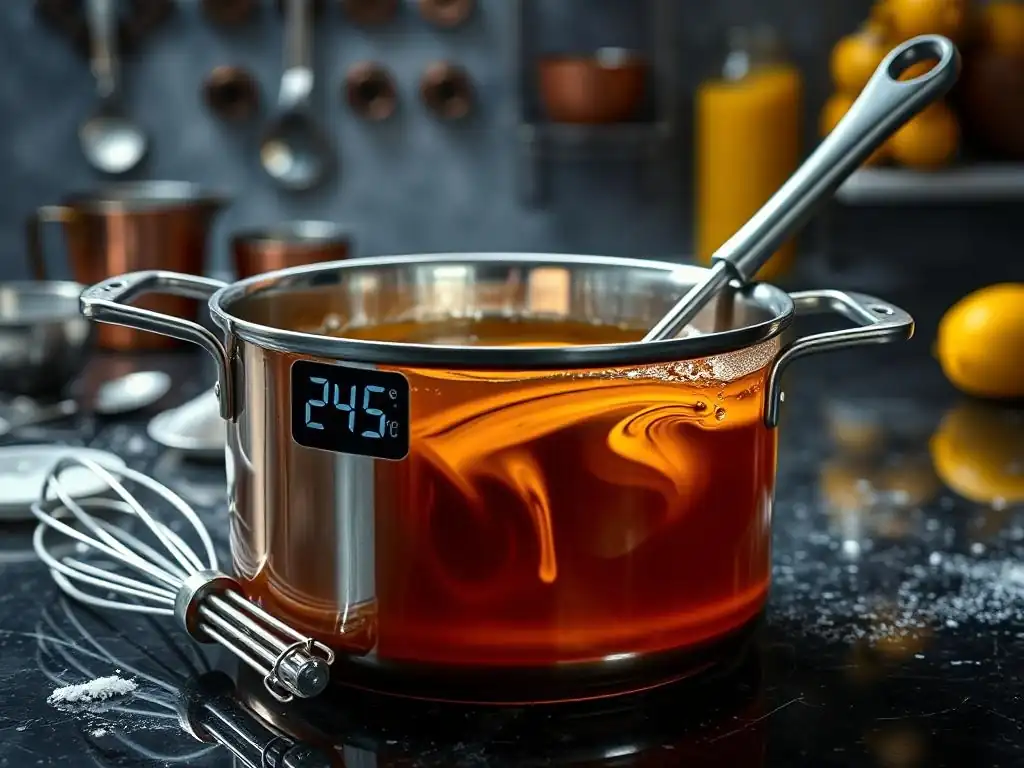
Welcome to BakeWithEase, where mastering the art of baking becomes a delightful journey! Ever wondered what separates a good meringue from a perfectly stable one? Today, we're diving deep into the secrets behind achieving that coveted consistency, focusing on the crucial element: the perfect Italian meringue syrup temp. Unlock the secrets to foolproof meringue and prepare to elevate your baking skills – let's get started and discover the transformative power of temperature!
- Italian Meringue: Achieving Ultimate Stability with Precise Syrup Temperature
- Understanding the Importance of Syrup Temperature in Italian Meringue
- Achieving the Perfect Italian Meringue Syrup Temp: A Step-by-Step Guide
- The Ideal Temperature Range for Italian Meringue Syrup
- Mastering Italian Meringue: Beyond Syrup Temperature
- Troubleshooting Common Italian Meringue Problems
- Tips and Tricks for Consistent Italian Meringue Success
- Italian Meringue Applications: Cakes to Frostings
- Advanced Techniques: Flavoring and Coloring
- Conclusion: Mastering Italian Meringue with Precise Syrup Temperature
-
Frequently Asked Questions
- What is the ideal temperature for Italian meringue syrup?
- Why is syrup temperature so important for Italian meringue?
- How do I accurately measure the temperature of Italian meringue syrup?
- What happens if my Italian meringue syrup goes over the recommended temperature?
- Can I still make Italian meringue if I don't have a thermometer?
- Final Reflection: Mastering the Art of the Perfect Italian Meringue
- Unlock the Secrets of Silky Smooth Italian Meringue!
Italian Meringue: Achieving Ultimate Stability with Precise Syrup Temperature
Understanding the Importance of Syrup Temperature in Italian Meringue
Why Temperature Matters for Perfect Italian Meringue
Achieving the perfect Italian meringue syrup temp is arguably the single most critical factor in creating a stable, glossy, and reliable meringue. Unlike French meringue, where sugar is simply whipped into raw egg whites, Italian meringue relies on a hot sugar syrup cooked to a specific temperature. This hot syrup is slowly streamed into whipping egg whites, effectively cooking them as they whip. This process denatures the egg white proteins, creating a much stronger and more stable protein matrix than raw egg whites alone can provide.
If the syrup is too cool, it won't properly cook the egg whites, resulting in a less stable meringue prone to weeping and collapsing. Conversely, if the syrup is too hot, it can scorch the sugar, leading to a brittle, potentially discolored meringue with a burnt taste. The precise temperature ensures the sugar reaches the "soft ball" stage, which provides the ideal consistency and structure for integrating into the egg whites, resulting in that signature smooth, stable Italian meringue perfect for frostings, buttercreams, or delicate desserts. Getting the ideal syrup temperature for Italian meringue is non-negotiable for success.
The Science Behind Meringue Stability and Syrup Temperature
The stability of Italian meringue comes from the interaction between the hot sugar syrup and the egg white proteins. Egg whites contain proteins like albumin. When whisked, these proteins unravel and trap air bubbles, forming a foam. However, this foam is fragile. Adding the hot sugar syrup, typically between 115°C and 118°C (240°F and 245°F), causes these proteins to coagulate and bond around the air bubbles. This forms a robust, stable network that resists collapse.
The temperature range corresponds to the "soft ball" candy stage. At this stage, the sugar concentration is high enough (around 85%) that a drop of syrup forms a soft, pliable ball when dropped into cold water.
This specific sugar concentration and temperature provide the right balance: the syrup is hot enough to cook the egg whites for stability but not so hot that it creates a hard candy, which would result in a grainy or brittle meringue. The process essentially pasteurizes the egg whites while simultaneously building structure, making the perfect Italian meringue syrup temp the foundation of its unique properties.
Achieving the Perfect Italian Meringue Syrup Temp: A Step-by-Step Guide
Step 1: Gathering Your Tools and Ingredients
Before you even think about heating sugar, ensure you have all your tools and ingredients ready. You will need fresh egg whites, granulated sugar, and water. The essential tool for achieving the perfect Italian meringue syrup temp is a reliable candy thermometer. This can be a digital or analog thermometer, but accuracy is key. You'll also need a heavy-bottomed saucepan to cook the syrup evenly and a stand mixer with a whisk attachment (or a powerful hand mixer) to whip the egg whites.
Having everything measured and in place beforehand is crucial because once the sugar syrup starts cooking, the process moves relatively quickly, especially as it approaches the target temperature. This preparation minimizes stress and allows you to focus on monitoring the syrup's temperature and the egg whites' progress simultaneously, ensuring you hit that ideal syrup temperature for Italian meringue precisely.
Step 2: Accurately Measuring Syrup Temperature
Accurate temperature measurement is paramount for achieving the perfect Italian meringue syrup temp. Use a clean, calibrated candy thermometer. If using an analog thermometer, ensure the tip is submerged in the syrup but not touching the bottom of the pan. For digital thermometers, follow the manufacturer's instructions, often involving placing the probe in the center of the syrup.
Monitor the temperature continuously as the syrup heats. As it approaches the target range (115-118°C or 240-245°F), the temperature will rise more rapidly. Be prepared to remove the syrup from the heat as soon as it hits the desired temperature. Relying on visual cues or guesswork is not sufficient for Italian meringue; precision is required to ensure the syrup is at the exact temperature needed to properly cook the egg whites and create a stable structure.
Step 3: Cooking the Sugar Syrup to the Ideal Temperature
To cook the syrup, combine your measured sugar and water in the heavy-bottomed saucepan. Heat gently at first, stirring occasionally to dissolve the sugar completely. Once the sugar is dissolved, stop stirring to prevent crystallization. Increase the heat to medium-high and insert your calibrated thermometer. Allow the syrup to boil steadily.
As the syrup boils, water evaporates, and the sugar concentration increases, causing the temperature to rise. Begin whipping your egg whites in the stand mixer on medium speed when the syrup reaches around 100°C (212°F). By the time the syrup hits the perfect Italian meringue syrup temp of 115-118°C (240-245°F), your egg whites should have reached stiff peaks. Remove the syrup immediately from the heat and slowly, carefully pour it in a thin stream down the side of the mixer bowl into the whipping egg whites.
The Ideal Temperature Range for Italian Meringue Syrup
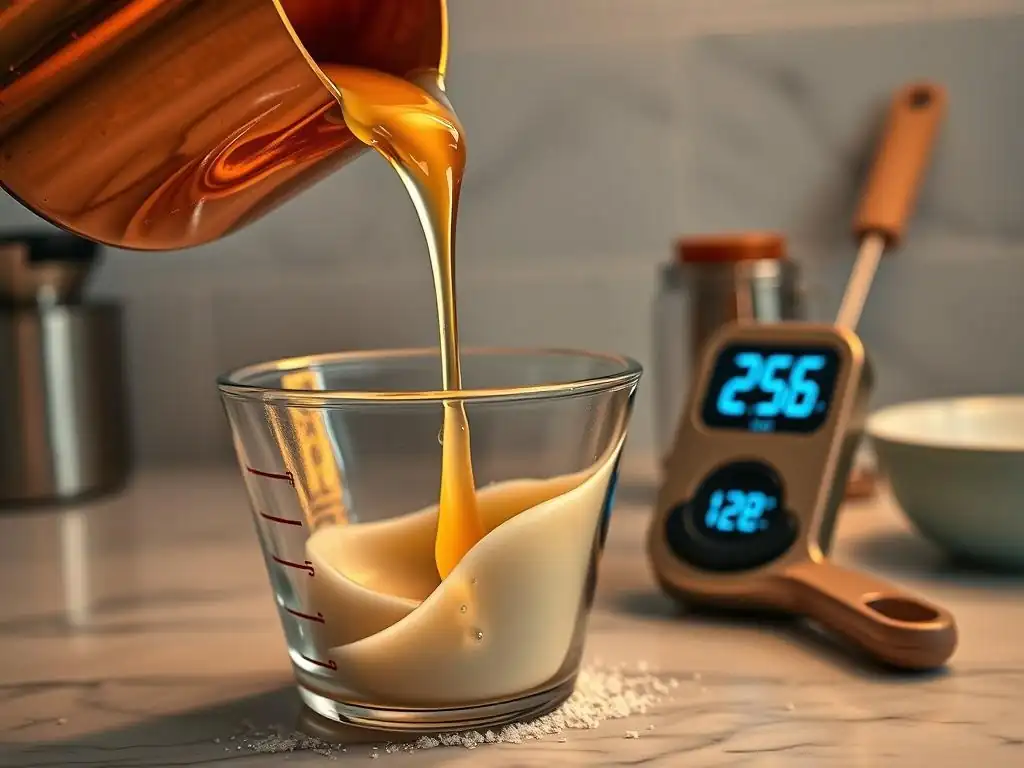
What is the Perfect Temperature for Italian Meringue Syrup?
The consensus among professional bakers for the perfect Italian meringue syrup temp is generally between 115°C and 118°C (240°F and 245°F). This range corresponds to the "soft ball" stage in candy making. At 115°C (240°F), the syrup has reached a concentration where it will create a soft, pliable structure when cooled, providing excellent stability for the meringue. Going up to 118°C (245°F) results in a slightly firmer structure, which can be beneficial depending on the final application, such as a very stiff frosting.
Hitting this precise temperature range ensures that the sugar syrup is hot enough to fully cook the egg whites as it's incorporated, eliminating the risk of raw egg while providing the necessary structure for a stable meringue. It's this specific temperature control that elevates Italian meringue above simpler meringues in terms of durability and texture.
Understanding Sugar Stages and Meringue Impact
The temperature of boiling sugar syrup dictates its concentration and, subsequently, its "stage." The perfect Italian meringue syrup temp of 115-118°C (240-245°F) falls within the "soft ball" stage. Understanding this stage is key because it directly impacts the texture and stability of your meringue.
- Thread Stage (106-112°C / 223-234°F): Lower temperature, less concentrated. Syrup forms thin threads in cold water. Too cool for Italian meringue; won't properly cook egg whites or provide structure.
- Soft Ball Stage (115-118°C / 240-245°F): Ideal temperature for Italian meringue. Syrup forms a soft, pliable ball in cold water. Hot enough to cook egg whites, concentrated enough to provide stable structure.
- Firm Ball Stage (118-121°C / 245-250°F): Slightly higher temperature. Syrup forms a firm ball in cold water. Can be used for a very stiff meringue, but increases risk of scorching or creating a brittle texture.
Using syrup at the correct soft ball stage ensures your meringue is stable, smooth, and holds its shape beautifully without becoming grainy or collapsing.
Troubleshooting: Hot or Cold Syrup Consequences
Using syrup that is too hot or too cold when making Italian meringue leads to distinct problems. If your syrup doesn't reach the perfect Italian meringue syrup temp and is too cool (e.g., below 115°C / 240°F), it won't adequately cook the egg whites. This results in a less stable meringue that is more likely to weep, where liquid separates from the foam, or deflate quickly. The structure simply isn't set properly.
Conversely, if the syrup is too hot (e.g., above 121°C / 250°F), it can cause the sugar to caramelize too much, potentially leading to a darker color and a burnt or toffee-like flavor, which is undesirable for most meringue applications. Extremely hot syrup can also shock the egg whites, making them seize up or cook unevenly, resulting in a lumpy or grainy meringue. Precision in reaching the ideal syrup temperature for Italian meringue is crucial to avoid these common pitfalls.
Mastering Italian Meringue: Beyond Syrup Temperature
Egg Whites: Choosing the Right Eggs
While the perfect Italian meringue syrup temp is paramount, the quality and preparation of your egg whites are also vital. Use fresh, room-temperature egg whites. Freshness is important because older eggs tend to have weaker protein structures, which can lead to a less stable foam. Room temperature eggs whip up to a greater volume more quickly than cold ones, allowing you to achieve stiff peaks by the time the syrup is ready.
Ensure your mixing bowl and whisk attachment are scrupulously clean and completely free of any grease or egg yolk. Even a tiny amount of fat can prevent the egg whites from whipping properly, resulting in a weak, unstable meringue that won't hold its structure, regardless of how perfectly you cook the sugar syrup.
Whipping Techniques: Achieving Stiff Peaks
Proper whipping of the egg whites is essential for Italian meringue success. Begin whipping the room-temperature egg whites on medium speed until they become foamy and opaque. Gradually increase the speed to high. Once the egg whites start to form soft peaks (they curl over when the whisk is lifted), you can begin adding a small amount of granulated sugar (separate from the syrup sugar, typically 10-20% of the total sugar weight) to the egg whites while they whip. This helps stabilize the foam before the hot syrup is added.
Continue whipping until the egg whites reach stiff, glossy peaks. Stiff peaks stand straight up when the whisk is lifted. This usually coincides with the sugar syrup reaching its perfect Italian meringue syrup temp. The stiff peak stage provides the ideal structure for the hot syrup to build upon, creating a strong, stable meringue matrix.
Incorporating Hot Syrup: Smooth and Glossy Meringue
Incorporating the hot syrup correctly is the final crucial step after achieving the perfect Italian meringue syrup temp and stiff egg white peaks. With the mixer running on medium-high speed, carefully and slowly pour the hot sugar syrup down the side of the mixing bowl in a thin, steady stream. Avoid pouring it directly onto the whisk attachment, as this can cause the syrup to splatter or harden instantly.
Once all the syrup has been added, continue whipping the meringue on high speed. The meringue will look glossy and voluminous. Continue whipping until the mixing bowl feels cool to the touch, which can take anywhere from 5 to 15 minutes depending on your mixer and the batch size. This cooling process is vital; it allows the meringue to stabilize further as the cooked egg white and sugar structure sets, resulting in a smooth, stable, and ready-to-use Italian meringue.
Troubleshooting Common Italian Meringue Problems
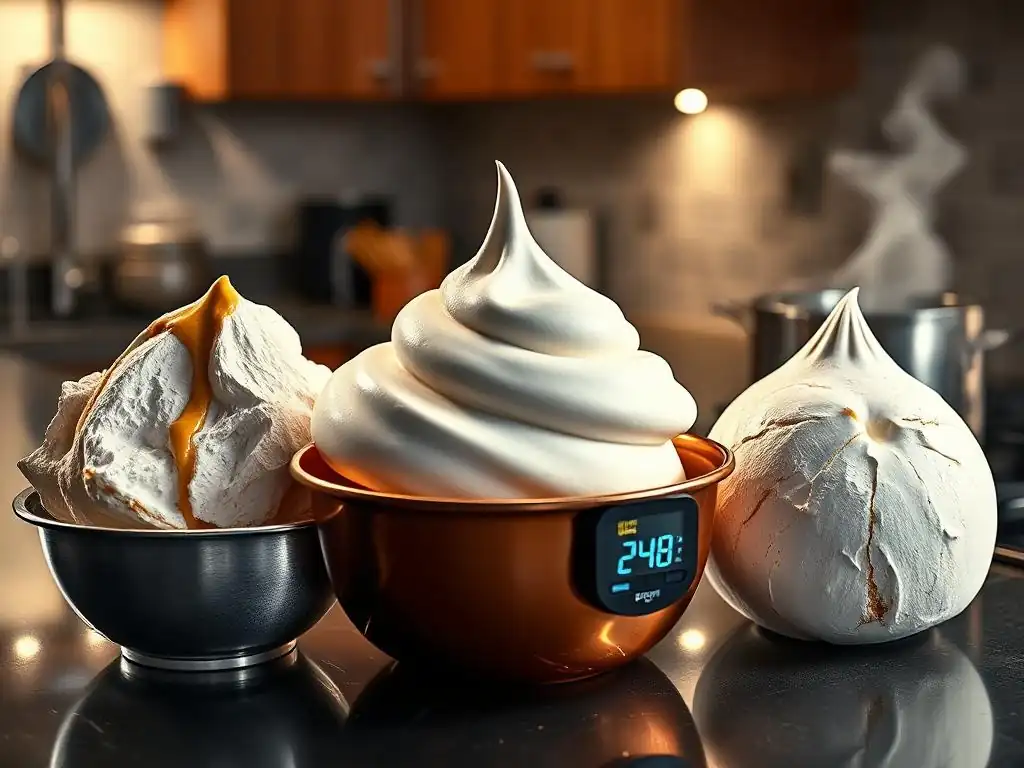
Meringue is Weeping: Causes and Solutions
Meringue weeping, where liquid separates from the foam, is a common issue, often linked to the sugar syrup temperature. The primary cause is usually using syrup that is too cool (below the perfect Italian meringue syrup temp of 115°C / 240°F). If the syrup isn't hot enough, it doesn't fully cook and stabilize the egg white proteins, leaving some unbound water that eventually seeps out.
To prevent weeping, always use a calibrated thermometer and ensure your syrup reaches at least 115°C (240°F). Another cause can be not whipping the meringue long enough after adding the syrup. Ensure you whip until the bowl is completely cool, allowing the structure to set properly. If your meringue is already weeping, unfortunately, it's difficult to fully correct, but sometimes gently stirring it can temporarily reincorporate some liquid, although it won't restore the original stability.
Meringue is Deflating: Syrup Temperature and Beating
Deflating meringue is another frustrating problem, often related to the syrup temperature or beating time. If the syrup is too cold (significantly below the ideal 115-118°C range), it won't create a strong enough structure, causing the meringue to collapse as it cools. Conversely, if you stop whipping the meringue too soon after adding the hot syrup, it won't have time to cool and stabilize, leading to deflation.
Ensure you hit the perfect Italian meringue syrup temp and whip the meringue on high speed until the bowl is completely cool to the touch. Overbeating can also cause deflation; once the meringue is glossy, stiff, and cool, stop whipping. Continuing to beat can break down the protein structure you've worked so hard to build.
Meringue is Grainy: Avoiding Crystallization
A grainy texture in Italian meringue is typically caused by sugar crystallization in the syrup. This happens when sugar crystals form during the cooking process and then introduce themselves into the meringue, resulting in a gritty texture. Crystallization can occur if you stir the syrup after the sugar has dissolved and it begins to boil, or if sugar crystals cling to the sides of the pan above the syrup line.
To prevent crystallization and ensure a smooth meringue, avoid stirring the syrup once it boils. You can brush down the sides of the pan with a wet pastry brush to dissolve any stray sugar crystals. Also, ensure your saucepan is clean before starting. Using a clean, calibrated thermometer to accurately measure the perfect Italian meringue syrup temp helps avoid issues that might tempt you to manipulate the syrup unnecessarily.
Tips and Tricks for Consistent Italian Meringue Success
Using a Candy Thermometer for Accurate Readings
Investing in and correctly using a candy thermometer is non-negotiable for consistent Italian meringue success. Guessing the temperature based on visual cues like bubble size is unreliable. A good digital or analog candy thermometer will give you a precise reading, allowing you to hit the perfect Italian meringue syrup temp of 115-118°C (240-245°F) every single time.
Ensure the thermometer is properly placed in the pan, with the tip submerged in the syrup but not touching the bottom, which can give a false high reading. Monitor the temperature closely, especially as it approaches the target range, as it can rise rapidly in the final degrees. Consistent use of a thermometer is the most important step you can take to master the ideal syrup temperature for Italian meringue.
Calibrating Your Thermometer for Reliability
Even a good thermometer can be inaccurate if it's not calibrated. Calibrating your thermometer ensures it's giving you a true reading. The simplest method is the boiling water test. Water boils at 100°C (212°F) at sea level. Place your thermometer in vigorously boiling water. If it reads exactly 100°C (212°F), it's calibrated.
If it reads slightly higher or lower, note the difference. For example, if it reads 98°C when it should be 100°C, you know your thermometer reads 2 degrees low. You'll need to adjust your target temperature accordingly when making meringue – aiming for 113-116°C instead of 115-118°C. Calibrating your thermometer is a quick step that drastically improves your chances of hitting the perfect Italian meringue syrup temp consistently.
Adjusting Syrup Temperature Based on Environmental Factors
While 115-118°C (240-245°F) is the standard range for the perfect Italian meringue syrup temp, environmental factors like altitude and humidity can slightly affect the ideal temperature. Water boils at a lower temperature at higher altitudes because of the reduced atmospheric pressure. For example, at 5,000 feet above sea level, water boils at approximately 95°C (203°F).
This lower boiling point means candy stages are also reached at lower temperatures. If you live at a high altitude, you may need to reduce your target syrup temperature by a few degrees. Humidity can also play a small role, though altitude has a more significant impact. Consult a reliable altitude candy-making chart or test the syrup stage in cold water if you suspect your environment is affecting results.
Italian Meringue Applications: Cakes to Frostings
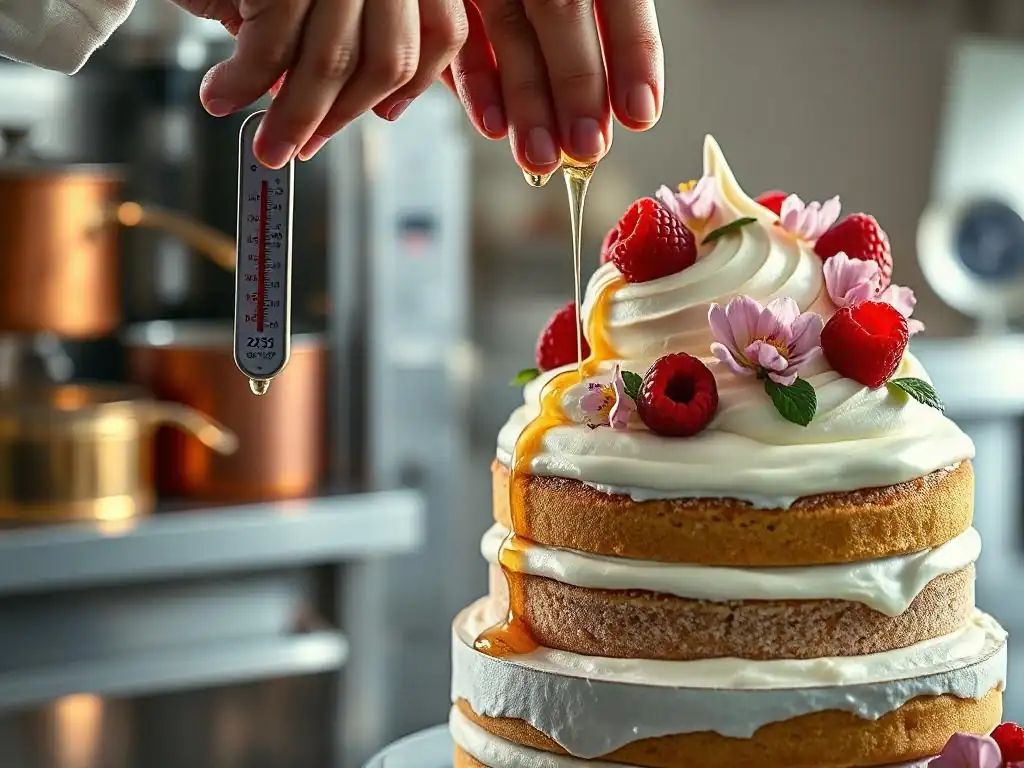
Using Italian Meringue for Cake Frosting
Italian meringue makes an exceptionally stable and beautiful cake frosting. Unlike simple whipped cream, it holds its shape without weeping, making it ideal for piping intricate designs. After achieving the perfect Italian meringue syrup temp and whipping the meringue until cool and stiff, it can be spread or piped directly onto cakes.
Its light, airy texture and not-too-sweet flavor (compared to some buttercreams) make it a popular choice. It pairs wonderfully with lemon, fruit tarts, or chocolate cakes. For a classic look, you can toast the peaks with a kitchen torch, adding visual appeal and a subtle caramelized flavor.
Creating Italian Meringue Buttercream
Italian meringue buttercream is a luxurious, smooth frosting prized for its stable emulsion and silky texture. It's made by gradually whipping softened butter into finished Italian meringue (made using the perfect Italian meringue syrup temp). The stability of the meringue allows it to emulsify with a large amount of butter without breaking.
This results in a less sweet buttercream than American buttercream, with a lighter mouthfeel. It's incredibly versatile, taking on flavors beautifully and perfect for filling and frosting cakes, cupcakes, and pastries. The successful creation of this buttercream relies entirely on starting with a correctly made, stable Italian meringue.
Using Italian Meringue in Baked Alaska
Baked Alaska is a classic dessert featuring ice cream on a cake base, encased in a layer of meringue and briefly baked or torched until the meringue is golden. Italian meringue is the preferred choice for this application because its stability and the fact that the egg whites are already cooked by the hot syrup mean it insulates the ice cream effectively and doesn't need to be cooked through in the oven, preventing the ice cream from melting.
The meringue, made using the perfect Italian meringue syrup temp, forms a protective, stable shell that browns beautifully under heat. This contrast between the warm, toasted meringue and the cold ice cream is the hallmark of this impressive dessert.
Advanced Techniques: Flavoring and Coloring
Adding Flavors: Extracts, Zests, and More
Once you've mastered hitting the perfect Italian meringue syrup temp and creating a stable base, you can experiment with flavoring your meringue. Extracts like vanilla, almond, or peppermint should be added after the meringue has cooled while the mixer is still running. A teaspoon or two is usually sufficient for a standard batch.
Citrus zests can be added at the same time for a bright, fresh flavor. For more intense flavors, consider adding fruit purées (ensure they are reduced and cooled) or even melted, cooled chocolate (for buttercream variations). Add flavors gradually and taste as you go to achieve the desired intensity without compromising the meringue's structure.
Coloring: Gel vs. Liquid Food Coloring
Adding color to Italian meringue allows for stunning visual effects. Gel food coloring is highly recommended over liquid coloring. Gel colors are concentrated and require only a small amount, which doesn't add significant moisture to the meringue. Liquid food coloring, on the other hand, can add too much liquid, potentially weakening the meringue structure and leading to weeping.
Add gel coloring after the meringue has cooled and reached stiff peaks. Add a tiny amount at a time, whipping until the color is evenly distributed. Remember that the color may deepen slightly as it sits. Using gel colors helps maintain the stability achieved by cooking the syrup to the perfect Italian meringue syrup temp.
Creating Swirled and Marbled Effects
For visually appealing meringue, you can create swirled or marbled effects using coloring. Once your meringue is fully whipped and cooled, place small amounts of different colored gel coloring in separate spots on the surface of the meringue. Gently swirl the colors through the meringue using a spatula or skewer, being careful not to overmix, which would result in a solid color.
This technique works beautifully for frosting cakes or filling pastry shells before torching. The stable structure provided by achieving the perfect Italian meringue syrup temp ensures that the colors hold their distinct swirls without blending excessively.
Conclusion: Mastering Italian Meringue with Precise Syrup Temperature
Frequently Asked Questions
What is the ideal temperature for Italian meringue syrup?
The ideal temperature for Italian meringue syrup is typically between 235°F (113°C) and 240°F (116°C). This range ensures the sugar is properly cooked, leading to a stable meringue.
Why is syrup temperature so important for Italian meringue?
Syrup temperature is crucial because it determines the sugar's concentration. If it's too low, the meringue will be runny and unstable. Too high, and it can become grainy or hard.
How do I accurately measure the temperature of Italian meringue syrup?
Use a candy thermometer or a digital thermometer clipped to the side of your saucepan. Ensure the thermometer bulb is fully submerged in the syrup but not touching the bottom of the pan for an accurate reading.
What happens if my Italian meringue syrup goes over the recommended temperature?
If the syrup exceeds 240°F (116°C), it may start to caramelize or become too thick. Immediately remove it from the heat and add a tablespoon of water to stop the cooking process, but be careful of splattering.
Can I still make Italian meringue if I don't have a thermometer?
While it's highly recommended to use a thermometer, you can try the cold water test. Drop a small amount of syrup into cold water; if it forms a firm, but pliable ball, it's likely at the correct temperature. However, this method is less precise.
Final Reflection: Mastering the Art of the Perfect Italian Meringue
The pursuit of the perfect Italian meringue syrup temperature is not merely a culinary quest; it's a testament to the power of precision in achieving culinary excellence. A seemingly small detail—a few degrees difference—can dramatically impact the stability and texture of this delicate confection, ultimately determining the success or failure of countless recipes relying on its airy perfection. This understanding transcends the simple act of making meringue; it speaks to the importance of meticulous attention to detail in any creative endeavor.
The journey of mastering Italian meringue has been a profound one, revealing the intricate dance between heat, sugar, and egg whites. It's a process that demands patience, observation, and a deep respect for the delicate balance required. The subtle shifts in viscosity, the tell-tale signs of the soft-ball stage—these are lessons learned not just in the kitchen, but in the broader context of life's pursuits. The difference between ordinary and extraordinary is that little extra.
This quote perfectly encapsulates the dedication needed to achieve true mastery in any field, and the pursuit of the perfect Italian meringue is a microcosm of that larger truth.
Now, consider your own pursuits. What seemingly small details hold the key to unlocking your own potential? I encourage you to apply the principles of precision and patience learned here to your own endeavors. Whether it's a professional project, a personal goal, or simply the next batch of macarons, remember the power of meticulous attention to detail. Embrace the process, observe the subtle nuances, and strive for that perfect balance—because the reward, like the airy lightness of a perfectly made Italian meringue, is truly extraordinary.
Unlock the Secrets of Silky Smooth Italian Meringue!
Thanks for diving deep into the world of Italian meringue with us! We hope you now feel confident in achieving that perfect, stable meringue every time. Ready to put your new knowledge into practice?
- Whip up your dream meringue: Try making the recipe from the article today – you'll be amazed at the difference a precise temperature makes!
- Share your meringue masterpiece: Show off your baking skills and tag us on social media – we'd love to see your creations! Use #BakeWithEaseMeringue
- Explore more baking secrets: Dive into our other articles on advanced baking techniques to further enhance your skills.
What incredible dessert will you create with your perfectly stable Italian meringue?