
Baking at High Altitude: The Surprising Role of Humidity


Welcome to BakeWithEase, your guide to confident baking! Ever wondered why your cakes fall flat at high altitude? It's not just the air pressure; the surprising role of humidity plays a crucial part. Dive into this article to unravel the mysteries of high altitude baking humidity and unlock the secrets to perfectly risen treats, no matter how high you are! Intrigued? Keep reading to discover the techniques that will transform your baking.
- Understanding High Altitude Baking Challenges
- The Impact of Humidity on High Altitude Baking
- Adjusting Recipes for High Altitude and Humidity Levels
- High Altitude Baking: Humidity Control Techniques
- Specific Baking Examples: High Altitude and Humidity
- Tips for Successful High Altitude Baking in Varying Humidity
- Advanced High Altitude Baking Techniques: Mastering Humidity
- Conclusion: Embrace Humidity for Better High Altitude Baking
-
Frequently Asked Questions
- What are the primary challenges of baking at high altitude, even considering humidity?
- How does humidity specifically impact baking at high altitude?
- What are some common adjustments needed when baking at high altitude, and how does humidity influence these adjustments?
- Where can I find reliable resources for specific recipes adapted for high altitude baking with varying humidity levels?
- Why is it important to monitor the internal temperature of baked goods when baking at high altitude, especially when humidity is a factor?
- Final Reflection: The Sweet Science of High-Altitude Humidity
- Unlock Your High-Altitude Baking Secrets!
Understanding High Altitude Baking Challenges
The Science Behind Baking at Higher Elevations
Baking at high altitude (typically above 3,500 ft or about 1,070 m) exposes dough and batters to lower atmospheric pressure, causing gases to expand more rapidly. For instance, at 5,000 ft, water boils at around 203 °F (95 °C) instead of 212 °F (100 °C), accelerating moisture loss and altering starch gelatinization temperatures. Rapid steam formation can overinflate air pockets in quick breads, cakes, and muffins, leading to collapsed domes or coarse crumb structures once removed from the oven.
Furthermore, leavening agents like baking powder and soda react faster because the reduced barometric pressure allows carbon dioxide to escape more quickly. A typical high-altitude adjustment—reducing baking powder by about ¼ tsp for every teaspoon—helps counteract over-expansion, but humidity interplay also demands precise tweaks to ingredients and oven settings to achieve uniform crumb and rise.
Why Humidity Matters in High Altitude Baking
While pressure and temperature are well-known variables, high altitude baking humidity often goes unnoticed. Relative humidity (RH) at altitude can drop below 30 %, especially in arid mountain regions. Dry air wicks moisture out of doughs faster, affecting gluten development: the same 2 cups of flour may absorb only 92 g of water at 20 % RH versus 108 g at 60 % RH. This directly influences dough consistency and volume.
Conversely, unexpected monsoon or rainforest microclimates at elevations of 4,000–6,000 ft (e.g., certain Andean valleys) can push RH above 80 %. In such locales, high humidity extends baking times by up to 15 % and can cause soggy crusts or gummy interiors. Understanding this duality is essential for mastering high altitude baking humidity adjustments and crafting consistent, reliable recipes.
The Impact of Humidity on High Altitude Baking
How Low Humidity Affects Dough and Batter
At low relative humidity (below 30 %), dry air accelerates moisture evaporation from exposed dough surfaces, leading to:
- Crust formation on proofing dough, inhibiting oven spring
- Stiffer batters that resist proper aeration
- Overly firm muffin tops and crumbly cake interiors
In Phoenix, AZ (elevation ~1,000 ft), home bakers report reducing flour by 2 Tbsp in a standard 9×5 in loaf pan recipe to maintain softness. Similarly, a threefold increase in brewer’s yeast for sourdough at 7,500 ft in Denver – from 1 % to 3 % of flour weight – compensates for moisture loss and sluggish fermentation in 20 % RH environments.
The Effects of High Humidity on Baking Times
When humidity spikes above 70 %—as in cloud forests of Costa Rica’s Central Valley at 4,500 ft—baking times lengthen by 10–15 %. The oven must first drive off excess moisture before Maillard reactions and crumb setting occur. Typical effects include:
- Delayed crust browning: Sugar caramelization slows due to added steam pressure.
- Gummy centers: Pushed back setting points for egg proteins and starches result in underbaked cores.
Home test: In Santa Fe, NM (approximately 7,200 ft; RH 75 % in monsoon months), bakers add a 5-minute slow-heat phase at 325 °F before raising to 350 °F to prime evaporation and stabilize crumb structure.
Bakers often encounter:
- Collapsed cakes: Overhydrated batters form weak gluten networks.
- Dry, cracked breads: Excess surface evaporation without proper steam.
- Soggy bottoms: Extra moisture trapped under loaves or cakes.
Real-case example: A bakery in Taos, NM (elevation 7,000 ft) saw a 40 % batch failure rate for cinnamon rolls during summer rains. They resolved it by extending bake times by 3 minutes and reducing dough water by 1 Tbsp per roll to offset bathroom-like humidity spikes (85 % RH).
Adjusting Recipes for High Altitude and Humidity Levels

Measuring Humidity Levels in Your Kitchen
Accurate humidity readings form the backbone of any high altitude baking humidity strategy. Essential tools include:
- Digital hygrometers (±2 % accuracy)
- Combined hygrometer-thermometers
Task list:
- [ ] Place device at counter height, away from drafty doors and ovens.
- [ ] Calibrate monthly using saturated salt solutions (e.g., salt + water in sealed bag yields ~75 % RH).
- [ ] Log RH and temperature at 8 AM and 4 PM to track daily swings.
Many bakers use home automation platforms (e.g., Home Assistant) to graph RH trends over weeks, revealing that morning lows of 25 % can spike to 60 % by afternoon in some high-altitude homes.
Adapting Dry Ingredients for High Altitude and Low Humidity
In low-humidity regions (>5,000 ft with RH <30 %), flour and dry mixes absorb less water. Recommended dry-ingredient adjustments include:
- Reducing flour by 2–4 Tbsp per cup to maintain batter moisture.
- Increasing sugar by 1–2 Tbsp per cup to retain water (hygroscopic effect).
- Adjusting salt down by 1/8 tsp per teaspoon to avoid over-tightening gluten.
For example, a 350 g all-purpose flour loaf becomes 330 g in Colorado Springs (elevation 6,000 ft; RH ~25 %) to prevent bricks while leaving dough pliable.
Modifying Liquid Ingredients for High Altitude and High Humidity
In high RH (>65 %), cutting back on liquids helps avoid overly slack doughs:
- Reduce water or milk by 10–15 ml per 250 ml.
- Swap part of the liquid for eggs (1 large egg ≈ 30 ml) to improve binding and structure.
- Add acid (cream of tartar or vinegar, ¼ tsp per cup) to strengthen gluten networks.
At 4,200 ft in Kerala’s hill stations (75 % RH), sponge cakes drop water by 12 % and add 1 Tbsp of lemon juice to keep crumb light and prevent sogginess.
High Altitude Baking: Humidity Control Techniques
Using Humidifiers and Dehumidifiers for Baking
Controlled humidity chambers around 50–55 % RH can be created in your kitchen using:
- Ultrasonic humidifiers: emit fine mist without heating
- Desiccant dehumidifiers: lower RH in small proofing cabinets
Real case: A small artisan bakery in Boulder, CO installed a 2 ft³ proofing box with built-in humidifier, maintaining 55 % RH. This cut proofing time for sourdough boules by 20 % at 7,200 ft elevation, ensuring consistent oven springs.
Oven Adjustments for Optimal Humidity
Generating or removing steam within the oven helps simulate ideal humidity:
- Steam injection: Place a cast-iron skillet on the bottom rack and pour ½ cup hot water at preheat.
- Venting: Crack oven door by 1 in during the last 10 minutes of baking to expel excess moisture.
- Double-bake method: Bake at 375 °F for initial crust set, then lower to 350 °F with door ajar for final bake.
These techniques maintain a balance between crisp crusts and fully set interiors, crucial when high altitude baking humidity fluctuates rapidly.
Baking with a Water Bath (Bain-Marie) to Increase Humidity
Water baths excel at delivering gentle, even steam:
- Place cakes (especially cheesecakes and custards) in a larger pan filled halfway with 180–185 °F water.
- Bake on the middle rack; water bath prevents cracking and underbaking.
For angel food cakes at 6,000 ft with 80 % RH, a foil-wrapped springform pan in a 1 in water bath ensures fine crumb and stable volume, despite humidity-driven inconsistencies in direct dry baking.
Specific Baking Examples: High Altitude and Humidity
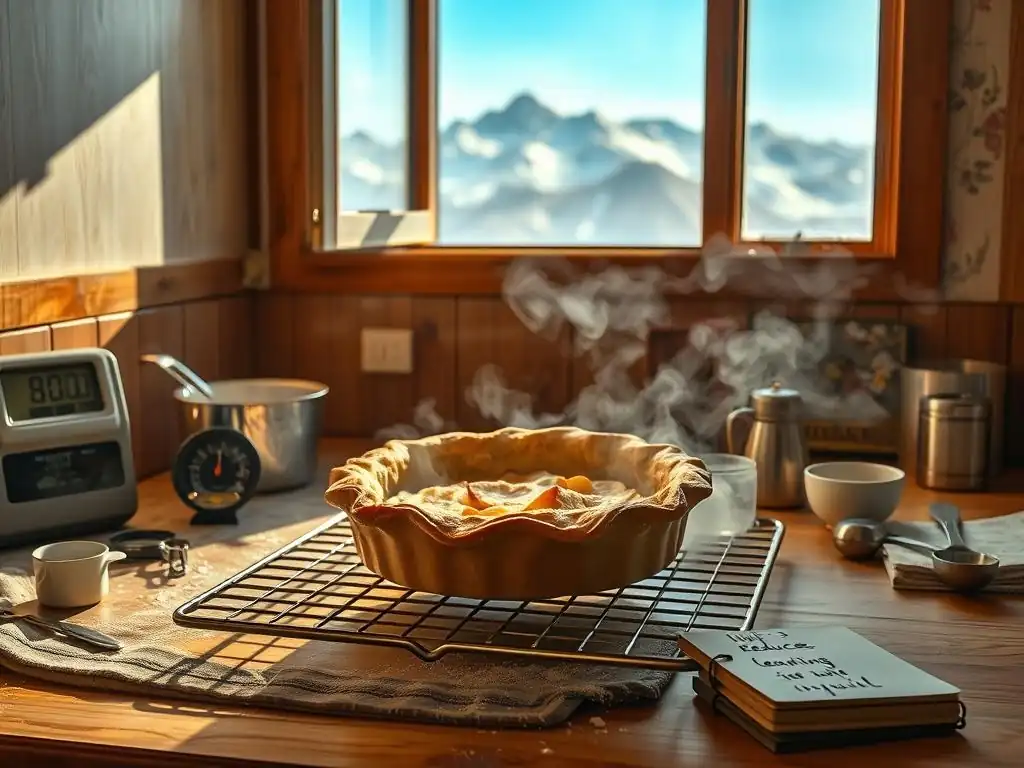
Baking Bread at High Altitude with Low Humidity: Sourdough Boule Recipe and Adjustments
In Denver (5,280 ft; ~25 % RH), standard sourdough requires:
- Starter hydration: 100 % (100 g flour + 100 g water)
- Dough hydration: 70 % instead of 75 % to prevent stickiness
- Proofing: 2 hrs bulk at 75 °F, covered with a damp cloth
Start with:
- 500 g strong bread flour
- 350 g water (70 % hydration)
- 100 g active starter
- 10 g salt
After mixing, fold every 30 min, shape, and proof in banneton for 90 min. Bake at 460 °F with steam for 20 min, then 10 min at 430 °F. The lower hydration combats petulant dryness from 20 % RH environments.
Baking Cakes at High Altitude with High Humidity: Angel Food Cake Recipe and Adjustments
At Oaxaca City’s outskirts (elevation 5,000 ft; RH ~80 %), an angel food cake benefits from:
- Reducing sugar by 10 % (from 425 g to 380 g) to accelerate structure set.
- Increasing flour by 1 Tbsp to counter extra moisture.
- Baking in bain-marie at 325 °F for 45 min then 10 min at 350 °F with vents open.
These changes offset humid summer air, preventing soggy bases, and ensure the delicate foam structure rises evenly without collapsing.
In Santa Barbara’s hills (4,200 ft; RH swings 30–65 %), chocolate chip cookies need:
- Butter: chill to 60 °F, not softened, to slow spread
- Flour: +2 Tbsp per 250 g to firm up dough
- Egg: add one extra yolk (18 g) for richness and binding
Recipe snippet:
- 250 g all-purpose flour + 2 Tbsp
- 170 g unsalted butter, chilled
- 150 g sugars (split 1:1 white:brown)
- 1 whole egg + 1 yolk
- 1 tsp baking soda
- 1 tsp salt
- 200 g semi-sweet chocolate chips
Chill dough 2 hrs, bake at 350 °F for 12–14 min, rotating halfway. This approach tames cookie spread during midday RH peaks.
Tips for Successful High Altitude Baking in Varying Humidity
Monitoring Your Dough and Batter Consistency
Regular visual and tactile checks can replace rigid formula adherence when humidity fluctuates:
- Dough should be smooth, slightly tacky but not wet
- Cake batter must fall in a ribbon pattern, thick yet pliable
- Biscuit dough: just cohesive, not crumbly or sticky
Keep a baking log to record RH, temperature, and the feel-test result for each batch, enabling progressive refinements.
Recognizing Signs of Over-Hydration or Under-Hydration
Key indicators:
- Over-hydration: gummy crumb, shallow rise, dough that spreads too much.
- Under-hydration: cracked crusts, tight crumb, difficulty in shaping.
Example: If pizza dough at 6,500 ft (RH 20 %) pulls away from bowl sides during kneading, add water 1 tsp at a time until it clings with a slight sheen.
When things go awry:
- Dense cakes: reduce liquids or add an extra egg white.
- Flat breads: introduce steam phase, increase yeast by 0.5 %.
- Crumbly cookies: add 1 Tbsp milk or reduce flour by 1 Tbsp.
Maintaining an adaptive mindset toward high altitude baking humidity ensures consistent success across recipes and seasons.
Advanced High Altitude Baking Techniques: Mastering Humidity
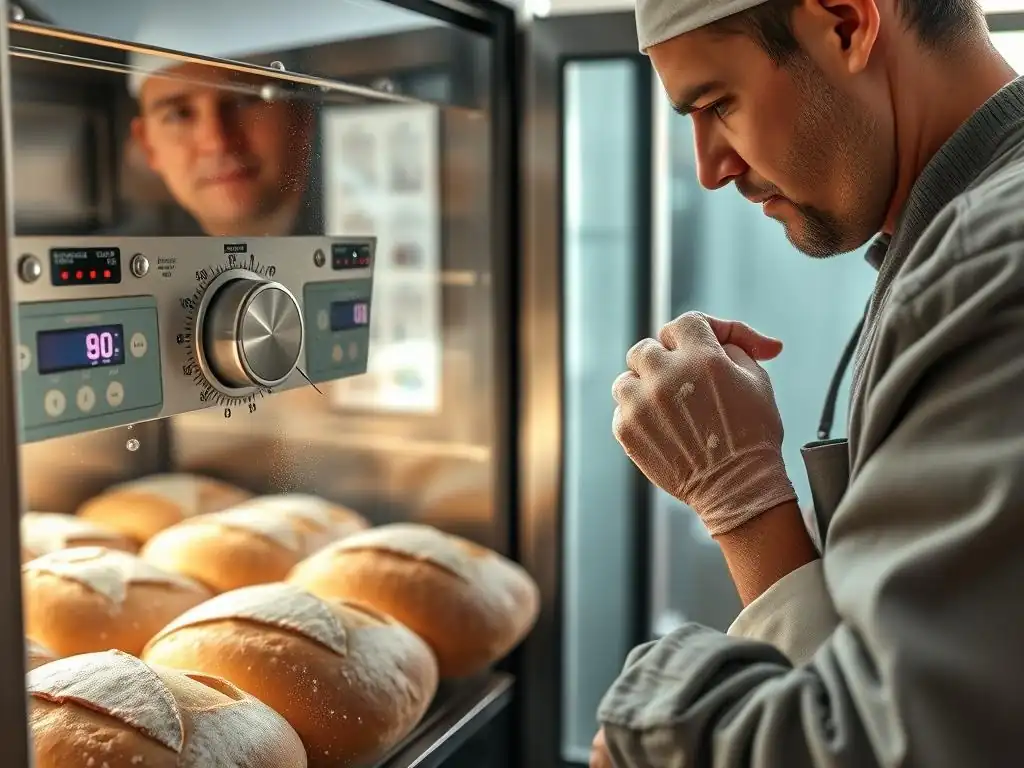
Using Sourdough Starter in High Altitude with Humidity Considerations
High-altitude starters ferment faster in warm, humid kitchens. To maintain balance:
- Feed at 1:3:3 ratio (starter:flour:water) instead of 1:1:1.
- Store at 50 °F in summer to slow metabolism when RH >70 %.
- Use starter within 4 hrs of peak activity to harness optimal leavening gas retention.
Practitioners report that this approach yields a consistent 1.8× volume rise in 4 hrs at Denver’s 55 % RH, versus only 1.5× in arid 25 % RH conditions.
Experimenting with Different Flours and their Hydration Properties
Whole grain flours hold 5–10 % more water than white flours. At 7,000 ft:
- Rye flour: +3 – 5 % water absorption
- Spelt flour: +4 %
By carefully adjusting hydration based on published absorption rates (e.g., King Arthur’s hydration tables), bakers can craft multigrain loaves that remain moist despite harsh, dry mountain air.
Understanding Gluten Development in High Altitude Baking Environments
Gluten forms stronger bonds in lower-pressure, low-humidity atmospheres. To fine-tune gluten:
- Autolyse: 20 min rest before salt and yeast addition to maximize enzyme action.
- Stretch-and-fold: every 30 min during bulk to align and strengthen gluten without over-oxidizing.
Successful baguettes at 6,500 ft and 30 % RH display an open crumb with 60 % alveoli by this method, compared to a tight crumb in rush-knead approaches.
Conclusion: Embrace Humidity for Better High Altitude Baking
Key Takeaways for Adjusting Recipes
- Always measure kitchen RH and temperature before starting.
- Tweak flour, sugar, and liquid ratios based on your specific humidity readings.
- Use in-oven steam or bain-marie techniques to stabilize baking environments.
- Maintain a detailed baking log to refine high altitude baking humidity adaptations.
Further Resources for High Altitude Baking Success
- Explore hydration tables from reputable millers for precise water-flour ratios.
- Join altitude-specific baking communities for regional insights.
- Invest in quality hygrometers and proofing equipment to minimize guesswork.
Frequently Asked Questions
What are the primary challenges of baking at high altitude, even considering humidity?
High altitude baking presents challenges due to lower air pressure and increased evaporation. These factors can lead to dry and crumbly baked goods if not addressed properly.
How does humidity specifically impact baking at high altitude?
Higher humidity can partially offset the increased evaporation at high altitude. This means you might need to adjust liquid ratios less drastically compared to baking in dry, high-altitude conditions.
What are some common adjustments needed when baking at high altitude, and how does humidity influence these adjustments?
Common adjustments include reducing leavening agents, increasing liquids, and lowering baking temperatures. Higher humidity might mean less liquid needs to be added, or even slightly increasing it in some cases.
Where can I find reliable resources for specific recipes adapted for high altitude baking with varying humidity levels?
Unfortunately, there isn't a universal chart for every humidity level. Experimentation with recipes and careful observation are key. Check BakeWithEase.com for high-altitude specific recipes.
Why is it important to monitor the internal temperature of baked goods when baking at high altitude, especially when humidity is a factor?
Monitoring internal temperature helps ensure baked goods are cooked thoroughly without drying out. Humidity can affect baking time, so relying on temperature is more reliable than time alone.
Final Reflection: The Sweet Science of High-Altitude Humidity
Mastering high-altitude baking isn't just about adjusting recipes; it's about understanding the subtle dance between flour, air, and the often-overlooked element of humidity. The seemingly minor fluctuations in atmospheric moisture can dramatically impact the outcome of your baked goods, transforming a potential disaster into a culinary triumph. This understanding is crucial, not just for professional bakers, but for anyone who enjoys the satisfaction of creating delicious treats in challenging environments.
The impact of humidity on high-altitude baking extends far beyond simply adjusting baking powder or liquid ratios. It speaks to a deeper understanding of the scientific principles at play, a connection between the environment and the final product that is both fascinating and humbling. The most important thing is to understand the why, not just the how.
This quote, while not directly about baking, perfectly encapsulates the journey of mastering high-altitude baking. It's about understanding the why behind the adjustments, the scientific reasoning that allows for consistent, delicious results, regardless of the atmospheric conditions. This knowledge empowers bakers to adapt and innovate, pushing the boundaries of what's possible in their unique environments.
Now, consider your own kitchen. Think about the subtle differences you've noticed in your baking on different days, in different seasons. Take the time to observe the humidity levels in your home, and how they might be influencing your baking results. Don't be afraid to experiment, to adjust your recipes based on your specific environment. Embrace the challenge, for within it lies the key to unlocking the secrets of consistently perfect high-altitude baking. The journey of mastering this art is a rewarding one, filled with delicious discoveries and the satisfaction of creating something truly special.
Unlock Your High-Altitude Baking Secrets!
Thanks for exploring the fascinating world of high-altitude baking with us! We hope you gained valuable insights into the often-overlooked role of humidity. Now it's time to put your new knowledge into practice.
- Master your high-altitude baking: Try adjusting your next recipe using the humidity-based techniques discussed – you might be surprised by the results! Pay close attention to the changes you make and note your observations.
- Share your baking triumphs (and challenges!): Let's build a community of high-altitude bakers. Share your experiences and recipes in the comments below – we’d love to hear from you!
- Explore our other resources: Dive deeper into high-altitude baking by checking out our other articles on the BakeWithEase website (bakewithease.com). You might discover even more tips and tricks to perfect your baking.
So, what unexpected humidity-related adjustments will you make in your next high-altitude baking adventure?