
Your Guide to LowCarb Sweeteners That Don't Ruin Your Baked Goods

Welcome to BakeWithEase, your haven for effortless baking!
Struggling to find the perfect low-carb sweetener that doesn't compromise the taste and texture of your favorite treats? You're not alone! Dive into our guide to low carb sweetener recipes and discover the secrets to guilt-free indulgence. Curious about which sweetener holds up best in cookies, or which one adds the perfect caramel note to your cakes? Let's unlock the delicious possibilities together – your next baking masterpiece awaits!
- Baking with Low Carb Sweeteners: A Comprehensive Guide
- The Best Low-Carb Sweeteners for Baking: A Detailed Comparison
-
Frequently Asked Questions
- What are the most popular low-carb sweeteners suitable for baking?
- How do low-carb sweeteners affect the texture of baked goods compared to sugar?
- Are there any low-carb sweeteners that should be avoided when baking?
- Can I substitute low-carb sweeteners 1:1 for sugar in baking recipes?
- Where can I find low-carb sweetener recipes specifically designed for baking?
- Final Reflection: The Sweet Truth About Low-Carb Baking
- Unlock Your Baking Potential: Sweet Success Awaits!
Baking with Low Carb Sweeteners: A Comprehensive Guide
Embarking on a low-carb lifestyle doesn't mean saying goodbye to your favorite baked treats. With the right low-carb sweeteners and techniques, you can still enjoy delicious cakes, cookies, muffins, and breads without the sugar rush. This guide dives into the world of sugar alternatives, helping you master the art of creating delightful low carb sweetener recipes that fit your dietary needs. We'll explore why these sweeteners are a great choice, what to look out for when using them, and compare some of the most popular options available today. Get ready to bake smarter, not harder!
Understanding how different sugar substitutes behave in the oven is key to successful low-carb baking. Unlike traditional sugar, which contributes to moisture, browning, and structure, low-carb sweeteners primarily offer sweetness. This means you often need to make adjustments to account for these missing properties. Whether you're a seasoned baker looking to adapt classic recipes or a beginner eager to try your first low carb sweetener recipes, knowing the nuances of each sweetener will significantly improve your results and help you avoid common pitfalls like dry or crumbly textures.
Why Choose Low-Carb Sweeteners for Your Baking?
Choosing low-carb sweeteners for your baking aligns with various health and dietary goals. For individuals managing blood sugar levels, such as those with diabetes or insulin resistance, these alternatives offer the pleasure of sweetness without the sharp spike in blood glucose that comes with refined sugar. This stability is crucial for overall metabolic health.
Beyond blood sugar control, many people adopt low-carb or ketogenic diets for weight management, improved energy levels, and reduced inflammation. Incorporating low-carb sweeteners allows them to satisfy cravings for sweets while staying within their carbohydrate limits, making adherence to the diet much more sustainable and enjoyable.
Furthermore, traditional sugar is calorie-dense, providing about 16 calories per teaspoon (approximately 4 grams). Low-carb sweeteners, on the other hand, often contain zero or very few calories. For example, erythritol has practically zero calories per gram, while stevia and monk fruit are non-caloric.
This significant difference in calorie content means that using these sugar alternatives can substantially reduce the overall calorie count of your baked goods, making them a more suitable option for calorie-conscious individuals or those aiming for weight loss. It's about enjoying the sweetness you love without the caloric burden, opening up a world of guilt-free low carb sweetener recipes.
Key Considerations When Baking with Sugar Alternatives
When transitioning from sugar to low-carb sweeteners in your baking, several factors require careful consideration to achieve desirable results. The first is sweetness level and flavor profile. Most low-carb sweeteners are significantly sweeter than sugar, and their sweetness intensity varies.
For instance, pure stevia extract can be 200-400 times sweeter than sugar, while erythritol is about 70% as sweet. Using too much of a highly concentrated sweetener can lead to an overpowering taste or a noticeable aftertaste, often described as bitter or metallic. It's crucial to use conversion charts or start with smaller amounts and taste as you go, especially when adapting existing low carb sweetener recipes.
Another major consideration is the functional role of sugar in baking beyond just sweetness. Sugar contributes to moisture retention, helps with browning (through caramelization and Maillard reactions), provides structure, and helps leaven baked goods by creaming with fat. Low-carb sweeteners typically don't perform these functions.
This lack of functionality can result in baked goods that are drier, paler, less structured, and don't spread or rise as expected. To compensate, bakers often need to add extra moisture (like unsweetened applesauce or yogurt), incorporate ingredients that aid browning (like a touch of molasses or baking soda), or use binding agents (like xanthan gum or psyllium husk) to improve texture and structure. Adapting low carb sweetener recipes successfully often involves these strategic additions to mimic sugar's physical properties.
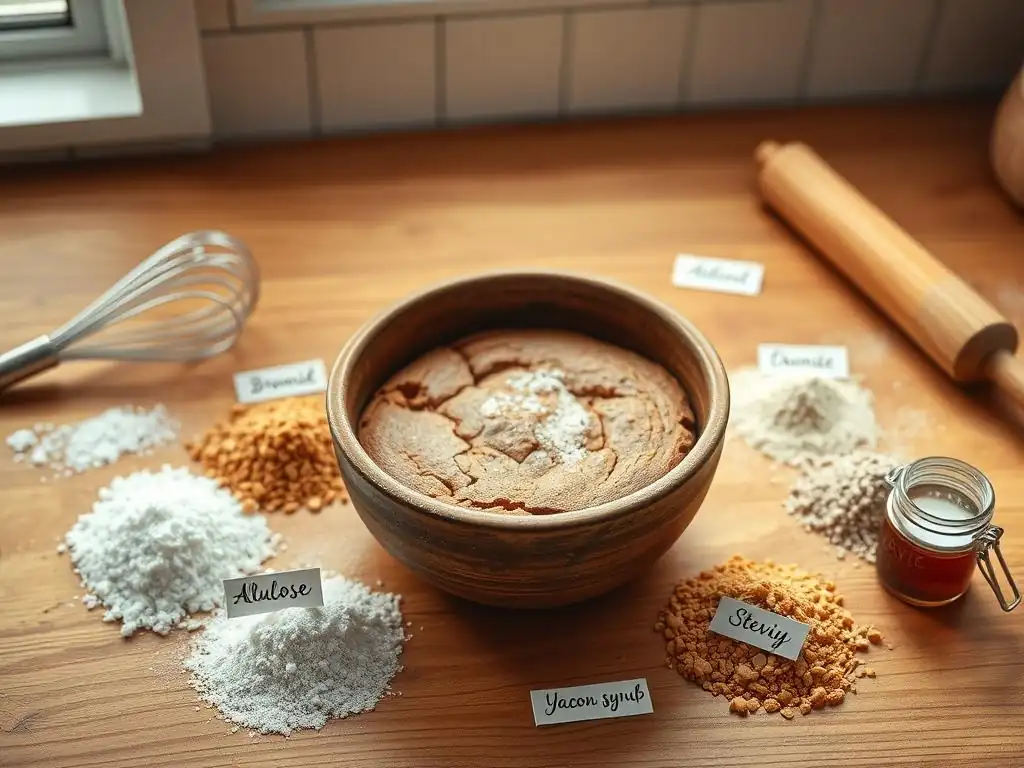
The Best Low-Carb Sweeteners for Baking: A Detailed Comparison
Frequently Asked Questions
What are the most popular low-carb sweeteners suitable for baking?
Some of the most popular include erythritol, stevia, and monk fruit. These are often used alone or in blends for optimal sweetness and texture.
How do low-carb sweeteners affect the texture of baked goods compared to sugar?
Low-carb sweeteners can sometimes lead to a slightly drier or less tender result. Using blends of sweeteners or adding ingredients like xanthan gum can help mimic sugar's properties.
Are there any low-carb sweeteners that should be avoided when baking?
While personal preferences vary, some bakers avoid sweeteners like maltitol due to its potential impact on blood sugar and digestion. It's best to experiment to find what works best for you.
Can I substitute low-carb sweeteners 1:1 for sugar in baking recipes?
Not always. The sweetness level and bulk of different low-carb sweeteners vary. It's crucial to consult conversion charts or recipe guidelines for accurate substitutions to avoid overly sweet or dry results.
Where can I find low-carb sweetener recipes specifically designed for baking?
BakeWithEase.com is a great resource! Look for recipes specifically mentioning the use of low-carb sweeteners and providing instructions on how to adjust for texture and taste in your baked goods.
Final Reflection: The Sweet Truth About Low-Carb Baking
The quest for delicious, low-carb baked goods is no longer a niche pursuit; it's a mainstream movement fueled by a growing awareness of dietary needs and preferences. Finding the right sweetener is crucial, and as we've explored, the options are surprisingly diverse and capable of delivering exceptional results. The right choice can transform a low-carb diet from restrictive to rewarding.
This journey into the world of low-carb sweeteners has been a personal one, highlighting the creativity and adaptability required when navigating dietary restrictions. I've learned firsthand that the perceived limitations of low-carb baking are often self-imposed. The only way to do great work is to love what you do.
– Steve Jobs. This applies perfectly to baking; when you find the right tools (in this case, sweeteners), the passion and creativity flow. The impact on both my own baking and the positive feedback from others who have experimented with these recipes has been incredibly rewarding.
Now, it's your turn. Don't be afraid to experiment with the different sweeteners we've discussed. Find your favorite, explore new recipes, and most importantly, enjoy the process of creating delicious, guilt-free treats. The world of low-carb baking is vast and exciting; embrace the challenge, and discover the sweet rewards that await.
Unlock Your Baking Potential: Sweet Success Awaits!
Thanks for joining us on this delicious journey into the world of low-carb baking! We hope you've discovered some exciting new ways to create guilt-free treats. Now it's time to put your newfound knowledge into practice.
- Bake your first low-carb masterpiece! Choose one of the recipes mentioned and give it a try. Let the sweet aroma fill your kitchen!
- Share your baking triumph! Post a picture of your creation on social media and tag us – we'd love to see your results.
- Explore our other low-carb resources: Dive deeper into the world of sugar alternatives and discover more delicious recipes on our site! (This would be where the link to bakewithease.com would go in a real-life scenario)
What incredible low-carb creation will you bake first? Let us know in the comments below!