
Why Your Cakes Sink at High Altitude (And How to Fix It)

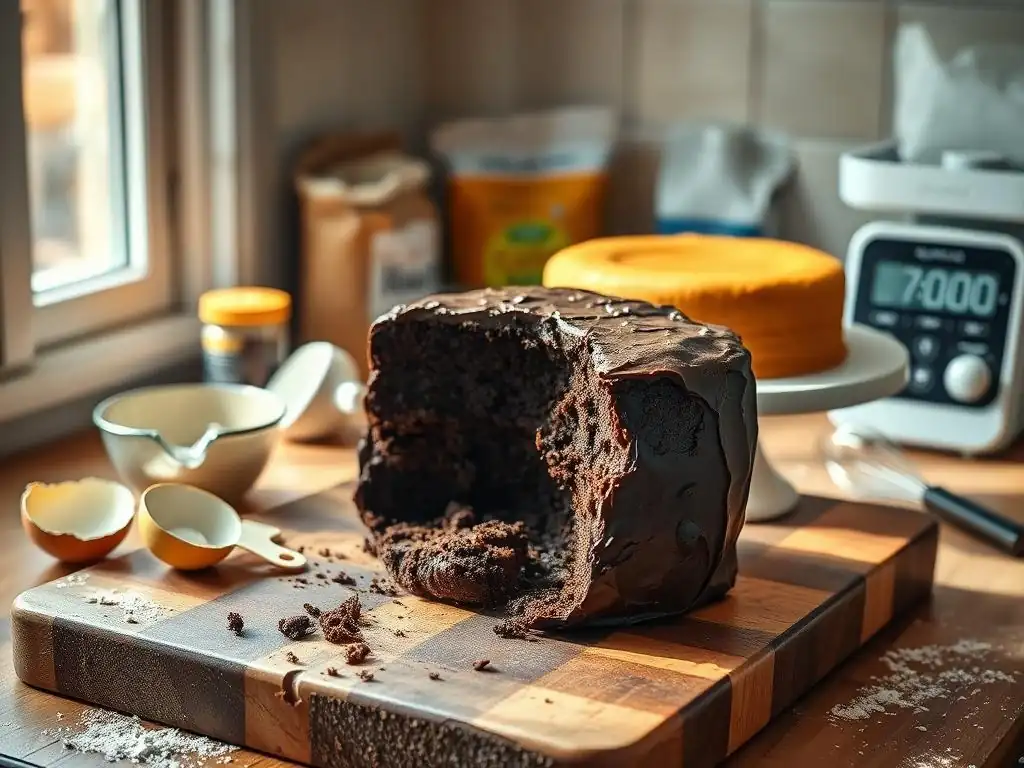
Welcome to BakeWithEase, your haven for baking bliss! Ever wondered why your cakes are falling flat when baking at higher altitudes? You're not alone! Dive into our latest article to uncover the secrets behind high altitude cake sinking and discover practical, foolproof methods to achieve perfectly risen, delectable cakes, no matter where you are. Ready to conquer the mountain of baking challenges? Let's get started!
- Why Cakes Sink at High Altitude (And How to Fix It) - BakeWithEase
- Understanding High Altitude Baking Challenges
- Identifying the Causes of High Altitude Cake Sinking
- High Altitude Cake Adjustment Techniques: Preventing Sinking
- High Altitude Cake Baking: Step-by-Step Adjustment Guide
- Troubleshooting Common High Altitude Cake Problems
- High Altitude Cake Recipes: Examples and Adaptations
- Essential Tools and Equipment for High Altitude Baking Success
- Mastering High Altitude Cake Baking: Key Takeaways
-
Frequently Asked Questions
- Why do cakes sink at high altitude?
- What's the most common adjustment to baking recipes at high altitude?
- How does humidity affect cake baking at high altitude?
- Can oven temperature impact high altitude cake sinking?
- Besides adjusting ingredients, what else can I do to prevent my cake from sinking at high altitude?
- Final Reflection: Rising Above the Challenges of High-Altitude Baking
- Unlock Your High-Altitude Baking Secrets!
Why Cakes Sink at High Altitude (And How to Fix It) - BakeWithEase
Understanding High Altitude Baking Challenges
Baking at high altitude presents unique challenges compared to sea level. As you ascend, the atmospheric pressure decreases, and this fundamental change significantly impacts how ingredients behave during the baking process. Understanding these differences is the first step to preventing common issues like high altitude cake sinking. It's not just about lower air pressure; water boils at a lower temperature, and gases expand more readily, all of which play a crucial role in the success or failure of your baked goods.
Successfully adapting your favorite recipes for higher elevations requires a grasp of the underlying science. While frustrating at first, learning these adjustments opens up a world of delicious possibilities, ensuring your cakes rise beautifully and maintain their structure, delivering that perfect crumb you crave. BakeWithEase is here to guide you through mastering these high altitude baking adjustments.
The Science Behind Cake Sinking at High Altitudes
At sea level, atmospheric pressure is relatively high, exerting a certain force on everything, including your cake batter. As altitude increases, this pressure drops. For instance, at 5,000 feet above sea level, the atmospheric pressure is roughly 12.2 psi, compared to 14.7 psi at sea level – a significant reduction of about 17%. This lower pressure allows gases within your batter, primarily carbon dioxide produced by leavening agents like baking powder or soda, to expand much more rapidly and to a greater extent.
Simultaneously, water boils at a lower temperature at higher altitudes. At sea level, water boils at 212°F (100°C), but at 5,000 feet, it boils at approximately 203°F (95°C), and at 7,500 feet, it's closer to 198°F (92°C). This means moisture evaporates faster from your cake batter during baking. The combination of rapid gas expansion and accelerated moisture loss before the cake's structure is fully set leads to the common problem of high altitude cake sinking. The cake rises too quickly, the moisture evaporates too fast, and the weakened structure collapses under its own weight.
How Altitude Affects Cake Recipes
The standard cake recipes designed for sea level assume a specific atmospheric pressure and boiling point of water. When you bake at high altitude without adjustments, these assumptions are invalidated, leading to imbalances in the recipe's delicate structure. The ingredients that provide lift, structure, and moisture behave differently, throwing off the intended chemical reactions and physical changes.
For example, the amount of leavening agent that works perfectly at sea level will likely produce too much gas at high altitude, causing the cake to over-expand prematurely. Similarly, the amount of liquid that provides the right moisture balance at sea level might be too much at altitude because less water stays in the batter before evaporating.
Flour, which provides structure, might need to be increased to support the extra lift and compensate for the weaker gluten development in drier conditions. These factors combined are why simply following a sea-level recipe often results in high altitude cake sinking or a dry, crumbly texture.
Identifying the Causes of High Altitude Cake Sinking
Pinpointing the exact reason for high altitude cake sinking can sometimes feel like detective work. However, several common culprits are frequently responsible. By understanding these specific issues, you can better target your adjustments and prevent future baking failures. It's often a combination of factors rather than a single problem, but addressing the most prominent issues is key to success.
Let's explore the primary reasons why cakes struggle at higher elevations and how these factors contribute to the frustrating phenomenon of a collapsed or sunken cake. Identifying the cause is the critical first step in implementing effective high altitude cake adjustments.
Too Much Leavening Agent: A Common Culprit
One of the most frequent causes of high altitude cake sinking is the use of too much leavening agent. At lower atmospheric pressure, the gases produced by baking powder or baking soda expand more dramatically. Imagine blowing up a balloon at sea level versus doing the same on a high mountain peak; the balloon will inflate more easily and reach a larger size with the same amount of air at the higher elevation.
In your cake batter, this excessive expansion happens before the proteins in the flour (gluten) and eggs have coagulated and set to form a stable structure. The batter stretches too thin and rises too high, too fast. Once the gases cool and contract, or if the fragile structure can't support itself, the cake collapses in the center, resulting in that tell-tale sunken look. A standard recipe might call for 1.5 teaspoons of baking powder per cup of flour; at high altitude, this could be excessive and contribute directly to high altitude cake sinking.
Insufficient Structure in Your Cake Batter
Another major factor contributing to high altitude cake sinking is inadequate structural support within the batter. The primary structural components in most cakes are flour (specifically the gluten developed from wheat flour) and eggs. At high altitude, the reduced moisture and faster evaporation can hinder gluten development, making the structure weaker.
Furthermore, if the ratio of structural ingredients (flour, eggs) to tenderizing ingredients (fat, sugar) is off for the altitude, the cake won't be strong enough to hold the expanded gases. A recipe with a high proportion of sugar or fat might be extra prone to collapse. Think of it like building a house with weak walls; even if the foundation (leavening) is strong, the structure will fail under pressure. Ensuring enough flour and egg relative to other ingredients is crucial for preventing high altitude cake sinking.
Over-Hydration in High Altitude Cake Baking
It might seem counterintuitive given the faster evaporation, but standard liquid amounts in sea-level recipes can actually lead to over-hydration issues at high altitude. Because water boils at a lower temperature and evaporates more quickly, the proportion of liquid that remains in the batter during the initial crucial setting phase is lower than at sea level. This accelerated moisture loss, combined with the rapid gas expansion, can result in a batter that is effectively too wet for its weakened structure during the early stages of baking.
Excess moisture can also dilute the structural components and prolong the time it takes for the cake to set. If the cake remains "wet" or unset for too long while the leavening gases are rapidly expanding, it increases the likelihood of collapse. Adapting the liquid content is a key high altitude cake adjustment to prevent this form of high altitude cake sinking.
Incorrect Oven Temperature and Baking Time
Oven temperature and baking time also play a significant role in high altitude cake sinking. If the oven temperature is too low, the cake will take longer to set, giving the rapidly expanding gases more time to overstretch the weak structure before it solidifies. This prolonged baking time also increases moisture loss, potentially leading to a dry cake even if it doesn't sink.
Conversely, an oven that runs too hot can cause the outside of the cake to set too quickly while the inside is still liquid and expanding. This can lead to cracking or a dome that collapses as the inside finishes baking. Additionally, faster evaporation at high altitude means cakes often bake more quickly than at sea level.
Using the standard sea-level baking time without monitoring can result in over-baking or, if pulled too soon because it looks done on the outside but is still raw inside, can contribute to high altitude cake sinking upon cooling. Using an oven thermometer to ensure your oven is calibrated is essential for accurate baking at any altitude.
High Altitude Cake Adjustment Techniques: Preventing Sinking

Now that we understand why cakes sink at high altitude, let's explore the practical adjustments you can make to prevent it. These techniques involve tweaking the standard sea-level recipe to compensate for the lower pressure and faster evaporation. Remember that these are general guidelines and finding the perfect balance for your specific altitude and recipe may require some experimentation.
Mastering these high altitude cake adjustments is the key to consistent baking success. By modifying leavening, flour, liquid, and baking conditions, you can effectively counteract the forces that lead to high altitude cake sinking.
Reducing Leavening Agents for High Altitude Cakes
Reducing the amount of chemical leaveners (baking powder and baking soda) is often the first and most crucial adjustment when baking cakes at high altitude. Since gases expand more readily, you simply don't need as much leavening to achieve the desired rise. Using too much will inevitably lead to over-expansion and collapse.
A common starting point for altitudes between 3,000 and 5,000 feet is to reduce the baking powder by 10-25% of the amount called for in the sea-level recipe. For every teaspoon of baking powder, you might reduce it by 1/8 to 1/4 teaspoon. At altitudes above 5,000 feet, you might need to reduce it even further, potentially by 25-50%. For baking soda, the reduction is often slightly less aggressive. This reduction helps control the rate of rise, allowing the cake's structure more time to set before full expansion occurs, thus preventing high altitude cake sinking.
How to Measure Leavening Agents Accurately
Accurate measurement is paramount when adjusting leavening agents, as even a slight miscalculation can impact the outcome. Use standard measuring spoons and level off the excess with a straight edge, like the back of a knife. Avoid scooping directly from the container with the measuring spoon, as this can compact the powder or soda, leading to an over-measurement.
For small adjustments, like reducing by an eighth of a teaspoon, using a set of accurate smaller measuring spoons (like those that include 1/8 tsp) is helpful. If you need to measure a very small amount, say less than 1/4 teaspoon, consider using a scale, although this is less common for leavening agents in home baking unless following a highly precise recipe. Precision here directly contributes to preventing high altitude cake sinking.
Increasing Flour for Structure and Stability
Increasing the amount of flour provides additional protein (gluten) and starch, strengthening the cake's structure to better support the expanded gases and resist collapse. It helps build a sturdier framework that can withstand the unique conditions of high altitude baking.
For every cup of flour in the original recipe, you might need to add 1 to 2 tablespoons of additional flour at altitudes above 3,000 feet. This adjustment helps create a stronger matrix as the cake bakes. The added flour also helps absorb some of the excess moisture that doesn't evaporate as quickly as the rest, contributing to a better texture and preventing high altitude cake sinking caused by structural weakness.
Choosing the Right Flour for High Altitude Baking
The type of flour matters when making high altitude cake adjustments. All-purpose flour is standard for many cakes and a good starting point. Its moderate protein content (around 10-12%) allows for sufficient gluten development to provide structure without making the cake tough.
Cake flour, which has a lower protein content (about 6-8%), produces a very tender crumb but might require slightly more adjustment or be less suitable for recipes already prone to collapse at altitude unless compensated for heavily in other areas. Bread flour, with its high protein content (12-14%+), can make cakes tough and is generally not recommended for standard cake recipes, even at high altitude. Stick with all-purpose flour for most adjustments, or use a blend if the recipe specifically calls for cake flour and you need to increase structure.
Adjusting Liquid Ratios to Prevent Cake Collapse
Reducing the liquid content is another critical step to prevent high altitude cake sinking. Since moisture evaporates faster at altitude, less liquid is needed initially to achieve the correct batter consistency and moisture balance in the finished cake. Too much liquid can weaken the structure and prolong baking time, increasing the risk of collapse.
A common guideline is to reduce the total liquid (milk, water, buttermilk, etc.) by 1 to 3 tablespoons per cup of liquid called for in the original recipe. Start with a smaller reduction (1-2 tablespoons) at moderate altitudes (3,000-5,000 feet) and increase the reduction (up to 3 tablespoons or slightly more) at higher elevations (above 5,000 feet). This adjustment helps the cake set more quickly, stabilizing the structure before the rapid gas expansion causes issues.
Precise Liquid Measurements for High Altitude
Accurate measurement of liquids is essential for successful high altitude cake adjustments. Always use liquid measuring cups placed on a flat surface and read the measurement at eye level. Avoid using dry measuring cups for liquids, as this can lead to inaccurate amounts.
When making small reductions, carefully pour the liquid out or use measuring spoons to remove the excess amount. For example, if you need to reduce by 2 tablespoons from 1 cup (16 tablespoons), measure 1 cup and then remove 2 tablespoons. Precision in this step helps control the batter consistency and is vital in preventing high altitude cake sinking.
Optimizing Oven Temperature and Baking Time at High Altitude
Adjusting oven temperature and baking time is the final piece of the puzzle in preventing high altitude cake sinking. A slightly higher oven temperature is often recommended. This helps the cake set faster before the leavening gases have a chance to over-expand and the moisture evaporates excessively.
Increasing the oven temperature by 15-25°F (8-14°C) above the sea-level recommendation is a common starting point for altitudes above 3,000 feet. For instance, if a recipe calls for 350°F (175°C), try 365°F or 375°F (185°C or 190°C). However, watch the cake closely, as the higher temperature combined with faster evaporation means it will likely bake in less time than specified in the original recipe. Start checking for doneness 5-10 minutes earlier than the recipe suggests.
Calibrating Your Oven for Accurate Baking
An accurately calibrated oven is crucial for consistent baking results at any altitude, but especially when making high altitude cake adjustments. Oven thermostats can be notoriously inaccurate, sometimes being off by 25°F or more. This inaccuracy can severely impact baking time and the cake's structure, contributing to high altitude cake sinking.
Use an inexpensive oven thermometer placed in the center of your oven to check the actual temperature. Compare it to the setting on your oven dial. If there's a significant discrepancy, you'll need to adjust your dial setting accordingly. For example, if your oven reads 325°F when set to 350°F, you'll need to set it to 375°F to achieve an actual temperature of 350°F. Knowing your oven's true temperature allows you to make precise adjustments based on high altitude recommendations.
High Altitude Cake Baking: Step-by-Step Adjustment Guide
Making high altitude cake adjustments can seem daunting, but breaking it down into steps makes it manageable. This guide provides a general sequence for modifying a standard sea-level cake recipe. Remember that these are starting points, and you may need to fine-tune based on your specific altitude and recipe.
Follow these steps to adapt your favorite cake recipes and prevent high altitude cake sinking. Keep notes on your adjustments and results – this is key to perfecting your high altitude baking skills.
Step 1: Reduce Baking Powder or Baking Soda
Begin by reducing the chemical leavening agent(s) in your recipe.
- For altitudes 3,000-5,000 feet: Reduce baking powder by 1/8 to 1/4 teaspoon per teaspoon. Reduce baking soda slightly less, if used.
- For altitudes above 5,000 feet: Reduce baking powder by 1/4 to 1/2 teaspoon per teaspoon. Adjust baking soda proportionally.
Example: A recipe calling for 2 teaspoons of baking powder at 5,000 feet might be adjusted to 1.5 to 1.75 teaspoons.
Step 2: Increase Flour Proportion
Next, add a small amount of extra flour to strengthen the cake's structure.
- Add 1 to 2 tablespoons of all-purpose flour per cup of flour called for in the original recipe.
- Sift the added flour with the rest of the dry ingredients for even distribution.
Example: If the recipe uses 2 cups of flour, add 2 to 4 tablespoons of extra flour.
Step 3: Decrease Liquid Content
Reduce the total amount of liquid called for in the recipe.
- Decrease liquids (milk, water, etc.) by 1 to 3 tablespoons per cup of liquid in the original recipe.
- Start with a smaller reduction at lower high altitudes and increase at higher elevations.
Example: A recipe with 1 cup of milk might be reduced to 1 cup minus 2 tablespoons at 6,000 feet.
Step 4: Increase Oven Temperature Slightly

Preheat your oven to a slightly higher temperature than specified in the original recipe.
- Increase the oven temperature by 15-25°F (8-14°C).
- Ensure your oven is accurately calibrated using an oven thermometer.
Example: If the recipe calls for 350°F (175°C), set your oven to 365°F or 375°F (185°C or 190°C).
Step 5: Shorten Baking Time (Watch Carefully!)
Be prepared for the cake to bake faster.
- Start checking for doneness 5-10 minutes before the minimum baking time listed in the original recipe.
- Use the toothpick test: insert a toothpick into the center; it should come out with moist crumbs, not wet batter.
Example: A cake with a baking time of 30-35 minutes might be ready in 25-30 minutes at high altitude. Do not rely solely on visual cues.
Troubleshooting Common High Altitude Cake Problems
Even with adjustments, you might encounter issues. Troubleshooting is part of the high altitude baking journey. Don't get discouraged! Understanding common problems helps you refine your adjustments for next time and ultimately prevent high altitude cake sinking and other issues.
Here are a few frequent problems faced by high altitude bakers and potential reasons or solutions.
My Cake Rose Beautifully, Then Sank: What Went Wrong?
This is the classic sign of high altitude cake sinking. The most likely culprit is too much leavening agent causing the cake to rise too quickly before the structure is set. The rapid expansion overstretches the gluten and egg proteins, and as the gases cool, the fragile structure collapses.
- Possible Causes:
- Leavening reduction was insufficient for your altitude.
- Not enough flour or egg to provide adequate structure.
- Oven temperature too low, causing slow setting.
- Opening the oven door too early in the baking process.
- Solutions:
- Increase the reduction of baking powder/soda in your next attempt.
- Consider adding a bit more flour or egg (if appropriate for the recipe type).
- Ensure your oven temperature is correct and slightly increased.
- Avoid opening the oven door during the first 2/3 of the baking time.
The Cake is Dry Despite Adjustments: Possible Causes
Sometimes, despite preventing high altitude cake sinking, the cake turns out dry and dense. This often indicates that too much moisture was lost during baking or that the adjustments overcompensated for the altitude effects.
- Possible Causes:
- Too much flour added.
- Too much liquid removed.
- Baking time was too long.
- Oven temperature was too high.
- Not enough fat or sugar in the recipe (these contribute to moisture).
- Solutions:
- Reduce the amount of added flour slightly.
- Reduce the amount of liquid removed slightly.
- Check the cake earlier next time and reduce baking time.
- Double-check your oven temperature calibration.
- Consider recipes that are naturally higher in fat or sugar, or slightly increase these if appropriate (though this can impact structure).
Uneven Baking at High Altitude: Solutions and Tips
Uneven baking, where the edges are done but the center is still raw, or one side bakes faster than the other, can also occur. While not always leading to high altitude cake sinking, it affects the final quality.
- Possible Causes:
- Oven hot spots (common in many ovens).
- Cake pan placed too close to oven walls or heating elements.
- Batter unevenly distributed in the pan.
- Using dark or warped pans that absorb/distribute heat poorly.
- Solutions:
- Rotate the cake pan halfway through the baking time (e.g., after 15-20 minutes).
- Ensure the cake pan is centered in the oven and not touching the sides.
- Use light-colored, straight-sided pans for more even heat distribution.
- Ensure batter is evenly spread in the pan before baking.
High Altitude Cake Recipes: Examples and Adaptations
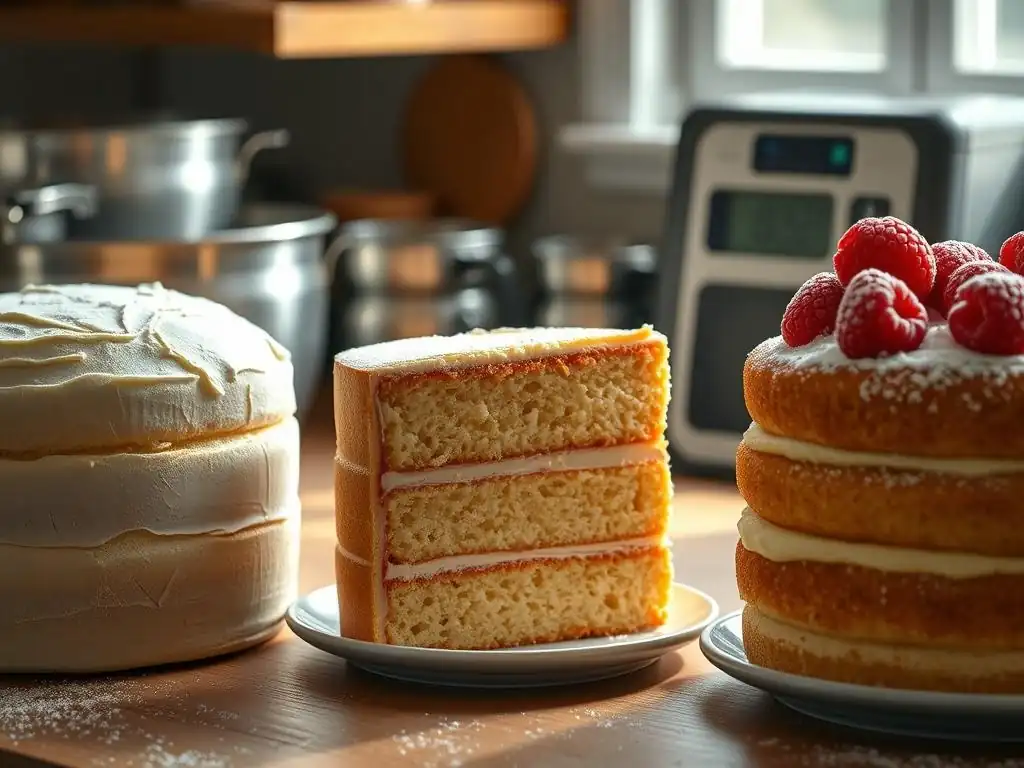
Adapting a standard sea-level recipe is a great way to master high altitude baking adjustments. Let's look at how you might apply the principles to a couple of common cake types. These are simplified examples to illustrate the adjustment process and prevent high altitude cake sinking in your own kitchen.
Remember, the exact adjustments will vary based on your specific altitude and the nuances of the original recipe. Treat these as illustrative examples of how to apply the step-by-step guide.
High Altitude Chocolate Cake Recipe (Example Adaptation)
Imagine a sea-level chocolate cake recipe that calls for:
- 2 cups All-Purpose Flour
- 1.5 tsp Baking Soda
- 1/2 tsp Baking Powder
- 1.5 cups Buttermilk
- High Altitude Adjustment (approx. 5,000 - 7,000 ft):
- Leavening: Reduce Baking Soda to 1 tsp (reduced by 1/3), reduce Baking Powder to 1/4 tsp (reduced by 1/2). The higher reduction in baking powder accounts for its double-acting nature.
- Flour: Increase All-Purpose Flour to 2 cups + 3 tbsp. (Added 1.5 tbsp per cup).
- Liquid: Reduce Buttermilk to 1.5 cups minus 3 tbsp (Reduced by 2 tbsp per cup).
- Oven Temp: Increase from 350°F (175°C) to 370°F (185°C).
- Bake Time: Start checking at 25 minutes if original time was 30-35 minutes.
This adaptation aims to reduce excessive rise from leavening, add structure with more flour, control moisture with less buttermilk, and speed up setting time with a higher temperature, all to combat high altitude cake sinking.
High Altitude Vanilla Cake Recipe (Example Adaptation)
Consider a sea-level vanilla cake recipe using the creaming method:
- 3 cups Cake Flour
- 2 tsp Baking Powder
- 1 cup Milk
- 4 Eggs
- High Altitude Adjustment (approx. 3,000 - 5,000 ft):
- Leavening: Reduce Baking Powder to 1.5 tsp (reduced by 1/4 tsp per tsp, total 0.5 tsp reduction).
- Flour: Since this recipe uses cake flour, you might increase it slightly less or add a tablespoon or two of AP flour for structure. Let's try adding 2 tbsp AP flour to the cake flour amount, making it 3 cups Cake Flour + 2 tbsp AP Flour.
- Liquid: Reduce Milk to 1 cup minus 2 tbsp (Reduced by 2 tbsp per cup).
- Eggs: Eggs provide structure; sometimes adding an extra egg white can help, but let's stick to the base adjustments first.
- Oven Temp: Increase from 350°F (175°C) to 365°F (185°C).
- Bake Time: Start checking 5-7 minutes early.
This adaptation addresses the lower pressure and faster evaporation for a lighter cake, focusing on reducing leavening and liquid while slightly boosting structure, aiming to prevent high altitude cake sinking while maintaining tenderness.
Essential Tools and Equipment for High Altitude Baking Success
Having the right tools can make a significant difference in your high altitude baking endeavors. Precision and consistency are key when making adjustments to prevent high altitude cake sinking. Investing in a few essential items will set you up for greater success.
Here are some tools that are particularly helpful when baking at higher elevations.
Accurate Measuring Cups and Spoons
As highlighted in the adjustment steps, precise measurement of ingredients, especially leavening agents, flour, and liquids, is critical. Using a reliable set of standard dry measuring cups (for flour, sugar, etc.) and liquid measuring cups (for milk, water, oil) is non-negotiable.
Ensuring your measuring spoons are accurate is also vital, particularly for small adjustments to baking powder or soda. Look for sets that are clearly marked and durable. Consistent, accurate measurements are the foundation of successful high altitude cake adjustments and help avoid issues like high altitude cake sinking.
Oven Thermometer for Precise Temperature Control
Given that oven temperatures can vary significantly from the dial setting, an inexpensive oven thermometer is arguably the most important tool for high altitude baking. As discussed, slightly increasing the oven temperature is a common adjustment, and you need to know the actual temperature inside your oven to make this adjustment effectively.
Place the thermometer in the center of your oven rack to get the most accurate reading. Check it periodically as the oven preheats and during baking. This ensures you are baking at the intended temperature, which helps the cake set properly and prevents problems like high altitude cake sinking or dry texture caused by inaccurate heat.
Quality Baking Pans for Even Heat Distribution
The type and quality of your baking pans affect how heat is absorbed and distributed, which impacts how the cake bakes and sets. Light-colored, heavy-gauge metal pans are generally recommended for even heat distribution. Darker pans absorb more heat and can cause edges to bake too quickly, potentially leading to uneven rising or a dome that collapses.
Ensure your pans are the correct size specified in the recipe and are not warped. Using parchment paper on the bottom can also help with even baking and prevent sticking. Consistent heat transfer from a quality pan contributes to a stable structure and helps prevent high altitude cake sinking.
Mastering High Altitude Cake Baking: Key Takeaways
Baking delicious, perfectly risen cakes at high altitude is absolutely achievable! It requires understanding the science behind the challenges and being willing to make specific adjustments to your recipes. While it might take a few tries to find the perfect balance for your altitude and oven, the results are well worth the effort.
Let's recap the essential points for preventing high altitude cake sinking and achieving baking success at elevation.
High Altitude Baking Adjustments: A Summary
Successfully adapting to high altitude conditions involves a multi-pronged approach:
- Reduce leavening agents (baking powder/soda) to control gas expansion.
- Increase flour slightly to strengthen the cake's structure.
- Decrease liquids to account for faster evaporation and ensure proper consistency.
- Increase oven temperature slightly to help the cake set faster.
- Shorten baking time and monitor for doneness earlier.
These adjustments work together to counteract the effects of lower atmospheric pressure and faster moisture loss, significantly reducing the likelihood of high altitude cake sinking.
Tips for Consistent High Altitude Cake Results
Consistency comes from careful execution and detailed observation. Here are some tips:
- Use accurate measuring tools and measure ingredients carefully every time.
- Always use an oven thermometer to ensure accurate temperature.
- Keep notes on your adjustments for each recipe and the results. This helps you learn what works at your specific altitude.
- Start with simple, reliable recipes before attempting complex ones.
- Don't overmix the batter after adding dry ingredients; this can develop too much gluten and make the cake tough, which can also affect rise and structure.
- Allow cakes to cool properly in the pan for the time specified before inverting. Sudden changes in temperature or handling can sometimes contribute to collapse.
BakeWithEase: Your Partner in High Altitude Baking Mastery
At BakeWithEase, we're dedicated to helping you overcome baking challenges, no matter your location. Mastering high altitude cake baking is a skill that builds confidence and expands your baking repertoire. By applying the principles and adjustments discussed here, you are well on your way to consistently baking beautiful, delicious cakes that don't sink.
Keep experimenting, keep learning, and don't be afraid of trial and error. Every bake is an opportunity to improve. With the right knowledge and tools, you can conquer high altitude cake sinking and enjoy all your favorite baked treats. Happy baking!
Frequently Asked Questions
Why do cakes sink at high altitude?
At higher altitudes, there is less air pressure. This causes gases in the cake batter to expand more rapidly during baking. This can lead to the cake rising too quickly and then collapsing under its own weight, resulting in a sunken center.
What's the most common adjustment to baking recipes at high altitude?
The most common adjustment is to reduce the amount of leavening agent (baking powder or baking soda). This prevents the cake from rising too quickly and then collapsing.
How does humidity affect cake baking at high altitude?
Lower humidity at high altitude can cause excessive moisture loss during baking, leading to a dry and potentially sunken cake. You may need to increase the liquid in your recipe slightly.
Can oven temperature impact high altitude cake sinking?
Yes, a higher oven temperature can exacerbate the sinking problem by causing the cake to rise too rapidly. Reducing the oven temperature slightly can help bake the cake more evenly and prevent collapse.
Besides adjusting ingredients, what else can I do to prevent my cake from sinking at high altitude?
Ensure accurate oven temperature with an oven thermometer and avoid opening the oven door frequently. This helps maintain a consistent baking environment and prevents temperature fluctuations that can contribute to sinking.
Final Reflection: Rising Above the Challenges of High-Altitude Baking
The struggle is real: baking at high altitude is notoriously tricky, and a sunken cake is a baker's worst nightmare. But understanding the science behind why cakes sink at higher elevations empowers us to conquer this challenge and achieve consistently perfect results, no matter the elevation. This article has explored the crucial role of reduced air pressure and boiling point in altering baking chemistry, offering practical solutions to adjust recipes and techniques for success.
The impact of altitude on baking extends beyond just a frustrating culinary experience; it speaks to the ingenuity and adaptability of human endeavor. We've adapted recipes and techniques for centuries, proving that even the most seemingly insurmountable challenges can be overcome with knowledge and a little experimentation. The only way to do great work is to love what you do.
- Steve Jobs. This applies perfectly to baking – the passion for creating something delicious fuels the determination to master even the most challenging aspects, like high-altitude baking.
Now, it's your turn. Consider the challenges you face in your own life, both big and small. Just as we've learned to adjust our baking for altitude, can you identify the adjustments needed to overcome your own obstacles? Embrace the process of learning and adapting, and remember that even the most seemingly impossible feats can be achieved with the right knowledge and a dash of perseverance. Go forth and bake (and live!) triumphantly!
Unlock Your High-Altitude Baking Secrets!
Thanks for joining us on this baking adventure! We hope you now feel confident tackling those tricky high-altitude challenges. Ready to take your baking to new heights?
- Master your high-altitude baking: Start experimenting with the adjustments we discussed – you'll be amazed at the results! Try substituting the ingredients in your favorite cake recipe today!
- Share your high-altitude baking triumphs (or hilarious fails!) with us on social media using #BakeWithEaseHighAltitude. Let's build a supportive community!
- Explore our other high-altitude baking resources on BakeWithEase.com for even more tips and recipes.
So, what delicious high-altitude creation are you going to tackle first?