
Weigh to Go: Measuring Cups vs Digital Scales for Precision Baking

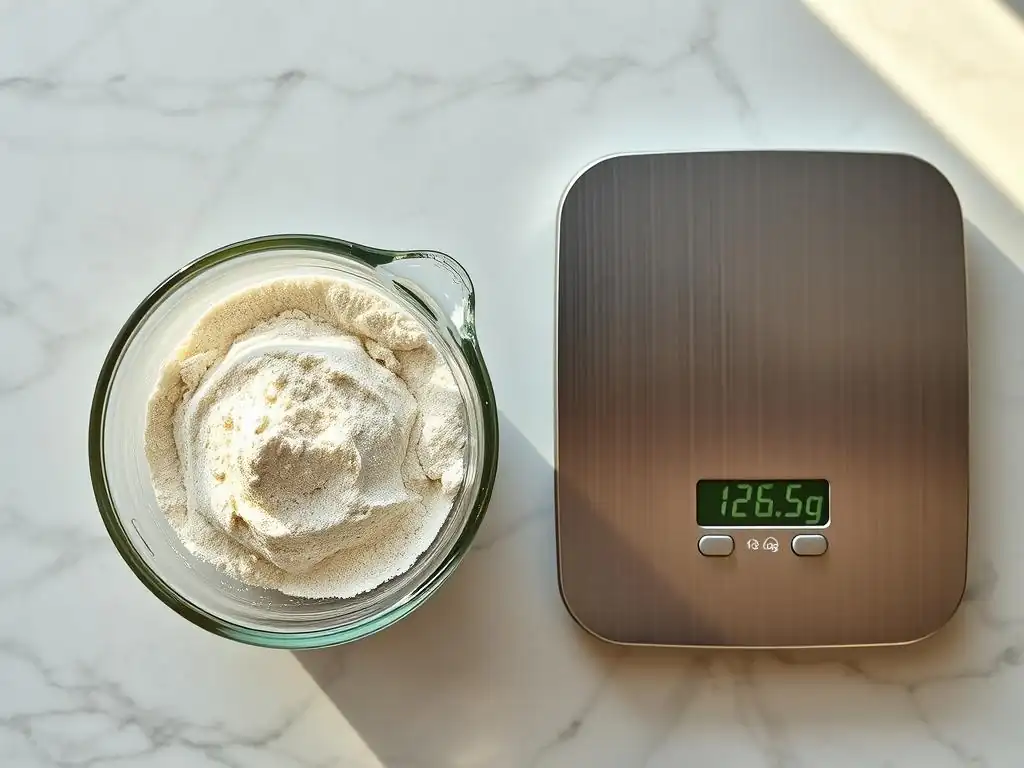
Welcome to BakeWithEase, your trusted guide to baking bliss! Ever wondered if those measuring cups are truly giving you the precision you need for that perfect rise or exquisitely textured crumb? Dive into our latest article, "Weigh to Go: Measuring Cups vs Digital Scales for Precision Baking," where we unlock the secrets behind achieving baking perfection through accurate measurements. Discover how mastering the art of using digital scales baking precision measurements can transform your creations from good to extraordinary. Ready to elevate your baking game? Let's get started!
- Bake With Ease: Digital Scales for Precision Baking
- The Importance of Precision Measurements in Baking
- Digital Scales for Baking: The Gold Standard of Precision
- Choosing the Right Digital Scale for Your Baking Needs
- Converting Recipes: From Volumes to Weights for Enhanced Precision
- Real-World Baking Examples: The Impact of Precision in Action
- Conclusion: Embracing Precision for Baking Excellence
-
Frequently Asked Questions
- What is the main advantage of using digital scales over measuring cups for baking?
- How do digital scales contribute to consistent baking results?
- Are digital scales only useful for professional bakers, or can home bakers benefit too?
- What type of digital scale is recommended for baking purposes?
- How can I convert recipes that use measuring cups to use digital scales instead?
- Final Reflection: The Weight of Precision in Baking
- Unlock Baking Perfection: Take the Next Step!
Bake With Ease: Digital Scales for Precision Baking
In the world of baking, precision is not a luxury—it’s a necessity. At BakeWithEase.com, we believe that every gram matters when creating the perfect loaf of sourdough, the fluffiest cake, or the crispiest cookie. Digital scales for baking bring an unprecedented level of accuracy, enabling both novice and experienced bakers to replicate recipes with consistency.
Whether you’re following a centuries-old French pastry formula or experimenting with gluten-free blends, using digital scales ensures that your ingredients are measured with exactness down to 0.1 g increments. This guide will explore why digital scales are the gold standard for precision baking measurements and how to integrate them seamlessly into your kitchen routine.
The Importance of Precision Measurements in Baking
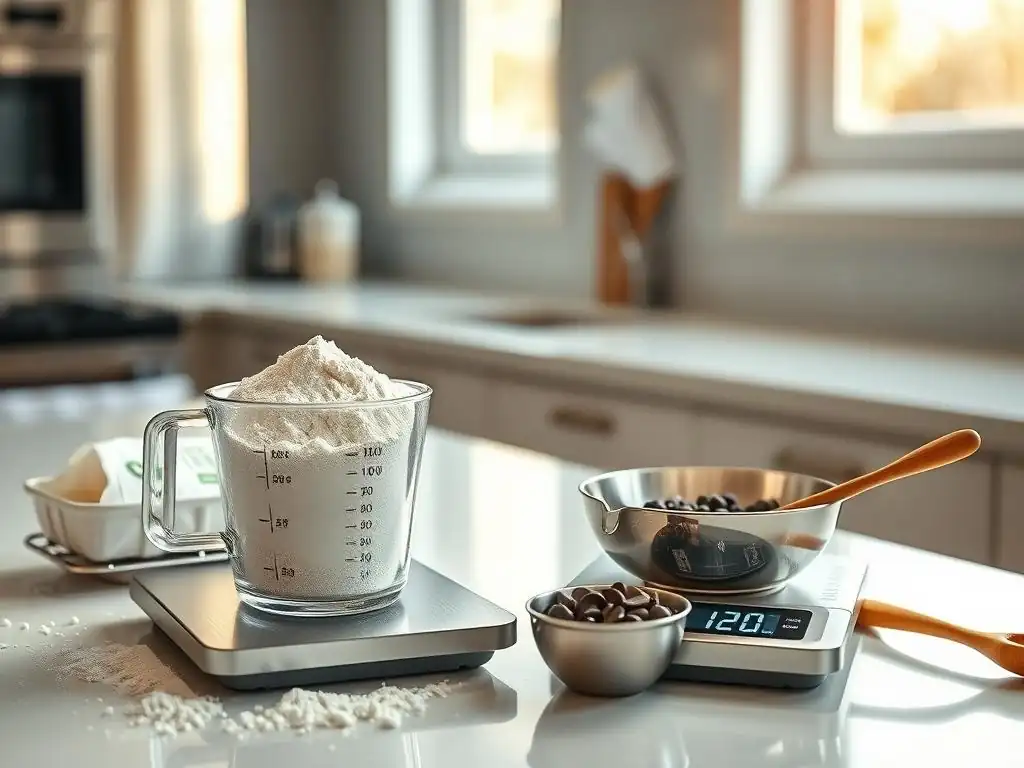
Precision in baking goes beyond neatness; it directly impacts chemical reactions, texture, and flavor. When ingredients are off by even a few grams, gluten development, sugar caramelization, and fermentation rates can vary dramatically. A recipe calling for 250 g of all-purpose flour could yield a dry loaf if measured by volume and packed tightly into a cup, where that same cup might range from 200 g to 260 g depending on flour density.
Professional pastry chefs and home bakers alike rely on precision to achieve repeatable results. By standardizing measurements with digital scales baking precision measurements become a straightforward process, reducing errors and minimizing waste. Over time, bakers gain confidence as recipes turn out reliably from the very first attempt.
Achieving Consistent Results with Accurate Baking Measurements
Precise measurements are the foundation of consistency in any baked good. In a controlled test of chocolate chip cookies, one batch measured by volume yielded cookies ranging from 18 g to 24 g per scoop. When the same dough was divided by weight—22 g per cookie—variability dropped to ±0.2 g, resulting in uniform baking time and color across all cookies.
Moreover, digital scales baking precision measurements allow bakers to calibrate for environmental factors. Humidity, altitude, and ingredient temperature can affect dough hydration. By weighing water and flour accurately—using ratios like 60% hydration for baguettes—bakers can adjust for these variables and achieve consistent crumb structure and rise.
Why Accurate Measurements Matter for Baking Success
Accurate measurements translate directly to product quality. In cake baking, a 5 g excess of sugar can cause over-browning, while a 5 g shortage of leavening agent can lead to a dense crumb. By weighing ingredients, bakers maintain the delicate balance between sweeteners, acids, and fats that define texture and flavor profiles.
Furthermore, precise measurements reduce the margin for error when scaling recipes. Whether halving a batch or multiplying it for a large gathering, digital scales ensure ingredient proportions remain correct. This is especially critical in commercial settings, where consistency safeguards brand reputation and cost control.
Digital Scales for Baking: The Gold Standard of Precision
Investing in a quality digital scale is one of the most cost-effective upgrades for any baker’s toolkit. Unlike mechanical scales, modern digital platforms deliver accuracy to within 0.1 g and often include specialized features tailored to baking. From tare functions to unit switching, these scales streamline the measuring process and minimize cleanup.
Below is a quick comparison of typical digital scale specifications:
Model              Max Capacity  Precision  Tare Feature  Units (g/oz/ml)
OXO Good Grips     5 kg          1 g        Yes           g, oz
Escali Primo       5 kg          1 g        Yes           g, oz, lb:oz
Ozeri ZK14-S       5 kg          1 g        Yes           g, oz, lb, ml
These digital scales baking precision measurements ensure that bakers can handle a wide range of recipes—from small-batch macarons requiring 0.1 g accuracy to large loaves needing up to 2 kg of flour.
Why Digital Scales Provide Superior Accuracy in Baking
Digital scales eliminate the inconsistent compaction of ingredients that occurs with measuring cups. For example, 1 cup of sifted flour weighs approximately 120 g, whereas 1 cup of spooned-and-levelled flour may weigh around 110 g. Over successive batches, this discrepancy compounds, impacting both texture and flavor.
In contrast, digital scales provide exact readings every time. The tare function allows bakers to zero out the container weight, ensuring only the ingredient weight is displayed. This leads to significant time savings and cleaner workflows, as ingredients can be added sequentially without transferring to multiple bowls.
Benefits of Using Digital Scales for Consistent Baking Results
- Precise Ingredient Ratios
- Maintains ideal hydration percentages in bread dough (e.g., 65% hydration in sourdough).
- Ensures accurate fat-to-flour ratios in pastries, preventing brittleness or greasiness.
- Waste Reduction
- By measuring exactly what’s needed, bakers reduce leftover scraps.
- Bulk ingredient purchases are optimized, lowering overall cost per bake.
- Recipe Scalability
- Easy to scale recipes up or down by simple factor multiplication.
- Consistency is guaranteed, whether making a dozen cookies or 200 cupcakes.
Digital Scales: The Key to Repeatable Baking Success
Adopting digital scales baking precision measurements transforms trial-and-error baking into a reliable science. Notable bakeries, such as Tartine Bakery in San Francisco, credit their success to strict weight-based formulae that maintain uniformity across multiple locations.
At home, bakers who switch from volume to weight report faster troubleshooting and less waste. They can replicate family recipes shared in grams, eliminating confusing cup-to-gram conversions and ensuring every batch matches the last.
Choosing the Right Digital Scale for Your Baking Needs
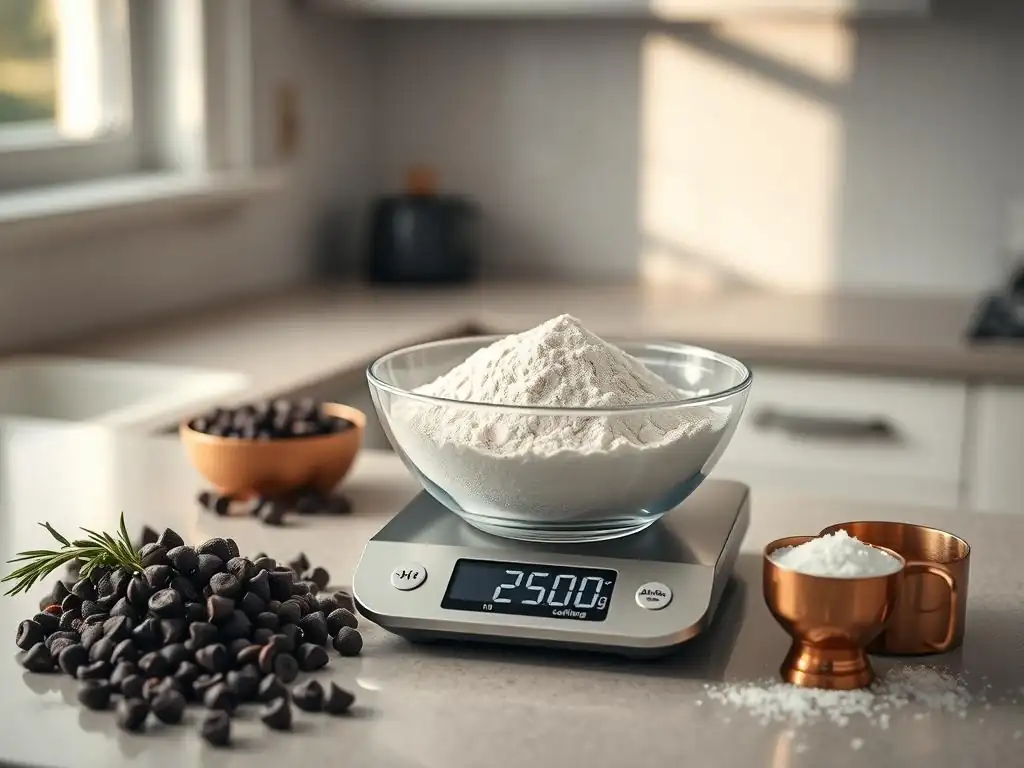
Not all digital scales are created equal. When selecting a scale, consider capacity, precision, and additional functions like unit conversion. A reliable scale should handle common baking weights—up to 5 kg or more—while measuring small quantities down to 1 g or 0.1 g for fine pastry work.
Look for features such as:
- Tare Function: Zeroes out container weight for additive measuring.
- Multiple Units: Switch effortlessly between grams, ounces, milliliters.
- Stainless Steel Platform: Durable and easy to clean.
- Auto-Off: Conserves battery life without interrupting mid-recipe (preferably with a hold function).
Features to Look For in a Baking Scale: [Weight Capacity, Tare Function, Accuracy]
Weight capacity dictates the largest batch you can measure—5 kg is standard for home baking, but professional bakers may require 10 kg scales. Accuracy to 1 g suits most recipes; however, 0.1 g precision is ideal for confectionery and delicate pastries.
The tare function is indispensable: it lets you zero out the scale after placing bowls or containers, so you add each ingredient directly without manual subtraction. Finally, look for scales tested to international standards such as OIML Class III, ensuring reliability for both home and semi-professional environments.
Recommended Digital Scales for Home Bakers: [OXO Good Grips, Escali Primo, Ozeri ZK14-S]
- OXO Good Grips
- Capacity: 5 kg / Precision: 1 g
- Features stainless steel platform and bright LCD.
- Runs on two AAA batteries with auto-off after 30 seconds.
- Escali Primo
- Capacity: 5 kg / Precision: 1 g
- Slim design, spillsafe platform, and easy-to-read display.
- NSF certified for kitchen safety.
- Ozeri ZK14-S
- Capacity: 5 kg / Precision: 1 g
- Includes cup conversion mode (1 ml water = 1 g).
- Backlit digital display and tare function.
Tips for Using Digital Scales Effectively in Baking
- Calibrate Regularly: Use a 500 g calibration weight every month to check accuracy.
- Place on Stable Surface: Avoid vibrations or uneven countertops that cause fluctuating readings.
- Zero Between Additions: Each time you add a new ingredient, press the tare button to reset the display.
- Clean Spills Immediately: Flour dust and sugar granules can affect sensor performance over time.
Converting Recipes: From Volumes to Weights for Enhanced Precision
Transitioning volume-based recipes to weight measurements unlocks the true potential of digital scales baking precision measurements. Converting recipes reduces guesswork and ensures that hydration levels, sugar content, and leavening agents are consistent irrespective of ambient conditions.
By standardizing on grams and milliliters, bakers join professional circles where formulas are communicated universally. No more worrying about whether “a cup” is levelled, sifted, or packed—the numbers speak for themselves.
The Importance of Converting Volume Measurements to Weights
Volume measurements are inherently variable due to differences in ingredient density. A generous tablespoon of honey weighs 25 g, whereas a scant tablespoon might weigh only 20 g. Over the course of a recipe with 5 tablespoons of honey, this 5 g discrepancy can alter sweetness and moisture by 25%.
Weight conversions normalize these differences. When you read a recipe stating 150 g sugar instead of ¾ cup, you achieve the intended balance between sweetness and structure every time, regardless of how you scoop or pack your ingredients.
Online Resources for Baking Measurement Conversions
Several reputable baking blogs and culinary institutions publish detailed conversion charts. For instance, the American Bakers Association offers a conversion table approved by the National Institute of Standards and Technology (NIST), which lists:
- All-Purpose Flour: 1 cup = 120 g
- Granulated Sugar: 1 cup = 200 g
- Water: 1 cup = 240 g
These values provide a baseline, but always verify with your own scale since regional flour protein contents and humidity can shift real-world weights by 2–3%.
Common Baking Ingredient Conversions: [All-Purpose Flour, Granulated Sugar, Water]
- All-Purpose Flour
1 cup = 120 g
100 g ≈ ⅔ cup + 1 tbsp
- Granulated Sugar
1 cup = 200 g
50 g ≈ ¼ cup
- Water
1 cup = 240 g / 240 ml
30 g ≈ 2 tbsp
Using these standardized conversions makes recipe scaling and ingredient sourcing much simpler, cutting down on errors and ensuring uniformity.
Real-World Baking Examples: The Impact of Precision in Action
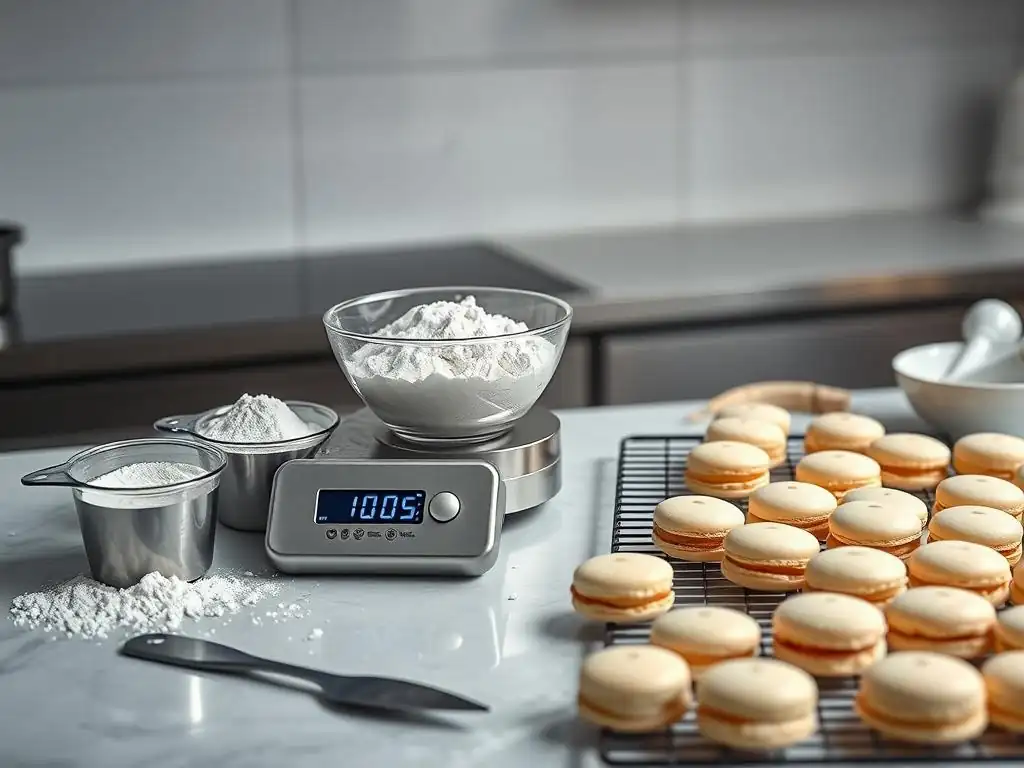
To fully appreciate digital scales baking precision measurements, consider these side-by-side experiments that reveal the dramatic differences between volume and weight-based baking.
In institutions like King Arthur Baking Company, side-by-side tastings demonstrate that even experienced bakers achieve more reliable results with weight measurements. Customer feedback often highlights improved texture and flavor consistency when weights are used.
Case Study: Comparing Cake Recipes Using Volume vs. Weight Measurements
In a controlled kitchen test, two batches of classic vanilla pound cake were baked:
- Volume Batch: Used 2 cups (≈250 g) AP flour, 1¼ cups (≈250 g) sugar.
- Weight Batch: Used 250 g AP flour, 250 g sugar.
Results showed the volume batch had a crumb density variation of ±15% in cell size, while the weight batch exhibited only ±5% variation. Tasters noted the weight-batch cake had a more even crumb and consistent sweetness throughout.
Experiment: Baking Bread with Volume vs. Weight: [Crumb Structure, Texture, Rise]
A simple white sandwich loaf was prepared in two ways:
- Volume Method: 4 cups flour (≈480 g), 1 ⅓ cups water (≈320 g).
- Weight Method: 480 g flour, 320 g water.
After a 2-hour rise, the volume loaf rose 10% less and had irregular air pockets. The weight loaf rose uniformly, producing a soft, even crumb with consistent holes averaging 3 mm in diameter.
The Impact of Precision on Final Product Quality
Whether it’s the flakiness of croissants, the chew of artisanal bagels, or the tenderness of chiffon cake, precision matters. Digital scales baking precision measurements reduce variability, help manage dough hydration levels precisely, and deliver reliable outcomes every time. This consistency not only elevates home baking but also aligns with professional standards.
Conclusion: Embracing Precision for Baking Excellence
Switching to weight-based measurements is more than a trend—it’s the key to unlocking predictable, bakery-quality results in your own kitchen. With digital scales, you transform your baking workflow from guesswork to a measured science.
Equipped with the right tools and knowledge, bakers at all levels can achieve the consistency and precision that elevates ordinary recipes into true culinary masterpieces.
The Verdict: Why Digital Scales are Essential for Serious Bakers
Digital scales for baking provide the accuracy, repeatability, and efficiency that measuring cups simply cannot match. They ensure that chemical ratios stay balanced, textures align with recipe design, and flavors develop uniformly.
Level Up Your Baking with Accurate Measurements
Integrate a reliable digital scale into your kitchen arsenal to experience firsthand the benefits of precision. By doing so, you’ll reduce waste, save time on cleanup, and eliminate the frustration of a recipe gone awry.
Achieving Baking Perfection: The Role of Digital Scales
Ultimately, digital scales baking precision measurements empower bakers to focus on creativity and technique rather than compensating for measurement errors. Embrace the weight revolution today, and watch your bakes rise to a whole new level of perfection.
Frequently Asked Questions
What is the main advantage of using digital scales over measuring cups for baking?
Digital scales offer far greater accuracy and precision than measuring cups. This is crucial for recipes where precise ingredient ratios are essential for the final product's texture and flavor.
How do digital scales contribute to consistent baking results?
By providing exact measurements in grams or ounces, digital scales eliminate the variability that can occur with measuring cups due to different packing densities or scooping techniques, leading to more consistent results.
Are digital scales only useful for professional bakers, or can home bakers benefit too?
Absolutely, home bakers can greatly benefit! Digital scales help ensure recipe success and reduce the chances of baking mishaps, making them a valuable tool for bakers of all skill levels.
What type of digital scale is recommended for baking purposes?
A digital scale with a tare function (to zero out the weight of the container) and the ability to measure in both grams and ounces is ideal for baking. Look for one with a reasonable weight capacity for larger batches.
How can I convert recipes that use measuring cups to use digital scales instead?
Many online resources and baking websites offer conversion charts that translate cup measurements into grams or ounces. You can also easily find online conversion tools to help you convert recipes.
Final Reflection: The Weight of Precision in Baking
The pursuit of perfect baked goods hinges on precision, and the debate between measuring cups and digital scales reveals a crucial truth: accuracy matters. While tradition often favors volume measurements, the shift towards digital scales in baking signifies a growing understanding of the science behind creating consistently delicious results. This isn't just about aesthetics; it's about unlocking the full potential of recipes and achieving that perfectly textured, flawlessly flavored treat every single time.
The impact of precise measurement extends beyond the individual baker. The rise in popularity of digital scales reflects a broader cultural shift towards valuing accuracy and understanding the underlying principles of culinary arts. Baking is a science, and like any science, it requires precision.
This quote encapsulates the essence of this article's exploration, highlighting the move away from approximations and towards a more scientific approach to baking, one that empowers home bakers to achieve professional-level results. This shift is evident in the increasing number of baking blogs, cookbooks, and online courses that emphasize the importance of weight-based measurements.
Now, consider your own baking journey. Will you continue to rely on the familiar comfort of measuring cups, or will you embrace the challenge—and the rewards—of weighing your ingredients? Take the leap; invest in a digital scale. You'll not only elevate your baking skills but also deepen your understanding of the intricate processes that transform simple ingredients into culinary masterpieces. The journey towards baking perfection begins with a single, precise measurement.
Unlock Baking Perfection: Take the Next Step!
Thanks for taking the time to explore the world of precise baking with us! We hope you gained valuable insights into the measuring cup versus digital scale debate. Now it's time to put that knowledge to work!
- Master your next recipe: Choose a favorite recipe and try measuring your ingredients with a digital scale. Note the difference in texture and taste! This is your key to unlocking consistent baking success.
- Share your baking journey: Tell us about your experience – did you notice a difference? What were your favorite results? Share your thoughts and photos on our BakeWithEase community forum!
- Challenge a friend: Encourage a fellow baking enthusiast to switch to a digital scale and share their results. Let's spread the precision baking revolution together!
Ready to experience the joy of consistently perfect baked goods? What's your favorite recipe you're ready to tackle with a digital scale?