
Convection vs Conventional Ovens: Perfect Temperature and Time Guides

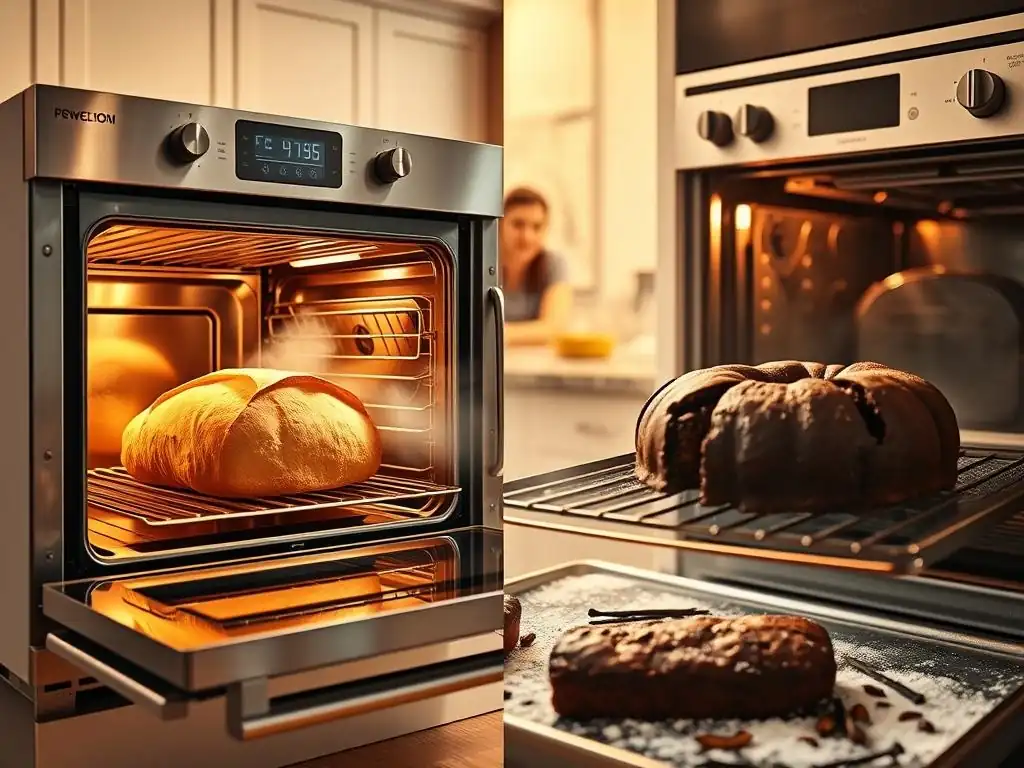
Welcome to BakeWithEase, your culinary companion on the journey to baking brilliance! Ever wondered if you're getting the most out of your oven? This article dives deep into the crucial differences between convection and conventional ovens, specifically focusing on mastering convection oven baking times. Unlock the secrets to perfectly baked goods every time, and discover how to adapt your favorite recipes for optimal results. Let's get baking!
- Convection vs Conventional Ovens: Perfect Temperature and Time Guides for Baking
- Understanding Convection and Conventional Ovens: A Baker's Guide
- Mastering Convection Oven Baking Times: The Ultimate Guide
- Convection Oven Temperature Chart: Baking Perfection
- Converting Conventional Oven Recipes to Convection: A Step-by-Step Approach
- Tips for Baking Successfully in a Convection Oven
- Troubleshooting Common Convection Oven Baking Problems
- Convection Oven Baking Times: Example Recipes & Adjustments
- Conclusion: Bake with Ease Using Convection or Conventional Ovens
-
Frequently Asked Questions
- What is the primary difference between baking in a convection oven versus a conventional oven?
- How do convection oven baking times typically compare to conventional oven times?
- What temperature adjustments should I make when converting a conventional oven recipe for a convection oven?
- Are there any types of baked goods that are better suited for convection ovens, and why?
- Can I use the same bakeware in both convection and conventional ovens?
- Final Reflection: Mastering the Heat: Convection vs. Conventional Baking
- Unlock Baking Perfection: Master Your Oven!
Convection vs Conventional Ovens: Perfect Temperature and Time Guides for Baking
Understanding Convection and Conventional Ovens: A Baker's Guide
Stepping into the world of baking often brings you face-to-face with different types of ovens, primarily conventional and convection. Understanding how each works is crucial for achieving consistent, delicious results, especially when it comes to managing Convection oven baking times. While both use heat to transform dough and batter into baked goods, they do so in fundamentally different ways, impacting everything from temperature settings to the final texture and color of your creations. Getting a handle on these differences is the first step to mastering your oven, no matter which type you have.
What is a Conventional Oven?
A conventional oven, also known as a radiant oven, relies on heating elements, usually located at the bottom and sometimes the top of the oven cavity. These elements heat the air inside, and the heat then radiates to the food. Think of it like standing near a warm radiator – the heat emanates outwards.
This method of heating creates distinct temperature zones within the oven; it's typically hottest near the heating elements and cooler towards the center or top. This uneven heat distribution is why recipes often instruct you to rotate baking sheets halfway through the cooking time, particularly when dealing with cookies or multiple trays of items.
This reliance on radiant heat means that the air inside a conventional oven is relatively still. Heat transfer to the food is slower compared to ovens that actively move air. While perfectly capable of producing wonderful baked goods, conventional ovens require careful monitoring and potentially longer baking times compared to their convection counterparts. The stagnant air can also mean that the surface of baked goods might dry out slightly before the interior is fully cooked, though this can be beneficial for developing certain crusts.
A convection oven takes the concept of heating and adds a fan, usually located at the back of the oven cavity. This fan circulates the hot air throughout the oven. Instead of just radiating heat, the hot air is actively blown around the food. This continuous movement of hot air accomplishes several things simultaneously. Firstly, it ensures a much more even temperature distribution throughout the oven, eliminating those hot and cold spots common in conventional models. Secondly, the circulating air speeds up the heat transfer process directly to the surface of the food.
The result of this forced air circulation is faster cooking and baking times. The circulating hot air also helps to quickly evaporate surface moisture from food, leading to better browning and crisping, which is particularly desirable for items like roasted vegetables, poultry, and certain pastries. However, this increased efficiency means you often need to adjust standard recipes, primarily by reducing the temperature and carefully managing Convection oven baking times to prevent overcooking or burning.
Key Differences: Convection vs. Conventional Baking
The core difference between convection and conventional ovens lies in how heat is distributed and transferred. Conventional ovens use radiant heat from stationary elements, leading to uneven temperatures and slower heat transfer. Convection ovens add a fan to circulate hot air, resulting in uniform temperatures and faster heat transfer. This affects several aspects of baking:
- Heat Distribution: Conventional ovens have hot spots; convection ovens provide consistent heat throughout. This is why baking multiple trays simultaneously works much better in a convection oven.
- Baking Speed: Convection ovens bake significantly faster due to the forced air accelerating heat transfer. This directly impacts Convection oven baking times, often requiring a reduction of 25% or more compared to conventional oven times.
- Browning and Crisping: The circulating air in convection ovens promotes faster surface drying and browning, leading to crispier exteriors on items like cookies or bread crusts.
- Moisture Retention: While convection can lead to crispier exteriors, the faster cooking time can sometimes help retain interior moisture in certain items, as they spend less time exposed to heat overall. However, for delicate items, the fan's airflow can sometimes be too drying.
Understanding these distinctions is key when you're looking at a recipe developed for a conventional oven and need to adapt it for convection, especially when calculating the appropriate Convection oven baking times and temperatures.
Mastering Convection Oven Baking Times: The Ultimate Guide
Navigating Convection oven baking times requires a bit of know-how, but once you understand the principles, you can unlock faster, more even baking results. The primary reason recipes need adjustment is the inherent efficiency of the convection fan. Knowing why it's faster and what factors influence the timing will empower you to make smart decisions in the kitchen.
Why Convection Ovens Bake Faster
The fundamental reason convection ovens reduce baking time is the principle of forced convection heat transfer. In a conventional oven, a layer of cooler air surrounds the food, acting as an insulator and slowing down the heat penetration. The circulating fan in a convection oven continuously sweeps away this cooler air layer, constantly exposing the food's surface to the full temperature of the hot air. This accelerated air movement significantly increases the rate at which heat energy is transferred to the food.
Think of it like drying clothes: they dry faster in a windy environment (like a convection oven) than in still air (like a conventional oven). This more efficient heat transfer means that the interior of your baked goods reaches the desired temperature more quickly, thus reducing the overall cooking duration. This speed is a major advantage, particularly when batch baking or roasting, but it necessitates careful attention to adjusting standard Convection oven baking times.
Factors Affecting Convection Oven Baking Time
While the convection fan is the primary driver of faster baking, several other factors also play a significant role in determining the precise Convection oven baking times:
- Food Density and Size: Denser or larger items (like loaves of bread or large roasts) will take longer to heat through than smaller, less dense items (like cookies or cupcakes), regardless of the oven type. Convection still speeds up the process, but the relative difference might be less dramatic for very dense foods.
- Starting Temperature of Food: Food taken directly from the refrigerator will require longer to bake than food that has been allowed to come to room temperature. This is true for both oven types, but the speed of convection makes this initial temperature difference potentially more noticeable in the overall timing.
- Pan Type and Material: Dark metal pans absorb and transfer heat more quickly than lighter metal or glass pans. Using dark pans in a convection oven can lead to even faster browning and potentially shorter Convection oven baking times, sometimes requiring further temperature or time adjustments.
- Amount of Food in the Oven: Overcrowding the oven cavity can impede airflow, slightly reducing the convection effect and potentially requiring a slightly longer bake time than expected for a single tray.
- Oven Calibration: Ovens can vary. A poorly calibrated oven, whether conventional or convection, might run hotter or cooler than the dial indicates, directly impacting how long it takes to bake. Using an external oven thermometer is always a good practice.
Considering these variables alongside the general convection adjustment guidelines will help you fine-tune your approach to Convection oven baking times for optimal results.
Adjusting Recipes for Convection Ovens: Time and Temperature Conversion
The most common adjustment when converting a conventional oven recipe for convection is to reduce both the temperature and the time. A widely accepted rule of thumb is to lower the temperature by about 25°F (or 15°C) and then reduce the baking time by approximately 25%. For example, if a conventional recipe calls for baking at 350°F (175°C) for 40 minutes, you would start by setting your convection oven to 325°F (160°C) and checking for doneness around the 30-minute mark (40 minutes minus 25%).
This 25% reduction in both temperature and time is a good starting point, but it's not an exact science for every recipe. Some delicate items might benefit from just a temperature reduction without a significant time cut, while others might require a larger time reduction. It's crucial to begin checking for doneness earlier than you would in a conventional oven, perhaps 75% of the way through the calculated convection baking times. Use visual cues – browning, bubbling, texture – as your primary indicators rather than relying solely on the clock.
Convection Oven Temperature Chart: Baking Perfection
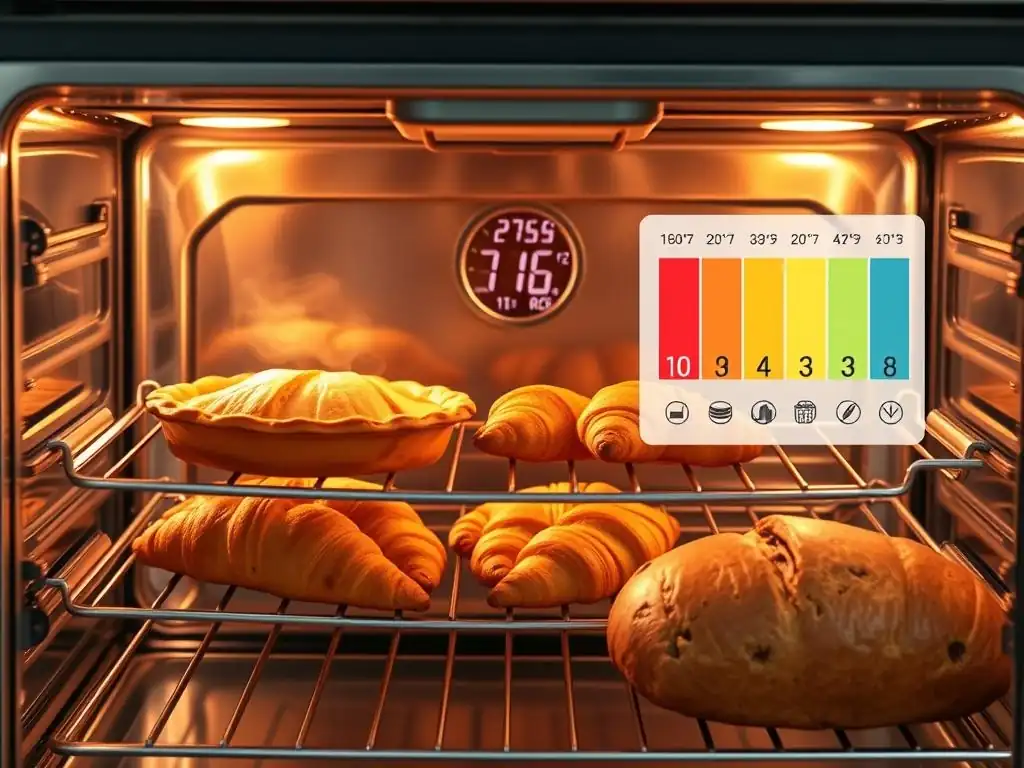
Having a quick reference for typical Convection oven baking times and temperatures for common items can be incredibly helpful. Remember that these are starting points and may need slight adjustments based on your specific oven, the recipe, and your desired outcome. The key is to understand the range and how it differs from conventional settings.
Recommended Convection Oven Temperatures for Common Baked Goods
Using convection often means lowering the temperature compared to a conventional recipe to prevent the outside from cooking too quickly before the inside is done. Here are some general guidelines for common baked goods when using the convection setting:
- Cakes: Typically 300-325°F (150-160°C)
- Cookies: Typically 300-325°F (150-160°C)
- Breads: Typically 325-375°F (160-190°C) (sometimes starting higher)
- Pastries: Typically 325-375°F (160-190°C) (depending on the type)
These temperatures are generally 25°F to 50°F lower than their conventional counterparts. Always remember to also consider the associated Convection oven baking times, which will also be shorter.
Convection Oven Temperatures for Cakes
When baking cakes in a convection oven, the goal is to achieve even rising and a tender crumb without drying out the edges or forming a tough crust too quickly. A common temperature range is 300°F to 325°F (150°C to 160°C). For instance, if a conventional recipe calls for 350°F (175°C) for 30-35 minutes, you might try 325°F (160°C) and check around the 22-26 minute mark.
Using a lower temperature helps prevent the fan's airflow from creating a dome that cracks or edges that set too fast. However, some bakers find that the convection fan can sometimes cause delicate cake batters to shift or rise unevenly. For very light, airy cakes, some prefer to disable the convection feature or use a lower fan speed if available. Always use the toothpick test to confirm doneness.
Convection Oven Temperatures for Cookies
Convection ovens are fantastic for baking cookies, especially large batches, because they ensure uniform browning and crisp edges across the entire baking sheet and even on multiple sheets simultaneously. A typical convection temperature for cookies is between 300°F and 325°F (150°C to 160°C). If your recipe calls for 350°F (175°C) conventional, try 325°F (160°C) with convection.
The reduced temperature combined with the circulating air helps cookies bake through evenly before the edges burn. Convection oven baking times for cookies are notably shorter; a cookie that takes 10-12 minutes conventionally might be done in 8-10 minutes with convection. Keep a close eye on the first batch, as the difference can be significant, and even a minute or two can be the difference between perfectly golden and overly crisp.
Convection Oven Temperatures for Breads
Baking bread with convection can yield a wonderfully crisp crust and even bake. The circulating air helps develop that desirable golden-brown exterior quickly. For most yeast breads, a convection temperature between 325°F and 375°F (160°C to 190°C) is common. A conventional recipe calling for 400°F (200°C) might work well at 375°F (190°C) with convection.
Some bakers even start bread baking at a higher conventional temperature (like 400-450°F) to achieve initial oven spring and crust development, then lower it and potentially switch to convection partway through the bake to finish it evenly and achieve a crisp crust. The Convection oven baking times for bread will depend heavily on the loaf size and density, but expect them to be shorter than conventional times. Always check the internal temperature (around 190-210°F or 88-99°C for most lean breads) for doneness.
Convection Oven Temperatures for Pastries
Pastries, encompassing everything from puff pastry and croissants to tarts and pies, benefit greatly from the even heat and browning provided by convection. The circulating air helps puff pastry rise beautifully and ensures tart crusts and pie tops are uniformly golden and crisp. Recommended convection temperatures typically range from 325°F to 375°F (160°C to 190°C), depending on the specific pastry.
For delicate items like puff pastry, the lower end of the range (325-350°F) might be preferred to allow the layers to set before browning too much. For pies or tarts with fillings, ensuring the filling is set while the crust bakes evenly is key. Convection oven baking times for pastries are invariably shorter. A pie that takes 50-60 minutes conventionally might be done in 40-45 minutes with convection. Monitor closely for that perfect golden hue and listen for the gentle sizzle of fillings.
Converting Conventional Oven Recipes to Convection: A Step-by-Step Approach
Converting a recipe written for a conventional oven to work with a convection oven is a skill that develops with practice. While the 25°F temperature reduction and 25% time reduction rule is a great starting point, a more nuanced approach involves a few key steps. By following these, you can confidently adapt your favorite recipes and achieve excellent results using the convection setting, optimizing your Convection oven baking times.
Step 1: Reducing Baking Temperature for Convection
The first crucial step is to lower the oven temperature. As mentioned, the circulating air in a convection oven is more efficient at transferring heat, so the same temperature setting as a conventional oven will result in faster cooking and potentially burnt exteriors before the interior is done. The standard recommendation is to reduce the temperature by 25°F (15°C).
For example, if the recipe calls for 350°F (175°C) in a conventional oven, set your convection oven to 325°F (160°C). If the conventional temperature is 400°F (200°C), set your convection oven to 375°F (190°C). Some ovens automatically adjust the temperature when the convection feature is selected, but it's essential to know the manual adjustment rule in case yours doesn't or if you prefer a slightly different adjustment. This temperature reduction is the foundation for safely reducing Convection oven baking times.
Step 2: Shortening Baking Time in a Convection Oven
Once you've adjusted the temperature, the next step is to account for the reduced baking time. Because the food cooks faster, leaving it in for the full conventional time will likely result in overcooked or dry results. A general guideline is to reduce the total baking time by about 25%.
So, if a recipe requires 60 minutes in a conventional oven, calculate 25% of 60 minutes, which is 15 minutes. This means you should aim for a total baking time of around 45 minutes (60 - 15 = 45) in your convection oven at the reduced temperature. This calculation gives you a target, but it's vital to treat it as an estimate and move on to the third step: monitoring. Your actual Convection oven baking times might vary slightly depending on the specific food and your oven's performance.
Step 3: Monitoring for Doneness in Convection Baking
This is arguably the most critical step. Because convection ovens are so efficient and vary slightly, relying solely on the calculated Convection oven baking times is risky, especially the first time you convert a specific recipe. Start checking for doneness earlier than your calculated time. A good rule of thumb is to start checking around 75% of the conventional baking time, or slightly before your calculated convection time.
For the 60-minute conventional recipe adjusted to 45 minutes convection, start checking around the 35-40 minute mark. Look for visual cues: golden-brown color, bubbling fillings, edges pulling away from the pan, or using tools like a toothpick inserted into cakes or an internal thermometer for meats and breads. Be prepared to pull the item out as soon as it looks done, even if it's before your estimated Convection oven baking times are complete. This proactive monitoring is key to preventing overbaking.
Tips for Baking Successfully in a Convection Oven
Mastering Convection oven baking times is easier with a few smart techniques. While convection offers many advantages, using it effectively requires understanding its nuances. These tips will help you get the most out of your convection setting for optimal baking results.
Achieving Even Baking with Convection
The primary benefit of convection is even heat distribution, which should theoretically lead to perfectly uniform baking. However, you can enhance this evenness further.
- Avoid Overcrowding: While convection handles multiple items better than conventional, don't completely fill the oven or block the fan. Leave space around items and between pans for air to circulate freely.
- Use Low-Sided Pans: Using baking sheets or pans with lower sides (like rimmed baking sheets) allows air to flow more easily around the food compared to deep-sided roasting pans or cake pans.
- Consider Pan Placement: Even with a fan, placing pans directly in front of the fan vent might lead to faster cooking on one side. Rotating your pans halfway through the reduced Convection oven baking times can help ensure absolute uniformity, especially with items like cookies.
- Don't Cover Too Early: If a recipe calls for covering food partway through baking to prevent over-browning, do so carefully. Covering too early can trap steam and counteract the convection's crisping effect.
By paying attention to these details, you can maximize the potential for even baking that convection offers.
When Not to Use Convection: Specific Baking Situations
While convection is great for many things, there are instances where the conventional setting might be preferable or even necessary.
- Delicate Batters: Very light or liquid batters, like those for soufflés, custards, or some cheesecakes, can be negatively affected by the strong airflow of a convection fan. It can cause uneven rising, tilting, or cracking.
- Items Requiring Initial Gentle Set: Some items benefit from a gentle, still environment to set their structure before browning, such as angel food cake or certain meringues. The fan can sometimes interfere with this delicate initial phase.
- Recipes Explicitly Developed for Conventional: If a recipe is perfect as written for a conventional oven and you aren't looking to change the outcome (e.g., you want a specific type of crust development that conventional heat provides), there's no need to convert it.
For these specific cases, sticking to the conventional setting ensures you follow the recipe developer's intended method and achieve the expected results without needing to guess at Convection oven baking times.
Using the Convection Feature Effectively: A Baker's Secret
Beyond temperature and time adjustments, effectively using your convection oven involves understanding when to engage the fan. Some ovens offer "convection bake" (fan + lower element) or "convection roast" (fan + upper element). Most home baking uses convection bake.
A useful technique is to preheat the oven using the convection setting, as it heats up faster and more evenly. For some items, you might even start with the conventional setting for the first portion of the bake to allow initial structure to form (especially for breads or cakes), then switch to convection for the remainder to achieve even browning and a crisp finish, carefully monitoring the remaining Convection oven baking times. Experimentation with your specific oven and recipes is the best way to find what works perfectly for you.
Troubleshooting Common Convection Oven Baking Problems
Even with the benefits of convection, you might encounter issues. Knowing how to troubleshoot common problems will help you get back on track and consistently achieve great results when managing Convection oven baking times and temperatures.
Uneven Baking in a Convection Oven: Solutions
While convection is designed for evenness, problems can still occur. If you notice one side of a pan or items on one rack browning faster than others, consider these solutions:
- Pan Placement: Ensure pans aren't directly blocking the fan vent. Try placing them in the center of the rack.
- Overcrowding: Make sure there's adequate space for air circulation around and between items.
- Oven Calibration: Your oven's temperature might be uneven despite the fan. Use an external oven thermometer to verify the temperature in different spots. If there's a significant difference, your oven may need service.
- Rotation: Even with convection, rotating your pan halfway through the Convection oven baking times can help guarantee absolute uniformity, especially if you're baking multiple items.
Addressing these factors can help resolve uneven baking issues and ensure consistent results.
Over-Browning or Burning in Convection Baking
This is a common issue if you don't adequately adjust the temperature and Convection oven baking times.
- Lower the Temperature Further: If reducing by 25°F isn't enough, try reducing by 35°F or even 50°F for particularly sensitive items.
- Reduce Baking Time More: Your initial 25% time reduction might not be sufficient. Check even earlier and reduce the total time further in subsequent attempts.
- Cover Loosely: If the tops or edges are browning too fast, you can loosely tent the item with foil partway through the bake.
- Use Lighter Pans: Dark metal pans absorb more heat. Switching to lighter-colored metal or even glass/ceramic (adjusting temperature/time as needed for the material) can help prevent over-browning.
Trial and error, combined with careful monitoring, is key to finding the perfect balance for your oven and recipe.
Dough Rising Problems in Convection Baking: Solutions
Sometimes, the force of the convection fan can negatively impact delicate doughs or batters, leading to uneven rising or a poor structure.
- Turn Off Convection Initially: For items like delicate cakes or breads that need a stable environment to rise, consider starting the bake on the conventional setting for the first 10-15 minutes. This allows the structure to set before you switch to convection to finish the bake and achieve browning.
- Use a Lower Fan Speed: If your oven has adjustable fan speeds, try using a lower setting for delicate items.
- Ensure Proper Proofing: Make sure your yeast doughs are adequately proofed before they go into the oven. A properly proofed dough has a stronger structure to withstand the airflow.
- Placement: Avoid placing delicate items directly in the path of the strongest airflow from the fan.
Experimenting with using convection for only part of the bake can often solve rising issues while still leveraging the benefits of even heat for the remainder of the Convection oven baking times.
Convection Oven Baking Times: Example Recipes & Adjustments
Seeing concrete examples can help illustrate how to apply the conversion principles to real-world recipes. Let's look at common baked goods and typical adjustments to their Convection oven baking times and temperatures. Remember these are approximations!
- Conventional Recipe: Bake at 375°F (190°C) for 10-12 minutes.
- Convection Adjustment:
- Reduce temperature to 350°F (175°C) or even 325°F (160°C).
- Reduce time by ~25%. 10 minutes becomes ~7.5 minutes, 12 minutes becomes ~9 minutes.
- Estimated Convection Oven Baking Times: Bake at 325-350°F (160-175°C) for 8-10 minutes.
- What to Look For: Edges should be set and lightly golden, centers might still look slightly soft but not wet. Check around the 7-minute mark for the first batch. Using convection helps ensure all cookies on the sheet bake evenly.
Banana Bread: Conventional vs. Convection Baking Times
- Conventional Recipe: Bake at 350°F (175°C) for 50-60 minutes.
- Convection Adjustment:
- Reduce temperature to 325°F (160°C).
- Reduce time by ~25%. 50 minutes becomes ~37.5 minutes, 60 minutes becomes ~45 minutes.
- Estimated Convection Oven Baking Times: Bake at 325°F (160°C) for 40-50 minutes.
- What to Look For: A toothpick inserted into the center should come out clean. The top should be golden brown. Because banana bread is dense, the relative time reduction might be slightly less than 25% in practice. Start checking around the 40-minute mark.
Roasted Chicken: Conventional vs. Convection Baking Times
While not baking in the traditional sense of dough/batter, roasting is a common oven task where convection shines, particularly for achieving crispy skin.
- Conventional Recipe: Roast at 400°F (200°C) for 1 hour 20 minutes to 1 hour 40 minutes (for a 3-4 lb chicken), or until internal temperature reaches 165°F (74°C).
- Convection Adjustment:
- Reduce temperature to 375°F (190°C).
- Reduce time by ~25%. 80 minutes becomes ~60 minutes, 100 minutes becomes ~75 minutes.
- Estimated Convection Oven Baking Times: Roast at 375°F (190°C) for 1 hour to 1 hour 15 minutes.
- What to Look For: Skin should be golden brown and crispy. Crucially, the internal temperature in the thickest part of the thigh (without touching bone) should reach 165°F (74°C). Convection significantly speeds up the cooking and browning for roasts.
These examples show that while the general rules apply, monitoring and checking for doneness based on visual cues and internal temperature remain paramount when determining final Convection oven baking times.
Conclusion: Bake with Ease Using Convection or Conventional Ovens
Whether you're using a conventional or a convection oven, understanding how heat works in each is the key to successful baking. Conventional ovens rely on radiant, still heat, leading to potential hot spots and longer baking times. Convection ovens use a fan to circulate hot air, resulting in faster, more even baking and excellent browning.
Mastering Convection oven baking times involves adjusting temperatures down (typically 25°F/15°C) and reducing cooking duration (often by 25% or more). However, these are guidelines, and factors like food type, density, pan material, and oven calibration all play a role. Always start checking for doneness earlier than expected when using convection. By understanding the principles, applying the adjustment rules, and diligently monitoring your baked goods, you can confidently use either oven type to bake with ease and achieve delicious results every time.
Frequently Asked Questions
What is the primary difference between baking in a convection oven versus a conventional oven?
The main difference lies in heat circulation. Convection ovens use a fan to circulate hot air, while conventional ovens rely on stationary heat. This results in more even baking in convection ovens.
How do convection oven baking times typically compare to conventional oven times?
Convection ovens generally require shorter baking times than conventional ovens. It's recommended to reduce the baking time by about 25% when using a convection oven.
What temperature adjustments should I make when converting a conventional oven recipe for a convection oven?
Typically, you should reduce the temperature by about 25 degrees Fahrenheit (15 degrees Celsius) when using a convection oven. This helps prevent over-browning.
Are there any types of baked goods that are better suited for convection ovens, and why?
Items like cookies and roasted vegetables often benefit from convection baking because the circulating air promotes crisper edges and even cooking.
Can I use the same bakeware in both convection and conventional ovens?
Yes, most bakeware is safe to use in both types of ovens. However, be mindful that darker bakeware may cause faster browning in a convection oven.
Final Reflection: Mastering the Heat: Convection vs. Conventional Baking
The quest for perfectly baked goods transcends mere recipe following; it's about understanding the nuances of heat transfer. This article has explored the crucial differences between convection and conventional ovens, highlighting how understanding these differences directly impacts baking times and results. Mastering this knowledge empowers home bakers to achieve consistently superior results, regardless of the oven they use.
The impact of this knowledge extends beyond the individual kitchen; it contributes to a broader appreciation for culinary precision. The subtle art of baking, often passed down through generations, is enhanced by a scientific understanding of heat distribution. As we move towards a more scientifically-minded approach to cooking, understanding the mechanics of our ovens becomes increasingly important. The best bakers are those who understand not just the recipe, but the science behind it.
- (This would be a quote from a reputable baking source or expert, which you should add).
Now, it's your turn. Take this knowledge and experiment! Don't be afraid to adjust baking times based on your oven's quirks and the specific recipe. Embrace the challenge of mastering your oven, and watch as your baking skills flourish. The journey to perfect pastries, cakes, and breads is a rewarding one, fueled by understanding and a touch of culinary curiosity. The perfect bake awaits!
Unlock Baking Perfection: Master Your Oven!
Thanks for diving into the world of convection and conventional ovens with us! You've now got the knowledge to bake like a pro. Ready to put your newfound expertise to the test?
- Try a recipe you've always wanted to perfect, adjusting the temperature and time based on your oven type. This is the ultimate test of your new skills!
- Share your baking triumphs (and challenges!) with us in the comments below. Let's build a community of bakers supporting each other!
- Explore our other baking guides for more tips and tricks on mastering different techniques and recipes.
What delicious creation will you conquer in the oven today?