
Mastering Macarons: A Beginner's Guide to the French Method

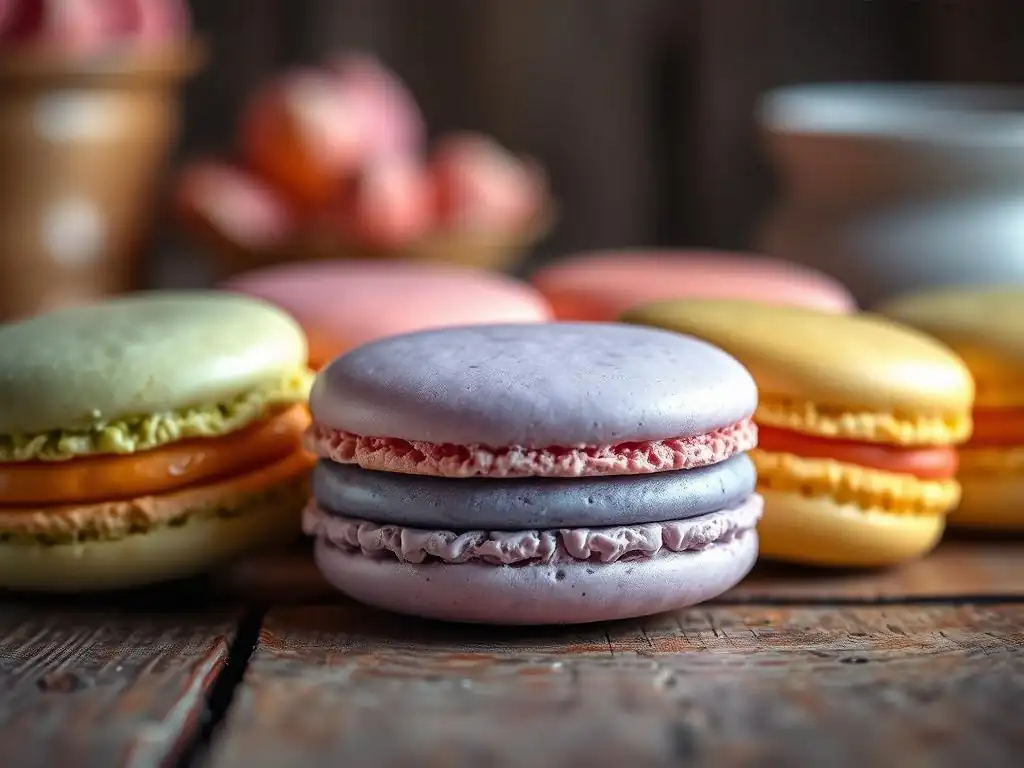
Welcome to BakeWithEase, your trusted guide in the delightful world of baking! Ever dreamt of creating those delicate, colorful treats that seem impossible to master? Prepare to unlock the secrets! This week, we're diving into a detailed, beginner-friendly guide to creating perfect French macarons. Intrigued? Let's conquer those notoriously tricky cookies together – your journey to becoming a macaron master starts now!
- Introduction to French Macarons for Beginners
- Essential Equipment for Your First Macaron Batch
- French Macarons Beginner Recipe: Ingredients Breakdown
-
Step-by-Step Guide to Making French Macarons (Beginner-Friendly)
- Step 1: Preparing the Almond Flour and Sugar Mixture
- Step 2: Whipping the Egg Whites to Stiff Peaks (French Meringue)
- Step 3: The Macaronage: Achieving the Perfect Batter Consistency
- Step 4: Piping the Macaron Shells: Tips for Uniformity
- Step 5: Resting the Macaron Shells: Forming the Skin
- Step 6: Baking the Macarons: Oven Temperature and Time
- Troubleshooting Common Macaron Problems for Beginners
- French Macaron Fillings for Beginners: Simple and Delicious Options
- Storing Your Homemade French Macarons
- Conclusion: Your Journey to Macaron Mastery Begins Now
-
Frequently Asked Questions
- What makes this French macaron beginner recipe from BakeWithEase different from other recipes?
- What essential equipment do I need to successfully bake French macarons using this recipe?
- I've heard French macarons are tricky. What are the most common mistakes beginners make, and how does BakeWithEase help avoid them?
- Can I substitute any of the ingredients in the French macaron beginner recipe?
- How do I know when my macarons are perfectly baked according to the BakeWithEase recipe?
- Final Reflection: The Sweet Success of Mastering Macarons
- Unleash Your Inner Pâtissier: Bake Perfect Macarons Today!
Introduction to French Macarons for Beginners
What are French Macarons and Why Bake Them?
French macarons are delicate, meringue-based confections known for their smooth, crisp shell, chewy interior, and delicious filling sandwiched between two shells. Originating in Italy but popularized in France, these elegant treats have gained immense popularity worldwide. Baking French macarons offers a rewarding challenge and the opportunity to create beautiful, customizable desserts perfect for gifts, special occasions, or simply enjoying with a cup of tea.
Beyond their aesthetic appeal, baking macarons allows you to experiment with a vast array of flavors and colors. From classic vanilla and chocolate to adventurous passion fruit or pistachio, the possibilities are nearly endless. Mastering the technique, even with a simple French macarons beginner recipe, provides a foundation for exploring complex flavor combinations and developing your baking skills.
Why the French Method for Macarons?
There are two primary methods for making macaron shells: the French method and the Italian method. The French method is generally considered more accessible for beginners because it requires fewer steps and less specialized equipment compared to the Italian method, which involves making a hot sugar syrup. In the French method, granulated sugar is simply whipped into egg whites to form a meringue.
Choosing the French method for your first attempt at a French macarons beginner recipe simplifies the process considerably. While it can be slightly less stable than the Italian meringue, it's easier to execute without the need for a candy thermometer and handling hot sugar. This makes it an excellent starting point for building confidence before potentially exploring other methods.
Essential Equipment for Your First Macaron Batch
Must-Have Tools for French Macaron Success
Having the right tools is crucial when tackling a French macarons beginner recipe. You'll need a stand mixer or a high-powered hand mixer to achieve the necessary stiff peaks for the meringue – whipping egg whites by hand is incredibly challenging for macarons. A kitchen scale is also essential for accurate measurements; macaron success often hinges on precise ingredient ratios, and measuring by weight is far more reliable than volume.
Other vital tools include fine-mesh sieves for sifting dry ingredients (almond flour and powdered sugar), rubber spatulas for the crucial "macaronage" step, baking sheets, and piping bags with round tips. While seemingly simple, each tool plays a specific role in ensuring your macaron shells turn out smooth, uniform, and with those characteristic "feet."
Choosing the Right Piping Bag and Tip for Macarons
Piping bags are indispensable for creating evenly sized macaron shells. Reusable silicone or plastic bags are economical and environmentally friendly, while disposable plastic bags offer convenience and easy cleanup. For beginners, disposable bags can be less intimidating. You'll also need a piping tip. A plain round tip, specifically an Ateco 804 or 805 (approximately 8-10mm diameter), is ideal for piping macaron shells.
The size of the tip directly influences the size of your macaron shells. Using too small a tip can make piping difficult and slow, while too large a tip might result in shells that are too big or spread excessively. Start with a standard size (like 8-10mm) as recommended for most French macarons beginner recipes to achieve consistently sized shells that are easier to bake evenly.
Macaron Baking Mats: Silicone vs. Parchment Paper
When baking macarons, you need a surface that prevents sticking and helps the shells maintain their shape. The two most common options are silicone baking mats (like Silpat) and parchment paper. Silicone mats are reusable, provide excellent non-stick properties, and often have printed circles that serve as guides for piping uniform shells, which is very helpful for a French macarons beginner recipe.
Parchment paper is a more readily available and disposable option. While it doesn't offer the same level of non-stick as silicone, it works well if greased lightly or if you use high-quality, non-stick parchment. Some bakers prefer parchment because it can sometimes yield slightly crispier feet. Experimenting with both on different trays can help you discover which works best with your specific oven and recipe.
French Macarons Beginner Recipe: Ingredients Breakdown
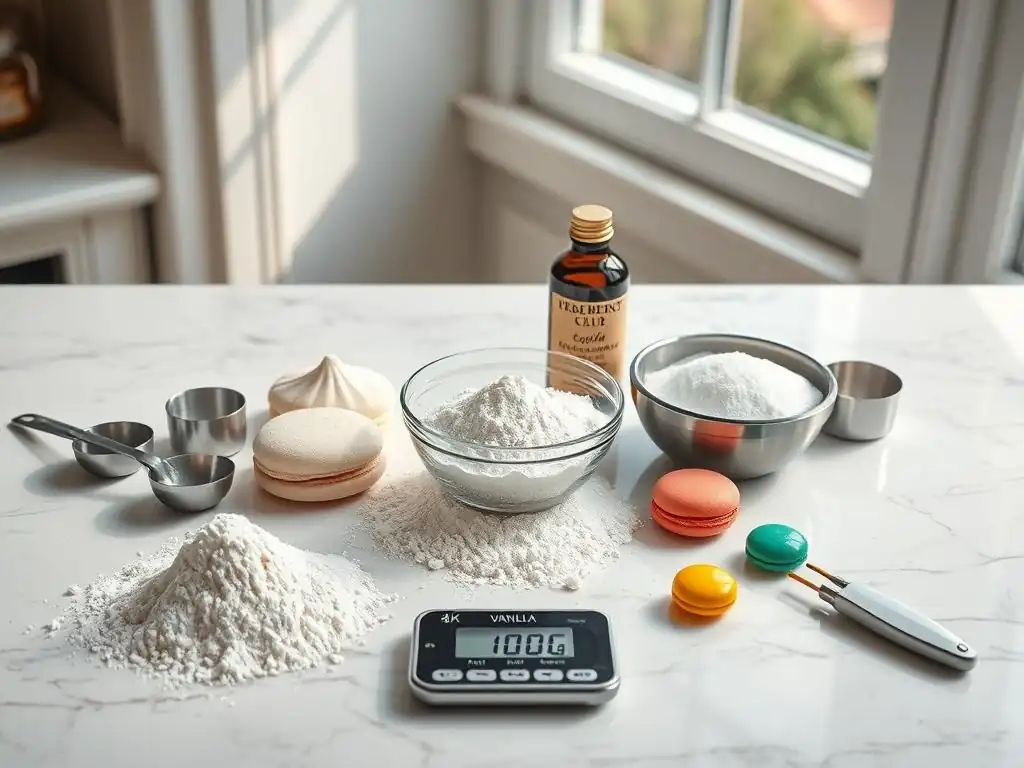
Almond Flour: The Key to Perfect Macarons
Almond flour is the foundation of macaron shells, providing their unique texture and slightly nutty flavor. It's crucial to use finely ground almond flour, ideally super-fine. Coarse almond flour will result in bumpy, uneven shells. Sifting the almond flour along with powdered sugar is a non-negotiable step in any French macarons beginner recipe to remove larger bits and ensure a smooth batter.
If you can only find regular almond flour, pulse it briefly in a food processor with the powdered sugar before sifting. Be careful not to over-process, as this can release oils and turn it into almond butter. Aim for a light, airy powder that passes easily through a fine-mesh sieve.
Egg Whites: Achieving Stiff Peaks for Macarons
Egg whites are the base of the meringue, providing structure and lift to the macaron shells. For best results with a French macarons beginner recipe, use aged egg whites. This means separating the eggs a day or two in advance and storing the whites in a covered container in the refrigerator. Aging helps break down proteins, resulting in a more stable meringue. Bring them back to room temperature before whipping.
Whipping the egg whites to the correct consistency – stiff peaks – is critical. This means the meringue will hold its shape firmly when the whisk is lifted. Undermixed egg whites won't provide enough structure, leading to flat shells, while overmixed whites can become dry and difficult to work with during macaronage. Achieving stiff peaks is a fundamental step in this French macarons beginner recipe.
Sugar: Granulated and Powdered Sugar Ratio for Macarons
This French macarons beginner recipe relies on two types of sugar: granulated sugar for the meringue and powdered sugar (also known as confectioners' sugar or icing sugar) blended with almond flour. Granulated sugar is whipped into the egg whites gradually to create a stable, glossy meringue. The sugar dissolves into the egg whites, strengthening the protein structure.
Powdered sugar, on the other hand, is blended with the almond flour. It adds sweetness and helps create the smooth texture of the shell. The typical ratio of almond flour to powdered sugar is often 1:1 by weight, but this can vary slightly depending on the specific French macarons beginner recipe. Ensure both are sifted together to remove lumps and achieve a uniform mixture.
Food Coloring: Gel vs. Liquid for Macaron Shells
Adding color is part of the fun when making French macarons! However, the type of food coloring you use matters significantly. Liquid food coloring should be avoided entirely in a French macarons beginner recipe. It adds too much moisture to the batter, which can negatively impact the texture and prevent the shells from forming properly.
Gel or powder food coloring is recommended. Gel colors are highly concentrated, so you only need a small amount to achieve vibrant hues without adding excess liquid. Add the coloring during the meringue stage, after the stiff peaks have formed, or during the macaronage. Start with a tiny amount and add more gradually until you reach your desired shade.
Step-by-Step Guide to Making French Macarons (Beginner-Friendly)
Step 1: Preparing the Almond Flour and Sugar Mixture
The very first step in this French macarons beginner recipe is to prepare your dry ingredients. Weigh out your almond flour and powdered sugar according to the recipe. Place both in a fine-mesh sieve set over a bowl. Sift the mixture together, tapping the side of the sieve to help it pass through. Discard any larger pieces that remain in the sieve.
For an even smoother result, you can pulse the sifted mixture briefly in a food processor (just a few quick pulses!) to break down any remaining small lumps, then sift it again. This extra step helps ensure a very fine, uniform powder, which is key to achieving smooth macaron shells. Set this mixture aside while you prepare the meringue.
Step 2: Whipping the Egg Whites to Stiff Peaks (French Meringue)
Place your room-temperature, aged egg whites in the clean bowl of your stand mixer fitted with the whisk attachment (or use a clean bowl with a hand mixer). Start whipping the egg whites on medium speed until they become frothy. Gradually increase the speed to medium-high. Once soft peaks form (they hold a shape but the tip curls over), start adding the granulated sugar, one tablespoon at a time, allowing each addition to incorporate before adding the next.
Continue whipping on high speed until the meringue is glossy and very stiff peaks form. When you lift the whisk, the meringue should stand straight up without drooping. If using gel food coloring, you can add it now and whip for another 30 seconds or so to distribute the color evenly. This perfectly whipped French meringue is the backbone of your French macarons beginner recipe.
Step 3: The Macaronage: Achieving the Perfect Batter Consistency
Macaronage is the most critical and often trickiest step in a French macarons beginner recipe. It's the process of folding the dry ingredients (almond flour and powdered sugar mixture) into the French meringue. Add about one-third of the dry ingredients to the meringue. Using a rubber spatula, gently fold them in using a motion that scrapes around the side of the bowl and cuts through the center.
Continue adding the dry ingredients in two more batches, folding gently until just combined. Then, begin the macaronage technique: scrape the batter from the sides and bottom of the bowl, bring it to the center, and gently press down. Repeat this folding and pressing motion. The goal is to deflate the meringue slightly and achieve a batter that flows like lava or ribbon when lifted with the spatula.
It should fall back into the bowl in a continuous stream, and you should be able to draw a figure eight with it. This perfect consistency is known as the "lava" stage or "ribbon" stage. Undermixing results in lumpy batter and cracked shells, while overmixing results in runny batter and flat shells without feet.
Step 4: Piping the Macaron Shells: Tips for Uniformity
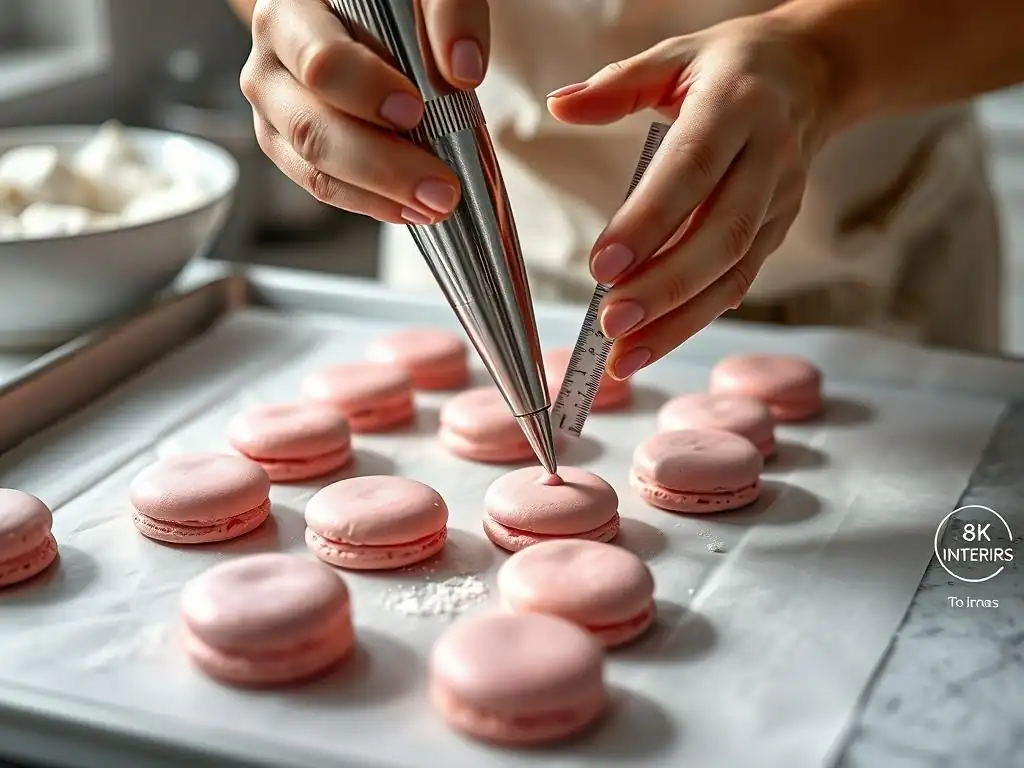
Once the macaronage is complete and your batter is the perfect consistency, carefully transfer it to a piping bag fitted with a round tip. Hold the piping bag vertically, about half an inch above the baking mat or parchment paper. Apply steady, even pressure to pipe circles of batter onto your prepared baking sheet, using guides if available.
Stop squeezing the bag and flick your wrist to the side to break the stream cleanly. Leave adequate space between each shell (about 1-2 inches) as they will spread slightly. After piping, firmly tap the baking sheet on your counter several times. This helps release air bubbles trapped in the batter, which prevents hollow shells and encourages the shells to settle into a smooth circle. You can also use a toothpick to pop any visible air bubbles on the surface.
Step 5: Resting the Macaron Shells: Forming the Skin
After piping and tapping, the macaron shells need to rest at room temperature. This resting period is essential for a French macarons beginner recipe. As the shells rest, they develop a dry skin on the surface. This skin is crucial because it allows the steam generated during baking to push the batter upwards and outwards, creating those characteristic "feet" at the base of the shell.
The resting time can vary depending on the humidity in your kitchen, typically ranging from 30 minutes to 2 hours. The shells are ready to bake when you can gently touch the surface with your fingertip without the batter sticking to you. The surface should feel dry and slightly firm. Do not skip this step!
Step 6: Baking the Macarons: Oven Temperature and Time
Preheat your oven to the temperature specified in your specific French macarons beginner recipe, typically somewhere between 300°F and 325°F (150°C - 160°C). An oven thermometer is highly recommended to ensure your oven's temperature is accurate. Place the baking sheet on the middle rack of the preheated oven.
Bake the macarons for 12-18 minutes. Baking time can vary significantly based on your oven and the size of your shells. The shells are done when they have developed feet, appear matte and not shiny, and do not wiggle when you gently try to push one from its base. If they still wiggle, they need more time. Overbaking can result in brittle shells, while underbaking leaves them sticky and difficult to remove.
Troubleshooting Common Macaron Problems for Beginners
Cracked Macaron Shells: Causes and Solutions
Cracked macaron shells are a common frustration when starting out with a French macarons beginner recipe. Several factors can cause this. One primary reason is insufficient resting time; if the skin doesn't form properly, steam gets trapped and breaks through the top. Ensure the shells are completely dry to the touch before baking.
Another cause can be overmixing the batter during macaronage, which incorporates too much air or makes the batter too thin. Uneven oven temperature or placing the tray too close to the heating element can also lead to cracking. Make sure your oven temperature is accurate and place the tray in the center.
Hollow Macarons: How to Prevent Them
Hollow shells mean the interior of the macaron is empty instead of being slightly chewy and full. This is another frequent issue for beginners. Over-whipping the meringue can contribute to hollowness by creating an unstable structure. Ensure you stop whipping just as stiff peaks form.
Insufficient macaronage is another common culprit. If the batter is too thick and hasn't been deflated enough, too much air remains, leading to a hollow space. Tapping the tray firmly after piping is also crucial for releasing trapped air bubbles that can cause hollowness.
Macarons Sticking to the Baking Mat: Release Techniques
Macarons sticking to the baking surface is frustrating after successful baking. This usually happens when the macarons are underbaked or haven't cooled completely before you try to remove them. Ensure the shells pass the "wiggle test" before taking them out of the oven.
Once baked, slide the mat or parchment paper off the hot baking sheet and onto a wire rack. Let the macarons cool completely on the mat/paper – this can take 15-30 minutes. As they cool, the steam dissipates, and they should release more easily. If they are still stuck, sometimes placing the mat in the freezer for a few minutes can help them detach.
Uneven Macaron Feet: Troubleshooting Tips
The "feet" are the ruffled base of the macaron shell. Uneven feet can occur for several reasons. Uneven oven temperature is a major factor; some parts of the tray get hotter than others. Using an oven thermometer and potentially rotating the tray halfway through baking can help.
Improper macaronage can also play a role. If the batter is too thick or too thin, or if the folding wasn't consistent, the feet might not rise evenly. Make sure your macaronage reaches the correct "lava" consistency. Finally, ensure your baking sheets are not warped, as this can cause the batter to pool unevenly.
French Macaron Fillings for Beginners: Simple and Delicious Options
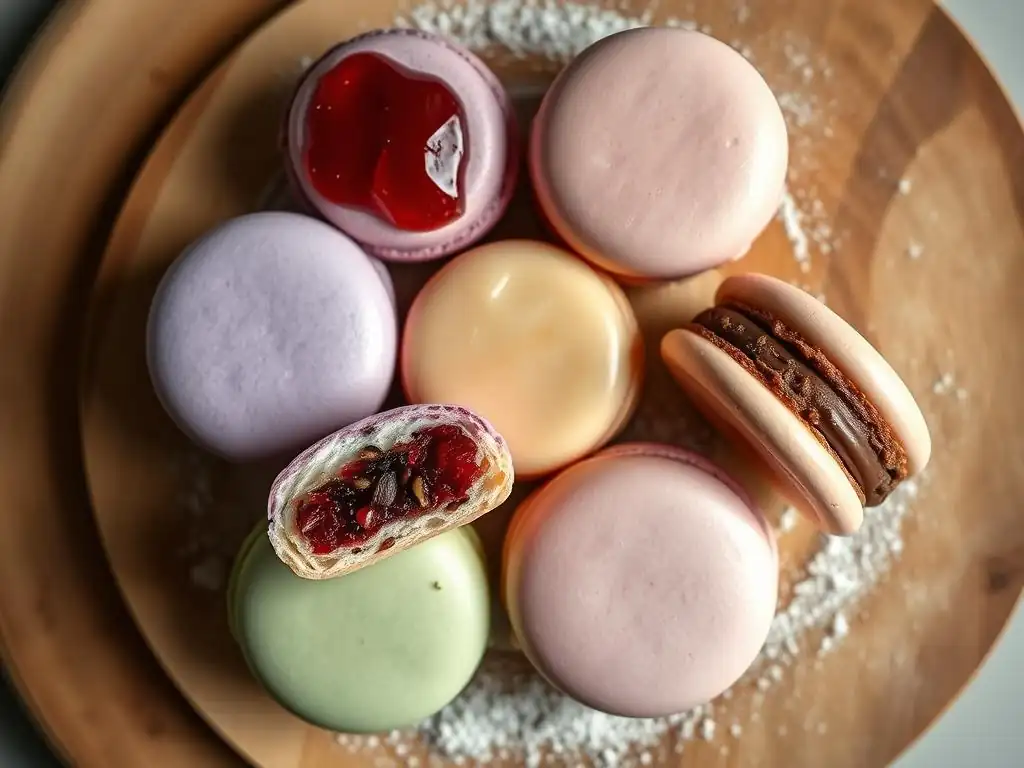
Easy Chocolate Ganache Filling for Macarons
Once your macaron shells are baked and cooled, it's time for the filling! A simple chocolate ganache is an excellent choice for a French macarons beginner recipe because it's easy to make and incredibly versatile. You'll need heavy cream and chocolate (chips or chopped bar). A common ratio is 1:1 by weight for a thick ganache suitable for piping.
Heat the cream until it just simmers, then pour it over the chocolate. Let it sit for a few minutes to melt the chocolate, then stir gently until smooth and emulsified. Let the ganache cool and thicken at room temperature or in the refrigerator until it reaches a pipeable consistency.
Simple Buttercream Filling for Macarons
Buttercream is another beginner-friendly filling option. A basic American buttercream involves creaming softened butter with powdered sugar and a splash of milk or cream and vanilla extract. Beat until light and fluffy. You can easily customize the flavor by adding cocoa powder, fruit purées, or extracts.
Ensure your butter is truly softened (but not melted) for a smooth buttercream. This filling is quick to whip up and pairs well with a wide variety of macaron shell flavors created from your French macarons beginner recipe.
Fruity Jam Filling for Macarons
For a quick and easy filling that requires no cooking, use your favorite high-quality jam or preserve. Smooth jams work best for piping or spreading neatly onto the shells. Choose a flavor that complements your macaron shells.
You can use jam on its own, or combine it with buttercream or ganache for a layered filling. For example, pipe a ring of buttercream around the edge of the shell and fill the center with jam. This adds both stability and a burst of fruity flavor to your French macarons beginner recipe creation.
Storing Your Homemade French Macarons
Proper Storage for Macaron Freshness
Once filled, macarons need time to "mature" in the refrigerator. This allows the filling's moisture to soften the shell slightly, creating the perfect chewy texture. Store filled macarons in an airtight container in the refrigerator for at least 12-24 hours before serving. They are often even better on the second day!
When storing, place a piece of parchment paper between layers of macarons to prevent them from sticking together. Properly stored in the refrigerator, filled macarons can last for 3-5 days, maintaining their texture and flavor.
Freezing Macarons: A Beginner's Guide
Macarons freeze exceptionally well, making them a great make-ahead treat. You can freeze unfilled shells or filled macarons. To freeze shells, place them in a single layer on a baking sheet until firm, then transfer to an airtight container or freezer bag, layering with parchment paper.
To freeze filled macarons, arrange them in a single layer in an airtight container, using parchment paper between layers. They can be frozen for up to 1-2 months. Thaw frozen macarons overnight in the refrigerator before bringing them to room temperature for serving. This is particularly useful if you're making a large batch using your French macarons beginner recipe.
Conclusion: Your Journey to Macaron Mastery Begins Now
Frequently Asked Questions
What makes this French macaron beginner recipe from BakeWithEase different from other recipes?
This recipe focuses on clear, concise instructions and easily accessible ingredients specifically designed for beginners. We break down the French method into manageable steps, avoiding common pitfalls.
What essential equipment do I need to successfully bake French macarons using this recipe?
You'll need a stand mixer or hand mixer, a piping bag with a round tip, parchment paper or a silicone mat, and an oven thermometer for accurate temperature control.
I've heard French macarons are tricky. What are the most common mistakes beginners make, and how does BakeWithEase help avoid them?
Common mistakes include over-mixing the batter, inaccurate oven temperature, and insufficient resting time (skin formation). BakeWithEase provides specific guidance on each of these critical points.
Can I substitute any of the ingredients in the French macaron beginner recipe?
While we recommend sticking to the recipe for the best results, some substitutions are possible. For example, you may be able to use a different type of almond flour, but consistency and texture can be affected.
How do I know when my macarons are perfectly baked according to the BakeWithEase recipe?
The macarons should have "feet" (ruffled edges), a smooth, glossy shell, and a slightly chewy interior. The bottoms should be firm and easily release from the baking sheet.
Final Reflection: The Sweet Success of Mastering Macarons
The delicate art of the French macaron, once perceived as an unattainable confectionery feat, is now within reach for aspiring bakers. This guide has demystified the process, providing a clear pathway for beginners to achieve perfectly smooth shells and luscious fillings. The journey may have its challenges, but the reward – a delightful, visually stunning macaron – is well worth the effort.
The enduring appeal of the macaron lies not just in its exquisite taste, but in its symbolic representation of precision, patience, and ultimately, triumph over seemingly insurmountable odds. It's a testament to the power of dedication and attention to detail. The most beautiful things are the most difficult to achieve.
This sentiment, though not specifically about macarons, perfectly encapsulates the rewarding experience of mastering this delicate pastry. The process itself, with its meticulous steps and the need for precise measurements, fosters a sense of accomplishment that extends beyond the culinary realm.
Now, it's your turn. Don't be intimidated by the seemingly complex process. Armed with the knowledge and techniques shared in this guide, you have the power to create your own batch of perfect macarons. Embrace the challenge, savor the process, and revel in the sweet success of your culinary creation. The journey to mastering macarons is a journey of self-discovery, proving that with patience and practice, even the most intricate recipes can be conquered. So, gather your ingredients, put on your apron, and embark on your own macaron adventure!
Unleash Your Inner Pâtissier: Bake Perfect Macarons Today!
Thanks for joining us on this delicious journey into the world of macarons! We hope you gained valuable insights and confidence in tackling this seemingly delicate treat. Now it's time to put your new knowledge to the test.
- Bake your own masterpiece! Try the recipe from the article and share your creations—we’d love to see them!
- Experiment with flavors! What unique combinations will you create? Think beyond the classic and let your imagination run wild.
- Share your macaron journey with fellow baking enthusiasts on social media! Use #BakeWithEaseMacarons and tag us.
Ready to transform your kitchen into a Parisian patisserie? What unexpected flavor combination are you most excited to try?