
GlutenFree Leavening Agents: Achieving Lift Without Wheat Flour

Welcome to BakeWithEase, your kitchen companion for creating delicious baked goods! Are you ready to unlock the secrets to achieving perfect rise and texture in your gluten-free creations? This article dives deep into the fascinating world of gluten-free baking leavening agents, revealing how to achieve that coveted lift without wheat flour. Discover the best methods and ingredients to elevate your baking, and leave your guests wondering how you did it. Let's get started and explore the possibilities!
- Introduction to Gluten-Free Baking Leavening
- Understanding Leavening in Gluten-Free Baking
- Common Gluten-Free Leavening Agents: A Comprehensive Guide
- Optimizing Gluten-Free Leavening Techniques for Best Results
- Gluten-Free Baking Leavening Troubleshooting
- Advanced Gluten-Free Leavening Tips and Tricks
- Conclusion: Mastering Gluten-Free Baking with the Right Leavening
-
Frequently Asked Questions
- What are some common gluten-free leavening agents used in baking?
- How does baking soda work as a leavening agent in gluten-free baking?
- What's the difference between baking soda and baking powder when used in gluten-free recipes?
- Can I use regular yeast in gluten-free baking?
- How do I choose the right leavening agent for my gluten-free baking project?
- Final Reflection: The Rising Tide of Gluten-Free Baking
- Unleash Your Gluten-Free Baking Potential!
Introduction to Gluten-Free Baking Leavening
Baking without gluten presents a unique set of challenges, especially when it comes to achieving that perfect rise and tender crumb. Gluten, the protein network found in wheat, rye, and barley, plays a crucial role in traditional baking. It provides structure and elasticity, allowing dough and batter to stretch and trap the gases produced by leavening agents like yeast or baking powder. This trapped gas is what makes baked goods light and airy.
When you remove gluten, you lose this natural scaffolding. Gluten-free flours, made from ingredients like rice, almond, tapioca, or potato, don't form the same kind of elastic network. Consequently, traditional leavening agents behave differently. They still produce gas, but without gluten to hold it, the gas can escape, resulting in dense, flat, or crumbly baked goods. Understanding how gluten-free baking leavening agents work and how to compensate for the absence of gluten is key to successful gluten-free baking.
Understanding Leavening in Gluten-Free Baking
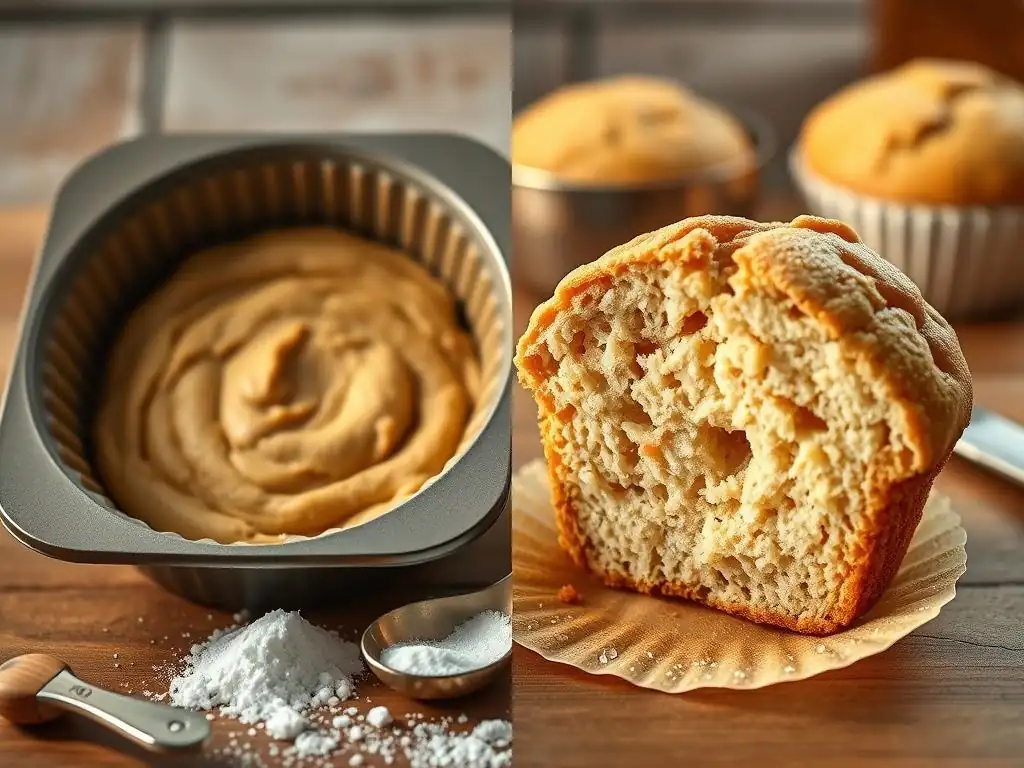
Leavening is the process that makes baked goods rise, creating a lighter texture and increased volume. It involves the production of gases, primarily carbon dioxide, within the batter or dough. These gases expand when heated during baking, causing the structure to lift. Without effective leavening, you'd end up with something more akin to a cracker or a brick rather than a fluffy cake or airy bread.
The science is fairly straightforward: leavening agents react chemically or biologically to produce gas. In traditional baking, this gas is trapped within the elastic gluten network. As the bake heats, the gluten sets around the expanding gas bubbles, solidifying the structure. In gluten-free baking, since the gluten network is absent, we rely on alternative binders like xanthan gum, psyllium husk, or the starches within the flour blend to provide some structure and help trap those precious gas bubbles, making the choice and use of gluten-free baking leavening agents even more critical.
Common Gluten-Free Leavening Agents: A Comprehensive Guide
Baking Powder in Gluten-Free Recipes
Baking powder is a complete leavening system containing an alkali (baking soda), an acid (like cream of tartar or sodium aluminum sulfate), and a starch (to keep them dry and prevent premature reaction). It's a popular choice for gluten-free baking because it doesn't require an additional acidic ingredient to activate, unlike baking soda alone.
There are two main types: single-acting, which reacts immediately when wet, and double-acting, which reacts once when wet and again when heated in the oven. Most baking powder sold today is double-acting, providing a sustained lift throughout the baking process, which is particularly beneficial in gluten-free batters that might be slower to set.
Using baking powder effectively in gluten-free mixes often requires slightly different ratios than wheat-based recipes. While a common starting point is 1 to 1.5 teaspoons of double-acting baking powder per cup of gluten-free flour blend, this can vary based on the blend composition and the recipe's desired outcome. For instance, a denser blend might need slightly more leavening.
Troubleshooting issues like a lack of rise can often be traced back to expired baking powder – you can test its freshness by adding a teaspoon to hot water; it should bubble vigorously. Incorrect ratios (too little or too much, which can cause a metallic taste or collapse) or overmixing the batter, which can deflate the tiny air pockets created by the leavening, are also common culprits when your gluten-free bake doesn't rise as expected.
Baking Soda: Activating Rise in Gluten-Free Treats
Baking soda (sodium bicarbonate) is a single leavening agent that requires an acidic ingredient to react and produce carbon dioxide gas. This reaction happens immediately upon mixing wet and dry ingredients. In gluten-free baking, this means you need to pair baking soda with an acidic component present in the recipe.
Common gluten-free acidic ingredients include buttermilk (dairy or non-dairy), yogurt, sour cream, molasses, brown sugar, honey, vinegar (like apple cider vinegar), lemon juice, or even cocoa powder (especially natural, unsweetened cocoa). The amount of baking soda used is typically balanced with the amount of acid in the recipe to ensure a complete reaction, often around 1/4 to 1/2 teaspoon per cup of flour blend, depending on the recipe's acidity level.
Deciding whether to use baking soda or baking powder (or both) depends on the recipe. Baking soda is often used in recipes containing acidic ingredients to provide lift and neutralize the acid, contributing to flavor and tenderness. Baking powder is used when the recipe lacks sufficient acidity or when a sustained lift is desired.
Many recipes, especially those using cocoa or buttermilk, benefit from using both baking soda and baking powder; the baking soda reacts with the acid, while the baking powder provides extra lift. A classic example showcasing baking soda's role is a Gluten-Free Chocolate Cake, where the natural acidity of cocoa powder activates the baking soda, contributing to its dark color and tender crumb.
Yeast: Cultivating Gluten-Free Bread
Yeast is a living organism that produces carbon dioxide and alcohol as it consumes sugars in dough. This biological leavening process is essential for many traditional breads, giving them their characteristic airy texture and complex flavor. Gluten-free bread baking with yeast can be more challenging than with wheat flour because, without gluten's structure, the gas produced by the yeast is harder to trap.
However, it's certainly achievable with the right techniques and gluten-free baking leavening agents. Common types include instant yeast (can be mixed directly with dry ingredients), active dry yeast (needs to be proofed in warm liquid first), and fresh yeast (less common, also needs proofing).
Activating yeast for gluten-free bread and doughs is similar to wheat bread, typically involving warm liquid (around 105-115°F or 40-46°C) and a pinch of sugar to feed the yeast. The key difference lies in handling the dough, which is often wetter and stickier than wheat dough. Gluten-free bread recipes using yeast often rely on binders like psyllium husk or xanthan gum to mimic some of gluten's properties and help trap the gas during proofing.
Common problems with gluten-free yeast breads include insufficient rise due to improper hydration (too dry dough inhibits yeast activity), incorrect temperature control (liquid too hot or too cold kills yeast), or insufficient proofing time (yeast needs time to produce gas). Achieving the right balance is crucial for light, well-risen loaves when mastering gluten-free baking leavening agents like yeast.
Alternative Leavening Agents for Gluten-Free Baking
Beyond the standard trio of baking powder, baking soda, and yeast, several other ingredients can contribute to lift and lightness in gluten-free baked goods. Cream of tartar, an acidic salt, is often used in combination with baking soda when another acidic ingredient isn't present in sufficient quantity; it's also key in stabilizing whipped egg whites. Speaking of which, egg whites are a fantastic leavening aid.
When whipped, they trap air mechanically, creating a foam that adds significant volume and a light texture to cakes, soufflés, and meringues. Incorporating gently folded-in whipped egg whites is a common technique for achieving a lighter crumb in gluten-free batters.
Another simple trick is using carbonated water or other carbonated liquids (like soda or sparkling cider) in batters. The dissolved carbon dioxide creates bubbles that expand during baking, adding a touch of lightness, particularly useful in quick breads or pancakes. For vegan gluten-free baking, aquafaba (the liquid drained from canned chickpeas) has emerged as a remarkable alternative. When whipped, it forms a stable foam similar to egg whites, making it an effective leavening agent for meringues, mousses, and even contributing to the lift in vegan cakes and muffins, proving that effective gluten-free baking leavening agents come in many forms.
Optimizing Gluten-Free Leavening Techniques for Best Results
Choosing the Right Gluten-Free Flour Blend
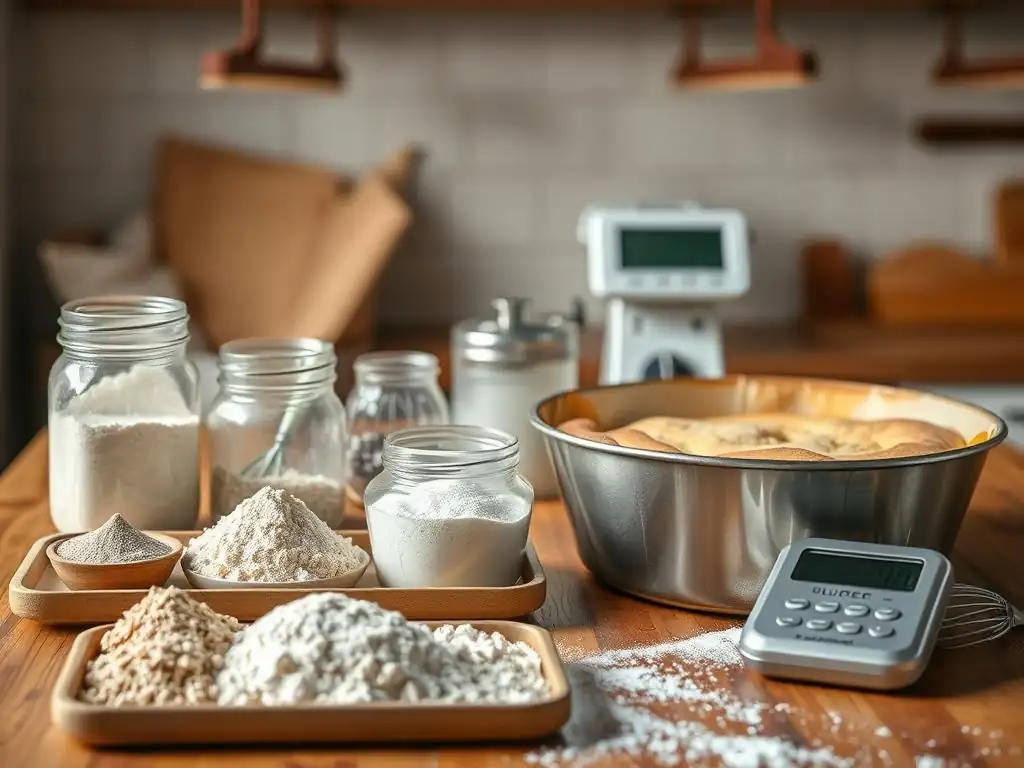
The composition of your gluten-free flour blend significantly impacts how leavening agents perform. Blends vary widely, containing different ratios of starchy flours (like rice, tapioca, corn, potato) and protein flours (like almond, sorghum, millet, oat). Starchy flours contribute to tenderness, while protein flours can add structure and absorbency.
The key is often the balance of these components and the inclusion of binders. Binders like xanthan gum, guar gum, or psyllium husk are crucial because they help create a structure similar to gluten's network, enabling the batter or dough to trap the gases produced by your gluten-free baking leavening agents. Without sufficient binding, the gas escapes, leading to a dense product.
Specific flour blends are often recommended for different types of baked goods due to their unique compositions. For example, a blend like Cup4Cup is known for working well in recipes traditionally made with all-purpose wheat flour, often yielding tender cakes and pastries because it includes cornstarch, potato starch, and tapioca starch along with rice flour, plus a binder.
King Arthur Measure for Measure Gluten-Free Flour is another popular blend designed for general use in a wide variety of recipes, from cookies to muffins, and also contains starches and a binder. Experimenting with different blends and noting how they interact with your chosen gluten-free baking leavening agents is a vital step in mastering gluten-free baking.
Hydration and Moisture Content in Gluten-Free Baking
Proper hydration is paramount in gluten-free baking and directly impacts the effectiveness of leavening agents. Gluten-free flours tend to absorb more liquid than wheat flour, and they absorb it differently. If a batter or dough is too dry, leavening agents like baking powder or baking soda may not fully react, and yeast activity can be inhibited. Moreover, insufficient moisture can lead to a dense, dry, and crumbly final product because there isn't enough liquid for the starches to gelatinize properly and create a moist texture.
Achieving the right batter consistency is often described as being thicker than wheat batter but not overly stiff. It should typically drop easily from a spoon rather than pour freely. Techniques to avoid dry and crumbly gluten-free bakes often involve adding extra moisture compared to a traditional recipe.
This could mean slightly increasing the liquid (milk, water, eggs) or adding ingredients that retain moisture well, such as yogurt, sour cream, mashed banana, or applesauce. Incorporating a binder like psyllium husk powder (often used at about 1 teaspoon per cup of flour blend) can also dramatically improve texture and moisture retention, helping the structure hold the gases from your gluten-free baking leavening agents.
Temperature Control for Effective Leavening
Temperature plays a critical role throughout the baking process, from activating yeast to the final oven spring provided by chemical leavening agents. An oven that is too cool will cause chemical leavening agents like baking powder to react too slowly, potentially before the structure is set, leading to collapse.
Conversely, an oven that is too hot can set the crust too quickly, preventing the full expansion of gases and resulting in a dense interior. The ideal oven temperature is crucial for the final rise, known as oven spring, where the heat causes the trapped gases and moisture to expand rapidly.
For yeast-based gluten-free recipes, controlling proofing temperature is key. Yeast is most active in a warm, moist environment, typically between 75-85°F (24-30°C). Temperatures too low slow down proofing significantly, while temperatures too high can kill the yeast. Ensuring consistent baking results, regardless of your oven's quirks, often requires using an oven thermometer. Many home ovens can be off by as much as 25-50°F (15-30°C), directly impacting how your gluten-free baking leavening agents perform and thus the final texture and rise of your baked goods.
Gluten-Free Baking Leavening Troubleshooting
My Gluten-Free Bake Didn't Rise: Common Mistakes
Experiencing a flat or dense result after baking gluten-free is a common frustration. The most frequent culprit is expired leavening agents. Both baking powder and baking soda lose their potency over time. If your baking powder doesn't fizz in hot water or baking soda doesn't bubble vigorously when mixed with vinegar, they've likely lost their power to produce gas.
Another critical error is incorrect measurements. Using too little leavening agent is obvious, but using too much can also hinder rise by producing gas too quickly before the structure can set, potentially causing collapse. Accurate measuring, especially with a scale for flour and liquid, minimizes this risk.
Overmixing the batter is another significant issue, particularly in gluten-free quick breads, cakes, and muffins. While you don't have gluten to worry about developing toughness, overmixing can still deflate the air bubbles created by your gluten-free baking leavening agents and the initial creaming of butter and sugar. Mix only until ingredients are just combined. Finally, oven temperature issues, as discussed earlier, play a huge role. An oven that is too cool won't provide the necessary heat for the leavening agents to perform optimally during the crucial phase of oven spring.
Diagnosing Flat Gluten-Free Breads and Cakes
When a gluten-free bread or cake turns out flat or dense, diagnosing the root cause of the leavening failure requires a systematic approach. Start by checking the simplest potential problems first. Were your leavening agents fresh? Check the expiry date and perform a quick test if unsure. Next, review your measurements. Did you use the correct amount of baking powder, baking soda, or yeast specified in the recipe? Did you measure flour and other dry ingredients correctly (preferably by weight)?
A step-by-step guide to pinpointing leavening problems involves examining the recipe, your ingredients, and your process. Did the recipe call for an acidic ingredient to activate baking soda, and did you include it? Was the liquid temperature correct for activating yeast? Did you follow mixing instructions precisely, avoiding overmixing? Finally, verify your oven temperature using an oven thermometer. By systematically checking each variable – ingredients, accurate measurement, proper mixing technique, and correct oven temperature – you can identify where the process failed and improve your results with gluten-free baking leavening agents on your next attempt.
Advanced Gluten-Free Leavening Tips and Tricks
Using Leavening Agents in Combination
Many gluten-free recipes benefit from using leavening agents in combination, leveraging their synergistic effects to achieve optimal lift and texture. The classic pairing is baking powder and baking soda. Baking soda reacts with acidic ingredients in the batter (like buttermilk or molasses), providing an initial burst of lift and neutralizing acidity, which can affect flavor and color.
Baking powder, particularly double-acting, provides sustained lift throughout the baking process, ensuring the structure continues to rise as it sets in the oven. This combination is often used in recipes where a significant rise is needed and acidic ingredients are present, such as muffins, cakes, and some quick breads.
Enhancing yeast-based gluten-free breads with other leavening agents is also a common practice. While yeast provides the primary lift and flavor development over a longer proofing period, a small amount of baking powder or baking soda (often reacting with an acid like yogurt in the dough) can be added to the final dough mix before shaping.
This provides an extra boost of oven spring, helping to achieve a lighter, less dense crumb structure, which can be challenging in gluten-free yeast breads. Recipes showing leavening combinations, such as a Gluten-Free Sourdough with Baking Powder added to the final dough, illustrate how chemical leaveners can support biological leavening for improved texture.
Adjusting Recipes for Different Altitudes
Altitude significantly affects baking, particularly leavening. At higher altitudes, the air pressure is lower. This means that gases produced by leavening agents expand more readily and liquids evaporate faster. In traditional baking, this can cause baked goods to over-rise, collapse, and become dry. When dealing with gluten-free baking leavening agents at high altitudes, these effects are compounded because the structure is already less robust than a gluten network. The increased expansion can cause the delicate gluten-free structure to stretch too quickly and break before it has a chance to set, leading to collapse or a coarse, crumbly texture.
Modifying recipes for high-altitude gluten-free baking involves several adjustments to counteract these effects. The most common adjustment is reducing the amount of chemical leavening agents (baking powder and baking soda) to prevent excessive expansion. A general guideline is to reduce baking powder by about 10-15% at 3,500 feet (approx.
1,000 meters) and up to 25% or more at very high altitudes (7,000+ feet or 2,100+ meters). You might also need to increase liquid slightly to compensate for faster evaporation and potentially increase oven temperature slightly (about 15-25°F or 8-15°C) to help the structure set faster before collapsing. Specific adjustments for different altitudes vary, so referencing high-altitude baking charts or recipes tested at similar elevations is recommended.
Conclusion: Mastering Gluten-Free Baking with the Right Leavening
Mastering gluten-free baking leavening agents is a fundamental step towards successful gluten-free baking. We've explored the key players: baking powder for consistent lift, baking soda requiring acidic partners, and yeast for developing classic bread structures and flavors, along with helpful alternatives like whipped egg whites or aquafaba. Understanding how these agents interact with gluten-free flour blends, the importance of proper hydration, and the impact of temperature control allows you to overcome the challenges posed by the absence of gluten.
Achieving delicious, well-risen gluten-free baked goods requires paying close attention to ingredient freshness, accurate measurements, and gentle mixing techniques. Don't be discouraged by initial results; gluten-free baking often involves a learning curve. Embrace experimentation and adaptation – try different flour blends, adjust leavening based on results, and don't be afraid to tweak recipes. With practice and a solid understanding of gluten-free baking leavening principles, you'll be well on your way to creating consistently light and lovely treats. We encourage you to share your gluten-free baking successes and challenges; the baking community thrives on shared experiences and tips!
Frequently Asked Questions
What are some common gluten-free leavening agents used in baking?
The most common gluten-free leavening agents include baking soda, baking powder, and yeast. Some recipes also utilize egg whites or cream of tartar to add lift.
How does baking soda work as a leavening agent in gluten-free baking?
Baking soda requires an acidic ingredient, like lemon juice or buttermilk, to activate. The reaction produces carbon dioxide, which creates air pockets and causes the baked good to rise.
What's the difference between baking soda and baking powder when used in gluten-free recipes?
Baking powder is baking soda with a built-in acid. It's a complete leavening agent, needing only moisture and heat to activate, unlike baking soda.
Can I use regular yeast in gluten-free baking?
Yes, regular yeast is naturally gluten-free, so it can be used in gluten-free bread and other baked goods. Be sure to check the packaging to ensure no cross-contamination occurred during processing.
How do I choose the right leavening agent for my gluten-free baking project?
Consider the other ingredients in your recipe. If the recipe contains acidic ingredients, baking soda might be appropriate; otherwise, opt for baking powder. For breads, you'll typically use yeast.
Final Reflection: The Rising Tide of Gluten-Free Baking
The quest for light and airy gluten-free baked goods is no longer a niche pursuit; it's a mainstream culinary challenge. Mastering gluten-free leavening is crucial for bakers seeking to replicate the texture and rise of traditional wheat-based recipes, impacting not only individual diets but the entire food industry. The demand for delicious and satisfying gluten-free alternatives continues to grow, pushing innovation and creativity in the baking world.
Understanding the science behind gluten-free leavening agents has been a personal journey of discovery, revealing the intricate interplay of ingredients and techniques. It's a testament to human ingenuity that we've found ways to overcome the limitations imposed by the absence of gluten. The journey to perfect gluten-free baking is ongoing, a constant exploration of new possibilities. The best way to find yourself is to lose yourself in the service of others.
– Mahatma Gandhi. This quote, while seemingly unrelated, speaks to the dedication and passion many bakers pour into perfecting gluten-free recipes, ultimately serving the needs of a growing community.
Now, consider your own baking experiences. Have you struggled with achieving the perfect rise in your gluten-free creations? I encourage you to experiment with the various leavening agents discussed in this article, to embrace the challenge, and to discover the joy of creating light and airy gluten-free baked goods.
The journey of mastering gluten-free baking is a rewarding one, filled with delicious discoveries and the satisfaction of overcoming a culinary hurdle. Don't be afraid to experiment, to adapt, and to share your own successes and learnings with others. The future of gluten-free baking is bright, and your contributions are vital to its continued evolution.
Unleash Your Gluten-Free Baking Potential!
Thanks for exploring the world of gluten-free leavening with us! You've now got the knowledge to create light and airy gluten-free baked goods. Ready to put your new skills to the test?
- Bake your first gluten-free masterpiece: Try one of the recipes mentioned in the article – or experiment with your own creations using the techniques you've learned! This is where the real fun begins.
- Share your success (or challenges!): Connect with our community on social media and share your baking journey – we'd love to see your results!
- Explore other gluten-free baking secrets: Dive deeper into our website to discover more tips and tricks for mastering gluten-free baking.
What exciting gluten-free treat will you bake first? Let us know in the comments!