
Your Guide to Perfecting French Crème Pâtissière Consistency

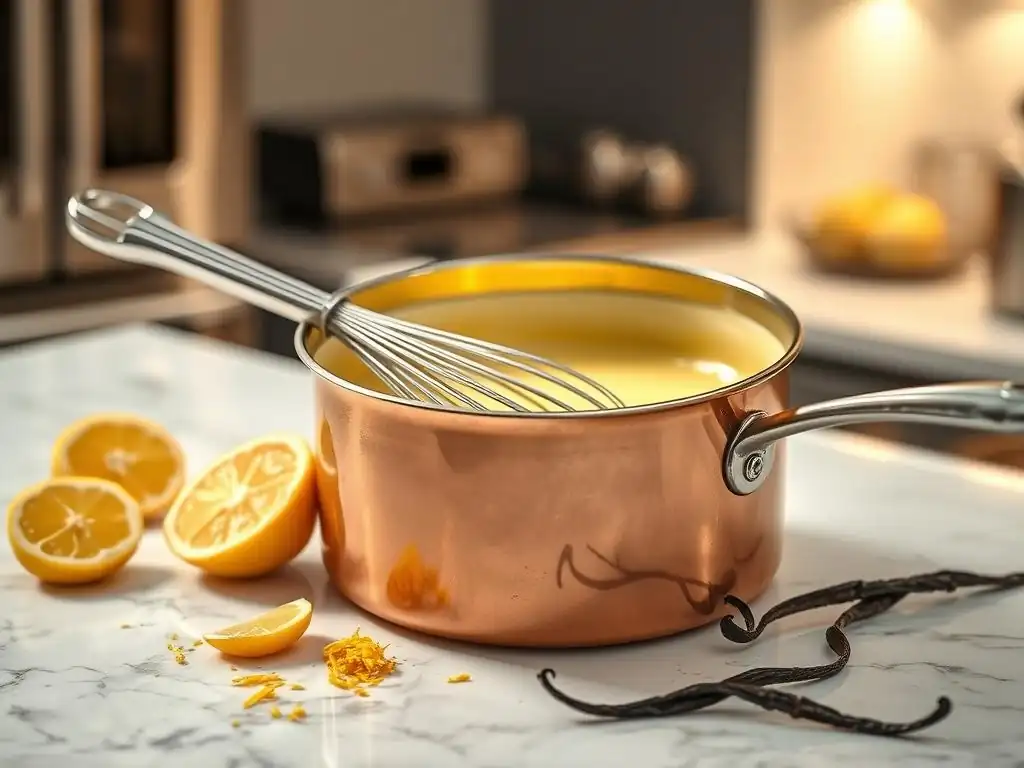
Welcome to BakeWithEase, where baking dreams become delicious realities! Ever wondered how to achieve that elusive, velvety smooth texture in your French pastry creations? This week, we're diving deep into the secrets of crafting the perfect consistency for French crème pâtissière. Unlock the secrets behind this essential pastry cream and discover how to elevate your desserts to a whole new level. Intrigued? Let's embark on a journey to pâtissière perfection!
- Mastering French Crème Pâtissière: A Baker's Guide
- Understanding Crème Pâtissière: Foundations for Success
-
Achieving Ideal Consistency: A Step-by-Step Guide
- Step 1: Preparing Ingredients - Accurate Measurement and Mise en Place
- Step 2: Combining Ingredients - Preventing Lumps and Ensuring Smoothness
- Step 3: Cooking the Crème - Temperature Monitoring and Constant Stirring
- Step 4: Achieving Perfect Thickness - The "Ribbon" Test
- Step 5: Cooling and Storing - Preventing Skin Formation and Maintaining Texture
- Troubleshooting Consistency Issues
- Tips and Tricks for Exceptional Crème Pâtissière
- Flavor Variations
- Recipes Featuring Crème Pâtissière
- Advanced Techniques
- Common Mistakes and How to Avoid Them
- Final Thoughts: Practice and Patience
-
Frequently Asked Questions
- What is French crème pâtissière and why is achieving the perfect consistency important?
- What are some common problems bakers face when trying to achieve the right consistency for crème pâtissière?
- What are the key ingredients that contribute to the consistency of crème pâtissière?
- How can I avoid lumps in my crème pâtissière?
- What can I do if my crème pâtissière turns out too thin?
- Final Reflection: Mastering the Art of Crème Pâtissière
- Unlock Your Crème Pâtissière Potential!
Mastering French Crème Pâtissière: A Baker's Guide
Understanding Crème Pâtissière: Foundations for Success
What is Crème Pâtissière? Definition and Culinary Applications
Crème pâtissière, often simply called pastry cream, is a classic French custard thickened with starch (typically cornstarch or flour) and enriched with egg yolks. Unlike simpler custards that rely solely on egg proteins for thickening, the addition of starch makes crème pâtissière remarkably stable and allows it to be brought to a boil without curdling. This characteristic is fundamental to achieving the desired thick, smooth consistency required for various pastries. It serves as a versatile base for countless desserts, from simple tarts to complex layered cakes.
This foundational custard is a cornerstone of French patisserie, prized for its rich flavor and luxurious texture. Its stability makes it ideal for fillings that need to hold their shape, such as in éclairs, cream puffs (choux à la crème), and fruit tarts. It can also be lightened by folding in whipped cream to create crème diplomat or combined with butter to make crème mousseline, demonstrating its adaptability across a wide range of culinary applications beyond just a simple filling. Understanding its basic composition and behavior during cooking is the first step towards mastering its perfect consistency.
Key Ingredients: Milk, Eggs, Sugar, and Starch
The core ingredients for French crème pâtissière are milk, egg yolks, sugar, and a thickening starch, most commonly cornstarch or all-purpose flour. Milk provides the liquid base and contributes to the creamy texture and flavor; whole milk is often preferred for its richness, though other fat percentages can be used with slight textural adjustments. Egg yolks are crucial for richness, color, and contribute to thickening through protein coagulation when heated, typically providing about 4-6 yolks per 500ml (approx.
2 cups) of milk in a standard recipe. Sugar not only sweetens the custard but also helps tenderize the egg proteins and contributes to a smoother consistency, usually around 100-120g (approx. 1/2 cup) per 500ml milk.
The starch component is vital for achieving the characteristic thick and stable consistency of French crème pâtissière. Cornstarch is a popular choice because it provides a clean, clear thickening without imparting a floury taste, typically used at a ratio of 40-50g (approx. 1/4 cup) per 500ml milk.
Flour (usually all-purpose) can also be used, often requiring slightly more volume (around 50-60g) as its thickening power is slightly less potent than cornstarch, and it can sometimes make the custard slightly cloudier. The interaction between these ingredients – the gelatinization of starch molecules and the coagulation of egg proteins upon heating – is what gives crème pâtissière its unique texture and allows you to achieve that essential perfect consistency.
Essential Equipment: Whisk, Saucepan, and Thermometer
Having the right tools is fundamental to successfully making French crème pâtissière with the desired consistency. A heavy-bottomed saucepan is crucial because it distributes heat more evenly than thin-bottomed pans, significantly reducing the risk of scorching the bottom of the custard as it thickens. A 2-3 quart saucepan is typically sufficient for standard batch sizes. The heavy base prevents hot spots that can lead to burnt bits sticking to the pan, which are notoriously difficult to remove and can ruin the flavor and smoothness of your crème.
A good quality whisk is perhaps the most important tool for achieving perfect consistency. A balloon whisk or a French whisk with many wires is ideal for incorporating air initially and, more importantly, for constantly stirring the custard as it cooks. Vigorous and continuous whisking is necessary to prevent lumps from forming as the starch gelatinizes and the eggs thicken.
Finally, while not strictly mandatory for every baker, a thermometer (instant-read or candy thermometer) is highly recommended. Cooking crème pâtissière to the correct temperature range, typically between 82°C and 85°C (180°F to 185°F), ensures that both the starch is fully cooked (for maximum thickening power) and the egg yolks are properly pasteurized, guaranteeing both safety and the optimal French crème pâtissière perfect consistency.
Achieving Ideal Consistency: A Step-by-Step Guide
Step 1: Preparing Ingredients - Accurate Measurement and Mise en Place
Accuracy in ingredient measurement is paramount when aiming for the perfect consistency in your French crème pâtissière. Unlike some more forgiving recipes, the ratios of starch, sugar, eggs, and liquid are finely balanced to achieve the desired thickness and texture. Using a kitchen scale to weigh dry ingredients like sugar and starch is highly recommended over volume measurements (cups), as it provides far greater precision.
For example, 50 grams of cornstarch will always be 50 grams, whereas 1/4 cup can vary depending on how it's scooped and leveled, potentially impacting your final French crème pâtissière perfect consistency. Measure liquids accurately using a liquid measuring cup at eye level.
Beyond just measuring, having a proper mise en place (everything in its place) before you start cooking is crucial for a smooth process and preventing errors that can lead to consistency issues. Separate your egg yolks carefully, ensuring no egg white contaminates them (whites can make the custard rubbery). Whisk the yolks, sugar, and starch together in a bowl until smooth and pale – this step is often called "blanching" and helps dissolve the sugar and evenly distribute the starch, preventing lumps later.
Have your milk heated gently in the saucepan (just to a simmer, not a boil) and any flavorings like vanilla bean ready. This preparation ensures you can move quickly through the cooking steps, which is essential for preventing scorching and achieving the ideal thickness without over or undercooking.
Step 2: Combining Ingredients - Preventing Lumps and Ensuring Smoothness
The stage where heated milk meets the egg-sugar-starch mixture is critical for preventing lumps and ensuring a smooth French crème pâtissière perfect consistency. The most common technique is tempering the egg mixture. This involves gradually whisking a small amount of the hot milk into the egg mixture first. Start with just a ladleful, whisking constantly and vigorously.
The goal is to slowly raise the temperature of the egg yolks without scrambling them. Add another ladleful, whisking again, and repeat 2-3 times. This process warms the eggs gently, making them less likely to seize up when added to the remaining hot milk.
Once the egg mixture is tempered, you can then pour it back into the saucepan with the remaining hot milk. It is vital to continue whisking the mixture in the saucepan constantly as you pour. This ensures the starch and egg proteins are dispersed evenly as they begin to heat and thicken, preventing any part of the mixture from cooking too quickly and forming clumps.
Maintain constant, vigorous whisking, paying special attention to the bottom edges of the pan where scorching is most likely to occur. A smooth, lump-free start at this stage is fundamental to achieving a beautiful, glossy French crème pâtissière perfect consistency.
Step 3: Cooking the Crème - Temperature Monitoring and Constant Stirring
Cooking the crème pâtissière requires careful attention to both temperature and continuous movement. Once the tempered egg mixture is combined with the milk in the saucepan, place it over medium heat. Begin whisking immediately and do not stop. Constant stirring is absolutely essential to prevent the bottom from burning and to ensure even heating and thickening throughout the custard. As the mixture heats, you will feel it start to thicken, usually around 70°C (158°F). Keep whisking vigorously as it becomes noticeably thicker.
Using a thermometer at this stage is highly beneficial for achieving consistent results and the desired French crème pâtissière perfect consistency. The custard needs to reach a boil (small bubbles breaking the surface) and cook at a boil for a specific duration, typically 1-2 minutes, while still whisking constantly. This step, often overlooked, is crucial for fully activating the starch's thickening power and cooking out any raw starch flavor.
Aiming for a temperature of 82-85°C (180-185°F) ensures the egg yolks are fully cooked and the starch is properly gelatinized. Cooking for too short a time will result in a thinner, less stable crème, while cooking for too long or at too high a heat increases the risk of scorching or breaking the emulsion.
Step 4: Achieving Perfect Thickness - The "Ribbon" Test
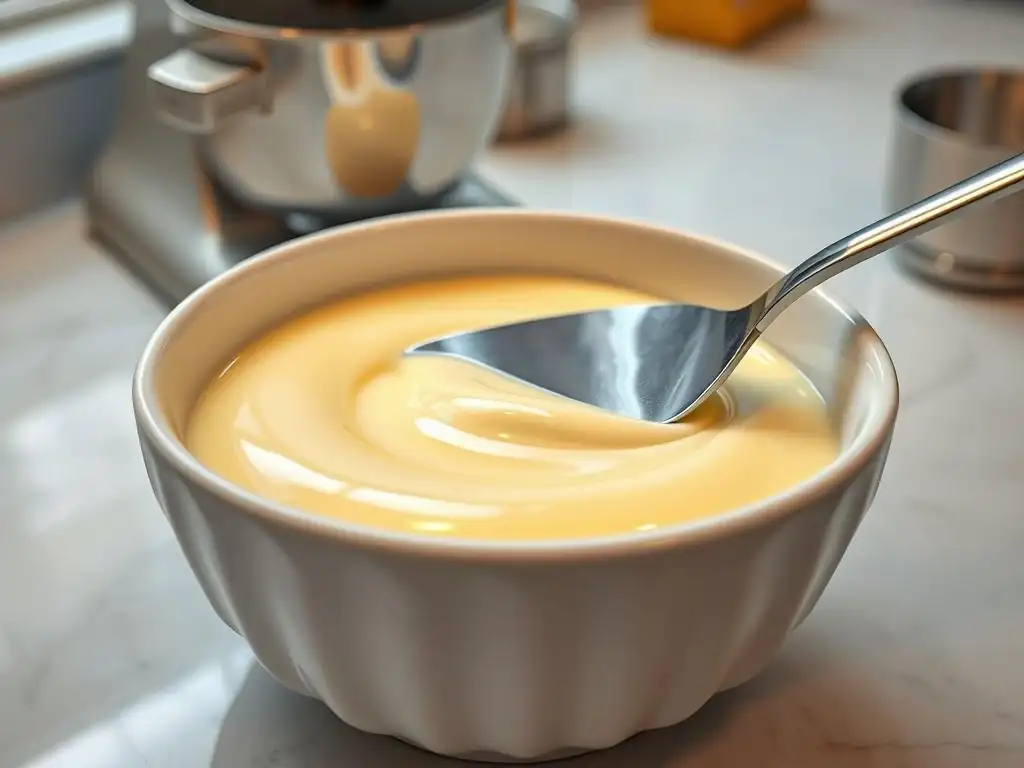
Determining when your French crème pâtissière has reached the perfect consistency while it's still hot in the pan requires a visual test, often referred to as the "ribbon" or "nappe" test. After the custard has come to a boil and cooked for the required 1-2 minutes (while whisking constantly), lift the whisk from the pan. The custard should coat the back of a spoon or the whisk wires thickly. When you draw your finger across the back of the spoon, the line should remain clean and not run.
Alternatively, when you let the custard drip from the whisk back into the pan, it should fall in a thick stream and briefly hold its shape on the surface before slowly sinking back into the rest of the mixture. This indicates that the starch has fully gelatinized and the egg proteins have coagulated to the correct degree, resulting in the desired French crème pâtissière perfect consistency.
If it runs off the spoon too quickly, it needs to cook for another 30 seconds to a minute while whisking vigorously. If it's already extremely thick and difficult to whisk, it might be slightly overcooked in terms of starch activation, but subsequent steps like straining and cooling will help refine the texture.
Step 5: Cooling and Storing - Preventing Skin Formation and Maintaining Texture
Once your French crème pâtissière has reached the desired thickness, prompt and proper cooling is essential to prevent a skin from forming on the surface and to maintain its perfect consistency. Immediately remove the saucepan from the heat. If you used a vanilla bean, scrape it out. For an extra smooth texture, you can strain the hot custard through a fine-mesh sieve into a clean bowl. This removes any potential lumps, scorched bits, or vanilla bean remnants.
To prevent the dreaded skin and cool the custard quickly (which helps maintain food safety and texture), cover the surface of the hot crème directly with plastic wrap. Press the plastic wrap down so it touches the entire surface of the custard, eliminating any air pockets between the crème and the wrap. This creates a seal that prevents evaporation and skin formation.
Allow it to cool at room temperature for a short while (about 15-20 minutes) before transferring it to the refrigerator. Chill completely for at least 2-3 hours, or preferably until firm, before using. Properly cooled French crème pâtissière should be thick enough to hold its shape when scooped, yet smooth and creamy.
Troubleshooting Consistency Issues
Lumpy Crème: Causes and Prevention Strategies
Lumpy crème pâtissière is a common frustration, often arising from uneven heating or insufficient whisking during the cooking process. One primary cause is not properly tempering the egg mixture; adding cold or slightly warmed eggs directly to hot milk can cause them to scramble instantly, creating irreversible lumps.
Another major culprit is inadequate whisking while the custard is on the heat. If the mixture sits even for a few seconds without being stirred, the starch and egg proteins on the bottom of the pan can cook too quickly and seize up, forming stubborn lumps that are difficult to whisk out.
Preventing lumps starts with meticulous preparation (Step 1) and careful combining (Step 2). Ensure your eggs are properly tempered by gradually adding hot milk while whisking constantly. When the mixture is back in the saucepan over heat, commit to continuous, vigorous whisking. Pay close attention to the corners and bottom of the pan.
If, despite your efforts, you end up with a few small lumps, don't despair. Passing the finished hot custard through a fine-mesh sieve (as mentioned in Step 5) is the most effective way to remove them and restore your French crème pâtissière perfect consistency before chilling. For larger, scrambled egg lumps, unfortunately, straining might not salvage the texture entirely.
Runny Crème: Correcting Under-Cooking and Insufficient Starch
A runny French crème pâtissière is usually a sign of under-cooking. The starch needs to reach a specific temperature (around 82-85°C or 180-185°F) and cook at that temperature for 1-2 minutes to fully gelatinize and achieve its maximum thickening potential. If you remove the custard from the heat too early, before it has properly boiled and thickened, it will remain thin even after cooling. Another reason for runniness could be using too little starch relative to the amount of liquid, or using a starch that has lost some of its potency (e.g., very old cornstarch).
If you realize your crème pâtissière is too runny after it has cooled, you can attempt to fix it. The best approach is to gently reheat it. Return the custard to a clean saucepan over medium-low heat. Prepare a slurry of 1-2 tablespoons of cornstarch mixed with an equal amount of cold milk or water.
Once the custard is warm and fluid again, slowly whisk in the starch slurry. Continue to whisk constantly as you bring the mixture back to a gentle boil, cooking it for 1-2 minutes after it thickens. This should activate the additional starch and correct the consistency, bringing it closer to the desired French crème pâtissière perfect consistency. Be careful not to scorch it during reheating.
Overcooked Crème: Salvaging Burnt Flavors and Texture
Overcooking French crème pâtissière can manifest in a couple of ways, both detrimental to flavor and consistency. Cooking at too high a heat or for too long without sufficient stirring can lead to scorching on the bottom of the pan, resulting in a bitter, burnt flavor that permeates the entire batch. In terms of texture, while initial thickening is achieved by starch gelatinization and egg coagulation, excessive heat or prolonged cooking can cause the egg proteins to seize up too much, leading to a slightly rubbery or grainy texture rather than a smooth, creamy one.
If you detect a burnt smell or see brown bits on the bottom of your pan while cooking, immediately remove the pan from the heat. Do not scrape the bottom of the pan; this will mix the burnt bits into the custard. Carefully pour the unaffected custard from the top into a clean bowl, leaving the scorched layer behind.
While this might salvage the majority of the batch from a burnt flavor, the texture might still be slightly affected if the overcooking was widespread. Unfortunately, there's no magic fix for truly burnt flavor; prevention through careful heating and constant whisking is key to avoiding this issue and maintaining your French crème pâtissière perfect consistency.
Thick Crème: Thinning Techniques and Adjustments
Sometimes, French crème pâtissière can turn out too thick after chilling. This might happen if you used slightly too much starch, cooked it for too long, or if the cooling process was very rapid. While a thick crème is better than a runny one for some applications (like piping into éclairs), if it's overly stiff or paste-like, it can be unpleasant. The goal is a thick but still smooth and creamy texture.
To thin overly thick crème pâtissière, the simplest method is to whisk in a small amount of liquid. Cold milk or cream works best. Start by whisking the chilled crème in a bowl to loosen it up. Gradually add 1-2 tablespoons of cold milk or cream at a time, whisking thoroughly after each addition until the desired consistency is achieved.
You might need to use an electric mixer with a whisk attachment for very stiff crème to ensure it becomes smooth and lump-free again. Be careful not to add too much liquid at once, as it's easier to add more than to correct if it becomes too thin. This gentle adjustment can restore your French crème pâtissière perfect consistency.
Tips and Tricks for Exceptional Crème Pâtissière
Using Whole Milk vs. Lower Fat Options
The choice of milk significantly impacts the final richness and texture of your French crème pâtissière perfect consistency. Traditional recipes almost invariably call for whole milk (around 3.5% milk fat). The higher fat content contributes to a creamier, more luxurious mouthfeel and a richer flavor profile. Fat also helps to coat the starch granules and egg proteins, contributing to a smoother texture and slightly inhibiting excessive thickening, resulting in a more desirable consistency.
Using lower-fat milk (2%, 1%, or skim) will still allow the custard to thicken due to the starch and egg proteins, but the resulting crème pâtissière will likely be less rich, less smooth, and potentially have a slightly thinner or even slightly gelatinous texture compared to one made with whole milk. While you can certainly make crème pâtissière with lower-fat milk, especially if dietary considerations require it, be aware that the French crème pâtissière perfect consistency as traditionally understood benefits greatly from the richness provided by whole milk.
If you must use lower-fat milk, sometimes adding a small amount of butter at the end can help compensate for the lost richness and smoothness.
Vanilla Bean vs. Extract: Flavor Profiles
The classic flavoring for French crème pâtissière is vanilla, and the choice between using a vanilla bean or vanilla extract can significantly affect the depth and complexity of the flavor. Using a whole vanilla bean, split lengthwise with the seeds scraped out and added to the milk while it heats, infuses the milk with a rich, nuanced vanilla flavor that extract simply cannot replicate. The tiny black seeds also add a visual cue of authentic, high-quality vanilla. While more expensive, the difference in flavor is noticeable and contributes significantly to the overall sensory experience of the crème.
Vanilla extract, on the other hand, is a more convenient and cost-effective option. A good quality pure vanilla extract can still provide a pleasant vanilla flavor. However, the flavor profile is typically less complex and lacks the subtle undertones present in a true bean infusion.
If using extract, add it after the custard has finished cooking and has been removed from the heat. Adding extract while cooking can cause some of the volatile flavor compounds to evaporate. For the most authentic and flavorful French crème pâtissière perfect consistency with a classic taste, a vanilla bean is the preferred choice, but quality extract is a perfectly acceptable alternative for everyday baking.
Achieving a Silky Texture: Strain and Emulsify
Even with careful whisking, minor imperfections can sometimes affect the ultimate silkiness of French crème pâtissière. To guarantee a beautifully smooth and velvety texture, straining the hot custard through a fine-mesh sieve immediately after cooking is a highly recommended step. This process catches any small lumps that may have formed, any pieces of vanilla bean, or any tiny scorched bits from the bottom of the pan, ensuring only the smoothest custard makes it into the chilling bowl.
After straining and covering the surface with plastic wrap to cool, the crème pâtissière will solidify considerably in the refrigerator. Before using it, it's often necessary to whisk it again to restore its smooth, creamy, and pipeable consistency. A few vigorous whisks by hand or using an electric mixer on low speed will break up the gel structure formed during chilling and return it to a luscious, homogenous texture. This brief re-whisking step is crucial for achieving that final, silky smooth French crème pâtissière perfect consistency ready for filling pastries.
Thermometer Use: Precise Temperature Control
While experienced bakers can often tell when French crème pâtissière is done by feel and appearance, using a thermometer provides invaluable precision, especially when you are aiming for consistent results and mastering the perfect consistency. As mentioned earlier, the custard needs to reach a specific temperature range, typically 82-85°C (180-185°F), and be cooked at this temperature for 1-2 minutes. This temperature ensures the starch is fully gelatinized for maximum thickening and the egg yolks are properly cooked for safety and structure.
Monitoring the temperature with an instant-read thermometer allows you to remove the custard from the heat at precisely the right moment, preventing both undercooking (leading to runniness) and overcooking (risking scorching or a rubbery texture). It takes the guesswork out of the process and is particularly helpful when adjusting to different stove heats or batch sizes. Consistent temperature control using a thermometer is a key technique for reliably achieving the desired French crème pâtissière perfect consistency every time you make it.
Flavor Variations
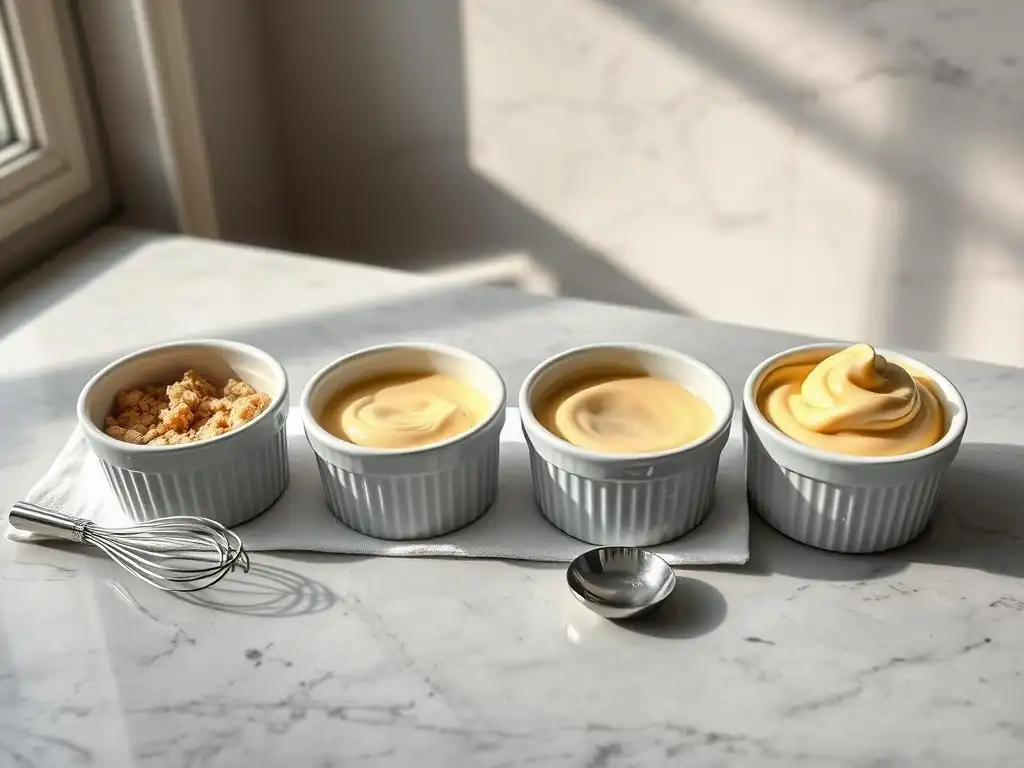
Chocolate Crème: Using Cocoa Powder or Melted Chocolate
Transforming classic French crème pâtissière into a rich chocolate version is a popular variation. This can be achieved using either cocoa powder or melted chocolate, each yielding a slightly different result in both flavor and consistency. If using cocoa powder, whisk it together with the sugar and starch in the initial step before adding the egg yolks.
Use unsweetened cocoa powder for a deeper chocolate flavor, typically around 30-40g per 500ml milk. The cocoa powder adds a bit more dry matter, which can slightly affect the thickening, so you might need a tiny bit less starch or milk depending on the recipe.
Alternatively, melted chocolate can be stirred into the finished hot crème pâtissière after it's removed from the heat and strained. Use high-quality bittersweet or semi-sweet chocolate (around 100-150g per 500ml milk) chopped finely or in callets for easy melting. The fat in the chocolate will add richness and contribute to a very smooth, almost ganache-like texture once cooled.
This method tends to produce a richer, more decadent chocolate flavor. Regardless of the method, whisk thoroughly until the chocolate is fully incorporated and the color is uniform, ensuring the chocolate doesn't create lumps and that the French crème pâtissière perfect consistency is maintained or slightly adjusted for the chocolate addition.
Citrus Crème: Zest and Juice Infusion
Adding citrus flavor to French crème pâtissière creates a bright, refreshing variation perfect for pairing with fruits or lighter pastries. This is typically done by infusing the milk with citrus zest. Use the zest of lemons, oranges, or mandarins, ensuring you only get the colorful part and avoid the bitter white pith. Add the zest to the milk before heating it, allowing it to steep and release its aromatic oils as the milk warms. Strain the milk before combining it with the egg mixture to remove the zest pieces.
While zest provides intense aroma, adding citrus juice requires more care as the acidity can curdle the egg proteins. If adding juice, it's usually incorporated after the crème pâtissière has cooked and thickened, and has been removed from the heat. A small amount (1-2 tablespoons per 500ml milk) of fresh juice can be whisked in.
However, a more stable method is often to make the crème pâtissière slightly thicker than usual and then whisk in a citrus curd (made separately with juice, eggs, sugar, and butter) once both are cooled. This combination provides robust citrus flavor and ensures a smooth, stable French crème pâtissière perfect consistency, avoiding curdling issues.
Nut Crème: Adding Nut Pastes or Extracts
Introducing nut flavors adds another layer of complexity to French crème pâtissière. This can be achieved by incorporating finely ground nuts, nut pastes, or nut extracts. For a subtle flavor and slight texture, very finely ground nuts like almonds (almond flour) can be whisked into the dry ingredients. However, this can affect the smoothness and might require straining. A more common method is using nut pastes, such as almond paste, pistachio paste, or hazelnut paste. These pastes are rich and flavorful and can be whisked into the hot, finished crème pâtissière off the heat until fully combined and smooth.
Nut extracts, like almond extract or hazelnut extract, offer a concentrated flavor without altering the texture. Similar to vanilla extract, these should be added after the crème has finished cooking to preserve their volatile aromas. Start with a small amount (1/2 to 1 teaspoon per 500ml milk) as extracts can be potent. Whisking in a nut paste or extract allows you to easily create variations like Pistachio Crème Pâtissière or Frangipane Crème (often a mix of crème pâtissière and frangipane/almond cream), adding delightful new dimensions while maintaining the essential French crème pâtissière perfect consistency.
Recipes Featuring Crème Pâtissière
Éclairs: Classic Filling Techniques
Éclairs are a quintessential French pastry where achieving the French crème pâtissière perfect consistency is paramount. The crème needs to be thick and stable enough to hold its shape within the airy choux pastry shell, but also smooth and pipeable. Traditionally, crème pâtissière for éclairs is made following the classic method, chilled until very firm, and then re-whisked vigorously just before filling to make it smooth and pipeable. A common ratio provides a crème that is firm yet creamy.
Filling éclairs is typically done by piping the chilled, re-whisked crème into the cooled choux shells. This can be achieved by making holes in the bottom or ends of the éclair shell and using a piping bag fitted with a plain or bismarck tip.
The perfect consistency allows the crème to fill the cavity completely without collapsing or becoming too runny, ensuring each bite of the éclair is filled with luscious, smooth custard. Some recipes call for lightening the crème pâtissière with whipped cream (making crème diplomat) for a lighter éclair filling, which requires the base crème pâtissière to be quite firm initially to support the added cream.
Fruit Tarts: Balancing Flavors and Textures
Crème pâtissière serves as a perfect base for fruit tarts, providing a creamy counterpoint to the crisp pastry shell and fresh fruit toppings. For fruit tarts, the French crème pâtissière perfect consistency is slightly less rigid than for éclairs, as it doesn't need to be piped into a narrow cavity, but it still needs to be firm enough to hold the weight of the fruit without spreading excessively. It's typically spread into a pre-baked tart shell after chilling and re-whisking.
The richness and sweetness of the crème pâtissière balance the tartness of fresh fruits like berries, kiwis, or citrus segments. Often, a thin layer of jam or glaze is applied to the surface of the tart shell before adding the crème to prevent the shell from becoming soggy. The cooled, re-whisked crème is spread evenly, and then the fresh fruit is artfully arranged on top. A final glaze (like melted apricot jam) can be brushed over the fruit for shine and preservation. The crème's smooth, stable consistency ensures the tart remains visually appealing and holds together well when sliced.
Cream Puffs: Achieving Light and Airy Results
Cream puffs, or choux à la crème, are another classic French pastry that relies on crème pâtissière as a filling. Similar to éclairs, the goal is to fill the light, hollow choux pastry shells with a generous amount of smooth, stable custard. The desired French crème pâtissière perfect consistency here is typically the standard, firm but creamy texture achieved through proper cooking and chilling.
After baking and cooling the cream puff shells, they are usually split open or have a hole poked in the bottom. The chilled, re-whisked crème pâtissière is then piped inside using a piping bag. The stability of the crème is essential to fill the large cavity of the puff without running out or making the pastry soggy.
Sometimes, as with éclairs, crème diplomat is used for a lighter filling. Regardless of whether plain crème pâtissière or crème diplomat is used, the underlying base must have that fundamental thick yet smooth French crème pâtissière perfect consistency to ensure a delightful contrast between the airy pastry and the rich filling.
Boston Cream Pie: Layering Crème with Cake
While its name suggests a pie, Boston Cream Pie is actually a cake – specifically, two layers of sponge cake filled with a generous amount of crème pâtissière and topped with a chocolate glaze. For this application, the French crème pâtissière perfect consistency needs to be spreadable but firm enough to create a distinct layer between the cake halves without oozing out the sides when sliced. A slightly looser texture than for piping into éclairs is acceptable, but it should still hold its shape well.
The chilled and re-whisked crème pâtissière is spread evenly over the bottom layer of cake, leaving a small border. The second cake layer is then placed on top, and the dessert is typically chilled again briefly to allow the crème to set slightly before the warm chocolate glaze is poured over the top. The contrast between the tender sponge cake, the rich, smooth crème pâtissière, and the slightly firm chocolate glaze is what defines this dessert. Achieving the right crème consistency ensures clean layers and a satisfying texture in every bite.
Advanced Techniques
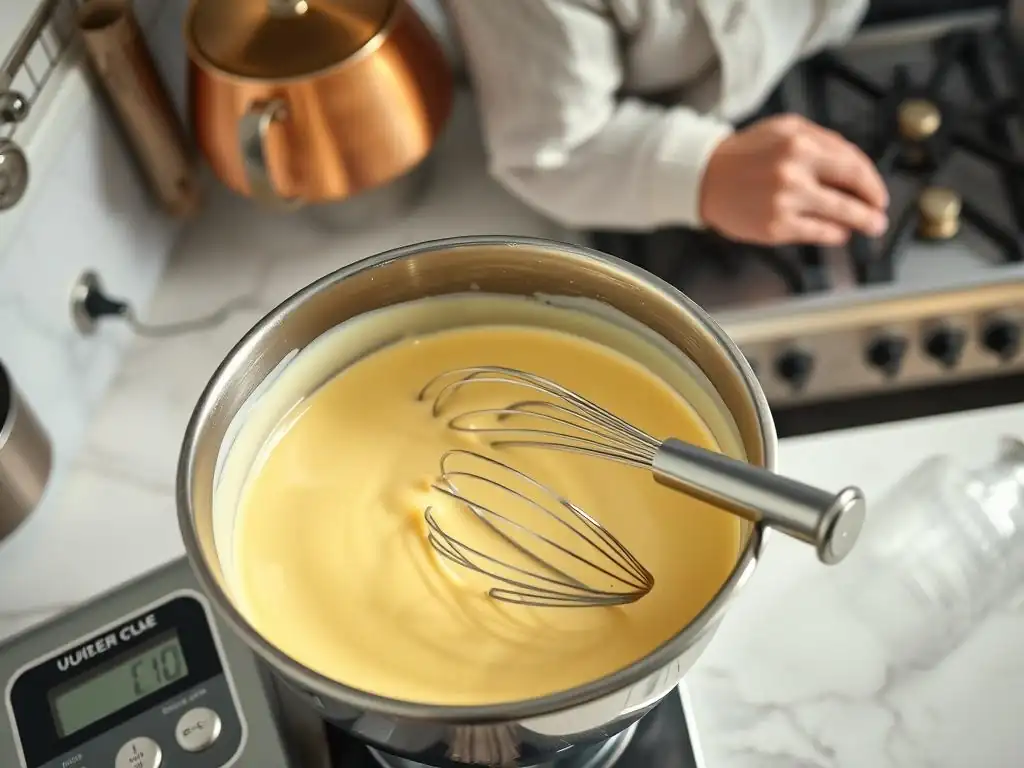
Incorporating Gelatin for Stability
For applications where extra stability is required, such as layered cakes that need to hold up under slicing, or when making crème diplomat (crème pâtissière lightened with whipped cream), incorporating gelatin can be beneficial. Gelatin provides additional structure and prevents the crème from weeping or collapsing, especially in warmer conditions. Typically, 1-2 sheets of gelatin (or 2-4g of powdered gelatin) are sufficient for 500ml of crème pâtissière.
To incorporate gelatin, soak the gelatin sheets in cold water until softened, or mix powdered gelatin with a small amount of cold water and let it bloom. Squeeze excess water from the sheets. Once the crème pâtissière is cooked and removed from the heat, whisk in the softened gelatin until it is completely dissolved by the residual heat. Ensure it's fully melted and incorporated evenly. Strain the mixture if desired, cover, and chill as usual. The gelatin will set as the crème cools, resulting in a firmer, more stable French crème pâtissière perfect consistency, particularly useful for structural desserts.
Preparing Ahead: Storage and Reheating
French crème pâtissière is an excellent component to prepare ahead of time, as it requires chilling to reach its final set consistency. It can be made up to 2-3 days in advance when stored properly in the refrigerator. The key to successful storage is ensuring the surface is completely covered with plastic wrap pressed directly onto the crème to prevent a skin from forming and to protect it from absorbing refrigerator odors.
When ready to use, the chilled crème pâtissière will be quite firm. It must be re-whisked thoroughly before use to restore its smooth, creamy texture and achieve the desired French crème pâtissière perfect consistency for filling or spreading. Use a whisk or electric mixer to beat it until it is smooth and lump-free. Do not attempt to "reheat" it in the traditional sense (like warming it up) unless you are trying to fix a runny batch by cooking it further with added starch. For standard use, simply whisking until smooth is sufficient.
Vegan Crème Pâtissière: Plant-Based Alternatives
Creating a vegan version of French crème pâtissière requires substituting all the dairy and egg components with plant-based alternatives while still achieving a similar rich flavor and perfect consistency. Plant-based milks like almond, soy, oat, or coconut milk can replace dairy milk. Coconut milk (full-fat canned) provides the most richness and creamy texture, closer to whole milk.
Replacing the egg yolks and their thickening/enriching properties is the main challenge. This is typically achieved by relying more heavily on starches and sometimes adding fats. Cornstarch is a primary thickener, often used in slightly higher quantities than in the traditional recipe.
Other starches like tapioca starch or arrowroot can also be used, sometimes in combination. Adding vegan butter or a neutral-flavored oil (like coconut oil or refined sunflower oil) at the end provides richness and helps create a smooth, emulsified texture similar to that provided by egg yolks. Recipes vary widely, but the principle is to cook a plant-based milk thickened with starch and enriched with fat until it reaches a similar glossy, thick consistency as traditional crème pâtissière, then chill and re-whisk.
Common Mistakes and How to Avoid Them
Overmixing: Developing Gluten and Impacting Texture
While whisking is crucial during the cooking phase of French crème pâtissière to prevent lumps and scorching, overmixing the initial egg, sugar, and flour mixture (if using flour as the starch) can potentially lead to issues. Vigorous whisking of flour in a liquid can develop gluten, resulting in a slightly tougher or less smooth texture in the final custard. This is less of a concern when using cornstarch, as it contains no gluten.
If using flour, whisk the egg, sugar, and flour mixture just until it's smooth and the flour is fully incorporated, but avoid excessive beating. Once the liquid is added and the mixture is on the heat, the focus shifts to continuous stirring to prevent scorching and ensure even thickening, rather than aggressive whisking aimed at aeration or gluten development. After chilling, re-whisk the set crème until smooth, but again, stop once it's creamy and pipeable; prolonged beating can sometimes make it slightly gluey, detracting from the French crème pâtissière perfect consistency.
Undercooking: Insufficient Thickening and Flavor Development
Undercooking is a primary reason for a runny French crème pâtissière. As detailed earlier, the custard must reach a boil and cook for 1-2 minutes at temperature (82-85°C or 180-185°F) to fully activate the starch's thickening power. Removing it from the heat too soon means the starch hasn't fully gelatinized, and it won't set properly upon chilling, resulting in a thin, disappointing custard.
Beyond consistency, undercooking also impacts flavor. Raw starch can leave a slightly chalky or floury taste. Cooking the crème properly ensures the starch flavor is cooked out, leaving behind a clean, rich taste. Using a thermometer and being patient enough to let the custard come to a full boil and cook for the required time while whisking constantly are the best ways to avoid undercooking and guarantee both the correct French crème pâtissière perfect consistency and optimal flavor.
Burning: Preventing Scorching and Bitter Flavors
Burning the bottom of the crème pâtissière is a common and unfortunate mistake that can ruin an entire batch. Scorching occurs when the heat is too high or when the custard is not stirred constantly, allowing the thick mixture on the bottom to stick and caramelize/burn rapidly. This results in dark, bitter bits clinging to the pan and infusing the whole custard with an unpleasant burnt flavor.
Prevention is key here. Always use a heavy-bottomed saucepan, which distributes heat more evenly. Cook the crème over medium heat, not high heat, even if it takes a little longer to thicken. Most importantly, whisk constantly from the moment the mixture goes on the heat until it's removed.
Pay particular attention to scraping the bottom and sides of the pan with your whisk. If you do notice scorching, immediately remove the pan from the heat and carefully pour the unaffected custard into a clean bowl without scraping the bottom. While you might save most of the volume, any burnt flavor will likely linger, emphasizing the importance of vigilant stirring to achieve your French crème pâtissière perfect consistency without bitter notes.
Final Thoughts: Practice and Patience
Mastering the French crème pâtissière perfect consistency is a skill that improves with practice. Don't be discouraged if your first attempt isn't absolutely perfect. Baking, especially classic French patisserie, often requires understanding the subtle cues of temperature, texture, and timing. Pay close attention to the steps, use accurate measurements, whisk diligently, and consider using a thermometer for precision.
Each batch you make will teach you more about how the custard behaves on your specific stovetop and with your equipment. Embrace the process, learn from any mistakes (like lumps or runniness), and soon you'll be creating beautifully smooth, rich, and stable French crème pâtissière perfect consistency every time, ready to elevate your favorite pastries. Happy baking!
Frequently Asked Questions
What is French crème pâtissière and why is achieving the perfect consistency important?
French crème pâtissière, also known as pastry cream, is a thick, creamy custard used in many desserts. Achieving the perfect consistency is crucial for its use as a filling or topping without being too runny or too stiff.
What are some common problems bakers face when trying to achieve the right consistency for crème pâtissière?
Common issues include a lumpy texture, a too-thin consistency, or a scorch taste from improper heating. These problems often stem from incorrect ingredient ratios, insufficient whisking, or overheating the mixture.
What are the key ingredients that contribute to the consistency of crème pâtissière?
The key ingredients that directly influence the consistency are eggs, sugar, milk (or cream), and starch (usually cornstarch or flour). The ratio of these ingredients is vital for achieving the desired thickness.
How can I avoid lumps in my crème pâtissière?
To avoid lumps, sift the dry ingredients (starch and sugar) together before adding them to the wet ingredients. Also, whisk vigorously and constantly while cooking to ensure even distribution of heat and prevent the starch from clumping.
What can I do if my crème pâtissière turns out too thin?
If your crème pâtissière is too thin, you can gently cook it a bit longer over low heat, stirring constantly, until it thickens. Alternatively, you can whisk in a slurry of cornstarch and cold water and cook for another minute or two.
Final Reflection: Mastering the Art of Crème Pâtissière
The pursuit of the perfect French crème pâtissière is more than just a culinary quest; it's a testament to precision, patience, and the enduring power of classic techniques. Achieving that flawlessly smooth, velvety texture, free from lumps and boasting just the right sweetness, is a triumph that elevates any pastry from good to extraordinary. This journey through the intricacies of custard-making highlights the importance of understanding the fundamental principles of heat transfer and ingredient interaction.
The impact of a perfectly executed crème pâtissière extends far beyond the individual dessert. It represents a connection to generations of pastry chefs who have honed this technique, passing down their knowledge and expertise. It's a reminder that even the simplest recipes can hold immense depth and reward those who dedicate themselves to mastering the craft. The secret to good cooking is loving what you do.
– Julia Child. This sentiment rings especially true when striving for the perfect crème pâtissière; the passion and care invested are undeniably reflected in the final product.
Now, consider your own culinary journey. Have you experienced the frustration of a curdled custard, or the joy of achieving that perfect, silken texture? I invite you to embrace the challenge, to experiment with the techniques outlined in this guide, and to discover the satisfaction of creating a crème pâtissière that is truly your own. Don't be afraid to tweak the recipe, to personalize it, and to find your own rhythm in the kitchen. The pursuit of perfection is a continuous process, and each attempt brings you closer to mastering this timeless culinary art.
Unlock Your Crème Pâtissière Potential!
Thanks for taking the time to explore the secrets of perfect French Crème Pâtissière! We hope you now feel confident in creating this classic pastry cream. Ready to put your new skills to the test?
- Master the perfect consistency: Try making the recipe again, paying close attention to the subtle nuances of cooking and chilling time. Note your observations and adjust accordingly to perfect your technique.
- Elevate your baking game: Use your newfound expertise to create a show-stopping dessert featuring your flawless crème pâtissière. Think tarts, éclairs, or even a simple but elegant crème brûlée!
- Share your success! Post a picture of your creation on social media and tag #BakeWithEase – we'd love to see your masterpiece.
What innovative dessert creation will your perfect crème pâtissière inspire?