
The Perfect Meringue Ratio: Egg Whites to Sugar for Consistent Success

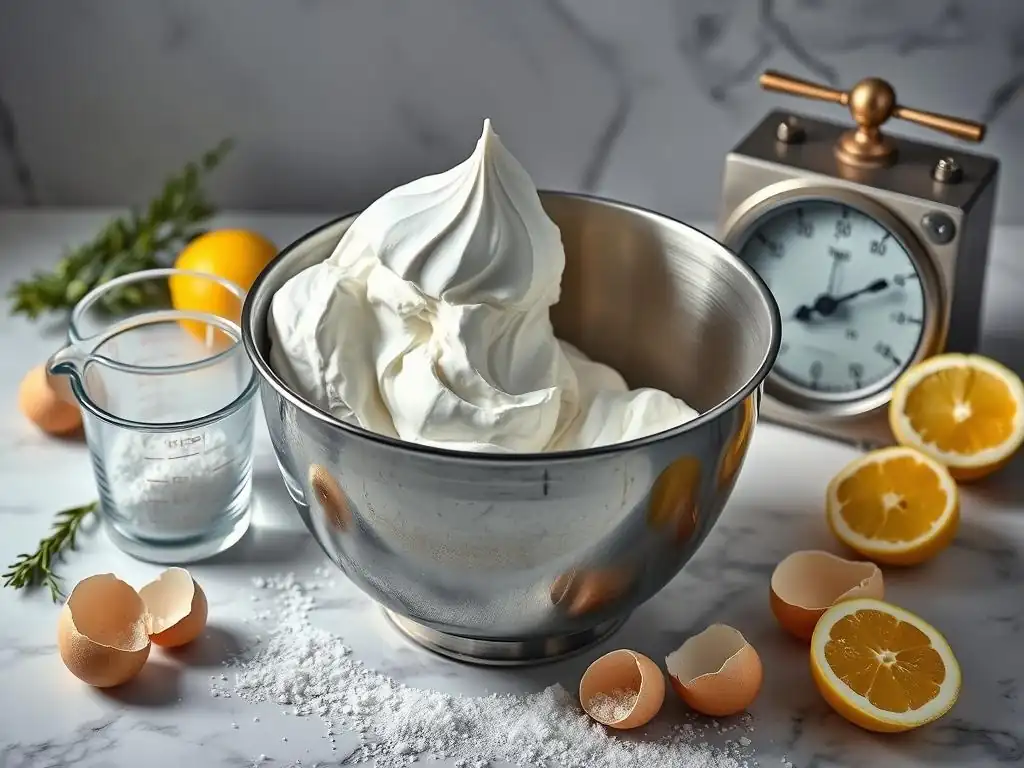
Welcome to BakeWithEase, where baking becomes a joy, not a chore! Ever wondered why your meringues sometimes fail? Unlock the secrets to light, airy perfection with our guide to the perfect egg whites meringue ratio. Discover how mastering this simple balance can elevate your baking from good to extraordinary. Intrigued? Let's dive in and banish meringue mishaps forever!
- Mastering Meringue: The Optimal Egg White to Sugar Ratio for Success
- A Baker's Guide to Meringue Perfection: Achieving Desired Consistency
- Understanding the Critical Importance of the Egg White to Sugar Ratio
- Determining the Ideal Egg White to Sugar Ratio for Various Meringue Types
- Calculating Sugar to Egg White Ratios: A Practical Approach
- Resolving Meringue Issues: Ratio-Related Problems and Solutions
- Beyond the Ratio: Key Factors Influencing Meringue Success
- Meringue Recipes and Applications Using Precise Ratios
- Advanced Meringue Techniques: Exploring Flavors and Textures
- Final Thoughts: Mastering the Egg White to Sugar Ratio for Meringue Mastery
-
Frequently Asked Questions
- What is the ideal egg whites meringue ratio for a stable meringue?
- Why is the egg whites meringue ratio so important in baking?
- Can I use different types of sugar when making meringue? Does this affect the egg whites meringue ratio?
- What happens if I don't follow the recommended egg whites meringue ratio?
- Does temperature affect the egg whites meringue ratio?
- Final Reflection: The Enduring Allure of the Perfect Meringue
- Unlock Your Meringue Mastery!
Mastering Meringue: The Optimal Egg White to Sugar Ratio for Success
A Baker's Guide to Meringue Perfection: Achieving Desired Consistency
Meringue, that ethereal cloud of whipped egg whites and sugar, is a fundamental building block in baking. From delicate cookies and crisp pavlovas to billowy pie toppings and stable cake frostings, its versatility is unmatched. However, achieving that perfect, stable meringue consistently can sometimes feel like a delicate dance.
The secret often lies in understanding and mastering the egg whites meringue ratio. Getting the proportions just right is paramount, influencing everything from the texture and stability to the final appearance of your creation. This guide will walk you through the essential ratios for different meringue types and the science behind why these proportions matter, helping you achieve meringue mastery in your own kitchen.
The journey to consistent meringue success begins with appreciating the nuances of its main components: egg whites and sugar. While seemingly simple, the way these two ingredients interact when whipped is a chemical marvel. The protein in the egg whites traps air, creating a foam, and the sugar then stabilizes this foam, preventing it from collapsing.
The specific egg white to sugar ratio determines how much sugar is available to coat and strengthen these air pockets, directly impacting how stiff, stable, and glossy your meringue becomes. A slight deviation in the proportions can mean the difference between a perfectly piped peak and a weeping, sad puddle.
Understanding the Critical Importance of the Egg White to Sugar Ratio
The egg whites meringue ratio isn't just a suggestion; it's a fundamental principle that dictates the very nature of the meringue you create. The ratio directly influences how well the egg proteins can denature and form a stable network to trap air, and how effectively the sugar can dissolve and bind with the water in the egg whites, reinforcing that structure. Too little sugar, and the meringue will be fragile, prone to weeping (releasing liquid), and lack structure.
Too much sugar, and it can become grainy, dense, or difficult to whip properly. Finding the sweet spot for your intended application is key to consistent results.
Consider the impact of the egg white to sugar ratio on stability. A higher sugar ratio, typical in Italian and Swiss meringues, results in a much more stable foam. This is because the sugar inhibits the protein bonds from becoming too tight and brittle, while also effectively binding water.
This stability is crucial for meringues that need to be piped into intricate shapes, used as frostings, or gently baked for extended periods without collapsing. Conversely, a lower sugar ratio, sometimes used in lighter applications, yields a less stable but potentially more voluminous meringue, though it's riskier for techniques requiring high stability or long baking times.
Why the Correct Ratio Dictates Meringue Structure and Stability
The structure of meringue is built upon the denaturation and coagulation of egg white proteins, primarily albumin. When egg whites are whipped, the mechanical action causes these proteins to unfold, or denature. As they unfold, they bond with each other and trap air bubbles, forming a foam.
The sugar added to the egg whites plays a crucial role in this process. It interferes with the protein bonds, preventing them from becoming too tight and forcing out the trapped air. Simultaneously, sugar dissolves in the water present in the egg whites, creating a syrup that coats the protein network, stabilizing the foam and preventing the protein strands from recoagulating too tightly.
A common egg white to sugar ratio for many stable meringues is around 1 part egg white to 2 parts sugar by weight. For example, if you use 50 grams of egg white (roughly 2 large egg whites), you would use 100 grams of sugar. This proportion provides enough sugar to effectively stabilize the large volume of air incorporated during whipping. The sugar also helps to prevent syneresis, which is the separation of liquid from the meringue over time. Without sufficient sugar, the fragile protein network cannot hold the trapped water, leading to a weeping meringue.
The Science of Meringue: How Egg Whites and Sugar Interact
At a molecular level, the interaction between egg whites and sugar is fascinating. Egg whites are primarily water and protein (about 90% water, 10% protein). When whipped, the mechanical force overcomes the surface tension of the liquid, allowing air to be incorporated. The proteins at the air-liquid interface denature and form a barrier around the air bubbles. Sugar, a disaccharide (sucrose), is highly hygroscopic, meaning it loves water. As sugar is added and dissolves, it competes with the proteins for the available water, which further aids in stabilizing the foam.
The method of adding sugar also impacts the final structure. Gradually adding sugar allows it to dissolve properly without deflating the foam. In methods like Italian or Swiss meringue, heating the sugar (or the egg whites and sugar together) ensures the sugar is fully dissolved, resulting in a much smoother and more stable meringue.
This heated sugar solution creates a stronger bond with the protein network. The specific egg whites meringue ratio determines the concentration of sugar in the final mixture, directly affecting its viscosity, stability, and susceptibility to moisture absorption from the environment. A higher sugar concentration generally leads to a more durable meringue.
Determining the Ideal Egg White to Sugar Ratio for Various Meringue Types
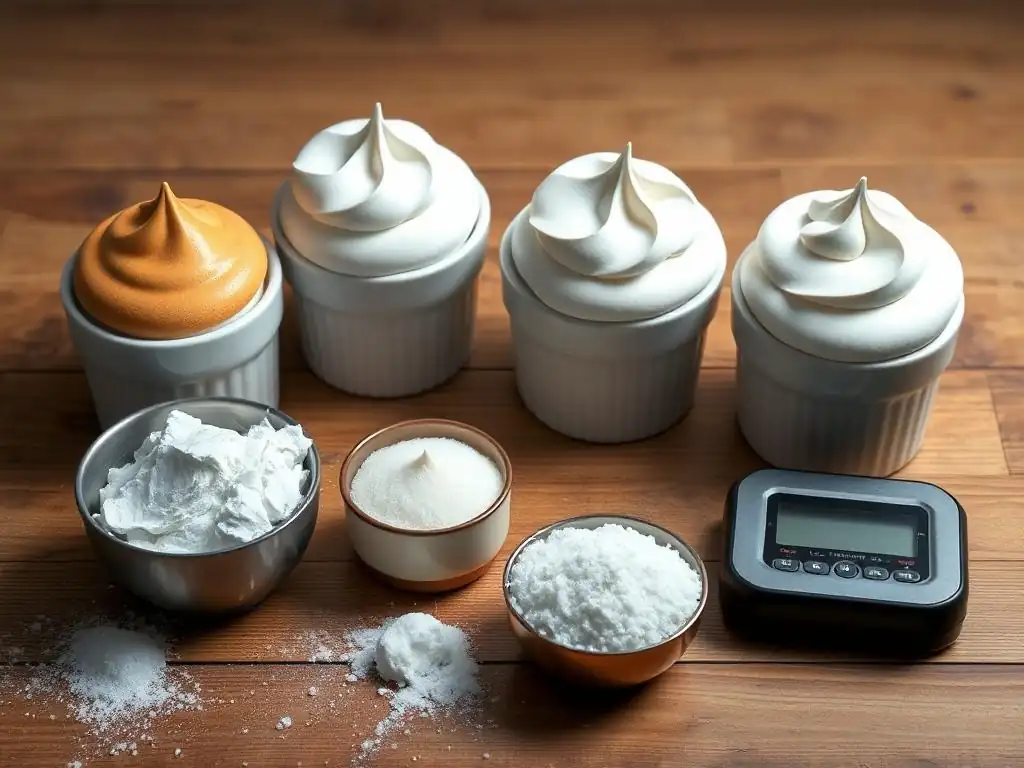
The world of meringue isn't monolithic; there are several primary types, each requiring a specific egg white to sugar ratio and technique to achieve its characteristic texture and stability. The three most common types are Italian, Swiss, and French, and understanding their distinct ratios is crucial for choosing the right one for your baking project. While general guidelines exist, slight variations in the egg whites meringue ratio can fine-tune the meringue for specific uses, from soft pie toppings to crisp cookies.
Selecting the appropriate egg white to sugar ratio is guided by the desired outcome. For a meringue that needs to be very stable and perhaps piped and baked, a higher sugar ratio is typically preferred. For a lighter, less stable meringue often used as a quick topping, a lower ratio might suffice. Knowing the standard ratios for each meringue type provides a reliable starting point, allowing you to predict the meringue's behavior during preparation and baking.
Italian Meringue: The Scalded Sugar Solution
Italian meringue is renowned for its exceptional stability and smooth texture. It's made by whipping egg whites to soft peaks and then gradually drizzling in a hot sugar syrup (heated to the soft-ball stage, typically 238-245°F or 114-118°C) while continuing to whip. The hot syrup cooks the egg whites as it's incorporated, making Italian meringue safe to consume without further baking. This cooking process also contributes significantly to its stability.
Understanding the Italian Meringue Ratio: 1:2 (Egg White to Sugar)
The standard egg white to sugar ratio for Italian meringue is commonly cited as 1 part egg white to 2 parts sugar by weight, plus a small amount of water for the syrup. For example, using 100 grams of egg whites would call for approximately 200 grams of sugar and about 50-70 grams of water to make the syrup. This high sugar concentration, combined with the cooking process, creates a meringue that is incredibly stable, glossy, and holds its shape beautifully. It's the go-to choice for macaron fillings, buttercream base, and stable frostings.
Tips for Achieving a Smooth and Stable Italian Meringue
- Use a candy thermometer to ensure the sugar syrup reaches the correct temperature (238-245°F). If it's too cool, it won't cook the egg whites properly; if too hot, it can crystallize.
- Drizzle the hot syrup in a slow, steady stream down the side of the mixing bowl while the mixer is running at medium-high speed. Avoid pouring it directly onto the whisk, as it can splatter and harden.
- Continue whipping the meringue on high speed until the bowl is completely cool to the touch. This ensures the meringue is stable and holds stiff, glossy peaks. This cooling process can take 10-15 minutes or even longer depending on your mixer and ambient temperature.
Swiss Meringue: The Gentle Warming Method
Swiss meringue is made by gently heating egg whites and sugar together over a double boiler (or bain-marie) while whisking constantly until the sugar is fully dissolved and the mixture reaches a temperature of about 130-140°F (54-60°C). The mixture is then removed from the heat and whipped until it cools and forms stiff, glossy peaks. This method also partially cooks the egg whites, resulting in a smooth, stable meringue that is less likely to weep than French meringue.
Mastering the Swiss Meringue Ratio: 1:2 (Egg White to Sugar)
Similar to Italian meringue, the standard egg white to sugar ratio for Swiss meringue is also typically 1 part egg white to 2 parts sugar by weight. For instance, 80 grams of egg whites would be combined with 160 grams of sugar. This ratio provides excellent stability, making Swiss meringue ideal for frostings (like Swiss meringue buttercream), piping decorations, and light, chewy cookies. The lower heating temperature compared to Italian meringue results in a slightly softer texture while still providing significant stability.
Troubleshooting Common Swiss Meringue Issues
- Grainy Texture: This usually means the sugar hasn't fully dissolved. Ensure the mixture reaches the target temperature (130-140°F) and rub a small amount between your fingers – it should feel completely smooth, with no sugar crystals.
- Meringue Won't Stiffen: This can happen if the bowl or whisk had any trace of grease or if the egg whites weren't heated sufficiently. Ensure all equipment is spotlessly clean and dry, and verify the temperature with a thermometer. Sometimes, simply whipping for longer helps, but if it's fundamentally unstable due to grease, it may not recover.
French Meringue: The Classic Raw Egg White Approach
French meringue is the simplest and most basic type, made by whipping raw egg whites until foamy, then gradually adding sugar while continuing to whip until stiff, glossy peaks form. Because the egg whites are not heated, French meringue is less stable than Italian or Swiss and is best used for applications where it will be baked immediately, like meringue cookies, pavlovas, or as a topping for pies that are then browned under a broiler.
The French Meringue Ratio: 1:2 (Egg White to Sugar) and Essential Techniques
While the 1 part egg white to 2 parts sugar by weight is a common starting point for French meringue, many recipes use a slightly lower sugar ratio, such as 1:1.5 or even 1:1 for a lighter result. For example, 50 grams of egg white might be combined with 75-100 grams of sugar. The key technique is adding the sugar slowly, usually a tablespoon at a time, once the egg whites have reached soft peaks. This allows the sugar crystals to dissolve gradually without deflating the foam. Whipping until the sugar is fully dissolved and the meringue is glossy is crucial.
Best Uses for French Meringue
- Meringue Cookies/Kisses: Baked at a low temperature for a long time, French meringue transforms into light, crisp, melt-in-your-mouth treats.
- Pavlova: The base of a pavlova is essentially a large French meringue shell, crisp on the outside and soft and marshmallowy inside.
- Pie Toppings: A quick and easy topping for pies like Lemon Meringue, browned under a broiler or briefly baked.
- Folded into Mousses or Soufflés: French meringue can add lightness and volume to mixtures that will be cooked or chilled.
Calculating Sugar to Egg White Ratios: A Practical Approach
Achieving the perfect egg whites meringue ratio requires precision, especially when scaling recipes or working with varying sizes of eggs. Relying solely on "number of egg whites" can lead to inconsistencies, as the weight of egg whites can vary significantly. A large egg white typically weighs around 30-35 grams. However, using a kitchen scale to measure your egg whites by weight is the most reliable method for ensuring your sugar ratio is spot on, leading to more predictable and successful meringue every time.
Let's say a recipe calls for 4 large egg whites and 200g of sugar for a French meringue (roughly a 1:1.5 ratio). If your egg whites are particularly small (say, 28g each), your total egg white weight is only 112g. Using 200g of sugar would result in a ratio closer to 1:1.78, potentially making the meringue too stiff or sweet for the intended purpose.
Conversely, if your egg whites are extra large (say, 38g each), your total is 152g, and the 200g of sugar yields a ratio of about 1:1.3, resulting in a softer, less stable meringue. Measuring by weight eliminates this variability.
Accurate Egg White Measurement for Consistent Results
To measure egg whites accurately, first separate your eggs, being careful to get absolutely no yolk into the whites, as fat will prevent them from whipping properly. Place a clean bowl on your kitchen scale and tare it to zero. Pour the separated egg whites into the bowl until you reach the desired weight specified by the recipe or your chosen egg whites meringue ratio. For example, if you need 100 grams of egg whites for a 1:2 Swiss meringue, simply pour until the scale reads 100g.
Once you have the precise weight of your egg whites, calculating the required amount of sugar based on your desired egg white to sugar ratio is straightforward. If you have 100g of egg whites and are aiming for a 1:2 ratio (egg white:sugar), you would multiply the egg white weight by the sugar part of the ratio: 100g * 2 = 200g of sugar. If aiming for a 1:1.5 ratio, it would be 100g * 1.5 = 150g of sugar. This simple calculation ensures your ratio is precise, regardless of the number or size of the eggs used.
Adjusting Recipes Based on Egg White Weight
Many traditional recipes specify ingredients by volume (cups) or count (number of eggs). When working with meringue and aiming for consistent results, it's beneficial to convert these to weight measurements, especially for the egg whites. If a recipe calls for "3 large egg whites," you can weigh them to get an average weight (e.g., 90-100g). Then, use this weight to calculate the sugar needed based on the recommended ratio for that meringue type, rather than just using the volume or count given.
For instance, if a recipe for meringue cookies calls for 3 large egg whites and 1 cup of granulated sugar (which is roughly 200g), you might find that your 3 large egg whites weigh 95g. The recipe's implied ratio is roughly 95g egg white to 200g sugar, or about 1:2.1 by weight. If you consistently use 95g of egg white and 200g of sugar, you'll get repeatable results.
If you use 3 egg whites that weigh only 85g, but still use 200g sugar, your ratio jumps to 1:2.35, potentially leading to an overly stiff or grainy meringue. Weighing ensures you maintain the intended egg whites meringue ratio, even if the original recipe's measurements were based on average egg sizes.
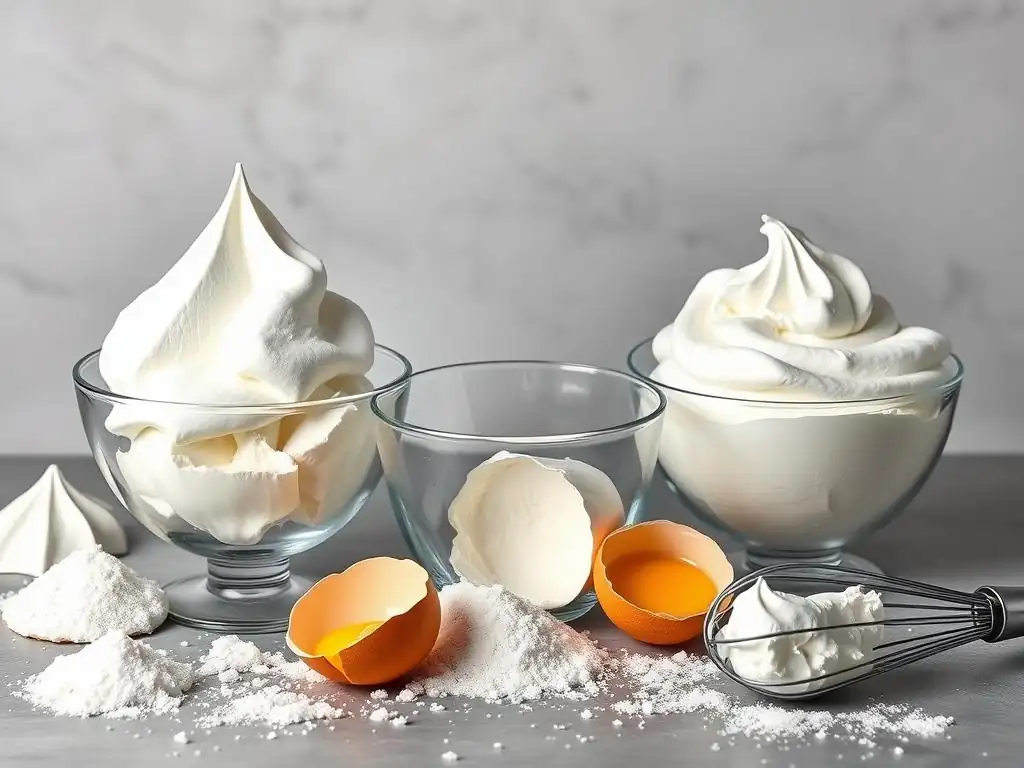
Even with the correct egg whites meringue ratio, problems can occasionally arise. Many common meringue pitfalls, such as weeping, softness, or graininess, are directly related to the interaction between the egg whites and sugar, often exacerbated by technique or environmental factors. Understanding how the ratio influences these issues is key to troubleshooting and correcting them.
**Common Meringue Problems & Potential Ratio Links:**

- [ ]  Weeping: Often too little sugar, or sugar not fully dissolved.
- [ ]  Soft/Collapsed: Too little sugar, fat contamination, or under-whipping.
- [ ]  Grainy: Sugar not fully dissolved (especially in French meringue).
- [ ]  Brittle/Dry: Too much sugar or over-baking.
By recognizing the symptoms and understanding the underlying egg white to sugar ratio principles, you can often diagnose and fix meringue issues. Sometimes it requires adjusting the ratio slightly, while other times it means refining your technique for adding and dissolving the sugar.
Weeping Meringue: Identifying and Correcting Imbalances
Weeping, or syneresis, occurs when liquid separates from the meringue, leaving a pool of sugary syrup at the base. This is a common issue, particularly with French meringue. It happens when the protein network isn't stable enough to hold onto the water. The primary culprits related to the egg whites meringue ratio are usually either too little sugar or the sugar not being fully dissolved.
If your meringue consistently weeps, consider increasing the sugar ratio slightly for that type of meringue, or ensure you are adding the sugar gradually and whipping until it is completely dissolved and the meringue is glossy and smooth before using or baking. For French meringue, using superfine (caster) sugar can help, as its smaller crystals dissolve more easily. For Italian or Swiss meringue, ensure the sugar syrup reaches the correct temperature (Italian) or the mixture is heated sufficiently to dissolve the sugar (Swiss). Using a stabilizer like cream of tartar also helps prevent weeping by strengthening the protein network.
Soft or Collapsed Meringue: Ratio Adjustments for Enhanced Stability
A soft or collapsed meringue lacks the necessary structure to hold its shape. While fat contamination is a major cause, an incorrect egg white to sugar ratio can also contribute significantly. Too little sugar provides insufficient material to stabilize the whipped egg whites, resulting in a fragile foam that quickly loses volume or collapses during baking or cooling.
If your meringue is consistently too soft, evaluate your egg white to sugar ratio. Ensure you are using enough sugar according to the standard ratios for the type of meringue you are making (e.g., aiming for a 1:2 ratio for stable meringues like Italian or Swiss). Also, ensure you are whipping the meringue to the correct stage – stiff, glossy peaks that hold their shape when the whisk is lifted. Under-whipping means the protein network hasn't fully developed its structure.
Stiff and Dry Meringue: Recognizing and Rectifying Over-Sugaring
While more sugar generally leads to more stability, too much sugar can result in a meringue that is overly stiff, brittle, grainy, and difficult to work with. This can happen if your egg white to sugar ratio is too high for the intended application, or if the sugar hasn't dissolved properly, leaving undissolved crystals that make the meringue grainy and prone to cracking.
If your meringue is stiff to the point of being dry or grainy, you may have used too much sugar relative to the egg white weight, or the sugar wasn't fully incorporated/dissolved. For French meringue, ensure you add the sugar very slowly and whip until no graininess remains when rubbed between your fingers. For Italian or Swiss meringue, verify the heating step was sufficient to dissolve all sugar crystals. Adjusting your egg whites meringue ratio downwards slightly (e.g., from 1:2 to 1:1.75 if the recipe allows) or ensuring proper sugar dissolution technique can resolve this issue.
Beyond the Ratio: Key Factors Influencing Meringue Success
While the egg white to sugar ratio is arguably the most critical element for meringue success, several other factors play significant roles in achieving that perfect, stable foam. Paying attention to these details alongside the ratio will dramatically improve your meringue-making consistency.
- Cleanliness: Any trace of fat (from egg yolk, oils, or even residual soap) will prevent egg whites from whipping properly. Ensure your bowl and whisk are meticulously clean and dry.
- Egg Quality: Fresh eggs generally produce more stable meringue than older ones, though some bakers prefer slightly older eggs for easier separation. Room temperature egg whites whip to a greater volume than cold ones.
- Whipping Technique: Start whipping egg whites on medium speed until foamy, then gradually increase speed. Add sugar slowly once soft peaks form (for French meringue) or incorporate hot syrup/heated mixture gradually. Don't over-whip, as this can cause the meringue to break.
Egg White Temperature and Its Effect on Meringue Volume
The temperature of the egg whites significantly impacts the volume and stability of the resulting meringue. Egg whites at room temperature (around 68-72°F or 20-22°C) whip up more easily and achieve greater volume than cold egg whites. The proteins in warmer egg whites are more elastic and unfold more readily, allowing them to trap more air.
For most meringues, especially French meringue, it's recommended to bring your egg whites to room temperature before whipping. This can be done by leaving them out of the refrigerator for 30-60 minutes, or by placing the separated egg whites in a bowl set over warm water for a few minutes. While Italian and Swiss meringues involve heating, starting with room temperature egg whites can still help initiate the whipping process more quickly before the heat is applied. This initial volume potential is crucial for achieving the desired final meringue consistency, regardless of the egg white to sugar ratio used.
The Role of Acid (Cream of Tartar or Lemon Juice) in Meringue
Adding a small amount of acid, such as cream of tartar, lemon juice, or white vinegar, is a common practice in meringue making. Acid helps to stabilize the whipped egg whites by further strengthening the protein network. It prevents the protein bonds from becoming too tight, which can lead to a fragile foam that is prone to collapsing or over-whipping.
Typically, about 1/8 to 1/4 teaspoon of cream of tartar or about 1 teaspoon of lemon juice is used per two large egg whites (or roughly 60-70g of egg white). The acid is usually added after the egg whites have become foamy but before the sugar is added. While not directly part of the egg white to sugar ratio, acid works in conjunction with the sugar to create a more robust and forgiving meringue structure, making it particularly helpful when learning or troubleshooting.
Baking Time and Temperature: Achieving Desired Meringue Texture
The baking process is the final crucial step in achieving the desired texture for many meringue applications, especially cookies and pavlovas. Meringue is typically baked at a very low temperature (often between 180°F and 250°F, or 80°C and 120°C) for a long period. This low heat gently dries out the meringue, making it crisp, rather than cooking it rapidly, which would cause it to expand too quickly and then collapse.
The specific temperature and time depend on the size and thickness of the meringue pieces and the desired outcome (chewy vs. crisp). A lower temperature and longer time result in a drier, crispier meringue. A slightly higher temperature or shorter time can leave the center soft and chewy, as is traditional for pavlova. The egg white to sugar ratio also influences baking. Meringues with a higher sugar content are more stable and less prone to cracking during baking, while those with less sugar may require even lower temperatures and gentler handling.
Meringue Recipes and Applications Using Precise Ratios
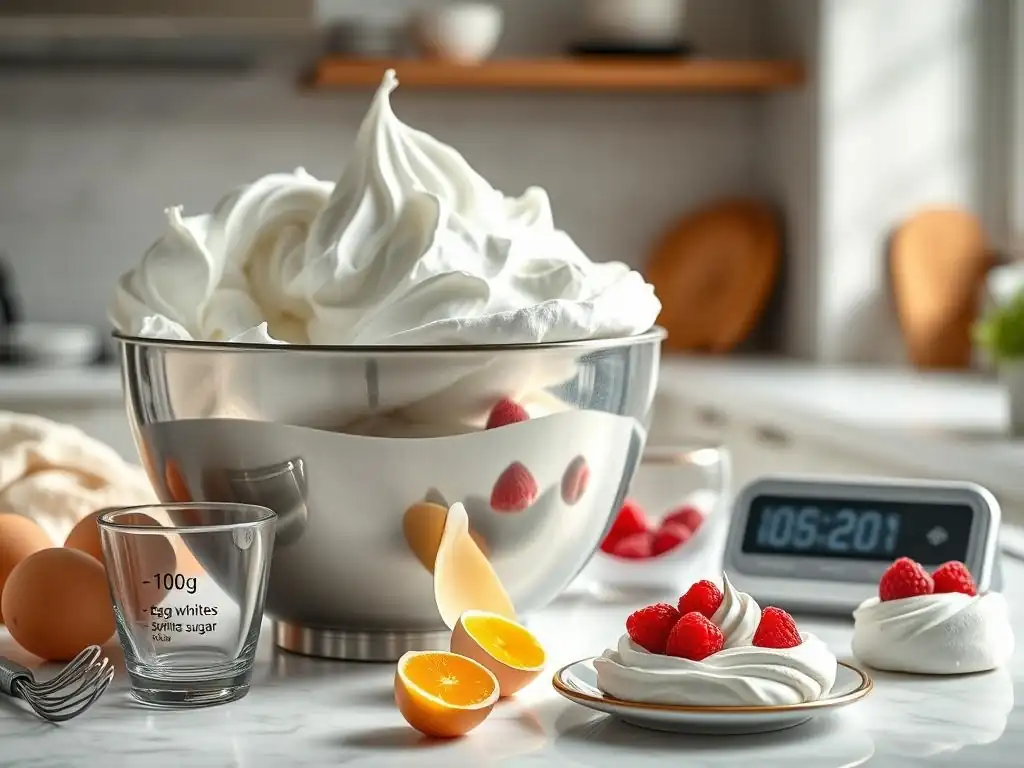
Putting the knowledge of the egg whites meringue ratio into practice is the best way to master meringue. Different recipes call for specific types and ratios of meringue to achieve their signature results. Let's look at how precise ratios are applied in some classic meringue applications.
- Meringue Cookies: Often use French meringue with a ratio between 1:1.5 and 1:2 (egg white:sugar by weight). Baked low and slow for crispness.
- Lemon Meringue Pie Topping: Can use French, Swiss, or Italian meringue. Italian or Swiss (1:2 ratio) provide superior stability and less weeping. French (1:1.5 to 1:2) is quicker but less stable.
- Baked Alaska: Typically uses Italian meringue (1:2 ratio) because it's stable enough to insulate the ice cream briefly under high heat for browning without melting significantly.
Using the correct egg white to sugar ratio ensures the meringue behaves as expected in these recipes, whether it needs to hold stiff peaks for piping, bake into a delicate shell, or provide a stable, torched topping.
Let's outline a basic French meringue cookie recipe using a common egg white to sugar ratio of 1:2 by weight.
**Ingredients:**

*   100g Egg Whites (from about 3 large eggs, at room temperature)
*   1/4 tsp Cream of Tartar (optional but recommended)
*   200g Granulated Sugar (or Superfine/Caster Sugar)

**Equipment:**

*   Electric mixer (stand mixer or hand mixer)
*   Clean, dry bowl and whisk attachment
*   Kitchen scale
*   Piping bag and tips (optional)
*   Baking sheets lined with parchment paper

**Instructions:**

1.  Preheat oven to 200°F (90°C).
2.  Weigh egg whites carefully into the clean mixing bowl.
3.  Begin whipping egg whites on medium speed until they become foamy. Add cream of tartar now if using.
4.  Increase speed to medium-high. Once soft peaks form (when the whisk is lifted, peaks curl over), begin adding sugar, 1-2 tablespoons at a time, allowing about 30 seconds between additions for the sugar to dissolve.
5.  Continue whipping on high speed until stiff, glossy peaks form and all the sugar is dissolved (rub a tiny bit between your fingers - it should feel smooth). This indicates the correct **egg whites meringue ratio** is properly incorporated.
6.  Spoon or pipe meringue onto prepared baking sheets.
7.  Bake for 1.5 to 2.5 hours, or until meringues are dry and crisp throughout. They should lift easily from the parchment.
8.  Turn off the oven and leave meringues inside to cool completely (several hours or overnight) to prevent cracking.
Meringue Kisses: Techniques for Achieving Optimal Texture
Meringue kisses are simply small meringue cookies, often piped into decorative shapes. Achieving their signature light, airy, and crisp texture relies heavily on both the egg white to sugar ratio and the baking process. Using a French meringue with a ratio of 1:1.5 to 1:2 by weight is standard. The key techniques involve:
- Whipping to Stiff Peaks: Ensure the meringue is whipped until it holds stiff, sharp peaks. This structure is essential for the piped shapes to hold during baking.
- Slow Sugar Addition: Adding the sugar very slowly allows it to dissolve fully, resulting in a smooth, non-grainy texture and preventing the meringue from collapsing.
- Low and Slow Baking: Baking at a very low temperature (like 200-225°F or 90-110°C) for an extended period (1-2 hours for small kisses) dries them out gently without browning excessively. Leaving them in the cooling oven is also crucial. The correct egg whites meringue ratio helps them maintain their shape and structure throughout this long drying process.
Topping a Lemon Meringue Pie: Achieving Ideal Meringue Coverage
A classic Lemon Meringue Pie features a generous topping of billowy meringue, often browned with a torch or under a broiler. For this application, stability is paramount to prevent weeping and ensure the meringue holds its shape and volume. Italian or Swiss meringue, both using a 1:2 egg white to sugar ratio (by weight), are the best choices due to their superior stability compared to French meringue.
Topping the pie involves spreading or piping the meringue over the cooled lemon filling, ensuring the meringue touches the crust all around the edge. This seal helps prevent the meringue from shrinking or weeping. Using a stable meringue from a precise egg white to sugar ratio means it will hold its peaks beautifully when piped and maintain its structure when briefly subjected to high heat for browning. A typical pie might require meringue made from 3-4 large egg whites (approx. 90-130g) and 180-260g of sugar, depending on the desired thickness and the type of meringue used.
Advanced Meringue Techniques: Exploring Flavors and Textures
Once you've mastered the basic egg white to sugar ratio and techniques for the three main meringue types, you can begin to explore variations and additions to create flavored and textured meringues. Incorporating other ingredients requires care, as they can affect the meringue's structure and stability.
- Extracts: Vanilla, almond, or other extracts can be added towards the end of whipping.
- Zests: Finely grated citrus zest adds vibrant flavor.
- Cocoa Powder/Melted Chocolate: Can be folded in for chocolate meringue.
- Nuts/Candies: Chopped additions can provide texture.
When adding flavorings or other ingredients, consider their moisture content and weight, as these can subtly alter the effective egg white to sugar ratio and the meringue's overall structure. Dry additions like cocoa powder need careful integration, while wet additions like extracts should be minimal.
Incorporating Extracts and Zests into Meringue
Adding extracts or zests is a simple way to flavor meringue. Liquid extracts should be added sparingly, usually just a teaspoon or two per batch made with 3-4 egg whites, right at the end of the whipping process after stiff peaks have formed. Over-adding liquid can compromise the meringue's stability.
Finely grated citrus zest (like lemon or orange) can also be added at the end of whipping or gently folded in. The oils in the zest provide intense flavor. For a batch made with 100g of egg whites and 200g of sugar (a 1:2 ratio), the zest of half a lemon or orange is usually sufficient. Ensure the zest is very fine so it doesn't create large particles that could disrupt the smooth texture achieved by the precise egg white to sugar ratio.
Creating Chocolate Meringue: Techniques and Considerations
Making chocolate meringue introduces cocoa solids or melted chocolate, which adds weight and fat. This requires careful technique to maintain the meringue's structure. For a cocoa powder version, unsweetened cocoa powder (often sifted) is usually gently folded into the finished meringue using a spatula, rather than whipped in. A common addition might be 1-2 tablespoons of cocoa powder per 100g of egg white used in the initial meringue.
If using melted chocolate, it must be cooled slightly and folded in very gently, as the fat can deflate the meringue. Some recipes use a higher egg white to sugar ratio for the base meringue when adding chocolate to provide extra stability. For example, starting with a 1:2.2 or 1:2.5 ratio for the egg white to sugar might compensate for the structural impact of the added chocolate. The goal is to incorporate the flavor without losing the airy texture provided by the perfectly whipped egg whites and sugar.
Utilizing Meringue in Various Baking Applications
Meringue's versatility extends far beyond simple cookies or pie toppings. Different types of meringue, leveraging their specific egg white to sugar ratio and stability, are used in a variety of sophisticated desserts.
- Swiss Meringue Buttercream: A popular frosting made by whipping butter into cooled Swiss meringue (1:2 ratio), resulting in a stable, less sweet buttercream.
- Dacquoise: Layers of baked nut meringue (French meringue with ground nuts folded in) used in layered cakes.
- Mousses and Bavarians: French meringue can be folded into bases to provide lightness.
- Soufflés: French meringue provides the lift and airy texture.
Understanding the properties imparted by the specific egg whites meringue ratio allows bakers to choose the right meringue type for the job, ensuring the final dessert has the desired texture, stability, and appearance.
Final Thoughts: Mastering the Egg White to Sugar Ratio for Meringue Mastery
Meringue, in its various forms, is a testament to the magic that happens when simple ingredients are combined with precise technique and the correct egg white to sugar ratio. While external factors like humidity and oven temperature play a role, getting the proportions right for your chosen meringue type is the most critical step towards consistent success.
By understanding the science behind how egg whites and sugar interact, measuring your ingredients accurately by weight, and adhering to the recommended egg whites meringue ratio for French, Swiss, or Italian meringue, you unlock the door to achieving those coveted stiff, glossy peaks and stable structures. Don't be discouraged by initial setbacks; meringue takes practice. Focus on the ratio, master the techniques, and soon you'll be whipping up perfect meringues with confidence and ease, ready to tackle any baking challenge that calls for this delightful confection.
Frequently Asked Questions
What is the ideal egg whites meringue ratio for a stable meringue?
The recommended ratio is 2:1 sugar to egg whites by weight. This means for every gram of egg white, you'll need two grams of sugar to create a strong and stable meringue.
Why is the egg whites meringue ratio so important in baking?
The egg whites meringue ratio directly impacts the texture and stability of your meringue. Too little sugar results in a soupy meringue, while too much can lead to a grainy or weeping outcome.
Can I use different types of sugar when making meringue? Does this affect the egg whites meringue ratio?
Granulated sugar is most commonly used, but caster sugar dissolves more easily. The egg whites meringue ratio remains the same regardless of the sugar type, but you may need to adjust mixing time.
What happens if I don't follow the recommended egg whites meringue ratio?
Deviating from the egg whites meringue ratio can lead to a collapsed, weepy, or grainy meringue. Accurate measurement is crucial for achieving the desired light and airy texture.
Does temperature affect the egg whites meringue ratio?
While temperature doesn't change the egg whites meringue ratio, it is vital for successful meringue. Room temperature egg whites whip to a greater volume, and careful baking temperatures help ensure proper drying and stabilization.
Final Reflection: The Enduring Allure of the Perfect Meringue
The quest for the perfect meringue is more than just a culinary pursuit; it's a testament to the power of precision and the transformative magic of simple ingredients. Understanding the precise ratio of egg whites to sugar is not merely a recipe detail, but a key to unlocking consistently delightful results, from delicate pavlovas to towering macarons. This knowledge empowers home bakers to achieve professional-level results, fostering confidence and creativity in the kitchen.
The impact of mastering meringue technique extends far beyond the individual baker. It's a connection to a rich culinary history, a tradition passed down through generations. The delicate balance of air and sugar, the transformation from liquid to solid, speaks to a fundamental understanding of chemistry and artistry. The perfect meringue is a testament to the power of patience and precision, a delicate dance between science and art.
This quote, though not from a specific source, encapsulates the feeling of accomplishment and satisfaction that comes with achieving the perfect peak. The pursuit of this seemingly simple goal connects us to a wider community of bakers, sharing tips, tricks, and the joy of a perfectly formed meringue.
Now, it's your turn. Consider the lessons learned here – the importance of precise measurements, the impact of room temperature ingredients, and the subtle nuances of whipping technique. Don't be afraid to experiment, to adjust the ratio slightly based on your specific needs and preferences. The journey to the perfect meringue is a personal one, filled with both triumphs and learning experiences. Embrace the process, enjoy the journey, and savor the sweet reward of a perfectly formed, cloud-like meringue.
Unlock Your Meringue Mastery!
Thanks for joining us on this journey to perfect meringue! We hope you now feel confident in achieving consistently delicious results. Ready to put your new knowledge into practice?
- Bake your dream meringue: Try the perfect ratio from today's article and share your creations with us! (Use #BakeWithEaseMeringues)
- Experiment with flavors: Add a dash of vanilla, lemon zest, or cocoa powder – the possibilities are endless!
- Share your baking triumphs (or even your meringue mishaps!) in the comments below; let's learn from each other!
What flavor adventure will your next perfect meringue take you on?