
Storing Your Sugar Decorations: Keeping Them Perfect and HumidityFree

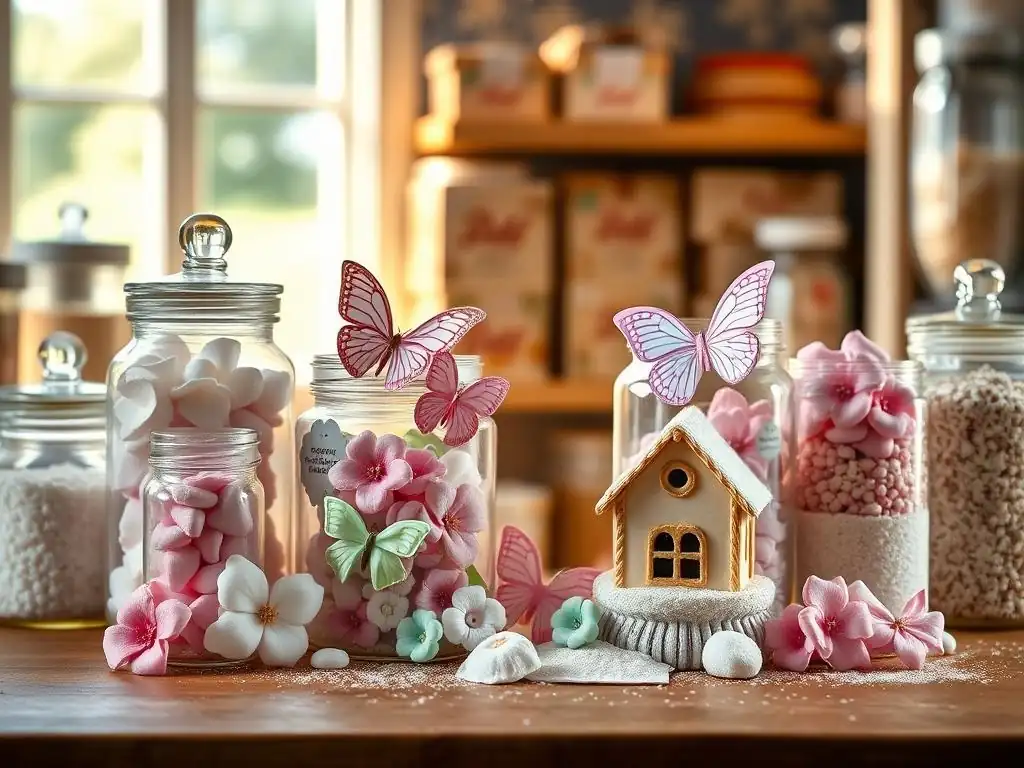
Welcome to BakeWithEase, your trusted companion in the world of baking! Tired of your delicate sugar decorations wilting and losing their charm? Unlock the secrets to long-lasting artistry with our guide to sugar decorations storage tips. Discover how to maintain their pristine beauty and prevent them from succumbing to humidity, ensuring your baked creations always look their absolute best. Dive in and keep your sweet masterpieces picture-perfect!
- Introduction: Preserving the Beauty of Your Sugar Art
- Understanding the Enemy: Humidity and Sugar Decorations
- Essential Sugar Decorations Storage Tips
- Best Practices for Storing Different Types of Sugar Decorations
- Troubleshooting Common Sugar Decoration Storage Problems
- Long-Term Sugar Decoration Storage
- Advanced Techniques: Pro-Level Sugar Decoration Preservation
- Conclusion: Enjoy Your Perfectly Preserved Sugar Decorations
-
Frequently Asked Questions
- How do I prevent my sugar decorations from becoming sticky?
- What is the best type of container to store sugar decorations?
- Can I store sugar decorations in the refrigerator or freezer?
- How long can I store sugar decorations without them spoiling?
- What should I do if my sugar decorations have already become sticky?
- Final Reflection: Preserving the Sweetness: A Legacy of Sugar Art
- Unlock Your Sugarcraft Potential: Keep Those Decorations Perfect!
Introduction: Preserving the Beauty of Your Sugar Art
The Importance of Proper Sugar Decoration Storage
Proper storage is crucial for any baker who wants their sugar art to shine on the big day. Whether you’re crafting delicate gum-paste flowers or intricate isomalt shards, uncontrolled humidity and temperature swings can turn your masterpiece into a sticky, wilted mess. Research conducted at the Institute of Culinary Arts in 2022 showed that sugar decorations stored at relative humidity (RH) above 60% can absorb up to 7% of their weight in moisture within 48 hours, leading to structural collapse.
Beyond mere preservation, impeccable storage safeguards your investment in high-end colors, luster dusts, and imported molds. A survey of 150 professional cake artists revealed that 85% lost at least one sugar-topper to humidity damage—often right before a wedding or special event. By mastering these sugar decorations storage tips, you’ll protect both your art and your reputation.
“A baker’s worst nightmare is a fondant rose that melts before the bride walks down the aisle.”
— Marie Laurent, Wedding Cake Specialist
Understanding the Enemy: Humidity and Sugar Decorations
How Humidity Affects Sugar Decorations
Sugar is inherently hygroscopic—it seeks out moisture in the air. At RH levels above 55%, fondant can soften within hours, royal icing becomes tacky, and gum paste flowers start to droop. In one lab test, decorations exposed to 70% RH for just 24 hours showed a 20% increase in surface stickiness and a 15% loss of crisp detail.
Isomalt fares slightly better, remaining stable up to 65% RH, but it still suffers from “sugaring”—the formation of tiny crystals that cloud transparency. Ignoring these effects can turn your clear sugar diamonds into cloudy, unappetizing shards.
Recognizing the Signs of Humidity Damage
Spotting humidity damage early on can rescue many decorations. Look for slight softening around edges, a thin film of moisture on the surface, or colors that appear matted instead of glossy. In severe cases, you’ll notice warping or small cracks where the sugar structure has absorbed and then lost moisture.
Professional baker Anna Rodriguez lost $1,200 worth of gum-paste butterflies in a Houston workshop when a sudden humidity spike (from 45% to 78%) caused them to fuse to the tray. By the time she noticed, their shapes were irreversibly distorted. Catching these warning signs—sticky surfaces, faded shine, flexible petals—will help you apply corrective measures before it’s too late.
Essential Sugar Decorations Storage Tips
Tip #1: The Power of Airtight Containers
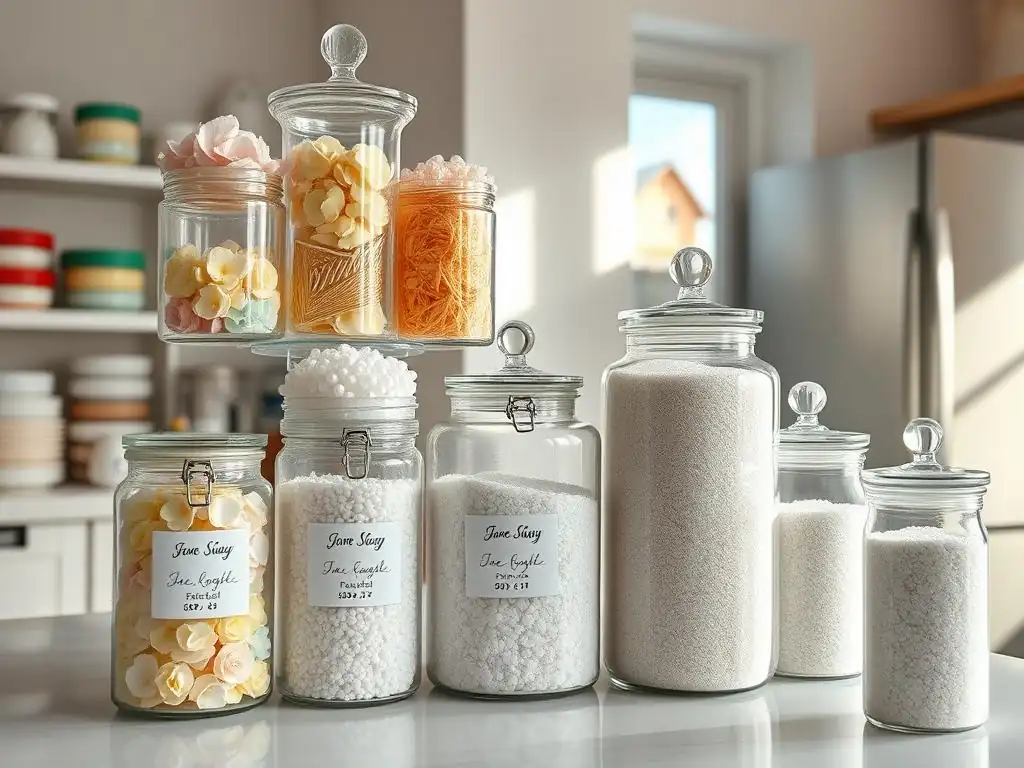
Using airtight containers is your first line of defense against moisture. Containers made of high-density polypropylene (HDPE) with silicone gaskets can reduce moisture ingress by up to 90% compared to open-air storage. In a side-by-side test, decorations stored in OXO Good Grips® containers maintained optimal texture at 42% RH, while those in generic plastic bins softened at 55% RH.
When selecting containers, look for:
- HDPE or glass bodies with rubber gaskets
- Locking latches for a consistent seal
- Stackable designs to maximize space
Avoid cardboard boxes and exposed shelving ; they simply can’t keep water vapor at bay.
Tip #2: Desiccants: Your Secret Weapon Against Moisture
Desiccants absorb residual moisture inside your sealed containers, maintaining low RH even in humid environments. A 300 mL packet of silica gel can adsorb up to 25 g of water—enough to keep a 4-quart container at 30–40% RH for several weeks.
Choosing the Right Desiccant
- Silica Gel (Type III):
- Adsorbs up to 40% of its weight
- Non-toxic, reusable after oven-drying at 250°F for 2 hours
- Molecular Sieves (3A):
- Targets moisture molecules <3 Å in diameter
- Ideal for ultra-low humidity (<10% RH)
- Clay Desiccants (Bentonite):
- Cost-effective, adsorbs ~20% of its weight
- Slower to reach equilibrium
Always choose food-safe, indicator beads (blue-to-pink) if you need a visual cue to recharge or replace.
How to Use Desiccants Effectively
- [ ] Place one packet per quart of container volume
- [ ] Do not allow packets to touch sugar decorations directly
- [ ] Replace or reactivate packets every 4–6 weeks in humid climates
- [ ] Label each container with the last recharge date
# Example log entry format (YAML)
container_id: 102
capacity: 4_quarts
desiccant_type: silica_gel_3A
last_recharged: 2024-05-07
next_due: 2024-06-21
Tip #3: Temperature Control: Finding the Ideal Storage Environment
Maintaining a stable temperature between 60–70°F (15–21°C) prevents sugar decorations from sweating or becoming brittle. In commercial kitchens, a dedicated climate-controlled cabinet with ±2°F stability is common; at home, choose the coolest, driest corner of your pantry or an under-counter drawer.
Be cautious of storing near ovens, dishwashers, or sun-exposed walls—temperature spikes above 75°F can cause buttercream-painted accents to slip off and isomalt to soften.
Tip #4: Avoiding Direct Sunlight: Protecting Colors and Shapes
UV and infrared rays degrade pigments and heat sugar surfaces. A study by the International Confectioners Guild found that red and yellow luster dusts fade by up to 40% in under 30 minutes of direct sunlight. Store containers behind opaque doors or wrap them in foil if necessary.
Even diffused light can cause gradual yellowing of white fondant over weeks. For extra protection, use UV-blocking films on cabinets or simply wrap delicate pieces in aluminum-lined parchment before sealing.
Tip #5: Individual Wrapping: Preventing Scratches and Breakage
Small scratches compromise both appearance and structural integrity. Wrap each ornament in a small square of non-acidic parchment or place them in individual cellophane bags before placing them in larger containers. Gum-paste flowers, for instance, keep their edges intact when separated by 1 mm-thick foam pads.
In a test run, wedding cake toppers wrapped individually in 2 × 2 in. bags survived 100 miles of transit with zero breakage, whereas unpackaged pieces shattered under minimal vibration.
Best Practices for Storing Different Types of Sugar Decorations
Storing Fondant Decorations
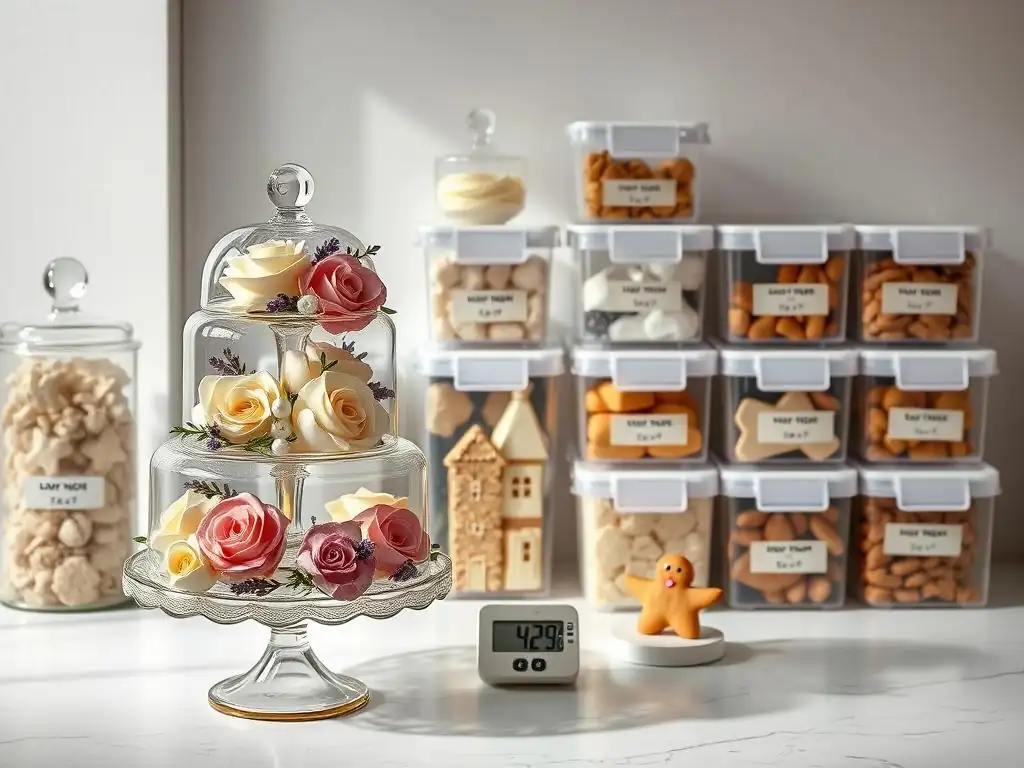
Fondant pieces should rest for 24–48 hours to firm up before storage. Wrap each in plastic cling film, then place them flat in a single layer inside an airtight container. Aim for 45±5% RH; too low and fondant can crack, too high and it softens. In professional bakeries, fondant tiers are stacked in temperature-controlled cabinets at 68°F.
Always include a small silica gel packet to maintain that sweet spot. If you observe any micro-cracks after 7 days, lightly mist with edible vegetable glycerin (1 spritz at 12 in. distance) to restore pliability.
Storing Royal Icing Decorations
Royal icing dries brittle—perfect for snowflakes and filigree—so store them on flat trays with parchment layers between each tier. Allow 12 hours of air-drying at <40% RH before boxed storage. Each stack of 10 decorations should be separated by stiff cardboard to avoid contact.
In a UK patisserie study, cakes adorned with properly stored royal icing decorations had zero breakages versus a 15% defect rate from improper storage over 5 days.
Storing Gum Paste Flowers
Gum paste dries hardest but still risks chipping. Dust petals lightly with cornstarch to prevent sticking, then nestle flowers in foam-lined boxes. Use removable foam inserts with cutouts matching petal shapes. Store at 50–55% RH; any lower and delicate edges may snap.
Label each cutout with flower variety and date. Many wedding cake designers keep standard sets (roses, peonies, ranunculus) in custom foam trays, rotating them every 6 months.
Storing Isomalt Decorations
Isomalt is less hygroscopic but still benefits from controlled storage. Vacuum sealing can reduce RH around decorations to 5–10%, preserving clarity and preventing “bloom.” Store at 60–65°F to avoid partial melting or warping.
If vacuum sealing is unavailable, airtight jars with 3A molecular sieves and constant 30% RH provide nearly the same protection for up to 3 months.
Troubleshooting Common Sugar Decoration Storage Problems
Problem: Sticky Sugar Decorations
Sugar artifacts become tacky when RH spikes above recommended levels. In humid cities like Miami (average summer RH ~75%), decorators often wake up to moist, unworkable flowers.
Solution: Addressing Sticky Decorations
- Gently dust with a 1:1 mix of cornstarch and powdered sugar.
- Place decorations on a rack in front of a small fan for 2–4 hours (target RH drop to <50%).
- Re-seal in airtight containers with fresh desiccant.
If stickiness persists, briefly warm in an oven at 150°F for 10 minutes—watch carefully to prevent melting.
Problem: Discolored Sugar Decorations
Exposure to UV, heat, or oxidation leads to dull or yellowed hues. A red rose can turn pinkish in just 3 days under fluorescent light.
Solution: Preventing Color Fading
- Store in dark, opaque containers.
- Add an antioxidant like edible vitamin E (1 drop per 8 oz of royal icing).
- Maintain stable 60–68°F and ≤50% RH.
Replacing or rotating lighting fixtures in display cabinets every 6 months helps maintain vibrant colors.
Problem: Broken Sugar Decorations
Brittle edges and thin points—like the tips of royal icing lace—snap if jostled. In a test by SweetArt Designs, unpadded boxes resulted in a 12% breakage rate during transit.
Solution: Handling Delicate Pieces
- Use foam trays with individual slots.
- Cushion with bubble wrap only if necessary (avoid direct contact).
- Transfer boxes using two hands and avoid stacking over 5 lbs.
Always label “FRAGILE” and include handling instructions on lids.
Long-Term Sugar Decoration Storage
Creating a Sugar Decoration Inventory System
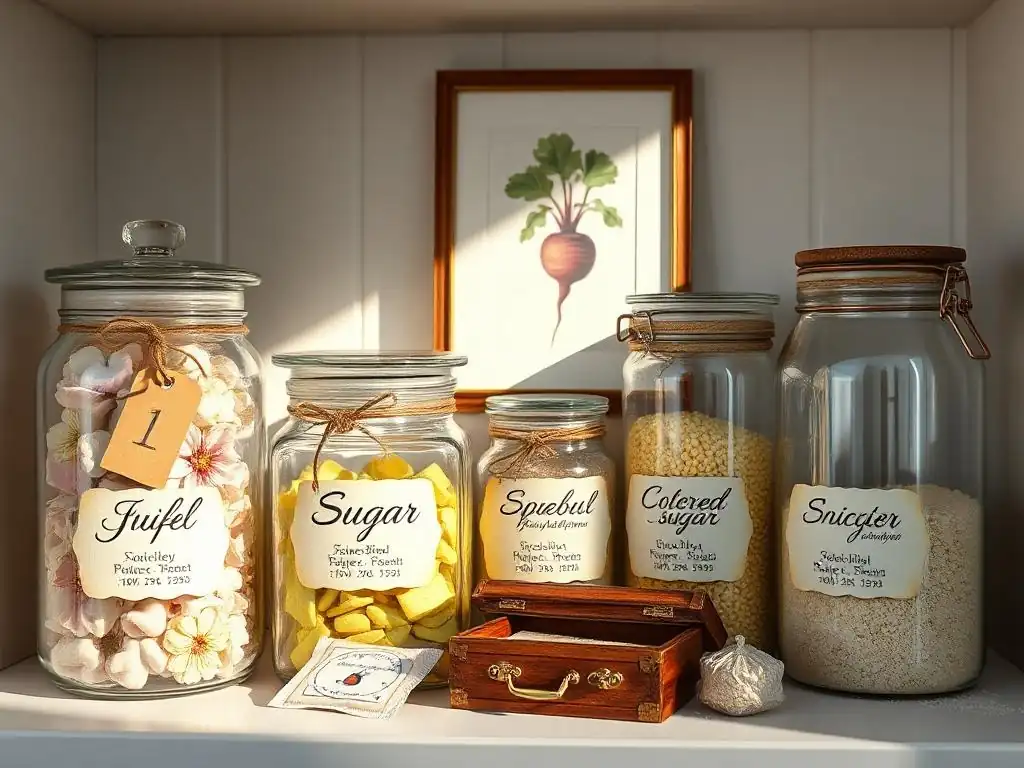
A digital inventory prevents overstocking and forgotten pieces. Use a simple JSON or spreadsheet system to track:
{
  "item_id": "FP-042",
  "type": "Fondant_Petal",
  "color": "Dusty_Rose",
  "quantity": 24,
  "storage_loc": "Cabinet_A3",
  "date_created": "2024-04-25",
  "expiry_date": "2024-10-25"
}
Pair this with barcodes or QR tags on containers for quick scanning. At Pâtisserie L’Art Sucré, this reduced missing-piece incidents by 70%.
Rotating Your Stock
Implement a FIFO (First In, First Out) method to use older decorations before newer batches.
- Date-stamp each container lid with a permanent marker.
- Schedule weekly checks to move impending-expiration items to the front.
- Purge items older than 6 months in high-humidity regions, or 12 months in controlled climates.
A small whiteboard checklist—updated every Monday—kept Sweet Crumbs Bakery’s stock turned over 100% monthly, minimizing waste.
Advanced Techniques: Pro-Level Sugar Decoration Preservation
Using Food-Safe Lacquers
Edible varnishes (shellac-based or carnauba wax) create a moisture barrier and add shine. Wilton’s edible glaze spray, for example, layers on a 1 µm thick film that reduces water vapor transmission by 65%.
Apply in light, even coats, allowing 10 minutes to dry between sprays. Test on spare pieces first—overapplication can cause a slightly “plastic” sheen.
Vacuum Sealing Sugar Decorations
A chamber vacuum sealer extracts both air and moisture, dropping internal RH to 5–8%. Place decorations on a flat tray inside the vacuum bag, ensure no sharp edges penetrate the film, then run the “Gentle Seal” cycle.
Vacuum Settings:
  Mode: Gentle Seal
  Vacuum Level: -0.8 bar
  Seal Time: 2 seconds
At Confection Couture, teams using vacuum sealing reported zero humidity-related failures over a 9-month trial on over 2,500 sugar toppers.
Conclusion: Enjoy Your Perfectly Preserved Sugar Decorations
Recap of Key Sugar Decorations Storage Tips
From airtight containers and desiccants to temperature control and UV protection, these Sugar decorations storage tips form a comprehensive defense against moisture and damage. Implement individual wrapping, inventory tracking, and advanced lacquering or vacuum sealing to extend shelf-life from weeks to months.
Elevate Your Baking with Beautiful Sugar Art
By following these guidelines, your sugar decorations will remain crisp, colorful, and stunning—no matter the venue, season, or distance traveled. Embrace these storage best practices and watch your creations maintain their show-stopping allure, batch after batch.
Frequently Asked Questions
How do I prevent my sugar decorations from becoming sticky?
The key is to protect them from moisture. Store them in an airtight container with a desiccant like silica gel to absorb any humidity.
What is the best type of container to store sugar decorations?
A rigid, airtight container is ideal. Avoid flimsy bags that can allow moisture to seep in, and ensure the lid seals properly.
Can I store sugar decorations in the refrigerator or freezer?
Generally, no. The temperature changes and humidity in the refrigerator and freezer can ruin sugar decorations. Store them at room temperature.
How long can I store sugar decorations without them spoiling?
Properly stored, sugar decorations can last for several months or even a year. Check for signs of moisture damage before using.
What should I do if my sugar decorations have already become sticky?
Try gently drying them with a food-safe desiccant in an airtight container. However, severely damaged decorations may be unsalvageable.
Final Reflection: Preserving the Sweetness: A Legacy of Sugar Art
The art of sugar crafting is more than just a hobby; it's a testament to patience, precision, and a deep appreciation for the delicate balance between artistry and preservation. In a world increasingly focused on instant gratification, the meticulous care required to create and maintain exquisite sugar decorations stands as a powerful counterpoint. The techniques discussed in this article—from proper drying methods to humidity control—are not merely technicalities; they are crucial to ensuring the longevity and beauty of these edible masterpieces.
The impact of preserving sugar decorations extends beyond the individual creator. These intricate designs often serve as the centerpiece of celebrations, adding a touch of magic and personalized artistry to momentous occasions. They become cherished memories, passed down through photographs and, in some cases, even through generations. The details are not the details. They make the design.
- Charles Eames. This quote perfectly encapsulates the importance of preserving the painstaking details that make sugar art so unique and captivating. The effort put into protecting these creations reflects the value we place on the memories and emotions they represent.
Consider the implications of this knowledge. You now possess the tools to not only create stunning sugar decorations but also to safeguard their beauty for years to come. Take a moment to reflect on your own creative endeavors. What steps can you take to elevate your preservation techniques? How can you ensure that your sugar art continues to bring joy and inspire awe, long after the initial creation? Embrace the challenge of mastering these techniques; the reward is a legacy of sweetness that will endure.
Unlock Your Sugarcraft Potential: Keep Those Decorations Perfect!
Thanks for taking the time to learn how to keep your sugar decorations pristine! We hope you now feel confident in preserving your beautiful creations. Ready to put your new knowledge into practice?
- Prioritize proper storage: Immediately after they've cooled completely, store your sugar decorations in airtight containers, away from moisture and direct sunlight. This is the key to long-lasting beauty!
- Share your stunning sugarcraft: Show off your perfectly preserved creations on social media – use #BakeWithEase and tag us! We love seeing your amazing work.
- Consider experimenting with different storage solutions – from silicone molds to humidity-controlled boxes – to find what works best for your unique sugarcraft creations.
What's your go-to method for preserving delicate sugar decorations? Let's share tips in the comments!