
Advanced Piping Tips & Tricks for Intricate Designs and Borders

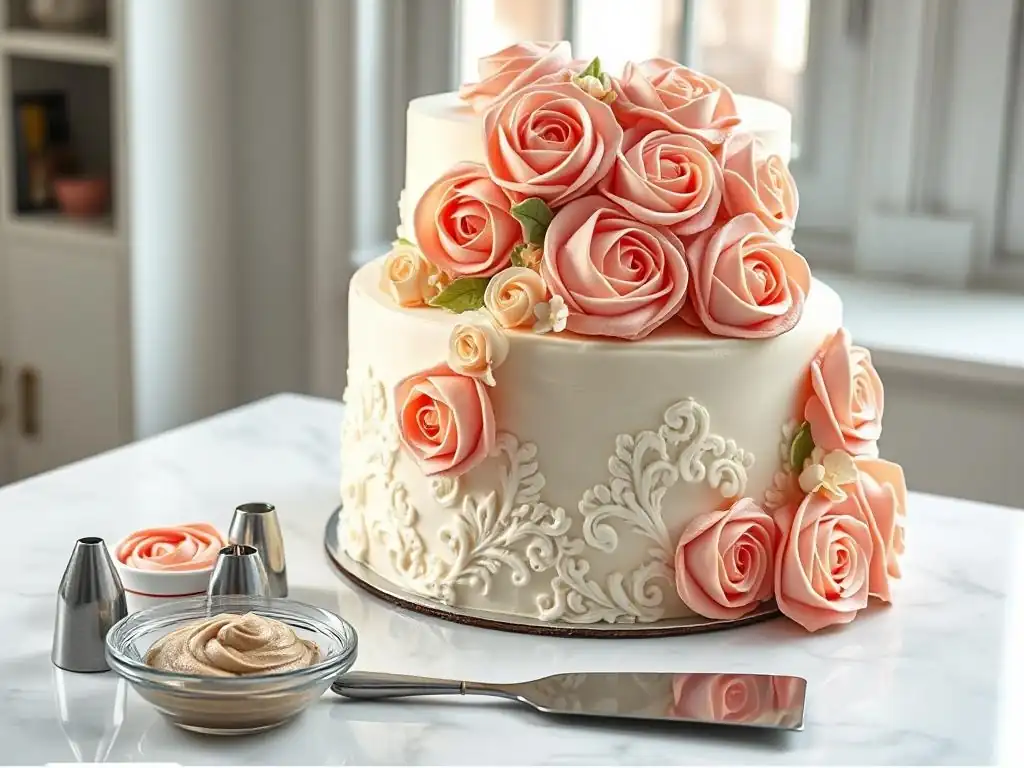
Welcome to BakeWithEase, your haven for baking brilliance! Are you ready to elevate your cake decorating skills from simple swirls to breathtaking masterpieces? This week, we delve into the art of intricate piping buttercream designs. Discover the secrets to creating stunning borders, delicate patterns, and eye-catching details that will transform your desserts into edible works of art. Prepare to unlock a new level of artistry – but first, what's the secret to achieving perfectly smooth buttercream that holds its shape? Let's find out...
- Introduction to Precision Piping Techniques
- Essential Equipment and Tooling for Precision Piping
- Advanced Piping Techniques for Intricate Designs
- Buttercream Considerations for Precision Piping
- Quality Control and Assessment in Precision Piping
- Troubleshooting Common Piping Problems
- Planning Strategies for Precision Piping
- Best Practices for Achieving Intricate Piping Designs
- Case Studies: Examples of Intricate Piping Designs
- Conclusion: Mastering Intricate Piping for Stunning Creations
-
Frequently Asked Questions
- What kind of buttercream works best for intricate piping designs?
- What are some essential piping tips for creating intricate borders?
- How can I prevent air bubbles from ruining my buttercream piping?
- What's the best way to practice intricate piping designs before decorating a cake?
- How do I achieve consistent color throughout my piped buttercream designs?
- Final Reflection: Mastering the Art of Intricate Buttercream Piping
- Unleash Your Inner Piping Artist!
Introduction to Precision Piping Techniques
Understanding the Importance of Precision in Cake Decoration
Achieving stunning and professional-looking cakes, cupcakes, and cookies often hinges on precision in decorative work. Just as in manufacturing where exact measurements ensure components fit perfectly, in baking, precise piping creates clean lines, sharp edges, and consistent patterns that elevate a simple dessert into a work of art. Whether creating delicate lacework borders or intricate piping buttercream designs, accuracy is paramount. A slight wobble or inconsistent pressure can ruin an entire section, making the difference between a polished finish and a messy one.
Precision in piping also impacts the overall structure and stability of certain designs. For example, when building up elaborate floral arrangements or layered borders, each piped element needs to be placed with careful consideration for its relationship to others. This level of detail requires steady hands, consistent technique, and a fundamental understanding of how buttercream behaves under pressure and temperature changes, ensuring that even the most intricate piping buttercream designs hold their shape beautifully.
Exploring the Capabilities of Piping Bags and Tips for Intricate Designs
Piping bags and tips are the fundamental tools that translate a baker's vision into edible art. The sheer variety of tips available opens up a world of possibilities for creating incredibly detailed and intricate piping buttercream designs. From fine round tips for delicate dots and lines to specialized basketweave or ruffle tips, each offers unique capabilities. Understanding how different tips perform with various buttercream consistencies is key to unlocking their full potential.
Mastering the use of couplers allows bakers to quickly switch between tips using the same bag of buttercream, enhancing efficiency when working on complex designs that require multiple tip styles. Furthermore, techniques like double-bagging or using multiple bags simultaneously with different colors or tips enable the creation of gradients, multi-colored details, and layered effects within intricate piping buttercream designs, pushing the boundaries of what's possible with just buttercream.
Essential Equipment and Tooling for Precision Piping
Selecting the Right Piping Bag and Tip for Specific Buttercreams and Intricate Designs
Choosing the correct piping bag and tip is the first step towards achieving precision in buttercream decoration. Piping bags come in various materials, including reusable silicone or plastic, and disposable plastic. Disposable bags offer convenience and easy cleanup, which is beneficial when working with many colors or different consistencies required for intricate piping buttercream designs. Reusable bags can provide a better grip and feel for some users. The size of the bag should be appropriate for the amount of buttercream being used; overfilling a bag makes it difficult to control pressure.
Piping tips are typically made of metal or plastic and come in hundreds of shapes and sizes, categorized by numbers. For intricate details, smaller tips (like Wilton #1 to #3 round tips or Ateco #13 to #16 star tips) are essential.
The consistency of the buttercream is equally critical; a soft, loose buttercream might be easy to pipe but won't hold sharp details, whereas a stiff buttercream is perfect for intricate designs but requires more hand strength. Matching the tip opening size and shape to the desired design element and the buttercream's stiffness is crucial for success in creating detailed and intricate piping buttercream designs.
Choosing High-Precision Piping Tips and Couplers
High-precision piping tips, often made from seamless stainless steel, offer consistent openings and smooth edges, which are vital for creating clean, crisp lines and shapes in intricate piping buttercream designs. While standard tips are suitable for many tasks, investing in high-quality tips from reputable brands ensures uniformity across sets and predictable results.
Couplers are indispensable tools, particularly when a design requires switching between several tips of similar base size while using the same color buttercream. A standard coupler set includes two pieces: a base that goes inside the bag before filling, and a ring that screws onto the outside to hold the tip in place.
For designs demanding extreme detail, micro-tips are available, some with openings less than a millimeter wide. These are perfect for adding tiny dots, fine script, or delicate lacework within intricate piping buttercream designs. Using a coupler with these small tips allows for easy cleaning and switching if a tip becomes clogged. Practicing with different tips and couplers helps bakers understand their capabilities and limitations, improving control and precision.
Star Tips for Detailed Borders
Star tips are among the most popular for borders, swirls, and rosettes, producing ribbed patterns. They come in open star and closed star varieties, with varying numbers of points and degrees of openness. For detailed borders, smaller open star tips (like Wilton 1M, 21, or 32) create sharp, defined ridges perfect for classic shell borders, zigzags, or simple rosettes along the edge of a cake. The number of points on the star tip affects the texture and appearance of the ribbed effect.
Closed star tips (like Wilton 2D or 199) produce patterns with more defined ridges that curl inward, resulting in fuller, more intricate shapes, often used for swirls or drop flowers. Varying the pressure and the angle of the tip allows for different effects, from tight, small shells to larger, more dramatic swirls. Mastering the consistent application of pressure is key to achieving uniform shells or stars along a border, a foundational skill for many intricate piping buttercream designs.
Round Tips for Accurate Dot Creation
Round tips are the most basic but incredibly versatile tips, producing smooth, rounded lines and dots. They are numbered based on the diameter of the opening, from very fine (e.g., #1, #2) to very large (e.g., #12, #A1). For accurate dot creation, especially for delicate patterns like pearl borders, polka dots, or eyelets, using small round tips is essential. Tips #1 through #5 are commonly used for fine detail work and script.
Creating uniform dots requires consistent pressure and a quick, clean lift-off motion. For intricate piping buttercream designs involving patterns of dots, maintaining the same size and spacing for each dot is crucial for a professional look. Larger round tips are used for filling in areas, creating smooth surfaces, or piping larger elements like macarons or cream puffs, but for precision work on cakes, smaller sizes are indispensable.
Petal Tips for Precise Ruffles
Petal tips are designed with a wider, rounded end and a narrower, often straighter end, specifically for creating realistic-looking flower petals, ruffles, and ribbon effects. By varying the angle of the tip relative to the cake surface and adjusting pressure, bakers can create a wide range of effects, from delicate rose petals to dramatic, flowing ruffles. The most common petal tip sizes range from small (e.g., #101, #102) for buds and small flowers to larger ones (e.g., #104, #127) for fuller blooms and wider ruffles.
To create precise ruffles for intricate piping buttercream designs, the narrower edge of the petal tip is typically held facing outwards or upwards, while the wider edge faces inwards or downwards, touching the cake surface. Consistent pressure and a slight back-and-forth or wavy motion as you pipe create the characteristic ruffle effect. The stiffness of the buttercream is particularly important here; it needs to be firm enough to hold the ruffle shape without collapsing.
Leaf Tips for Finishing Details
Leaf tips are designed to create realistic leaves, often used as finishing details for piped flowers or as standalone decorative elements. They typically have a V-shaped opening, sometimes with serrated edges for added texture. By varying the pressure and pulling the tip away while decreasing pressure, bakers can create leaves of different sizes and shapes, from small buds to larger, more prominent foliage. Common leaf tip numbers include #67, #68, #70, and #352.
Using leaf tips adds depth and realism to floral arrangements and helps to fill in gaps in designs. The angle at which the tip is held and the motion used can create different leaf styles, from simple flat leaves to ruffled or pointed ones. Adding these precise details with leaf tips is a key element in many intricate piping buttercream designs, providing a natural, organic feel to the decoration.
Handholding Techniques for Stability and Accuracy
Proper handholding technique is as crucial as the tools themselves for achieving stability and accuracy in precision piping. The goal is to maintain consistent pressure and control over the piping bag's movement. Typically, the top of the piping bag is twisted or secured with a clip to prevent buttercream from squeezing out the wrong end. The dominant hand applies steady pressure to the twisted end of the bag, pushing the buttercream down towards the tip.
The non-dominant hand guides the tip, providing stability and directing the flow of buttercream precisely where it's needed for intricate piping buttercream designs. Holding the bag too tightly can cause hand fatigue and inconsistent pressure, while holding it too loosely results in a lack of control. Practicing different grips and finding what feels most comfortable and stable is essential for developing the muscle memory required for intricate work.
Secure Grip for Piping Bag Clamping
Maintaining a secure grip on the piping bag is fundamental to consistent pressure and control. After filling the bag and twisting the top closed, the dominant hand should grasp the twisted section firmly but comfortably. Some bakers prefer to fold the top edge of the bag over a few times before twisting, creating a more substantial grip point. Using piping bag ties or clips can help secure the top, preventing buttercream from escaping and allowing the baker to focus solely on applying pressure towards the tip.
This secure "clamping" of the bag ensures that the only way the buttercream can exit is through the tip, allowing for direct control over the flow rate. Without a firm grip at the top, pressure is lost, resulting in weak, inconsistent lines or shapes, which is detrimental when attempting intricate piping buttercream designs that demand uniformity and sharpness.
Rotating Turntables for Rotational Piping
For designs that wrap around a cake, such as borders, swags, or continuous patterns, a rotating turntable is an invaluable aid. It allows the baker to smoothly turn the cake while keeping their piping hand in a consistent position relative to the surface. This rotational movement, akin to rotational machining on a lathe, helps maintain a steady angle and pressure, resulting in seamless, uniform designs around the entire circumference of the cake.
Using a turntable is particularly helpful when creating intricate piping buttercream designs that require long, continuous lines or repetitive elements like shells or rosettes. It reduces the need for the baker to constantly reposition themselves or lift the bag, minimizing potential points of error and fatigue. A turntable with a smooth rotation mechanism and a non-slip base is recommended for stability during detailed work.
Template Guides for Complex Designs
When tackling particularly complex or repetitive intricate piping buttercream designs, using templates or guides can significantly improve accuracy and consistency. Templates can be drawn directly onto parchment paper placed beneath a cake board (if the design is on the top edge or side) or lightly traced onto a fondant-covered cake surface using edible markers or impressions. For borders, simply marking points at even intervals around the cake circumference can serve as a basic guide.
More elaborate designs, like lacework, geometric patterns, or script, benefit greatly from detailed templates. These guides act like fixtures in manufacturing, providing a reference point to ensure elements are correctly sized, spaced, and positioned. While freehand piping is a sign of skill, using guides for complex patterns ensures symmetry and accuracy, especially when replicating a design or working on large projects with intricate piping buttercream designs.
Advanced Piping Techniques for Intricate Designs
High-Speed Piping (HSP) for Efficiency and Smooth Finishes
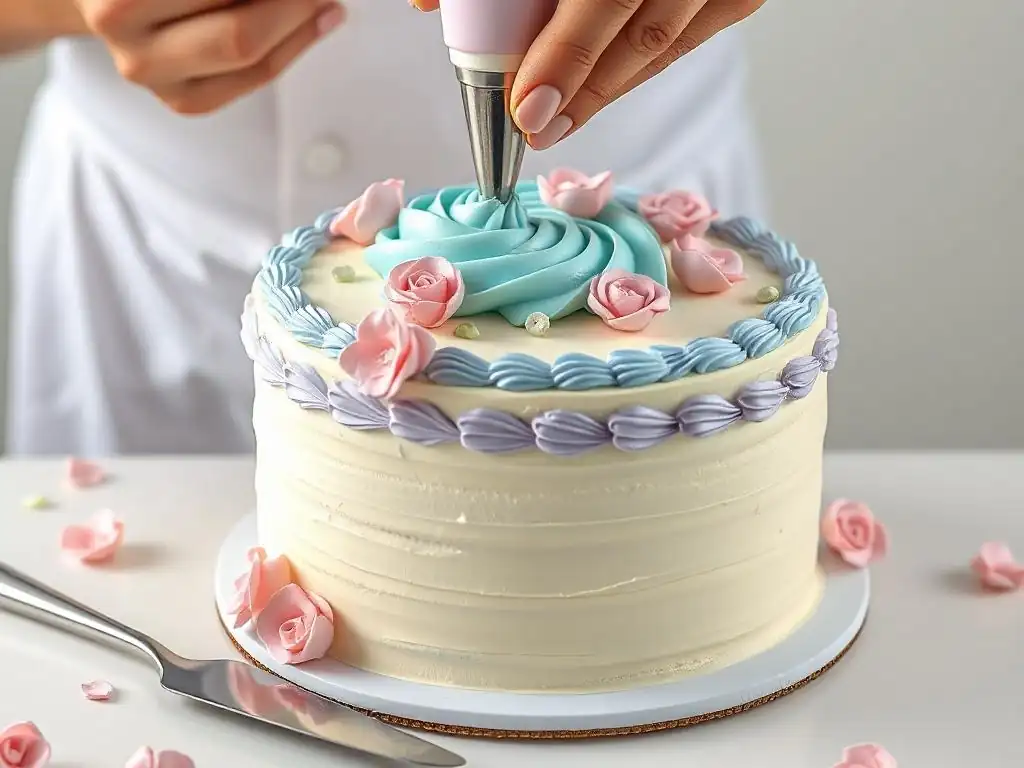
While "high-speed" in piping doesn't mean moving uncontrollably fast, it refers to developing the efficiency and flow needed to pipe consistently and smoothly, especially for continuous elements or large areas. This involves mastering the balance between pressure, speed of movement, and buttercream consistency. Achieving a steady, uninterrupted flow of buttercream is essential for smooth lines, consistent swirls, and seamless transitions in intricate piping buttercream designs.
Practicing piping lines, curves, and shapes repeatedly helps build the muscle memory required for HSP. The goal is to minimize hesitation or pauses, which can cause breaks or unevenness in the piped design. A well-conditioned buttercream that is free of air bubbles and at the right temperature flows more smoothly, facilitating quicker, more efficient piping while maintaining a high-quality finish.
Multi-Angle Piping for Complex Designs
Multi-angle piping involves manipulating the piping bag and tip at various angles relative to the cake surface to create three-dimensional effects, realistic flowers, or complex textures. Unlike basic piping where the bag might be held at a standard 45 or 90-degree angle, multi-angle techniques require dynamic movement and precise control. For instance, creating a realistic buttercream rose involves holding a petal tip at specific angles while rotating the cake or the flower nail, gradually building up layers of petals.
Mastering different angles allows for greater versatility in intricate piping buttercream designs. Techniques like piping over an edge for a clean drop, creating textured surfaces by holding a star tip almost flat against the cake, or forming specific shapes by manipulating the tip's orientation are all examples of multi-angle piping. This adds depth and complexity to the final decoration.
Micro Piping for Miniature Details
Micro piping refers to the use of the smallest piping tips (size #0, #00, #1, #2, #3) to create extremely fine details. This technique is essential for adding delicate lines, tiny dots, fine script, miniature lacework, or intricate patterns on cookies, cupcakes, or small sections of a cake. It requires a very steady hand, immense patience, and a buttercream consistency that is smooth and free of even the tiniest air bubbles, which could clog the tip.
Working with micro tips demands a light, consistent pressure. Even a slight increase in pressure can result in too much buttercream being released, overwhelming the delicate detail. This technique is particularly useful for adding facial features to piped characters, fine embroidery effects, or incredibly detailed borders that mimic real lace, showcasing the highest level of precision in intricate piping buttercream designs.
Stiff Buttercream Techniques for Intricate Shapes and Stable Designs
Using a stiff consistency buttercream is crucial for piping intricate shapes, upright designs, and elements that need to maintain their structure, such as standing ruffles, sharp peaks, or detailed figures. A stiff buttercream is made by using a higher ratio of confectioners' sugar to butter/liquid compared to a medium or soft buttercream. While harder to pipe initially, it holds its shape exceptionally well once piped.
Techniques using stiff buttercream include piping detailed three-dimensional elements directly onto parchment paper to set before transferring them to the cake (like delicate butterflies or complex geometric shapes). It's also ideal for creating sharp, defined shells, stars, and borders that won't slump. Working with stiff buttercream requires more hand strength and careful temperature management, as it can become even stiffer if too cold, or too soft if handled too much or if the room is warm. Mastering its properties is key to creating stable and impressive intricate piping buttercream designs.
Buttercream Considerations for Precision Piping
Selecting Buttercream Consistency Based on Piping Properties and Flowability
The consistency of your buttercream is arguably the most critical factor influencing the success of intricate piping buttercream designs. Different techniques and tips require different consistencies. A general-purpose medium consistency is good for basic swirls and borders, but for fine details or stiff upright designs, adjustments are necessary. A buttercream that is too soft will not hold sharp edges or intricate shapes, resulting in a melted or blurred appearance.
To achieve a stiffer consistency suitable for detailed work and standing elements, simply beat in more sifted confectioners' sugar, a tablespoon at a time, until the desired firmness is reached. For a softer consistency needed for smooth coverage or delicate ruffles with certain tips, add a tiny amount of milk, cream, or clear extract (like vanilla or almond) – literally a half teaspoon at a time – and mix thoroughly. Testing the consistency by piping a small amount on a piece of parchment paper is essential before applying it to your final project.
Managing Temperature Changes During Piping
Buttercream consistency is highly sensitive to temperature. Warm hands, a warm kitchen, or even the heat generated from piping can cause buttercream to soften, making intricate piping buttercream designs difficult to execute. As buttercream warms, it loses its ability to hold sharp lines and can become greasy. Conversely, if buttercream is too cold, it becomes stiff and difficult to pipe smoothly, sometimes causing the bag to burst or the tips to clog.
To manage temperature, work in a cool environment if possible. When filling piping bags, avoid overfilling, as the heat from your hands will warm the buttercream more quickly. If the buttercream in the bag starts to soften, you can place the bag in the refrigerator for a few minutes to firm it up. If the main batch of buttercream is too cold, knead it slightly in the bowl or beat it on low speed for a moment to warm it up gently. Keeping a consistent temperature ensures the buttercream flows predictably, which is vital for precision.
Understanding the Effects of Coloring or Flavoring on Buttercream Performance
Adding coloring or flavoring can slightly alter the consistency of buttercream, impacting its piping performance. Liquid or gel food colorings generally have minimal impact if used sparingly, but adding large amounts, especially liquid colors, can thin the buttercream. Gel colors are concentrated and preferred for achieving vibrant hues without significantly changing consistency. For very deep colors, it might be necessary to make the buttercream slightly stiffer initially to compensate for the added liquid.
Flavorings, whether extracts, emulsions, or melted chocolate, also affect consistency. Liquid extracts can thin buttercream, while emulsions (which are water-based but contain flavor suspended in an oil-like base) tend to have less impact. Adding melted and cooled chocolate to make chocolate buttercream will stiffen the mixture as it cools. Always check and adjust the consistency after adding colors or flavorings before beginning intricate piping buttercream designs.
Quality Control and Assessment in Precision Piping
Using Stencils and Guides for Dimensional Consistency
Ensuring dimensional consistency in intricate piping buttercream designs is crucial for a professional appearance, especially for repetitive patterns or symmetrical elements. While not "measuring machines" in the manufacturing sense, stencils and guides serve a similar purpose by providing a visual framework for placement and sizing. Stencils can be placed directly on the cake surface (for flat patterns) or used to mark guidelines. Lightly pressing a stencil into chilled buttercream or fondant leaves an impression to follow.
For borders or repetitive elements, using a ruler or measuring tape to mark starting and ending points, or dividing the cake circumference into equal sections, helps ensure even spacing. For freehand designs, stepping back frequently to assess symmetry and proportion is a simple but effective form of quality control. These techniques, while manual, help achieve uniformity comparable to the consistency sought in precision manufacturing.
Implementing Practice and Observation for Process Monitoring
Consistent quality in intricate piping buttercream designs is built through practice and careful observation. Before piping directly onto a cake, practicing the specific technique or design element on a piece of parchment paper is highly recommended. This allows you to test the buttercream consistency, pressure control, and movement without risking the final project. Observe how the buttercream flows, how the tip performs, and how the shape holds.
This practice serves as a form of "process monitoring." If the piped lines are shaky, the pressure is inconsistent. If the shapes are slumping, the buttercream is too soft. If the buttercream is breaking, it might be too stiff or cold, or there are air bubbles. By identifying these issues during practice, you can adjust your technique or the buttercream before moving to the actual cake, ensuring a smoother, more successful application of intricate piping buttercream designs.
Conducting Texture Analysis for Optimal Buttercream Smoothness
The texture of the buttercream significantly impacts the final appearance of piped designs. A perfectly smooth buttercream, free of lumps or air bubbles, is essential for clean lines, sharp details, and a polished finish on intricate piping buttercream designs. This "texture analysis" is done visually and by feel. Buttercream should be creamy and consistent throughout.
To achieve optimal smoothness, ensure that your confectioners' sugar is sifted to remove any lumps. After making the buttercream, beating it on a low speed for several minutes can help remove air bubbles, resulting in a smoother, denser texture that pipes more cleanly. If using a crusting buttercream, allowing it to develop a slight crust can also help in achieving sharper details and easier smoothing.
Troubleshooting Common Piping Problems
Reducing Shakes and Inconsistent Pressure
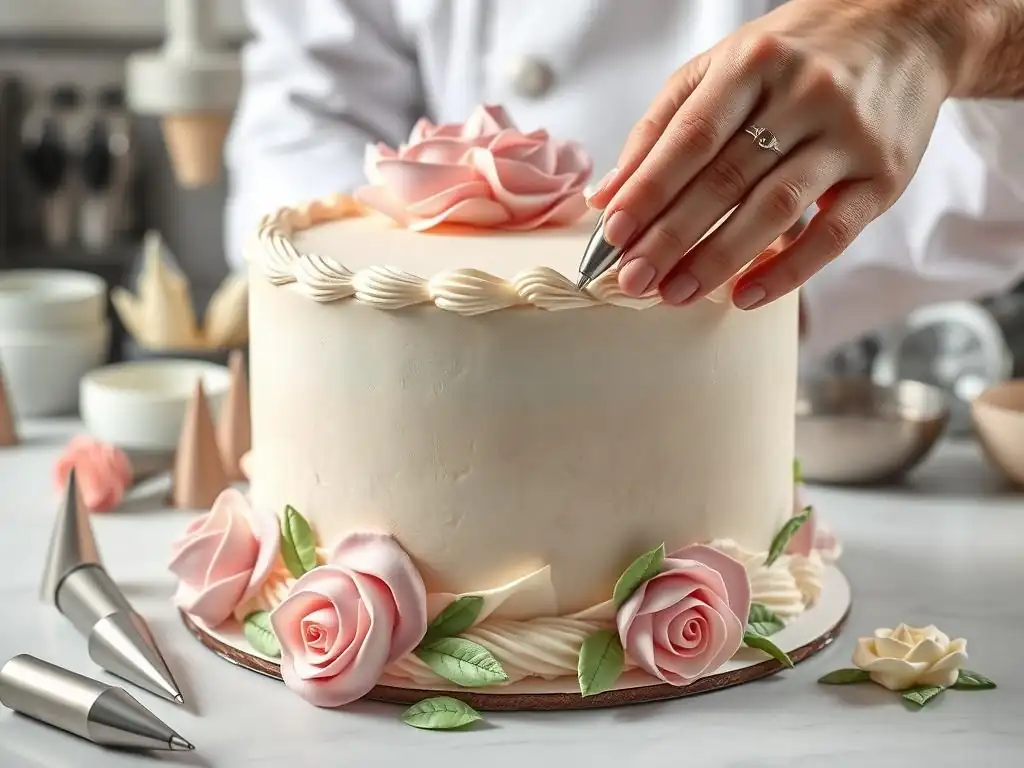
Shaky lines and inconsistent pressure are common challenges when piping, leading to uneven designs. Shakes can be caused by nervousness, fatigue, or holding the piping bag awkwardly. Inconsistent pressure results in lines or shapes that vary in thickness or size. To reduce shakes, rest your guiding hand on the cake board or surface for stability, if possible. Practice piping lines on parchment paper to build muscle memory and steadiness.
To maintain consistent pressure, focus on applying steady, even pressure from the top of the bag with your dominant hand. Avoid squeezing the bag rhythmically; instead, apply continuous pressure. Ensure the buttercream consistency is right – too stiff requires excessive force, leading to fatigue and inconsistency, while too soft offers less resistance, making even pressure difficult. Consistent practice is the best way to overcome these issues and improve control for intricate piping buttercream designs.
Preventing Bag Tears and Tip Clogs
Piping bag tears and tip clogs are frustrating problems that interrupt the flow of work. Bag tears, especially with disposable bags, often occur when piping very stiff buttercream, applying excessive pressure, or if the bag is overfilled and stressed at the seams. Using high-quality piping bags and ensuring the buttercream consistency is appropriate for the bag's strength can help prevent tears. Double-bagging can also provide extra reinforcement when piping stiff mixtures.
Tip clogs are usually caused by air bubbles in the buttercream or unsifted confectioners' sugar lumps. To prevent clogs, always sift confectioners' sugar. After making buttercream, mix it on low speed for a few minutes to release trapped air bubbles. If a clog occurs while piping intricate piping buttercream designs, gently squeeze the tip to dislodge the blockage or, if using a coupler, quickly unscrew the tip, clear it, and reattach.
Minimizing Ragged Edges
Ragged or fuzzy edges on piped designs detract from their precision. This is often caused by buttercream that is too stiff or too cold, causing it to break as it's extruded, or by lifting the tip away too quickly or messily. Using a buttercream at the correct, slightly pliable consistency is key. If it's too stiff, knead it in the bag slightly or warm it minimally with your hands to soften it.
The technique of lifting the tip away is also important. For dots or stars, pipe the shape and then stop pressure before lifting the tip straight up with a quick, clean motion. For lines, maintain pressure until the very end, then stop pressure and quickly flick the tip away in the direction of the line. A clean lift prevents trailing edges that can look ragged. Ensuring the piping tip opening is clean and free of dried buttercream also helps create sharp edges on intricate piping buttercream designs.
Addressing Inconsistent Design Size and Shape
Inconsistent sizing and shaping of repetitive elements (like stars, shells, or rosettes) or variations in line thickness are common issues when aiming for precision. This stems from inconsistent pressure, speed of movement, or angle of the tip. While templates help with placement, achieving uniform size requires practice.
To address this, focus on maintaining steady, even pressure throughout the piping motion for each element. For repetitive shapes, try to pipe them with the same duration of pressure application. Practicing the specific element repeatedly on parchment paper, focusing on making each one identical, builds the necessary control and muscle memory. Using reference points or guides on the cake also helps maintain consistent spacing and alignment for intricate piping buttercream designs.
Planning Strategies for Precision Piping
Optimizing Piping Paths for Efficiency and Accuracy
Planning the sequence and direction of piping can significantly improve efficiency and accuracy, especially for complex or intricate piping buttercream designs. Before starting, visualize the design and determine the most logical path to follow. For borders, decide where to start and end to make the join as seamless as possible. For intricate patterns, determine which elements should be piped first (e.g., outlines before filling in).
Optimizing the piping path minimizes unnecessary lifting of the bag, reduces the chances of smudging previously piped elements, and helps maintain a consistent flow. For instance, when piping a continuous border, planning the rotation of the turntable in conjunction with your piping motion ensures a smooth, unbroken line. Thinking through the steps like this, similar to optimizing toolpaths in manufacturing, leads to a more efficient and accurate application of intricate piping buttercream designs.
Using Sketching and Practice for Simulation and Verification
Before attempting a complex design on a finished cake, using sketching and practice on parchment paper serves as a crucial simulation and verification step. Sketching the design allows you to plan the layout, scale, and details. Transferring this sketch (or a simplified version) to parchment paper and practicing piping the elements allows you to test the technique, tip, and buttercream consistency.
This practice run helps identify potential challenges, refine your hand movements, and verify that the chosen tools and consistency produce the desired effect. You can experiment with different pressures, angles, and speeds without wasting buttercream or damaging the cake. This "simulation" ensures you are prepared and confident before tackling the intricate piping buttercream designs on your final edible canvas.
Implementing Adaptive Piping Techniques
Adaptive piping involves being able to make slight adjustments to your technique on the fly based on how the buttercream is behaving or minor imperfections on the cake surface. For example, if the buttercream is slightly softening during piping, you might need to apply slightly less pressure or move a little faster to maintain the desired shape. If the cake surface is slightly uneven, you might need to adjust the angle or amount of buttercream piped in certain areas to compensate.
This ability to adapt requires experience and sensitivity to the feel of the piping bag and the flow of the buttercream. It's about making micro-adjustments to maintain consistency and quality despite minor variations. Developing this adaptive skill through practice allows bakers to handle unexpected issues smoothly and achieve a polished finish even on challenging intricate piping buttercream designs.
Best Practices for Achieving Intricate Piping Designs
Maintaining Piping Tool Cleanliness and Condition
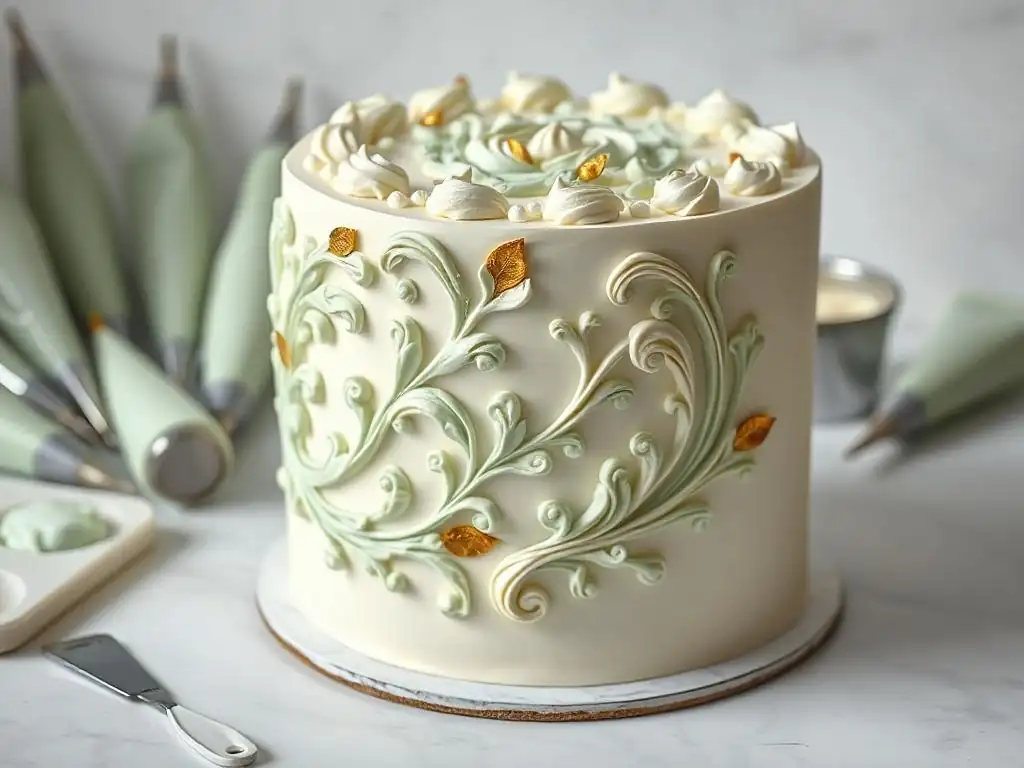
Just like precision machinery requires maintenance, keeping piping tools clean and in good condition is a best practice for achieving intricate piping buttercream designs. Ensure piping tips are thoroughly washed and dried immediately after use, as dried buttercream can be very difficult to remove and can clog small openings. Using a small brush or pipe cleaner can help clean tiny tips.
Inspect piping bags for any small tears or weaknesses before filling them, especially reusable ones. A damaged bag can ruin a design mid-pipe. Ensuring couplers are assembled correctly and securely prevents leaks. Well-maintained tools perform predictably, contributing significantly to the precision and quality of your intricate piping buttercream designs.
Ensuring a Clean and Stable Piping Environment
A clean and stable workspace is essential for precision piping. Dust, crumbs, or other debris in the work area can easily get into the buttercream or stick to the piped design, ruining the clean finish. Ensure your workspace is clean and free of distractions.
A stable surface, like a sturdy table, is also important, especially when using a turntable. Wobbling surfaces can make it difficult to maintain steady hands and consistent pressure, leading to errors in intricate piping buttercream designs. A cool environment, as mentioned earlier, helps maintain buttercream consistency, further contributing to stability during the piping process.
Practice and Skill Development for Bakers
Achieving mastery in intricate piping buttercream designs, much like skill in precision machining, requires dedicated practice and continuous skill development. Start with basic techniques like piping lines, dots, and stars on parchment paper. Gradually move on to more complex shapes, borders, and flowers. Don't be discouraged by initial imperfections; consistency comes with repetition.
Experiment with different tips, buttercream consistencies, and techniques. Watch tutorials, take classes, and learn from experienced bakers. Setting aside regular time for practice, even just 15-20 minutes a few times a week, can significantly improve your control, precision, and speed over time, allowing you to confidently tackle increasingly intricate piping buttercream designs.
Case Studies: Examples of Intricate Piping Designs
Elaborate Cake Borders
Elaborate cake borders showcase the potential for intricate piping buttercream designs. Consider the classic Lambeth method, a traditional English style characterized by layers of piped elements creating deep, dimensional overpiped designs that resemble architectural molding or lace. This technique uses various tips, including small round, star, and shell tips, building layers upon layers of buttercream. A single tier might feature multiple rows of shells, swags, and delicate filigree work, often requiring hours of meticulous piping.
Another example is intricate lacework borders, often achieved using very fine round tips (#1 or #2) to pipe delicate lattice patterns, scrolls, and dots that mimic the look of real lace draped around the cake. These designs demand extreme precision, consistent pressure, and a steady hand to create uniform, interconnected patterns without breaks or smudges. Achieving a flawless Lambeth border or intricate lacework requires significant practice and control over buttercream consistency.
Detailed Cupcake Swirls
While often seen as simple, detailed cupcake swirls can also demonstrate intricate piping buttercream designs. Beyond the basic large star tip swirl, bakers use techniques to create multi-colored swirls, swirls with sharp, defined ridges using specific closed star tips, or swirls that incorporate multiple tip styles within a single design. For example, a swirl might start with a large round base and finish with a delicate ruffle piped with a petal tip on top.
Another detailed application is piping miniature intricate designs directly onto the surface of a frosted cupcake, such as tiny flowers, leaves, or geometric patterns using small tips (#1-5). These small-scale intricate piping buttercream designs require fine motor control and precision to ensure clarity and detail on the limited surface area of a cupcake.
Cookies offer a smaller canvas for incredibly intricate piping buttercream designs, similar to decorating electronic connectors with fine details. Techniques like "flooding" with run-out icing (a thinner consistency) are often combined with detailed piping using stiff buttercream or royal icing (which dries hard). Using fine tips (#00 to #2) to pipe delicate outlines, tiny dots, brush embroidery effects, or complex patterns onto the cookie surface showcases extreme precision.
Creating miniature scenes, portraits, or highly detailed patterns on cookies requires steady hands and the ability to work on a small scale. For example, piping intricate paisley patterns, detailed floral sprays, or fine script onto a cookie demands the same level of focus and control as working on a large cake, highlighting the versatility and precision possible with intricate piping buttercream designs across different baked goods.
Conclusion: Mastering Intricate Piping for Stunning Creations
Mastering intricate piping for stunning buttercream creations is a rewarding journey for any baker. It involves understanding your tools, controlling your medium (buttercream), and developing your technique through dedicated practice. While the terminology might differ from precision engineering, the core principles of accuracy, consistency, and attention to detail are remarkably similar. From selecting the right tip and managing buttercream temperature to practicing steady hand techniques and planning your designs, each step contributes to the final outcome.
Achieving beautiful, intricate piping buttercream designs is a skill that improves with every hour spent practicing. Embrace the challenges of troubleshooting common issues and continuously refine your approach. The ability to translate your creative vision into precise, edible art is a testament to your dedication and skill, allowing you to create truly memorable and visually spectacular baked goods.
Frequently Asked Questions
What kind of buttercream works best for intricate piping designs?
The best buttercream for intricate piping is a stiff and stable buttercream, such as Swiss meringue buttercream or American buttercream. These types hold their shape well and allow for detailed designs without melting or drooping.
What are some essential piping tips for creating intricate borders?
Essential piping tips include star tips, round tips, and petal tips, each offering unique textures and patterns. Mastering the correct pressure and angle is also crucial for consistent and beautiful borders.
How can I prevent air bubbles from ruining my buttercream piping?
To prevent air bubbles, ensure you beat the buttercream thoroughly but not excessively, and gently tap the piping bag on the counter to release trapped air. You can also use a toothpick to pop any visible bubbles on the piped design.
What's the best way to practice intricate piping designs before decorating a cake?
Practice on a sheet of parchment paper or a silicone mat. This allows you to perfect your technique and reuse the buttercream. You can also trace designs onto the parchment for added guidance.
How do I achieve consistent color throughout my piped buttercream designs?
Use gel food coloring for the most vibrant and consistent color. Add the coloring gradually, mixing well after each addition, until you achieve the desired shade. Avoid using liquid food coloring, as it can alter the buttercream's consistency.
Final Reflection: Mastering the Art of Intricate Buttercream Piping
The ability to create stunning, intricate buttercream designs is no longer a niche skill; it's a powerful tool for bakers looking to elevate their craft and captivate their audience. In today's visually-driven world, the artistry of buttercream piping is more relevant than ever, transforming simple cakes into breathtaking masterpieces that command attention and inspire awe. The techniques explored in this article—from mastering pressure control to understanding different piping tips—are the keys to unlocking this creative potential.
The journey of mastering intricate piping is a testament to patience, practice, and the joy of creation. It's a process that transcends the simple act of decorating; it's about expressing oneself through a medium that is both delicate and powerful. The details are not the details. They make the design.
- Charles Eames. This quote perfectly encapsulates the importance of precision and attention to detail in achieving truly intricate buttercream designs. The impact of these designs extends beyond the visual; they evoke emotion, tell stories, and create lasting memories for those who experience them.
Now, it's your turn. Take the techniques you've learned here, experiment with different tips and designs, and let your creativity flow. Don't be afraid to fail; every imperfect swirl is a step closer to mastering your craft. Embrace the process, celebrate your successes, and most importantly, have fun! The world of intricate buttercream piping awaits your unique touch – go forth and create something beautiful.
Unleash Your Inner Piping Artist!
Thanks for taking the time to explore the world of intricate piping! We hope you've gained valuable insights and inspiration for creating stunning cake designs. Ready to put your new skills to the test?
- Master a new piping technique: Choose one technique from the article that excites you most and practice it today. Even 15 minutes of practice can make a huge difference!
- Share your creations: Show us your piping masterpieces! Post a picture on social media using #BakeWithEasePiping and tag us – we’d love to see what you create.
- Challenge yourself: Try designing a simple border using a combination of techniques learned in the article. It's a great way to build confidence and discover your own unique style.
What's your favorite piping technique, and what delicious treat will you be decorating first?