
Your Guide to Chocolate Tempering Temperatures for Every Type.

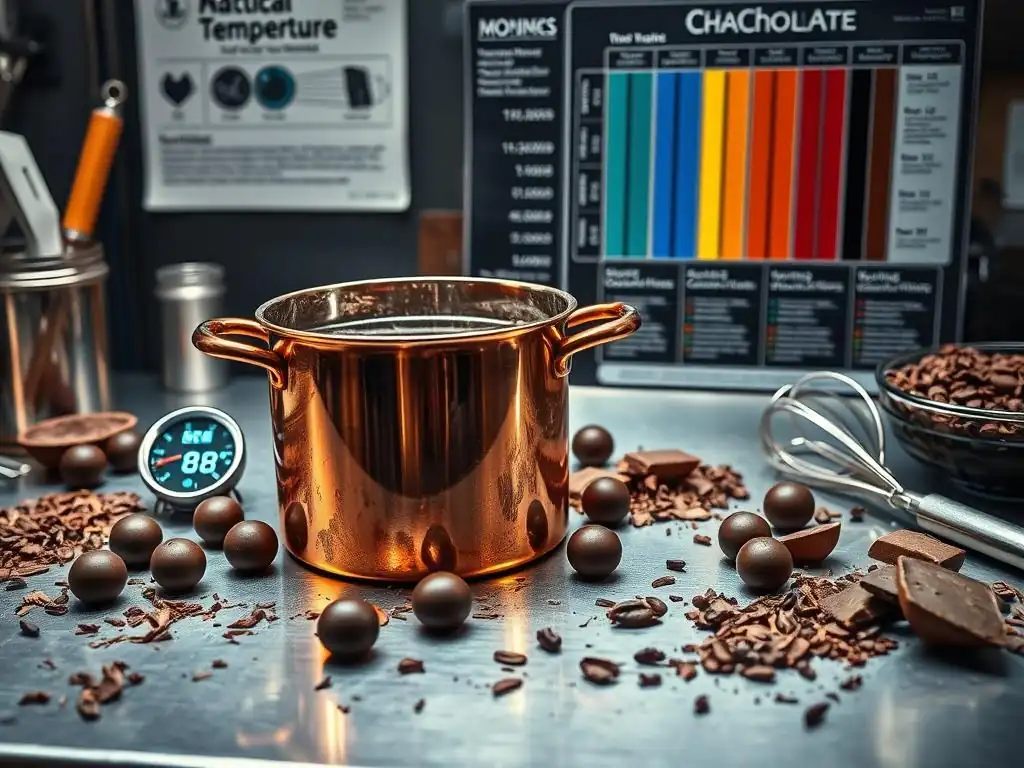
Welcome to BakeWithEase, your trusted companion on your baking journey! Ever wondered how to achieve that perfect, glossy sheen on your homemade chocolates? Unlock the secrets to professional-quality chocolate work with our in-depth guide on chocolate tempering temperatures. Discover the precise heat ranges needed for each type of chocolate, from dark to white, and eliminate those frustrating bloom issues forever. Ready to master the art of chocolate tempering? Let's begin!
Ruby Chocolate Tempering: Maintaining Color and Flavor
Ruby chocolate, often hailed as the fourth type of chocolate, presents a unique challenge and opportunity for bakers. Discovered relatively recently, it's made from the ruby cocoa bean and possesses a distinctive natural pink hue and a slightly fruity, berry-like flavor without the addition of any colorants or fruit flavorings. Tempering this delicate chocolate is crucial not only for achieving the desirable snap and glossy finish but also for preserving its vibrant color and characteristic taste, which can be easily compromised by incorrect handling.
Just like dark, milk, or white chocolate, ruby chocolate contains cocoa butter crystals that need to be stabilized through the tempering process. The goal is to encourage the formation of stable Type V crystals, which melt just below body temperature, providing that satisfying mouthfeel and preventing bloom. However, ruby chocolate's specific composition means its melting point is typically lower than dark chocolate, requiring a different approach to temperature control. Following a precise chocolate tempering temperatures guide is paramount to unlocking its full potential in your confections.
Ruby Chocolate Tempering Temperature Recommendations
Tempering ruby chocolate requires careful adherence to specific temperature ranges to ensure its unique properties are maintained. Overheating is a primary concern, as it can quickly dull the beautiful pink color and negatively impact the delicate flavor profile.
- Melting Temperature: Heat the ruby chocolate gently until it reaches approximately 45°C (113°F). It's vital not to exceed this temperature significantly. Using a double boiler or microwave on low power with frequent stirring is recommended to prevent scorching.
- Cooling/Crystallization Temperature: After melting, the chocolate needs to be cooled down to a specific temperature range to encourage stable crystal formation. For ruby chocolate, this range is typically between 26°C and 28°C (79°F and 82°F). This is often achieved through seeding (adding solid tempered chocolate) or tabling (spreading on a cool surface).
- Working Temperature: Once the chocolate has cooled and stable crystals have formed, it needs to be gently reheated to its working temperature. The ideal working temperature for tempered ruby chocolate is usually between 28.5°C and 30°C (83°F and 86°F). Maintaining this temperature allows the chocolate to remain fluid enough for dipping or molding while staying in temper.
Working with Ruby Chocolate: Special Considerations
Working with ruby chocolate requires attention to detail beyond just temperature control. Due to its unique composition and natural color, it is more sensitive to heat and light than traditional chocolates. Always use a reliable digital thermometer to monitor temperatures precisely throughout the entire process; guesswork can lead to failure and wasted chocolate.
Protection from light is also essential, both during and after tempering, as exposure can cause the color to fade over time. Store ruby chocolate confections in a cool, dark place. When tempering, ensure your workspace is clean and dry, as even a tiny amount of water can cause the chocolate to seize.
Its distinct fruity flavor pairs wonderfully with ingredients like berries, rose, or certain nuts, but its unique profile means it might not be suitable for every application where milk or dark chocolate is traditionally used. Mastering the specific chocolate tempering temperatures guide for ruby chocolate ensures your creations are not only stable and shiny but also visually stunning and delicious.
- What is chocolate tempering and why is it important?
- What are the ideal tempering temperatures for dark, milk, and white chocolate?
- What happens if I overheat my chocolate during tempering?
- What are some common methods for tempering chocolate at home?
- How can I tell if my chocolate is properly tempered?
Frequently Asked Questions
What is chocolate tempering and why is it important?
Chocolate tempering is the process of stabilizing the cocoa butter in chocolate. This is important for achieving a smooth, glossy finish and a satisfying snap.
What are the ideal tempering temperatures for dark, milk, and white chocolate?
Dark chocolate should be tempered to around 88-91°F (31-33°C), milk chocolate to 84-88°F (29-31°C), and white chocolate to 82-84°F (28-29°C). These temperatures ensure the proper crystal formation of cocoa butter.
What happens if I overheat my chocolate during tempering?
Overheating chocolate during tempering can cause it to become seized or grainy. It disrupts the cocoa butter crystals. You might need to start the tempering process again.
What are some common methods for tempering chocolate at home?
Common methods include seeding, tabling, and using a double boiler. The seeding method involves adding tempered chocolate to melted chocolate to encourage crystal formation.
How can I tell if my chocolate is properly tempered?
Properly tempered chocolate will have a glossy sheen and a crisp snap when broken. You can also test it by dipping a knife into the chocolate; it should set up quickly and evenly.
Final Reflection: Mastering the Art of Chocolate Tempering
The pursuit of perfectly tempered chocolate, a seemingly simple act, reveals a profound connection between precision, patience, and the creation of truly exquisite confections. From the initial melt to the final snap, the journey of tempering underscores the importance of understanding the subtle nuances of this process. This understanding, as we've explored, is crucial not just for professional chocolatiers, but for anyone seeking to elevate their baking and confectionery skills.
The impact of mastering chocolate tempering extends far beyond the kitchen; it speaks to a broader appreciation for craftsmanship and the dedication required to achieve excellence. It's a testament to the power of meticulous attention to detail, a quality that resonates across many aspects of life. The details are not the details. They make the design.
- Charles Eames. This quote perfectly encapsulates the importance of precise temperature control in achieving the desired shine, snap, and overall quality of tempered chocolate. The subtle variations in temperature, as highlighted throughout this guide, are not mere technicalities; they are the very essence of the process.
Now, as you embark on your own chocolate tempering adventures, remember the lessons learned here. Don't be afraid to experiment, to adjust your techniques based on your specific needs and equipment. Embrace the process, appreciate the science behind the art, and savor the satisfaction of creating flawlessly tempered chocolate. The journey itself, with its challenges and triumphs, is as rewarding as the final, delectable result. Let the smooth, glossy sheen and satisfying snap of your perfectly tempered chocolate be a testament to your dedication and skill.
Unlock Perfectly Smooth Chocolate: Your Next Baking Adventure Starts Now!
Thanks for diving into the world of chocolate tempering with us! We hope you now feel confident tackling even the most challenging chocolate projects. Ready to put your new knowledge into practice?
- Master a new chocolate technique: Try tempering a small batch of your favorite chocolate type using the methods discussed. Note down your experience and any adjustments you make!
- Share your chocolate creations: Show off your perfectly tempered treats on social media using #BakeWithEaseChocolate. Let's see those glossy masterpieces!
- Explore more baking tips: Dive deeper into our other articles on chocolate work – you'll find tons more expert advice to elevate your baking game!
Ready to create your own flawless chocolate masterpieces? What type of chocolate are you most excited to temper next?