
Insider Tips for Seamlessly Working with Both Gelatin and AgarAgar

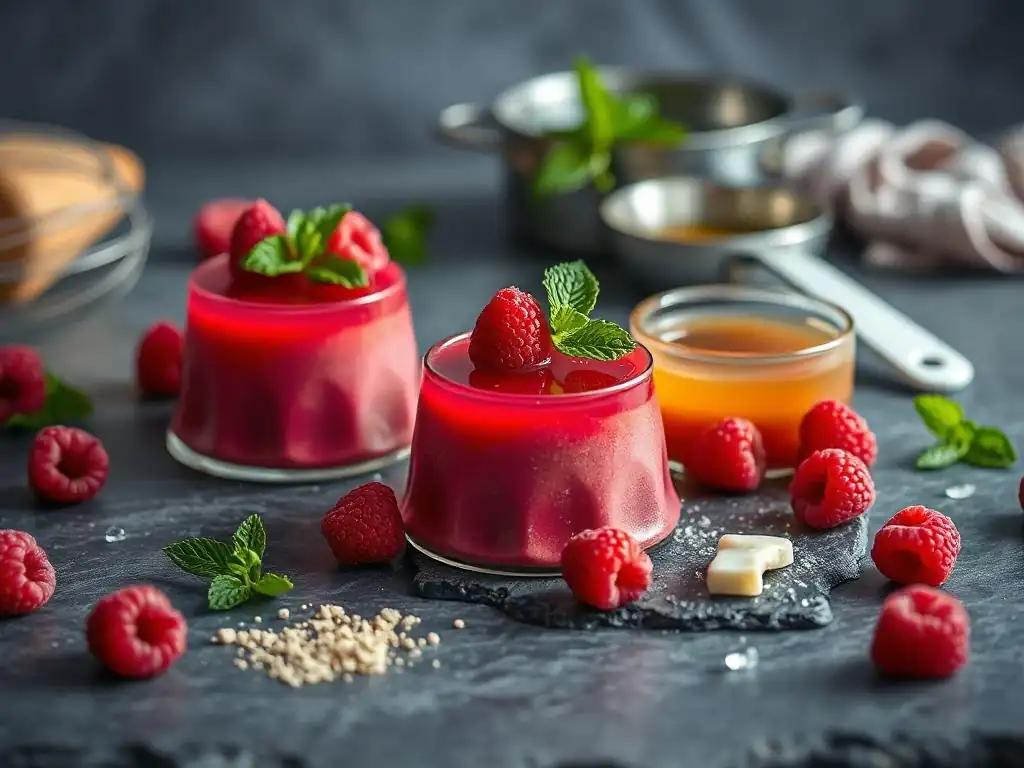
Welcome to BakeWithEase, where baking becomes a joy, not a chore! Are you ready to unlock the secrets to flawlessly incorporating gelatin and agar agar into your most ambitious creations? Dive into "Insider Tips for Seamlessly Working with Both Gelatin and AgarAgar" and discover how to master these versatile ingredients, elevating your pastries, cakes, and more to professional levels. Curious about achieving that perfect set, texture, and visual appeal? Let's begin!
- Insider Tips for Seamlessly Working with Gelatin and Agar Agar in Baking
- Preparing Gelatin and Agar Agar for Baking: Techniques and Best Practices
- Gelatin Agar Agar Baking: Tips for Achieving Ideal Consistency and Stability
- Flavor and Ingredient Compatibility When Baking with Gelatin and Agar Agar
- Advanced Gelatin Agar Agar Baking Techniques for Professional Results
- Expert Tips for Seamless Integration of Gelatin and Agar Agar in Baking Projects
-
Frequently Asked Questions
- What exactly are gelatin and agar-agar, and why are they important in baking?
- How do I substitute agar-agar for gelatin in a baking recipe?
- What are some common mistakes people make when working with gelatin?
- What are the best ways to bloom or hydrate gelatin and agar-agar?
- Can I reuse gelatin or agar-agar once it has been set?
- Final Reflection: Unlocking the Culinary Potential of Gelatin and Agar-Agar
- Unlock Your Baking Potential: Mastering Gelatin & Agar-Agar
Insider Tips for Seamlessly Working with Gelatin and Agar Agar in Baking
Understanding Gelatin and Agar Agar: Key Differences for Baking Success
Gelatin is derived from collagen in animal bones and tissue, offering a soft melt-in-the-mouth texture at 5–10 °C, while agar agar—an extract of red algae—sets firm at room temperature around 40 °C. In classic French bavarois, pastry chefs typically use 1 g gelatin per 100 ml liquid, yielding a tender gel. Conversely, agar agar’s gelling strength demands roughly 0.5–1% (w/w), meaning 0.5–1 g per 100 ml produces a resilient, slightly brittle gel.
The molecular structure of gelatin features long, triple-helix proteins that coil upon cooling, creating a flexible network. Agar agar consists of polysaccharides—mainly agarose—that form a rigid, thermo-reversible gel with hysteresis; it melts at 85 °C and sets near 40 °C. Understanding these thermal transitions is crucial for “Gelatin agar agar baking,” as misjudging melting points leads to collapsed structures or overly rubbery textures.
“When I blend gelatin and agar agar,” says pastry chef Claire Heitzler, “I can tune the bite—richer or more plateau-like—by simply adjusting their ratio.”
Why Use Gelatin and Agar Agar Together in Advanced Baking Recipes?
Combining gelatin and agar agar harnesses the best of both agents: gelatin’s silky mouthfeel and agar agar’s temperature stability. For example, a layered mousse cake (entremet) can feature a bottom layer set with agar agar for structure at room temperature, while an upper fruit mousse leverages gelatin for a smoother finish in the mouth.
In high-humidity environments or for desserts shipped nationwide, agar agar prevents meltdown at 25–30 °C, whereas gelatin alone could soften prematurely. Professional kitchens often employ a hybrid approach in plated desserts:
- A firm agar agar gel for precise geometry (e.g., cubes or discs)
- A lightly gelatinized component for cream-based layers (e.g., crème anglaise)
This synergy is a hallmark of advanced “Gelatin agar agar baking,” ensuring reliability and textural nuance.
Essential Properties of Gelatin and Agar Agar for Perfect Texture in Desserts
Key parameters include bloom strength (for gelatin) and gel strength or “gelling power” (for agar agar). Bloom strength ranges from 80 to 300 g; an 180 g bloom gelatin is ideal for mousse, providing elasticity without excessive chewiness. Agar agar’s gel strength typically sits around 800–1,200 g/cm²; higher values yield firmer gels used for sugar-free jellies.
Other factors:
- pH Sensitivity
- Gelatin loses gelling power below pH 3.5, making highly acidic fruit purees (e.g., lemon curd) require more gelatin or pH adjustment.
- Ionic Interference
- Calcium ions can strengthen agar agar but weaken gelatin; recipes combining dairy and fruit must balance calcium-rich cheeses (in cheesecake) with pH buffering.
Preparing Gelatin and Agar Agar for Baking: Techniques and Best Practices
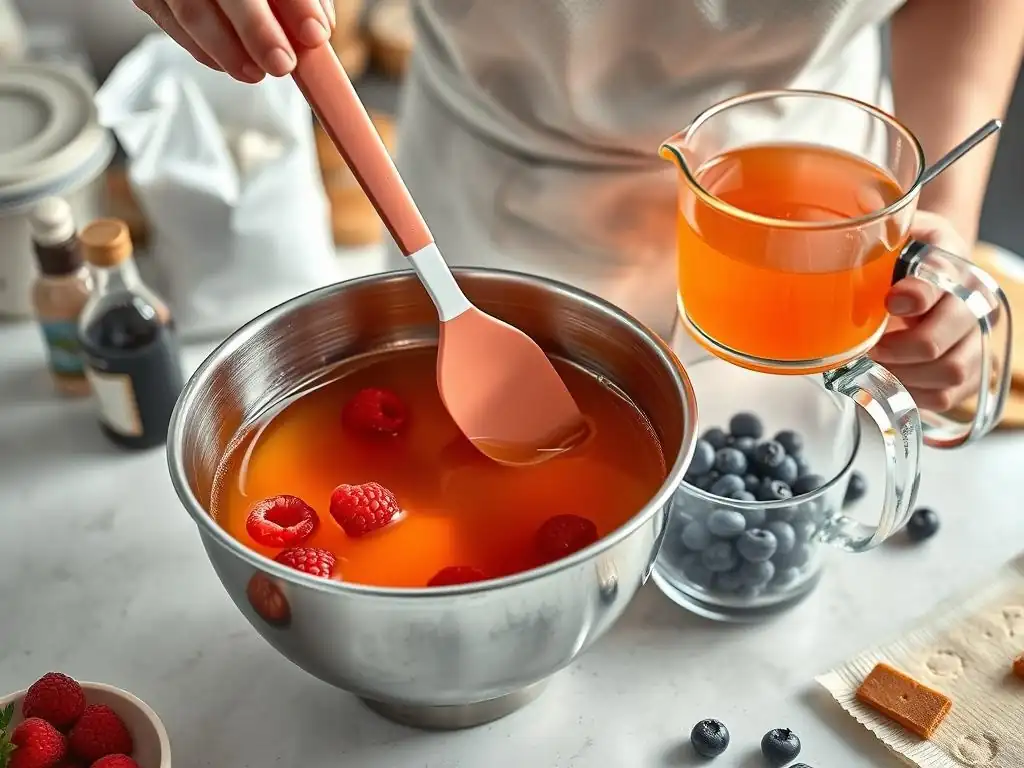
How to Properly Bloom and Dissolve Gelatin for Smooth Baking Results
Blooming gelatin involves sprinkling powder evenly over cold water and allowing it to stand for 5–10 minutes until swollen. For 200 ml liquid, use 4 g gelatin (2% w/w), and bloom in 20 ml water at 10 °C. This ensures each granule is hydrated.
Next, dissolve gently over a water bath at 50–60 °C:
- Place bloomed gelatin and water in a heatproof bowl
- Submerge bowl in a pot of simmering water (not boiling)
- Stir until completely clear (≈2–3 minutes)
Avoid direct high heat, as exceeding 70 °C can degrade gelatin proteins, reducing gelling strength by up to 20%.
Step-by-Step Guide to Hydrating and Heating Agar Agar Powder
Hydrating agar agar begins by dispersing the powder into cold or room-temperature liquid—often fruit juice or milk—at approximately 0.8% concentration (8 g agar per 1 liter). This cold hydration prevents lumps.
- In a saucepan, whisk agar agar powder into 200 ml cold liquid.
- Bring mixture to a boil, stirring constantly to dissolve all granules (≈1–2 minutes at 100 °C).
- Reduce heat and simmer for 1 minute to activate full gelling power.
Pro Tip: For clear gels, strain the hot agar agar solution through a fine mesh sieve.
Temperature and Timing Tips for Combining Gelatin and Agar Agar Effectively
When combining both agents, temperature management is vital:
- Agar agar must be boiling (100 °C) to dissolve; gelatin should never exceed 60 °C.
- Cool agar agar solution to 60 °C before whisking in dissolved gelatin to avoid denaturation.
Task List:
- [ ] Dissolve agar agar completely at 100 °C
- [ ] Cool to 60 °C
- [ ] Fold in warm gelatin solution (50–60 °C)
- [ ] Pour into molds at ~50 °C to prevent shock setting
Maintaining this temperature window ensures that agar agar continues to form robust gels while gelatin retains its bloom strength.
Gelatin Agar Agar Baking: Tips for Achieving Ideal Consistency and Stability
Adjusting Gelatin and Agar Agar Ratios for Different Types of Baked Goods
Ratio guidelines for 100 ml liquid base:
- Fruit Jellies: 0.5 g gelatin + 0.5 g agar agar (lightly springy yet soft)
- Mousses & Creams: 2 g gelatin + 0.3 g agar agar (silky interior, slight lift)
- Vegan Dessert Layers: 1 g agar agar alone
Real-world example: A passion fruit bavarois uses 1.5 g gelatin and 0.2 g agar agar per 100 ml purée for an airy yet sliceable texture.
Troubleshooting Common Issues: Clumping, Graininess, and Setting Problems
Clumping often arises when agar agar contacts hot liquid too rapidly. Solution: pre-disperse in cold water or sugar.
Graininess in gelatin gels can result from uneven blooming—ensure full hydration and gentle dissolution.
Setting Failure occurs when acidity dips below pH 3.4 or when alcohol content exceeds 20%. Counter with:
- Additional gelatin (0.5 g per 100 ml)
- pH-adjustment with a pinch of sodium bicarbonate (0.1 g per 100 ml)
Enhancing Gelatin and Agar Agar Textures in Creams, Jellies, and Mousses
In dairy-based creams, adding a 1:1 ratio of gelatin to agar agar yields a smooth cut and prevents syneresis over 48 hours in refrigeration. For vibrant fruit jellies, incorporate inverted sugar (10 % of the liquid) to maintain clarity and prevent microbial degradation—especially important for agar agar gels stored at room temperature.
Flavor and Ingredient Compatibility When Baking with Gelatin and Agar Agar
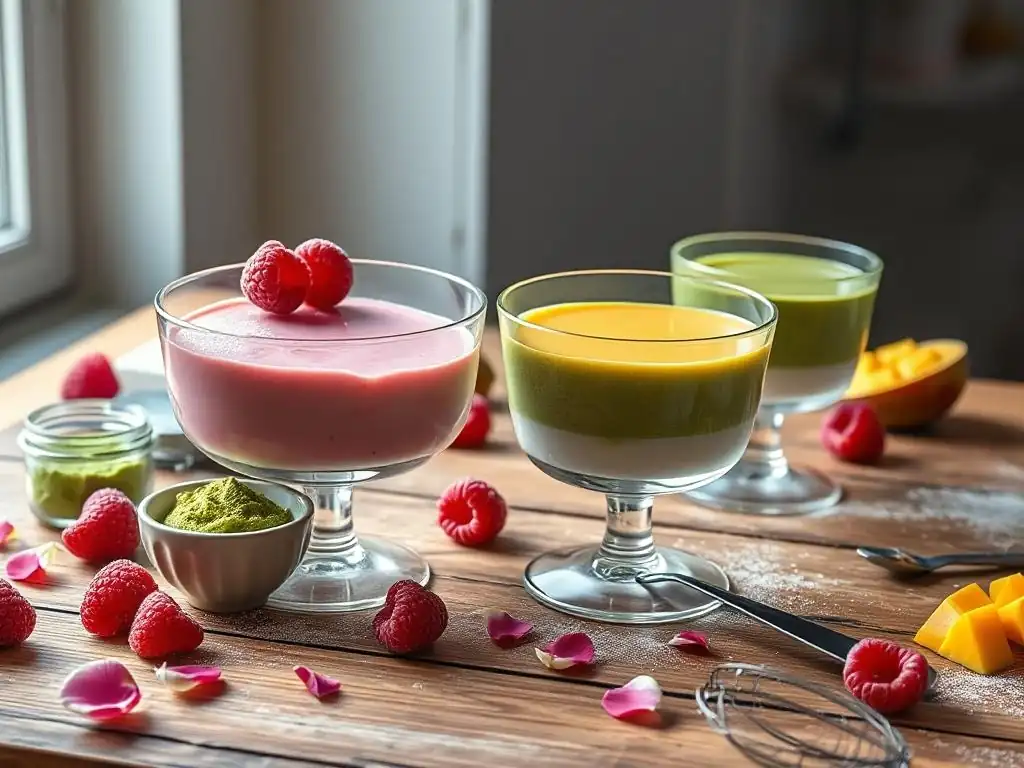
How Gelatin and Agar Agar Interact with Common Baking Flavors and Additives
- Vanilla and Spices: Gelatin carries flavor volatiles well at low temperatures; infuse vanilla pods into bloom water for maximum aroma transfer.
- Citric Acid & Vinegar: Keep total acidity below 0.3% (w/w) to prevent gelatin weakening. Agar agar is more tolerant, up to 1% acidity.
Using Gelatin and Agar Agar with Dairy, Fruit, and Alcohol in Baking Recipes
Dairy: Calcium in milk can prematurely set agar agar; use ultrafiltered milk or add agar agar at 0.8% to offset.
Fruit: Purees with >10 % solids gel better; dilute high-water fruits (e.g., watermelon) or add sugar syrup.
Alcohol: Each 5 % ABV reduces gelling strength by ~10%; compensate with 0.2 g extra gelling agent per 5 % ABV.
Tips for Preserving Flavor and Appearance When Using Gelatin Agar Agar
- Color retention: Add fruit gels at 40 °C to limit oxidation and preserve pigments.
- Glossy finish: Brush set gels with a 1:1 sugar syrup as a natural glaze.
- Extended shelf life: Store agar-based gels at ambient (20–25 °C) to avoid cold-induced syneresis common in gelatin gels below 4 °C.
Advanced Gelatin Agar Agar Baking Techniques for Professional Results
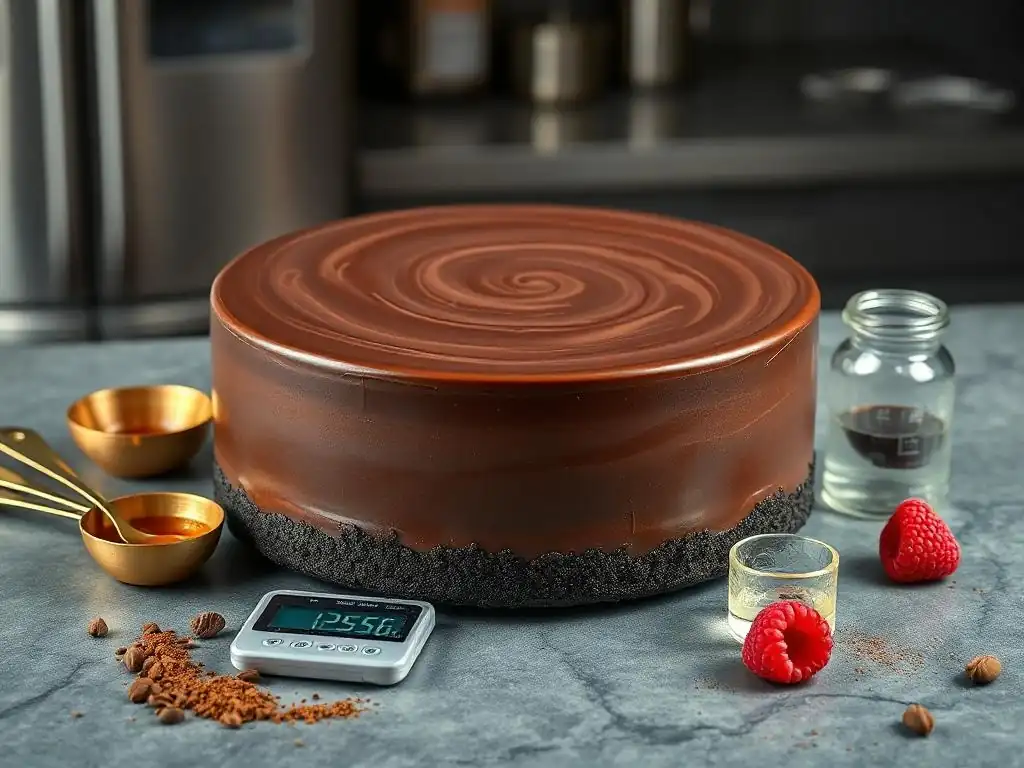
Combining Gelatin and Agar Agar in Layered and Complex Desserts
For intricate entremets with multiple strata:
- Foundation Layer (Agar Agar): 0.7% in biscuits or fruit gel for stiffness.
- Creamy Mousse (Gelatin): 1.8% in custard for softness.
- Mirror Glaze (Mix): 0.3% agar agar + 0.7% gelatin for a balance of shine and elasticity.
Allow each layer to reach ~30 °C before adding the next to avoid mixing and maintain sharp interfaces.
Innovative Uses of Gelatin and Agar Agar for Vegan and Gluten-Free Baking
Agar agar alone can replace gelatin in vegan cheesecakes at 1.2%. Combine with cornstarch (0.5%) for added creaminess. For gluten-free sponge cakes, use agar agar in fruit fillings to avoid soggy crumbs, ensuring each slice holds shape without gluten structure.
Storing and Handling Gelatin and Agar Agar-Based Baked Creations
- Gelatin desserts: Refrigerate at 4–6 °C, consume within 5 days to prevent water loss.
- Agar agar desserts: Store at 18–22 °C, humidity <60% to preserve firmness; can last up to 2 weeks without refrigeration.
Expert Tips for Seamless Integration of Gelatin and Agar Agar in Baking Projects
How to Substitute Agar Agar for Gelatin and Vice Versa Without Compromising Texture
Substitution guide for 100 ml liquid:
- Gelatin → Agar Agar: 1 g gelatin ≈ 0.6 g agar agar (increase if ambient >25 °C)
- Agar Agar → Gelatin: 1 g agar agar ≈ 1.4 g gelatin (softens bite for creams)
Always test small batches (50 ml scale) to adjust for matrix effects like sugar content or fat.
Balancing Gelatin and Agar Agar for Optimal Baking Performance and Presentation
- For glossy glazes, use a 1:2 ratio (gelatin:agar agar) to maintain shine while avoiding brittleness.
- For sturdy molding, shift to 1:1.5 (gelatin:agar agar), supporting unmolding at warm ambient temperatures.
Final Advice on Mastering Gelatin Agar Agar Baking for Home and Professional Bakers
Mastery of “Gelatin agar agar baking” comes from:
- Precise weighing (±0.1 g accuracy)
- Strict temperature control (±2 °C tolerance)
- Iterative trial of ratio tweaks in 20 ml test portions
By combining the silky suppleness of gelatin with the robust stability of agar agar, you’ll unlock a spectrum of textures—from melting mousses to architected jellies—and elevate your creations from home kitchens to professional pâtisseries.
Frequently Asked Questions
What exactly are gelatin and agar-agar, and why are they important in baking?
Gelatin and agar-agar are gelling agents used to provide structure and stability in baked goods. Gelatin is derived from animal collagen, while agar-agar comes from seaweed, making it a vegan alternative. They are crucial for creating textures in desserts like mousses and jellies.
How do I substitute agar-agar for gelatin in a baking recipe?
Agar-agar is generally a stronger gelling agent than gelatin. A common rule of thumb is to use about one-third of the gelatin amount when substituting with agar-agar. However, testing the recipe is always recommended.
What are some common mistakes people make when working with gelatin?
Overheating gelatin can cause it to lose its gelling ability, resulting in a weak or non-existent set. Improper blooming, or not allowing the gelatin to properly hydrate, can also lead to lumpy or grainy textures.
What are the best ways to bloom or hydrate gelatin and agar-agar?
Gelatin is typically bloomed in cold water for about 5-10 minutes. Agar-agar, on the other hand, needs to be boiled in liquid to activate its gelling properties.
Can I reuse gelatin or agar-agar once it has been set?
Generally, it is not recommended to re-melt and re-set either gelatin or agar-agar. The gelling structure degrades with each melt, leading to a weaker and less desirable final product.
Final Reflection: Unlocking the Culinary Potential of Gelatin and Agar-Agar
The ability to confidently utilize both gelatin and agar-agar opens up a world of culinary possibilities, transforming textures and creating innovative dishes that delight both the eye and the palate. Mastering these two versatile gelling agents is no longer a niche skill; it's a key to unlocking a wider range of baking and culinary creations in today's increasingly sophisticated food landscape.
The exploration of gelatin and agar-agar's unique properties has profoundly impacted my own approach to baking and cooking. Understanding their distinct strengths – gelatin's delicate bloom and agar-agar's heat-reversible nature – has allowed me to experiment with textures and techniques I never thought possible. The art of cooking is the art of transforming the commonplace into the extraordinary.
This quote perfectly encapsulates the power of these ingredients to elevate even the simplest recipes.
Now, it's your turn to embark on this culinary adventure. Don't be intimidated by the seemingly technical aspects of gelatin and agar-agar. Experiment with the techniques outlined in this article, adapt them to your own style, and most importantly, have fun! The journey of mastering these ingredients is as rewarding as the delicious results they produce. Embrace the challenge, and discover the boundless creativity that awaits you in the world of gelatin and agar-agar baking.
Unlock Your Baking Potential: Mastering Gelatin & Agar-Agar
Thanks for diving into the world of gelatin and agar-agar with us! We hope you now feel confident tackling these versatile ingredients. Ready to put your newfound knowledge to the test?
- Experiment with a new recipe: Try substituting agar-agar for gelatin in your favorite dessert – the results might surprise you! (Remember to adjust the recipe based on the different gelling properties.)
- Share your baking adventures! Post a picture of your creation on social media and tag us – we'd love to see your culinary masterpieces.
- Join our baking community forum! Ask questions, share tips, and connect with fellow bakers who are also mastering the art of gelatin and agar-agar.
What unique dessert will you create now that you understand the secrets of these amazing gelling agents?