
The Science Behind Lamination: Baking Perfect Layers

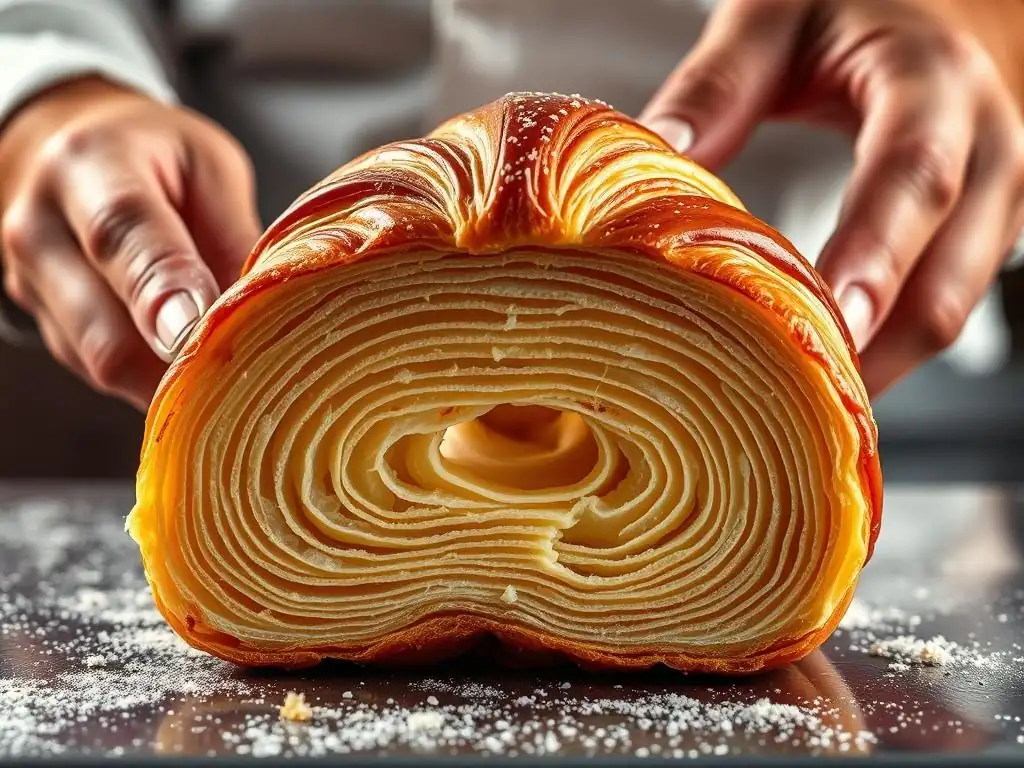
Welcome to BakeWithEase, your trusted companion in the baking journey! Ever wondered how bakers achieve those impossibly delicate, flaky layers in croissants and pastries? Dive into the fascinating science behind lamination dough layers technique and unlock the secrets to creating bakery-worthy treats at home. Prepare to transform your baking skills with our step-by-step guide – are you ready to master the art of lamination?
- The Science Behind Lamination: Crafting Flaky Pastries
- Understanding Lamination for Baking Success
- What is Lamination in Baking? A Detailed Exploration
- The Science of Perfect Lamination
- Step-by-Step Guide to Lamination
- Troubleshooting Common Lamination Issues
- Lamination for Different Pastries
- Advanced Lamination Techniques
- Tips and Tricks for Consistent Lamination
- Conclusion: Mastering the Art of Laminated Dough
-
Frequently Asked Questions
- What is lamination in baking and why is it important?
- What is the key to achieving distinct dough layers and fat layers during lamination?
- What are some common mistakes that can ruin the lamination process?
- How many folds are typically required for successful lamination?
- Can different types of fat be used for lamination dough layers besides butter?
- Final Reflection: Mastering the Art and Science of Lamination
- Unlock Your Layering Genius: Bake Perfection Today!
The Science Behind Lamination: Crafting Flaky Pastries
Welcome to the fascinating world of lamination in baking! If you've ever bitten into a perfectly flaky croissant or enjoyed the airy layers of puff pastry, you've experienced the magic of this technique. Lamination is the process of folding fat (usually butter) into dough repeatedly, creating alternating layers that separate and puff up when baked. It's a fundamental skill for many classic pastries and viennoiseries, resulting in that coveted light, crisp texture. Mastering the lamination dough layers technique transforms simple ingredients into culinary delights.
Understanding lamination is key to unlocking consistent results in your baking. It's not just about folding; it's about managing temperature, gluten development, and the unique properties of butter. While it might seem intimidating at first, breaking down the science makes the process much more approachable. Whether you dream of baking pain au chocolat or delicate palmiers, a solid grasp of lamination is your pathway to success.
Understanding Lamination for Baking Success
Lamination is a cornerstone technique in the world of pastry, essential for creating baked goods with distinct, airy layers. It involves a precise process of enclosing a block of fat within a dough (known as the détrempe) and then repeatedly rolling and folding it. This action multiplies the layers of dough and fat. When the pastry bakes, the water in the fat turns to steam, forcing the layers apart and creating that characteristic flaky structure. The success of this lamination dough layers technique hinges on careful execution and understanding the interaction between dough and fat.
Achieving successful lamination requires patience and attention to detail, particularly regarding temperature. If the butter is too cold, it will break into pieces rather than spreading evenly. If it's too warm, it will melt into the dough, preventing the formation of separate layers. The goal is for the butter to be pliable – firm enough to hold its shape but soft enough to roll out smoothly alongside the dough. This balance is critical for developing the numerous, even layers that define pastries like croissants and puff pastry.
What is Lamination in Baking? A Detailed Exploration
Defining Lamination: Creating Distinct Layers in Pastry
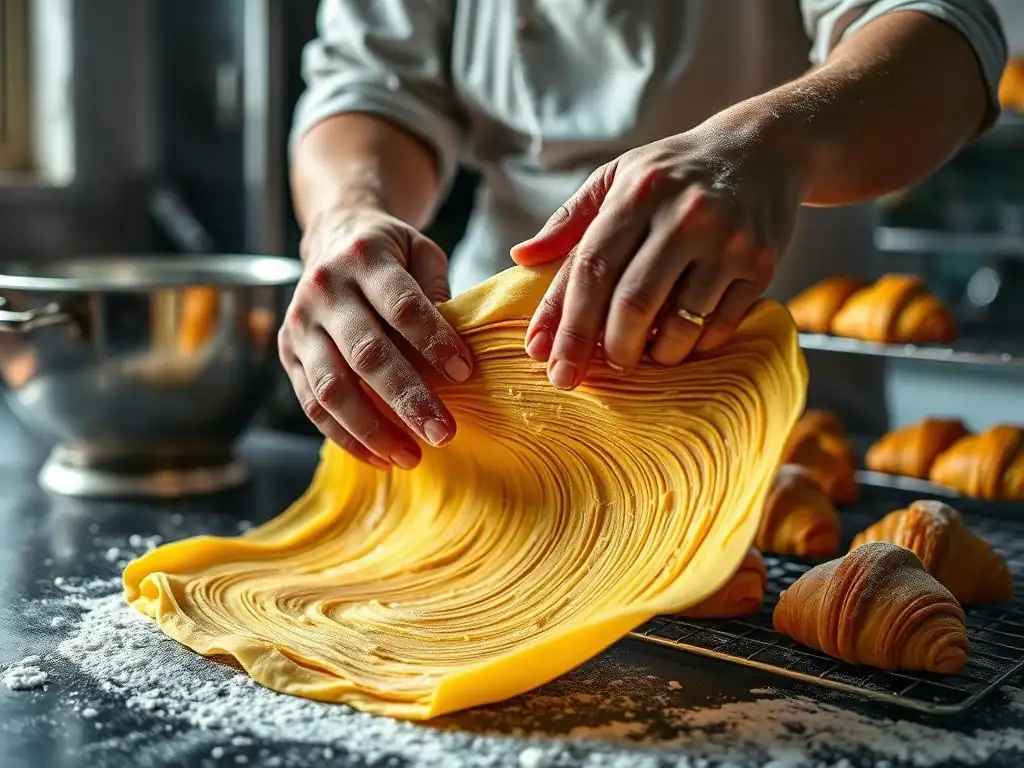
Lamination is the process of creating alternating layers of dough and fat through repeated folding and rolling. Think of it like making a very thin, layered sandwich, but with dough and butter instead of bread and fillings. Each fold essentially doubles or triples the number of layers, depending on the type of fold used (single or book fold). For example, a single fold creates three layers from one, while a book fold creates four. After several repetitions of rolling and folding, the number of layers can reach into the hundreds.
The ultimate goal is to achieve a structure where thin sheets of dough are separated by equally thin sheets of fat. When heat is applied during baking, the fat melts, and the water within it evaporates, creating steam. This steam is trapped between the dough layers, pushing them apart and causing the pastry to puff up. Simultaneously, the dough layers bake into thin, crisp sheets. This is the essence of the lamination dough layers technique – building a physical structure that transforms dramatically in the oven.
The Role of Fat: Butter's Impact on Flakiness and Flavor
Butter is the gold standard fat for lamination, particularly in French pastries like croissants and pain au chocolat. Its unique composition of fat, water (typically around 15-18%), and milk solids is crucial for both texture and flavor. The high fat content provides the necessary barrier between dough layers, while the water content is essential for steam creation during baking. The milk solids contribute significantly to the rich, desirable flavor and help with browning.
Using butter also imparts a superior flavor compared to other fats. Its melting point is relatively low (around 90-95°F or 32-35°C), which means it melts quickly in the mouth, contributing to a tender texture rather than a greasy one. Some bakers opt for high-fat butter (often 82% or more fat) as it contains less water, potentially leading to even flakier results and easier handling during the lamination dough layers technique, especially in warmer kitchens. However, standard butter (around 80% fat) works beautifully for many applications.
Laminated vs. Non-Laminated Dough: Key Structural Differences
The fundamental difference between laminated and non-laminated dough lies in their internal structure. Non-laminated doughs, like those used for bread, pizza, or brioche, are typically mixed until homogenous. While they may contain fat, it is dispersed throughout the dough rather than existing as distinct, separate layers. When non-laminated dough bakes, it expands primarily due to yeast activity or chemical leaveners, resulting in an open, spongy, or cake-like crumb depending on the dough type.
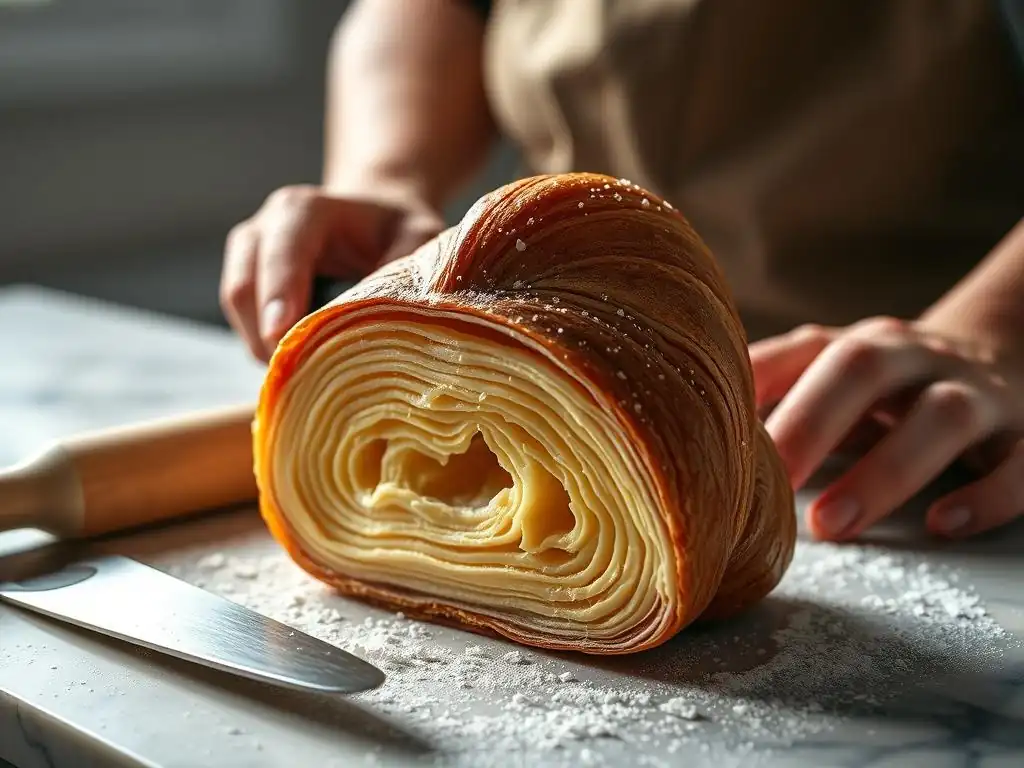
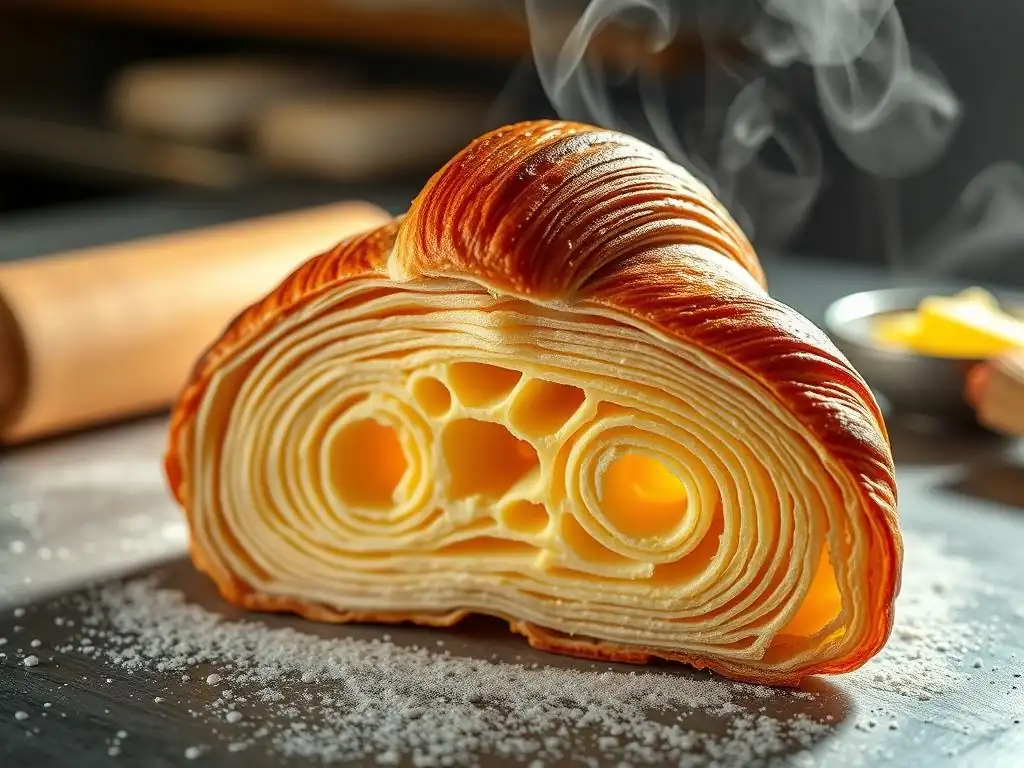
Laminated dough, on the other hand, is characterized by its multiple, distinct layers of dough and fat. This layered structure is intentionally created through the specific lamination dough layers technique of folding and rolling. When baked, this structure results in a significantly different texture: light, airy, and extremely flaky, with visible layers that separate easily. This structural difference is what gives pastries like croissants their signature honeycomb interior and puff pastry its incredible lift.
The Science of Perfect Lamination
Gluten Development: Achieving Elasticity and Strength
Gluten, formed when water interacts with proteins (glutenin and gliadin) in flour, is vital for laminated dough. During the initial mixing of the détrempe, controlled gluten development is needed to create a dough that is elastic enough to be rolled thin repeatedly without tearing. However, too much gluten development can make the dough tough and resistant to rolling, causing it to spring back excessively and potentially squeeze out the butter.
The resting periods between folds are crucial for managing gluten. Allowing the dough to rest, especially in the refrigerator, relaxes the gluten network. This makes the dough more extensible, meaning it can be rolled out more easily and thinly without tearing. It also prevents the dough from becoming overly elastic and difficult to work with. A well-managed gluten structure is essential for achieving thin, even layers during the lamination dough layers technique.
Temperature Control: Essential for Maintaining Fat Integrity
Temperature is arguably the most critical factor in successful lamination. The dough and the butter block ( beurrage) must be at the correct, similar temperature for the lamination process to work. Ideally, both should be cool and pliable, typically between 40°F and 50°F (4°C and 10°C). If the butter is too cold and hard, it will shatter into pieces when rolled, creating uneven layers. If it's too warm, it will become soft or even melt, integrating into the dough and destroying the distinct layers necessary for flakiness.
Maintaining this temperature range throughout the process requires frequent refrigeration. After each fold and roll, the dough needs to rest in the refrigerator for 30 to 60 minutes (or sometimes longer, depending on the recipe and kitchen temperature). This chills the butter layers, allowing them to firm up, and relaxes the gluten in the dough, making it easier to roll the next time. Ignoring proper chilling is a common cause of lamination failure, leading to butter leakage and poor layer separation.
Fat Consistency: Optimizing for Layer Separation
The consistency of the butter block is just as important as its temperature. The butter should be pliable and roughly the same consistency as the dough when you begin rolling. This allows the butter to spread evenly alongside the dough without breaking or squeezing out. Butter that is too hard will crack, while butter that is too soft will melt into the dough during rolling.
Some bakers temper their butter slightly before forming the beurrage block to ensure it is at the ideal pliable state. This might involve gently pounding it with a rolling pin or letting it sit at room temperature for a few minutes until it is bendable but not greasy. The goal is a butter block that can be rolled into a thin sheet that maintains its integrity alongside the dough layers throughout the entire lamination dough layers technique. Using butter with a higher fat content can also help maintain better consistency at slightly warmer temperatures.
Step-by-Step Guide to Lamination
Preparing the Détrempe: Mixing and Initial Rest
The détrempe is the initial dough base for lamination. It's typically a lean dough made from flour, water (or milk), a small amount of fat, and sometimes yeast, sugar, and salt depending on the desired pastry (e.g., croissants require yeast, puff pastry does not). The ingredients are mixed until just combined, forming a shaggy dough. Overmixing should be avoided to prevent excessive gluten development early on.
After mixing, the détrempe is often kneaded briefly or simply brought together into a cohesive mass. It then requires an initial rest period, usually in the refrigerator for several hours or overnight. This rest is crucial for hydrating the flour fully and allowing the gluten structure to relax significantly. A well-rested détrempe will be much easier to roll out thinly and evenly, which is fundamental for the subsequent steps of the lamination dough layers technique.
Incorporating the Beurrage: Encasing the Butter
The beurrage is the block of fat (usually butter) that will be incorporated into the détrempe. The butter should be prepared into a flat, rectangular block. This is often done by shaping tempered butter between two sheets of parchment paper or by cutting and arranging slices of cold butter. The size of the butter block relative to the rolled-out détrempe is important and specified in recipes, often being about two-thirds the size of the dough rectangle.
To incorporate the beurrage, the détrempe is rolled into a rectangle. The butter block is placed on one half or two-thirds of the dough, and the remaining dough is folded over to completely encase the butter. The edges are then sealed to prevent the butter from leaking out during rolling. This creates the initial layered structure: dough, butter, dough. This precise encasing is the first step in building the hundreds of layers needed for a successful lamination dough layers technique.
Folding Techniques: Single, Double, and Book Folds
The heart of lamination lies in the folding process. There are two primary types of folds used to multiply the layers:
- Single Fold (or Letter Fold): The dough rectangle is folded into three sections, like folding a letter. One end is folded into the center, and the other end is folded over that. This fold triples the number of layers (e.g., 3 layers become 9, 9 become 27).
- Book Fold (or Double Fold): The two ends of the dough rectangle are folded inwards so they meet in the center. Then, the dough is folded in half along the center line, like closing a book. This fold quadruples the number of layers (e.g., 3 layers become 12, 12 become 48).
Recipes will specify which type and number of folds are required for a particular pastry. For example, puff pastry often uses multiple single folds, while croissants might use a combination of single and book folds. Each fold requires careful rolling to maintain an even thickness before chilling.
Resting and Refrigeration: Allowing Relaxation and Gluten Development
Resting and refrigeration are integral to the lamination dough layers technique. After each fold and subsequent rolling, the dough must be rested and chilled, typically for 30 to 60 minutes in the refrigerator. This serves two critical purposes:
- Chilling the Butter: The cold temperature firms up the butter layers, preventing them from melting into the dough during the next rolling step. This maintains the distinct separation essential for flakiness.
- Relaxing the Gluten: The chilling period allows the gluten network in the dough to relax. This reduces elasticity and makes the dough easier to roll out thinly without resistance or tearing in the next step. Without adequate resting, the dough would be too springy and difficult to work with, potentially squeezing butter out or resulting in uneven layers.
Neglecting these resting periods is a common mistake that leads to frustration and poor results.
Number of Folds: Balancing Layers and Texture
The number and type of folds determine the final number of layers in the pastry, which directly impacts its texture.
- Puff Pastry: Often requires 4 to 6 single folds, resulting in hundreds (potentially over a thousand) of layers. This yields an incredibly light, airy, and crisp texture that puffs up dramatically.
- Croissants and Pain au Chocolat: Typically require fewer folds, often 3 to 4 folds (a combination of single and book folds is common). This results in a lower layer count compared to puff pastry (e.g., 55-70 layers for a standard croissant). This balance provides flakiness while also allowing for the development of the characteristic open, honeycomb interior structure when yeast is used.
The specific number of folds is chosen to optimize the texture for the particular pastry. Too few folds might result in less puff and flakiness, while too many folds can make the layers too thin and fragile, potentially leading to butter integration or a tough texture if the dough is overworked.
Troubleshooting Common Lamination Issues
Butter Leaks: Preventing and Addressing Melted Butter
Butter leakage, often called "blowouts," is a common and frustrating issue during lamination. It occurs when the butter melts and oozes out of the dough during rolling or resting. The primary cause is the dough or butter being too warm. This can happen if the kitchen is too hot, the dough hasn't been chilled sufficiently between folds, or if the rolling is too vigorous, generating heat through friction.
To prevent butter leaks, ensure your kitchen is cool, use well-chilled ingredients, and give the dough ample rest time in the refrigerator between each fold (at least 30-60 minutes). Roll with firm but gentle pressure, avoiding excessive force or speed. If you notice a small leak beginning, you can try lightly dusting the area with flour and chilling the dough immediately. For significant leaks, it may be difficult to salvage the perfect layers, though the dough might still be usable for less layer-dependent applications.
Tough Dough: Understanding and Preventing Overdeveloped Gluten
Tough, elastic dough that springs back excessively during rolling is usually a sign of overdeveloped or improperly relaxed gluten. This can happen if the initial détrempe was overmixed, or if the dough hasn't been given sufficient rest time between folds. Rolling the dough when the gluten is still tense will cause it to resist, making it difficult to achieve thin, even layers and potentially leading to a tough final product.
To prevent tough dough, mix the initial détrempe minimally, just until the ingredients are combined. Crucially, ensure adequate rest periods in the refrigerator (minimum 30 minutes, ideally 60+ minutes) after each fold and before final shaping. This allows the gluten network to relax, making the dough extensible and easy to roll. If the dough is fighting you during rolling, stop, cover it, and return it to the refrigerator for another 20-30 minutes before trying again. Patience is key to mastering the lamination dough layers technique.
Uneven Layers: Achieving Consistent Thickness
Uneven layers result in inconsistent puff and texture in the final pastry. This often stems from not rolling the dough evenly during the lamination process. If one part of the dough is thicker than another when folded, the layers will be thicker in that section, leading to less separation and puff compared to thinner areas. Similarly, if the butter block isn't evenly distributed or if the butter shatters during rolling, the fat layers will be uneven.
To achieve consistent layers, always aim to roll the dough rectangle to an even thickness before each fold. Use gentle, consistent pressure with your rolling pin, working from the center outwards and ensuring the edges are not significantly thicker or thinner than the middle. Ensure the initial butter block is evenly shaped and pliable. If using a book fold, make sure the two sides meet precisely in the center before folding in half. Consistent rolling technique throughout the lamination dough layers technique is paramount.
Lamination for Different Pastries
Lamination for Croissants: Achieving the Honeycomb Structure
Lamination is fundamental to creating the iconic flaky exterior and airy, honeycomb interior of croissants. The détrempe for croissants contains yeast, which produces carbon dioxide gas during fermentation. This gas, combined with the steam from the melting butter during baking, contributes to the significant rise and open structure of the interior crumb. Croissant dough typically undergoes 3-4 folds (often a combination of single and book folds), resulting in around 55-70 layers.
The lamination dough layers technique for croissants requires precise temperature control to balance yeast activity and butter integrity. The dough is often given a bulk fermentation before lamination and a final proof after shaping. During proofing, the shaped croissants rise, and the layers begin to separate slightly. Baking at a high initial temperature helps create oven spring and sets the layers, while a lower temperature finishes the bake and develops the crust color. The result is a pastry that is both flaky and airy.
Lamination for Puff Pastry: Creating Light and Airy Layers
Puff pastry, or pâte feuilletée, is perhaps the most dramatic example of lamination. Unlike croissant dough, puff pastry détrempe typically contains no yeast or leavening agents other than the steam created by the melting fat. Its incredible rise relies solely on the expansion of steam trapped between the numerous, very thin layers of dough and fat. Puff pastry usually undergoes 4 to 6 single folds (or equivalent), resulting in hundreds, sometimes over a thousand, layers.
The lamination dough layers technique for puff pastry is all about maximizing the number and thinness of the layers. Recipes often call for more folds than croissants and require meticulous rolling to ensure the dough and fat layers are paper-thin and consistent. When baked at a high temperature, the steam rapidly forces these countless layers apart, resulting in a pastry that can puff up to eight times its original height, creating a shatteringly crisp and light texture perfect for tarts, vol-au-vents, and turnovers.
Lamination for Kouign Amann: Achieving Caramelization and Crispness
Kouign Amann, a specialty from Brittany, France, uses a laminated dough similar to croissant dough but with significant amounts of sugar incorporated during the folding process. The détrempe is yeasted and laminated with butter, much like croissant dough, often with a similar number of folds (3-4). However, after the lamination is complete, sugar is generously sprinkled between the layers during the final shaping steps.
When Kouign Amann bakes, the butter melts and interacts with the sugar. The sugar caramelizes, creating a rich, sticky, and intensely crisp exterior. The lamination dough layers technique provides the structure for the pastry, allowing it to puff and separate, while the added sugar transforms the texture and flavor dramatically. The result is a pastry that is simultaneously flaky, tender, and wonderfully caramelized and crunchy on the outside.
Advanced Lamination Techniques
Reverse Lamination: Exploring Alternative Dough Structures
Reverse lamination is an alternative method where the fat block is placed on the outside of the dough, rather than the inside. In this technique, the butter is rolled out into a large rectangle, and the détrempe (which is often softer than in traditional lamination) is placed on top of it. The whole structure is then folded and rolled as usual.
This lamination dough layers technique is sometimes favored because the butter on the outside helps to keep the dough cool during rolling, making it easier to handle, especially in warmer conditions. It can also potentially lead to a slightly different texture, with the butter perhaps frying the outermost layer of dough during baking. While less common than traditional lamination, it offers an interesting variation for experienced bakers.
Using Alternative Fats: Shortening and its Affects
While butter is traditional and provides superior flavor, other fats like shortening or margarine can be used for lamination. Shortening (hydrogenated vegetable oil) is 100% fat, containing no water. This means it won't produce steam during baking, so pastries made with shortening will puff less dramatically than those made with butter. However, shortening has a higher melting point than butter, which can make the dough easier to handle, particularly in warm kitchens, as the fat is less likely to melt and leak.
Margarine, especially pastry margarine specifically designed for lamination, often contains water and has a higher melting point than butter. This allows it to create some steam for puff and be easier to work with at room temperature. However, alternative fats generally lack the complex flavor of butter. Using these fats changes the dynamics of the lamination dough layers technique and the final texture and taste of the pastry compared to using butter.
Laminating with Poolish: Adding Depth of Flavor
For yeasted laminated doughs like croissants, incorporating a poolish (a type of preferment made with equal parts flour and water and a small amount of yeast) can add significant depth of flavor and improve the dough's structure. A poolish is typically mixed several hours or even a day before the main dough, allowing a slow fermentation to develop complex aromatic compounds.
When the ripe poolish is added to the détrempe ingredients, it contributes to a more extensible dough that is easier to laminate. The pre-fermentation also results in a more flavorful final product with subtle tangy notes and a more desirable crumb structure. While not strictly a change in the lamination dough layers technique itself, using a poolish enhances the quality of the dough before lamination begins, leading to superior croissants or pain au chocolat.
Tips and Tricks for Consistent Lamination
Choosing the Right Flour: Protein Content and Its Role
The type of flour used significantly impacts the lamination dough layers technique. For most laminated pastries like croissants and puff pastry, a medium-protein flour (around 11-13% protein), often labeled as bread flour or a strong all-purpose flour, is recommended. This protein level provides enough gluten development for the dough to be elastic and strong enough to be rolled thinly repeatedly without tearing, yet not so much that it becomes tough and difficult to handle.
Using a very low-protein flour (like cake flour) might result in a dough too weak to withstand repeated rolling. Conversely, a very high-protein flour could lead to excessive gluten development, making the dough too elastic and resistant. Choosing the flour with the appropriate protein content is a foundational step in ensuring the lamination dough layers technique proceeds smoothly and yields the desired flaky texture.
Measuring Ingredients Accurately: Precision in Pastry
Pastry making, especially lamination, is a science that requires precision. Accurate measurement of ingredients is crucial for consistent results. Small variations in the ratio of flour to liquid can significantly impact dough hydration and gluten development, affecting how the détrempe handles during lamination. Similarly, the correct ratio of butter to dough is essential for achieving the right number and thickness of layers.
Using a digital kitchen scale is highly recommended for measuring flour, butter, and even liquids by weight rather than volume. This eliminates the variability inherent in cup measurements. Precise measurement ensures that the dough and butter have the correct consistency and balance needed for successful execution of the lamination dough layers technique.
Practicing Patience: Mastering the Technique Takes Time and Practice
Mastering the lamination dough layers technique requires patience and practice. It's a process that cannot be rushed. The resting and chilling periods between folds are non-negotiable; attempting to roll dough that hasn't rested sufficiently will only lead to frustration and poor results. Each fold and roll should be done carefully and deliberately, focusing on maintaining even thickness.
- Task: Schedule sufficient time for the entire process, including chilling.
- Task: Work in a cool environment if possible.
- Task: Don't be discouraged by initial imperfections; every attempt is a learning experience.
- Task: Pay close attention to how the dough feels after each rest and adjust chilling time if needed.
Like any skilled craft, becoming proficient in lamination takes time and repetition. Don't expect perfection on your first try. Embrace the process, learn from any mistakes, and with consistent practice, you will develop the feel and intuition needed to create beautiful, flaky laminated pastries.
Conclusion: Mastering the Art of Laminated Dough
Lamination is a captivating baking technique that transforms simple ingredients into pastries of incredible texture and flavor. By understanding the science behind the process – the delicate balance of gluten development, the critical role of temperature control, and the unique properties of butter – you can confidently approach this rewarding challenge. Whether you're aiming for the airy honeycomb of a croissant or the dramatic puff of pâte feuilletée, the principles of the lamination dough layers technique remain constant.
While it demands precision and patience, the effort invested in mastering lamination is well worth it. The satisfaction of biting into a perfectly flaky, homemade pastry is unparalleled. Troubleshoot common issues by focusing on temperature and rest times, and remember that practice is your best teacher. Embrace the journey of perfecting your lamination dough layers technique, and soon you'll be creating stunning laminated pastries that impress everyone lucky enough to try them.
Frequently Asked Questions
What is lamination in baking and why is it important?
Lamination is the process of creating distinct, alternating layers of dough and fat, typically butter. This technique is crucial for achieving flaky pastries like croissants and puff pastry.
What is the key to achieving distinct dough layers and fat layers during lamination?
Maintaining a cold temperature is paramount. Cold fat stays solid and prevents it from mixing with the dough, ensuring separate and defined layers.
What are some common mistakes that can ruin the lamination process?
Overworking the dough leads to gluten development and a tough pastry. Also, allowing the butter to melt will prevent proper layering.
How many folds are typically required for successful lamination?
The number of folds varies depending on the desired result, but generally, 3-6 single or double folds are sufficient to create hundreds of layers.
Can different types of fat be used for lamination dough layers besides butter?
While butter provides the best flavor and texture, other fats like shortening or margarine can be used, but they may affect the final taste and flakiness of the pastry.
Final Reflection: Mastering the Art and Science of Lamination
The pursuit of perfectly layered pastries isn't just a culinary quest; it's a testament to the power of precision and understanding. The meticulous process of lamination, as explored throughout this article, reveals a fascinating interplay between scientific principles and artistic skill. From the careful manipulation of butter and dough to the precise control of temperature and time, each step contributes to the creation of a truly exceptional product. This understanding transcends mere baking; it's a gateway to unlocking a deeper appreciation for the intricacies of food science.
The impact of lamination extends far beyond the individual baker's kitchen. It represents a dedication to quality and craftsmanship that resonates throughout the culinary world. The delicate, melt-in-your-mouth layers of a perfectly laminated croissant or pain au chocolat are a testament to this dedication, a sensory experience that speaks volumes about the passion and precision involved in its creation. As renowned pastry chef, Dominique Ansel, once said, Baking is a science, but it's also an art. It's about precision, but it's also about passion.
This quote perfectly encapsulates the essence of lamination, highlighting the delicate balance between technical skill and creative expression.
Now, consider your own baking journey. What challenges have you faced in mastering the lamination technique? What small adjustments or newfound understanding, gleaned from this article, might you apply to your next baking project? Don't be afraid to experiment, to embrace the imperfections, and to learn from each attempt. The path to mastering lamination, like any culinary pursuit, is a journey of continuous learning and refinement. Embrace the process, celebrate the successes, and allow the science and art of lamination to inspire your creativity in the kitchen.
Unlock Your Layering Genius: Bake Perfection Today!
Thanks for joining us on this delicious journey into the science of lamination! You've now got the tools to create bakery-worthy layers in your own kitchen. Ready to put your new knowledge into practice?
- Master the art of lamination: Try the recipe from the article, focusing on the precise folding and resting techniques. Note your observations and refine your process for even better results next time!
- Share your layered masterpiece: Post a picture of your creation on social media and tag BakeWithEase – let's celebrate your baking success together!
- Explore advanced lamination techniques: Search online for variations on this method and experiment with different doughs and fillings. Who knows what delicious discoveries you might uncover?
What surprising flavor combination will you try to layer next? Let’s discuss your ideas in the comments below!