
Baking Croissants in a Convection Oven: Tips and Tricks

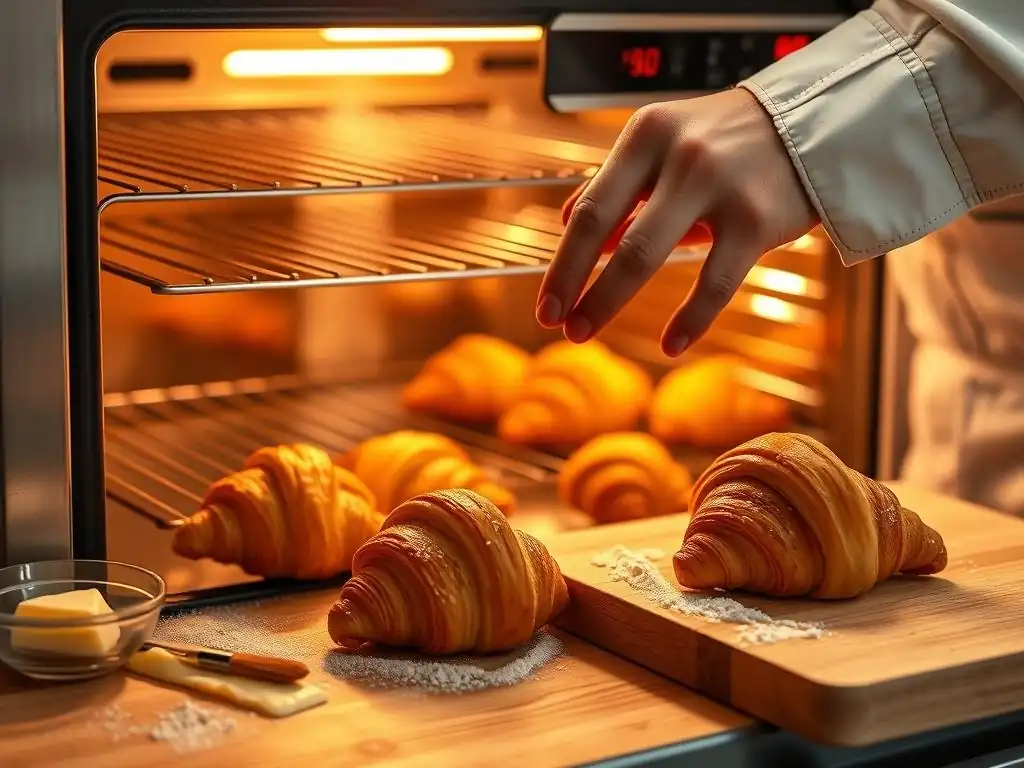
Welcome to BakeWithEase!
Ever dreamt of perfectly flaky, golden-brown croissants, baked to absolute perfection? We're thrilled to have you join us on this delicious journey! Unlock the secrets to achieving bakery-quality results at home, even with a convection oven. Our article dives deep into mastering the convection oven croissants recipe, revealing essential tips and tricks that will elevate your baking game. Curious how to achieve that signature airy interior and crispy exterior? Read on, and let's get baking!
- Baking Croissants in a Convection Oven: Tips and Tricks for Perfect Flaky Layers
- Introduction: Mastering Convection Oven Croissants at Home with BakeWithEase
- Understanding Convection Oven Settings for Optimal Croissant Baking
- The Ultimate Convection Oven Croissants Recipe: A Step-by-Step Guide
- Troubleshooting Common Convection Oven Croissant Baking Problems
- Tips and Tricks for Perfect Convection Oven Croissants
- Convection Oven Croissant Variations: Explore Beyond the Basic Recipe
- Storing and Reheating Your Convection Oven Baked Croissants
- Conclusion: Achieving Croissant Perfection with Your Convection Oven and BakeWithEase
-
Frequently Asked Questions
- What are the key benefits of using a convection oven for baking croissants?
- What temperature setting is recommended for baking croissants in a convection oven?
- How can I ensure my croissants rise properly in the convection oven?
- What's the best way to get that golden-brown color on my convection oven-baked croissants?
- Can I bake frozen croissants in a convection oven, and if so, what adjustments should I make?
- Final Reflection: The Golden Crust of Convection: Mastering the Art of Croissant Baking
- Unleash Your Inner Pastry Chef: Bake Amazing Croissants!
Baking Croissants in a Convection Oven: Tips and Tricks for Perfect Flaky Layers
Introduction: Mastering Convection Oven Croissants at Home with BakeWithEase
Baking croissants at home can feel like a daunting task, but with the right tools and techniques, achieving those coveted flaky layers and buttery interiors is well within reach. For many home bakers, the convection oven, a staple in modern kitchens, offers a significant advantage in this delicate process. Understanding how your convection oven works and how to adapt a standard recipe can elevate your convection oven croissants recipe from good to absolutely spectacular.
At BakeWithEase, we believe that even the most challenging bakes can become accessible and enjoyable. This guide is designed to demystify the process of baking croissants using a convection oven, providing you with the knowledge and confidence to create bakery-quality pastries in your own kitchen. We'll walk you through the specific considerations for using convection heat, from temperature adjustments to fan speed, ensuring your journey to perfect flaky croissants is smooth and successful.
Why Bake Croissants in a Convection Oven? Exploring the Advantages
Using a convection oven for baking croissants offers several distinct benefits that contribute to a better final product compared to traditional radiant heat ovens. The forced air circulation helps distribute heat more evenly throughout the oven cavity, reducing hot spots and ensuring that all your croissants bake consistently, regardless of their position on the baking sheet. This uniform heating is crucial for achieving even browning and a consistent rise across the entire batch.
Furthermore, the circulating hot air in a convection oven helps to quickly set the exterior of the croissant, creating a delicate crust while the interior continues to steam and expand. This results in superior oven spring, leading to taller, airier croissants with more defined layers.
Studies and anecdotal evidence from bakers suggest that convection baking can reduce baking time by up to 25% and often allows for lower baking temperatures (typically 25°F or 15°C lower than conventional settings), saving energy and preventing the exterior from burning before the interior is fully cooked. This efficiency makes the convection oven an ideal tool for mastering a convection oven croissants recipe.
The BakeWithEase Approach to Convection Croissant Baking
Our philosophy at BakeWithEase centers around simplifying complex baking processes while ensuring professional-level results. For baking croissants in a convection oven, this means providing clear, step-by-step instructions tailored specifically to this cooking method. We emphasize precision in ingredient measurements, temperature control, and technique, breaking down the seemingly intricate steps of lamination and proofing into manageable tasks.
Our approach incorporates practical tips, such as adjusting oven racks, understanding the nuances of fan speed, and recognizing the visual cues of properly proofed dough, all within the context of a convection environment. We aim to equip you with the knowledge to not just follow a convection oven croissants recipe but to understand why certain steps are crucial when using convection heat. This empowers you to adapt and troubleshoot, ensuring consistent success with your homemade croissants every time you bake.
Understanding Convection Oven Settings for Optimal Croissant Baking
Baking with convection requires a slightly different approach than conventional baking, particularly when dealing with delicate pastries like croissants. Understanding your oven's specific settings – temperature, fan speed, and potential steam functions – is key to unlocking the full potential of your convection oven croissants recipe. These settings directly impact how heat interacts with your dough, influencing everything from rise and flakiness to browning and texture.
Many modern convection ovens offer various modes, including "True Convection," "Convection Bake," or options to adjust fan speed. Familiarizing yourself with your appliance's manual is the first step. Generally, convection modes circulate air, but "True Convection" often includes a third heating element around the fan for even more consistent heat. For croissants, selecting the appropriate mode and fine-tuning temperature and fan speed is crucial for achieving the perfect balance of a crisp exterior and a light, airy interior.
Finding the Right Temperature for Convection Baked Croissants
When converting a standard croissant recipe for a convection oven, a common rule of thumb is to reduce the baking temperature by about 25°F (or roughly 15°C). For example, if a conventional recipe calls for baking at 400°F (200°C), you might start with 375°F (190°C) in your convection oven. This adjustment accounts for the more efficient heat transfer provided by the circulating air, preventing the exterior from cooking too quickly or burning.
However, the ideal temperature can vary depending on your specific oven and the size of your croissants. Some bakers prefer starting at a higher temperature, like 375°F (190°C), for the first 5-10 minutes to encourage rapid oven spring, then reducing it to 350°F (175°C) to finish baking and ensure the interior is fully cooked without over-browning the exterior. Monitoring your first batch closely and making slight adjustments for future bakes is the best way to dial in the perfect temperature for your convection oven croissants recipe.
Fan Speed Considerations for Achieving Flaky Layers
Most home convection ovens have a single fan speed, but some advanced models offer variable speeds. The fan speed directly impacts the intensity of the circulating air. For delicate pastries like croissants, a high fan speed can sometimes lead to the exterior drying out too quickly or uneven browning if the air currents are too strong or inconsistent.
If your oven allows, using a lower fan speed setting might be beneficial for croissants, promoting more gentle and uniform baking. If you only have one speed, ensure your oven rack is positioned correctly (usually the middle rack) and consider using a sturdy baking sheet or stone to buffer the direct heat and airflow slightly. Observing how your croissants bake and brown will help you determine if the fan speed is negatively impacting the results and whether adjustments to temperature or baking time are needed for your convection oven croissants recipe.
Utilizing Steam in Your Convection Oven for Enhanced Croissant Rise
Some high-end convection ovens feature a steam function, which can be incredibly beneficial for baking laminated doughs like croissants. Steam introduced at the beginning of the baking process keeps the surface of the dough moist, allowing it to expand more fully before a crust forms. This results in greater oven spring and ultimately, a taller, more voluminous croissant with a lighter texture.
If your convection oven has a steam injection feature, follow the manufacturer's instructions for incorporating steam during the initial phase of baking (often the first 5-7 minutes). If your oven doesn't have this feature, you can attempt to create steam manually. One common method is placing a heatproof pan or cast-iron skillet on the bottom rack or oven floor while preheating, and carefully pouring about a cup of hot water into it just as you place the croissants in the oven.
Be cautious to avoid splashing water onto the heating elements. This added humidity can significantly enhance the rise and flakiness of your convection oven croissants recipe.
The Ultimate Convection Oven Croissants Recipe: A Step-by-Step Guide
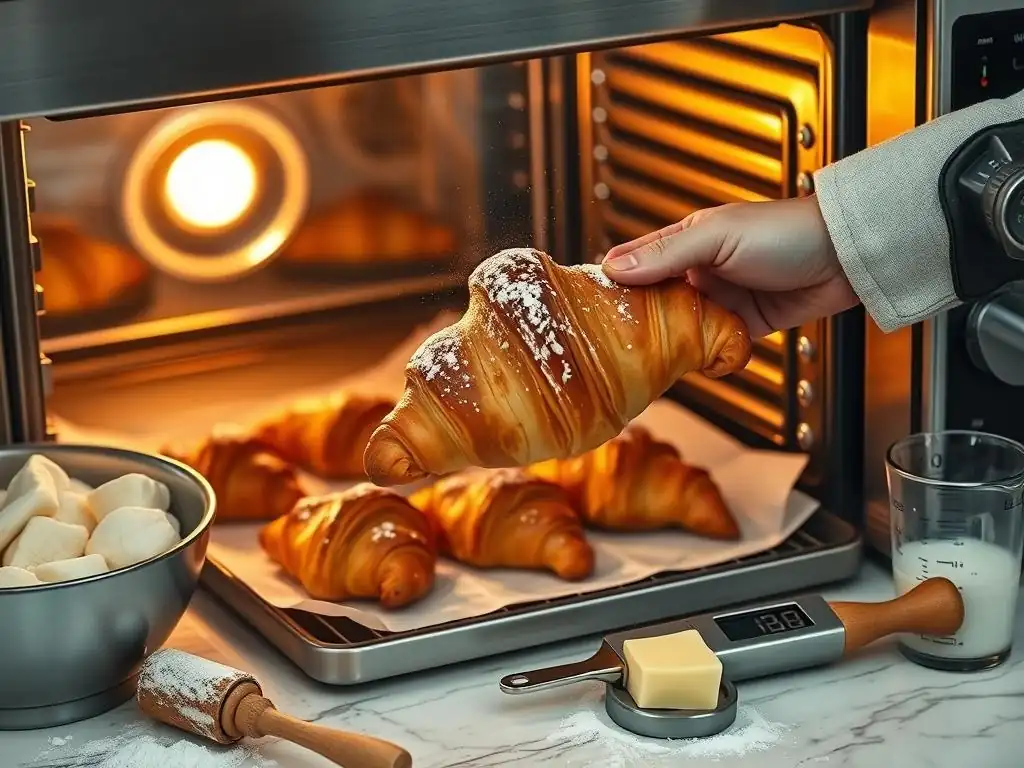
Crafting the perfect croissant is a labor of love, involving precise measurements, careful technique, and patience. This convection oven croissants recipe is designed to guide you through the process, optimizing each step for the unique environment of a convection oven. By following these steps, you'll be well on your way to enjoying warm, buttery, flaky croissants fresh from your own oven.
Remember that success lies in attention to detail, particularly regarding dough temperature and chilling times. Using high-quality ingredients, especially unsalted butter with a high fat content, will also make a significant difference in the final texture and flavor of your convection oven croissants.
Ingredients for Delicious Home-Baked Croissants
To make a standard batch of about 12 medium-sized croissants, you will need the following ingredients. Using cold ingredients is crucial for developing the flaky layers.
- 500 grams (about 4 cups) strong bread flour
- 60 grams (about 1/4 cup) granulated sugar
- 10 grams (about 1.5 teaspoons) active dry yeast or 7 grams instant dry yeast
- 10 grams (about 1.5 teaspoons) fine sea salt
- 250 ml (about 1 cup) cold milk (whole milk is recommended)
- 50 grams (about 1/4 cup) unsalted butter, melted and cooled slightly, plus additional for butter block
- 250-300 grams (about 1 cup to 1 1/4 cups) cold unsalted butter for the butter block (preferably high-fat European butter)
- 1 large egg, beaten with 1 tablespoon milk, for egg wash
Ensure all your ingredients, especially the milk and the butter for the butter block, are kept very cold. The success of your convection oven croissants recipe hinges on maintaining cold temperatures throughout the lamination process.
Step 1: Preparing the Dough for Convection Oven Baking
Begin by mixing the dry ingredients: flour, sugar, yeast, and salt in a large bowl or the bowl of a stand mixer. In a separate bowl, whisk together the cold milk and the slightly cooled melted butter (50g). Add the wet ingredients to the dry ingredients and mix until a shaggy dough forms. If using a stand mixer, knead on low speed for about 5-7 minutes until the dough is smooth and elastic but not overly developed – it should still be relatively firm.
Turn the dough out onto a lightly floured surface, shape it into a rough rectangle, wrap it tightly in plastic wrap, and refrigerate for at least 2-3 hours, or preferably overnight. This cold rest is vital for chilling the dough thoroughly and allowing the gluten to relax, making it easier to roll out later for your convection oven croissants recipe.
Step 2: Lamination Techniques for Perfect Croissant Layers
Lamination is the process of creating alternating layers of dough and butter through repeated rolling and folding. Prepare your butter block by shaping the cold 250-300g butter into a flat rectangle, approximately 8x6 inches (20x15 cm), between two sheets of parchment paper. Ensure the butter is pliable but still cold – it should bend slightly without breaking.
Roll out the chilled dough rectangle to roughly double the size of your butter block (about 16x12 inches or 40x30 cm). Place the butter block on one half of the dough, leaving a small border. Fold the other half of the dough over the butter block, sealing the edges to fully enclose the butter. This is the first step in creating the hundreds of layers needed for flaky convection oven croissants recipe results.
Gently roll out the dough to a long rectangle (about 24x10 inches or 60x25 cm). Perform a 'single fold' by folding one end two-thirds of the way up the rectangle, then folding the remaining third down over the top, like folding a letter. Wrap tightly and refrigerate for 30-60 minutes. Repeat this rolling and single folding process two more times, resting the dough in the refrigerator for 30-60 minutes between each fold.
You will have performed a total of three single folds. Alternatively, you can perform two 'double folds' (also known as a book fold) with resting periods in between. The key is to keep the dough and butter cold and the layers distinct.
Step 3: Proofing Your Croissants for Optimal Oven Spring
After shaping your croissants, they require a crucial proofing period before baking. Proofing allows the yeast to produce gas, causing the croissants to double in size and develop their structure. For perfect convection oven croissants recipe results, proofing in a warm, humid environment is ideal. Aim for a temperature around 75-80°F (24-27°C) with about 75% humidity.
A common method for home proofing is to place the shaped croissants on a baking sheet lined with parchment paper, leaving ample space between them as they will expand significantly. Place the baking sheet inside a turned-off oven with a pan of hot water on the rack below. Close the oven door to trap the warmth and humidity. Proofing typically takes 2-3 hours, depending on the temperature.
The croissants are ready when they are visibly larger (nearly doubled), appear puffy and delicate, and jiggle gently when the baking sheet is lightly shaken. They should not look wet or feel sticky. Avoid over-proofing, which can cause the layers to collapse during baking.
Step 4: Baking Your Croissants in the Convection Oven: Time and Temperature
Preheat your convection oven according to the temperature you've determined is best (likely around 350-375°F or 175-190°C). While the oven preheats, gently brush the proofed croissants with the egg wash, being careful not to let the wash pool between the layers, which can seal them together.
Place the baking sheet with the egg-washed croissants into the preheated convection oven. Bake for approximately 15-20 minutes, or until the croissants are deeply golden brown and feel light when lifted. For optimal results with a convection oven croissants recipe, consider starting at a slightly higher temperature (e.g., 375°F/190°C) for the first 5-7 minutes to maximize oven spring, then reduce the temperature (e.g., to 350°F/175°C) for the remainder of the baking time to ensure the interior cooks thoroughly without the exterior burning.
If using steam, introduce it at the beginning of this step. Rotate the baking sheet halfway through the baking time for even browning. Remove from the oven and let cool slightly on a wire rack before enjoying.
Troubleshooting Common Convection Oven Croissant Baking Problems
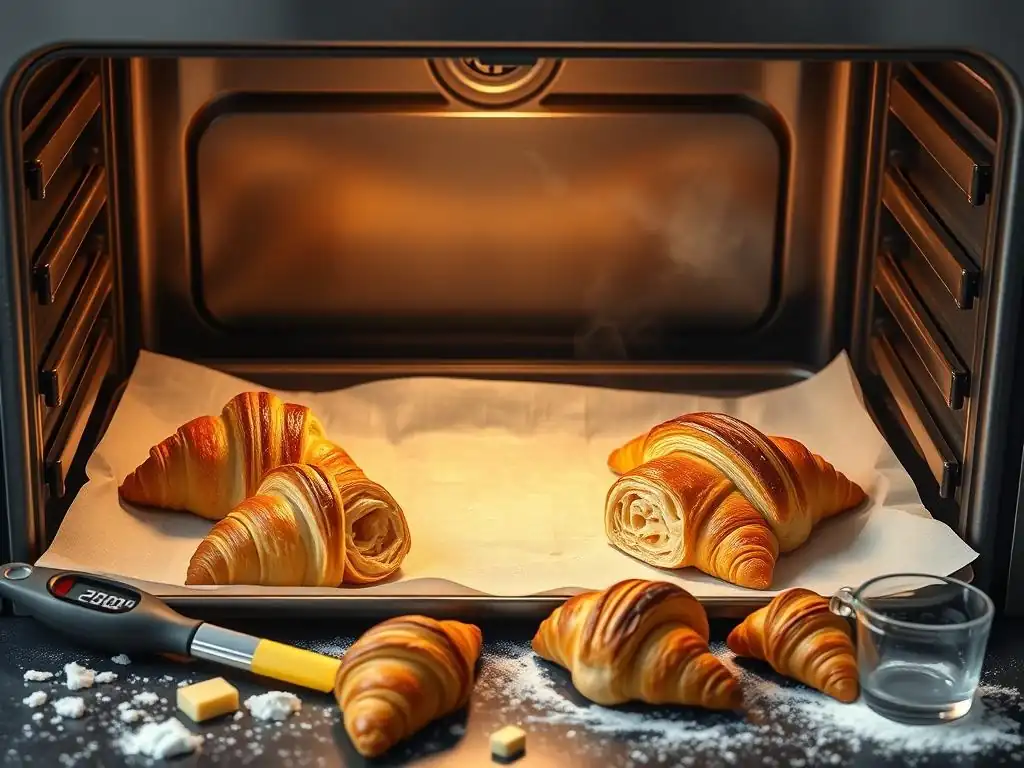
Even with a solid convection oven croissants recipe, you might encounter issues. The unique airflow of a convection oven can sometimes present challenges. Recognizing these common problems and knowing how to address them will help you refine your technique and achieve consistently excellent results. Patience and observation are your best allies when troubleshooting.
Understanding the relationship between dough handling, proofing, oven settings, and the final outcome is key. Don't be discouraged by less-than-perfect batches; each bake is an opportunity to learn and improve your approach to baking croissants in a convection oven.
Croissants Not Rising Properly in the Convection Oven
If your croissants come out dense or flat, several factors could be contributing to poor rise. Insufficient proofing is a primary culprit; the yeast didn't have enough time or the right conditions (warmth and humidity) to produce adequate gas before baking. Ensure your proofing environment is warm enough (75-80°F / 24-27°C) and humid, and that the croissants have proofed until visibly puffy and jiggly.
Another reason could be that the dough was too cold going into the oven, inhibiting initial oven spring. While the dough needs to be cold during lamination, it must be properly proofed at a warmer temperature before baking. The yeast is most active in the proofing range.
Finally, old or inactive yeast will not leaven the dough effectively. Always check the expiration date on your yeast and consider proofing it in warm milk with a pinch of sugar beforehand to ensure it's active. A convection oven relies on good initial rise for optimal flakiness, so addressing these issues is crucial for a successful convection oven croissants recipe.
Croissants Burning on Top: Prevention and Solutions
Convection ovens can sometimes cause the tops of baked goods to brown very quickly due to the direct airflow. If your croissants are burning on top before the rest of the croissant is fully baked, your oven temperature might be too high, or the fan speed might be too intense.
Try reducing your baking temperature by another 10-15°F (5-8°C) from your initial convection setting. If your oven has variable fan speed, select a lower setting if possible. As a quick fix during baking, if you notice the tops browning too rapidly, you can loosely tent the baking sheet with aluminum foil for the remainder of the baking time. This shields the tops from the direct heat and airflow, allowing the rest of the croissant to catch up. Adjusting your temperature and potentially using foil are practical steps for perfecting your convection oven croissants recipe.
Croissants Not Flaky Enough: Mastering the Lamination and Baking Process
Lack of flakiness is often a sign that the layers of butter and dough didn't remain separate during the lamination and baking process. This can happen if the butter was too soft during rolling and folding, causing it to incorporate into the dough rather than forming distinct layers. Ensure your butter is pliable but cold and firm for the butter block, and that you chill the dough adequately between each fold (at least 30-60 minutes).
Baking temperature and time also play a role in flakiness when using a convection oven croissants recipe. If the oven temperature is too low, the butter might melt and leak out before the dough sets, resulting in a greasy, dense interior instead of distinct layers. Baking at the correct, relatively high temperature (even with the convection adjustment) is necessary to create steam from the melting butter, which forces the layers apart. Ensure your oven is properly preheated and maintains the correct temperature throughout the bake.
Uneven Baking: Ensuring Consistent Results in Your Convection Oven
While convection ovens are designed for even heat distribution, some ovens can still have subtle hot spots, or the airflow pattern might cause uneven browning, especially if the baking sheet is too large or the oven is crowded. If you notice some croissants browning faster than others, the airflow in your specific convection oven might be uneven.
To combat uneven baking, always leave adequate space between croissants on the baking sheet to allow air to circulate freely around each pastry. Avoid overcrowding the oven by baking only one sheet at a time if possible. A crucial step is to rotate your baking sheet halfway through the total baking time (e.g., after 8-10 minutes of a 15-20 minute bake). This ensures that all sides of the croissants are exposed to the same heat and airflow patterns, leading to more uniform browning and baking results for your convection oven croissants recipe.
Tips and Tricks for Perfect Convection Oven Croissants
Beyond the basic steps of a convection oven croissants recipe, incorporating a few expert tips can significantly improve your results and consistency. These small details can make a big difference in achieving that coveted golden color, airy texture, and buttery flavor that defines a perfect croissant. Paying attention to these nuances will elevate your home baking game.
From verifying your oven's temperature to optimizing how you load your baking sheet, these tips address factors that are particularly important when working with the dynamic heat of a convection oven. They are simple additions to your process that can prevent common pitfalls and ensure success.
Preheating is Key: Ensuring Optimal Oven Temperature
Properly preheating your convection oven is non-negotiable for baking croissants. The dough relies on a burst of initial heat to achieve maximum oven spring, causing the layers to puff up rapidly before the butter melts completely. Placing croissants into an oven that hasn't reached its target temperature will result in less rise and potentially greasy layers.
For a convection oven croissants recipe, preheat your oven for at least 15-20 minutes after it indicates it has reached the set temperature. Ovens often signal they are ready when they hit the target temperature, but the internal components and walls need extra time to fully heat up and radiate consistent heat. This extended preheat ensures a stable and hot environment, which is vital for the initial expansion of your delicate dough.
Using a Baking Stone or Sheet for Even Heat Distribution
The surface you bake your croissants on can affect how the heat transfers from the oven to the dough, particularly the bottom crust. While a standard metal baking sheet works well, using a baking stone or a heavy-duty commercial-grade baking sheet can provide more even heat distribution.
Placing your parchment-lined baking sheet directly on a preheated baking stone in the convection oven can help regulate the bottom heat, preventing the bottoms from burning while the tops catch up, or conversely, ensuring the bottoms are fully baked and crisp. If you don't have a stone, a substantial aluminum baking sheet (often called a half-sheet pan) offers better thermal mass and heat distribution than flimsy, thin pans, contributing to more consistent results with your convection oven croissants recipe.
Rotating Your Baking Sheet for Uniform Browning
Even the best convection ovens can sometimes have slight variations in airflow or heating patterns. To ensure all your croissants brown uniformly, make it a habit to rotate your baking sheet halfway through the baking time. If your recipe calls for 18 minutes of baking, rotate the sheet 180 degrees after 9 minutes.
This simple step exposes all sides of the baking sheet and the croissants to the same average temperature and airflow over the entire baking duration. Rotating prevents the croissants closest to the fan or heating elements from over-browning while those further away remain pale. It's a quick and effective way to guarantee that every single croissant from your convection oven croissants recipe emerges with a beautiful, even golden-brown color.
The Importance of a Proper Oven Thermometer
Relying solely on your oven's built-in thermostat can be risky, as they can be inaccurate, sometimes off by as much as 25-50°F (15-30°C). This discrepancy can significantly impact baking outcomes, especially for temperature-sensitive items like croissants. An oven that runs too hot can burn the exterior, while one that runs too cool can result in underbaked, dense pastries.
Using an independent, oven-safe thermometer placed inside your convection oven provides an accurate reading of the actual temperature. Check the thermometer during the preheating phase and throughout the bake to ensure your oven is maintaining the correct temperature specified in your convection oven croissants recipe. If you notice a consistent difference, you can adjust your oven's thermostat setting accordingly for future bakes to match the desired temperature measured by the external thermometer. This simple tool is invaluable for consistent baking success.
Convection Oven Croissant Variations: Explore Beyond the Basic Recipe
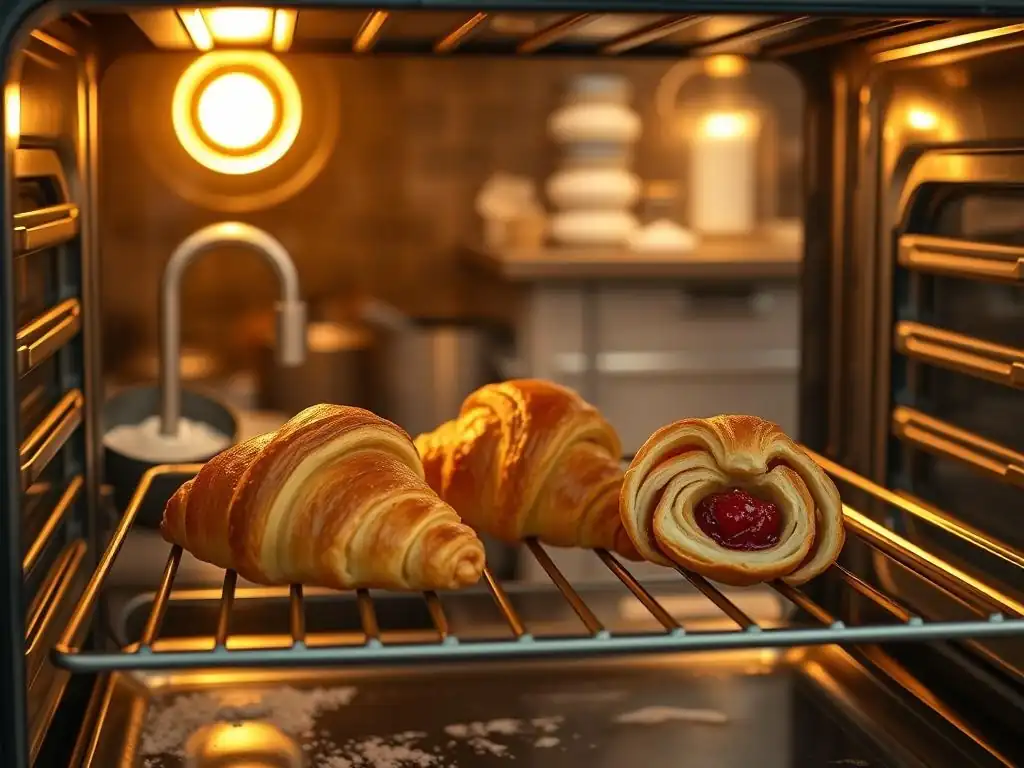
Once you've mastered the basic convection oven croissants recipe, the possibilities for variations are endless! Croissants serve as a fantastic base for incorporating different fillings, toppings, and flavors. Using your convection oven for these variations ensures they bake up just as beautifully and evenly as the classic version.
Exploring these variations allows you to customize your baking and cater to different tastes, from sweet chocolate-filled pastries to savory bites perfect for brunch. The principles of lamination, proofing, and convection baking remain the same, making the transition to these variations straightforward and fun.
Chocolate Croissants (Pain au Chocolat) in the Convection Oven
Pain au Chocolat, or chocolate croissants, are a beloved variation. To make them using your convection oven croissants recipe dough, simply roll out the laminated dough to the final thickness (usually about 1/8 inch or 3-4mm) and cut it into rectangles, typically about 4x8 inches (10x20 cm).
Place one or two chocolate batons (special baking sticks available at baking supply stores) along the shorter edge of the rectangle and roll up the dough, ensuring the seam is on the bottom. Some bakers place a second baton and roll further. Shape them, proof as usual, egg wash, and bake in the convection oven following the same time and temperature guidelines as the plain croissants. The convection heat will help crisp the exterior while the chocolate melts perfectly inside.
Almond Croissants: Adding a Nutty Twist to Your Convection Baking
Almond croissants are often made from day-old plain croissants, but you can also make them fresh. Slice baked or proofed (but not yet baked) croissants horizontally. Prepare a frangipane filling (a mixture of ground almonds, sugar, butter, and egg).
Spread a generous layer of frangipane on the bottom half, place the top half back on, and cover the entire top surface liberally with more frangipane. Sprinkle with sliced almonds. Bake in the convection oven at a slightly lower temperature (e.g., 325-350°F / 160-175°C) for 15-20 minutes until the frangipane is golden brown and set. The convection heat ensures the frangipane bakes evenly and the almonds toast beautifully.
Savory Croissants: Exploring Different Fillings and Toppings for Convection Baking
Croissants aren't just for sweet treats! The buttery, flaky dough makes an excellent base for savory fillings. For a simple ham and cheese variation, roll out the dough as usual and cut into triangles. Place a slice of ham and a sprinkle of shredded cheese (like Gruyère or cheddar) at the wide end before rolling up.
Other savory options include spinach and feta, mushroom and thyme, or pesto and sun-dried tomato. Add your desired filling before rolling the dough triangles into the classic crescent shape. Bake following your convection oven croissants recipe instructions. The convection oven is perfect for ensuring the cheese melts and the fillings are heated through while the exterior remains crisp and flaky.
Storing and Reheating Your Convection Oven Baked Croissants
One of the joys of baking a batch of convection oven croissants recipe pastries is having some leftover to enjoy later. Proper storage is key to maintaining their freshness, and reheating them correctly can bring back much of their original flakiness and warmth. While they are undeniably best eaten fresh from the oven, these methods allow you to savor your hard work for a little longer.
Avoid storing warm croissants immediately, as this can create condensation and make them soggy. Always allow them to cool completely before storing.
Best Practices for Storing Freshly Baked Croissants
For short-term storage (1-2 days), store cooled croissants at room temperature in an airtight container or a paper bag placed inside a plastic bag. The paper bag helps absorb excess moisture, while the plastic bag prevents them from drying out too quickly. Avoid storing them in the refrigerator, as this can actually make them go stale faster.
For longer storage, croissants freeze exceptionally well. Once completely cooled, place them in a single layer on a baking sheet and freeze until solid. Then, transfer the frozen croissants to a freezer-safe bag or airtight container. Properly frozen croissants can be stored for up to 1-2 months. This is a great way to enjoy your convection oven croissants recipe results whenever a craving strikes.
Reheating Techniques to Restore Flakiness
Reheating croissants is the best way to bring back their delicious texture. Microwaving is generally not recommended, as it makes them soft and chewy. The best method is using an oven, and your convection oven is perfect for this.
To reheat, place croissants directly on a baking sheet (no need to preheat the oven for this unless reheating from frozen). Place them in a convection oven set to a moderate temperature, around 300-325°F (150-160°C). Reheat for about 5-10 minutes for room temperature croissants, or 10-15 minutes for frozen ones, until they are warm throughout and the exterior feels crisp again. The circulating air of the convection oven helps to quickly re-crisp the layers, restoring much of that fresh-baked flakiness from your convection oven croissants recipe.
Conclusion: Achieving Croissant Perfection with Your Convection Oven and BakeWithEase
Baking croissants in a convection oven might seem intimidating at first, but by understanding how the circulating heat affects the dough and adjusting your techniques accordingly, you can achieve truly remarkable results at home. From precise temperature control and fan speed considerations to mastering the delicate art of lamination and proofing, each step contributes to the final flaky, buttery perfection.
Using a convection oven, as highlighted throughout this guide, offers significant advantages in achieving even baking and superior oven spring for your convection oven croissants recipe. With the detailed steps and troubleshooting tips provided by BakeWithEase, you are now equipped to tackle this rewarding baking project. So, gather your ingredients, embrace the process, and get ready to enjoy the incredible satisfaction of pulling warm, golden, perfectly layered croissants from your own convection oven. Happy baking!
Frequently Asked Questions
What are the key benefits of using a convection oven for baking croissants?
Using a convection oven ensures even heat distribution, leading to flakier and more uniformly browned croissants. It also typically reduces baking time compared to a conventional oven.
What temperature setting is recommended for baking croissants in a convection oven?
Generally, reduce the temperature recommended in a standard recipe by 25°F (15°C). This prevents the outer layers from burning before the inner layers are fully cooked.
How can I ensure my croissants rise properly in the convection oven?
Maintain a consistent temperature and avoid opening the oven door frequently. Ensuring your dough is properly proofed before baking is also crucial for a good rise.
What's the best way to get that golden-brown color on my convection oven-baked croissants?
Brushing the croissants with an egg wash before baking is essential. Also, monitor the color closely during the last few minutes and rotate the baking sheet for even browning.
Can I bake frozen croissants in a convection oven, and if so, what adjustments should I make?
Yes, you can! Allow frozen croissants to thaw slightly before baking. You may need to increase the baking time by a few minutes compared to fresh croissants.
Final Reflection: The Golden Crust of Convection: Mastering the Art of Croissant Baking
The delicate dance of butter, flour, and heat, perfected in the controlled environment of a convection oven, remains a culinary pursuit both challenging and deeply rewarding. The seemingly simple croissant, with its flaky layers and buttery aroma, reveals itself to be a testament to precision and patience, a fact amplified by the unique considerations of convection baking. This article has explored the nuances of achieving that perfect, golden crust, highlighting techniques that elevate the home baker's croissant experience.
The journey of mastering croissant baking, for me, has been one of continuous learning and surprising discoveries. The convection oven, initially perceived as a mere tool, has become a partner in this creative process, its even heat distribution allowing for a level of control previously unimaginable. The best things in life are worth waiting for,
and this certainly holds true for the perfectly baked croissant. The time invested, the attention to detail, and the eventual reward of that first bite—all contribute to a deeply satisfying experience that transcends the simple act of baking.
Now, it's your turn. Consider the techniques outlined in this article—the precise butter layering, the careful proofing, the understanding of convection's unique properties. Don't be afraid to experiment, to adjust the techniques to your own oven and preferences. Embrace the challenge, and the reward of a perfectly flaky, buttery croissant, warm from the oven, will be yours. The journey to mastering this classic pastry is a rewarding one, and I invite you to embark on it, one perfectly golden crust at a time.
Unleash Your Inner Pastry Chef: Bake Amazing Croissants!
Thanks for taking the time to explore the world of croissant baking with us! We hope you’ve gained valuable insights and feel more confident tackling this delicious challenge. Ready to put your new skills to the test?
- Bake your own masterpiece! Try the croissant recipe from the article, and adapt the baking times for your specific convection oven. Remember to closely monitor the browning!
- Share your croissant creations! Post a picture of your baked goods on social media and tag us – we’d love to see them. Use the hashtag #BakeWithEaseCroissants.
- Explore our other baking guides: Delve deeper into pastry making by browsing our extensive collection of recipes and tutorials.
Are you ready to discover which flavor profile you'll master next in your croissant journey?