
The Essential Flours for Authentic European Breads

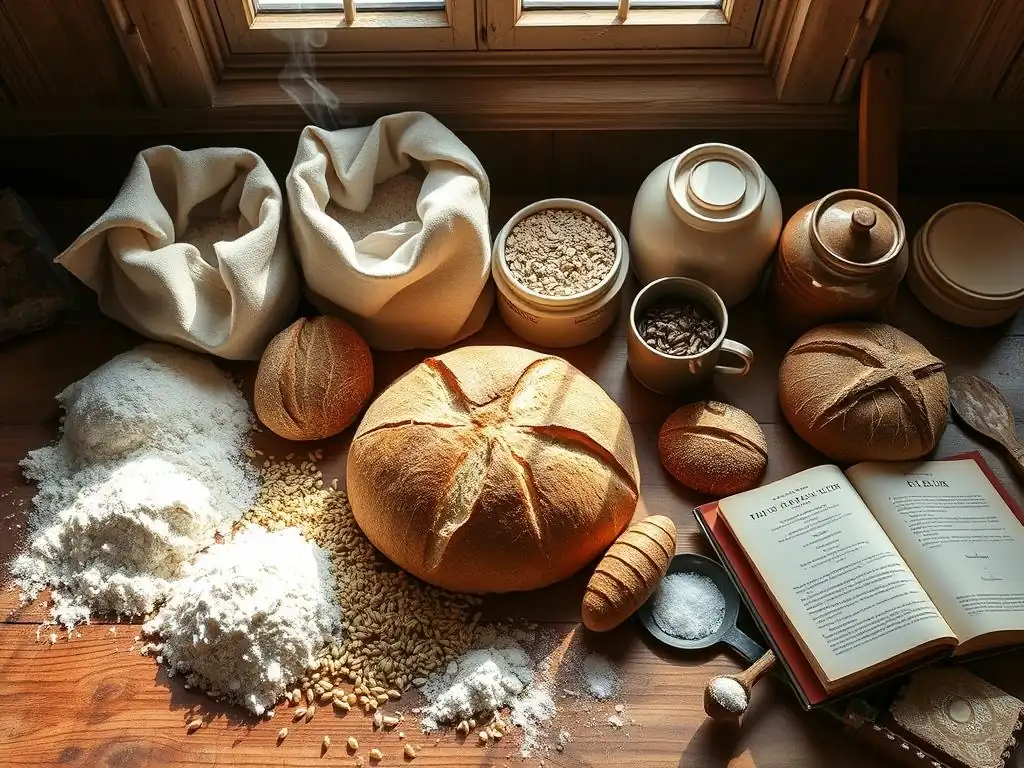
Welcome to BakeWithEase, your kitchen companion on a journey to baking brilliance! Ever wondered what truly sets apart those crusty, flavorful loaves you find in European bakeries? Get ready to unlock the secrets! This week, we're diving deep into European bread flour recipes, exploring the essential flours that can transform your home baking into an authentic experience. Prepare to discover the nuances of each flour type and elevate your bread baking game – your next unforgettable loaf awaits!
- Essential Flours for Authentic European Breads
- Mastering European Bread Baking: A Guide to Flour Selection
- Understanding Flour's Role in European Bread Baking
- Exploring Essential Flours for European Breads
- Sourcing Quality Flours for European Bread Baking
- Tips for Adapting European Bread Recipes
- Conclusion: Baking Authentic European Breads with Confidence
-
Frequently Asked Questions
- What is European bread flour, and why is it important for authentic European bread recipes?
- Where can I find European bread flour if my local grocery store doesn't stock it?
- What types of European breads specifically benefit from using European bread flour?
- Can I substitute all-purpose flour for European bread flour in a recipe?
- What are some key differences between different types of European bread flours, such as those from Germany, Italy, or France?
- Final Reflection: The Enduring Legacy of European Breads
- Unleash Your Inner Baker: Master European Breads!
Essential Flours for Authentic European Breads
Mastering European Bread Baking: A Guide to Flour Selection
Baking authentic European breads at home opens up a world of incredible flavors and textures, from the chewy crust of a French baguette to the dense crumb of a German pumpernickel. The secret to these distinctive loaves often lies in the flour you choose. Understanding the specific types of flour used across the continent is the first step to mastering genuine European bread flour recipes. It’s not just about protein content; factors like the type of wheat, milling process, and even regional classifications play a crucial role in the final outcome of your bake.
Embarking on the journey of baking European breads requires a bit of knowledge about the fundamental ingredient: flour. While all flour starts as grain, the way it's processed and the type of grain used create significant differences. For instance, the characteristics of the wheat grown in France differ from that grown in Italy or Germany, leading to distinct flour properties. By exploring the essential flours used in traditional European bread flour recipes, you'll gain the insight needed to select the perfect flour for your next baking project and achieve truly authentic results.
Understanding Flour's Role in European Bread Baking
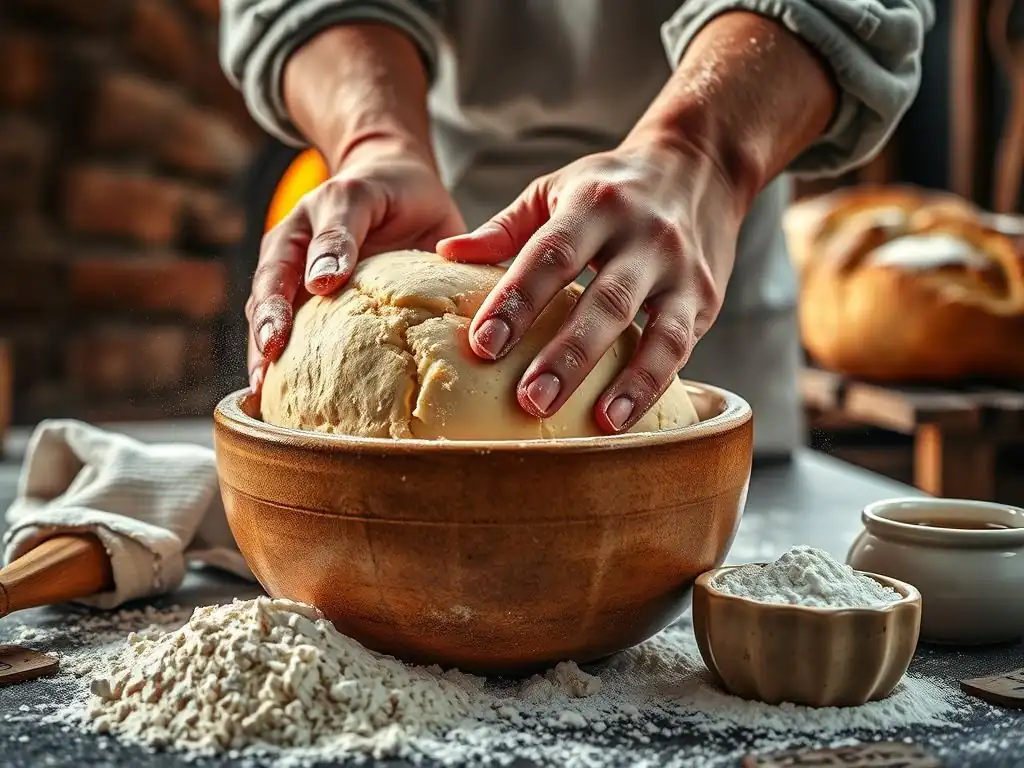
The Impact of Flour on Texture, Flavor, and Structure
Flour is far more than just a dry ingredient; it is the very foundation of bread, dictating its texture, flavor, and structural integrity. The starch granules within flour provide the bulk, gelatinizing during baking to create the crumb structure. Simultaneously, enzymes present in the flour break down some starches into sugars, which feed the yeast and contribute to fermentation, rise, and crust browning, directly impacting the flavor profile of your European bread. The interaction of these components is vital for achieving the desired characteristics in authentic European bread flour recipes.
Perhaps the most significant component influencing bread structure is protein, specifically glutenin and gliadin, which form gluten when hydrated and kneaded. Gluten creates an elastic network that traps the carbon dioxide produced by yeast, allowing the bread to rise and hold its shape. The amount and quality of gluten determine the dough's strength and elasticity, directly affecting the bread's volume, crumb structure (whether open and airy or dense and tight), and chewiness. Different European bread flour types possess varying protein levels and gluten qualities, making the correct selection paramount for specific European bread flour recipes.
Key Characteristics of European Bread Flours
European flour classifications often differ significantly from those in North America, primarily focusing on ash content (minerals left after burning a flour sample) and extraction rate, rather than solely protein percentage. Ash content provides an indication of how much of the outer part of the grain (bran and germ) is included. Lower ash content flours (like French T45 or German Type 405) are more refined and whiter, while higher ash content flours (like French T110 or German Type 1370) are closer to whole wheat and have more flavor and nutritional value.
Beyond ash content, the quality of protein and gluten is crucial. European flours, particularly those designated for bread, possess gluten that develops into a strong, extensible network suitable for long fermentation times often used in traditional European bread flour recipes. Italian flours, for example, are often classified by their 'W' index, indicating strength, and 'P/L' ratio, indicating elasticity versus extensibility.
A high 'W' flour (like W300+) is strong and ideal for enriched doughs or long rises, while a lower 'W' (like W180-220) is better for simpler loaves or direct methods. Understanding these characteristics helps bakers choose the right flour for achieving authentic results.
Exploring Essential Flours for European Breads
Wheat Flour: The Cornerstone of European Bread
Protein Content and Gluten Development in Wheat Flour
Wheat flour forms the backbone of most European bread flour recipes. Its unique ability to form gluten when mixed with water makes it ideal for creating loaves with structure and volume. Bread flours typically have a protein content ranging from 11% to 14%. This protein is composed primarily of two types: glutenin and gliadin. When hydrated and worked (through kneading or stretch-and-folds), these proteins link together to form gluten, a viscoelastic network.
The development of this gluten network is essential for capturing the gases produced by yeast, allowing the dough to rise and creating the characteristic open or closed crumb structure of different European breads. A higher protein flour generally yields a stronger gluten network, capable of supporting a larger loaf with a more open crumb, typical of rustic loaves or baguettes. Conversely, lower protein flours might be used for softer rolls or pastries where less chewiness is desired. Mastering gluten development techniques for specific wheat flours is key to successful European bread flour recipes.
Regional Variations in Wheat Flour: France, Germany, Italy
European countries have their own distinct flour classification systems, reflecting centuries of baking traditions and local wheat characteristics. In France, flours are classified by 'Type' numbers (T numbers) based on ash content: T45 for pastries, T55 for classic white breads and baguettes, T65 often called 'traditional bread flour', T80 'high extraction' or 'semi-whole', and T110/T150 for whole wheat. A T55 flour typically has around 0.50-0.60% ash and is well-suited for many French bread flour recipes.
Germany uses 'Type' numbers based on ash content as well: Type 405 (pastry/cakes), Type 550 (white bread), Type 815/997 (rye), Type 1050 (dark wheat/mixed bread), and Type 1150/1370 (rye). Italian flours are classified by fineness (00, 0, 1, 2, and Whole Wheat) and often include a 'W' index for strength and 'P/L' for elasticity. 00 flour is the finest and lowest in ash, while Type 1 and 2 are progressively coarser and higher in ash. Understanding these regional differences is vital when trying to replicate specific European bread flour recipes accurately.
Rye Flour: Adding Depth and Complexity to Northern European Breads
Different Types of Rye Flour: Light, Medium, and Dark
Rye flour is a staple in the hearty, dense breads of Northern and Eastern Europe. Unlike wheat, rye contains less gluten-forming protein, and its dominant carbohydrates (pentosans) absorb large amounts of water, resulting in sticky doughs. Rye flours are classified based on their extraction rate or ash content, similar to wheat. Light rye flour (e.g., German Type 815 or 997) is milled from the inner part of the grain and has a lighter color and milder flavor.
Medium rye flour (e.g., German Type 1150) includes more of the outer layers, resulting in a darker color and stronger flavor. Dark rye flour (e.g., German Type 1370 or Pumpernickel) is milled from nearly the entire grain, offering the deepest color, most robust flavor, and highest nutritional value. These different types are used in various European bread flour recipes, from lighter mixed-flour loaves to dense, 100% rye pumpernickel.
Using Rye Flour in European Bread Recipes: Tips and Tricks
Baking with rye flour presents unique challenges due to its low gluten content. Rye doughs are typically sticky and don't develop a strong elastic network like wheat doughs. Over-kneading rye dough can actually break down its structure. Therefore, many European bread flour recipes using significant amounts of rye rely on minimal mixing and techniques like pan-baking to provide support.
Furthermore, the pentosans in rye can interfere with starch gelatinization and enzyme activity. Traditional European bread flour recipes often counteract this by using a sourdough starter, which increases acidity. This acidity helps control enzymatic breakdown, improves the dough's structure, and contributes to the characteristic tangy flavor of rye bread. Using a sourdough starter is almost essential for achieving a good crumb and texture in high-percentage rye breads.
Spelt Flour: An Ancient Grain for Rustic European Breads
Spelt Flour's Unique Flavor Profile and Texture
Spelt (Triticum spelta) is an ancient grain, a subspecies of wheat, that has seen a resurgence in popularity, particularly in health-conscious baking and traditional European bread flour recipes. It has a unique, slightly nutty and sweet flavor profile that adds complexity to bread. While related to modern wheat, spelt has a different cellular structure and a husk that protects the grain, often leading to it being milled into a slightly coarser flour compared to fine modern wheat flours.
This distinct flavor and texture make spelt a popular choice for rustic loaves, rolls, and even pastries in parts of Europe. Its taste is often described as richer and more nuanced than common wheat. Incorporating spelt flour into your baking can transform simple European bread flour recipes into something with a deeper, more historical character.
Spelt Flour in Bread: Hydration and Gluten Development
Although spelt contains gluten, its gluten structure is different from that of modern wheat. Spelt gluten is more fragile and water-soluble. This means spelt flour absorbs water differently and can become sticky or even break down if overmixed. Spelt dough requires a gentler touch and often less kneading than traditional wheat dough.
When using spelt flour in European bread flour recipes, pay close attention to hydration levels – it may require slightly less or more water depending on the specific flour and desired outcome. It's also beneficial to avoid prolonged, intensive kneading. Many bakers find that a combination of short mixing periods and rest times (like autolyse) works best for developing spelt's gluten without degrading it, resulting in a tender crumb.
Semolina Flour: The Secret to Southern Italian Breads
Durum Wheat and Semolina's Coarse Texture
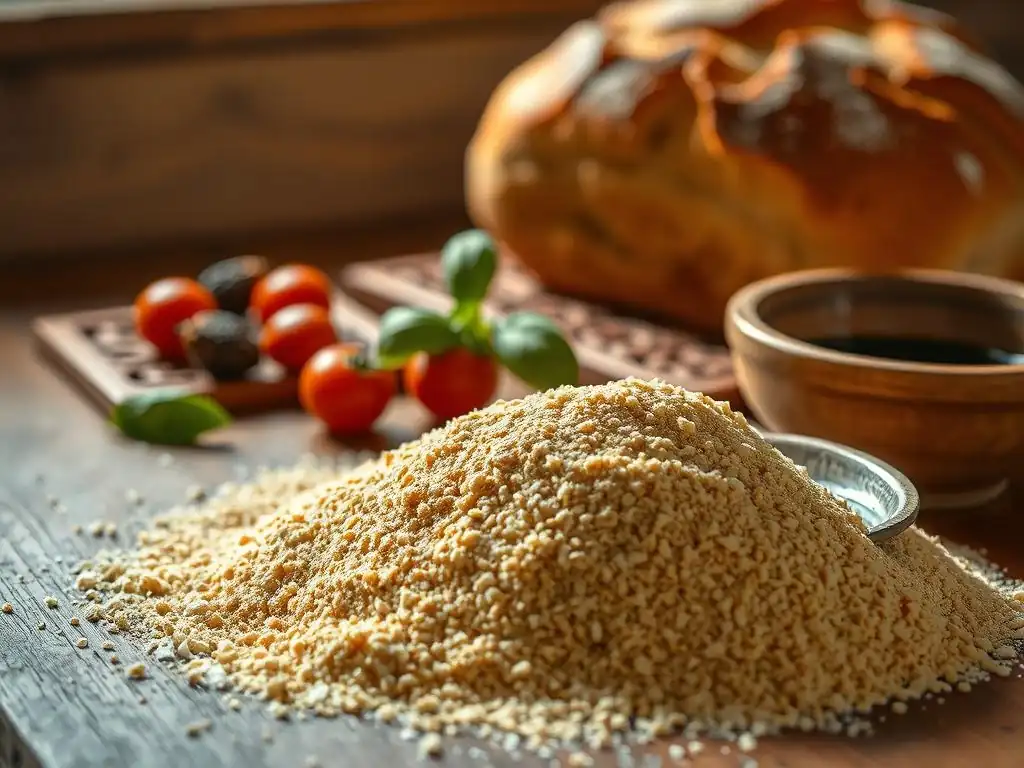
Semolina is a coarse flour milled from durum wheat (Triticum durum), a hard wheat variety known for its high protein content and strong, elastic gluten. Durum wheat is also rich in carotenoids, which give semolina its characteristic pale yellow color. Unlike the finer flours used for cakes or pastries, semolina has a granular, sandy texture, which is evident when you handle it.
This coarse texture is a defining feature that contributes significantly to the structure and mouthfeel of breads made with semolina. It absorbs liquid more slowly than finer flours, which requires specific hydration techniques in European bread flour recipes, particularly those from Southern Italy where durum wheat thrives.
Using Semolina Flour for Crusty Italian Breads
Semolina flour is a cornerstone of many iconic Southern Italian breads, such as Pane di Altamura or Pane Pugliese. Its high protein and strong gluten contribute to a dough that develops into a loaf with a remarkably crispy, substantial crust and a moist, chewy interior crumb. The coarse particles also help create a more open structure.
When used in European bread flour recipes, especially those calling for a significant percentage of semolina, bakers often employ long fermentation periods and high hydration. The slow absorption of water by the semolina granules helps keep the dough manageable despite the high hydration, and the long fermentation develops complex flavors. The result is a bread with unparalleled texture and a beautiful golden hue.
00 Flour: Achieving Delicate Texture in Italian Baking
The Fineness of 00 Flour and its Effect on Dough
Italian 00 flour is renowned for its incredibly fine texture, achieved through a very careful milling process that removes most of the bran and germ. The '00' refers to the fineness level, the finest classification in the Italian system (00, 0, 1, 2). It is also very low in ash content, resulting in a very white flour. While typically milled from soft wheat, bread-specific 00 flours (often labeled "Tipo 00 per Pane") are available and milled from harder wheat varieties or blends to achieve higher protein levels (around 11-12.5%) suitable for bread.
The extreme fineness of 00 flour allows it to absorb liquids quickly and evenly, resulting in a very smooth and extensible dough. This characteristic makes it easy to work with, particularly for doughs that need to be stretched very thin, like pizza dough or fresh pasta dough. When used in European bread flour recipes, it contributes to a tender crumb and a delicate crust, depending on the application.
00 Flour Applications: Bread, Pizza, and Pasta
While not always the primary flour for every Italian bread, 00 flour is essential for certain types of Italian baking. It is arguably most famous for its use in Neapolitan pizza dough, where its fineness and specific protein quality allow for the creation of a light, airy crust with characteristic charring when baked at high temperatures. It's also the standard flour for making fresh pasta, producing a silky, non-chewy texture.
In bread making, 00 flour is often used in blends with stronger flours or for specific loaves like ciabatta, where its extensibility helps create the signature open crumb. Some European bread flour recipes for softer rolls or focaccia might also use 00 flour, sometimes combined with a small amount of durum semolina for added structure and flavor. Its versatility makes it a valuable addition to any baker's pantry aiming for authentic Italian results.
Sourcing Quality Flours for European Bread Baking
Local Mills vs. Specialty Retailers: Where to Buy Flour
Finding quality flour is paramount for successful European bread flour recipes. You have several options, each with its advantages. Local mills often provide the freshest flour, sometimes stone-milled, which can retain more flavor and nutrients. Buying directly from a mill can also give you access to unique or regional grain varieties not found elsewhere. However, availability might be limited depending on your location.
Specialty food retailers, both brick-and-mortar stores and online shops, offer a wider selection of imported European flours and specific types like high-extraction or stone-ground varieties. While potentially less fresh than straight from a local mill, these sources are often necessary to find the exact type of flour specified in authentic European bread flour recipes, such as specific French T types, German Types, or Italian 00/Semolina with particular W indices. Consider the balance of freshness, selection, and convenience when sourcing your flour.
Understanding Flour Labels and Certifications
Navigating flour labels, especially European ones, requires a bit of understanding. Look for classification numbers (T numbers, Type numbers, 00/0/1/2) as these indicate the extraction rate and ash content, giving you clues about the flour's refinement level and suitability for different European bread flour recipes. The protein percentage is also usually listed and is a key indicator of gluten potential.
Certifications like 'organic' ensure the grain was grown without synthetic pesticides and fertilizers. Some labels might also indicate whether the flour is stone-ground, which can impact texture and nutrient content. For Italian flours, look for the 'W' index and 'P/L' ratio if specified, as these provide valuable information about the flour's strength and elasticity, crucial for adapting European bread flour recipes that require specific dough characteristics.
Storing Flour Properly for Optimal Freshness
Proper storage is crucial to keep your flour fresh and prevent it from going rancid or attracting pests, especially with whole grain or stone-ground flours which contain oils from the germ. The best way to store flour is in an airtight container. Glass, plastic, or metal containers with tight-fitting lids are ideal.
Store the container in a cool, dark, and dry place, away from direct sunlight and heat sources. A pantry cupboard is usually suitable. For longer-term storage, especially for whole wheat or specialty European bread flours you don't use frequently, the freezer is an excellent option. Stored properly, refined white flour can last for several months, while whole grain flours are best used within 1-3 months, though freezing can extend their life significantly.
Tips for Adapting European Bread Recipes
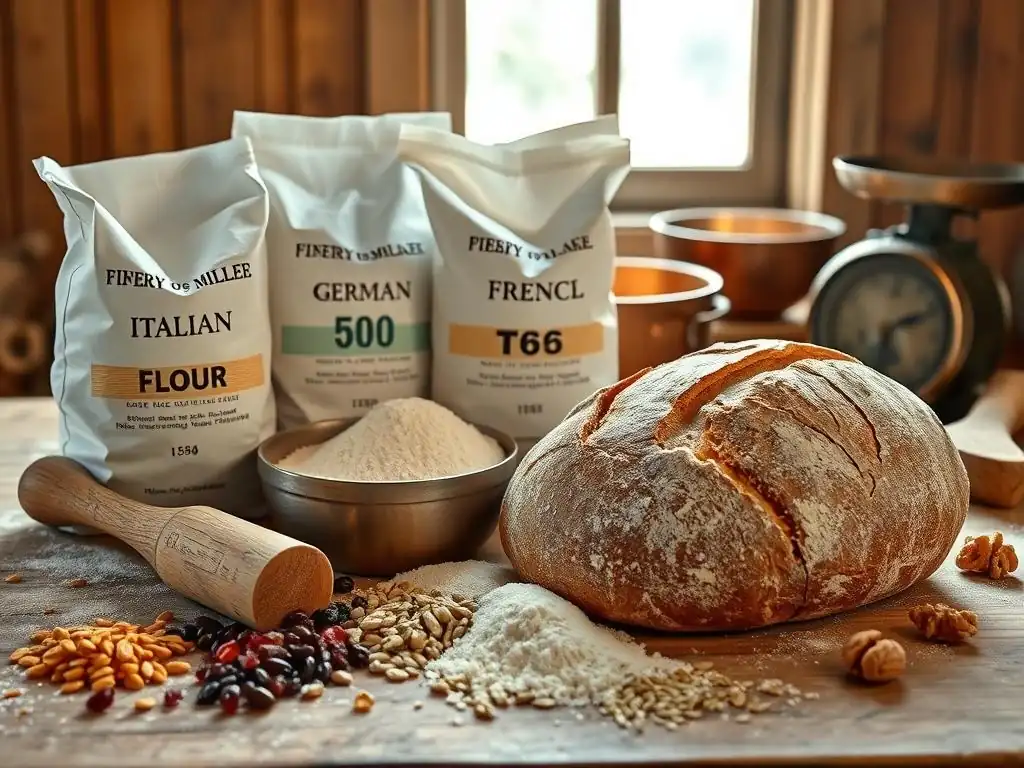
Adjusting Hydration Levels Based on Flour Type
One of the most common challenges when adapting European bread flour recipes or substituting flours is managing hydration. Different flours absorb water differently. Whole wheat and rye flours, for example, absorb significantly more water than refined white wheat flours. Spelt can be finicky, sometimes absorbing less or becoming sticky quickly.
When using a flour different from the one specified in a recipe, start by adding the liquid gradually. You may need to add slightly more or less water to achieve the correct dough consistency. For instance, if substituting a portion of white flour with whole wheat or rye in a European bread flour recipe, you will likely need to increase the total amount of water by 10-20% or more to achieve a similar dough feel. Pay attention to the dough's texture rather than strictly adhering to the initial water volume.
Gluten Development Techniques for Different Flours
Different flours require different approaches to gluten development. For high-protein wheat flours used in many classic European bread flour recipes, vigorous kneading (by hand or mixer) or a series of stretch-and-folds over time are effective methods to build a strong gluten network. An autolyse period (mixing flour and water and letting it rest before adding other ingredients) can also help hydrate the flour and kickstart gluten development with less effort.
However, for flours with weaker or different gluten structures like spelt or rye, aggressive kneading can be detrimental. Spelt benefits from gentle mixing and minimal handling, while high-percentage rye doughs require very little mixing at all and often rely on the support of a pan during baking. Understanding the gluten characteristics of your chosen flour allows you to select the appropriate dough handling technique for optimal results in your European bread flour recipes.
Experimenting with Flour Blends for Unique Flavors
Many traditional European bread flour recipes utilize blends of different flours to achieve specific textures, flavors, and handling properties. For example, combining wheat and rye flours is common in Germany and Scandinavia to balance structure and flavor. Mixing a strong bread flour with a weaker, more flavorful grain like spelt or kamut can add nutritional value and a unique taste while maintaining good dough structure.
Experimenting with flour blends allows you to customize European bread flour recipes and create your signature loaves. You can blend a high-protein bread flour with a lower-protein all-purpose flour for a softer crumb, or mix in a percentage of whole wheat or rye for added depth and rustic character. Start with simple blends (e.g., 80% white bread flour, 20% whole wheat or rye) and adjust based on your desired outcome and how the dough handles.
Conclusion: Baking Authentic European Breads with Confidence
Frequently Asked Questions
What is European bread flour, and why is it important for authentic European bread recipes?
European bread flour typically has a higher protein content and different gluten properties than standard all-purpose flour. This results in stronger gluten development, necessary for the characteristic chewy texture of many European breads.
Where can I find European bread flour if my local grocery store doesn't stock it?
If your local store doesn't carry it, try specialty baking supply stores or online retailers. Look for flours specifically labeled as "European-style bread flour" or those with a protein content of 11-13%.
What types of European breads specifically benefit from using European bread flour?
Sourdough, baguettes, ciabatta, and many other rustic European breads benefit greatly. These breads require strong gluten networks to achieve their signature texture and rise. Using European bread flour ensures a superior crumb structure and overall quality.
Can I substitute all-purpose flour for European bread flour in a recipe?
While you can substitute all-purpose flour, the results may differ. The bread might be less chewy and have a slightly different texture. Adding vital wheat gluten can help improve gluten development when using all-purpose flour.
What are some key differences between different types of European bread flours, such as those from Germany, Italy, or France?
Different European countries have varying milling processes and wheat varieties, resulting in subtle differences in flour characteristics. For example, Italian "00" flour is known for its fine texture, while German flours might be graded differently. Experimenting will help you discover the best flour for your specific recipe.
Final Reflection: The Enduring Legacy of European Breads
The pursuit of authentic European bread is more than just a culinary quest; it's a journey through history, culture, and the very essence of community. From the rustic charm of a sourdough boule to the delicate crumb of a Viennese semmel, each loaf tells a story, a testament to generations of bakers perfecting their craft. The specific flours we've explored are not mere ingredients, but the very foundation upon which these narratives are built.
The impact of flour choice on the final product is profound, extending far beyond mere texture and taste. It's a reflection of regional traditions, agricultural practices, and the enduring connection between people and their food. Bread is the staff of life,
a simple phrase, yet it encapsulates the deep-seated importance of this staple across European cultures. This article has hopefully illuminated the nuances of flour selection, highlighting how seemingly small differences can lead to vastly different results, enriching our understanding and appreciation of the diverse bread-making traditions across the continent.
Now, consider your own kitchen. Think about the next loaf you bake. Will you choose convenience, or will you embark on a journey of discovery, selecting a flour that speaks to a specific region, a particular style? Embrace the opportunity to connect with the history and artistry of European bread-making. Experiment with different flours, explore new recipes, and savor the unique character each one brings to the table. The reward is not just a delicious loaf, but a deeper understanding of the rich tapestry of European culinary heritage.
Unleash Your Inner Baker: Master European Breads!
Thanks for joining us on this delicious journey into the world of European breads! We hope you've gained a deeper appreciation for the unique characteristics of different flours and their impact on texture and flavor. Ready to put your newfound knowledge to the test?
- Bake your own sourdough using the techniques we discussed! This is the best way to truly experience the difference between flours and hone your baking skills.
- Share your baking triumphs (and challenges!) on social media using #BakeWithEaseEuropeanBreads. Let's inspire each other!
- Explore our other articles on BakeWithEase.com for more tips and tricks on mastering the art of bread-making.
What unique flour are you most excited to experiment with next? Let us know in the comments!