
How to Prevent Nut Pieces in Biscotti from Burning

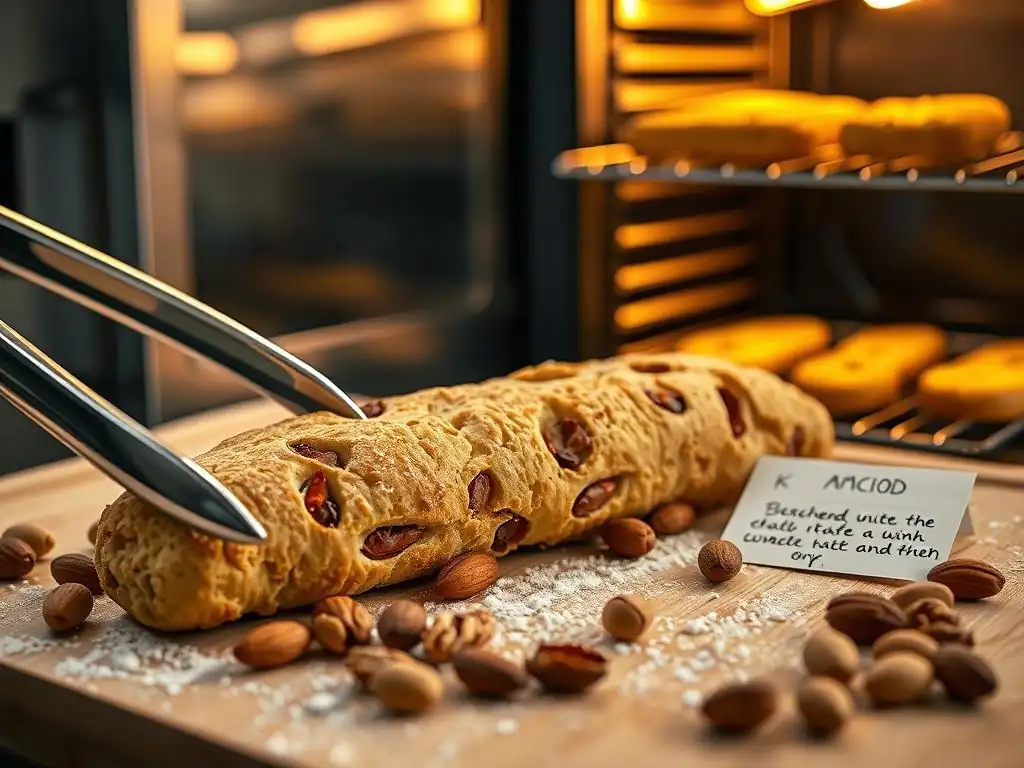
Welcome to BakeWithEase, your trusted companion in the sweet world of baking! Ever wonder why your biscotti's delicate crunch sometimes turns into a bitter burn, especially when those delicious nut pieces are involved? Dive into our expert guide on biscotti burning prevention tips and unlock the secrets to perfectly baked biscotti every time. Discover simple yet effective techniques that will transform your baking game and leave you craving more. Let's get baking!
Nuts are composed of fats, proteins, and carbohydrates, and their susceptibility to burning in a baking environment is largely due to their oil content and the Maillard reaction and caramelization processes. When subjected to heat, the oils in nuts begin to break down and oxidize, which happens much faster at higher temperatures. Different nuts have varying oil percentages; for instance, walnuts can contain up to 65% oil, while almonds are closer to 50%.
This higher oil content means they can reach their smoke point or burn point more quickly than dough, which has a higher moisture content acting as a buffer. The surface area exposed to heat also plays a significant role; smaller nut pieces heat up and burn faster than larger ones.
Furthermore, the Maillard reaction, which is responsible for the browning and flavor development in baked goods and nuts, occurs between amino acids and reducing sugars at temperatures typically above 140°C (284°F). While beneficial for toasting nuts and developing complex flavors, this reaction can quickly transition to burning if temperatures are too high or exposure is too long. Nuts, being dry and exposed on the surface of or within the dough, reach these temperatures rapidly.
Unlike the dough which is protected by its moisture content evaporating and cooling the surface, the relatively dry nut surface can easily exceed the point of pleasant browning and enter the burning phase, resulting in a bitter, acrid taste that ruins the delicate flavor of biscotti. Understanding these chemical and physical processes is key to preventing nuts from burning in your biscotti.
The Role of Sugar Content in Nut Caramelization and Burning
Sugar in cookie dough plays a dual role when it comes to nuts: it contributes to overall browning through caramelization and the Maillard reaction, and it can also directly impact how nuts brown and potentially burn. Caramelization is the browning of sugar itself, occurring at temperatures typically above 160°C (320°F), which is well within the range for baking biscotti.
When nuts are coated in or surrounded by sugar-rich dough, the sugar in direct contact with the nut surface can caramelize rapidly. While light caramelization adds a pleasant sweetness and color, excessive caramelization turns sugar bitter and dark, effectively burning the sugar around the nut and making the nut appear burnt or taste acrid.
The presence of sugar also influences the Maillard reaction rate. Doughs with higher sugar content tend to brown faster overall. This means that while the dough is achieving a desirable golden-brown color, the nuts embedded within it, already prone to browning due to their own composition, are exposed to even higher temperatures and more aggressive browning reactions facilitated by the surrounding sugary environment.
This accelerates the process from toasting to burning for the nuts. Balancing sugar levels in your biscotti recipe is therefore a critical biscotti burning prevention tip, helping to control the overall browning rate and protect sensitive nuts from charring before the dough is properly baked.
Why Biscotti's Double-Baking Process Increases Burning Risk
The defining characteristic of biscotti is its double-baking process: first baked as a log, then sliced and baked again. This second bake is crucial for achieving the signature dry, crisp texture. However, this process significantly increases the risk of nuts burning compared to single-bake cookies. During the initial bake, the nuts are partially protected by the surrounding moist dough. They begin to toast and develop flavor, but the dough's moisture helps regulate their temperature.
The second bake, however, involves exposing the already partially baked and dried slices directly to heat. At this stage, much of the moisture content has been reduced, leaving the nuts more exposed and vulnerable. The goal of the second bake is to further dry the biscotti slices, which requires time in a warm oven, often at a slightly lower temperature than the first bake but still hot enough to continue browning reactions.
With less moisture to absorb heat and regulate temperature, the nuts, especially those on the exposed surfaces of the slices, can quickly overheat and burn. Implementing effective biscotti burning prevention tips is particularly vital during this second, dehydrating bake to ensure the nuts achieve a perfect toast without becoming charred.
- The Science Behind Nut Burning in Cookie Dough
- The Role of Sugar Content in Nut Caramelization and Burning
- Why Biscotti's Double-Baking Process Increases Burning Risk
- How does the type of nut affect burning in biscotti?
- What oven temperature is best to prevent biscotti nut burning?
- Should I pre-toast the nuts before adding them to the biscotti dough?
- How does the size of the nut pieces impact burning?
- Is there a specific position in the oven that helps prevent burning?
Biscotti Burning Prevention Tips: The Ultimate Checklist
Tip 1: Choose the Right Nuts for Biscotti Baking
Choosing the appropriate nuts is the first step in preventing burnt nuts in biscotti. Not all nuts behave the same way under heat. Some nuts, like almonds (especially blanched ones without the skin) and pistachios, tend to be more forgiving during baking due to their composition and oil content profile compared to others.
They can withstand the temperatures required for biscotti baking relatively well, achieving a pleasant golden toast. When selecting nuts for your biscotti, consider their inherent heat resistance. For instance, if a recipe calls for a mix, ensure the primary nuts can handle the heat profile of biscotti baking.
Avoiding nuts that are known to burn easily is a key selection strategy for effective biscotti burning prevention tips. Nuts with very high oil content or those that are delicate can be problematic. While delicious, nuts like pecans or walnuts, with their higher fat content, require more careful monitoring and potentially lower baking temperatures or shorter baking times, especially during the second bake.
If using these nuts, ensure they are fresh, as stale nuts or those with rancid oils will burn and taste unpleasant much faster. Opting for nuts with a slightly lower fat content or pre-treating them can make a significant difference in preventing burning.
Tip 2: Properly Prepare Your Nuts Before Adding to Biscotti Dough
Proper preparation of nuts before they even touch the dough is a crucial step in mastering biscotti burning prevention tips. One common question is whether to toast nuts before adding them to biscotti. Toasting nuts beforehand can deepen their flavor, but it also means they've already undergone part of the browning process before the biscotti enters the oven.
This pre-toasting can increase the risk of burning during the long biscotti baking time, especially the second bake. While some bakers prefer the intensified flavor of pre-toasted nuts, others find it safer to add raw nuts, allowing them to toast gradually within the protective environment of the dough during the first bake. If you choose to pre-toast, do so lightly – just enough to bring out some aroma – and be extra vigilant during the biscotti's baking process.
The size of your chopped nuts also impacts their susceptibility to burning. Smaller pieces have a larger surface area relative to their volume, meaning they heat up and brown much faster than larger pieces. If your recipe calls for finely chopped nuts and you're experiencing burning, try chopping them into slightly larger, more uniform pieces, perhaps around 1/4 to 1/2 inch in size.
This reduces the surface area exposed to direct heat, allowing them to toast more evenly alongside the dough. Uniformity in size is also important; a mix of very fine dust and large chunks will lead to uneven toasting, with the fine pieces burning long before the larger ones are done.
Tip 3: Optimize Your Biscotti Dough Recipe for Nut Protection
The composition of your biscotti dough itself can act as a shield for the nuts, and adjusting the recipe can be a powerful biscotti burning prevention tip. Sugar levels, as discussed, play a role in overall browning. While you can't drastically reduce sugar without affecting texture and sweetness, being mindful of excessive sugar can help.
If your recipe is very high in sugar and you're having trouble with burning nuts, a slight reduction (perhaps 10-15%) might help slow down the caramelization process around the nuts without completely altering the biscotti's character. This small adjustment can give the nuts a bit more time to toast evenly before the sugar around them starts to char.
Adding a touch more moisture or fat to the dough can also create a more protective barrier around the nuts. Ingredients like butter, oil, or even an extra egg yolk can slightly increase the moisture and fat content, which helps conduct heat more evenly and provides a buffer against the dry heat of the oven.
For instance, if a recipe uses only whole eggs, substituting one whole egg with two yolks and a tablespoon of milk might add enough richness and moisture to help prevent the nuts from drying out and burning prematurely during the long bake times. This added moisture evaporates more slowly, keeping the immediate environment around the nuts cooler for a longer period during the initial bake.
Tip 4: Master the Biscotti Baking Process to Prevent Burning
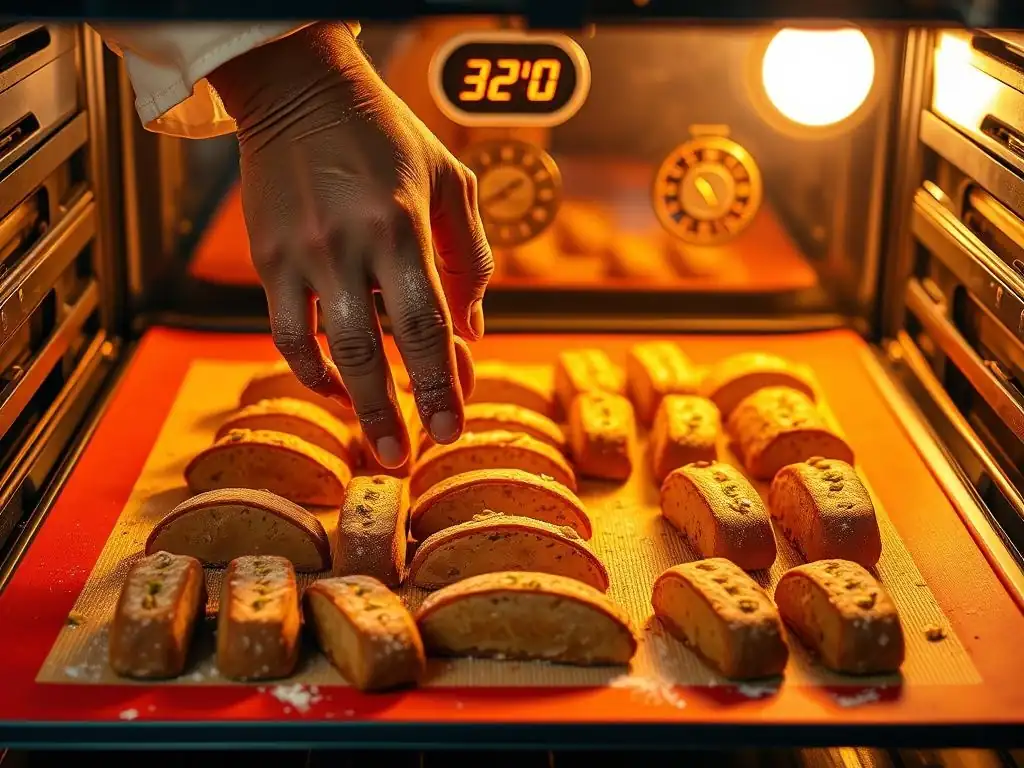
Controlling your oven temperature is paramount for effective biscotti burning prevention tips. Ovens can have hot spots and inaccurate thermostats. Using an oven thermometer is highly recommended to ensure your oven is heating to the correct temperature. Baking biscotti at a slightly lower temperature for a longer time during the first bake, perhaps 160-170°C (325-340°F) instead of 180°C (350°F), can allow the dough and nuts to bake through more evenly without the nuts on the exterior burning before the center is cooked. This gentler heat gives the nuts time to toast gradually.
Monitoring your biscotti closely during baking is essential. Visual cues are your best friend here. During the first bake, look for the log to be firm to the touch and lightly golden brown, especially around the edges. The nuts on the surface should look toasted, not dark brown or black.
If you see nuts browning too quickly, you might need to adjust the temperature or cover the log loosely with foil. During the second bake, watch the sliced sides carefully. They should become dry and crisp and turn a lovely golden color. If the nuts on the exposed sides start to darken significantly before the slices are dry, they are on the verge of burning.
Adjusting baking time based on the nut content and size is also a smart strategy. If you've used a large quantity of nuts or very small nut pieces, they will likely brown faster than the dough. You might need to slightly reduce the overall baking time for the first bake or shorten the duration of the second bake.
For example, if a recipe suggests 25-30 minutes for the first bake and your nut-heavy log looks properly set and golden at 23 minutes, take it out. Similarly, if the second bake calls for 10-15 minutes per side, but your slices are dry and the nuts are perfectly toasted after 8 minutes, don't hesitate to remove them. Trust your eyes and nose over the clock when it comes to preventing nuts from burning.
Tip 5: Techniques for Protecting Nuts During the Second Bake
The second bake is often where nuts are most vulnerable to burning due to the reduced moisture in the biscotti slices. Lowering the oven temperature for this phase is a highly effective biscotti burning prevention tip. While the first bake might be around 160-180°C (325-350°F), the second bake is typically done at a lower temperature, often 140-150°C (275-300°F).
This lower heat allows the slices to dry out and crisp up without causing the nuts on the surface to char. If your recipe suggests a higher temperature for the second bake and you consistently have burnt nuts, try reducing it by 10-20 degrees Celsius (25-50 degrees Fahrenheit).
Positioning your biscotti slices correctly on the baking sheet can also help with even heat distribution and prevent localized burning. Arrange slices cut-side down, leaving a little space between them for air circulation. Avoid overcrowding the baking sheet. If you notice nuts on the bottom or edges browning faster, you can flip the slices halfway through the second bake, or even rotate the baking sheet in the oven.
Using a baking sheet with good heat distribution is also beneficial. Dark-coated or thin metal sheets can sometimes cause the bottoms to brown too quickly. Lighter colored, heavier gauge aluminum sheets or those with a non-stick coating tend to distribute heat more evenly, reducing the risk of nuts on the bottom of the slices burning.
Troubleshooting: What to Do if Your Biscotti Nuts Are Already Burning
Salvaging Slightly Burnt Biscotti: Quick Fixes
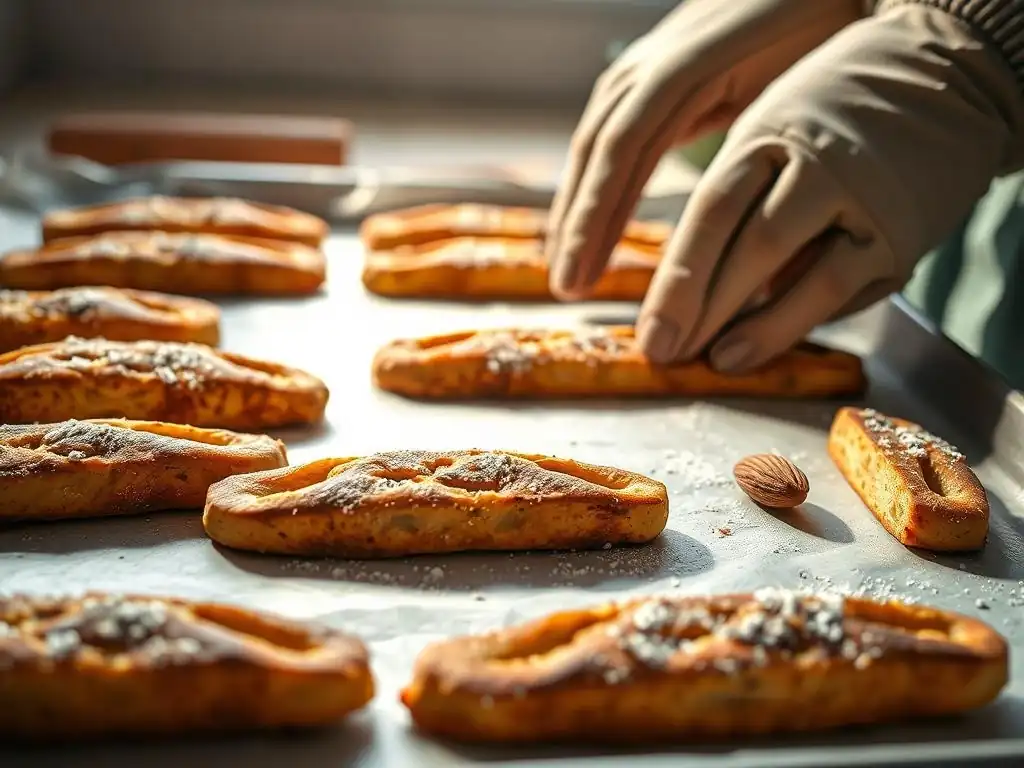
Even with the best biscotti burning prevention tips, sometimes a few nuts on the surface might look a little too dark. If the nuts are only slightly singed and the bitter flavor hasn't permeated the entire slice, you might be able to salvage the biscotti. Carefully pick off any obviously burnt nuts from the surface of the cooled slices.
If the burnt spot is small and localized, you might be able to gently scrape off the burnt portion of the nut with a small paring knife. Be cautious not to crumble the biscotti slice itself. This won't fix the flavor entirely if the bitterness has spread, but it can improve the appearance and reduce the acrid taste from the charred pieces.
If a whole side of a slice has nuts that are too dark, but the other side is fine, you might choose to only serve the good side up or use those slices in a way where the appearance matters less, such as crumbling them over ice cream or using them as a base for a dessert. While you can't reverse burning, these quick fixes can sometimes make a batch presentable and partially edible, preventing the need to discard the entire tray. It's a small comfort when your biscotti burning prevention tips didn't work perfectly this time.
Preventing Future Batches from Burning: Learning from Mistakes
Every baking mishap is a learning opportunity, especially when it comes to common issues like nuts burning in biscotti. If your nuts burned, analyze when it happened: Was it during the first bake, the second bake, or both? Were they evenly burnt, or only on the edges or bottom? This diagnosis helps pinpoint the cause. For example, if nuts on the bottom burned, your baking sheet or oven rack position might be the culprit. If nuts on the exposed surfaces of the slices burned during the second bake, the temperature was likely too high or the time too long.
Adjust your process for the next batch based on your findings. If the first bake was the issue, consider a slightly lower temperature or shorter time, or ensure your nuts weren't chopped too finely. If the second bake was the problem, definitely lower the temperature, monitor more closely, and consider flipping the slices.
Take notes of your adjustments (e.g., "Baked first log at 165°C for 28 mins. Second bake at 140°C for 12 mins per side.") This methodical approach to applying biscotti burning prevention tips, learning from each bake, will significantly improve your results over time and help you achieve perfectly toasted nuts consistently.
Advanced Biscotti Baking Techniques for Perfect Nuts
Using a Baking Stone for Even Heat Distribution
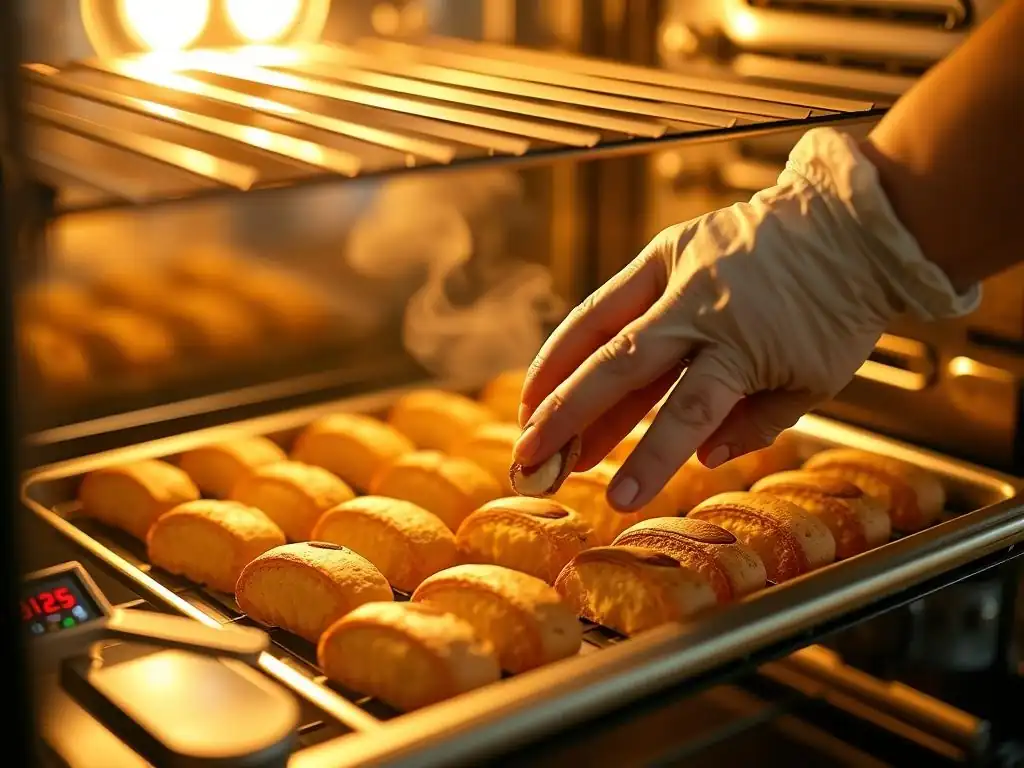
Utilizing a baking stone or steel can significantly improve heat distribution in your oven, which is an advanced biscotti burning prevention tip. Baking stones absorb and radiate heat evenly, creating a stable temperature environment that helps bake the biscotti log and slices more consistently from bottom to top. Preheat the stone in your oven as the oven heats up, typically for at least 30-60 minutes, to ensure it's fully热. Then, place your baking sheet directly on the preheated stone.
The stone helps prevent the bottom of the biscotti log or slices from burning while the tops are still pale, a common issue with standard metal baking sheets and uneven oven heat. The radiant heat from the stone promotes even browning across the entire surface of the biscotti slices during the crucial second bake, allowing the nuts embedded within to toast uniformly without charring on the bottom. This technique requires careful handling as the stone is very hot, but it can make a noticeable difference in achieving perfectly baked biscotti with evenly toasted nuts.
Experimenting with Different Nut Varieties and Their Baking Properties
Once you've mastered the basic biscotti burning prevention tips, you can experiment with different nut varieties, understanding their unique baking properties. As mentioned, nuts like almonds and pistachios are generally more forgiving. However, if you love the flavor of more delicate nuts like pecans or walnuts, you can still use them successfully with modifications. Consider using them in combination with more heat-resistant nuts, or slightly reducing the proportion of the more delicate nuts in your recipe.
You might also pre-treat delicate nuts differently. Some bakers suggest very lightly toasting pecans or walnuts before adding them, but immediately chilling them down to stop the cooking process, then adding them to the cold dough. This gives them a head start on flavor development without making them overly susceptible to burning.
Another approach is to chop them slightly larger than you would almonds. By understanding that nuts high in polyunsaturated fats (like walnuts and pecans) are more prone to oxidation and burning than those higher in monounsaturated fats (like almonds and pistachios), you can make informed choices and adjustments to your baking time and temperature when using these varieties, ensuring your biscotti burning prevention tips are tailored to the specific nuts in your recipe.
Frequently Asked Questions
How does the type of nut affect burning in biscotti?
Different nuts have varying fat contents. Higher fat nuts, like pecans and walnuts, are more prone to burning at higher temperatures than almonds or hazelnuts.
What oven temperature is best to prevent biscotti nut burning?
Baking biscotti at a slightly lower temperature, around 300-325°F (150-160°C), gives the nuts more time to toast evenly without burning. This allows the inside of the biscotti to cook thoroughly as well.
Should I pre-toast the nuts before adding them to the biscotti dough?
No, it's generally not recommended to pre-toast. That can cause your nuts to burn more easily in the second bake.
How does the size of the nut pieces impact burning?
Smaller nut pieces have a larger surface area exposed to heat, making them more susceptible to burning. Chopping nuts into larger, uniform pieces helps to minimize this risk.
Is there a specific position in the oven that helps prevent burning?
Positioning the baking sheet in the center rack of the oven promotes even heat distribution. This helps to prevent hot spots that can lead to localized burning of the nuts.
Final Reflection: The Sweet Science of Biscotti Baking
The seemingly simple act of baking biscotti hides a surprising complexity, particularly when it comes to preventing those dreaded burnt edges. Mastering the art of even biscotti baking isn't just about achieving a perfect golden hue; it's about understanding the interplay of heat, time, and ingredients to create a consistently delicious treat. This knowledge, while seemingly specific to biscotti, translates to a broader understanding of baking precision and patience.
The journey of perfecting my biscotti recipe has been a testament to the power of incremental improvement and meticulous observation. Each batch, each adjustment of oven temperature or baking time, has been a lesson in itself. It's reminded me that even the most straightforward recipes require attention to detail and a willingness to adapt. The secret to good cooking is to taste and adjust.
- This simple quote holds true for biscotti baking, and indeed, for life's challenges. The pursuit of perfection, in baking as in life, is a continuous process of learning and refinement.
Now, armed with these biscotti burning prevention tips, I invite you to embark on your own baking journey. Don't be afraid to experiment, to adjust, and to learn from your mistakes. Each slightly burnt edge, each perfectly golden piece, is a step closer to mastering the art of biscotti baking. Remember the importance of patience, precision, and the joy of creating something delicious with your own hands. The next time you bake, embrace the process, and savor the sweet reward of your efforts.
Unlock Perfectly Golden Biscotti: Your Baking Journey Starts Now!
Thanks for taking the time to learn how to prevent those pesky burnt nut pieces in your biscotti! We hope you gained valuable tips for achieving perfectly golden, crunchy perfection. Ready to put your new knowledge to the test?
- Bake a batch of biscotti today! Use your newfound wisdom to create a batch of flawlessly golden biscotti—and impress your friends and family. This is your moment to shine!
- Share your biscotti baking journey! Post a picture of your beautiful biscotti on social media using #BakeWithEaseBiscotti – let's see your culinary masterpiece!
- Explore other BakeWithEase recipes! Discover more baking secrets and techniques to elevate your baking game.
What unique flavor combination will you create in your next batch of biscotti?