
Pampered Pastries: Optimal Temperatures and Timers for Flaky Croissants

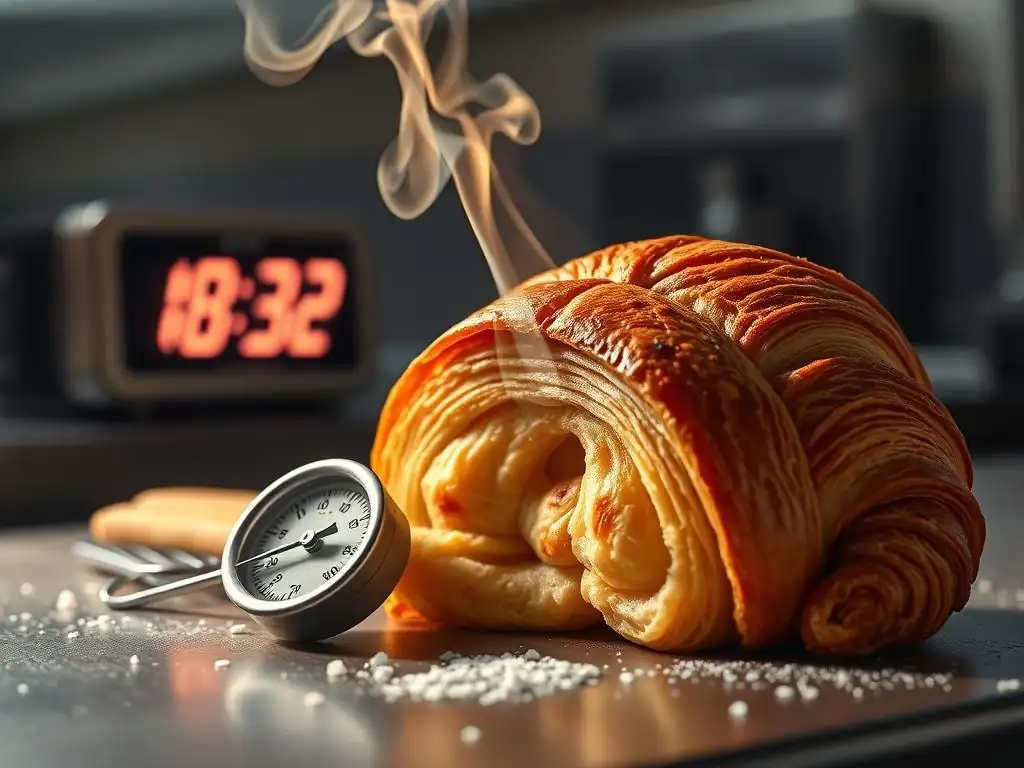
Welcome to BakeWithEase, your haven for all things baking! Ever wondered how to achieve that perfect, shatteringly flaky croissant? Unlock the secrets to mastering flaky croissants temperature timing with our expert guide. Discover the crucial temperatures and timing strategies that separate a good croissant from a truly exceptional one. Get ready to elevate your baking game – the journey to pastry perfection starts here!
- The Art of Precision: Perfect Temperatures and Timers for Flaky Croissants
- Achieving Croissant Perfection: Mastering Temperature and Timing
- Understanding Croissant Lamination and the Baking Process
- The Ideal Croissant Bake: Precise Temperature Recommendations
- Mastering the Croissant Baking Timer: A Detailed Guide
- Addressing Common Croissant Baking Challenges
- Essential Techniques for Consistently Flaky Croissants
- Advanced Croissant Baking: Refined Techniques
- Basic Croissant Recipe: Applying Temperature and Timing Principles
- Conclusion: Mastering the Art of Croissant Baking
-
Frequently Asked Questions
- What is the most crucial temperature to monitor when making flaky croissants?
- How important is the timing of the proofing process for flaky croissants?
- What oven temperature is recommended for baking flaky croissants?
- How does the type of butter affect the flakiness of croissants, and what temperature should it be?
- What is the best way to check if the croissants are fully baked, considering internal temperature and appearance?
- Final Reflection: The Pursuit of the Perfect Flaky Croissant
- Unlock Your Inner Croissant Master!
The Art of Precision: Perfect Temperatures and Timers for Flaky Croissants
Achieving Croissant Perfection: Mastering Temperature and Timing
Baking croissants is often considered an art form, a delicate dance between dough, butter, and heat. The pursuit of that shatteringly crisp exterior and ethereally light, airy interior hinges significantly on two critical factors: oven temperature and baking time. Getting the flaky croissants temperature timing just right is the difference between a dense, disappointing pastry and a truly magnificent one that boasts dozens of visible, buttery layers.
Understanding how temperature impacts the butter within the dough layers and how time allows the structure to set is fundamental. It’s not simply about 'hot oven, bake until golden.' Precise temperature control ensures the butter melts at the right pace, creating steam that forces the layers apart. The duration of the bake then determines the crust development, the internal structure's stability, and the overall golden hue. Mastering the flaky croissants temperature timing is arguably the most impactful skill a baker can develop in their quest for perfect croissants.
Understanding Croissant Lamination and the Baking Process
The Critical Role of Temperature in Fat Layer Preservation
The magic of a flaky croissant lies in its lamination – the process of creating alternating layers of dough and butter. When these layers hit the heat of the oven, the butter melts rapidly. However, before it can completely soak into the dough, it turns into steam. This steam is trapped between the layers, causing them to separate and puff up, creating the characteristic airy structure.
Maintaining the correct oven temperature is paramount for this transformation. If the oven is too cool, the butter melts too slowly and has time to be absorbed by the dough before enough steam is generated, resulting in a heavy, bread-like texture rather than distinct, flaky layers.
Conversely, if the oven is too hot initially, the exterior can set too quickly, trapping moisture and preventing the full expansion of the layers, or worse, burning the outside before the inside is cooked. Achieving the optimal flaky croissants temperature timing starts with ensuring the initial heat is sufficient to trigger rapid steam production without prematurely setting the crust.
How Baking Time Influences Croissant Structure and Color
Once the initial puff from steam generation occurs, baking time takes over to solidify the structure and develop flavor and color. The duration of the bake allows the dough to fully cook through, transitioning from a raw, pliable state to a firm, stable one. Sugars in the dough caramelize, contributing to the golden-brown color of the crust and adding depth of flavor.
Insufficient baking time can leave the interior doughy and undercooked, potentially collapsing upon cooling. Too much time, even at the correct temperature, can lead to a dry, tough pastry or a burnt exterior. The total baking time, typically ranging from 15 to 25 minutes depending on size and oven type, must be carefully monitored. It's a balance: enough time to cook the interior and achieve a beautiful crust, but not so long that the croissant becomes dry or over-caramelized. The precise flaky croissants temperature timing ensures both internal doneness and external perfection.
The Ideal Croissant Bake: Precise Temperature Recommendations
Recommended Oven Temperature Range for Flaky Croissants
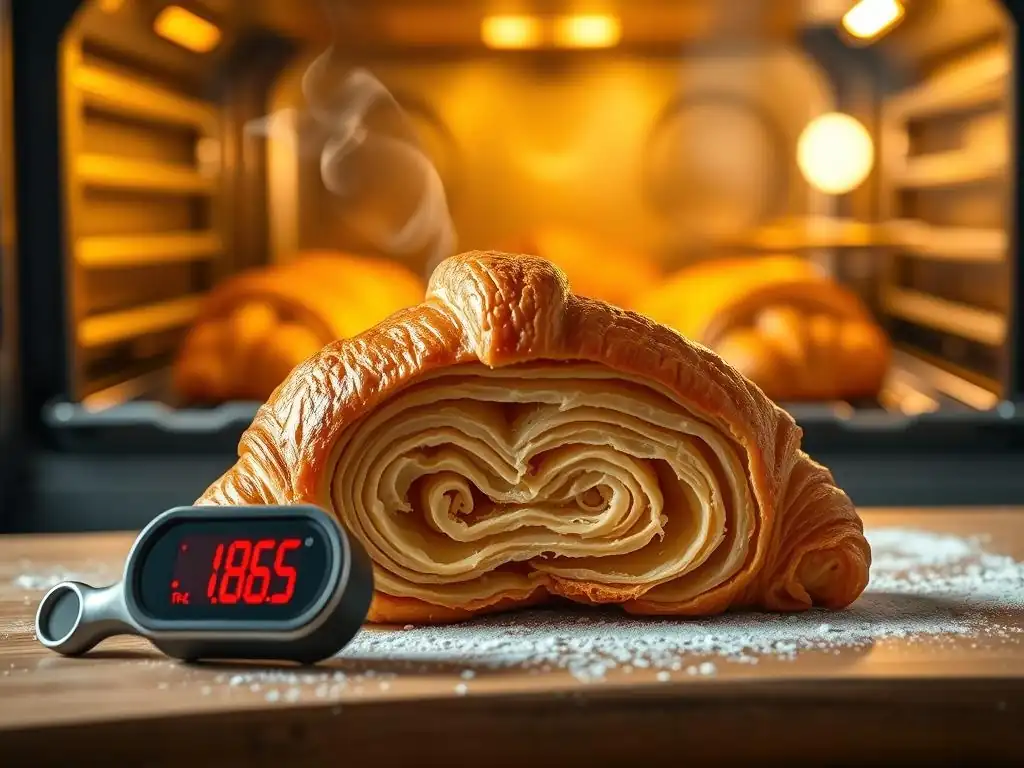
For most standard-sized croissants, a common and effective temperature range for achieving that sought-after flakiness is between 375°F and 400°F (approximately 190°C to 200°C). Many professional bakers start with a slightly higher initial temperature, perhaps 400°F (200°C), for the first 5-10 minutes to maximize oven spring and steam production, then reduce it to 375°F (190°C) for the remainder of the bake. This two-stage approach helps ensure rapid puffing followed by even cooking and browning without burning.
Using an oven thermometer placed inside your oven is highly recommended, as oven thermostats can be notoriously inaccurate, sometimes off by as much as 50°F (28°C). Knowing your oven's true temperature is vital for replicating successful results and mastering the flaky croissants temperature timing. For instance, if your oven runs cool, you might need to set it slightly higher than the recipe suggests to hit the target range.
Convection vs. Conventional: Temperature Adjustments
The type of oven you use significantly impacts the ideal temperature. Conventional ovens heat from stationary elements (top and bottom), while convection ovens use a fan to circulate hot air, distributing heat more evenly and often cooking faster.
When baking croissants in a convection oven, you typically need to reduce the temperature compared to a conventional oven to prevent the outsides from browning too quickly before the insides are cooked. A general guideline is to reduce the temperature by about 25°F (around 15°C). So, if a recipe calls for 400°F (200°C) in a conventional oven, you might bake at 375°F (190°C) in a convection oven.
Always start checking for doneness a few minutes earlier when using convection, as the circulating air accelerates the baking process. This adjustment is a key part of perfecting your flaky croissants temperature timing based on your specific equipment.
Baking Temperatures for Different Croissant Proofing Levels
The degree to which your croissants are proofed can also influence the optimal baking temperature. Fully proofed croissants (those that are significantly puffed up and jiggly) are more delicate. Baking them at a very high temperature might cause them to collapse or brown too rapidly.
If your croissants are on the verge of over-proofing, starting at a slightly lower temperature within the recommended range, say 375°F (190°C), might be beneficial. This allows the structure to set more gently. Conversely, slightly under-proofed croissants might benefit from the initial higher temperature blast (like 400°F/200°C) to encourage maximum expansion. Paying attention to the proofing state and making slight adjustments to the flaky croissants temperature timing can lead to better outcomes.
Mastering the Croissant Baking Timer: A Detailed Guide
Setting the Optimal Baking Time for Desired Doneness
The baking time for croissants is not a one-size-fits-all number. It depends on the size of the croissants, the oven temperature, the type of oven, and your desired level of browning and doneness. However, a typical range for medium-sized croissants baked at 375-400°F (190-200°C) is between 18 and 25 minutes. Smaller pain au chocolat might take slightly less time, perhaps 15-20 minutes.
It's crucial to remember that the timer is a guide, not an absolute rule. Start checking your croissants around the minimum recommended time. Factors like how many croissants are on the tray (crowding can increase bake time) and the specific quirks of your oven will influence the final duration. Relying solely on the timer without visual cues or internal temperature checks can lead to under or over-baked results, proving that precise flaky croissants temperature timing requires attention beyond just setting a clock.
Visual Indicators: Recognizing the Perfect Croissant Bake
Visual cues are perhaps the most intuitive way to judge croissant doneness. A perfectly baked croissant should be significantly puffed up, often doubling or tripling in height from its unbaked state. The layers should be clearly visible and separated.
The color is another critical indicator. Croissants should be a deep golden brown all over, not just on the tops. Check the bottoms as well – they should be the same rich color. Pale croissants are likely underbaked and will be doughy inside. Dark brown, almost mahogany croissants might be overbaked or slightly burnt. A beautiful, even golden hue signals that the sugars have caramelized properly and the interior is likely cooked through. Observing these visual signs is a key part of mastering the flaky croissants temperature timing.
Using a Thermometer: Ensuring Internal Doneness
For absolute certainty, especially for larger or thicker pastries like pain au chocolat, using an instant-read thermometer can confirm internal doneness. While not strictly necessary for standard croissants if visual cues are strong, it's a reliable method.
Insert the thermometer into the thickest part of the croissant, avoiding any large air pockets. A fully baked croissant should register an internal temperature between 190°F and 200°F (approximately 88°C to 93°C). This temperature range indicates that the starches in the dough have gelatinized and the structure is set. Relying on an internal temperature check can provide peace of mind and prevent the disappointment of a seemingly perfect exterior hiding a raw interior, refining your understanding of flaky croissants temperature timing.
Addressing Common Croissant Baking Challenges
Excessive Browning: Solutions for Preventing Burnt Tops
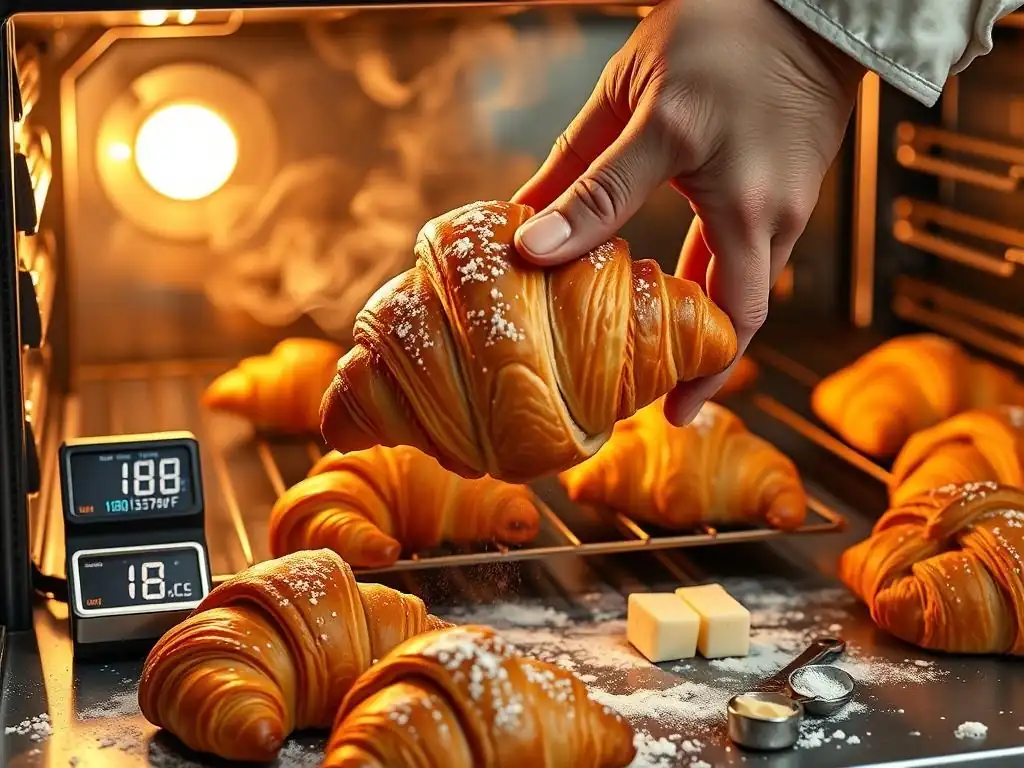
One common issue is the tops of croissants browning too quickly while the rest of the pastry is still pale or undercooked. This can happen if the oven's top element is significantly hotter than the bottom, if the croissants are placed too high in the oven, or if the temperature is too high for too long.
- Lower the rack: Try baking on a lower oven rack position.
- Tent with foil: If the tops start browning excessively early (say, after 10-12 minutes), loosely tent the baking sheet with aluminum foil. This reflects radiant heat from the top element, slowing down the browning.
- Adjust temperature: If this is a persistent issue, slightly reducing the overall baking temperature by 10-15°F (5-8°C) might help, potentially requiring a slightly longer bake time.
Underbaked Centers: Techniques for Achieving Even Doneness
Discovering a perfectly golden croissant with a raw, doughy center is incredibly frustrating. This often happens when the outside cooks too fast relative to the inside.
- Check oven calibration: As mentioned earlier, verify your oven's true temperature with an oven thermometer. An inaccurate thermostat is a common culprit.
- Rotate trays: Rotate your baking sheet halfway through the baking time (e.g., after 10-12 minutes). This helps ensure even heat exposure across all croissants on the tray and compensates for oven hot spots.
- Adjust temperature/time: If rotation isn't enough, try reducing the oven temperature slightly (e.g., from 400°F to 380°F or 200°C to 190°C) and increasing the baking time. This allows more time for heat to penetrate to the center without burning the exterior. Using an internal thermometer to confirm 190-200°F (88-93°C) is the most reliable check.
Preventing a Soggy Base: Strategies for a Crisp Bottom
A soggy or pale bottom crust detracts significantly from the overall croissant experience. This usually indicates insufficient heat reaching the bottom of the pastry.
- Baking surface: Bake directly on a sturdy metal baking sheet, preferably one that is not dark-coated (dark pans absorb more heat and can cause the bottom to burn before the top is done). Avoid baking directly on parchment paper if you suspect it's hindering heat transfer; sometimes a thin layer like parchment can insulate the bottom slightly. A perforated baking sheet designed for pastries can also improve airflow and heat transfer to the bottom.
- Lower rack position: Baking on the lowest or second-lowest rack helps expose the bottom of the tray to more direct heat from the bottom element.
- Ensure oven is fully preheated: A properly preheated oven, especially the baking sheet inside, is crucial for immediate heat transfer to the base of the croissant. Preheating for 20-30 minutes after the oven indicates it's reached temperature is often beneficial.
Essential Techniques for Consistently Flaky Croissants
The Importance of Cold Butter and Dough Temperature
The foundation of flaky croissants is successful lamination, and that success hinges on keeping the butter and dough cold throughout the folding process. The butter must remain solid and distinct layers, not melt into the dough.
Ideally, your butter block and dough should be around 40°F to 45°F (4°C to 7°C) during lamination. If the butter gets too warm, it becomes soft and squishy, making it impossible to create clean layers; it will simply mix into the dough. This is why chilling periods between folds are non-negotiable, typically 30-60 minutes in the refrigerator. Cold temperatures are the unsung heroes alongside the flaky croissants temperature timing in the oven.
Proofing Environment: Humidity and Temperature Control
Proofing is the final rest period where the shaped croissants rise before baking. This is where they develop their final volume and delicate texture. The ideal proofing environment is warm and humid.
A temperature around 75°F to 80°F (24°C to 27°C) is generally recommended. Too cold, and they won't rise sufficiently; too hot, and the butter can melt out of the layers before baking, leading to a greasy, less flaky result. Humidity is also important to prevent the surface from drying out and forming a skin, which restricts expansion.
A proofing box is ideal, but you can create a humid environment at home using your oven (turned off!) with a pan of hot water on the rack below, or by proofing in a slightly warm, steamy bathroom. Proper proofing sets the stage for successful flaky croissants temperature timing in the bake.
Baking Surface: Optimizing Heat Transfer
The surface on which you bake your croissants plays a role in how heat is transferred, particularly to the base. A standard rimmed aluminum baking sheet is a common choice.
For optimal heat transfer and a crisp bottom, consider preheating your baking sheet in the oven while it comes up to temperature. Placing the proofed croissants directly onto a hot baking sheet provides an immediate burst of heat to the base, helping to set the structure and promote even cooking from the bottom up. Using silicone baking mats can provide a non-stick surface but might slightly insulate the bottom, potentially requiring a minute or two extra bake time or a slightly higher bottom heat. Perforated baking sheets are excellent for maximum airflow and crispness on the base.
Advanced Croissant Baking: Refined Techniques
Preheating Ovens for Professional Results
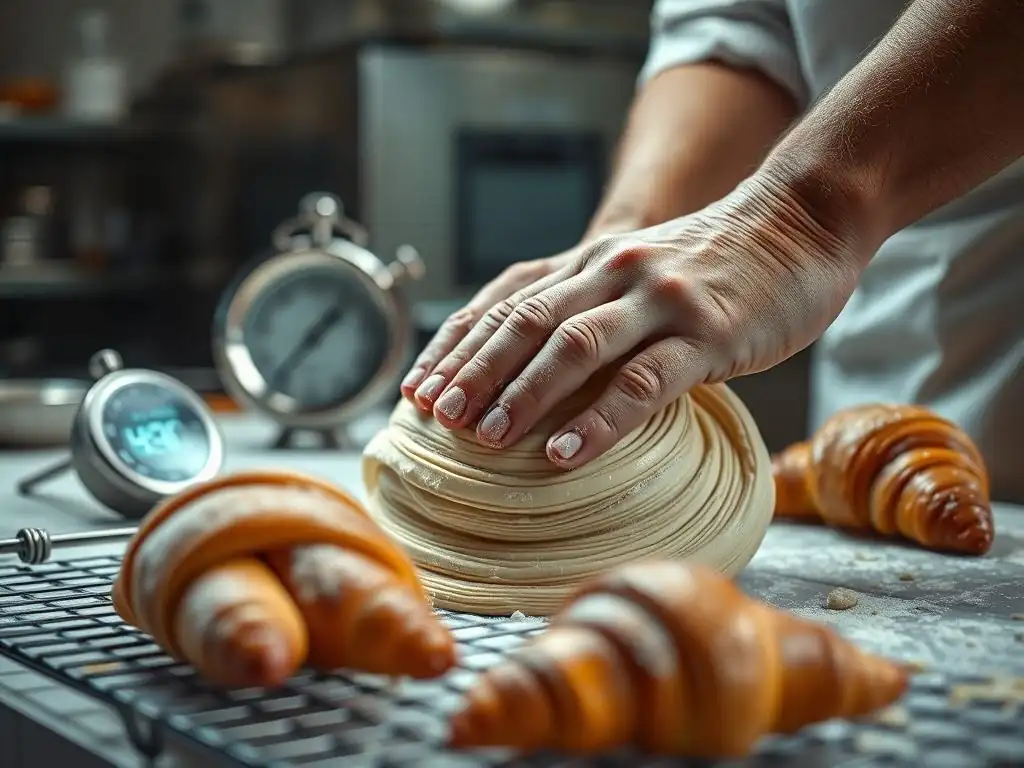
Professional bakers understand that proper preheating is non-negotiable. It's not just about the air temperature reaching the target; the oven walls and racks need to absorb and radiate heat evenly.
For croissants, preheating your oven for at least 20-30 minutes beyond the point it signals it's ready is highly recommended. This ensures the oven cavity is saturated with heat, providing consistent and powerful radiant heat needed for optimal oven spring and even browning. As mentioned before, preheating the baking sheet inside the oven is also a technique used to give the base of the croissant a strong start. This meticulous approach to flaky croissants temperature timing begins long before the pastries enter the oven.
Generating Steam for a Shiny Crust
While the butter creates internal steam for lift, some bakers also introduce external steam into the oven at the beginning of the bake. This is believed to keep the surface of the croissant supple for a few extra minutes, allowing for maximum expansion before the crust sets. It can also contribute to a slightly shinier, more delicate crust.
Methods for generating steam include placing a tray of hot water on the bottom rack when you preheat the oven, or carefully pouring hot water into a hot pan (like a cast iron skillet) placed on the bottom of the oven just as you load the croissants. Be cautious when adding water to a hot oven to avoid burns. The steam phase is typically only needed for the first 5-10 minutes of the bake.
Temperature Adjustments for Pain au Chocolat
Baking pain au chocolat follows very similar principles to plain croissants regarding flaky croissants temperature timing. However, the addition of chocolate batons can slightly alter the thermal dynamics.
The chocolate inside will melt and become very hot. While the baking temperature range remains largely the same (375-400°F or 190-200°C), you might find that pain au chocolat sometimes requires an extra minute or two compared to plain croissants of the same size to ensure the dough surrounding the chocolate is fully cooked. Visual cues and an internal thermometer check (aiming for the dough portion, avoiding the chocolate) are still the best guides. Ensure the chocolate is fully melted and the surrounding dough is cooked through, indicated by a firm feel and golden color.
Basic Croissant Recipe: Applying Temperature and Timing Principles
Recipe Overview and Ingredient List
A basic croissant recipe involves creating a lean dough (flour, water, yeast, sugar, salt) and encasing a block of cold butter within it. Through a series of rolling and folding steps (lamination), dozens of alternating layers are formed. The dough is then shaped into crescent rolls, proofed, and finally baked.
Typical ingredients include:
- Strong bread flour
- Cold water
- Yeast (instant or active dry)
- Granulated sugar
- Salt
- Unsalted butter (high quality, with at least 82% fat content is preferred for lamination)
- Egg wash (for glazing before baking)
Step-by-Step Instructions with Precise Temperature and Timing
Applying the flaky croissants temperature timing principles discussed:
- Dough Preparation: Mix lean dough ingredients, knead, and chill thoroughly (at least 2 hours, preferably overnight).
- Butter Block: Shape cold butter into a rectangle and chill.
- Lamination: Encase the butter in the dough and perform multiple folds (e.g., 3-4 single or double folds), chilling for 30-60 minutes between each fold to keep butter and dough cold.
- Shaping: Roll dough to desired thickness, cut triangles, and shape into crescents.
- Proofing: Proof shaped croissants in a warm, humid environment (75-80°F / 24-27°C) until significantly puffed and jiggly (typically 2-3 hours, timing varies greatly).
- Preheating: Preheat oven to 400°F (200°C) with a baking sheet inside for at least 20-30 minutes. If using convection, preheat to 375°F (190°C).
- Egg Wash: Gently brush proofed croissants with egg wash.
- Baking: Carefully place croissants on the preheated baking sheet.
- Bake at 400°F (200°C) for 5-10 minutes, then reduce to 375°F (190°C) for the remaining time (Conventional).
- Bake at 375°F (190°C) for the entire time (Convection).
- Total baking time is typically 18-25 minutes.
- Monitoring: Observe color and puffing. Tent with foil if tops brown too fast. Rotate tray halfway through bake.
- Doneness Check: Croissants are done when deep golden brown and register 190-200°F (88-93°C) internally.
**Approximate Baking Flow:**

*   Preheat Oven: 400°F (200°C) Conventional | 375°F (190°C) Convection
*   Preheat Time: 20-30 minutes (with baking sheet inside)
*   Initial Bake: 5-10 minutes @ 400°F (200°C) Conventional (for maximum spring)
*   Reduce Temp (Conventional): To 375°F (190°C)
*   Remaining Bake: 10-15 minutes @ 375°F (190°C) Conventional | 15-20 minutes @ 375°F (190°C) Convection
*   Total Bake Time: ~18-25 minutes (check visually and internally)
*   Internal Temp: 190-200°F (88-93°C)
Serving and Enjoying Your Homemade Croissants
Once baked to a beautiful golden brown, immediately transfer the croissants to a wire rack to cool slightly. This prevents the bottoms from becoming soggy from trapped steam. While they are best enjoyed warm from the oven when the layers are at their crispiest, allow them to cool for 10-15 minutes so the internal structure can set and the butter isn't molten hot.
Serving warm, perhaps with a smear of butter or jam, highlights their delicate texture and rich flavor. The satisfaction of biting into a perfectly baked, flaky croissant that you made yourself, mastering the flaky croissants temperature timing along the way, is truly unparalleled. Share them with friends and family, or simply savor one with your morning coffee.
Conclusion: Mastering the Art of Croissant Baking
Achieving the perfect flaky croissant is a rewarding baking challenge that heavily relies on precision. While many factors contribute, from the quality of ingredients to meticulous lamination and proofing, getting the flaky croissants temperature timing correct in the oven is arguably the most critical step in developing that signature airy structure and crisp, golden crust.
By understanding how temperature affects butter layers and steam creation, and how baking time influences the final structure and color, bakers can significantly improve their results. Paying attention to specific temperature ranges (375-400°F / 190-200°C), making adjustments for oven type (reducing temp for convection), monitoring visual cues, and using an internal thermometer are all key practices. Troubleshooting common issues like excessive browning or underbaked centers further refines your technique. With practice and careful attention to the flaky croissants temperature timing, you'll be well on your way to baking consistently perfect, flaky croissants that rival your favorite bakery. Happy baking!
Frequently Asked Questions
What is the most crucial temperature to monitor when making flaky croissants?
The most crucial temperature to monitor is the dough temperature, both during mixing and lamination. Keeping it between 60-65°F (15-18°C) prevents the butter from melting into the dough.
How important is the timing of the proofing process for flaky croissants?
Timing is extremely important. Over-proofing results in croissants that lose their shape during baking, while under-proofing leads to dense, less flaky croissants.
What oven temperature is recommended for baking flaky croissants?
A high initial temperature, around 400-425°F (200-220°C), is recommended to create steam and rapidly expand the layers. Lower the temperature after the initial burst for even baking.
How does the type of butter affect the flakiness of croissants, and what temperature should it be?
Using high-fat European-style butter is ideal because it contains less water, resulting in superior flakiness. It should be cold but pliable, around 50-60°F (10-15°C), to prevent tearing the dough.
What is the best way to check if the croissants are fully baked, considering internal temperature and appearance?
The internal temperature should reach around 190-200°F (88-93°C). Visually, they should be a deep golden brown with a crisp, flaky crust and a honeycomb interior.
Final Reflection: The Pursuit of the Perfect Flaky Croissant
The quest for the ideal croissant, a delicate dance of temperature and time, is more than just a baking challenge; it's a reflection of our pursuit of perfection in all aspects of life. The precise measurements and careful timing detailed in this article highlight the importance of attention to detail, a principle applicable far beyond the kitchen. Mastering the art of the croissant, with its layers of buttery goodness, teaches us the value of patience and precision in achieving our goals.
The journey of creating the perfect flaky croissant mirrors our own personal journeys. Each fold, each rise, each careful adjustment of the oven temperature represents the challenges and triumphs we face in life. The only way to do great work is to love what you do.
- Steve Jobs. This quote resonates deeply with the process of croissant making; the dedication and passion required to achieve that perfect, golden-brown crust are a testament to the power of love and commitment in any endeavor.
Now, consider your own "recipe" for success. What are the key ingredients, the precise temperatures, and the crucial timing elements that will lead you to your own personal "flaky croissant" moment? Take the lessons learned from this exploration of pastry perfection and apply them to your own life. Embrace the process, be patient with the rise, and don't be afraid to experiment – the rewards of achieving your own personal masterpiece are well worth the effort.
Unlock Your Inner Croissant Master!
Thanks for joining us on this flaky journey into the world of perfect croissants! We hope you gained valuable insights into achieving that coveted, melt-in-your-mouth texture. Now it's time to put your newfound knowledge to the test!
- Bake a batch of croissants using our recommended temperature and timing guide: Let's see those golden-brown, buttery layers emerge! Don't forget to share your results with us – we'd love to see your creations!
- Experiment with different types of butter to find your ultimate croissant flavor profile. This is your chance to get creative!
- Share this article with a fellow baking enthusiast: Spread the love (and the flaky goodness)!
What unique ingredient or technique will you try next to elevate your croissant game? Let's discuss in the comments below!