
Replacing Volume Measures with Weights: A Comprehensive Guide

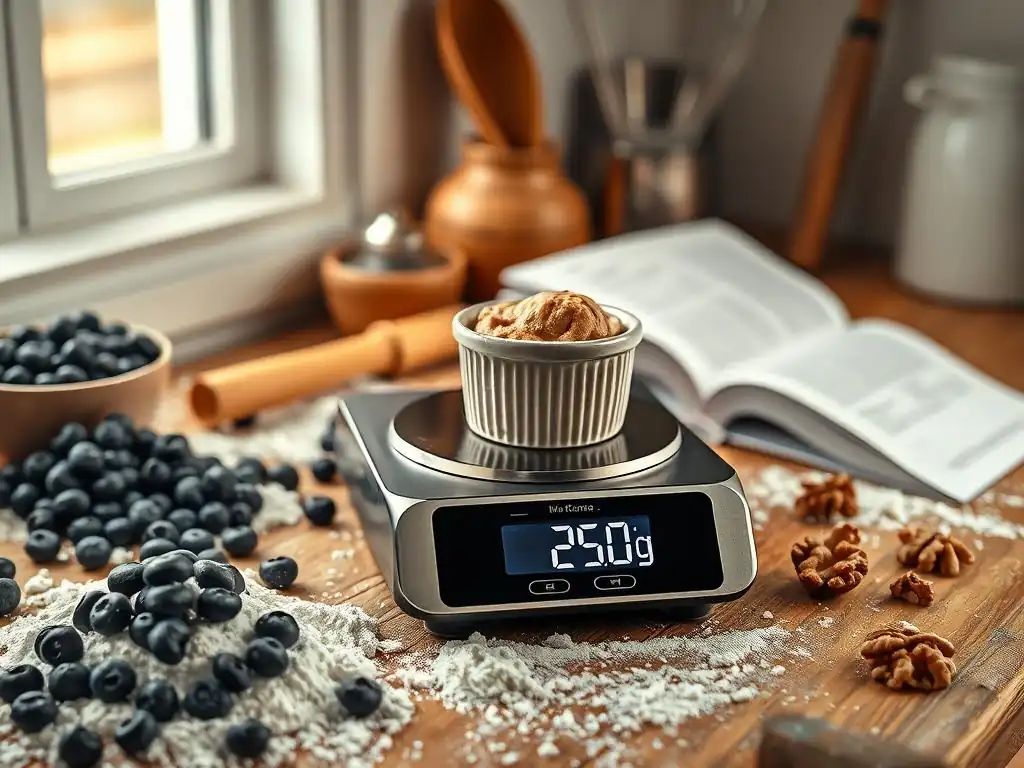
Welcome to BakeWithEase, your partner in creating delicious baked goods!
Are you tired of inconsistent results in your baking? Discover the secret to bakery-quality treats with our comprehensive guide on baking with kitchen scales. Uncover the precision that professional bakers rely on, and learn how replacing volume measurements with weights can transform your recipes and elevate your baking skills. Ready to say goodbye to guesswork and hello to perfectly consistent cakes, cookies, and breads? Dive in and let's get started!
- Replacing Volume Measures with Weights: A Comprehensive Guide for Baking with Kitchen Scales
- Why Baking with Kitchen Scales is Superior to Volume Measurements
- Converting Recipes: From Volume to Weight for Baking
- Essential Kitchen Scales for Baking: Choosing the Right One
- Mastering Baking with Kitchen Scales: Step-by-Step Guide
- Common Mistakes to Avoid When Baking with Kitchen Scales
- Advanced Baking Techniques Using Weight Measurements
- Baking with Kitchen Scales: A Baker's Best Friend
-
Frequently Asked Questions
- Why should I use kitchen scales for baking instead of measuring cups and spoons?
- What types of kitchen scales are best for baking?
- How does using weight measurements affect the outcome of my recipes?
- Are all ingredients easily measured using kitchen scales?
- Where can I find recipes that use weight measurements instead of volume?
- Final Reflection: The Weight of Precision in Baking
- Unlock Baking Precision: Weigh Your Ingredients Now!
Replacing Volume Measures with Weights: A Comprehensive Guide for Baking with Kitchen Scales
Baking is often described as a science, and like any science, precision is key to achieving consistent and delicious results. While many home bakers start with volume measurements using cups and spoons, transitioning to weighing ingredients with a kitchen scale can dramatically improve your baking game. This guide will walk you through why baking with kitchen scales is a superior method and how to master it.
Why Baking with Kitchen Scales is Superior to Volume Measurements
Achieving predictable outcomes in baking relies on the accurate ratio of ingredients. Even small variations can impact texture, rise, and flavor. This is where the method of measurement becomes critical.
Achieving Accuracy in Baking: The Problem with Volume Measurements
Volume measurements, like cups and spoons, are inherently inconsistent. The amount of an ingredient that fits into a cup can vary significantly based on how it's scooped or packed. For example, a cup of all-purpose flour can weigh anywhere from 100 grams (if lightly spooned into the cup) to 150 grams (if aggressively scooped and packed). That's a potential difference of 50%! This variability makes it difficult to replicate results, even when using the same recipe.
Consider granular ingredients like sugar or brown sugar. Brown sugar is often packed, but how firmly do you pack it? Granulated sugar can settle, leading to more sugar fitting into a cup over time. Even liquids can have minor variations due to surface tension. This lack of precise control over the actual mass of your ingredients is the primary reason why a recipe might turn out perfectly one day and fall flat the next when relying solely on volume.
The Benefits of Using a Kitchen Scale for Baking Accuracy
Using a kitchen scale eliminates the guesswork associated with volume. When you weigh an ingredient, you are measuring its mass, which is a fixed quantity regardless of how fluffy or packed it is. One hundred grams of flour is always one hundred grams of flour, whether it's sifted or straight from the bag. This provides an objective standard for measurement.
This precision is invaluable when baking with kitchen scales. It ensures that the delicate balance of your recipe's ingredients is maintained every single time. For instance, if a recipe calls for 250 grams of flour, you can be certain you are adding exactly that amount, leading to more predictable dough consistency, batter texture, and ultimately, a more reliable final product.
Consistent Baking Results: Weight vs. Volume
The most significant advantage of baking with kitchen scales is the consistency it brings to your results. Once you've successfully made a recipe using weight measurements, you can be confident that you can recreate that success every time, provided other variables (like oven temperature or mixing time) are also controlled. This is incredibly empowering for bakers who strive for perfection.
Think about a sensitive recipe like macarons, where precise ratios are critical for achieving the desired delicate shell and "feet." Using a scale to measure almond flour, powdered sugar, and egg whites ensures the batter has the correct consistency. Similarly, for bread baking, accurately measuring flour and water by weight (often expressed as baker's percentages) is fundamental to controlling hydration and developing the perfect crumb structure. This level of control is simply not possible with volume measurements alone.
Converting Recipes: From Volume to Weight for Baking
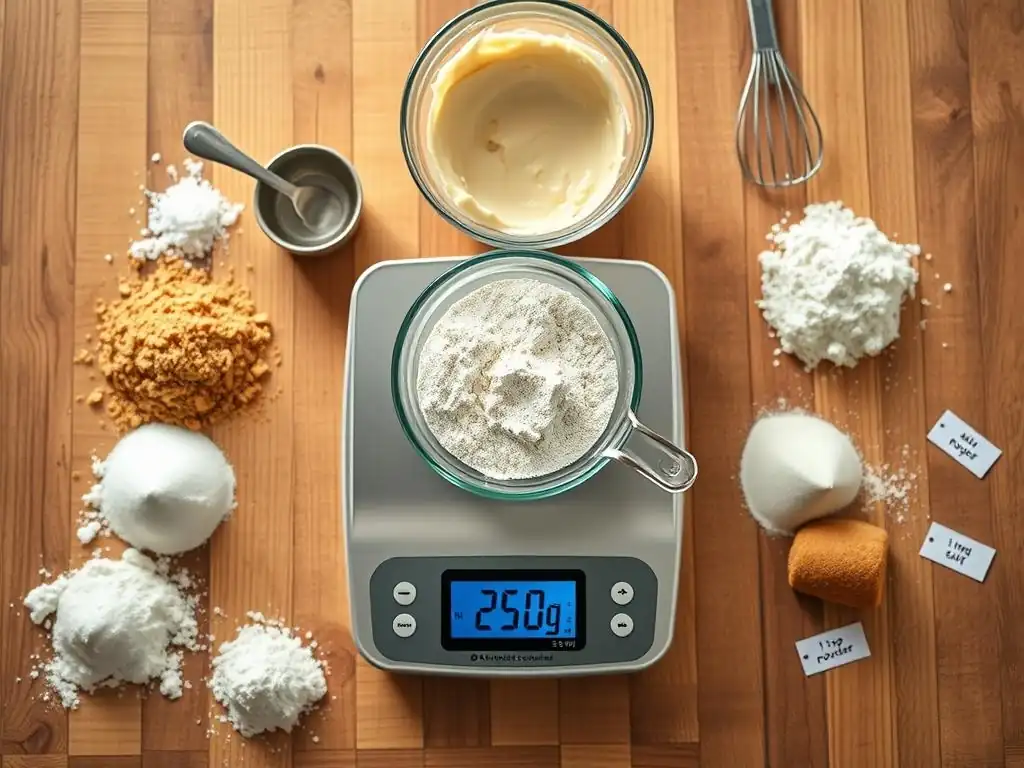
Many traditional recipes use volume measurements, but don't let that stop you from embracing the precision of baking with kitchen scales. Converting recipes is simpler than you might think, and many online resources provide conversion charts.
Understanding Conversion Factors for Common Baking Ingredients
Converting between volume and weight requires understanding the density of different ingredients. A cup of flour weighs less than a cup of sugar because flour is less dense. Standard conversion charts are based on the average weight of an ingredient when measured using typical volume methods (often, though not always, the "spoon and level" method for dry goods). These charts provide approximate weight equivalents for common volumes.
For example, a common conversion factor for all-purpose flour is that 1 cup weighs approximately 120 to 125 grams. Granulated sugar is much denser, with 1 cup typically weighing around 200 grams. Brown sugar, when packed, can weigh closer to 220 grams per cup. While these conversions are approximations based on averages, using them is still significantly more accurate than the variability inherent in volume scooping.
How to Accurately Convert All-Purpose Flour from Cups to Grams
Converting flour is one of the most impactful changes you can make when switching to baking with kitchen scales. If a recipe calls for 2 cups of all-purpose flour, and you use a conversion factor of 120 grams per cup, you would need 240 grams of flour. If the conversion factor is 125 grams per cup, you'd need 250 grams. It's helpful to use a consistent conversion chart or tool.
Let's say your favorite cookie recipe calls for 3 cups of flour. Using the 125g/cup conversion, you'd weigh out 375 grams of flour. This ensures that regardless of how you scoop, you have the same amount of flour each time. Many reliable baking websites and cookbooks now provide weight measurements alongside volume, making the transition even easier.
A Practical Guide to Converting Granulated Sugar from Volume to Weight
Granulated sugar is a common ingredient where weight measurement provides greater accuracy. Since 1 cup of granulated sugar is typically around 200 grams, a recipe calling for 1.5 cups would require 300 grams (1.5 * 200).
To convert a recipe, simply look up the standard weight equivalent for the volume specified for each ingredient. For example, if your recipe uses:
- 1 cup all-purpose flour (approx. 125g)
- 1/2 cup granulated sugar (approx. 100g)
- 1/4 cup cocoa powder (approx. 25g)
You would measure 125g flour, 100g sugar, and 25g cocoa powder when weighing ingredients for baking. Keep a reliable conversion chart handy or write the weight next to the volume in your recipe notes.
Essential Kitchen Scales for Baking: Choosing the Right One
Selecting the right tool is important when you decide to enhance your baking with kitchen scales. The market offers various options, but some features are more beneficial for bakers than others.
Types of Kitchen Scales: Digital vs. Analog for Baking
There are two main types of kitchen scales: analog and digital. Analog scales use a spring mechanism and a dial to show weight. They are typically less expensive and don't require batteries. However, they are also generally less accurate and harder to read precise measurements, especially for small quantities.
Digital kitchen scales are the preferred choice for baking with kitchen scales. They use electronic sensors to provide a precise numerical readout, often down to the gram or tenth of an ounce. They are easy to read and usually include a tare function, which is essential for weighing multiple ingredients in the same container. While they require batteries, their accuracy and convenience make them far superior for detailed baking.
Key Features to Look for in a Baking Scale
When choosing a scale for weighing ingredients for baking, several features are particularly useful. Accuracy is paramount; look for scales that measure in small increments (1 gram or 0.1 ounce). A good weight capacity is also important, typically between 5 kg (about 11 lbs) and 10 kg (about 22 lbs) to handle larger batches or heavy mixing bowls.
The tare function is non-negotiable for baking. This allows you to place a container on the scale, zero out its weight, and then add your ingredient, measuring only the ingredient itself. Multiple unit options (grams, ounces, pounds, milliliters) provide flexibility, although grams are most commonly used in professional baking due to their precision. An easy-to-clean surface and a clear, backlit display are also practical features.
Recommended Kitchen Scales for Baking at Home
Many reputable brands offer excellent digital kitchen scales suitable for baking. Brands like OXO, Ozeri, and Etekcity are popular choices known for their reliability and accuracy. A basic digital scale from one of these brands can often be purchased for $20-$40 and will serve most home bakers perfectly.
Look for models specifically marketed for kitchen or food use. Some advanced scales offer additional features like nutritional information calculation, but for the core task of baking with kitchen scales, a simple, accurate digital scale with a tare function and gram measurement is all you need. Reading user reviews can also help identify models that are durable and consistently accurate.
Mastering Baking with Kitchen Scales: Step-by-Step Guide
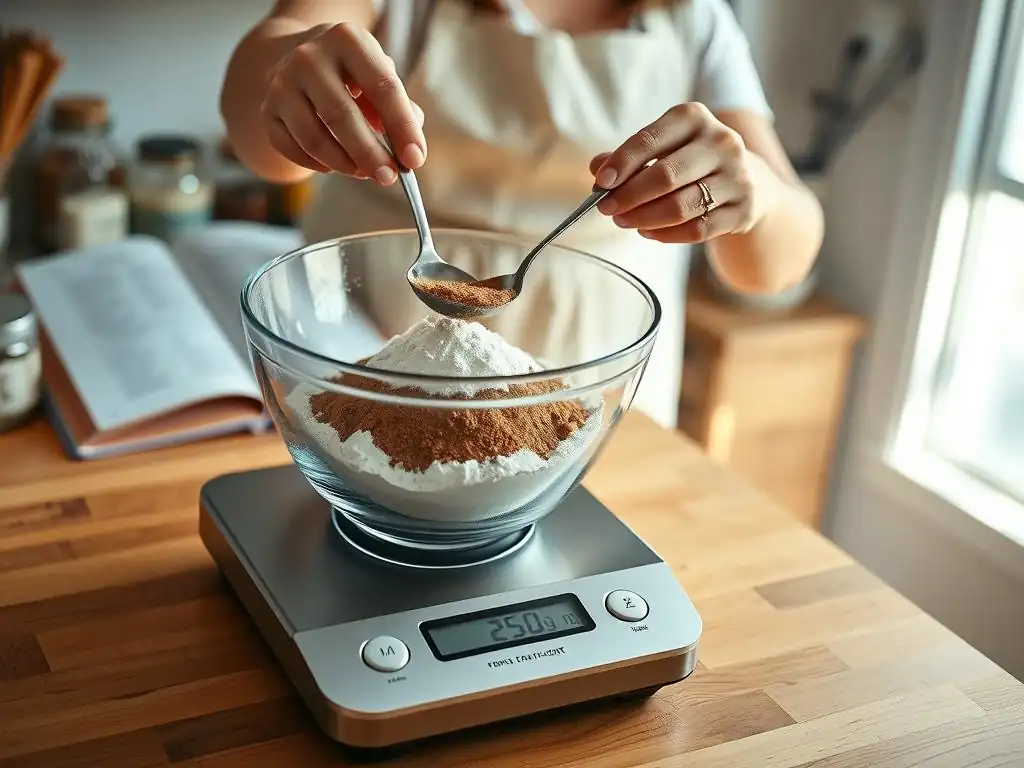
Once you have your kitchen scale, incorporating it into your baking routine is straightforward. It might feel a little different at first, but the process quickly becomes second nature.
Zeroing Your Kitchen Scale: Ensuring Accurate Measurements
The first crucial step when baking with kitchen scales is using the tare function correctly. Place your mixing bowl or container onto the scale before adding any ingredients. Turn the scale on or press the "tare" or "zero" button. The display should reset to 0.00. This tells the scale to ignore the weight of the container.
For instance, if your mixing bowl weighs 500 grams, placing it on the scale and pressing tare makes the scale read 0g. Now, as you add flour, the scale will only display the weight of the flour, not the combined weight of the bowl and flour. This process must be repeated for each ingredient added to the same bowl.
Weighing Dry Ingredients: A Precise Approach
Weighing dry ingredients like flour, sugar, cocoa powder, or leavening agents is incredibly simple with a kitchen scale. After taring your container, gently spoon or pour the ingredient into the bowl until the scale reaches the desired weight specified in the recipe. There's no need to worry about sifting unless the recipe specifically calls for sifting after measuring.
For example, if a recipe requires 250 grams of flour, place your bowl on the scale, tare it, and then add flour until the display shows 250g. You can add most of the amount quickly, then slow down and add small spoonfuls as you approach the target weight for maximum precision. This method eliminates the variable packing issues of volume cups entirely.
Weighing Liquid Ingredients: Minimizing Mess and Maximizing Precision
While liquids like water, milk, or oil are often measured by volume, baking with kitchen scales allows you to weigh them too, which can be more precise, especially for smaller amounts or when dealing with viscous liquids. Since most liquids commonly used in baking (water, milk) have a density very close to 1 gram per milliliter (or per cubic centimeter), the weight in grams is approximately equal to the volume in milliliters.
To weigh liquids, place your container (like a jug or the mixing bowl) on the scale, tare it, and then pour the liquid until the desired weight is reached. For instance, if a recipe calls for 240ml of water, you can weigh 240 grams of water. This is particularly useful when adding liquids directly to a bowl containing other ingredients you've already weighed, reducing the number of measuring cups needed.
Common Mistakes to Avoid When Baking with Kitchen Scales
While baking with kitchen scales simplifies measurement, there are still a few pitfalls to watch out for. Being aware of these can help you ensure you're getting the most accurate readings possible.
Overcrowding the Scale: Ensuring Accurate Readings
Most kitchen scales have a weight limit. Attempting to weigh items heavier than the scale's capacity can lead to inaccurate readings or even damage the scale. Always check the maximum weight capacity of your scale and ensure the total weight of your container plus ingredients does not exceed it.
Also, make sure the item you are weighing (the bowl or ingredient) is centered on the scale platform and not touching anything else on the counter. Any contact with other surfaces can interfere with the sensor and result in an incorrect reading.
Incorrect Unit Settings: Grams vs. Ounces
A common error when weighing ingredients for baking is using the wrong unit. Recipes written by weight usually specify grams or ounces. Ensure your scale is set to the unit your recipe uses. Accidentally measuring grams when the recipe calls for ounces (or vice versa) will lead to a completely wrong amount of ingredient.
Most digital scales have a button to switch between units (often labeled "UNIT" or "MODE"). Double-check the display before adding your ingredient to confirm you are measuring in grams (g) if the recipe specifies grams, or ounces (oz) if it specifies ounces. Grams are generally preferred in baking for their finer precision compared to ounces.
Ignoring Tare Weight: Resetting the Scale for Each Ingredient
Forgetting to tare the scale before adding each new ingredient is another frequent mistake. If you add flour to a bowl, then add sugar without taring, the scale will show the combined weight of the flour and sugar. You won't know the exact amount of sugar you've added.
Always place your container on the scale and press the tare button to zero it out before adding the next ingredient. This allows you to measure each component individually and accurately, which is fundamental to successful baking with kitchen scales. Use the tare function diligently for every single ingredient you add to a container.
Advanced Baking Techniques Using Weight Measurements
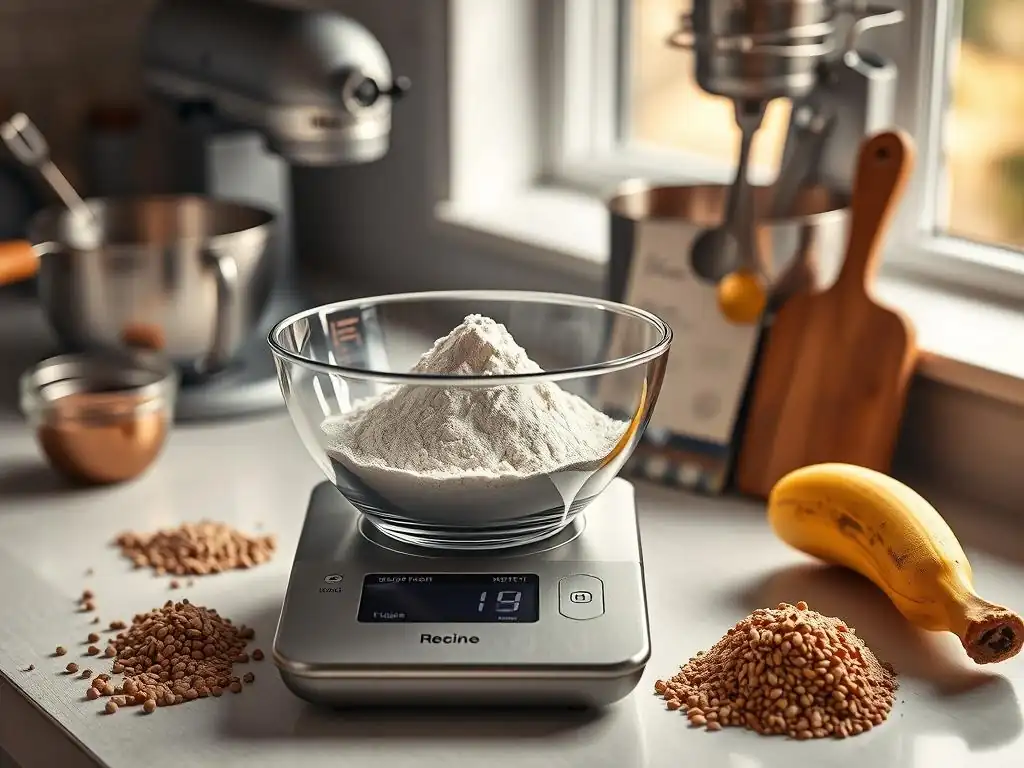
Beyond basic ingredient measurement, baking with kitchen scales opens the door to more advanced techniques and a deeper understanding of recipe formulation.
Precise Hydration Levels in Bread Baking: The Importance of Weight
In bread baking, hydration refers to the ratio of water to flour by weight, expressed as a percentage. For example, a dough with 1000g of flour and 700g of water has a hydration of 70% (700/1000 * 100). Achieving a specific hydration level is critical for developing the desired dough structure and crumb. This level of precision is only possible when weighing ingredients for baking.
Even a slight variation in water or flour amount when using volume could significantly alter the hydration, leading to a dough that is too wet and sticky or too dry and stiff. Using a scale ensures you hit the target hydration consistently, which is essential for mastering different bread types, from a low-hydration bagel dough (around 50-55%) to a high-hydration ciabatta (75% or more).
Scaling Recipes Up or Down Accurately Using Weight Ratios
Scaling a recipe means adjusting ingredient quantities to make a larger or smaller batch. This is incredibly easy and accurate when the recipe is based on weight. You simply maintain the ingredient ratios by multiplying or dividing the weight of each ingredient by the desired scaling factor.
For instance, if a cookie recipe yields 2 dozen cookies using 300g flour, 200g sugar, and 100g butter, and you want to make 3 dozen (1.5 times the recipe), you would simply multiply each ingredient weight by 1.5: 450g flour, 300g sugar, and 150g butter. Attempting this with volume measurements is prone to error, as the relationships between volumes aren't always linear, especially with odd fractional amounts. Baking with kitchen scales makes recipe scaling foolproof.
Achieving Consistent Results in Pastry Making with Precise Weight Measurements
Pastry making, particularly delicate items like croissants, puff pastry, or choux pastry, demands extreme precision. The ratio of butter to flour, the amount of liquid, and even the weight of eggs can significantly impact the final texture and flakiness. Using a scale ensures these ratios are exact every time.
For example, choux pastry relies on a specific ratio of water, butter, flour, and eggs. If the weight of the eggs is slightly off (which can vary between individual eggs), the consistency of the paste will be incorrect, affecting its ability to puff properly. Weighing ingredients for baking delicate pastries guarantees the correct balance, leading to consistent, high-quality results that are difficult to achieve with the inherent variability of volume measures.
Baking with Kitchen Scales: A Baker's Best Friend
Embracing a kitchen scale is one of the simplest yet most impactful steps you can take to improve your baking. It's a tool that empowers you with precision and consistency.
Streamlining Your Baking Process with Accurate Weight Measurements
Contrary to what some might think, baking with kitchen scales can actually streamline your process. Instead of dirtying multiple measuring cups and spoons of various sizes, you often only need one bowl placed on the scale. You can weigh ingredient after ingredient into the same bowl, taring the scale each time. This reduces cleanup and simplifies the workflow, especially for recipes with many dry ingredients.
Once you get used to it, simply pouring or spooning ingredients until the number on the scale matches the recipe is faster and more efficient than leveling cups precisely. It removes the mental effort of choosing the right size cup and ensures you're always hitting the exact target weight.
Elevate Your Baking: Achieving Professional Results at Home
The level of accuracy provided by weighing ingredients for baking is a standard practice in professional bakeries and patisseries for a reason. It guarantees reproducible results batch after batch. By adopting this method at home, you bring that same level of scientific precision to your own kitchen.
This precision translates directly into better baked goods. Your cakes will have a more consistent crumb, your cookies will spread just right, and your bread will rise predictably. It allows you to troubleshoot recipes more effectively, as you eliminate measurement error as a variable. Baking with kitchen scales is a key step towards elevating your home baking to a truly professional level.
Embrace the Precision: Why Kitchen Scales are Essential for Every Baker
If you're serious about improving your baking skills and achieving consistent, high-quality results, a kitchen scale is an essential tool, not just a nice-to-have gadget. It takes the guesswork out of measurement and provides the accuracy needed for both simple and complex recipes.
From mastering delicate pastries to achieving the perfect loaf of bread, baking with kitchen scales is the foundation of precise ingredient control. It's an investment that pays dividends in the form of baking success and confidence. Make the switch today and experience the difference that accurate weight measurements can make in all your baking endeavors.
Frequently Asked Questions
Why should I use kitchen scales for baking instead of measuring cups and spoons?
Using kitchen scales provides greater accuracy in measurements. This leads to more consistent and predictable results in your baking, minimizing errors caused by variations in how ingredients are packed.
What types of kitchen scales are best for baking?
Both digital and analog scales can be used, but digital scales offer more precision and often have a "tare" function to zero out the weight of the container. Look for scales with a sufficient weight capacity for your baking needs.
How does using weight measurements affect the outcome of my recipes?
Weight measurements are more precise than volume, leading to a better understanding of ingredient ratios. This can improve the texture, rise, and overall quality of your baked goods, reducing inconsistency.
Are all ingredients easily measured using kitchen scales?
Most dry ingredients like flour, sugar, and baking powder are easily measured by weight. Liquid ingredients can also be weighed, though you might occasionally still use volume for small amounts of liquids like extracts for convenience.
Where can I find recipes that use weight measurements instead of volume?
Many modern baking recipes now include weight measurements alongside volume. Websites like BakeWithEase.com often provide recipes with weights for greater accuracy, promoting consistent baking results.
Final Reflection: The Weight of Precision in Baking
The shift from volume to weight measurements in baking isn't just a trend; it's a revolution in kitchen accuracy. By embracing the precision of kitchen scales, bakers everywhere are unlocking a new level of consistency and control, transforming even the simplest recipes into culinary masterpieces. This newfound precision allows for a deeper understanding of the fundamental science behind baking, leading to more predictable and reliably delicious results.
The impact of this simple change extends far beyond individual kitchens. It's a quiet rebellion against the inconsistencies of measuring cups and spoons, a testament to the power of scientific methodology in the art of baking. This move towards precision reflects a broader cultural shift towards valuing accuracy and detail in all aspects of life. Baking is a science, and a science needs precision.
This simple statement encapsulates the core message of this guide, highlighting the profound difference that even a small change in methodology can make.
Now, consider your own baking journey. Will you continue to rely on the vagaries of volume measurements, or will you embrace the empowering precision of the kitchen scale? Take the leap; invest in a scale, and experience the transformative power of weight-based baking. The journey towards consistently perfect results starts with a single, precise measurement. You'll be amazed at the difference.
Unlock Baking Precision: Weigh Your Ingredients Now!
Thanks for diving deep into the world of weight-based baking! You've just learned how measuring by weight unlocks a whole new level of consistency and deliciousness in your baked goods. Ready to put your newfound knowledge into practice?
- Start weighing your ingredients today: Begin with your next baking project, even if it's a simple recipe. You'll be amazed by the difference!
- Share your experience: Tell us (and other BakeWithEase readers) about your first weight-based baking adventure! What did you bake? How did it turn out?
- Explore our recipe collection: Many of our recipes are specifically designed for weight measurements, ensuring perfect results every time.
What exciting recipe will you weigh your way through next?