
Your First Time Baking with Honey? Essential Tips for Success

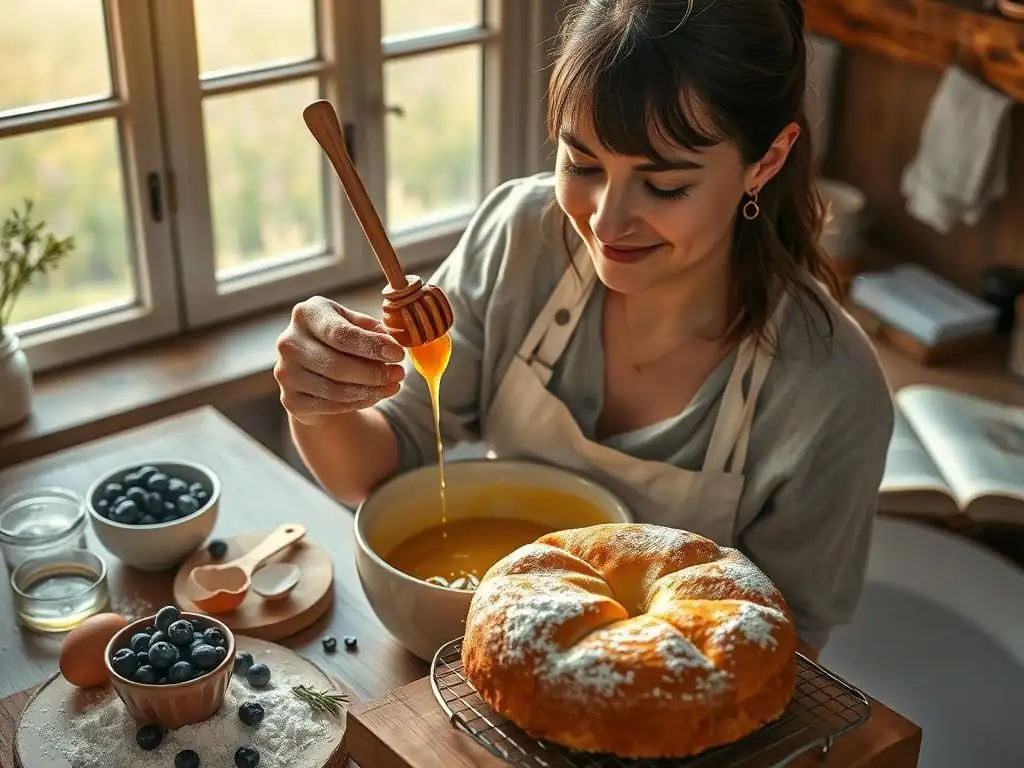
Welcome to BakeWithEase, your partner in creating delicious baked goods!
Ready to unlock the golden secrets of baking with honey? This article dives into essential Honey Baking Beginner Tips that will transform your treats and elevate your baking game. Discover how to harness honey's unique properties for moist, flavorful results, avoid common pitfalls, and create unforgettable desserts. Intrigued? Let's get started!
- Honey Baking Beginner Tips: A Sweet Start
- Understanding Honey: The Baker's Key Ingredient
- Essential Honey Baking Techniques for Beginners
- Honey Baking Recipes for Beginners: Start with These Simple Treats
- Troubleshooting Common Honey Baking Problems
- Honey Baking: Advanced Techniques and Flavor Pairings
- Where to Buy the Best Honey for Baking: Recommendations
- Conclusion: Enjoy the Sweetness of Honey Baking
- Frequently Asked Questions
- Final Reflection: The Sweetness of Success: Honey Baking's Enduring Appeal
- Unlock the Golden Goodness: Your Honey Baking Journey Begins Now!
Honey Baking Beginner Tips: A Sweet Start
Welcome to Honey Baking: A Beginner's Guide
Embarking on your journey into baking with honey opens up a world of unique flavors and textures. Honey, a natural sweetener produced by bees, offers a distinct aroma and moisture-retaining quality that granulated sugar simply can't replicate. For beginners exploring honey baking, understanding its fundamental properties is key to transforming simple recipes into delightful creations. This guide is designed to walk you through the essential honey baking beginner tips, helping you navigate substitutions, temperature adjustments, and common challenges with confidence.
Unlike refined sugars, honey brings complex floral, fruity, or even earthy notes depending on its origin. This natural variation means that the type of honey you choose can significantly impact the final taste of your baked goods, from a subtle sweetness in muffins to a rich depth in bread. Getting started with honey baking for beginners is less about perfect precision initially and more about embracing the learning process and enjoying the delicious results. We'll cover everything from selecting the right honey to troubleshooting common issues like over-browning or sticky dough, ensuring your first attempts are successful and encouraging.
Understanding Honey: The Baker's Key Ingredient
Types of Honey for Baking: Acacia, Orange Blossom, and More
The world of honey is vast and varied, with different types offering unique flavor profiles that can complement or contrast with other ingredients in your baking. Light-colored honeys, such as Acacia or Clover, tend to have a milder, more delicate flavor that won't overpower subtle pastries or cakes.
For instance, Acacia honey, known for its clear appearance and gentle sweetness, works wonderfully in light sponge cakes or delicate shortbread where you want a clean sugary taste with a hint of floral undertones. Clover honey, readily available and widely used, offers a universally appealing mildness suitable for most general honey baking applications.
Moving towards darker honeys, like Orange Blossom or Wildflower, you encounter more pronounced flavors. Orange Blossom honey, sourced from citrus groves, carries a distinct citrusy aroma and a moderately sweet taste that pairs beautifully with fruit-based baked goods or in glazes. Wildflower honey varies greatly depending on the regional flora but often provides a rich, complex flavor that can add depth to heartier bakes like gingerbread or whole wheat bread.
Buckwheat honey, one of the darkest and most robust, has a strong, malty flavor that is best suited for dark fruitcakes or rich spice cookies, where its intense profile can shine without clashing. Choosing the right type is a crucial honey baking beginner tip.
Honey Composition: Moisture Content and Sweetness Levels
Understanding honey's composition is vital for successful honey baking for beginners. Honey is primarily composed of fructose and glucose (simple sugars), along with water, enzymes, acids, and trace minerals. A key difference from granulated sugar is its moisture content, which typically ranges from 17% to 20%. Granulated sugar, in contrast, is virtually moisture-free. This higher moisture level in honey means that using it as a direct substitute for sugar will add more liquid to your recipe, which can affect the texture and consistency of your dough or batter.
Furthermore, honey is generally perceived as sweeter than granulated sugar due to its higher fructose content. Fructose is sweeter than sucrose (the main component of table sugar). While the exact sweetness varies slightly depending on the honey type and its sugar ratio, you often need less honey by volume or weight to achieve the same level of sweetness as sugar.
This is a fundamental principle when learning honey baking beginner tips regarding substitution. This higher sweetness and moisture also contribute to honey's ability to keep baked goods moist and extend their shelf life compared to those made solely with sugar.
Essential Honey Baking Techniques for Beginners

Substituting Honey for Sugar: Conversion Ratios and Adjustments
One of the first honey baking beginner tips you'll need is how to substitute honey for sugar. A general rule of thumb is to use about 3/4 cup of honey for every 1 cup of granulated sugar called for in a recipe. However, because honey is sweeter and contains more liquid, you need to make two additional adjustments for optimal results.
First, reduce the amount of other liquids in the recipe by about 1/4 cup for every 1 cup of sugar substituted. For example, if a cookie recipe calls for 1 cup of sugar and 1/2 cup of milk, you would use 3/4 cup of honey and reduce the milk to 1/4 cup.
The second crucial adjustment when substituting honey is adding a small amount of baking soda, typically 1/4 teaspoon for every 3/4 cup of honey used. Honey is acidic, and baking soda (an alkali) helps to neutralize this acidity. This neutralization is particularly important when the recipe relies on baking powder for leavening, as honey's acidity can interfere with baking powder's effectiveness. Adding baking soda ensures proper leavening, resulting in a lighter, more tender crumb. These adjustments are fundamental honey baking beginner tips for successful substitution.
Baking Temperature and Time: Avoiding Over-Browning
Honey causes baked goods to brown more quickly and intensely than sugar due to its higher fructose content. Fructose caramelizes at a lower temperature than sucrose. To prevent your delicious creations from burning on the outside before they are cooked through on the inside, it's essential to adjust your oven temperature and baking time. A widely recommended honey baking beginner tip is to reduce the oven temperature by approximately 25°F (about 15°C) from what the original recipe specifies.
For instance, if a cookie recipe typically bakes at 350°F (175°C) with sugar, you would lower the temperature to 325°F (160°C) when using honey. You should also monitor your baked goods closely, as the baking time might be slightly shorter or longer depending on the recipe and your oven. Check for doneness a few minutes before the original recipe suggests.
If the top or edges start browning too much before the center is done, you can loosely tent the item with aluminum foil to shield it while it finishes baking. Mastering temperature control is a key part of successful honey baking for beginners.
Honey and Leavening Agents: Baking Soda vs. Baking Powder
When you start honey baking, understanding how honey interacts with leavening agents is important for achieving the desired rise and texture. Honey is naturally acidic, with a typical pH ranging from 3.2 to 4.5. This acidity can react with alkaline leavening agents like baking soda, producing carbon dioxide gas that helps baked goods rise. However, this acidity can also interfere with the action of double-acting baking powder, which contains both acidic and alkaline components.
As mentioned earlier regarding substitutions, when you replace sugar with honey, it's often beneficial to add baking soda, even if the original recipe only calls for baking powder. The added baking soda helps neutralize some of the honey's acidity, allowing the baking powder to function more effectively and contributing to a better rise and a less acidic taste.
If a recipe already uses baking soda (common in recipes with acidic ingredients like buttermilk or molasses), the added honey might not require additional baking soda, but it's a consideration depending on the proportion of honey used. Getting this balance right is a key honey baking beginner tip for achieving light and airy results.
Honey Baking Recipes for Beginners: Start with These Simple Treats
Honey oatmeal cookies are an excellent entry point into honey baking for beginners. They are forgiving, relatively quick to make, and the natural sweetness and moisture of honey pair wonderfully with the hearty texture of oats. The chewy texture often associated with oatmeal cookies is enhanced by honey's hygroscopic nature, meaning it attracts and retains moisture effectively. You can start with a standard oatmeal cookie recipe and apply the substitution honey baking beginner tips we discussed: reduce sugar by about 1/4 and liquids by 1/4, and add a touch of baking soda if the recipe doesn't already have it.
A simple recipe might involve creaming butter with honey, adding eggs and vanilla, then mixing in flour, oats, cinnamon, salt, and baking soda. Baking at a slightly lower temperature (around 325-335°F or 160-168°C) for 10-12 minutes helps prevent the edges from burning while ensuring the centers are cooked. The resulting cookie will be delightfully chewy with a subtle, pleasant sweetness from the honey, a perfect demonstration of basic honey baking principles in action.
Honey Cornbread: A Southern Classic with a Sweet Twist
Cornbread is another fantastic option for honey baking beginners. Traditionally, cornbread can be either savory or slightly sweet, and incorporating honey adds a natural, moist sweetness that complements the cornmeal beautifully. Unlike dense cakes, cornbread batter is often quick to mix, minimizing the risk of overworking the dough, a common pitfall for beginners. Substituting some or all of the sugar in a standard cornbread recipe with honey is straightforward, following the 3/4 cup honey for 1 cup sugar ratio and adjusting liquids.
Using honey in cornbread not only adds sweetness but also contributes to a tender, moist crumb that stays fresh longer. A typical recipe might combine cornmeal, flour, baking powder, salt, and a pinch of baking soda, then whisk wet ingredients like buttermilk, eggs, melted butter, and honey. Baking in a hot cast-iron skillet at around 375°F (190°C) (adjusted down slightly if necessary) for 20-25 minutes results in a golden-brown crust and a moist interior. The sweet aroma from the honey baking is an added bonus!
Honey Glazed Muffins: A Quick and Easy Recipe
Muffins are a quick and easy bake, making them ideal for honey baking beginners. Adding honey to the batter provides moisture and a subtle sweetness, while a simple honey glaze takes them to the next level. You can adapt almost any basic muffin recipe to use honey as the primary sweetener. Focus on simple flavor profiles initially, like plain, blueberry, or apple cinnamon, to appreciate how the honey enhances the fruit or spice.
A simple honey glaze can be made by whisking together warm honey with a small amount of powdered sugar or just drizzling warm honey directly over the cooled muffins. The warmth helps the honey flow smoothly. Baking muffins with honey in the batter usually involves a temperature around 350-375°F (175-190°C), potentially lowered slightly as per honey baking beginner tips. The quick baking time (typically 20-25 minutes) means you'll have warm, delicious, honey-sweetened treats ready in under an hour, perfect for building confidence in your honey baking skills.
Troubleshooting Common Honey Baking Problems
Sticky Dough or Batter: Finding the Right Balance
A common issue encountered when honey baking for beginners is dealing with sticky doughs or batters. Because honey adds more liquid than granulated sugar, your dough or batter might feel wetter or stickier than you're used to. If you've followed the substitution guidelines (using 3/4 cup honey for 1 cup sugar and reducing other liquids), the stickiness might be manageable. However, if the dough is excessively sticky and difficult to handle, particularly for recipes like cookies or bread, you might need a slight adjustment.
One solution is to add a small amount of additional dry ingredient, like flour, a tablespoon at a time, until the dough reaches a more manageable consistency. For cookie dough, chilling the dough in the refrigerator for at least 30 minutes can significantly help make it less sticky and easier to scoop or roll. Remember that honey baking beginner tips often involve slight flexibility; the exact absorption of liquid can vary depending on the flour type and even atmospheric conditions. Don't be afraid to make minor adjustments based on the feel of the dough.
Over-Browning or Burning: Preventing Burnt Edges
As previously mentioned, honey causes baked goods to brown faster due to fructose caramelizing at lower temperatures. This can lead to the outside looking done (or even burnt) while the inside is still undercooked. Over-browning is a frequent challenge in honey baking for beginners. The primary defense is lowering your oven temperature by about 25°F (15°C) and checking for doneness earlier than the recipe indicates.
If you notice the edges or top of your cake, muffins, or loaf browning too quickly while the center needs more time, loosely tenting the baked good with aluminum foil is an effective strategy. This shields the surface from direct heat, slowing down the browning process. Using lighter-colored baking pans instead of dark ones can also help, as dark pans absorb more heat and promote faster browning. Paying close attention and utilizing these simple honey baking beginner tips will help prevent burnt edges and ensure even cooking.
Dense or Flat Baked Goods: Achieving Proper Rise
Sometimes, despite your best efforts, baked goods made with honey can turn out dense or flat. This can be disheartening for honey baking beginners, but it's often related to how honey interacts with leavening agents and the overall balance of ingredients. As honey is acidic, if you haven't added enough baking soda to neutralize this acidity, it can inhibit the chemical reactions needed for proper leavening, especially when relying on baking powder.
Ensuring you add the recommended 1/4 teaspoon of baking soda per 3/4 cup of honey when substituting is crucial. Also, double-check that your baking powder and baking soda are fresh – expired leaveners won't provide the necessary lift. Over-mixing the batter can also lead to dense results by developing too much gluten, so mix just until combined. Finally, accurately measuring both the honey and other ingredients is vital; too much honey or not enough dry ingredients can weigh down the batter. Reviewing basic honey baking beginner tips on substitution and leavening can help troubleshoot this issue.
Honey Baking: Advanced Techniques and Flavor Pairings
Pairing Honey with Spices and Extracts: Enhancing Flavors
Once you've mastered the basics of honey baking for beginners, you can start exploring how honey's unique flavor profile interacts with various spices and extracts. Honey pairs exceptionally well with warm spices like cinnamon, nutmeg, ginger, cloves, and cardamom. For instance, a simple honey cake becomes much more complex and aromatic with the addition of ground ginger and a pinch of cardamom. These spices highlight the natural warmth and depth of the honey.
Vanilla extract is a universal enhancer in baking, and it works beautifully with honey, adding a layer of classic sweetness. Almond extract can also be a delightful partner, especially with lighter honeys like Acacia, bringing out nutty undertones in cookies or muffins. Consider pairing darker honeys, such as Buckwheat, with more robust flavors like espresso powder or dark chocolate. Experimenting with these combinations is a fun way to elevate your honey baking skills beyond the beginner level and create truly unique flavor experiences.
Honeycomb and Honeycomb Candy: Adding Texture and Visual Appeal
Beyond simply using liquid honey as a sweetener, advanced honey baking can involve incorporating elements like honeycomb or making honeycomb candy (also known as cinder toffee or sponge candy). Honeycomb itself, straight from the hive, can be crumbled over cakes, ice cream, or tarts, providing a delightful chewy texture and concentrated bursts of honey flavor. It's a beautiful and natural way to garnish and add authenticity to your honey baking creations.
Honeycomb candy is made by boiling sugar, honey, and sometimes corn syrup to a specific temperature, then quickly whisking in baking soda, which creates a dramatic foaming action that results in a light, airy, and brittle candy structure. This candy can then be broken into pieces and used as a crunchy inclusion in cookies, brownies, or even ice cream, or dipped in chocolate for a decadent treat. While making honeycomb candy is a step beyond basic honey baking beginner tips, it's a rewarding technique that adds unique texture and visual interest to your baked goods.
Where to Buy the Best Honey for Baking: Recommendations
Local Honey Vendors: Supporting Your Community
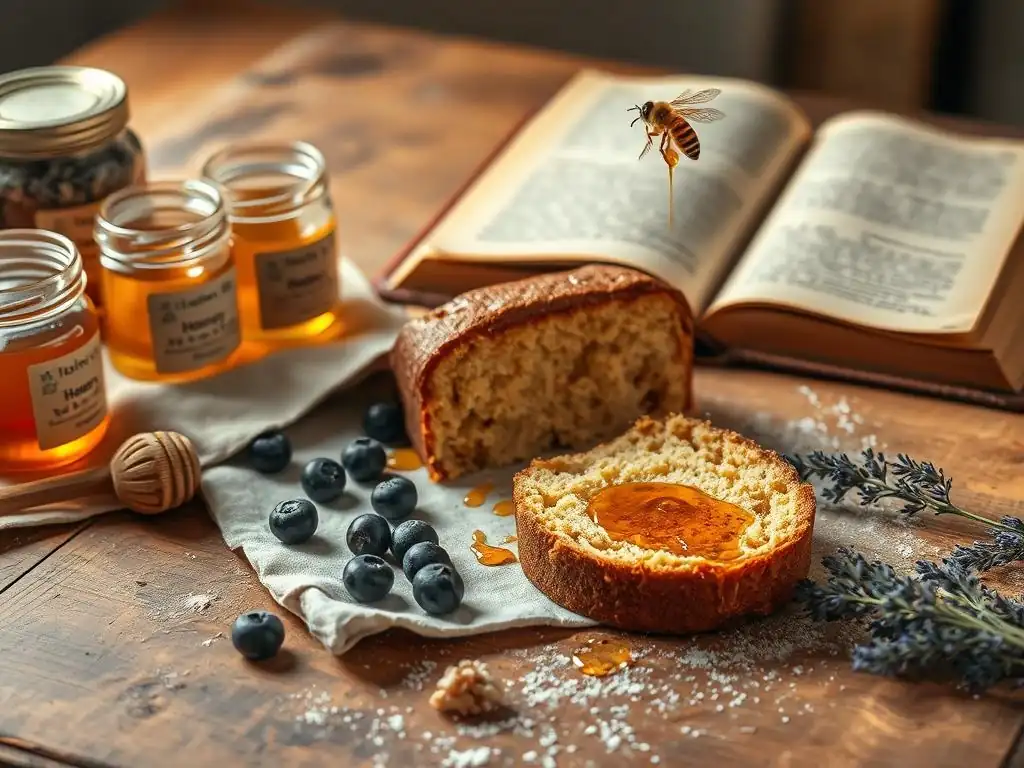
Choosing where to buy your honey is part of the honey baking experience. Opting for local honey vendors offers numerous benefits. Firstly, it supports local beekeepers and agricultural businesses in your community. Secondly, local honey often has unique flavor characteristics based on the regional flora the bees visit. For instance, honey from an area with many apple orchards might have a subtle fruity note. Visiting farmers markets or local food stores is a great way to find these vendors.
Buying local also allows you to talk directly to the producer, who can often tell you about the specific floral sources of the honey and recommend the best types for your honey baking projects. Prices might vary, but the quality and freshness are often exceptional. Exploring local options is a valuable honey baking beginner tip for discovering new flavors and connecting with the source of your ingredients.
Online Honey Retailers: Convenient Options
For those seeking convenience or a wider variety of honey types than available locally, online honey retailers are an excellent resource. Websites specializing in honey offer everything from common Clover and Wildflower to exotic Manuka, Tupelo, or Sourwood honeys from around the world. This allows you to specifically source honeys known for certain flavor profiles or characteristics that might be perfect for a particular honey baking recipe you want to try.
When buying honey online, look for reputable retailers who provide details about the honey's origin, floral source, and processing methods (e.g., raw, unfiltered, pasteurized). Read customer reviews to gauge quality and service. While you miss the personal interaction of a local market, online stores provide access to a global selection, expanding your possibilities as you grow your honey baking skills beyond the beginner stage.
Conclusion: Enjoy the Sweetness of Honey Baking
Embrace the Art of Honey Baking with Confidence.
Diving into honey baking is a rewarding experience that adds a unique dimension of flavor and texture to your homemade treats. By understanding the basic properties of honey, learning how to substitute it correctly, and making simple adjustments to your baking process, you can successfully transform your favorite recipes. Remember the key honey baking beginner tips: adjust liquid and add baking soda when substituting, lower your oven temperature to prevent over-browning, and check for doneness a bit earlier.
Don't be discouraged by initial challenges like sticky dough or uneven browning; these are common learning curves in honey baking for beginners. With practice, you'll develop an intuition for how honey behaves in different recipes. Embrace the process, experiment with different types of honey, and enjoy the wonderful aromas and delicious results. Happy honey baking!
Frequently Asked Questions
What are the main benefits of using honey in baking?
Honey adds moisture and a unique flavor to baked goods. It also acts as a natural humectant, keeping items fresher for longer.
Can I substitute honey directly for sugar in any recipe?
Not always, as honey is sweeter and more liquid than sugar. You'll typically need to reduce the liquid in the recipe and lower the oven temperature slightly.
What type of honey is best for baking?
The best honey depends on your flavor preference. Lighter honeys like clover are more neutral, while darker honeys like buckwheat have a stronger flavor.
How should I store honey to keep it fresh?
Store honey in a sealed container at room temperature. Avoid direct sunlight and extreme temperatures, which can affect its texture and flavor.
What are some common mistakes beginners make when baking with honey?
Overbaking is a frequent issue, as honey can caramelize quickly. Also, not adjusting liquid levels can result in a dense or sticky final product.
Final Reflection: The Sweetness of Success: Honey Baking's Enduring Appeal
The transformative power of honey in baking extends far beyond mere sweetness; it's a journey of discovery, patience, and ultimately, delicious reward. From the subtle floral notes to the rich, complex flavors it imparts, honey elevates baking to a truly artisanal experience, a fact increasingly appreciated by home bakers today. This is more than just a trend; it's a rediscovery of natural ingredients and a return to mindful cooking.
The shift towards natural sweeteners, away from heavily processed alternatives, has profoundly impacted the culinary landscape. Honey's unique properties—its varying textures, its diverse flavor profiles depending on the floral source, and its inherent humectant qualities—offer a depth and complexity that artificial sweeteners simply cannot match. The best things in life are simple, and honey is a testament to that simplicity.
This quote, though not directly about baking, perfectly encapsulates the appeal of using honey: a natural ingredient offering profound results.
Now, armed with these essential tips, you stand at the threshold of a world of honey-infused delights. Don't be afraid to experiment! Try different types of honey, explore various recipes, and most importantly, savor the process. Each batch, each successful bake, is a step further on your culinary journey, a testament to your growing skill and confidence. Embrace the sweetness of success, and let the golden nectar of honey guide you to baking bliss.
Unlock the Golden Goodness: Your Honey Baking Journey Begins Now!
Thank you for joining us on this sweet journey into the world of honey baking! We hope you've discovered the unique flavor and benefits honey brings to your baking creations. Now it's time to put your newfound knowledge into practice!
- Bake your dream recipe using honey: Choose one recipe (even a simple one!) and substitute honey for sugar. See how its unique flavor transforms your creation! Don't forget to adjust the liquid as needed.
- Share your honey-baked masterpiece: Post a photo of your creation on social media using #HoneyBakingWithEase and tag us – we'd love to see your results!
- Explore more honey baking inspiration: Dive deeper into our website for more recipes, tips, and tricks for all your honey-sweet baking adventures!
Ready to transform your baking and experience the magic of honey? What's the first honey-infused treat you're going to bake?