
Understanding Piping Tip Numbering

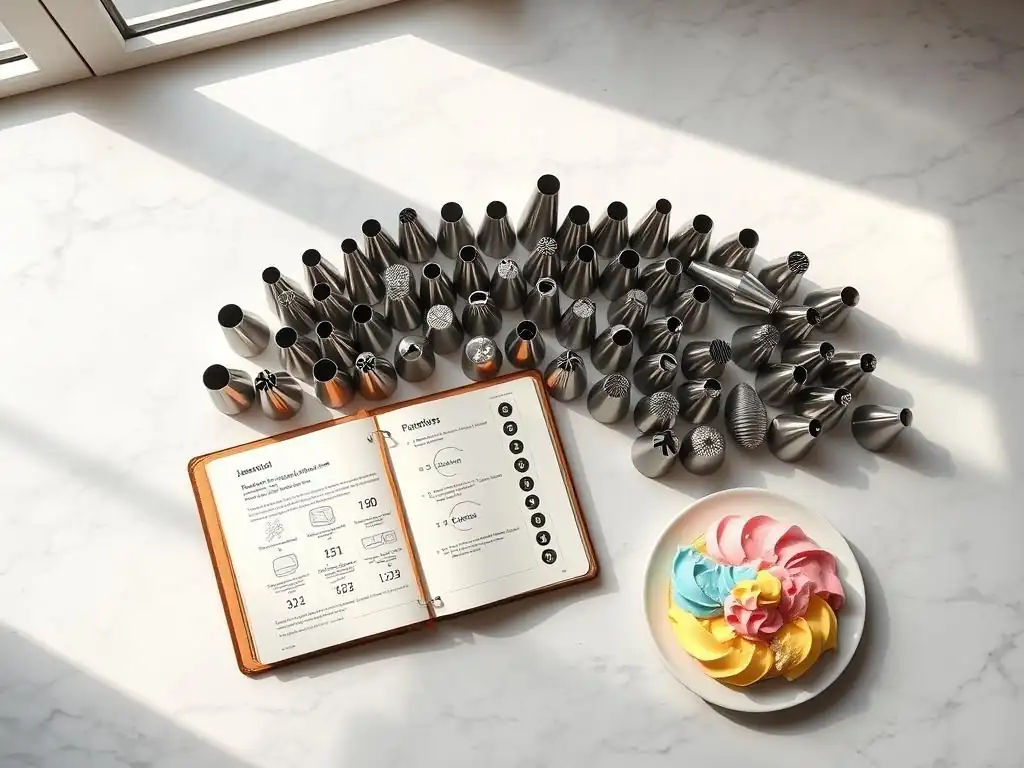
Welcome to BakeWithEase, your haven for unlocking baking brilliance! Ever wondered what those mysterious numbers on your piping tips actually mean? This guide demystifies the entire system, providing you with a clear piping tip numbering guide that will revolutionize your decorating. Prepare to transform your pastries with newfound confidence – are you ready to decode the secrets?
- Introduction to Piping Tips and Their Numbering System
- Decoding the Piping Tip Numbering System: A Comprehensive Overview
-
Common Piping Tip Numbers and Their Uses in Cake Decorating
- Round Piping Tips: Numbers and Applications (e.g., #1, #3, #5)
- Star Piping Tips: Numbers and Applications (e.g., #16, #21, #32)
- Petal Piping Tips: Numbers and Applications (e.g., #104, #125)
- Leaf Piping Tips: Numbers and Applications (e.g., #67, #352)
- Specialty Piping Tips: Numbers and Applications (e.g., Basketweave, Ruffle)
- Piping Tip Sizes: Small, Medium, and Large
- Piping Tip Materials: Stainless Steel vs. Plastic
- Tips for Choosing the Right Piping Tip Number
- Piping Tip Care and Maintenance
- Advanced Piping Techniques Using Specific Piping Tip Numbers
- Troubleshooting Common Piping Tip Issues
- Conclusion: Mastering Piping Tip Numbering for Beautiful Cake Decorations
-
Frequently Asked Questions
- What is a piping tip numbering guide, and why is it useful?
- Where can I find a reliable piping tip numbering guide?
- Are all piping tip numbering systems the same across different brands?
- What are some common piping tip numbers used for specific decorations?
- How does understanding piping tip numbers help improve my baking skills?
- Final Reflection: Mastering the Language of Piping Tips
- Unlock Your Piping Potential: Master the Art of Numbered Tips!
Introduction to Piping Tips and Their Numbering System
Why Understanding Piping Tip Numbers is Essential for Cake Decorating
Mastering cake decorating relies heavily on using the right tools, and piping tips are arguably the most fundamental. Each tip, identified by a unique number, is designed to produce a specific shape or effect when frosting or icing is pushed through it. Without a proper grasp of this numbering system, bakers often find themselves guessing which tip will create the desired outcome, leading to frustration and inconsistent results.
Knowing the numbers allows you to confidently select the tool needed for intricate details, bold borders, delicate flowers, or smooth fills, transforming your vision into reality on your baked goods. It's the difference between a haphazard swirl and a perfectly formed rose.
Furthermore, understanding the piping tip numbering guide is crucial when following recipes or tutorials. Many decorating instructions specify the exact tip number required for a particular technique, such as using a #2 tip for fine script lettering or a #21 tip for classic star borders. If you don't know what these numbers signify, you can't accurately replicate the design.
This knowledge also saves money and space by helping you build a useful collection rather than accumulating random tips. It's the first step towards becoming a more skilled and efficient cake decorator, enabling you to tackle a wider range of designs with confidence and precision.
BakeWithEase's Guide to Demystifying Piping Tip Sizes and Shapes
Welcome to your ultimate guide to understanding piping tip numbering, brought to you by BakeWithEase! We know the array of numbers and shapes can seem overwhelming at first glance, but our goal is to make this system clear and easy to navigate. Think of this guide as your personal dictionary for piping tips, helping you translate those mysterious numbers into beautiful cake decorations. We'll walk you through the common categories of tips – round, star, petal, leaf, and specialty – explaining what each number range typically represents in terms of size and the effect it creates.
Our comprehensive overview aims to demystify the logic behind the numbers, helping you understand how they relate to the tip's opening and intended use. For instance, generally, smaller numbers within a category indicate smaller openings for finer work, while larger numbers mean larger openings for bolder decorations.
We'll also touch upon variations you might encounter between different brands like Wilton, Ateco, or PME, providing tips on how to identify similar tips even if the numbers aren't identical. By the end of this piping tip numbering guide, you'll feel equipped to choose the perfect tip for any decorating task, from delicate swirls to impressive basketweave patterns.
Decoding the Piping Tip Numbering System: A Comprehensive Overview
The Logic Behind Piping Tip Numbers: What Do They Mean?
The numbering system for piping tips, while not perfectly standardized across all manufacturers, follows a general logic that helps bakers identify the size and shape of the tip's opening. For many common tips, especially those from widely used brands like Wilton, the number provides clues about the tip's function. Lower numbers within a category, like #1, #2, or #3 in round tips, typically indicate a very small opening used for fine details, writing, and delicate lines. As the numbers increase, the opening size usually increases as well. For example, a #12 round tip has a significantly larger opening than a #3, making it suitable for dots, beads, or filling small areas.
Beyond just size, the number often relates to the tip's specific design and the pattern it produces. For instance, tips in the #13 to #32 range are frequently open or closed star tips, with the number indicating the size of the star points and the overall opening. Petal tips, often used for flowers and ruffles, might fall into ranges like #101 to #104 (smaller) or #125 to #127 (larger), with the number reflecting the tip's curvature and size. While some numbers are unique to very specific specialty tips, understanding these general patterns within common categories is key to navigating the piping tip numbering guide effectively.
Exploring Different Piping Tip Brands and Their Numbering Variations
While the general principles of piping tip numbering hold true, it's important to be aware that different brands may use slightly different numbering conventions or even have tips with similar functions but entirely different numbers. Brands like Wilton, Ateco, and PME are popular choices among bakers, each with their own extensive range of tips. A Wilton #1M open star tip is famous for creating large rosettes, and Ateco offers a similar tip often numbered #826 or #828. Similarly, a standard round tip might be a #3 from Wilton, while Ateco's equivalent could be #803.
This variation means that relying solely on a number without considering the brand can sometimes be misleading. If you are following a recipe or tutorial that specifies a tip number from a particular brand, it's best to use a tip from that same brand if possible. However, if you have tips from a different manufacturer, you can often find conversion charts online or compare the tip openings visually to find a suitable substitute. For example, if a guide calls for a Wilton #104 petal tip (a small, curved petal shape), an Ateco #104 or PME #ST51 might be comparable alternatives, though their exact size and curvature could vary slightly. Familiarizing yourself with the common tips from a few major brands is a helpful strategy when building your piping tip collection.
Common Piping Tip Numbers and Their Uses in Cake Decorating
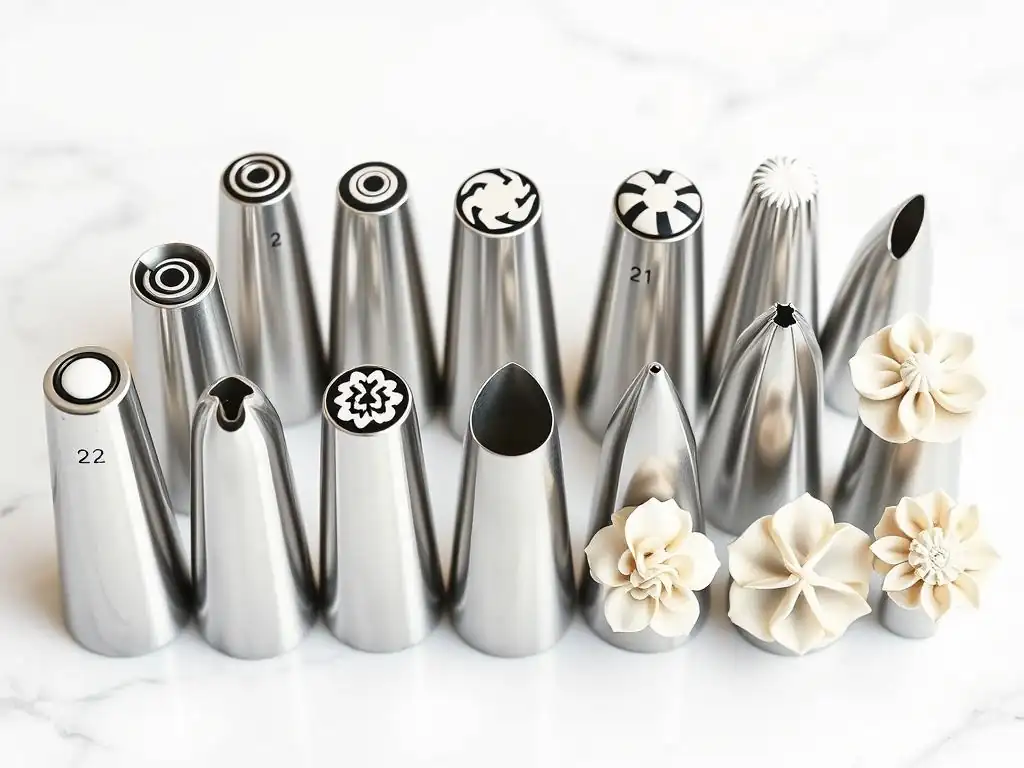
Round Piping Tips: Numbers and Applications (e.g., #1, #3, #5)
Round piping tips are the workhorses of cake decorating, essential for everything from fine details to bold outlines and dots. They are characterized by a simple, circular opening. Smaller round tips, such as the #1 or #2, have very fine openings, typically less than 1mm in diameter for a #1. These are perfect for intricate detail work like writing names, adding small dots, creating fine lines, or piping delicate lace patterns. For example, using a #1 tip with royal icing is standard practice for detailed floodwork outlining on cookies.
Moving up in size, tips like #3, #5, or #8 have progressively larger openings. A #3 tip, with an opening around 1.5-2mm, is versatile for writing, outlining shapes, and creating consistent bead borders. A #5 tip (around 2-3mm opening) is good for thicker outlines, larger dots, and simple swirls. Larger round tips, such as #10, #12, or even larger like #789 (a large plain tip often used for filling or smooth frosting), are excellent for piping larger dots, beads, filling in areas, or creating smooth surfaces. For instance, a #12 tip is often used to pipe uniform dots around the base of a cake or create simple, rounded dollops of buttercream.
Star Piping Tips: Numbers and Applications (e.g., #16, #21, #32)
Star piping tips are incredibly popular for creating classic borders, rosettes, stars, and shells. They come in two main varieties: open star tips and closed star tips, each producing a slightly different effect. Open star tips, commonly found in numbers like #16, #18, #21, or #32, have points that flare outwards. A #16 tip is a smaller open star, great for creating delicate star patterns or small rosettes. A #21 tip is a medium-sized open star, perhaps the most versatile and widely used star tip, perfect for creating consistent star borders, shells, or medium-sized rosettes on cupcakes or cakes. The #32 tip is slightly larger, producing bolder stars and borders.
Closed star tips, such as #30, #33, #35, or #199, have points that curve inwards slightly, creating a more defined, sharper point and often a more dramatic swirl effect when piping rosettes or shells. A #30 or #33 tip can be used for smaller, detailed closed stars, while a #35 provides a medium size. The famous Wilton #1M tip, while often categorized with star tips, is a large open star tip known for producing large, swirled rosettes and cupcakes tops. Understanding the subtle difference between open and closed star tips and their corresponding numbers is key to selecting the right one for your desired texture and definition in your piping.
Petal Piping Tips: Numbers and Applications (e.g., #104, #125)
Petal piping tips are specifically designed for creating realistic-looking flower petals, ruffles, swags, and bows. These tips have a distinct shape: one side is narrow and the other is wider, and they are often slightly curved. By holding the tip with the narrow end either facing up or sideways and varying the pressure and movement, you can create a variety of effects that mimic delicate fabric or flower petals. Smaller petal tips like #101 (very small) or #104 (small, versatile) are ideal for piping tiny blossoms like forget-me-nots or creating small ruffles and bows. For example, the #104 tip is arguably the most famous petal tip, used extensively for piping classic buttercream roses by holding the narrow end up and swirling the tip around a central cone.
Larger petal tips, such as #125 or #127, have wider openings, allowing you to create larger petals for bigger flowers like peonies or large ruffles and swags along the side of a cake. A #125 tip is a common choice for medium-sized roses, while the very large #127 is suitable for creating dramatic ruffles or large flower components. The curvature of the tip is also important; some petal tips are flatter, while others have a more pronounced curve, which affects the shape and lift of the petal or ruffle. Experimenting with angle and pressure when using these tips is crucial to mastering their potential.
Leaf Piping Tips: Numbers and Applications (e.g., #67, #352)
Leaf piping tips are designed to create realistic leaves to complement piped flowers, adding a natural touch to your cake decorations. These tips have a V-shaped opening, sometimes with small serrations along the edges to give the leaf a more textured, veined appearance. By applying pressure, then decreasing it while pulling the tip away, you can create simple yet effective leaf shapes. Common leaf tips include #67, #68, #70, and #352. The size of the V-opening varies with the number, allowing for leaves of different sizes.
A #67 tip is a common choice for medium-sized leaves. It has a V-shaped opening that, when piped with a slight squeeze and pull motion, forms a convincing leaf shape. The #70 tip is slightly larger. Some leaf tips, like the popular #352, have a split opening down the center of the V. This split helps create a more defined vein down the center of the piped leaf, enhancing its realism. Piping leaves is typically done after the flowers are in place, strategically positioning them to fill gaps and add color and dimension to your floral arrangements on the cake.
Specialty Piping Tips: Numbers and Applications (e.g., Basketweave, Ruffle)
Beyond the basic categories, there's a wide world of specialty piping tips designed for unique effects. These tips often have complex openings that produce specific patterns with a single pass. Basketweave tips, for example, have a flat opening with one side smooth and the other serrated. Tips like #46 or #47 are used to create woven patterns that resemble a basket, by alternating between piping smooth and serrated lines horizontally and vertically. The #47 tip is slightly larger than the #46.
Ruffle tips, such as #86 or #402, have openings designed to produce flowing, wavy ruffles or swags. The specific shape of the opening dictates the style of the ruffle, from tight waves to broad folds. Other specialty tips include grass tips (like #233), which have multiple small holes to create a furry or grassy texture, and drop flower tips (like #2D or #1B), which pipe a complete flower shape with a single squeeze. Exploring specialty tips, guided by a comprehensive piping tip numbering guide, opens up a vast array of creative possibilities for adding unique textures and designs to your baked creations.
Piping Tip Sizes: Small, Medium, and Large
Using Small Piping Tips for Fine Details
Small piping tips, generally those with the lowest numbers within their category (like round tips #1 to #4, or small star tips like #16), are indispensable for adding fine details to your baked goods. Their narrow openings allow for precise control over the flow of icing or buttercream, making them perfect for intricate work. This includes piping delicate outlines on cookies before flooding them with thinner icing, adding tiny dots or beads as accents, or creating fine lines for lace patterns or spiderwebs. For instance, using a #2 round tip is standard practice for writing messages or names on cakes, requiring steady hands and a smooth icing consistency.
These small tips are also essential for creating tiny elements in larger designs, such as the centers of small flowers, delicate tendrils, or fine details on character cakes. While they require patience and a bit more control due to their small size, the ability to execute such fine work elevates the overall appearance of your decorations, demonstrating a higher level of skill. Mastering the use of small tips is a key step in becoming proficient in detailed cake decorating techniques, allowing you to add those finishing touches that truly make your creations stand out.
Using Medium Piping Tips for General Decoration
Medium-sized piping tips are the workhorses for everyday cake decorating tasks and are likely the most frequently used tips for many bakers. This category includes popular tips like the #12 round, #21 open star, #32 closed star, and #104 petal tip. Their openings are large enough to allow for a good flow of icing without being so large that precision is lost. They are perfect for piping borders around cakes, creating medium-sized rosettes or stars on cupcakes, piping shells, or adding ruffles and swags. For example, the #21 star tip is a go-to for quickly decorating a batch of cupcakes with classic swirls or creating a simple yet effective star border along the top and bottom edges of a cake.
Medium tips strike a balance between detail and speed. While they can't achieve the ultra-fine lines of a #1 tip, they are much faster for covering larger areas or creating repetitive patterns like stars or shells. They are also suitable for piping dots or beads of a more substantial size than those made with small tips. Building a collection of versatile medium tips is highly recommended for any baker looking to regularly decorate cakes, cupcakes, or cookies, as they cover a vast range of common decorating needs and techniques.
Using Large Piping Tips for Bold Designs
Large piping tips are used for making a statement with your cake decorations. These tips have significantly larger openings and are perfect for quickly covering large areas, creating bold borders, piping large rosettes or swirls on cupcakes, or making large-scale floral elements. Examples include large round tips like #789 or #1A, large star tips like #1M or Ateco #826, and large petal tips like #127. A #1M tip is perhaps the most iconic large tip, famous for piping those impressive, swirled peaks on cupcakes and large, dramatic rosettes on cakes.
Using large tips is much faster than using smaller tips for covering surface area, making them ideal for projects where speed and impact are important. They are also great for creating textures, such as covering a cake in large swirls or waves of buttercream using a large round or star tip. While they lack the ability for fine detail, their strength lies in creating bold, eye-catching designs that can be seen from a distance. Incorporating large tips into your piping tip numbering guide knowledge allows you to add dramatic flair and structure to your decorated treats.
Piping Tip Materials: Stainless Steel vs. Plastic
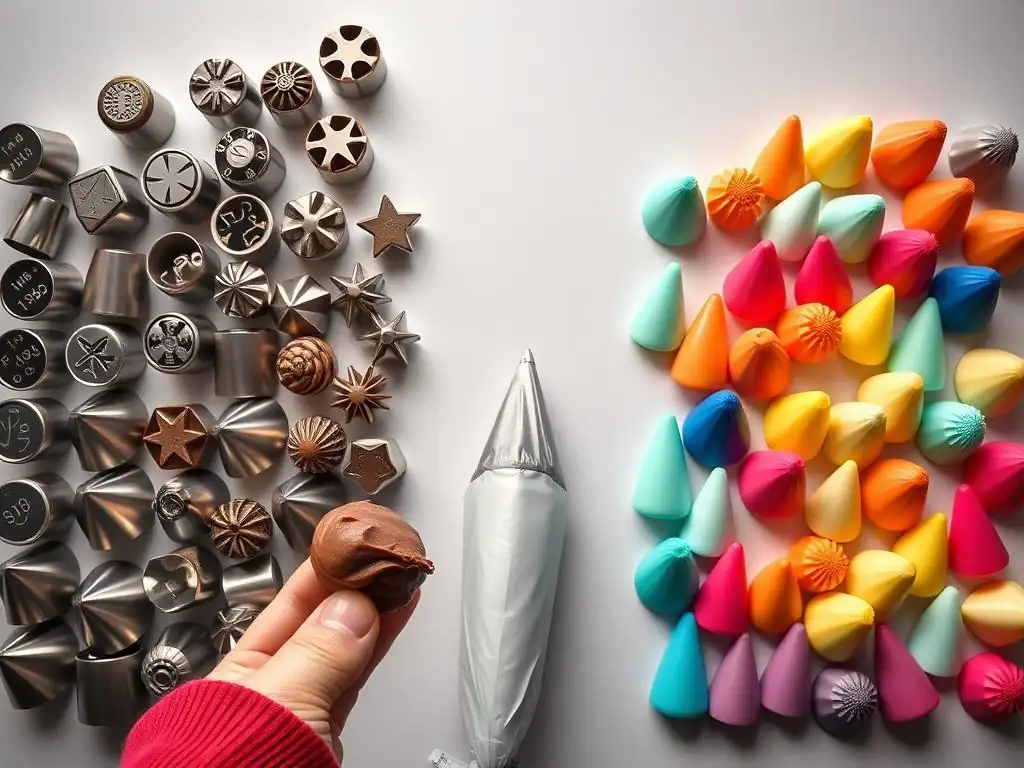
Stainless Steel Piping Tips: Advantages and Disadvantages
Stainless steel piping tips are the standard choice for professional and serious home bakers, and for good reason. Their primary advantage is durability. Made from strong, non-corrosive metal, they are resistant to rust and bending, maintaining their shape even with frequent use and cleaning.
This longevity makes them a cost-effective investment over time. Stainless steel tips also tend to have thinner walls and more precisely cut openings compared to plastic tips, which can lead to sharper, more defined edges on your piped decorations. They are also dishwasher safe and can withstand high temperatures if needed for sterilization (though typically not necessary for baking).
However, stainless steel tips do have a few potential drawbacks. They can be more expensive to purchase initially compared to plastic alternatives. While durable, they can be scratched or dented if dropped onto hard surfaces, which can affect the piping pattern. Also, because they are metal, they can get cold, potentially affecting the consistency of temperature-sensitive icing, though this is rarely a significant issue in practice. Overall, their superior durability, precision, and longevity make stainless steel tips a preferred choice for those who pipe frequently and value crisp, professional results.
Plastic Piping Tips: Advantages and Disadvantages
Plastic piping tips offer a more budget-friendly entry point into cake decorating and have certain advantages. They are significantly less expensive than stainless steel tips, making them a great option for beginners or for those who only pipe occasionally. Plastic tips are also lightweight and typically come in bright, fun colors, which can be appealing. They are less likely to scratch non-stick surfaces if they come into contact with them (like on a baking sheet), and they won't rust. They are also generally easy to clean, although some intricate designs might trap icing.
The main disadvantage of plastic piping tips is their lack of durability and precision compared to stainless steel. They are more prone to breaking, cracking, or having their openings deform, especially with pressure or repeated use. The openings may not be as sharply defined, which can result in slightly softer or less crisp piping lines.
While convenient for casual use or for providing large quantities for a class or party activity, they typically won't last as long or produce the same level of professional finish as high-quality stainless steel tips. For those serious about mastering intricate piping techniques, stainless steel is generally the better long-term investment, but plastic tips can be a perfectly fine starting point.
Tips for Choosing the Right Piping Tip Number
Consider Your Cake Decorating Project
When selecting a piping tip number, the most crucial factor is the specific design you want to achieve on your cake, cupcakes, or cookies. Are you planning to write a message? You'll need a small round tip, likely a #1 or #2. Do you want to pipe classic star borders? A medium open star tip like #21 or #32 is a good choice. Are you aiming to create buttercream roses? A petal tip like #104 or #125 is essential. Thinking about the desired size, shape, and texture of the piped element will immediately narrow down the possibilities within your piping tip numbering guide.
Also, consider the scale of your project. A small cupcake might call for a #18 star tip for rosettes, while a large wedding cake might require a #1M or even larger tip to create impressive swirls or borders efficiently. The type of icing you are using can also influence your choice; very stiff royal icing works well with small tips for fine details, while softer buttercream might require a slightly larger opening to flow smoothly. Always visualize the final look you are going for and select the tip whose opening shape and size are best suited to create that specific effect.
Start with a Basic Set of Piping Tips
For beginners or those just starting to build their collection, navigating the vast number of available piping tips can be daunting. A smart approach is to begin with a basic set that includes a few versatile tips from different categories. Many starter kits include essential tips like a small round ( #3 or #4), a medium round ( #12), a medium open star ( #18 or #21), a medium closed star ( #32), a petal tip ( #104), and perhaps a leaf tip ( #70). This small collection allows you to experiment with writing, borders, stars, rosettes, shells, leaves, and simple flowers.
Having a basic set provides a solid foundation and allows you to practice fundamental piping techniques. As you gain experience and discover which techniques you enjoy most or which specific designs you want to create, you can gradually add more specialized tips to your collection. Referring back to your piping tip numbering guide and identifying the numbers associated with the techniques you want to learn will help you make informed purchases, ensuring you only buy the tips you truly need and will use.
Read Piping Tip Reviews and Recommendations
Before investing in new piping tips, especially specialty or less common ones, it can be incredibly helpful to read reviews and recommendations from other bakers. Online baking communities, blogs, and product review sections on retail websites are great resources. Other bakers can share their experiences with specific tip numbers, explaining what they are best used for, how they perform with different types of icing, and whether they are easy to use and clean. For example, you might find that while several tips claim to make leaves, one specific number like #352 is widely praised for creating the most realistic veins.
Look for reviews that mention the tip's performance, durability, and how accurately it matches its description or intended use according to the piping tip numbering guide. Recommendations from experienced decorators can also point you towards essential tips you might not have considered or steer you away from tips that are difficult to work with or produce disappointing results. Gathering this information helps you make informed decisions and build a collection of reliable tips that will serve you well in your cake decorating adventures.
Piping Tip Care and Maintenance
Cleaning Your Piping Tips Properly
Proper cleaning and maintenance are crucial for extending the life of your piping tips and ensuring hygienic use. After each use, it's best to clean your tips immediately before any residual icing hardens inside. Start by scraping out as much excess icing as possible with a spatula.
Then, rinse the tips under warm running water. For thorough cleaning, especially to remove stubborn bits of icing from intricate openings (like star points or the multiple holes of a grass tip), use a small tip brush. These brushes are specifically designed with thin bristles that can reach into all the nooks and crannies.
Soaking the tips in warm, soapy water for a few minutes can help loosen dried icing before scrubbing. Make sure to rinse them thoroughly to remove all soap residue. While many stainless steel tips are dishwasher safe, handwashing with a tip brush is often more effective for ensuring every bit of icing is removed from the intricate designs, which is vital for consistent piping next time. Pay special attention to specialty tips with complex openings.
Storing Your Piping Tips Safely
Storing your piping tips correctly is just as important as cleaning them. Improper storage can lead to lost tips, damaged openings, or even rust (if they are not completely dry). Before storing, ensure your tips are completely dry to prevent rust, especially stainless steel ones. You can air dry them on a rack or pat them dry with a clean towel. Avoid stacking wet metal tips directly on top of each other, as moisture can get trapped.
There are several effective storage solutions. Small plastic containers with compartments are ideal for keeping tips organized by type or size. Dedicated piping tip organizers or cases, often with pegs or slots for each tip number, are excellent for keeping your collection visible and easily accessible, making it simple to find the right tip using your piping tip numbering guide.
Another option is storing them in small zip-top bags, perhaps grouped by type (all round tips together, all star tips together), although this method is less organized for larger collections. Whatever method you choose, ensure the tips are protected from being crushed or bent, particularly the delicate points of star tips or the fine openings of small round tips.
Advanced Piping Techniques Using Specific Piping Tip Numbers

Creating Rosettes with Star Piping Tips: Step-by-Step
Creating beautiful rosettes is a fundamental technique often achieved using star piping tips, particularly medium to large open or closed star tips like #18, #21, #32, or the popular #1M. This technique relies on steady pressure and a circular motion.
- Fit your piping bag with your chosen star tip and fill it with frosting of a medium consistency.
- Hold the piping bag upright, perpendicular to the surface you are piping on (e.g., a cupcake or cake).
- Apply steady pressure to the bag, allowing the frosting to flow out.
- Starting from the center point where you want the rosette to begin, pipe in a continuous circular motion, moving outwards and slightly upwards, guiding the frosting around the center point.
- Complete the circle to meet your starting point.
- Stop applying pressure and gently lift the bag straight up to break the flow cleanly.
Practicing this motion with different star tip numbers will show you how the size and type of tip affect the rosette's appearance – a #21 makes a smaller, more defined rosette, while a #1M creates a large, dramatic swirl.
Piping Delicate Flowers with Petal Piping Tips: A Tutorial
Piping delicate flowers, such as roses, carnations, or ranunculus, is a beautiful technique often accomplished with petal tips like #101, #104, or #125. The key is controlling pressure and the angle of the tip. For a classic buttercream rose using a #104 tip:
- Pipe a small cone of buttercream onto a flower nail or directly onto the cake surface using a round tip (like
#12). This forms the base and center bud. - Hold the
#104petal tip with the narrow end pointing upwards. - Pipe a small petal around the cone to form the center bud. Apply pressure, move the tip slightly back and forth, and release pressure while pulling away.
- For the next row of petals, hold the narrow end of the tip slightly away from the bud and pipe overlapping petals around the base of the bud, keeping the wide end of the tip touching the cone/flower nail.
- As you move to outer rows, slightly increase the angle of the tip and the size of the petals, allowing them to cup outwards more.
- Continue adding rows of petals until the rose is the desired size and fullness.
The #104 tip's curved shape helps create the natural curve of a petal. Using different sizes of petal tips allows you to create flowers of varying dimensions, adding depth and realism to your floral cake decorations.
Achieving Basketweave Effects with Specialty Piping Tips
The basketweave pattern is a classic cake decorating technique that creates a woven texture resembling a basket, typically covering the sides of a cake. This is achieved using a basketweave tip, such as #46 or #47, which has one smooth edge and one serrated edge.
- Pipe a vertical strip of icing using the smooth edge of the basketweave tip facing outwards. This forms the first "splint".
- Pipe several short, horizontal strips of icing across the vertical strip, using the serrated edge facing upwards. Leave a small gap between the horizontal strips. For a
#47tip, the width of the strip might be around 1 cm. - Pipe a second vertical strip next to the first, covering the ends of the horizontal strips you just piped. Ensure the smooth edge is again facing outwards.
- Now, pipe short, horizontal strips between the previous horizontal strips, again with the serrated edge upwards, starting from the second vertical strip and going across.
- Continue alternating vertical strips (covering the ends of the previous horizontal strips) and horizontal strips (piping in the gaps created by the previous horizontal strips) around the cake.
Maintaining consistent pressure and spacing is key to achieving a uniform basketweave pattern. The choice between a #46 and #47 tip will affect the scale of the weave, with the #47 creating a slightly wider pattern.
Troubleshooting Common Piping Tip Issues
Clogged Piping Tips: Causes and Solutions
A common frustration when piping is encountering a clogged tip, where the icing stops flowing or comes out unevenly. This usually happens when a small piece of dried icing, a crumb, or even a seed from vanilla bean or fruit gets stuck in the tip's opening, especially with smaller or more intricate tips. Using icing that is too cold or has not been properly sieved can also contribute. For example, trying to pipe with a #1 tip using buttercream with tiny sugar crystals can easily cause a blockage.
If your tip becomes clogged mid-piping, stop immediately. The quickest fix is often to push the obstruction back out from the outside of the tip using a toothpick or a small, thin skewer. If the clog is stubborn, you may need to remove the tip from the bag, clear it with warm water and a brush, and then reattach it.
To prevent clogs, always ensure your icing is smooth and free of debris by pushing it through a sieve if necessary, especially when using small tips. Also, keep your icing covered when not in use to prevent it from drying out and forming crusty bits.
Uneven Piping: Techniques for Consistency
Achieving smooth, consistent piping lines, dots, or shapes can be challenging, and uneven results are a common issue for bakers. Uneven piping can stem from inconsistent pressure on the piping bag, an unevenly filled bag, an air bubble trapped in the icing, or icing that is too stiff or too soft. For instance, squeezing too hard then too softly while piping a line with a #5 round tip will result in a line that varies in thickness.
To improve consistency, first ensure your icing is the correct consistency – it should flow smoothly but hold its shape. Fill your piping bag evenly, pushing the icing down towards the tip to eliminate air pockets. Practice maintaining steady, even pressure on the bag. Imagine you are squeezing a tube of toothpaste uniformly.
For lines or borders, try to maintain a consistent angle between the tip and the surface. If you encounter an air bubble, you'll feel a sudden release of pressure; stop, gently squeeze the bag to move the bubble past the tip, or briefly lift the tip and expel the bubble onto parchment paper before continuing. Practice on parchment paper before piping onto your final product to build muscle memory and control.
Conclusion: Mastering Piping Tip Numbering for Beautiful Cake Decorations
Recap of Key Piping Tip Numbering Concepts
Understanding the piping tip numbering guide is a fundamental skill that unlocks a world of possibilities in cake decorating. We've explored how this system, though varying slightly by brand, generally uses numbers to indicate the size and shape of the tip's opening. Lower numbers typically mean smaller openings for fine detail, while higher numbers signify larger openings for bolder designs. We looked at common categories – round, star, petal, leaf, and specialty tips – and discussed how specific numbers within these groups are used to create everything from delicate writing with a #1 tip to dramatic rosettes with a #1M.
We also touched upon the practicalities of choosing the right tip based on your project, the benefits of starting with a basic set, and the importance of caring for your tips through proper cleaning and storage. From piping classic star borders with a #21 tip to crafting intricate buttercream flowers with a #104, knowing your piping tip numbers empowers you to select the perfect tool for every technique, ensuring your decorations are precise, consistent, and beautiful. This guide serves as a stepping stone to help you feel confident navigating the vast array of tips available.
Encouragement for Continued Learning and Experimentation with Piping Tips
Mastering piping tip numbering and techniques is an ongoing journey, and we encourage you to continue learning and experimenting! Don't be afraid to try new tip numbers or practice different techniques. Buy a few new tips that intrigue you – perhaps a specialty tip for a unique texture or a different size of a tip you already love, like trying a #3 round tip if you've only used a #1. Practice piping on parchment paper; you can scrape off the buttercream and reuse it, making it a zero-waste way to hone your skills.
Explore online tutorials and videos that demonstrate techniques using specific piping tip numbers. Challenge yourself to recreate designs you admire, paying close attention to which tips are recommended in the piping tip numbering guide for those effects. The more you practice and experiment with different tips and icing consistencies, the more comfortable and creative you will become. Every piped swirl, star, or petal is an opportunity to learn and improve, bringing you closer to creating the stunning cake decorations you envision. Happy piping!
Frequently Asked Questions
What is a piping tip numbering guide, and why is it useful?
A piping tip numbering guide is a resource that helps bakers understand the standardized numbering system used to identify different piping tips. It's useful because it allows you to easily replicate designs and follow recipes accurately.
Where can I find a reliable piping tip numbering guide?
You can find reliable guides on baking websites like BakeWithEase.com, or in baking supply stores. Many guides also offer visual examples of the patterns each tip creates.
Are all piping tip numbering systems the same across different brands?
While most brands adhere to a general numbering system, there can be slight variations. It's always best to consult the specific brand's guide when possible for the most accurate information.
What are some common piping tip numbers used for specific decorations?
Round tips (like #2 or #3) are great for outlining and writing. Star tips (like #16 or #21) are often used for creating stars and rosettes. Leaf tips are for creating leaves on cakes.
How does understanding piping tip numbers help improve my baking skills?
Knowing the numbering system allows you to easily experiment with different decorating techniques. It also enables you to follow recipes more precisely and achieve consistent results in your baking.
Final Reflection: Mastering the Language of Piping Tips
Understanding piping tip numbering isn't just about memorizing numbers; it's about unlocking a world of creative possibilities in cake decorating. The seemingly simple system of numbers actually represents a vast spectrum of textures, shapes, and designs, impacting everything from delicate buttercream flowers to bold chocolate swirls. This knowledge empowers bakers of all skill levels to achieve professional-looking results.
The impact of standardized piping tip numbering on the baking community is undeniable. It fosters a shared language, allowing bakers to easily communicate and replicate designs across different brands and tutorials. This accessibility has democratized cake decorating, making advanced techniques achievable for home bakers. The beauty of baking lies in its precision, and understanding piping tips is a crucial step towards mastering that precision.
This quote, though not directly from a source, encapsulates the core sentiment of the article: that understanding the system unlocks a deeper appreciation for the craft.
Now, it's your turn. Take this newfound knowledge and experiment! Don't be afraid to try different tips, explore various pressures, and discover your own unique style. Each number holds a potential masterpiece waiting to be unveiled. The journey of mastering piping tip numbering is a continuous one, filled with learning, growth, and the sweet reward of creating beautiful, delicious works of art. Embrace the challenge, and let your creativity flourish.
Unlock Your Piping Potential: Master the Art of Numbered Tips!
Thanks for taking the time to explore the world of piping tips! We hope you now feel more confident in understanding those mysterious numbers. Ready to put your new knowledge into practice?
- Try a new piping technique: Choose a tip number you haven't used before and experiment with different consistencies of frosting. Document your results – you might discover a new favorite!
- Share your creations: Show off your piping skills on social media using #BakeWithEasePiping. We'd love to see what you bake!
- Explore further: Research the various brands of piping tips and compare their numbering systems. You might find some surprising differences!
So, which piping tip will you conquer next?