
The Magic of the Cake Turntable for Smooth Sides

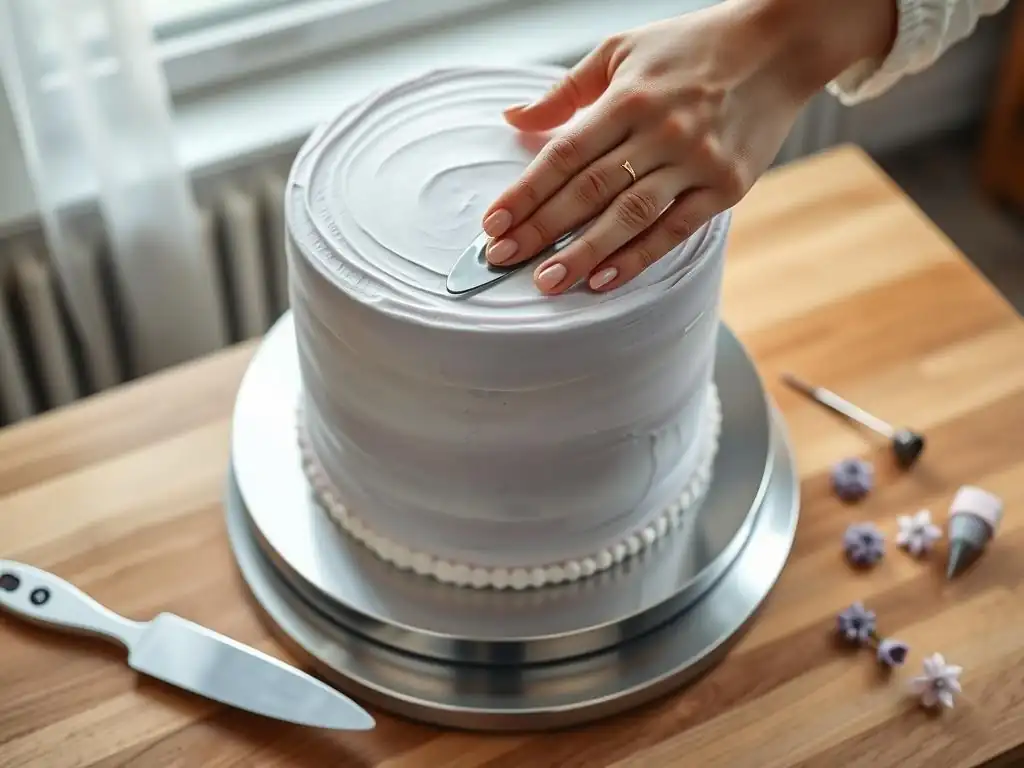
Welcome to BakeWithEase! Are you ready to finally achieve those flawlessly smooth cake sides you've always dreamed of? Unlocking professional-looking results is easier than you think. In this article, we'll unveil the magic of using a cake turntable to master the smooth frosting technique, transforming your baking from good to absolutely stunning. Get ready to elevate your cake decorating game!
- Mastering the Art of Cake Decorating with a Turntable
- Introduction: Achieving Professional Cake Finishes with a Turntable
- Why a Cake Turntable is Essential for Flawless Frosting
- Selecting the Ideal Cake Turntable for Smooth Frosting
- Step-by-Step Guide: Achieving Smooth Cake Sides with a Turntable
- Advanced Techniques: Utilizing the Cake Turntable for Complex Designs
- Troubleshooting Common Cake Turntable Frosting Problems
- Cleaning and Maintaining Your Cake Turntable
- Cake Turntable: Expanding Your Cake Decorating Capabilities
-
Frequently Asked Questions
- What is a cake turntable and why is it useful for frosting cakes?
- How does a cake turntable contribute to a smoother frosting finish?
- What kind of frosting works best with the cake turntable smooth frosting technique?
- Besides a cake turntable, what other tools are helpful for achieving a smooth frosting finish?
- Can beginners easily learn the cake turntable smooth frosting technique?
- Final Reflection: The Enduring Allure of the Perfectly Frosted Cake
- Unlock Perfectly Smooth Cakes: Level Up Your Baking!
Mastering the Art of Cake Decorating with a Turntable
Introduction: Achieving Professional Cake Finishes with a Turntable
Creating a cake that looks as good as it tastes is a significant part of the baking joy. While delicious flavor is paramount, the visual appeal often sets a homemade cake apart and makes it truly special. Achieving those coveted smooth sides, sharp edges, and intricate decorative details can seem daunting, especially for those new to cake decorating. It's a skill that requires practice, patience, and, crucially, the right tools. One tool stands out as a game-changer for anyone serious about elevating their cake finishing game: the cake turntable.
A cake turntable, also known as a rotating cake stand, provides a stable, elevated platform that spins smoothly. This simple mechanism dramatically simplifies the process of applying and smoothing frosting, piping borders, and creating consistent designs around the cake. By allowing you to rotate the cake effortlessly while keeping your decorating hand steady, it transforms tasks that might otherwise feel awkward and challenging into fluid, controlled movements. Mastering the use of a cake turntable is arguably one of the most impactful steps you can take towards achieving professional-looking results right in your own kitchen.
Why a Cake Turntable is Essential for Flawless Frosting
The Benefits of Using a Rotating Cake Stand for Precise Application
Using a rotating cake stand, or cake turntable, offers unparalleled precision when applying frosting and decorations. Instead of awkwardly moving around a stationary cake or trying to spin a heavy cake plate, the turntable allows you to remain in one comfortable position while the cake rotates smoothly before you. This ergonomic advantage means less strain and more focus on the task at hand.
For example, when applying a buttercream crumb coat, you can hold your offset spatula steady against the cake's side and simply turn the turntable, ensuring an even, consistent layer around the entire circumference with minimal effort. This control is vital for setting the foundation for a smooth final coat.
Beyond basic frosting, this precision extends to intricate piping work. Imagine piping a shell border around the base of a cake. Without a turntable, you'd constantly stop, lift, and reposition the cake or yourself. With a cake turntable, you can maintain a continuous piping motion as you rotate the cake, resulting in a much more uniform and professional-looking border. This level of control is difficult, if not impossible, to replicate with a stationary cake, making the turntable an indispensable tool for any serious cake decorator aiming for clean lines and consistent designs.
How a Cake Turntable Ensures Uniform Frosting Thickness
Achieving uniform frosting thickness is a hallmark of a professionally finished cake, and a cake turntable is key to this. When frosting a cake on a rotating stand, you can hold your spatula or bench scraper at a consistent angle and distance from the cake's surface while turning the turntable at a steady pace.
This continuous motion allows the tool to effectively shave off or add frosting as needed, ensuring the layer is evenly thick from top to bottom and all the way around. This is particularly effective when using a bench scraper to smooth the sides; holding the scraper against the cake and rotating the stand creates a perfectly flat, smooth surface.
Contrast this with frosting a cake on a static surface. It's much harder to maintain a consistent angle and pressure with your smoothing tool as you move your body around the cake. You're likely to end up with areas that are too thin, showing cake underneath, or too thick, creating bulges. The smooth, controlled rotation provided by a quality cake turntable eliminates these inconsistencies, making the task of achieving that desired uniform layer significantly easier and more reliable. This contributes directly to the overall aesthetic and texture of the finished cake, enhancing the "cake turntable smooth frosting technique".
Cake Turntable: An Indispensable Tool for All Skill Levels
Whether you're a complete novice attempting your first layer cake or an experienced baker perfecting complex designs, a cake turntable is an incredibly valuable asset. For beginners, it simplifies the fundamental tasks of frosting application and smoothing, making the process less frustrating and more likely to yield satisfying results early on. Learning the basic "cake turntable smooth frosting technique" provides a solid foundation for developing more advanced skills. It helps build muscle memory for steady hands and controlled movements, which are essential for all aspects of cake decorating.
Even seasoned professionals rely heavily on cake turntables for efficiency and precision. For intricate details like stenciling, airbrushing, or creating detailed patterns with combs, the ability to smoothly and precisely rotate the cake is non-negotiable. A high-quality turntable allows for fine adjustments and steady rotation needed for these techniques. While a beginner might start with a simple plastic model, an experienced decorator might invest in a heavy-duty metal turntable for maximum stability and fluidity, demonstrating its utility across the entire spectrum of cake decorating expertise.
Selecting the Ideal Cake Turntable for Smooth Frosting
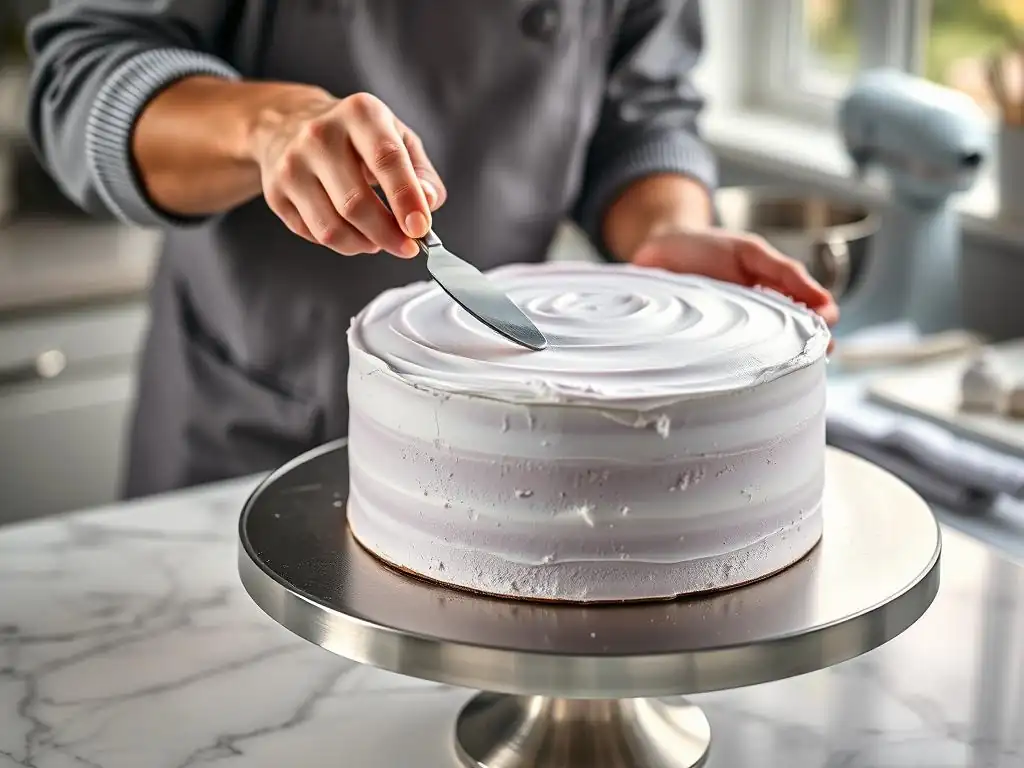
Types of Cake Turntables: Finding the Right Fit for Your Needs
Cake turntables come in various materials and designs, each offering different advantages. Understanding these types can help you choose the best one for your specific needs and budget, especially when focusing on achieving that perfect "cake turntable smooth frosting technique".
Stainless Steel Cake Turntables: Robustness and Precision
Stainless steel cake turntables are often considered the gold standard by many professional bakers. They are typically heavy, providing exceptional stability, which is crucial when working on large or heavy cakes. The weight helps prevent the turntable from wobbling or shifting on your counter.
The bearings in high-quality metal turntables are usually very smooth, allowing for effortless, continuous rotation with minimal friction. This smooth spin is ideal for achieving seamless frosting application and sharp edges. A typical professional-grade stainless steel turntable might weigh between 5 to 10 pounds and have a mechanism designed for years of heavy use, offering precision that justifies a higher price point, often ranging from $50 to over $100.
Polymer Cake Turntables: Lightweight and Cost-Effective
Polymer, or plastic, cake turntables are a popular choice, especially for beginners or those with limited storage space. They are significantly lighter than metal turntables, making them easy to move and store. While generally less stable and potentially less smooth in rotation than their metal counterparts, modern polymer turntables have improved considerably.
Many feature non-slip bases and decent bearing systems that provide adequate rotation for basic frosting and decorating tasks. Their main advantage is affordability, with many good options available for under $30. They are perfectly capable of helping you learn and practice the fundamental "cake turntable smooth frosting technique" on smaller or standard-sized cakes.
Turntables with Locking Mechanisms: Increased Stability
Some cake turntables, regardless of material, come equipped with a locking mechanism or brake. This feature allows you to temporarily fix the turntable in place. While not strictly necessary for all techniques, a lock can be incredibly useful for specific tasks, such as piping details on a single section of the cake, cutting portions, or transporting the frosted cake before the frosting sets.
The ability to stabilize the platform precisely where you need it provides an extra layer of control, preventing accidental rotation that could disrupt delicate work. This feature is particularly beneficial when you need to apply significant pressure or focus on a small area without the cake shifting.
Key Considerations When Choosing a Cake Turntable
Selecting the right cake turntable involves more than just picking a material. Several factors influence its performance and suitability for achieving smooth frosting and overall cake decorating success.
Diameter and Load-Bearing Capacity
Consider the size of the cakes you typically bake. Most standard turntables have a diameter between 10 and 12 inches. This is sufficient for cakes up to about 10 or 11 inches in diameter. If you frequently bake larger cakes, you might need a turntable with a greater diameter to provide adequate support and stability.
Equally important is the load-bearing capacity, especially if you work with multi-tiered or heavily decorated cakes. A sturdy turntable, particularly a heavy-duty metal one, can comfortably support cakes weighing 20 pounds or more, ensuring it doesn't wobble or struggle to rotate under the weight, which is essential for a smooth "cake turntable smooth frosting technique" on larger projects. Check product specifications for weight limits.
Fluidity of Rotation
The smoothness and consistency of the turntable's rotation are paramount for achieving smooth frosting. A turntable with high-quality bearings or a well-engineered mechanism will spin effortlessly and continue rotating for a few seconds after you give it a gentle push. This allows you to hold your smoothing tool steady while the cake spins, creating a perfectly even surface.
A turntable that is jerky, wobbly, or requires constant pushing will make achieving smooth results significantly more difficult. Test the rotation if possible, or read reviews specifically mentioning the smoothness of the spin. A consistent, fluid rotation is the backbone of the "cake turntable smooth frosting technique".
Secure Base
A cake turntable needs a stable base that won't slide around on your counter while you work. Many turntables feature a non-slip ring or feet made of rubber or silicone on the bottom. This prevents the turntable from moving unexpectedly as you apply pressure with spatulas or scrapers.
A sliding turntable can quickly ruin a smooth frosting layer or a delicate piping design. Ensure the base is wide enough to provide stability and has effective non-slip properties, especially if you work on slick surfaces like granite or laminate countertops. The combination of a stable base and smooth rotation makes the "cake turntable smooth frosting technique" much more attainable.
Step-by-Step Guide: Achieving Smooth Cake Sides with a Turntable
Preparing Your Cake and Frosting for Optimal Results
Before you even place your cake on the turntable, proper preparation is key to achieving that coveted smooth finish. The state of your cake and frosting directly impacts the ease and success of the smoothing process using your cake turntable.
Ensuring Level Cake Tiers
Start with level cake layers. Uneven layers create an unstable base and make it incredibly difficult to achieve straight, smooth sides. Use a cake leveler or a serrated knife to carefully trim off any domes from your cooled cake layers. Aim for layers that are uniform in thickness. For instance, if you baked two 8-inch layers, ensure they are both precisely the same height after trimming. A level cake sits evenly on the turntable and provides a consistent surface for frosting application, which is foundational for the "cake turntable smooth frosting technique".
The Importance of a Crumb Coat
A crumb coat is a thin layer of frosting applied to the cake to trap loose crumbs. This is a critical step, especially when aiming for smooth sides. Once the crumb coat is applied, chill the cake in the refrigerator for about 15-30 minutes, or until the frosting is firm to the touch.
This solidifies the crumb coat, creating a stable, crumb-free surface for the final layer of frosting. Skipping this step often results in crumbs getting mixed into your final frosting layer, making it impossible to achieve a truly smooth finish. Think of the crumb coat as the primer before painting – it prepares the surface.
Achieving the Correct Frosting Consistency
The consistency of your frosting is paramount for smooth application. It should be smooth, creamy, and spreadable, but not too soft or too stiff. If it's too soft, it won't hold its shape and will slide off the cake. If it's too stiff, it will be difficult to spread smoothly and will likely tear the cake.
Add a tablespoon of milk or cream at a time to stiff frosting and mix until it reaches the desired consistency – similar to a thick, spreadable peanut butter. Ensure it is free of air bubbles by stirring it vigorously with a spatula after mixing. Proper consistency is a non-negotiable element of the "cake turntable smooth frosting technique".
Efficient Frosting Application Using the Cake Turntable
With your cake and frosting prepared, it's time to leverage your cake turntable for the main event: applying the frosting smoothly. Proper technique here sets you up for success in the final smoothing steps.
Centering the Cake for Balanced Decoration
Place your chilled, crumb-coated cake directly in the center of the cake turntable. Centering is important because it ensures that as the turntable rotates, the cake spins evenly around its true axis. If the cake is off-center, it will wobble as it turns, making it very difficult to apply frosting evenly or use a smoothing tool consistently. Take a moment to visually check that the cake is perfectly aligned in the middle of the turntable before you begin applying the final layer of frosting. This simple step prevents frustration later on.
Applying the Initial Frosting Layer
Using an offset spatula or a large piping bag fitted with a round tip, apply a generous amount of frosting to the top and sides of the cake. Don't worry about making it perfectly smooth at this stage; the goal is simply to get enough frosting onto the cake. For the sides, you can pipe thick vertical lines of frosting around the cake or use an offset spatula to apply dollops and spread them roughly.
Apply more frosting than you think you need; it's easier to remove excess than to add more later without disturbing the layers. Aim for a relatively even layer around the entire cake.
Utilizing an Offset Spatula for a Seamless Surface
Once you have a generous amount of frosting on the cake, use a large offset spatula to gently spread and smooth the top surface first. Hold the spatula flat against the top and rotate the turntable slowly to even out the frosting. For the sides, hold the offset spatula perpendicular to the cake's side, with the blade flat against the frosting. Begin rotating the turntable with one hand while holding the spatula steady with the other.
The rotating cake will allow the spatula to spread the frosting around the sides. Keep adding frosting to any thin spots and continue rotating until the sides are mostly covered and relatively even. This is the initial pass for the "cake turntable smooth frosting technique".
Achieving Impeccably Smooth Sides with Rotation Techniques
This is where the cake turntable truly shines and where you execute the core "cake turntable smooth frosting technique". With a generous, relatively even layer of frosting applied, you can now refine it to a smooth finish.
Mastering the Rotation and Smoothing Process
For the smoothest sides, you'll typically use a bench scraper or a long, straight offset spatula. Hold the smoothing tool against the side of the cake at a slight angle, typically around 45 degrees, with the bottom edge touching the turntable or cake board. Ensure the scraper is perpendicular to the side of the cake.
Now, with one hand holding the scraper steady in place, use your other hand to slowly and consistently rotate the cake turntable. As the cake spins, the scraper will remove excess frosting and fill in any gaps, leaving a smooth surface behind. Maintain steady pressure and a consistent angle throughout the rotation.
Removing Excess Frosting for a Polished Look
As you rotate the turntable and smooth the sides with your scraper, excess frosting will build up on the edge of your tool. Periodically scrape this excess frosting off into a separate bowl using a clean spatula. If you don't remove the buildup, it can drag across the cake and create streaks or unevenness.
After scraping the sides smooth, you'll likely have a small lip of frosting around the top edge of the cake where the side frosting meets the top. Use your offset spatula, held almost flat against the top surface and angled slightly towards the center, to gently pull this lip of frosting inwards towards the center of the cake. Clean your spatula after each swipe for the cleanest result.
Achieving a Professional-Caliber Finish
Repeat the smoothing process on the sides and tidying the top edge as needed until you are satisfied with the smoothness. For an extra-smooth finish, some decorators lightly warm their bench scraper under hot water, dry it completely, and then use it for a final pass. The slight warmth helps the frosting become exceptionally smooth.
The key is consistent, slow rotation of the cake turntable while holding your smoothing tool steady. With practice, you'll develop a feel for the right pressure and speed. This diligent execution of the "cake turntable smooth frosting technique" is what transforms a good cake into a stunning one.
Advanced Techniques: Utilizing the Cake Turntable for Complex Designs
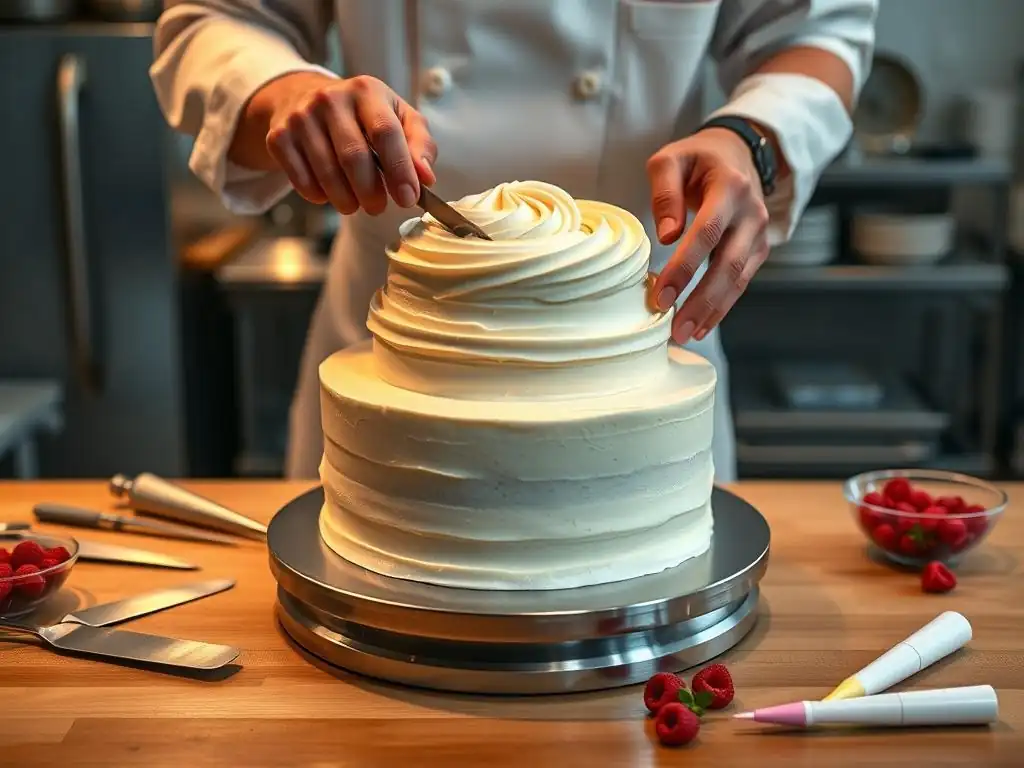
The utility of a cake turntable extends far beyond simply smoothing sides. It becomes an essential partner for more intricate decorating tasks, allowing for precision and consistency in complex designs.
Achieving Sharp, Clean Cake Edges
While smoothing the sides is a primary function, the cake turntable is equally crucial for achieving sharp, professional-looking top edges. After smoothing the sides and pulling in the top lip of frosting, you can use a clean bench scraper or offset spatula to refine the edge. Hold the scraper vertically against the side and the spatula horizontally across the top, meeting at the edge.
Rotate the turntable smoothly while holding your tools steady to create a crisp 90-degree angle or a slightly beveled edge, depending on your desired look. This technique requires a very steady hand and a smooth-rotating turntable, but the result is a clean, defined edge that elevates the cake's appearance significantly.
Enhancing Piping and Decorative Elements with the Turntable
Piping borders, swirls, rosettes, or intricate patterns around the cake becomes significantly easier and more consistent with a cake turntable. Instead of moving around the cake, you can sit or stand comfortably in one spot. Hold your piping bag steady with the tip positioned correctly against the cake, and rotate the turntable smoothly as you apply pressure to the bag.
This allows you to create continuous, even piping around the entire circumference without breaking your rhythm. For instance, piping a consistent shell border on an 8-inch cake might take 30-40 shells. Using the turntable ensures each shell is spaced and sized similarly, a level of uniformity hard to achieve otherwise.
Creating Varied Frosting Textures with Rotation
Beyond perfectly smooth, the cake turntable enables the creation of various textured finishes with ease. Techniques like using a cake comb to create ridged patterns, applying a rustic swirl with an offset spatula, or even using specific tools for wood grain or basketweave effects all rely on the consistent rotation provided by the turntable.
You hold the texturizing tool against the frosting and rotate the cake at a steady speed to imprint the pattern evenly around the sides. For example, using a specific cake comb on a 9-inch cake and rotating the turntable allows you to create uniform vertical or horizontal ridges quickly and effectively, adding visual interest to the "cake turntable smooth frosting technique".
Troubleshooting Common Cake Turntable Frosting Problems
Even with a cake turntable, you might encounter issues when frosting. Knowing how to identify and fix common problems will save you time and frustration, ensuring you can still achieve a great result with your "cake turntable smooth frosting technique".
Addressing Uneven Frosting: Causes and Remedies
Uneven frosting is often caused by inconsistent pressure or angle when smoothing, or by not having enough frosting on the cake initially. If you see thin spots or areas where the cake shows through, it's likely you didn't apply enough frosting in that area or you pressed too hard with your smoothing tool. To fix this, add more frosting to the thin spots using a small offset spatula, ensuring there's enough material to work with.
Then, go back to your bench scraper or large offset spatula, hold it at the correct angle and pressure, and rotate the turntable again to re-smooth the area. Ensure your turntable's rotation is smooth; a jerky spin can also cause unevenness.
Eliminating Air Pockets in Frosting
Air pockets create unsightly bumps and holes in your smooth frosting finish. They are usually caused by incorporating too much air when making or coloring the frosting, or by not properly preparing the frosting before application. To minimize air pockets, vigorously stir your frosting with a spatula against the side of the bowl for several minutes to "de-bubble" it before you start frosting the cake.
If you encounter air pockets during smoothing, you can gently press on them with your spatula to release the air and then smooth over the area. For stubborn holes left behind, fill them with a tiny bit of fresh frosting and re-smooth the section using your bench scraper and the turntable.
Preventing Cake Slippage on the Turntable
A cake slipping on the turntable is frustrating and can damage your frosting. This usually happens if the cake board or the bottom of the cake is wet or greasy, or if the turntable doesn't have a good non-slip base. To prevent slippage, always place your cake on a slightly smaller cake board (about 1/2 inch smaller than the cake diameter) and secure the cake to the board with a dollop of frosting before placing the board on the turntable.
Ensure both the bottom of the cake board and the surface of the turntable are clean and dry. If your turntable lacks a non-slip base, you can place a damp (not wet) kitchen towel or a piece of non-slip matting underneath it for added stability while performing the "cake turntable smooth frosting technique".
Cleaning and Maintaining Your Cake Turntable
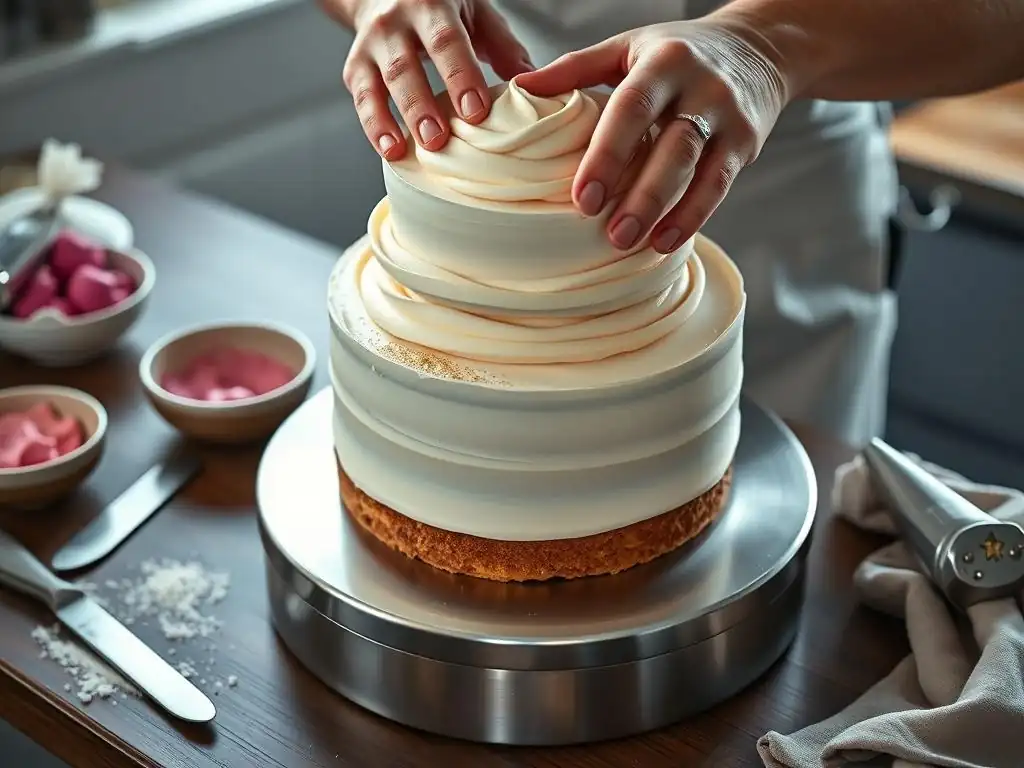
Proper cleaning and maintenance will ensure your cake turntable remains a reliable tool for achieving that "cake turntable smooth frosting technique" for years to come. Different materials require slightly different care.
Recommended Cleaning Methods
For stainless steel turntables, cleaning is usually straightforward. After use, scrape off any excess frosting immediately. Wash the turntable by hand using warm, soapy water and a soft sponge or cloth. Avoid abrasive scrubbers that could scratch the surface or damage the bearings. Rinse thoroughly and dry completely with a clean towel to prevent water spots and rust, especially around the bearing mechanism. For polymer turntables, most are also best washed by hand with warm, soapy water. Some might be dishwasher safe, but check the manufacturer's instructions. Always clean your turntable promptly after use before frosting hardens.
Storage Guidelines for Longevity
Proper storage is key to maintaining the condition and smooth rotation of your cake turntable. Store it in a clean, dry place. Avoid storing heavy items on top of it, especially if it's a polymer turntable, as this could warp the platform or damage the bearings. If you have a metal turntable with exposed bearings, ensure they stay dry and free of debris.
Some turntables come with a storage box, which is ideal. If not, consider storing it upside down or in a way that protects the rotating mechanism from dust and potential damage. Keeping it clean and stored correctly ensures it's always ready for your next "cake turntable smooth frosting technique" session.
Cake Turntable: Expanding Your Cake Decorating Capabilities
Beyond Smooth Sides: Using Your Turntable for Airbrushing, Stenciling, and More
While mastering the "cake turntable smooth frosting technique" is a fundamental skill, the turntable's utility extends much further. It's an indispensable tool for a variety of advanced cake decorating techniques. When airbrushing a cake, placing it on a turntable allows you to rotate it smoothly while applying an even mist of color, ensuring uniform coverage and gradients. Stenciling on the sides of a cake becomes significantly easier; you can hold the stencil in place with one hand and rotate the cake slowly with the other while applying frosting, royal icing, or airbrush color.
The turntable also facilitates creating drip effects, applying sprinkles or edible glitter evenly around the sides, and even assembling multi-tiered cakes by allowing easy access to all sides for doweling and stacking. Its ability to provide a stable, rotating platform simplifies tasks that would be awkward and difficult on a stationary surface, truly expanding the range of decorative finishes you can achieve. Investing in and learning to use a cake turntable effectively is one of the best decisions you can make to improve the look of your baked creations.
Frequently Asked Questions
What is a cake turntable and why is it useful for frosting cakes?
A cake turntable is a rotating platform used for decorating cakes. It's useful because it allows you to easily rotate the cake, providing consistent access to all sides for achieving smooth frosting.
How does a cake turntable contribute to a smoother frosting finish?
Using a turntable allows for consistent pressure and angle when applying frosting. This enables you to create a uniform layer without having to constantly reposition yourself or the cake.
What kind of frosting works best with the cake turntable smooth frosting technique?
While you can use various frostings, buttercream is often preferred due to its smooth consistency and ease of manipulation. However, ganache and whipped cream can also be successfully used with proper technique.
Besides a cake turntable, what other tools are helpful for achieving a smooth frosting finish?
Essential tools include an offset spatula for applying the frosting and a bench scraper or frosting smoother to create a clean, even surface. Proper preparation of the cake layers is also crucial.
Can beginners easily learn the cake turntable smooth frosting technique?
Yes! With practice and the right tools, even beginners can master the technique. BakeWithEase provides step-by-step guides and tips to help you achieve professional-looking results at home.
Final Reflection: The Enduring Allure of the Perfectly Frosted Cake
The quest for the flawlessly smooth cake frosting remains a timeless pursuit, and the humble cake turntable has emerged as a surprisingly powerful tool in achieving this culinary perfection. Its impact extends far beyond simply making frosting easier; it represents a commitment to detail and a dedication to creating something beautiful and delicious. The seemingly simple act of rotating a cake becomes a meditative process, a testament to the artistry involved in baking.
The cake turntable's influence transcends the kitchen; it symbolizes the pursuit of excellence in any creative endeavor. The meticulous attention to detail required to achieve a smooth finish mirrors the dedication needed in other aspects of life. It’s a reminder that even the smallest tools can yield extraordinary results with patience and practice. Perfection is not attainable, but if we chase perfection we can catch excellence.
- Vince Lombardi. This quote perfectly encapsulates the spirit of cake decorating and the role the turntable plays in helping us strive for that excellence.
So, the next time you find yourself facing a blank canvas – or rather, a frosted cake – remember the power of the cake turntable. Don't just frost a cake; craft a masterpiece. Embrace the process, appreciate the small details, and let the smooth, even surface be a reflection of your own dedication and skill. The journey to a perfectly frosted cake is a journey of self-discovery, a testament to the magic that can be found in the simplest of tools, and a delicious reward for your efforts.
Unlock Perfectly Smooth Cakes: Level Up Your Baking!
Thanks for taking the time to explore the world of cake turntable magic! You've now learned how this simple tool can transform your baking. Ready to take your cake decorating skills to the next level?
- Master the art of frosting: Practice your swirling, piping, and smoothing techniques using your turntable – you'll be amazed at the difference!
- Share your creations: Post a picture of your perfectly frosted cake on social media and tag us @BakeWithEase – we'd love to see your results!
- Explore creative frosting designs: Challenge yourself to try a new technique or design you've always admired.
What's your favorite cake design to try with a turntable? Let's discuss in the comments below!