
Baking French Pastries in Different Climates: Tips & Tricks

Welcome to BakeWithEase, your haven for all things baking! Ever wondered how climate impacts your favorite French pastries? This article dives deep into the science and secrets of French pastry baking climates, offering invaluable tips and tricks to ensure perfect results, no matter where you are. Intrigued? Let's unlock the secrets to consistently delightful croissants and éclairs, even when the weather's not cooperating!
- Baking French Pastries in Coastal vs. Mountainous Climates: Tips & Tricks
- Introduction to Baking French Pastries in Varied Altitudes and Humidity
- Adapting French Pastry Recipes for Coastal and Mountainous Climates
- Key French Pastries and Their Climate Sensitivity
- Essential Tools and Equipment for Climate-Conscious Baking
- Ingredient Adjustments for Optimal Results
- Troubleshooting Common Baking Problems Related to Climate
- Expert Tips from BakeWithEase for Climate Adaptation
- Conclusion: Mastering French Pastry Baking Regardless of Climate
-
Frequently Asked Questions
- How does humidity affect French pastry baking?
- What adjustments should I make to my French pastry recipes in a dry climate?
- Does temperature play a significant role in French pastry baking?
- What ingredients are most sensitive to climate changes when baking French pastries?
- How can I adapt my oven for optimal French pastry baking in different climates?
- Final Reflection: The Enduring Allure of French Pastries Across Climates
- Unlock Your Inner Pâtissier: Master French Pastry Baking Anywhere!
Baking French Pastries in Coastal vs. Mountainous Climates: Tips & Tricks
Introduction to Baking French Pastries in Varied Altitudes and Humidity
Baking French pastries is a delicate dance, requiring precision and an understanding of how ingredients interact. When you introduce varying environmental factors like altitude and humidity, this dance becomes even more complex. Whether you're attempting classic croissants, delicate macarons, or airy choux pastry, the air pressure and moisture content in your surroundings can significantly impact the outcome. Mastering French pastry baking in different climates is a rewarding challenge that elevates your skills.
Understanding these environmental influences is the first step towards consistent results. A recipe perfected at sea level in a dry climate might fail dramatically in the humid air of a coastal city or the thin air of a mountain town. This section will lay the groundwork for understanding these forces before we dive into specific adjustments for successful French pastry baking climates.
Why Altitude and Humidity Matter for French Pastry Baking Success
Altitude and humidity are silent partners in your baking process, influencing everything from ingredient hydration to how your dough rises and how your finished product sets. At higher altitudes, lower atmospheric pressure causes baked goods to rise faster and dry out quicker. Conversely, in high humidity, the air is saturated with moisture, which can make doughs sticky, prevent crisp crusts, and affect leavening.
For delicate French pastries, which often rely on precise ratios, careful temperature control, and specific textures (like the crisp shell of a macaron or the flaky layers of a croissant), these environmental factors are critical. Ignoring them can lead to cracked macarons, collapsed choux puffs, or dense, heavy croissants, making successful French pastry baking climates a key consideration.
Understanding the Impact of Air Pressure and Moisture on Pastry Dough
Air pressure directly affects how gases expand during baking. At lower pressures found at high altitudes, leavening agents (like baking powder, baking soda, yeast, or steam) work more efficiently, causing doughs and batters to rise more rapidly. While this might sound good, if the structure isn't strong enough to support this rapid rise, the baked goods can over-expand and then collapse. Lower boiling points of liquids at altitude also mean moisture evaporates faster, leading to dryness.
Humidity, the amount of water vapor in the air, primarily impacts ingredient hydration and the baking environment. High humidity can cause flour to absorb more moisture even before mixing, affecting dough consistency. During baking, high humidity in the oven cavity can slow down crust formation, potentially leading to soggy bottoms or tops, particularly in pastries like tarts or quiches. Low humidity, common in mountainous or arid regions, can dry out dough surfaces, preventing proper rise and potentially causing cracking. These are crucial factors in French pastry baking climates.
Adapting French Pastry Recipes for Coastal and Mountainous Climates
Successfully baking French pastries requires more than just following a recipe; it demands adaptation based on your environment. The same recipe will yield different results in the humid air of Miami compared to the dry air of Denver. Understanding the specific challenges of coastal (high humidity) and mountainous (low air pressure, often low humidity) climates allows you to make targeted adjustments for perfect French pastry baking climates.
This section provides practical strategies and specific adjustments for tackling the unique conditions presented by different altitudes and humidity levels. We'll explore how to modify ingredient ratios, adjust baking temperatures and times, and handle delicate doughs like those used for croissants and choux pastry, ensuring your French pastry baking climates don't dictate your success.
Baking in Coastal Climates: Strategies for Success (High Humidity)
Coastal areas are often characterized by high humidity, sometimes exceeding 70-80%. This excess moisture in the air can make doughs sticky and challenging to handle. It also affects how baked goods brown and crisp up in the oven. For French pastry baking climates with high humidity, the goal is often to manage this extra moisture and ensure proper structure and texture develop.
Strategies include reducing liquid content in the recipe, adjusting flour types, and modifying baking techniques to encourage moisture release and proper crust formation. Tackling high humidity is key to achieving that coveted flaky or crisp texture in many French pastries.
Reducing Moisture Content in Doughs and Batters
In high humidity, flour and other dry ingredients naturally absorb more moisture from the air. This means the liquid amount specified in a standard recipe might result in a dough or batter that is too wet and sticky. A common adjustment is to slightly reduce the liquid component – water, milk, or eggs – by about 1-2 tablespoons per cup of liquid called for, or approximately 5-10% of the total liquid.
For example, if a croissant recipe calls for 1 cup (240ml) of milk, you might start by using 7/8 cup (approx. 210ml) and add more only if the dough feels too dry. Similarly, a macaron recipe in high humidity might require slightly less aged egg whites, or the batter might need to be mixed slightly longer to achieve the correct consistency. This careful reduction helps compensate for the atmospheric moisture absorbed by the ingredients.
Choosing the Right Flour for High Humidity Environments
Flour's protein content affects how much liquid it absorbs and the strength of the gluten structure it forms. In humid climates, using a flour with slightly lower protein content than specified might be beneficial, as it will absorb less moisture overall. However, for pastries requiring strong structure like croissants or choux, you still need adequate protein.
A common approach for French pastry baking climates with high humidity is to use the specified flour but be prepared to adjust the liquid. Alternatively, some bakers find success by using a blend of flours or ensuring their flour is stored in an airtight container to minimize pre-absorption of moisture. For delicate items like macarons, ensuring your almond flour is dry is paramount; spreading it thinly on a baking sheet and drying it in a low oven (around 200°F or 90°C) for 10-15 minutes can help.
Oven Temperature Adjustments for High Humidity Climates
High humidity in the oven cavity can slow down the rate at which water evaporates from the surface of your pastry, hindering crust formation. To counteract this in French pastry baking climates, some bakers increase the initial oven temperature slightly (perhaps by 10-15°F or 5-8°C) for the first 5-10 minutes of baking. This burst of heat helps set the exterior and encourages steam to escape, promoting a crispier crust.
After the initial high-temperature phase, reduce the oven temperature to the recipe's specified temperature for the remainder of the baking time. Using a convection setting, if available, can also help by circulating hot, dry air around the pastries, accelerating evaporation and improving browning and crisping in humid conditions.
Baking in Mountainous Climates: Preventing Collapse and Dryness (Low Air Pressure)
High altitude, typically considered above 3,000 feet (approx. 900 meters), presents a different set of challenges for French pastry baking climates. The lower atmospheric pressure means gases expand more readily, causing doughs to rise faster. The lower boiling point of water (around 203°F or 95°C at 5,000 ft / 1,500m, compared to 212°F or 100°C at sea level) causes liquids to evaporate faster, leading to dry baked goods.
Adjustments for high-altitude French pastry baking climates focus on controlling the rapid rise and preventing excessive moisture loss. This often involves modifying leavening agents, increasing hydration, and adjusting oven temperature and baking time.
Adjusting Leavening Agents for Lower Air Pressure
Because gases expand more at high altitude, recipes often require a reduction in chemical leavening agents like baking powder and baking soda. Too much leavening will cause the pastry to rise too quickly, potentially resulting in a fragile structure that collapses or a coarse, open texture. A general rule of thumb is to reduce baking powder by 1/8 to 1/4 teaspoon per teaspoon called for in the recipe, and baking soda by a similar amount.
For yeast-leavened doughs like croissants or brioche, less yeast might be needed, or the proofing time might need to be shortened. Monitoring the dough's rise visually rather than strictly adhering to time is crucial. You want the dough to rise just until it's doubled, not over-proof, which can weaken the gluten structure.
Hydration Techniques for Doughs and Batters at High Altitude
The faster evaporation of liquids at high altitude means that doughs and batters can dry out quickly, leading to tough or crumbly results. To combat this in French pastry baking climates, it's often necessary to increase the liquid content slightly. This could mean adding an extra tablespoon or two of milk, water, or egg per cup of liquid in the recipe, or about a 5-10% increase in total liquid.
Adding an extra egg can also provide needed moisture and structure. For delicate batters like choux pastry or macarons, ensuring adequate hydration is key to achieving the correct consistency and preventing cracking or collapse during baking. Kneading dough slightly less might also help prevent over-developing gluten, which can exacerbate dryness at altitude.
Lowering Oven Temperature and Increasing Baking Time
To prevent pastries from over-rising and drying out too quickly at high altitude, it's common to lower the oven temperature and increase the baking time. Lowering the temperature (typically by 15-25°F or 8-14°C) allows the interior of the pastry to set and the structure to develop more gradually, keeping pace with the rapid expansion caused by lower pressure.
Increasing the baking time compensates for the lower temperature, ensuring the pastry is cooked through and properly browned. For example, a croissant baked at sea level for 18 minutes at 400°F (200°C) might need 22-25 minutes at 375°F (190°C) at high altitude. This adjusted baking process is vital for successful French pastry baking climates at elevation.
Key French Pastries and Their Climate Sensitivity
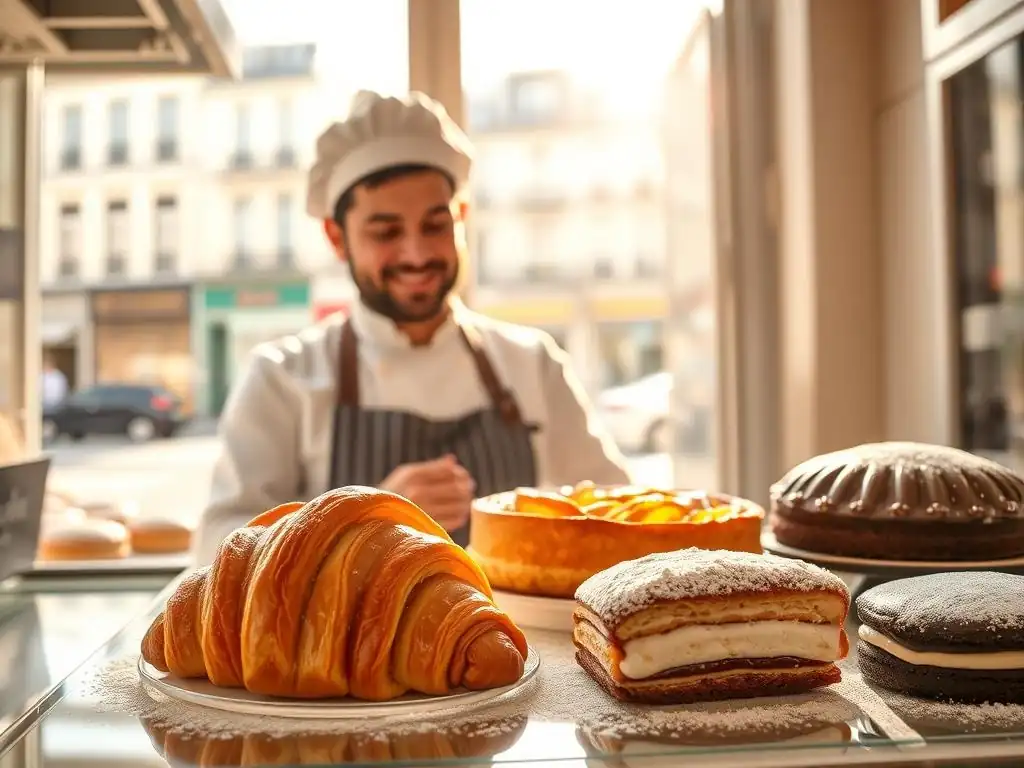
Some French pastries are notoriously sensitive to climate conditions. Their reliance on specific textures achieved through precise techniques makes them excellent case studies for understanding the impact of altitude and humidity. Macarons, croissants, and choux pastry are three prime examples where mastering French pastry baking climates is absolutely essential for success.
Exploring the specific challenges and solutions for these iconic pastries offers valuable insights that can be applied to other delicate baked goods. Let's look at how these favorites fare in varying conditions and the specific adjustments needed.
Macarons: The Ultimate Climate Test
Macarons are perhaps the most temperamental French pastry when it comes to climate. Achieving the perfect crisp shell, tender interior, and distinct "foot" relies heavily on the drying (or 'curing') process and precise baking. Both high humidity and low air pressure can wreak havoc on macaron shells, making them a true test of your French pastry baking climates adaptation skills.
Humidity prevents the shells from forming a proper skin, leading to cracking, lack of feet, or hollow shells. Low air pressure can cause them to rise too quickly and crack before the skin is fully set.
Troubleshooting Macaron Shells in Coastal vs. Mountainous Climates
In high humidity (coastal climates), the primary challenge is getting the macaron shells to form a dry skin before baking. This skin is crucial for directing the rise downwards and creating the foot.
- Coastal Tips: Increase drying time significantly (from the usual 30-60 minutes to 2-3 hours, or even longer). Use a fan directed towards the shells to aid air circulation and drying. Consider baking on cooler days or running a dehumidifier in your kitchen. Some bakers slightly reduce the liquid in the meringue (e.g., hold back a tiny bit of egg white).
In mountainous climates (low air pressure), the shells might rise and crack before the surface has dried sufficiently.
- Mountainous Tips: Ensure shells dry completely before baking. Lower the oven temperature slightly (10-15°F / 5-8°C) and bake for a minute or two longer. Some high-altitude recipes might slightly reduce the amount of meringue or sugar to create a more stable batter.
Achieving Perfect Macaron Feet Regardless of Altitude and Humidity
The "foot" of a macaron is the ruffled base that lifts slightly during baking. It's a sign of a properly executed recipe and technique, heavily influenced by French pastry baking climates.
- Humidity: If shells are too wet, steam can't escape downwards, leading to no feet or cracked tops. Ensure adequate drying time and potentially use the initial higher temperature oven method mentioned earlier.
- Altitude: Rapid expansion can cause the foot to form too quickly and potentially be uneven or blow out. Proper drying and the lower temperature/longer bake time adjustment help manage the rise and promote even foot development.
Regardless of climate, proper macaronage (the folding technique) is key. The batter should flow like lava, not be too stiff or too runny.
Croissants: Mastering Lamination in Varying Temperatures and Humidity
Croissants rely on perfect lamination – layers of dough separated by butter – to create their signature flaky texture. This process is incredibly sensitive to temperature and humidity, making croissant French pastry baking climates especially challenging. The butter must remain cold and pliable enough to be rolled into thin layers without melting into the dough.
High temperatures and humidity make keeping the butter cold difficult, leading to messy lamination and a bread-like texture instead of flaky layers. Low humidity can dry out the dough surface during resting periods, hindering expansion.
Controlling Butter Temperature for Optimal Lamination
The ideal temperature for butter during lamination is typically between 50-55°F (10-13°C). It should be firm but bend without breaking.
- Coastal/Warm Climates: This is challenging. Work quickly. Use high-fat European butter (82% fat) as it has a higher melting point than standard American butter (80% fat). Chill dough and butter block thoroughly between folds, potentially chilling for longer periods (45-60 minutes) than standard recipes. Consider laminating during the coolest part of the day.
- Mountainous/Cool Climates: Butter might be too hard and crack. Let the butter block sit at room temperature for a few minutes to become pliable before incorporating. Ensure your kitchen isn't too cold.
Proofing Croissants in Warm Humid vs. Cool Dry Climates
Proofing is the final rise before baking, crucial for developing flavor and achieving a light texture.
- Coastal/Warm Humid Climates: Dough will proof much faster. Watch the croissants closely; they are ready when slightly puffed and jiggly, not doubled in size. Over-proofing in humidity leads to a weak structure that collapses in the oven. Keep the proofing environment slightly cooler if possible (75°F / 24°C is ideal).
- Mountainous/Cool Dry Climates: Dough might proof slower and dry out on the surface. Create a humid, warm proofing environment. A proofing box is ideal, or place pastries in a turned-off oven with a pan of hot water. Monitor closely to prevent drying. The lower air pressure might cause them to look larger than expected when fully proofed.
Choux Pastry: Preventing Collapse at High Altitude
Choux pastry, used for éclairs and cream puffs, relies on steam to create a large, hollow cavity. The dough is cooked on the stovetop, then eggs are beaten in, creating a thick paste. This paste is piped and baked at high temperatures.
At high altitude, the steam forms and expands more aggressively due to lower air pressure. If the exterior crust isn't set quickly enough, the pastry can over-expand and then collapse, resulting in flat or deflated puffs. This is a common issue in high-altitude French pastry baking climates.
Baking Choux Pastry for a Crisp Texture in All Climates
Achieving a crisp exterior is key for choux.
- High Humidity: High oven humidity can slow down crust formation. Starting with a slightly higher temperature (e.g., 425°F / 220°C) for the first 10-15 minutes helps, followed by reducing it (to around 375-400°F / 190-200°C) to cook the interior. Using a convection oven helps circulate air.
- Low Humidity/Altitude: Dough can dry out on the surface before it fully expands, potentially causing cracking. Ensure the dough has the correct consistency (not too dry). The high altitude adjustment of lower temperature/longer time (e.g., starting at 400°F / 200°C then reducing to 350-375°F / 175-190°C) helps the structure set gradually.
Ensuring Proper Expansion and Hollow Cavities
Proper expansion and hollow cavities are the goal for choux.
- Altitude: To prevent collapse due to rapid expansion, ensure the dough is well-mixed with enough eggs to create a strong structure. Reduce the initial high baking temperature slightly (e.g., start at 400-415°F / 200-215°C instead of 425-450°F / 220-230°C) and increase the overall baking time. This allows the crust to set more firmly before the maximum expansion occurs. Resist the urge to open the oven door during the initial high-heat phase!
- Humidity: While less prone to collapse than at altitude, choux in high humidity might take longer to dry out internally. Ensure they are baked until completely firm and light when lifted. Turning off the oven and propping the door open for 10-15 minutes at the end of baking can help them dry out further and maintain crispness.
Essential Tools and Equipment for Climate-Conscious Baking
While mastering technique is crucial, having the right tools can make adapting to French pastry baking climates much easier. Certain pieces of equipment provide valuable information or help control variables that are affected by your environment. Investing in these tools can significantly improve your consistency and success rate, regardless of whether you're dealing with coastal humidity or mountainous altitude.
These tools don't need to be expensive or complex, but they offer insights and control that are difficult to achieve otherwise. They empower you to make informed adjustments to your French pastry baking climates strategy.
Investing in a Reliable Oven Thermometer
Oven calibration is notoriously inconsistent, and external temperature fluctuations caused by climate can exacerbate this. An inexpensive, oven-safe thermometer placed inside your oven provides an accurate reading of the actual temperature, which is often different from what the oven dial indicates.
Knowing the true temperature is critical for French pastry baking climates, especially when making temperature adjustments for altitude or humidity. For example, if your oven runs 25°F hot, and you've already planned to reduce the temperature by 20°F for high altitude, you'd need to adjust your dial setting accordingly based on the thermometer reading to hit your target temperature. This prevents guesswork and ensures your pastries bake at the intended temperature.
Using Humidity and Temperature Gauges for Precision
A simple hygrometer (humidity gauge) and thermometer in your kitchen can provide crucial data about your environment. Knowing the exact humidity percentage helps you decide how much to adjust liquid content or drying times, particularly for sensitive items like macarons or puff pastry.
Understanding the ambient temperature is also vital, especially when working with temperature-sensitive doughs like croissant or puff pastry. If your kitchen is warmer or cooler than ideal, you can anticipate how it will affect dough temperature and adjust chilling times accordingly. This data is invaluable for making precise decisions about French pastry baking climates adaptations.
Choosing the Right Baking Sheets and Pans
The material and color of your baking sheets affect how quickly and evenly heat is transferred to the pastry. For climate-conscious baking:
- Light-colored, heavy-gauge aluminum sheets are generally preferred as they conduct heat evenly and prevent bottoms from browning too quickly. This is especially helpful at high altitude where rapid browning can occur before the interior is cooked.
- Parchment paper or silicone mats are essential for preventing sticking and promoting even heat distribution. They also provide a non-stick surface, which is important for delicate pastries like macarons.
- Perforated baking sheets can be beneficial for pastries that rely on good air circulation for crispness, like choux or croissants, especially in humid environments where drying is slower.
Ingredient Adjustments for Optimal Results
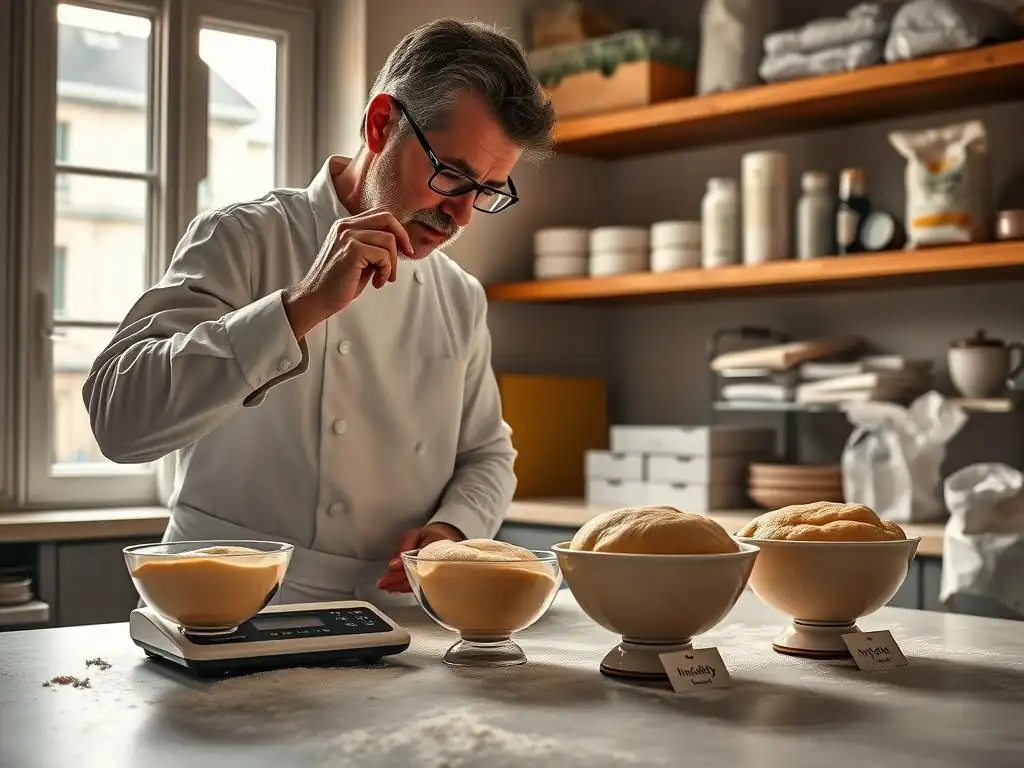
Beyond simply adjusting liquids, the specific types and ratios of ingredients can also be modified to better suit different French pastry baking climates. Flour, sugar, and fat all behave differently depending on the surrounding temperature and humidity, and making informed choices or adjustments can significantly impact the final texture and structure of your French pastries.
Understanding the properties of your key ingredients in relation to climate is a powerful tool for consistent success. Let's look at how flour, sugar, and fat can be tweaked for French pastry baking climates.
Flour Selection: Protein Content Adjustments
Flour's protein content dictates its gluten-forming potential. Higher protein flours (like bread flour, 12-14% protein) develop strong gluten networks, while lower protein flours (like pastry or cake flour, 8-10% protein) result in more tender baked goods.
- High Altitude: Sometimes, slightly higher protein flour or adding a small amount of vital wheat gluten (1 teaspoon per cup of flour) can help strengthen the gluten structure to support the faster rise caused by lower pressure, preventing collapse.
- High Humidity: As mentioned earlier, using the specified flour but adjusting liquid is often best. However, ensuring flour is fresh and stored properly is key, as aged flour can absorb more moisture.
For delicate pastries like macarons, using finely ground almond flour is non-negotiable. Ensure it is dry and lump-free, regardless of climate.
Sugar Considerations: Hygroscopic Properties
Sugar is hygroscopic, meaning it attracts and retains moisture from the air. This property is particularly relevant in humid climates.
- High Humidity: Sugar can absorb moisture, making it clumpy and potentially affecting how it dissolves in batters and doughs. Storing sugar in airtight containers is crucial. In some very high humidity situations, slightly reducing the sugar content (by 5-10%) might be considered, though this can affect sweetness and browning.
- Low Humidity/Altitude: Sugar's moisture-retaining property can be beneficial, helping to keep baked goods moist. No major adjustments are typically needed here based on sugar's hygroscopic nature alone, but the ratio of sugar to other ingredients might be adjusted as part of overall hydration changes.
For French pastry baking climates, using superfine or castor sugar can help it dissolve more easily, which is beneficial in all conditions but particularly where ingredient interaction might be affected by moisture levels.
Fat Content: Butter vs. Shortening in Different Climates
Fat contributes tenderness, flavor, and flakiness. Butter, with its water content (around 18%) and specific melting point, is essential for the laminated layers in croissants and puff pastry. Shortening (100% fat) creates tenderness but not flakiness in the same way.
- High Humidity/Warm Climates: Using high-fat European butter (82% fat) is highly recommended for lamination as it melts slower than standard 80% fat butter, making it easier to work with in warmer conditions. Ensuring butter is at the correct temperature is paramount.
- Low Humidity/Cool Climates: Standard butter (80% fat) is usually fine. The challenge might be keeping it pliable enough if the kitchen is very cold.
For pastries where creaming butter and sugar is involved (like some cake-based pastries), the temperature of the butter and the kitchen affects emulsification. Slightly warmer butter might be needed in a cold climate, and slightly cooler butter in a warm, humid one.
Even with adjustments, you might encounter issues when baking French pastries in different climates. Recognizing the signs of climate-related problems is the first step to correcting them. Understanding why a pastry is soggy, dry, or unevenly baked often points back to the influence of altitude or humidity.
This section addresses some frequent problems encountered when tackling French pastry baking climates and offers specific troubleshooting techniques to help you get back on track.
Soggy Pastries: Identifying the Cause and Finding Solutions
Soggy bottoms or overall lack of crispness is a common issue in high-humidity French pastry baking climates.
- Cause: High humidity in the oven prevents the surface moisture from evaporating quickly enough to form a crisp crust. Insufficient baking time or temperature can also contribute.
- Solutions:
- Ensure adequate initial high heat (as discussed for choux and general baking).
- Use a convection oven setting if available.
- Bake pastries until they are truly done – they should look well-browned and feel light.
- Consider using perforated baking sheets.
- For tarts or quiches, blind baking the crust fully before adding the filling can help prevent a soggy bottom.
- After baking, allow pastries to cool on a wire rack immediately to allow air circulation.
Dry and Crumbly Pastries: Rehydration Techniques
Dryness is a hallmark of baking in low-humidity or high-altitude French pastry baking climates due to faster moisture evaporation.
- Cause: Insufficient liquid in the recipe for the environment, over-baking, or dough drying out during proofing/resting.
- Solutions:
- Increase liquid content in the recipe slightly (as discussed for high altitude).
- Ensure dough surfaces are covered during resting and proofing to prevent drying (plastic wrap, damp towel).
- Lower the oven temperature and increase baking time to allow the interior to cook without the exterior drying out too quickly.
- Avoid over-mixing dough, which can over-develop gluten and lead to toughness and dryness.
Uneven Baking: Oven Temperature and Placement Adjustments
Uneven baking can happen in any oven, but climate factors can exacerbate it by affecting how heat is distributed and how quickly different parts of a pastry cook.
- Cause: Hot spots in the oven, overcrowding the baking sheet, or placing sheets too close to heat sources. In high-altitude French pastry baking climates, the faster rise can sometimes lead to uneven expansion.
- Solutions:
- Use an oven thermometer to identify hot spots and ensure the oven is calibrated correctly.
- Rotate baking sheets halfway through the baking time to ensure even exposure to heat.
- Avoid overcrowding baking sheets; leave space between pastries for air circulation.
- Ensure baking sheets are placed on appropriate rack levels (usually the middle rack is best for even heat).
- For high-altitude, ensure dough is properly proofed (not over-proofed) and the initial temperature adjustment is made to control the rapid rise.
Expert Tips from BakeWithEase for Climate Adaptation

At BakeWithEase, we believe that understanding your environment is just as important as understanding your ingredients. Tackling French pastry baking climates can feel daunting, but with a few strategic approaches, you can significantly improve your results. Here are some of our top tips gleaned from years of baking in varied conditions.
These insights are designed to provide practical, actionable advice that complements the specific adjustments we've discussed, helping you master French pastry baking climates wherever you are.
Using a Convection Oven for Even Baking in Humid Climates
Convection ovens use a fan to circulate hot air, which helps to distribute heat more evenly and also speeds up the evaporation of moisture from the surface of baked goods. This is particularly advantageous in high-humidity French pastry baking climates.
The circulating dry heat promotes faster crust formation and more even browning, helping to combat sogginess and achieve that desired crisp or flaky texture in pastries like croissants, choux, and tarts. If your oven has a convection setting, experiment with using it, potentially reducing the temperature by 25°F (approx. 14°C) from the standard recipe and checking for doneness a bit earlier.
Adjusting Baking Powder for High Altitude
As previously mentioned, adjusting leavening is crucial at high altitude. For every teaspoon of baking powder specified in a recipe, reduce it by approximately 1/8 to 1/4 teaspoon when baking above 3,000 feet.
For example, if a recipe calls for 2 teaspoons of baking powder, start by using 1 and 3/4 teaspoons, or even 1 and 1/2 teaspoons if you are at a very high elevation (like 7,000+ feet / 2,100m). Monitor your results and adjust further in subsequent bakes. This controlled reduction helps prevent the pastry from rising too quickly and collapsing in the lower atmospheric pressure common in mountainous French pastry baking climates.
Rotating Baking Sheets for Consistent Results
Even in a perfectly calibrated oven, heat distribution can vary. Rotating your baking sheets halfway through the baking time ensures that all pastries on the sheet receive equal exposure to the oven's heat.
This simple step helps prevent uneven browning, ensures that pastries cook through evenly, and is a good practice regardless of climate. However, it's particularly helpful when making climate-related temperature or time adjustments, as it reduces the risk of some pastries overcooking or undercooking compared to others on the same sheet, leading to more consistent results across your batch in any French pastry baking climates.
Conclusion: Mastering French Pastry Baking Regardless of Climate
Baking French pastries in different climates presents unique challenges, but none are insurmountable. By understanding the fundamental ways that altitude and humidity affect ingredients and the baking process, you can make targeted adjustments to your recipes and techniques. From managing moisture in coastal humidity to controlling rapid expansion at mountainous altitudes, adaptation is the key to success.
Embracing these environmental factors as part of the baking journey, rather than obstacles, opens up a world of possibilities. With careful observation, smart adjustments, and a willingness to experiment, you can achieve beautiful, delicious French pastries no matter where you are.
Embracing Climate Challenges for Baking Excellence
Think of French pastry baking climates not as problems, but as variables in your recipe. Just as you adjust baking time based on how your oven performs, you learn to adjust hydration, leavening, and temperature based on the air around you. Each bake is an opportunity to learn more about how your specific environment interacts with the delicate science of pastry.
Document your adjustments and results. Did reducing liquid by 10% work in the humidity? Did lowering the temperature by 20°F prevent collapse at altitude? Building this personal database of knowledge specific to your French pastry baking climates will make future bakes more predictable and successful. It's a journey towards becoming a truly versatile baker.
Continuing Your French Pastry Baking Journey with BakeWithEase
Navigating the nuances of French pastry baking climates is a continuous learning process. BakeWithEase is here to support you every step of the way, providing guides, recipes, and troubleshooting tips tailored to help you succeed in various conditions. Our goal is to demystify the process and empower you to bake with confidence, no matter the weather or elevation.
Keep exploring new recipes, keep experimenting with adjustments, and keep refining your technique. The satisfaction of pulling a perfect batch of climate-adapted French pastries from your oven is immense. We encourage you to use the knowledge gained here to tackle your next baking project and master French pastry baking climates with ease.
Frequently Asked Questions
How does humidity affect French pastry baking?
High humidity can significantly impact French pastry baking by causing dough to become sticky and difficult to handle. It can also affect the rise and texture of baked goods, often resulting in a less desirable outcome.
What adjustments should I make to my French pastry recipes in a dry climate?
In dry climates, your dough may dry out quicker. You may need to add more liquid to your recipes to maintain the correct consistency. Also, consider covering your dough while it rests to prevent it from drying out.
Does temperature play a significant role in French pastry baking?
Yes, temperature is crucial. Warmer temperatures can accelerate yeast activity in bread doughs, while butter-based pastries like croissants require cold temperatures to maintain distinct layers. Always follow the recipe's temperature guidelines closely.
What ingredients are most sensitive to climate changes when baking French pastries?
Butter and flour are particularly sensitive. Butter's melting point is affected by temperature, while flour absorbs moisture differently depending on humidity. Adjusting these can greatly improve baking success.
How can I adapt my oven for optimal French pastry baking in different climates?
Ensure your oven temperature is accurate with an oven thermometer. Adjust baking times as needed, as pastries may bake faster or slower depending on humidity and altitude. Consider using a baking stone for even heat distribution.
Final Reflection: The Enduring Allure of French Pastries Across Climates
The delicate art of French pastry baking, far from being confined to Parisian kitchens, thrives—and adapts—in diverse climates worldwide. The seemingly simple act of creating a croissant or macaron becomes a fascinating dance between precision, ingredient selection, and the subtle nuances of atmospheric conditions. This exploration has revealed the crucial role climate plays in achieving the perfect texture and flavor, highlighting the need for adaptable techniques to ensure consistent results regardless of location.
The impact of climate on baking is more than just a technical challenge; it's a testament to the enduring power of culinary tradition. The quest for the perfect croissant, for example, transcends geographical boundaries, uniting bakers across continents in a shared pursuit of excellence. This shared passion, this dedication to perfecting a craft, speaks to something deeper than just a recipe. The most beautiful thing we can experience is the mysterious. It is the source of all true art and science.
- Albert Einstein. This quote, while not directly about baking, speaks to the mystery and artistry involved in mastering a craft influenced by such unpredictable factors as humidity and temperature.
Consider the lessons learned within these pages. You now possess the knowledge to navigate the challenges posed by your unique climate, to adjust your techniques, and to ultimately achieve the exquisite results you desire. Don't let your location limit your culinary aspirations. Embrace the challenge, experiment with the techniques discussed, and discover the joy of creating perfect French pastries, no matter where you are in the world. The journey of a thousand croissants begins with a single, perfectly formed, climate-conscious fold.
Unlock Your Inner Pâtissier: Master French Pastry Baking Anywhere!
Thanks for joining us on this delicious journey into the world of French pastries! We hope you’ve gained valuable insights and confidence in tackling these delectable treats, no matter your climate. Now it's time to put your new knowledge to the test!
- Bake your dream French pastry today! Choose your favorite recipe (or try a new one!) and get baking. Embrace the challenge, and savor the rewarding results.
- Share your baking adventures! Snap a picture of your masterpiece and share it on social media using #BakeWithEaseFrenchPastries. Let’s inspire each other!
- Explore our community forum: Connect with other passionate bakers and ask any lingering questions you might have about tackling different climates and ingredients.
Ready to create your own Parisian-style patisserie? What unique ingredient will you experiment with next?