
Overhauling Your Oven Calibration for Consistent Cookie Results

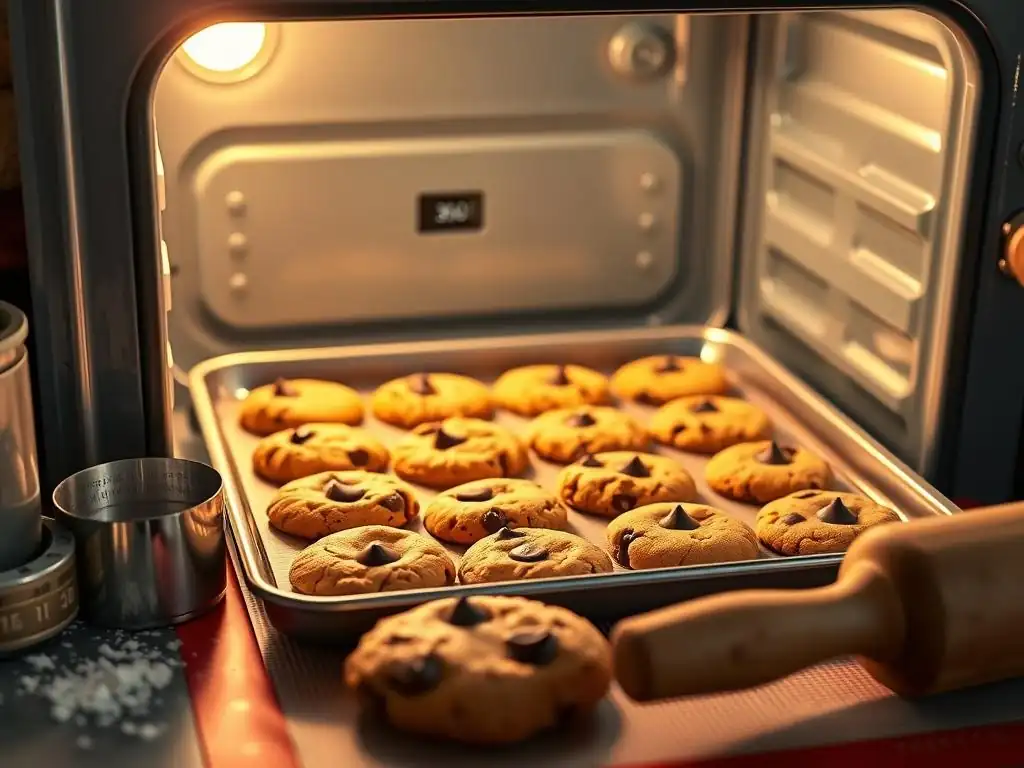
Welcome to BakeWithEase, where baking bliss begins! Are you tired of unpredictable bakes? Discover the secret to consistently perfect results: consistent oven temperature baking. Overhauling Your Oven Calibration is the key to unlocking a new level of baking confidence, starting with those finicky cookies. Ready to banish burnt edges and undercooked centers? Let's dive in and transform your baking game!
Baking perfect cookies is a delightful process, but often the biggest hurdle isn't the recipe itself, but the performance of your oven. Achieving that coveted golden-brown edge and soft, chewy center relies heavily on a consistent oven temperature baking environment. Without it, even the best dough can yield disappointing results – think burnt bottoms, pale tops, or uneven textures. Understanding how your oven works and ensuring its accuracy is a foundational step to mastering cookie baking and ensuring consistent results batch after batch.
- Understanding Oven Temperature and Its Impact on Cookie Baking
- Diagnosing Oven Calibration Issues: A Step-by-Step Approach
- The Ultimate Guide to Calibrating Your Oven for Baking Success
- Troubleshooting Common Oven Calibration Problems
- Mastering Cookie Baking with a Properly Calibrated Oven
- Maintaining Your Oven's Calibration for Long-Term Baking Excellence
- Advanced Techniques for Consistent Cookie Baking
- Frequently Asked Questions
- Final Reflection: The Key to Baking Success Lies in Calibration
- Unlock Your Baking Potential: Perfect Cookies Every Time!
The temperature inside your oven is perhaps the single most critical factor determining the outcome of your cookies. A difference of just 25°F (approx. 14°C) from the recipe's specified temperature can dramatically alter spread, texture, and color. Too hot, and your cookies might burn on the edges before the center is cooked; too cool, and they could spread excessively, remain pale, or turn out cakey instead of chewy. Achieving a consistent oven temperature baking environment is key to predictable and delicious results.
Accurate oven temperature is fundamental for controlling the chemical reactions that occur during baking. For instance, fats melt, sugars caramelize, and leavening agents like baking soda and baking powder activate at specific temperatures and rates. If your oven runs hotter than the dial indicates, these reactions can happen too quickly, leading to cookies that spread too much, brown unevenly, or become overly crisp. Conversely, if it runs too cool, your cookies might not spread enough, remain pale, or take much longer to bake, potentially drying out in the process.
Consider a classic chocolate chip cookie recipe that calls for 350°F (approx. 175°C). If your oven is actually at 375°F (approx. 190°C), the edges might set and brown too fast, preventing the center from finishing properly or causing the entire cookie to become brittle. If it's only at 325°F (approx. 160°C), the cookies might spread into thin wafers or remain underbaked in the middle even after extended time. A consistent oven temperature baking approach is essential for recipes to perform as intended, ensuring your cookies have the desired texture, shape, and color every time.
Identifying Temperature Inconsistencies in Your Oven
Recognizing that your oven might not be heating accurately is the first step towards fixing the problem. Common signs include batches of cookies that consistently bake faster or slower than the recipe suggests, or cookies that look drastically different from batch to batch even when using the same dough and baking sheet. Sometimes, you might notice that cookies placed on one side of the baking sheet bake faster than those on the other, indicating uneven heat distribution.
Another tell-tale sign is when the internal oven light seems to struggle or flicker, or if the heating element cycles on and off very rapidly or very slowly. While these aren't direct temperature readings, they can sometimes hint at underlying issues affecting the oven's ability to maintain a stable temperature. Paying close attention to how your cookies look and behave during the baking process provides valuable clues about your oven's performance and whether it's delivering a consistent oven temperature baking environment.
Several specific outcomes point directly to a need for oven calibration. If your cookies consistently burn on the bottom but are pale on top, your oven likely runs hot. If they spread excessively and remain pale even after the recommended baking time, it might be running cool. Uneven browning across a single baking sheet, where cookies on the back are significantly darker than those in the front, indicates hot spots that need addressing.
Furthermore, if you've tried multiple reliable cookie recipes and consistently get unpredictable results regarding bake time, spread, or texture, your oven's internal thermostat is likely inaccurate and requires calibration. This is especially true if you've verified your technique, ingredients, and recipe measurements. Ensuring a consistent oven temperature baking setup is paramount for eliminating oven variability as a factor in your baking results.
Diagnosing Oven Calibration Issues: A Step-by-Step Approach
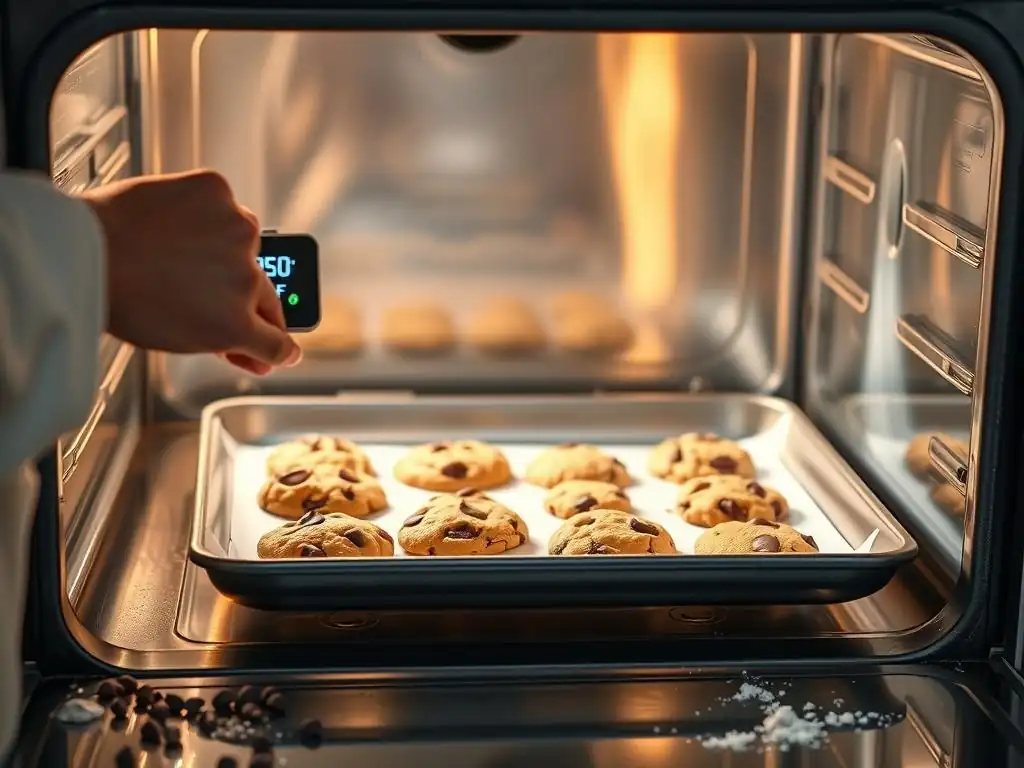
Before you can fix an oven calibration problem, you need to accurately diagnose it. Relying solely on the oven's built-in thermostat dial can be misleading, as these can drift over time. The most reliable way to understand your oven's true temperature and identify inconsistencies is by using external tools and simple tests. This diagnostic phase is crucial for establishing a baseline before attempting any adjustments.
Using an Oven Thermometer for Accurate Temperature Readings
The simplest and most effective tool for diagnosing oven temperature issues is an inexpensive, oven-safe thermometer. Place a reputable oven thermometer near the center of your oven rack, away from the walls or heating elements. Preheat your oven to a common baking temperature, such as 350°F (approx. 175°C), and let it preheat for at least 20-30 minutes after the preheat indicator light or sound goes off. This allows the oven to fully stabilize its temperature.
Once the oven has stabilized, check the reading on your external thermometer. Compare this reading to the temperature set on your oven's dial. If the external thermometer consistently reads significantly higher or lower than the set temperature (e.g., 20-30°F or more difference), your oven's thermostat is likely inaccurate and requires calibration. Repeating this test at a couple of different temperatures (like 325°F and 400°F) can help confirm the extent of the discrepancy and whether it's consistent across the temperature range, which is vital for achieving consistent oven temperature baking.
Recognizing Hot Spots and Cold Spots Within Your Oven
Beyond just checking the average temperature, it's important to identify if your oven heats evenly. Hot spots and cold spots are common, even in calibrated ovens, but significant variations can ruin a batch of cookies. To test for this, you can use the toast test. Arrange slices of plain white bread or shredded coconut evenly across a baking sheet that fills most of your oven rack. Place the sheet in a preheated oven (say, 350°F/175°C) and bake until the bread/coconut starts to brown, usually 5-10 minutes.
Observe the browning pattern. Areas that brown significantly faster or darker indicate hot spots, while areas that remain pale suggest cold spots. This test provides a visual map of your oven's heat distribution. Knowing where these inconsistencies lie is crucial for baking, as you might need to rotate your baking sheets halfway through the baking time to ensure even results. Addressing significant hot spots might involve professional repair, but understanding them helps manage your baking process for more consistent oven temperature baking outcomes.
Testing for Temperature Fluctuations During Baking
Even if your oven reaches the set temperature and heats relatively evenly, its ability to maintain that temperature throughout the baking cycle is critical. Ovens naturally cycle on and off to regulate temperature, but excessive fluctuations can impact delicate items like cookies. Use your oven thermometer and monitor its reading over a 15-20 minute period after the oven has fully preheated to a set temperature (e.g., 350°F/175°C).
Watch the thermometer as the heating element cycles. A typical oven might fluctuate by +/- 15-25°F (approx. 8-14°C) around the set point. However, if the temperature swings are much larger (e.g., 40-50°F or more), or if the oven consistently drops significantly below the set temperature and takes a long time to recover, this instability will make achieving consistent cookie results difficult. While some fluctuation is normal, excessive swings point to a need for potential calibration or even repair to ensure a stable and consistent oven temperature baking environment.
The Ultimate Guide to Calibrating Your Oven for Baking Success
Once you've diagnosed your oven's temperature issues using an external thermometer, you can often recalibrate it yourself. Most modern ovens have a built-in calibration setting that allows you to adjust the displayed temperature up or down to match the actual temperature reading from your external thermometer. This process can significantly improve the accuracy and consistency of your oven's heating, leading to much better baking results.
Locating Your Oven's Calibration Settings: A Detailed Walkthrough
The exact method for accessing your oven's calibration settings varies significantly depending on the brand and model. Typically, you'll need to consult your oven's user manual. Look for sections related to "Settings," "Options," "Calibration," or "Temperature Adjustment." Common methods involve pressing and holding specific buttons on the control panel, such as "Bake" and "Temp" simultaneously, or navigating through a digital menu using buttons like "Settings," "Clock," or "Timer."
If you don't have your manual, search online using your oven's specific model number (usually found around the oven door frame or storage drawer). Manufacturers often provide digital versions of manuals. Once you locate the calibration setting, it will usually allow you to adjust the displayed temperature by a certain number of degrees, often in increments of 5°F or 10°F (approx. 3°C or 5°C), either upwards or downwards from the current setting. Understanding how to access this feature is the first hurdle in achieving consistent oven temperature baking.
Adjusting the Oven Temperature: A Precise Calibration Process
To adjust the temperature, you'll use the information gathered from your oven thermometer test. If your external thermometer read 320°F when the oven was set to 350°F, your oven is running 30°F (approx. 17°C) cool. You would then adjust the calibration setting to increase the temperature by 30°F. If your oven only allows adjustments in 5°F increments, you'd adjust it by +30. If it allows direct temperature input, you'd set the calibration offset to +30°F.
Follow the steps in your manual to make the adjustment. After saving the new setting, it's crucial to re-test. Preheat the oven to 350°F again, let it stabilize for 20-30 minutes with the external thermometer inside, and check the reading. You may need to repeat the adjustment process a couple of times, making smaller tweaks (e.g., 5-10°F increments) until the external thermometer reading consistently matches the set temperature on the oven's display. This precise adjustment is key to establishing a reliable and consistent oven temperature baking environment.
Verifying the Calibration: Ensuring Accurate Baking Temperatures
After making adjustments, verification is essential. Preheat your oven to a standard baking temperature like 350°F (approx. 175°C) and allow it to stabilize for at least 30 minutes with your oven thermometer inside. The external thermometer should now read very close to the temperature displayed on your oven's control panel, ideally within +/- 5-10°F (approx. 3-5°C).
Repeat this verification at one or two other common baking temperatures, such as 325°F (approx. 160°C) and 400°F (approx. 200°C). While calibration often corrects the discrepancy across the entire temperature range, it's good to confirm. If the readings are consistently close to the set temperatures, your oven is now calibrated! This confirmed accuracy means you can trust your oven's display and recipe temperatures, paving the way for consistent cookie results and much more reliable baking outcomes.
Troubleshooting Common Oven Calibration Problems
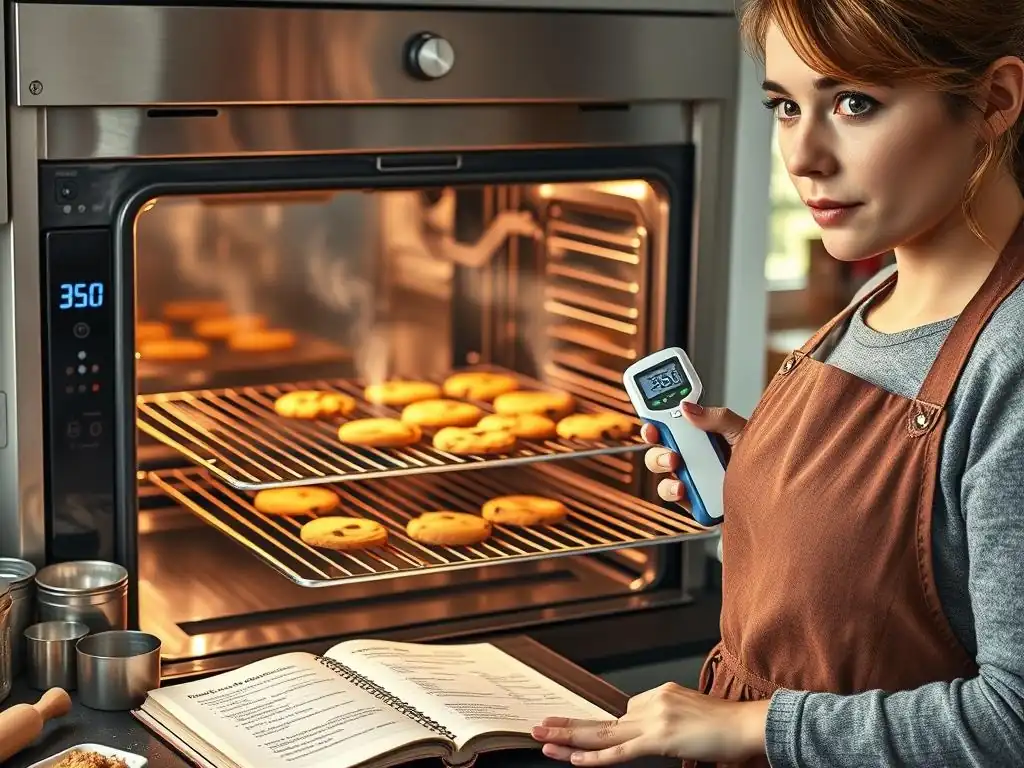
While calibrating your oven can significantly improve accuracy, sometimes you might encounter issues during or after the process. Ovens are complex appliances, and various factors can interfere with temperature regulation. Knowing how to troubleshoot common problems can help you determine if further action, like professional repair, is needed to achieve consistent oven temperature baking.
Dealing with Ovens That Won't Calibrate
If you follow your oven's manual and cannot access or adjust the calibration settings, or if the oven simply doesn't respond to the adjustments you make, there might be a deeper issue. Check that the control panel isn't locked or that you're not in a special mode (like Sabbath mode) that might disable settings changes. Ensure you are following the manual's steps precisely, as the sequence of button presses can be critical.
If the calibration feature seems unresponsive or missing, it could indicate a problem with the control board or the thermostat sensor itself. In older or simpler models, calibration might not be a user-adjustable feature at all. In such cases, achieving consistent oven temperature baking might require compensating for the known temperature discrepancy by adjusting recipes or considering professional repair to address the underlying hardware issue.
Addressing Persistent Temperature Fluctuations After Calibration
Even after successfully calibrating the average temperature, you might still observe significant temperature swings (e.g., >30°F or 17°C) around the set point, as seen on your external thermometer during the cycling test. While some fluctuation is normal due to the heating element turning on and off, excessive swings can still lead to uneven baking and make consistent cookie results challenging.
Persistent, large fluctuations often indicate a problem with the oven's thermostat sensor (thermocouple or thermistor) or the control board that regulates the heating element cycles. The sensor might not be accurately reading the internal temperature, or the control board might not be reacting appropriately. While cleaning the sensor (if accessible and safe) can sometimes help, persistent fluctuations usually require professional diagnosis and repair to restore a stable and consistent oven temperature baking environment.
Professional Oven Repair vs. DIY Calibration: When to Seek Help
Attempting DIY oven calibration using the built-in settings is a great first step and often resolves common accuracy issues. However, there are times when calling a professional appliance repair technician is necessary. If your oven:
- Won't heat at all.
- Heats to extreme temperatures (dangerously hot or very low).
- Displays error codes related to temperature sensors or heating elements.
- Has persistent, large temperature fluctuations even after calibration attempts.
- Cannot be accessed for calibration according to the manual.
- Is very old and showing signs of wear on components.
While calibration adjusts the display to match the actual temperature, it doesn't fix underlying hardware problems like a faulty sensor or control board. If your diagnostic tests point to these issues, or if you're uncomfortable working with appliances, professional repair is the safer and more effective route to ensure a truly consistent oven temperature baking environment.
With your oven now calibrated and maintaining a consistent temperature, you're ready to experience a new level of baking success. A reliable oven removes a major variable, allowing you to focus on your ingredients, technique, and recipe nuances. This consistency means you can trust baking times and temperatures specified in recipes, leading to predictable and delightful results every time you bake cookies.
Even with a calibrated oven, a few techniques can further enhance even baking. Always allow your oven to fully preheat and stabilize for at least 20-30 minutes after it indicates it's ready. This ensures the air and oven walls are at the correct temperature. Use high-quality, light-colored baking sheets; dark sheets absorb more heat and can lead to burnt bottoms. Avoid overcrowding the baking sheet, allowing space for air circulation around each cookie.
If your oven still shows minor hot spots (as identified by the toast test), rotate your baking sheet halfway through the baking time. For example, if baking for 12 minutes at 350°F (approx. 175°C), rotate the sheet 180 degrees after 6 minutes. Using parchment paper not only prevents sticking but also helps insulate the bottom of the cookies slightly, promoting more even browning. These simple practices, combined with a consistent oven temperature baking environment, help ensure every cookie on the sheet bakes perfectly.
Adjusting Baking Times Based on Calibrated Oven Temperature
While your oven is now calibrated to the correct temperature, remember that baking times in recipes are always approximate. Factors like the size and thickness of your cookies, the specific ingredients used, and even altitude can affect how quickly they bake. Use the recipe's baking time as a guideline, but start checking for doneness a few minutes early.
Look for visual cues: golden-brown edges, centers that appear set (though they may still look slightly soft), and tops that are no longer glossy. If your calibrated oven consistently bakes cookies faster or slower than multiple recipes suggest (perhaps due to your specific dough composition or desired texture), you can make a mental note to adjust the time accordingly for future batches. The key is that the bake time will now be consistent and predictable thanks to your consistent oven temperature baking setup.
Recipes That Shine with Consistent Oven Temperature
Recipes that are particularly sensitive to temperature fluctuations benefit most from a calibrated oven. This includes delicate cookies like French macarons (which require precise temperature control for their feet), thin and crisp cookies (where slight variations can cause burning), and thick, chewy cookies (where achieving a set edge and soft center is a narrow window).
Even standard drop cookies like sugar cookies or snickerdoodles will show a marked improvement in consistency regarding spread, texture, and color across batches. With a reliable oven temperature, you can confidently experiment with different recipes and techniques, knowing that your oven is no longer the unpredictable variable. Achieving consistent oven temperature baking opens up a world of reliable and successful cookie adventures.
Maintaining Your Oven's Calibration for Long-Term Baking Excellence
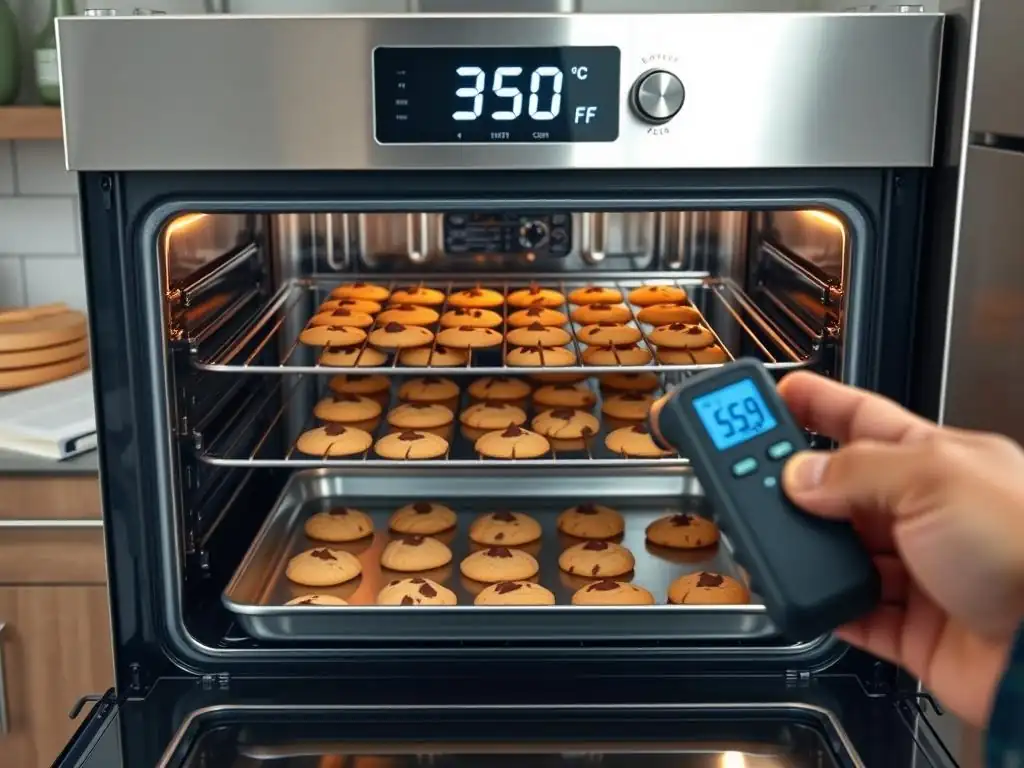
Calibrating your oven isn't necessarily a one-time fix. Like any appliance, components can age or become dirty, potentially affecting performance over time. Regular maintenance is key to ensuring your oven continues to provide a consistent oven temperature baking environment for years to come. Integrating oven care into your baking routine will pay off with consistently excellent results.
Regular Oven Cleaning and Its Effect on Temperature Accuracy
A dirty oven can impact its performance. Spills and debris on the oven floor or walls can absorb heat, create smoke, and even interfere with the thermostat sensor's ability to accurately read the internal temperature. Excessive buildup around the heating elements can also affect how efficiently they heat.
Regularly cleaning your oven according to the manufacturer's instructions (using self-cleaning cycles or manual cleaning methods) helps maintain optimal performance. Pay special attention to cleaning around the temperature sensor if it's visible and accessible (usually a small probe inside the oven cavity), ensuring it's free from grease or food splatter. A clean oven operates more efficiently and helps maintain the consistent oven temperature baking accuracy you worked to achieve.
Preventative Measures to Avoid Future Calibration Issues
While you can't prevent all oven issues, some preventative measures can help maintain accuracy. Avoid slamming the oven door, as this can potentially jar the thermostat sensor or heating elements. Be careful not to scratch or damage the sensor during cleaning. When spills occur, clean them up promptly to prevent buildup, especially around critical components.
Using baking sheets and dishes that are appropriate for your oven's size and avoiding blocking vents can also contribute to better air circulation and more even heating. While these measures won't stop a sensor from eventually aging, they help ensure that external factors aren't contributing to temperature inaccuracies or uneven heating, supporting your goal of consistent oven temperature baking.
Re-Calibrating Your Oven: A Periodic Check-Up for Consistent Results
Even after initial calibration, it's a good practice to periodically check your oven's accuracy, perhaps once or twice a year, or if you start noticing inconsistencies returning in your baking. Use your oven thermometer to perform the temperature check at a standard baking temperature like 350°F (approx. 175°C) after a 30-minute stabilization period.
If the external thermometer reading has drifted significantly from the set temperature again (e.g., more than 10-15°F), it's time to repeat the calibration process. This periodic check-up ensures that any minor drift in the thermostat is corrected before it starts impacting your baking results. Making re-calibration a part of your routine maintenance helps guarantee long-term consistent oven temperature baking excellence.
Beyond basic calibration and maintenance, some advanced techniques and equipment can further enhance the consistency of your cookie baking, especially if your oven still has minor temperature variations or hot spots. These methods help distribute heat more evenly and provide a more stable baking surface.
Using Baking Stones or Sheets for Even Heat Distribution
A baking stone or a thick steel baking sheet placed on a lower rack (or the rack below your cookie sheet) can act as a heat reservoir. Once preheated for at least 30-60 minutes, this stone or steel radiates consistent heat upwards, helping to minimize temperature swings and providing a more stable thermal environment above it.
When you place your cookie sheet on the rack above the preheated stone or steel, the radiant heat helps ensure the bottoms of your cookies bake evenly and prevents the temperature from dropping too drastically when you open the oven door. This technique is particularly useful in ovens with noticeable temperature fluctuations or hot spots on the bottom, contributing to more consistent oven temperature baking around your delicate cookies.
If your oven has a convection setting, it uses a fan to circulate hot air, which can lead to faster and more even baking. However, convection heat is more intense than conventional radiant heat. When baking cookies using convection, you typically need to either reduce the baking temperature or shorten the baking time compared to a conventional oven.
A common guideline is to reduce the temperature by 25°F (approx. 14°C) or decrease the baking time by 25%. For example, if a recipe calls for 350°F for 12 minutes in a conventional oven, you might try 325°F for 9-10 minutes with convection. Monitor your first batch closely, as the exact adjustment needed can vary by oven. Convection can be excellent for achieving consistent browning and crisp edges, but mastering it requires understanding its impact and making appropriate adjustments based on your calibrated oven and desired cookie texture for consistent oven temperature baking.
Understanding the Maillard Reaction and Oven Temperature
The Maillard reaction is a complex chemical process responsible for the browning and development of rich flavors in baked goods, including cookies. It primarily occurs between amino acids and reducing sugars at temperatures typically above 300°F (approx. 150°C). The rate and extent of the Maillard reaction are highly dependent on temperature and moisture levels.
If your oven temperature is too low, the Maillard reaction might not occur sufficiently, resulting in pale, underdeveloped flavors. If it's too high, the reaction can happen too quickly, leading to burnt exteriors before the interior is properly cooked. A consistent oven temperature allows you to control this crucial reaction, ensuring your cookies develop that perfect golden-brown color and delicious caramelized flavor profile consistently from batch to batch. Understanding this process highlights why achieving consistent oven temperature baking is fundamental to both the appearance and taste of your cookies.
Frequently Asked Questions
An inaccurate oven temperature can lead to uneven baking, resulting in cookies that are burnt on the bottom or raw in the middle. It can also affect the cookie's texture and overall appearance.
What are some signs that my oven might be out of calibration?
Signs include cookies consistently burning on one side, taking longer or shorter to bake than the recipe specifies, or a noticeable difference between the set temperature and the actual temperature.
How can I check my oven's temperature accuracy?
Use an oven thermometer placed in the center of the oven. Compare the thermometer reading to the set temperature after the oven has preheated. Repeat this process several times at different temperature settings.
What are the steps involved in calibrating my oven?
Refer to your oven's manual for specific instructions, but generally, it involves adjusting a calibration screw or setting located on the temperature dial or control panel. This allows you to modify the displayed temperature to match the actual temperature.
How often should I calibrate my oven for optimal baking results?
It's recommended to check and calibrate your oven every 6-12 months, or whenever you notice inconsistencies in your baking results. Drastic changes in weather can also impact oven calibration.
Final Reflection: The Key to Baking Success Lies in Calibration
In the world of baking, achieving consistent oven temperature is not just a technical necessity; it is the cornerstone of culinary success. As we explored throughout this article, the precision of your oven calibration directly impacts the outcome of your baked goods, particularly when it comes to creating the perfect cookie. In an age where home baking has surged in popularity, understanding how to maintain that ideal temperature can transform your baking experience from frustrating to fulfilling.
Calibrating your oven is more than just a task; it is a commitment to excellence in the kitchen. The influence of this practice extends beyond individual recipes, shaping the very culture of baking itself. As we strive for perfection in our cookies, we also cultivate a deeper appreciation for the art of baking.
> “Baking is both an art and a science, and mastering the science is what leads to the art.” This quote encapsulates the journey of every baker who seeks to elevate their skills through knowledge and practice. By ensuring our ovens are calibrated correctly, we not only enhance our baking results but also contribute to a community that values quality and consistency.
As you reflect on the insights shared in this article, I invite you to take action. Consider your own baking practices and the role that oven calibration plays in your results. Whether you're a seasoned baker or just starting, embracing the importance of consistent oven temperature can lead to delightful discoveries in your kitchen. So, take a moment to check your oven's calibration, experiment with your favorite cookie recipes, and enjoy the sweet rewards of your efforts. Remember, every perfectly baked cookie is a testament to your dedication and passion for the craft.
Thanks for taking the time to learn how to calibrate your oven for consistently delicious cookies! You’ve gained valuable knowledge that will transform your baking. Now, let’s put it into action.
- Take the Oven Calibration Challenge: This week, bake your favorite cookie recipe using your newly calibrated oven. Note any differences in baking time and texture. Share your results in the comments below!
- Experiment with a New Recipe: Once you're confident in your oven's calibration, try a more challenging cookie recipe—perhaps one with a delicate texture or specific baking requirements.
- Share Your Success (or Struggles!): Connect with our BakeWithEase community and post your baking photos – let's celebrate successes and problem-solve together!
What’s your biggest baking challenge, and how will improved oven calibration help you overcome it?