
Dealing with Warped Baking Sheets for Even Cookie Bakes

Welcome to BakeWithEase.com!
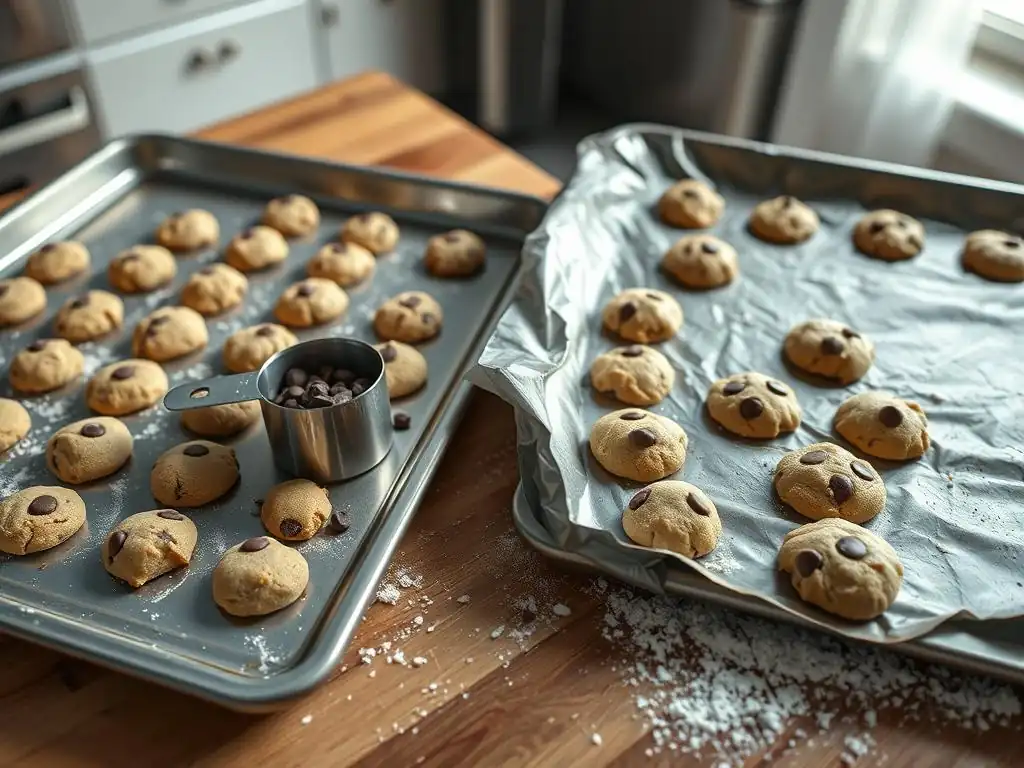
Ever wondered if that slightly warped baking sheet is secretly sabotaging your perfect cookie dreams? Don't let uneven baking ruin another batch! Discover the secrets to achieving consistently delicious cookies, even when battling those pesky warped sheets. Dive in to learn practical tips and clever hacks that will transform your baking game.
- Achieving Even Bakes with Imperfect Baking Sheets
- Introduction: The Baking Sheet Challenge
- Understanding Baking Sheet Imperfections: Causes and Prevention
- Troubleshooting Imperfect Baking Sheets: Solutions for Even Bakes
- Choosing Quality Baking Sheets to Minimize Imperfections
- Repairing or Replacing Imperfect Baking Sheets: Determining Viability
- Achieving Consistent Bakes Despite Imperfect Baking Sheets: Final Tips
-
Frequently Asked Questions
- How does a warped baking sheet affect my cookie bake?
- Can I fix a warped baking sheet?
- What type of baking sheet is least likely to warp?
- How can I prevent my baking sheets from warping in the first place?
- If I can't replace my warped baking sheet right now, what can I do to still bake cookies evenly?
- Final Reflection: The Pursuit of Perfectly Even Cookies
- Unlock Perfectly Even Cookies: Your Baking Sheet Upgrade Awaits!
Achieving Even Bakes with Imperfect Baking Sheets
Introduction: The Baking Sheet Challenge
Baking delicious cookies depends on many factors, from the quality of your ingredients to the precision of your measurements. However, one often overlooked element that significantly impacts the outcome is the baking sheet itself. A perfectly flat baking sheet ensures even heat distribution, leading to cookies that bake uniformly across the surface. But what happens when your trusted baking sheet develops a wobble, a buckle, or a permanent curve? This common issue, often referred to as warping, can turn a simple cookie bake into a frustrating experience, resulting in burnt edges and underbaked centers.
Understanding why baking sheets warp and how to mitigate their effects is key to achieving consistent results. Whether you're a novice baker or working to perfect your signature chocolate chip recipe, dealing with warped baking sheets cookie bake outcomes requires knowledge of the underlying causes and effective troubleshooting techniques. This article will guide you through identifying, understanding, preventing, and ultimately, overcoming the challenges posed by imperfect baking sheets to ensure your cookies turn out perfectly every time.
Why Uneven Baking Occurs with Imperfect Baking Sheets
Uneven baking on a warped sheet stems directly from inconsistent heat transfer. When a baking sheet warps, it lifts away from the oven rack in certain areas, creating air gaps. Air is a poor conductor of heat compared to direct contact with the hot metal or radiant heat from the oven elements.
This differential contact means that parts of the sheet are receiving heat less efficiently than others. For instance, areas still in direct contact with the rack or closer to a heat source might heat up significantly faster, causing cookies placed there to bake and brown more quickly. Conversely, areas lifted by the warp are insulated by the air pocket, receiving less heat, resulting in cookies that remain pale and underbaked. This uneven heat distribution is the primary culprit behind the frustrating dichotomy of burnt edges and doughy centers often seen when using warped baking sheets for cookie bake sessions.
Furthermore, the buckling itself can cause batter or dough to pool in certain areas, leading to variations in cookie thickness across the sheet. Thicker parts will naturally take longer to bake than thinner parts, exacerbating the problem of uneven cooking. The physical distortion of the sheet fundamentally disrupts the intended uniform heat environment necessary for consistent baking, making it difficult to predict or control how each individual cookie will bake.
Identifying Imperfect Baking Sheets: Common Issues
Identifying a warped baking sheet is usually quite simple. The most obvious sign is when the sheet does not lie flat on a level surface, exhibiting a noticeable wobble or tilt. You can test this by placing the sheet on a countertop and pressing down on different corners; if it rocks back and forth, it's likely warped.
Beyond the visible wobble, other signs include permanent bends, dents, or creases that weren't there when the sheet was new. Sometimes the warp might be subtle, only becoming apparent when the sheet is heated in the oven and the thermal expansion causes it to buckle audibly with a pop or clang. These physical distortions are key indicators that the sheet's surface is no longer uniform, and its ability to conduct heat evenly has been compromised, directly impacting the quality of your warped baking sheets cookie bake.
Understanding Baking Sheet Imperfections: Causes and Prevention
The Science Behind Baking Sheet Issues: Heat and Material Properties
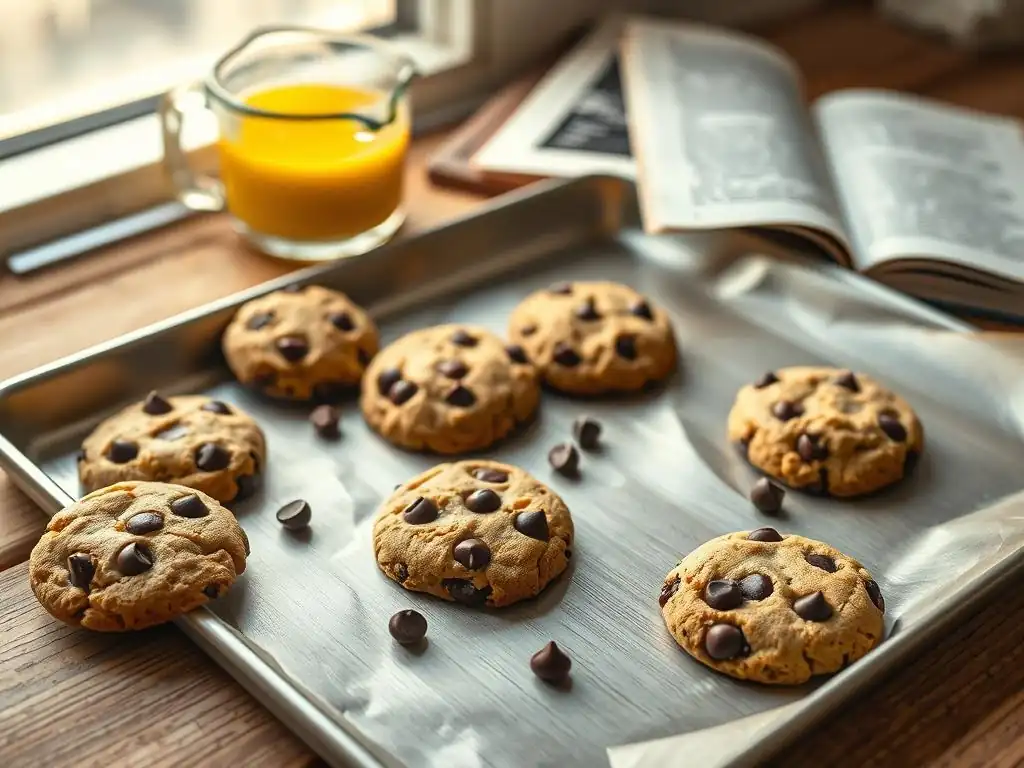
The primary scientific principle behind baking sheet warping is thermal expansion. When materials are heated, their molecules move faster and spread out, causing the material to expand. Different materials expand at different rates, and even within a single sheet, variations in thickness or composition can lead to uneven expansion.
Metal baking sheets, typically made of aluminum or steel, are particularly susceptible to rapid temperature changes. If one part of the sheet heats up or cools down much faster than another, the uneven expansion or contraction creates stress within the metal. When this stress exceeds the material's elastic limit, it causes a permanent deformation, resulting in a warp.
For example, rapidly cooling a hot sheet under cold water can cause the quickly contracting areas to pull against the still-hot, expanded areas, leading to buckling. This understanding of thermal stress is crucial for preventing issues with your warped baking sheets cookie bake.
Common Causes: Factors Contributing to Imperfections
Several everyday practices contribute to the warping of baking sheets, often unknowingly. One major factor is placing a cold or room-temperature sheet directly into a very hot oven, especially temperatures exceeding 400°F (200°C). The sudden exposure to intense heat causes the metal to expand rapidly, and if the expansion isn't uniform across the sheet, it can buckle.
Another significant cause is subjecting a hot baking sheet to rapid cooling. Rinsing a hot sheet under cold water, or even placing it directly onto a cold surface like a granite countertop, can induce thermal shock. The quick contraction of the rapidly cooling areas creates stress that leads to warping. Over time, repeated exposure to these extreme temperature fluctuations degrades the structural integrity of the metal, making it more prone to developing a permanent warp, impacting its performance during a warped baking sheets cookie bake.
Temperature Shock: Minimizing Rapid Changes
Avoiding temperature shock is paramount in preventing baking sheet warping. This means allowing your baking sheet to heat up gradually with the oven or at least giving it a few minutes inside the warm oven before adding dough, especially for recipes requiring high temperatures.
Equally important is allowing the baking sheet to cool down naturally at room temperature after it comes out of the oven. Resist the urge to plunge a hot sheet into cold water for quicker cleaning. Letting it cool on a wire rack ensures that the metal contracts slowly and evenly, minimizing the stress that leads to permanent deformation and keeping your sheet flat for future warped baking sheets cookie bake sessions.
Weight Distribution: Even Loading Practices
While thermal shock is a major culprit, uneven weight distribution can also contribute to warping, especially over time or with thinner sheets. Placing a very heavy item or a large quantity of dough concentrated in one area of the sheet can put undue stress on that section, particularly when combined with heat.
Try to distribute dough or other items as evenly as possible across the surface of the baking sheet. This balances the load and helps the sheet heat and cool more uniformly. While loading won't cause the dramatic pop of thermal shock, consistent uneven loading can contribute to a gradual deformation of the sheet's surface, affecting its performance in future baking.
Material Quality: Selecting Durable Options
The quality and type of material, as well as the thickness (gauge) of the baking sheet, play a significant role in its susceptibility to warping. Thinner sheets, typically made from a lighter gauge metal (higher gauge number), are more prone to buckling under thermal stress than thicker, heavier sheets.
Sheets made from certain alloys or with reinforced edges are designed to be more resistant to warping. Investing in heavier-gauge aluminum or steel sheets, often labeled as "commercial grade," can provide better durability and resistance to the stresses of repeated heating and cooling cycles, leading to a more consistent surface for your warped baking sheets cookie bake.
Preventing Imperfections: Proactive Baking Sheet Care
Proper care is the best defense against baking sheet imperfections. Simple habits can significantly extend the life and flatness of your sheets.
One crucial aspect is cleaning; avoid using overly abrasive scrubbers or harsh chemicals that can damage the surface finish, potentially creating weak points. Gentle washing with warm soapy water and a non-scratch sponge is usually sufficient. Ensure sheets are thoroughly dried to prevent rust, especially stainless steel or aluminized steel varieties. Consistent, gentle cleaning helps maintain the integrity of the metal.
Proper Storage: Maintaining Flat Surfaces
How you store your baking sheets can impact their shape over time. Stacking heavy items on top of sheets, or storing them precariously where they can be bent or dented, can cause physical deformation.
Ideally, store baking sheets vertically in a rack or organizer. If stacking is necessary, ensure the stack is neat and that heavy objects are not placed on top of the stack. Storing sheets flat and protected from physical stress helps maintain their original shape and prevents bending that could exacerbate or initiate warping.
Gradual Cooling: Avoiding Sudden Temperature Shifts
As mentioned earlier, rapid cooling is a primary cause of thermal shock and warping. Always allow baking sheets to cool down gradually after use.
Place the hot sheet on a heat-safe surface or a wire cooling rack away from direct drafts or cold water sources. Allowing it to reach room temperature naturally minimizes the stress on the metal caused by uneven contraction. This simple step is one of the most effective ways to prevent warping and preserve the integrity of your sheet for optimal performance in your next warped baking sheets cookie bake.
Using Liners: Protecting Baking Sheet Surfaces
Using parchment paper or silicone baking mats not only makes cleanup easier but also provides a layer of protection for the baking sheet surface.
Liners can help distribute heat slightly more evenly and protect the metal from direct contact with sticky dough or spills that might require aggressive scrubbing later. While liners won't prevent severe warping caused by thermal shock, they contribute to the overall longevity and maintenance of the sheet's surface quality, which supports better baking outcomes.
Troubleshooting Imperfect Baking Sheets: Solutions for Even Bakes
Even with the best care, baking sheets can sometimes develop minor imperfections. Fortunately, several techniques can help you achieve more even results when using a slightly warped baking sheet for cookie bake. These methods compensate for the uneven heat distribution caused by the warp.
Understanding these workarounds allows you to salvage a bake and produce delicious cookies even when your equipment isn't perfect. They are about adapting your process to the limitations of the tool at hand.
Solution 1: Rotating During Baking for Consistent Heat Exposure
One of the simplest and most effective strategies is rotating the baking sheet halfway through the baking time. This helps expose all parts of the sheet and the cookies on it to different areas of the oven, which often have hot and cool spots.
For a cookie recipe that typically bakes for 10-12 minutes, rotate the sheet 180 degrees after 5-6 minutes. If your oven has multiple racks, you might also consider moving the sheet from a hotter rack to a cooler one, or vice versa, while rotating. This evens out the heat exposure, reducing the difference in browning between cookies on the warped sheet. While it won't eliminate the warp, it significantly mitigates its negative impact on uniformity.
Solution 2: Adjusting Time and Temperature for Imperfect Sheets
Sometimes, slightly altering the baking time and temperature can help. A common approach is to lower the oven temperature by 10-15°F (5-8°C) and increase the baking time slightly.
A lower temperature reduces the intensity of the heat, giving the cookies more time to cook through before the hotter spots cause excessive browning or burning. For instance, if a recipe calls for 375°F (190°C) for 10-12 minutes, try baking at 360°F (180°C) for 12-14 minutes. This gentler heat transfer can help minimize the drastic temperature differences across a warped sheet, leading to a more even bake, especially for a warped baking sheets cookie bake. Monitor the cookies closely, as the exact adjustment will depend on your oven and the severity of the warp.
Solution 3: Utilizing a Baking Stone for Heat Stabilization
A baking stone or steel can act as a heat sink, providing a stable and consistent heat source in your oven. While typically used for bread or pizza, placing a warped baking sheet on top of a preheated baking stone can help.
Preheat your oven with the stone inside for at least 30-45 minutes to ensure it's thoroughly hot. Then, place your baking sheet with cookies directly on the hot stone. The stone's consistent radiant heat can help counteract the uneven heating caused by the air gaps under the warped sheet, providing a more uniform temperature base for the cookies. This method requires careful handling as the stone will be extremely hot.
Solution 4: Employing the Double Baking Sheet Technique
Using two baking sheets stacked together is another effective way to manage a warped sheet. Simply place the warped sheet on top of a second, flat baking sheet before adding your cookie dough.
The air gap created between the two sheets acts as an insulator, particularly buffering the intense direct heat from the oven elements or rack. This insulation helps slow down the heat transfer to the bottom of the top sheet, preventing the bottoms of the cookies from browning too quickly in the hotter spots caused by the warp. It promotes a more even distribution of heat across the top sheet's surface, leading to a more uniform warped baking sheets cookie bake. Ensure the bottom sheet is flat for the best results.
Choosing Quality Baking Sheets to Minimize Imperfections
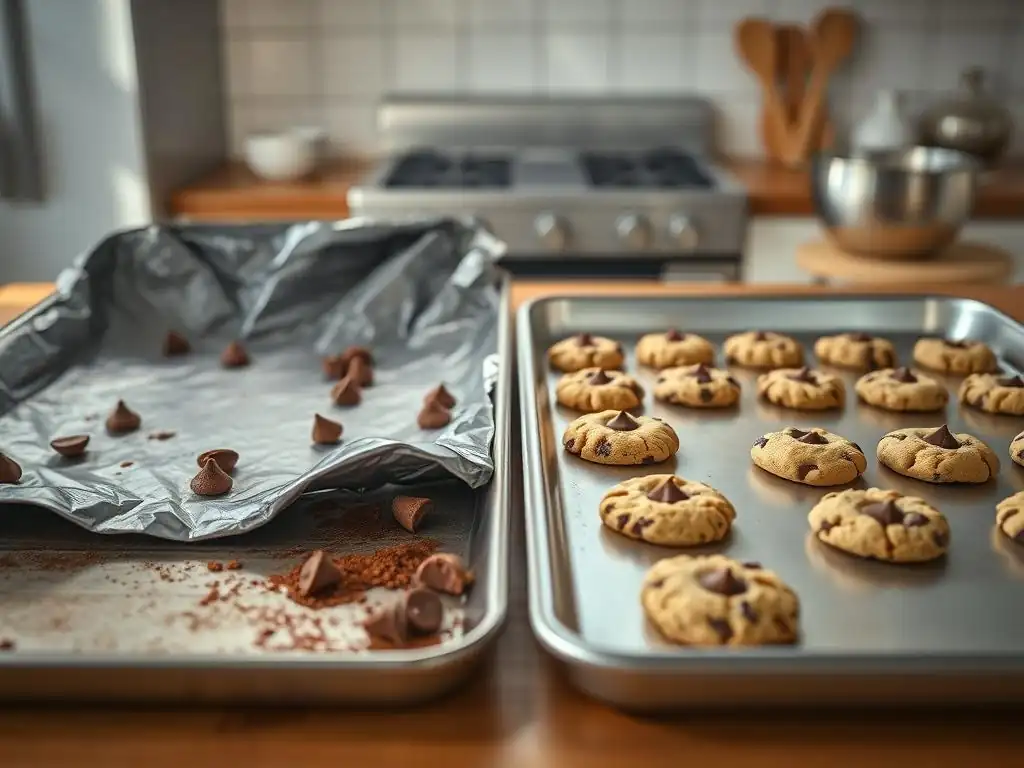
Selecting the right baking sheet from the start can significantly reduce the likelihood of warping and other imperfections. Investing in quality equipment is often cheaper in the long run than constantly replacing warped sheets or dealing with failed bakes.
Consider the materials used, the thickness of the metal, and the construction features when purchasing new baking sheets. A well-chosen sheet will provide consistent performance for years, making your baking journey smoother and more predictable.
Material Selection: Prioritizing Heat-Resistant Materials
The material of a baking sheet is the most critical factor determining its heat conductivity, durability, and resistance to warping. Different materials offer distinct advantages and disadvantages.
Understanding how materials like aluminum, stainless steel, and insulated constructions behave under high heat is essential for choosing a sheet that suits your baking needs and minimizes the chances of developing issues that lead to a warped baking sheets cookie bake.
Aluminum Baking Sheets: Advantages and Disadvantages
Aluminum is the most common material for baking sheets due to its excellent heat conductivity. It heats up quickly and evenly, which is ideal for consistent baking. Professional bakers often prefer bare aluminum sheets for their superior heat transfer properties, leading to uniform browning.
However, aluminum is also relatively soft and more susceptible to warping, especially thinner gauges, when exposed to sudden temperature changes. It can also react with acidic foods, potentially causing discoloration. Despite this, a thick, heavy-gauge aluminum sheet remains a popular choice for its performance, provided it's cared for properly to prevent warping.
Stainless Steel Baking Sheets: Advantages and Disadvantages
Stainless steel is significantly more durable and resistant to warping and corrosion than aluminum. It does not react with acidic foods and is easier to clean.
The main disadvantage of stainless steel is that it does not conduct heat as efficiently or evenly as aluminum. This can sometimes lead to less uniform browning unless the sheet is specifically designed with features to improve heat distribution. While less prone to warping, a warped baking sheets cookie bake scenario is less likely with stainless steel, but achieving perfectly even color might require more attention or oven adjustments.
Insulated Baking Sheets: Heat Distribution Characteristics
Insulated baking sheets consist of two layers of metal with an air pocket in between. This air layer acts as an insulator, significantly slowing down the heat transfer to the bottom of the baked goods.
These sheets are specifically designed to prevent over-browning or burning on the bottom, making them excellent for delicate cookies or pastries. The slower, more gentle heat transfer also makes them less likely to warp from thermal shock compared to single-layer sheets. However, they result in longer baking times and may not achieve the same level of crispness or browning on the bottom as single-layer sheets.
Thickness and Gauge: Ensuring Robust Construction
The thickness of the metal, often measured by its gauge, is a critical indicator of a baking sheet's durability and resistance to warping. Lower gauge numbers indicate thicker metal.
A standard quality baking sheet is typically around 18-gauge aluminum or aluminized steel. Thinner sheets, often 20-gauge or higher, are more flexible and prone to buckling under heat or physical stress. Investing in an 18-gauge or even 16-gauge sheet provides a more rigid and stable surface that is significantly less likely to warp, offering a more reliable foundation for consistent baking. Thicker sheets distribute heat more evenly and retain heat better.
Features to Consider: Rimmed vs. Rimless for Specific Baking Needs
Baking sheets come in two main styles: rimmed and rimless. Rimmed baking sheets, also known as jelly roll pans, have a raised edge on all four sides. Rimless sheets have no edges, allowing items to slide off easily.
For cookie baking, rimmed sheets are generally preferred. The rim adds structural integrity, making the sheet more resistant to warping. It also prevents cookies or spills from sliding off the sides in the oven. Rimless sheets are typically used for items that need to be easily transferred, like delicate pastries or biscuits, and while they might be slightly more prone to bending, the structural support of a rim is a significant factor in preventing the kind of buckling that leads to a warped baking sheets cookie bake.
Repairing or Replacing Imperfect Baking Sheets: Determining Viability
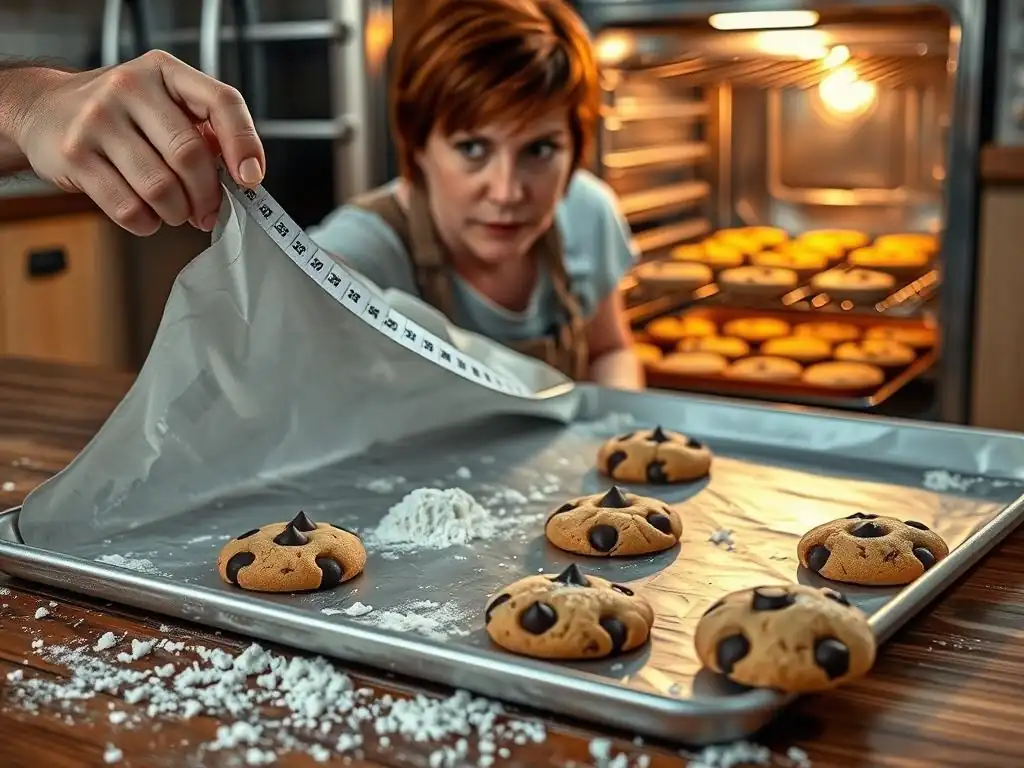
Once a baking sheet has warped, you might wonder if it can be fixed or if it's destined for retirement. The feasibility of repairing a warped sheet depends largely on the severity and nature of the damage.
Sometimes, a minor buckle can be temporarily corrected, but often the metal has been stressed beyond its elastic limit, making the warp permanent or likely to recur. Deciding whether to repair, replace, or simply adapt your baking techniques is an important step in managing your kitchen equipment.
Assessing Repair Feasibility: Evaluating Potential Solutions
For minor, temporary buckling that occurs only when heated and flattens upon cooling, no repair is necessary; the sheet is performing as expected under thermal expansion. However, for a sheet with a permanent warp that causes it to rock on a flat surface, repair is difficult.
Some sources suggest attempting to gently bend the sheet back into shape using weights or clamps when cold. However, this often puts new stress on the metal and can lead to cracking or a different kind of warp. The metal's structure has been altered, and forcing it back rarely results in a perfectly flat, stable surface. Generally, permanent warps are not reliably repairable for achieving consistent baking performance.
Recognizing Irreversible Damage: Knowing When to Replace
A baking sheet has likely sustained irreversible damage if it has a significant, permanent warp that causes a large gap when placed on a flat surface (e.g., lifting by half an inch or more), or if it has deep dents, creases, or cracks.
These types of deformations cannot be effectively repaired to restore the sheet's flatness and even heat distribution. Continuing to use a severely warped sheet will consistently lead to unevenly baked goods. At this point, the most practical solution for achieving reliable results in your warped baking sheets cookie bake is to replace the sheet.
Recommended Baking Sheet Brands for Consistent Results
While specific model availability varies, several brands are consistently recommended for producing durable, warp-resistant baking sheets. Look for brands known for using heavy-gauge materials and robust construction.
Examples include Nordic Ware (their Natural Aluminum Commercial Baker's Half Sheet is a popular, durable choice), Vollrath (often found in professional kitchens, known for heavy-duty aluminum), and King Arthur Baking Company (offers sturdy, high-quality sheets). Reading reviews and checking the gauge of the metal are good steps when selecting a replacement to ensure you get a sheet less prone to developing issues that affect your warped baking sheets cookie bake.
Achieving Consistent Bakes Despite Imperfect Baking Sheets: Final Tips
Even if you're using a sheet that isn't perfectly flat, mastering a few final tips can significantly improve your chances of a successful bake. It's about combining equipment knowledge with smart baking practices.
These final pieces of advice focus on adaptability and precision, ensuring you can produce delicious, evenly baked cookies regardless of minor imperfections in your equipment.
Adapting Baking Techniques: Mastering Equipment Compensation
Becoming a great baker involves understanding your tools and how to get the best results from them, even when they aren't ideal. If you know a particular sheet tends to warp or has hot spots, adapt your technique.
This might involve using the double-sheet method consistently, rotating the sheet more frequently (perhaps every 4-5 minutes instead of half-way), or slightly adjusting the temperature and time based on past results with that specific sheet. Keep notes on how a particular sheet performs with different recipes and oven temperatures. This hands-on knowledge is invaluable for predicting and compensating for uneven heat distribution in a warped baking sheets cookie bake.
The Role of an Oven Thermometer: Ensuring Accurate Temperatures
One of the most crucial tools for consistent baking, especially when troubleshooting equipment issues like warped sheets, is an inexpensive oven thermometer. Oven thermostats are notoriously inaccurate and can be off by as much as 25-50°F (15-30°C).
Knowing the true temperature of your oven helps you make more informed decisions about time and temperature adjustments. If your oven runs hot, it might exacerbate warping; if it runs cool, it might make underbaking worse on the warped sections. An accurate temperature reading allows you to adjust the oven dial correctly and better predict how heat is transferring to your warped baking sheets cookie bake.
Conclusion: Baking with Confidence and Adaptability
Dealing with warped baking sheets cookie bake issues is a common challenge, but it doesn't have to ruin your baking endeavors. By understanding the causes of warping, practicing good sheet care, and employing effective troubleshooting techniques, you can achieve remarkably even results even with less-than-perfect equipment.
From rotating sheets and adjusting temperatures to utilizing baking stones or double sheeting, there are many ways to compensate for a wobble. Ultimately, investing in quality, heavy-gauge baking sheets is the best long-term solution for preventing warping and ensuring consistent, reliable baking outcomes for all your favorite cookie recipes. Bake with confidence, knowing you have the knowledge and techniques to handle any baking sheet challenge that comes your way!
Frequently Asked Questions
A warped baking sheet can cause uneven heat distribution, leading to some cookies being overbaked while others are underbaked. This is because the warped areas create air gaps that prevent consistent contact with the oven rack.
Can I fix a warped baking sheet?
While some people attempt to fix warped baking sheets, it's generally not recommended. The process can further damage the metal and potentially make it unsafe to use. It's usually better to invest in new, high-quality baking sheets.
What type of baking sheet is least likely to warp?
Heavier gauge baking sheets made of aluminum or stainless steel are less prone to warping due to their increased thickness and durability. Avoid thin, flimsy sheets as they are more susceptible to warping.
How can I prevent my baking sheets from warping in the first place?
Avoid extreme temperature changes by letting baking sheets cool completely before washing them. Also, avoid placing a cold sheet directly into a hot oven.
Try rotating the baking sheet halfway through the baking time to compensate for uneven heat. You can also use parchment paper as it can help distribute heat more evenly, although it won't completely solve the problem.
The quest for the perfect cookie, a seemingly simple desire, reveals a surprising truth: even the most minor kitchen equipment issues can significantly impact the final product. A warped baking sheet, often overlooked, can be the silent saboteur of uniformly baked, golden-brown cookies. This seemingly insignificant detail highlights the importance of attention to detail in even the most commonplace tasks.
The impact of a warped baking sheet extends beyond just unevenly baked cookies; it speaks to a larger theme of how seemingly small imperfections can ripple outwards, affecting the overall outcome of our endeavors. It's a microcosm of life, where attention to the seemingly insignificant details can lead to greater success and satisfaction. Perfection is not attainable, but if we chase perfection we can catch excellence.
– Vince Lombardi. This quote resonates deeply, reminding us that while perfect cookies might remain elusive, striving for even baking through careful attention to our tools brings us closer to excellence in the kitchen.
Now, consider your own baking endeavors, and indeed, your life beyond the kitchen. What seemingly small details are you overlooking that might be hindering your progress or satisfaction? Take a moment to examine your tools, both literal and metaphorical, and identify areas where a little extra care and attention could yield significant improvements. The pursuit of the perfectly even cookie, while seemingly trivial, offers a valuable lesson in meticulousness and the rewarding results that follow. Embrace the challenge, and may your cookies – and your life – be consistently excellent.
Thanks for taking the time to learn how to conquer those warped baking sheets! You're now equipped to bake cookies that are consistently golden brown and delicious. Ready to put your new knowledge into practice?
- Invest in a set of new, high-quality baking sheets. This is your key to consistently even baking. Consider exploring different materials like aluminum or stainless steel to find your perfect fit.
- Share your baking triumphs (and disasters!) with our community in the comments below. Let's learn from each other!
- Consider experimenting with parchment paper as an interim solution while you upgrade your sheets.
Ready to say goodbye to unevenly baked cookies forever? What's your favorite tip for achieving perfectly golden-brown cookies?