
Oven Showdown: Digital vs Analog and Which One Elevates Your Baking

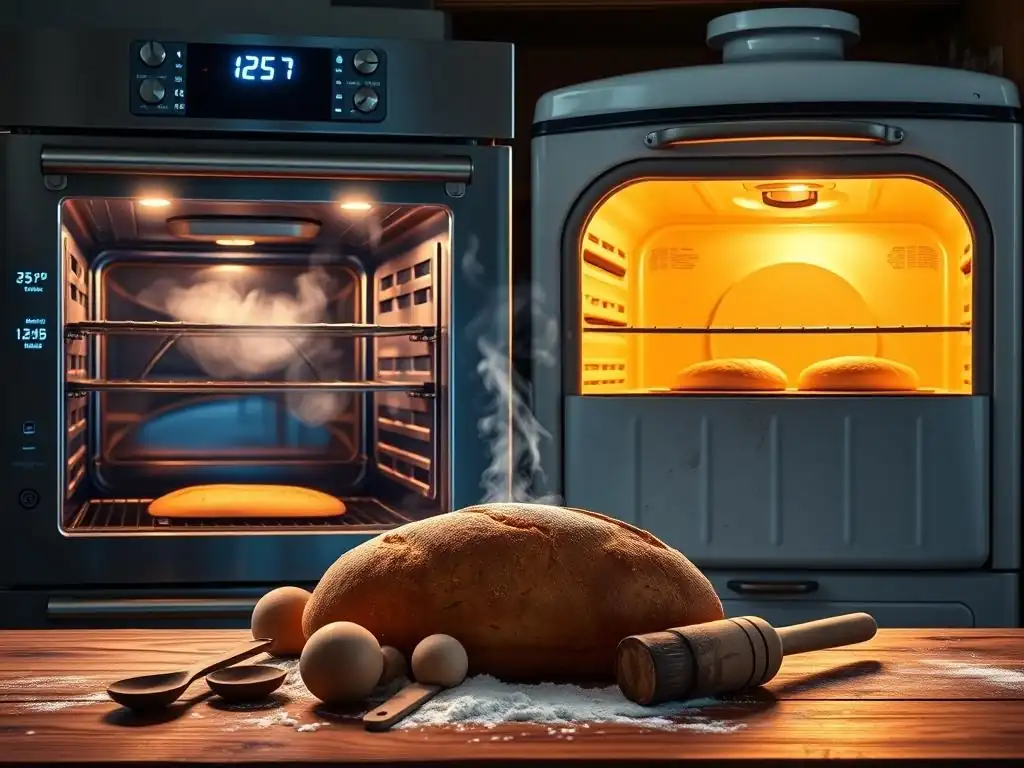
Welcome to BakeWithEase, your trusted companion in the delightful world of baking! Are you ready to elevate your baking game? This article delves into the heart of the matter: the Digital oven vs Analog debate. But which one truly unlocks the secrets to perfectly baked goods? Prepare to uncover the surprising differences and discover which oven will transform your kitchen into a baking paradise. Read on to find out!
- BakeBetter: Choosing the Right Oven for Perfect Baking
- Understanding the Basics: Convection Ovens vs. Conventional Ovens
- Performance Comparison: Convection vs. Conventional Baking
- Ease of Use and Features: A Baker's Perspective
- Baking Applications: Which Oven Excels in Specific Scenarios?
- Energy Efficiency and Cost Considerations
- Making the Right Choice: Selecting an Oven for Your Baking Needs
- Mastering Your Oven: Tips for Baking Success
- Final Verdict: Convection vs. Conventional - Which Oven is Right for You?
-
Frequently Asked Questions
- What are the main differences between digital and analog ovens for baking?
- Is a digital oven always better than an analog oven for baking?
- How does temperature accuracy impact baking results when using either type of oven?
- Are repairs and maintenance easier or more difficult for digital ovens compared to analog ovens?
- Which type of oven is recommended for beginner bakers according to BakeWithEase?
- Final Reflection: Embracing the Best of Both Worlds in Baking
- Unleash Your Inner Baker: Elevate Your Baking Game Today!
BakeBetter: Choosing the Right Oven for Perfect Baking
Selecting the right oven is a pivotal step on your baking journey. It's not just about finding a box that gets hot; it's about choosing a piece of equipment that aligns with your baking style, the types of goods you love to create, and your desire for consistent, delicious results.
Beyond the fundamental difference between convection and conventional heating methods, bakers today also face a choice regarding the oven's control interface: the classic reliability of analog dials versus the precision and features offered by digital controls. Understanding how these elements – the heating type and the control interface (digital oven vs analog) – interact is key to elevating your baking from good to truly exceptional.
Whether you're a beginner just learning the basics or an experienced baker perfecting complex pastries, your oven is your most important tool. The way heat is distributed, the accuracy of the temperature setting, and the ease with which you can manage the baking process all depend on the oven's design and controls. This showdown between different oven types and control systems will help you navigate the options and make an informed decision that empowers your baking adventures, ensuring your cakes rise evenly, your cookies bake consistently, and your roasts achieve that perfect crisp.
Understanding the Basics: Convection Ovens vs. Conventional Ovens
Before diving into the performance nuances and control types, it's essential to grasp the core difference between the two primary oven heating methods found in home kitchens: convection and conventional. These methods dictate how heat moves within the oven cavity and impacts how your food cooks and bakes. While the control system (digital oven vs analog) influences precision and features, the heating method fundamentally changes the baking environment.
Conventional ovens rely on radiant heat from heating elements, typically located at the bottom and sometimes the top of the oven cavity. Convection ovens, on the other hand, introduce a fan that circulates hot air, creating a more dynamic heating environment. This difference in heat distribution has significant implications for baking outcomes, affecting everything from cooking time and temperature to the texture and appearance of your baked goods. Understanding these foundational principles is the first step in choosing the oven that's right for you.
What is a Convection Oven? Key Features and Functionality
A convection oven is characterized by the presence of a fan, usually located at the back of the oven, which circulates hot air throughout the cavity. This forced air movement is the defining feature that sets it apart from a conventional oven. The fan ensures that the air temperature is more uniform around the food, eliminating hot and cold spots that can occur in static-air environments.
This results in faster cooking times and more even browning. Many modern convection ovens also feature a third heating element around the fan, known as "true convection" or "European convection," which preheats the circulated air for even more consistent results.
The functionality of convection ovens often goes hand-in-hand with advanced control systems. While some older or simpler models might have basic analog controls, the vast majority of contemporary convection ovens utilize digital interfaces. These digital controls allow for precise temperature settings, often in 5-degree increments (e.g., 350°F, 355°F), compared to the broader ranges on analog dials. Digital oven controls also enable features like precise timers, delayed starts, and sometimes even programmed baking cycles optimized for specific dishes, enhancing both performance and user convenience.
What is a Conventional Oven? Exploring the Traditional Design
A conventional oven, also known as a thermal or radiant oven, represents the traditional design that has been a staple in kitchens for decades. It operates using heating elements that radiate heat directly onto the food. Typically, there's an element on the bottom for baking and roasting, and often one on the top for broiling.
Heat rises naturally within the cavity, creating temperature zones – it's generally hotter towards the top and cooler towards the bottom. This static heat environment means that items on different racks or even different parts of the same baking sheet may cook at slightly different rates.
Historically, conventional ovens were exclusively controlled by analog dials. These simple mechanical controls allow you to set the temperature by turning a knob to a marked degree or range (e.g., "350°F", "Medium"). While straightforward and durable, analog controls offer less precision than their digital counterparts.
The temperature setting might be an approximation, and achieving a precise temperature like 347°F is impossible. However, the simplicity of analog controls is part of their appeal for many; there are no complex menus or buttons, just turn the dial and go. Modern conventional ovens may incorporate digital controls, offering the precision of digital temperature setting within the conventional heating method, bridging the gap between the two control types (digital oven vs analog).
Performance Comparison: Convection vs. Conventional Baking
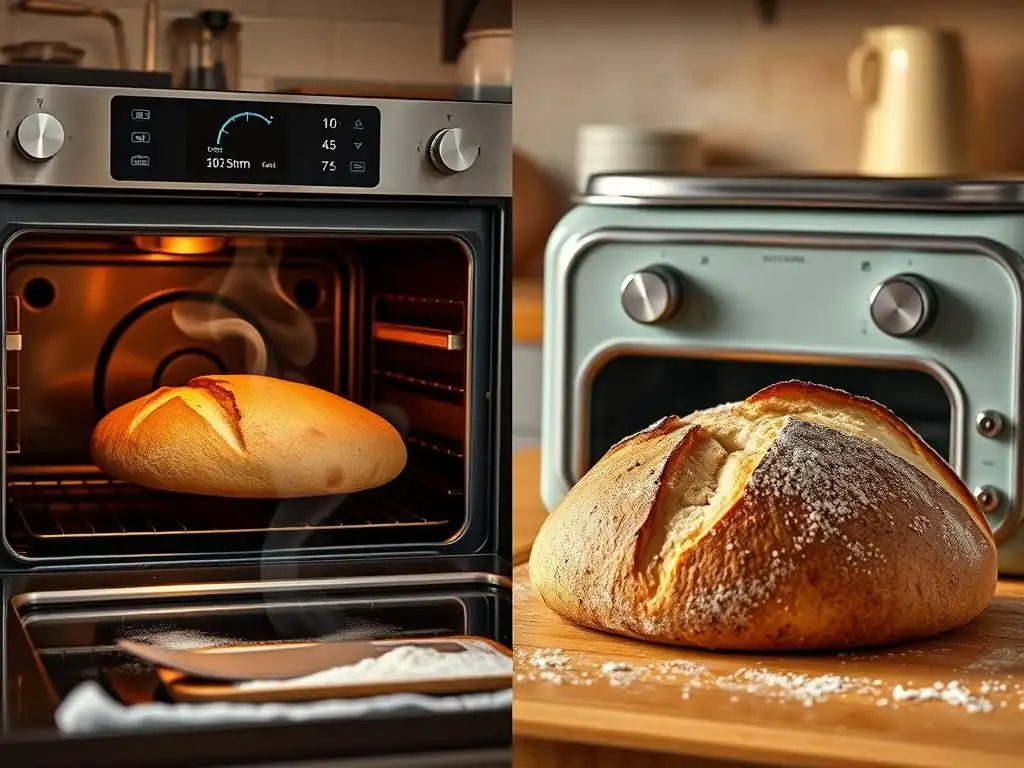
When it comes to how your food actually bakes, the difference between convection and conventional heat is significant. The forced air in a convection oven interacts with food differently than the radiant heat in a conventional oven, impacting cooking time, browning, and overall texture. While the heating method is the primary driver here, the type of controls (digital oven vs analog) can influence how effectively you can manage and replicate these performance characteristics.
Understanding these performance differences helps you decide which oven type is best suited for your preferred baking activities. Do you need rapid, even browning for roasted vegetables, or gentle, consistent heat for a delicate soufflé? The answer often points towards one heating method over the other. Furthermore, the precision offered by digital oven controls can fine-tune the performance of either oven type, allowing for more consistent results compared to the variability sometimes associated with analog dials.
Temperature Control: Convection Oven Accuracy vs. Conventional Oven Performance
Temperature control is paramount in baking. A few degrees off can mean the difference between a perfectly risen cake and a dense failure, or cookies that are just right versus burnt around the edges. Convection ovens, with their circulating air, generally maintain a more uniform temperature throughout the cavity.
However, the accuracy of the temperature setting itself is often more influenced by the control system, highlighting a key aspect of the digital oven vs analog comparison. Digital controls typically allow you to set a temperature with high precision, often within ±5°F of the target. This accuracy is crucial for recipes sensitive to temperature variations.
Conventional ovens, relying on radiant heat and natural air movement, can have more significant temperature gradients, sometimes varying by 15-25°F or more between different racks. While the oven's thermostat attempts to regulate the average temperature, the actual temperature experienced by food can vary depending on its position.
Analog controls on conventional ovens can further complicate precision; the dial markings are often approximations, and the internal thermostat's calibration might be less exact than a digital sensor. For bakers prioritizing precise temperature management for consistent results, digital oven controls on either a convection or conventional unit offer a distinct advantage over less precise analog systems.
Heat Distribution: How Each Oven Type Bakes Your Goods
The way heat is distributed directly impacts how your baked goods cook and brown. In a conventional oven, radiant heat from the elements causes the surfaces of the food facing the elements to heat up directly. Air currents are natural thermal convection currents. This can lead to uneven browning, where the bottom browns faster than the top, or items closer to the walls cook differently than those in the center. Rotating baking sheets partway through cooking is often necessary to compensate for these variations.
Convection ovens, by contrast, use a fan to actively move hot air around the food. This forced air flow ensures that heat reaches all surfaces more quickly and evenly. This leads to faster cooking times – often requiring you to reduce the recipe's recommended temperature by 25°F or cooking time by 25% – and more uniform browning.
You can often bake multiple trays of cookies or pastries simultaneously on different racks in a convection oven without needing to rotate them. The type of controls (digital oven vs analog) doesn't change how the heat moves (fan vs. radiant), but digital controls can sometimes offer specific convection modes or preheating functions that optimize the fan's operation.
Baking Consistency: Achieving Repeatable Results with Convection and Conventional Ovens
Consistency is the hallmark of a skilled baker. Being able to produce the same delicious result every time requires an oven that performs predictably. Convection ovens generally offer better consistency due to their uniform heat distribution. Once you've dialed in the correct temperature and time adjustments for your recipe using convection, you can expect similar results batch after batch, even when baking multiple items. This reliability is a major draw for serious bakers and busy households.
Conventional ovens can also produce consistent results, but it often requires more active management, such as careful positioning of food and rotating trays. The degree of consistency can also be influenced by the control system. Digital oven controls, with their precise temperature setting and often more accurate sensors, can help maintain a tighter temperature range than analog controls, reducing temperature fluctuations that can impact consistency. While a well-calibrated analog oven can be consistent, a digital system generally provides a higher level of repeatable precision, minimizing guesswork and making it easier to replicate baking success.
Ease of Use and Features: A Baker's Perspective
Beyond raw performance, the user interface and available features play a big role in the overall baking experience. This is where the digital oven vs analog comparison becomes most apparent. Digital controls offer a different level of interaction and functionality compared to the simple, mechanical nature of analog dials. The choice here often comes down to a preference for modern convenience and precision versus traditional simplicity and tactile feedback.
For many bakers, the ease of setting temperature and time, the clarity of the display, and the presence of helpful extra features can significantly impact their enjoyment and efficiency in the kitchen. Whether you appreciate the straightforward nature of turning a knob or the precise control offered by a digital keypad, the control system is a daily point of interaction that shapes your baking workflow.
Convection Oven Features: Fan-Forced Air and Multi-Rack Baking
The primary feature of a convection oven is, of course, the fan-forced air system, which enables faster, more even cooking and the ability to bake on multiple racks simultaneously without significant hot or cold spots. This multi-rack capability is a major advantage for baking large batches of cookies, pastries, or roasting multiple pans of vegetables. Modern convection ovens, almost universally equipped with digital controls, often come with additional features.
These can include precise digital timers with audible alerts, delayed start functions allowing you to program baking to begin at a later time, and specific baking modes like "convection bake," "convection roast," or even specialized settings for pizza or dehydrating. Some high-end models with digital interfaces might even offer programmable cooking cycles where the oven automatically adjusts temperature and time through different stages of a recipe. The digital oven interface facilitates access to and control over these advanced functionalities, offering a level of control and automation not typically found on analog-controlled ovens.
Conventional Oven Simplicity: The Charm of Traditional Baking
Conventional ovens, particularly those with analog controls, are the epitome of baking simplicity. The interface usually consists of just two or three dials: one for temperature, one for the timer, and perhaps one for function (bake, broil). Setting the oven involves simply turning a knob. There are no menus to navigate, no buttons to press repeatedly, and no digital displays to decipher. This straightforward operation appeals to many who prefer a more tactile and less technologically complex experience in the kitchen.
The charm of traditional baking with a conventional oven often lies in its predictability once you understand its quirks. Experienced bakers learn where the hot spots are and adjust their techniques accordingly. While lacking the precision of digital oven controls or the evenness of convection, the conventional oven with analog dials is a reliable workhorse for classic baking techniques. Its simplicity means there are fewer electronic components to potentially fail compared to a feature-rich digital model, contributing to its perceived durability by some users.
Cleaning and Maintenance: Convection vs Conventional Oven Upkeep
When it comes to cleaning and maintenance, the primary factor is often the oven's self-cleaning feature (pyrolytic or steam cleaning), rather than whether it uses convection or conventional heat, or if it has digital oven vs analog controls. Both convection and conventional ovens are available with self-cleaning options. However, the type of controls can have a minor impact on maintenance.
Digital control panels are typically smooth surfaces that are easy to wipe clean, but care must be taken not to scratch or damage the electronic components underneath. Analog dials, while mechanically robust, can accumulate grime around the knobs and behind the faceplate, sometimes requiring more detailed cleaning. The fan in a convection oven adds one more potential point of maintenance (though they are generally sealed units). Overall, the difference in cleaning and maintenance between convection and conventional ovens, or between digital oven vs analog controls, is relatively minor compared to the presence or absence of a self-cleaning cycle.
Baking Applications: Which Oven Excels in Specific Scenarios?
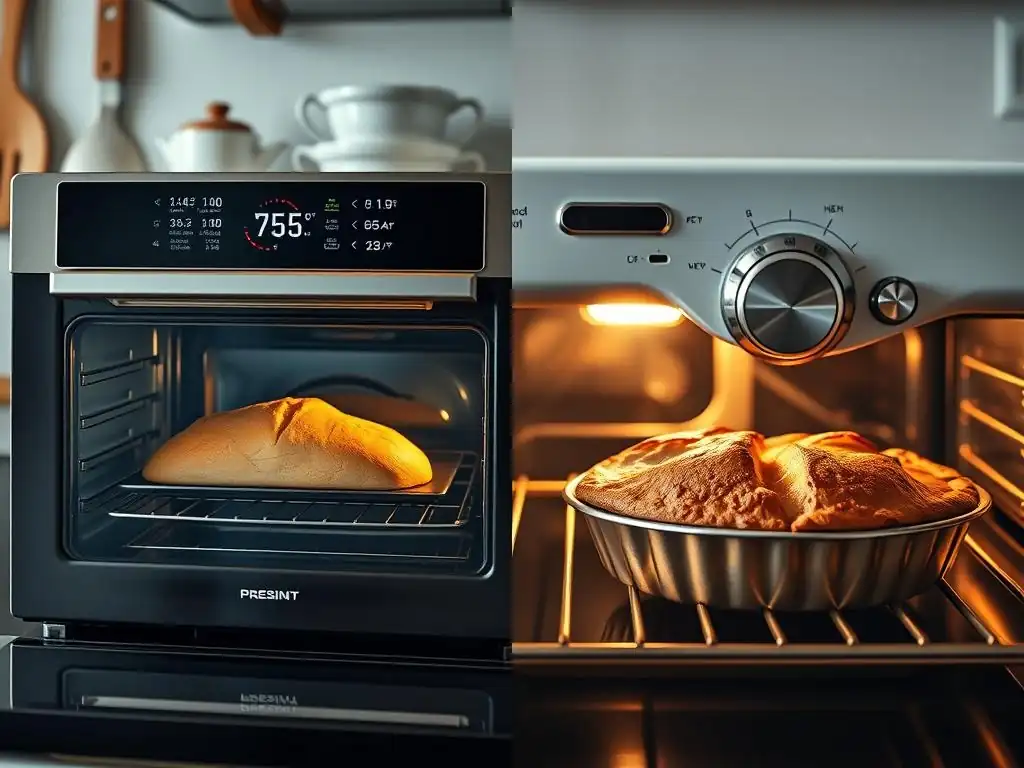
The choice between a convection and conventional oven, and the preference for digital oven vs analog controls, can significantly impact the results for different types of baked goods and cooking tasks. While a skilled baker can adapt to almost any oven, understanding which type is inherently better suited for specific applications can make achieving desired outcomes easier and more consistent.
Whether you're aiming for a perfectly roasted chicken with crispy skin, a delicate sponge cake with an even crumb, or a loaf of bread with a beautiful crust, the oven type and its control system play a crucial role. Let's explore how convection and conventional ovens, influenced by their control interfaces, perform in common baking scenarios.
Best Oven for Roasting: Convection Oven for Crispy Skin
For roasting meats and vegetables, a convection oven is generally considered superior. The circulating hot air cooks food faster and more evenly, but critically, it also helps to render fat and moisture from the surface, leading to beautifully browned and crispy exteriors. A chicken roasted in a convection oven typically develops significantly crispier skin than one roasted in a conventional oven at the same temperature. The forced air ensures all sides of the roast are exposed to the same heat, eliminating the need for frequent turning.
While the convection fan is the key feature here, precise temperature control is also beneficial. Digital oven controls allow you to set the exact roasting temperature recommended by a recipe, often within a narrow range (e.g., 400°F to 425°F) that is critical for achieving the perfect balance of internal doneness and external crispness. Analog controls, with their potential for temperature variation, might make hitting and maintaining this optimal range slightly more challenging, impacting the final crispness.
This is where the choice becomes more nuanced. For cookies, convection is usually excellent. The even heat ensures uniform spread and browning across the entire baking sheet, and you can bake multiple sheets at once.
For delicate items like cakes, soufflés, and quick breads, the forced air of a convection oven can sometimes be too aggressive, leading to uneven rising, sloped tops, or dry edges, especially if not used correctly (often requiring a temperature reduction of 25°F). Many bakers prefer the gentler, more static heat of a conventional oven for these items, feeling it promotes a more even rise and tender crumb.
However, the control system (digital oven vs analog) is also important here. Precise temperature control is vital for cakes; being able to set the oven to exactly 350°F with digital controls provides more confidence than relying on an analog dial that might be off by 10°F. For cookies, consistent temperature ensures predictable spread and texture. While a conventional oven might be preferred for some cakes, pairing it with digital controls can offer the best of both worlds: gentle heat with precise temperature management, potentially leading to more consistent cake results than an analog-controlled conventional oven.
Best Oven for Bread: Even Baking with Convection or Conventional?
Baking bread requires consistent, even heat to achieve a good rise, a well-set structure, and a desirable crust. Both convection and conventional ovens can bake excellent bread, but they require different techniques. In a conventional oven, the radiant heat helps create a good crust, especially on the bottom. However, the uneven heat can sometimes lead to loaves browning more on one side or needing rotation.
A convection oven provides very even heat, which helps the loaf bake uniformly and develop an even crust all around. Some bakers find the circulating air can sometimes dry out the crust too quickly, so techniques like using a baking stone or adding steam might be employed. Regardless of the heating method, maintaining a consistent temperature is crucial, particularly during the initial stages of the bake when oven spring occurs.
Digital oven controls offer the ability to set and hold specific temperatures accurately, which is beneficial for achieving repeatable results in bread baking, whether you're using convection or conventional heat. An analog oven might require more careful monitoring with an external thermometer to ensure the correct temperature is maintained throughout the bake.
Energy Efficiency and Cost Considerations
When investing in a new oven, it's natural to consider not just the purchase price but also the ongoing costs, including energy consumption. The type of oven and its features can influence how much electricity or gas it uses, which adds up over time. Comparing the energy profiles of convection versus conventional ovens, and considering the potential impact of digital oven vs analog controls, provides a fuller picture of the long-term expense.
While an oven isn't typically the most energy-hungry appliance in the kitchen compared to, say, an electric range or dishwasher, differences in efficiency can still contribute to your utility bills, especially for frequent bakers. Understanding these factors can help you make a more economical choice that aligns with your baking habits.
Convection Ovens: Energy Consumption and Long-Term Savings
Convection ovens are generally considered more energy-efficient than conventional ovens. Because the circulating hot air cooks food faster and at slightly lower temperatures (often 25°F less than a conventional recipe calls for), the oven is on for less time and doesn't need to work as hard to maintain temperature. Studies suggest that using the convection setting can reduce cooking time by 20-30% and save around 20-30% of energy compared to using a conventional setting for the same task.
While the primary energy saving comes from the convection fan and reduced cooking time, the control system can also play a subtle role. Digital oven controls often allow for more accurate temperature regulation, preventing the oven from overheating beyond the set point and then needing to cool down, or cycling on and off excessively. This precise management can contribute marginally to overall energy efficiency compared to an analog thermostat that might allow for wider temperature swings. Over the lifespan of the appliance, these small savings can add up.
Conventional Ovens: Initial Cost vs. Operational Expenses
Conventional ovens, particularly basic models with analog controls, typically have a lower initial purchase price than comparable convection ovens with digital interfaces. This makes them an attractive option for budget-conscious consumers or those who bake less frequently. They are simpler machines with fewer components, contributing to their lower upfront cost.
However, conventional ovens are less energy-efficient in operation. They take longer to preheat, and cooking times are generally longer because of the less efficient heat transfer. They also often lose more heat through the door and walls compared to newer, better-insulated convection models.
While the analog controls themselves don't consume significant energy, the less precise temperature management compared to a digital oven can mean the heating elements cycle more frequently or stay on longer to maintain an approximate temperature. Over many years of use, the higher operational costs of a conventional oven with analog controls could potentially outweigh the initial savings compared to a more efficient digital convection oven.
Making the Right Choice: Selecting an Oven for Your Baking Needs
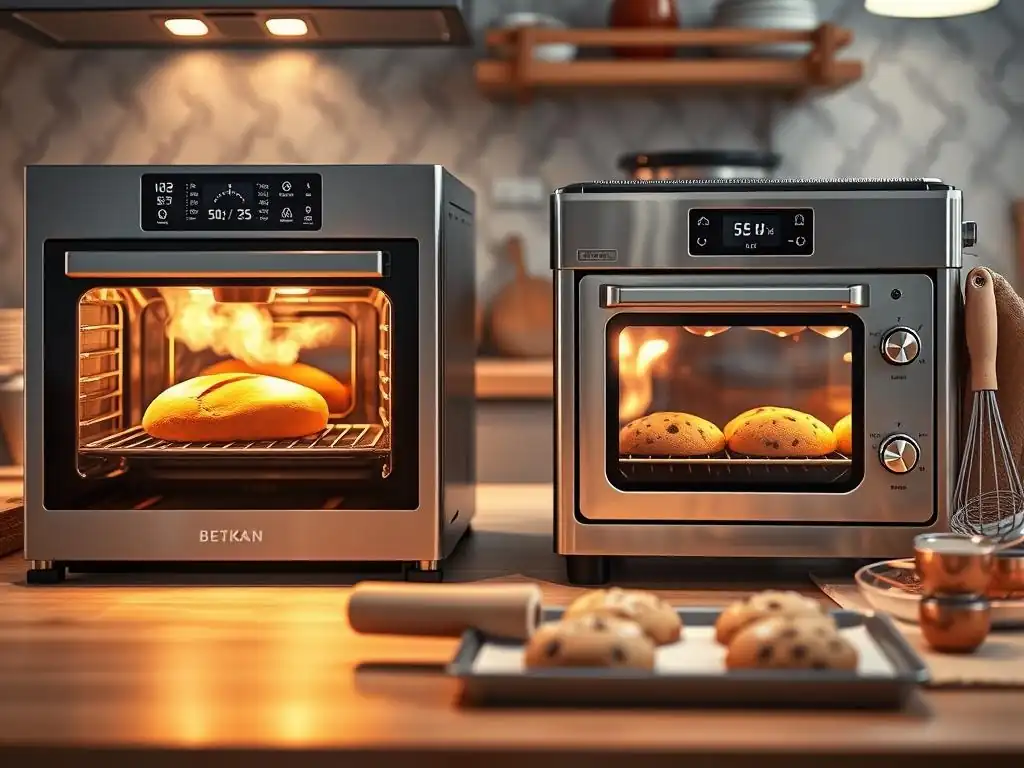
Choosing the perfect oven is a personal decision that depends on a variety of factors unique to your situation. There's no single "best" oven for everyone. By considering your baking habits, skill level, and budget, you can narrow down the options and find the oven that will serve you best. The decision involves not just the heating method (convection vs. conventional) but also the control type (digital oven vs analog), which impacts usability, precision, and features.
Taking the time to evaluate your needs against the capabilities of different oven types and control systems will ensure you invest in an appliance that enhances your baking experience. Whether you prioritize speed and efficiency, precise control, or simple reliability, there's an oven out there that's the right fit for your kitchen and your baking aspirations.
Factors to Consider: Baking Frequency, Skill Level, and Budget
Your baking frequency is a major factor. If you bake multiple times a week, investing in a more efficient and feature-rich oven like a convection model with digital controls might be worthwhile for the time and energy savings and consistent results. If you only bake occasionally, a simpler conventional oven, perhaps even one with reliable analog controls, might suffice.
Your skill level and goals also play a role. Beginners might appreciate the precision and automated features offered by a digital oven, which can help reduce errors. More experienced bakers might have specific needs, like the even browning of convection for pastries or the gentle heat of conventional for cakes, and might value the precise temperature setting of digital controls regardless of the heating method.
Budget is, of course, a practical constraint. Analog conventional ovens are typically the most affordable upfront, while digital convection ovens are usually at the higher end of the price spectrum. Carefully weighing the digital oven vs analog cost difference against the benefits is essential.
Convection Oven Recommendations: Top Convection Ovens for Home Bakers
For home bakers who prioritize speed, efficiency, and even results, particularly for roasting and baking large batches, a convection oven is an excellent choice. Look for models with "true convection" (a third heating element around the fan) for the most consistent results. Modern convection ovens almost exclusively feature digital controls.
Consider ovens with precise digital thermostats, often allowing temperature adjustments in 5°F increments. Features like multiple convection modes, programmable timers, and delayed starts, all facilitated by the digital interface, add significant convenience. While specific brand recommendations are beyond the scope here, look for models known for reliable temperature accuracy and even fan circulation. Many popular appliance brands offer robust convection ovens with advanced digital control systems catering to serious home bakers.
Conventional Oven Recommendations: Reliable Conventional Ovens for Baking Enthusiasts
For bakers who prefer the traditional baking environment, primarily bake delicate items like cakes and soufflés, or simply value simplicity and a lower upfront cost, a conventional oven remains a solid option. While traditional models feature analog controls, modern conventional ovens are often available with digital interfaces, offering a blend of the conventional heating method with the precision of digital temperature setting.
If you prefer the tactile feel and simplicity, look for conventional ovens with sturdy, clearly marked analog dials. While less precise than digital, a well-calibrated analog oven can still produce excellent results, especially if you use an oven thermometer to verify the internal temperature. If you want the conventional heating method but desire more precise temperature control, opt for a conventional oven with a digital thermostat. Reliable conventional ovens, whether digital oven or analog controlled, are available across various price points, offering dependable performance for everyday baking tasks.
Mastering Your Oven: Tips for Baking Success
Regardless of whether you choose a convection or conventional oven, or opt for digital oven vs analog controls, understanding your specific appliance is key to achieving consistently great baking results. Every oven has its own unique characteristics, slight temperature variations, and hot spots. Learning to work with your oven is just as important as following the recipe instructions precisely.
By implementing a few simple techniques and paying close attention to how your baked goods are cooking, you can maximize the performance of your oven and turn out delicious creations every time. Mastering your oven means knowing when to adjust temperatures, how to position your food, and how to utilize the features your specific model offers.
Optimizing Baking Techniques for Convection Ovens
When baking with convection, remember that the circulating air cooks food faster and often requires a lower temperature. A common starting point is to reduce the recipe's recommended temperature by 25°F or decrease the baking time by 25%. Keep a close eye on your baked goods the first few times you use the convection setting for a new recipe, as you may need to fine-tune these adjustments.
Utilize the multi-rack capability of convection ovens. The even heat distribution allows you to bake several trays of cookies or multiple cake layers simultaneously, saving time and energy. If your convection oven has digital controls, take advantage of features like precise timers and programmable settings. Use the timer religiously to avoid overbaking, and explore any specialized modes your digital oven offers, such as "convection bake" for pastries or "convection roast" for meats, as these are often optimized for specific results.
Baking in a conventional oven often requires more attention to food placement and rotation due to potential hot and cold spots. Use an oven thermometer to verify the actual temperature inside your oven, as the thermostat or analog dial marking might not be perfectly accurate. If you notice uneven browning, rotate your baking sheets halfway through the cooking time. Position food in the center of the oven cavity for the most consistent results, and avoid placing items too close to the heating elements unless the recipe specifically calls for it (like broiling).
If your conventional oven has analog controls, understand that the temperature setting is approximate. Learning where to set the dial to achieve a desired temperature (verified with your oven thermometer) is a skill developed over time. If you have a conventional oven with digital controls, leverage the precise temperature setting and digital timer for better consistency than you might get with analog. For recipes requiring steam (like some bread), you may need to manually add a pan of water to the oven cavity in a conventional oven.
Final Verdict: Convection vs. Conventional - Which Oven is Right for You?
The showdown between convection and conventional ovens, and the comparison of digital oven vs analog controls, ultimately boils down to aligning the appliance's capabilities with your individual baking needs and preferences. Both oven types can produce fantastic results, and both control systems have their merits. The "right" oven isn't inherently the most expensive or the most feature-rich; it's the one that best supports your baking journey and helps you achieve the results you desire.
Consider what you bake most often, how much value you place on speed and efficiency, your comfort level with technology, and your budget. By carefully weighing the pros and cons of each option, you can make an informed decision that will empower you in the kitchen for years to come.
Summarizing the Pros and Cons of Each Oven Type
Convection ovens offer faster cooking times, more even heat distribution, and the ability to bake on multiple racks, making them excellent for roasting, baking large batches of cookies, and achieving crispy textures. They are generally more energy-efficient. The trade-off can be a higher upfront cost and potential over-drying or uneven rising for delicate items if not used carefully.
Conventional ovens provide a traditional, gentler baking environment, often preferred for delicate cakes and soufflés. They are typically less expensive upfront and simpler to operate, especially models with analog controls. Their limitations include longer cooking times, less even heat distribution requiring food rotation, and potential temperature variations.
Regarding controls, digital oven controls offer precision, exact temperature setting, and access to advanced features like timers and programming. They are generally found on newer, often convection, models. Analog controls are simple, durable, and provide a tactile experience but lack the precision of digital, potentially leading to less consistent temperatures and results. The choice between digital oven vs analog controls is a matter of balancing desired precision and features against simplicity and cost.
Empowering Your Baking Journey with BakeBetter
Ultimately, the best oven for you is the one you feel most comfortable using and which consistently helps you achieve your baking goals. Whether you opt for the speed and efficiency of a convection oven with precise digital controls, the traditional reliability of a conventional oven with simple analog dials, or a conventional oven with the added accuracy of a digital interface, understanding your oven's capabilities is the most important ingredient for success.
At BakeWithEase, we believe that mastering your equipment is a crucial part of mastering baking itself. By understanding the differences between convection and conventional heating and the impact of digital oven vs analog controls, you are empowered to make informed choices and adapt recipes to suit your specific appliance. Happy baking!
Frequently Asked Questions
What are the main differences between digital and analog ovens for baking?
Digital ovens offer precise temperature control and often include features like timers, while analog ovens rely on a manual dial and may have temperature fluctuations. This difference impacts baking consistency.
Is a digital oven always better than an analog oven for baking?
Not necessarily. Digital ovens offer enhanced precision, but analog ovens can be more affordable and still produce excellent results with experience and careful monitoring.
How does temperature accuracy impact baking results when using either type of oven?
Temperature accuracy is crucial for baking. Inaccurate temperatures, more common in analog ovens, can lead to uneven cooking, burnt edges, or underbaked centers.
Are repairs and maintenance easier or more difficult for digital ovens compared to analog ovens?
Digital ovens often have more complex components, which can make repairs more expensive and require specialized technicians. Analog ovens are typically simpler to fix.
Which type of oven is recommended for beginner bakers according to BakeWithEase?
While both can work, BakeWithEase recommends a digital oven for beginners due to its ease of use and consistent temperature control, helping to reduce baking errors.
Final Reflection: Embracing the Best of Both Worlds in Baking
In the ever-evolving world of baking, the debate between digital ovens and analog ovens remains as relevant as ever. As technology advances, the way we approach baking continues to transform, offering us tools that can enhance our culinary experiences. The choice between digital and analog is not merely about preference; it reflects our relationship with the art of baking and how we adapt to modern conveniences while honoring traditional methods. Understanding these distinctions empowers bakers to elevate their craft, regardless of which oven they choose.
The influence of this topic extends beyond the kitchen, shaping our cultural and social landscapes. Baking is not just a task; it is a form of expression, a way to connect with others, and a tradition passed down through generations. The choice of oven can symbolize our approach to this craft—whether we embrace precision and innovation or cherish the tactile, hands-on experience of analog baking. As the famous chef Julia Child once said, No one is born a great cook, one learns by doing.
This sentiment resonates deeply as we navigate the tools available to us, reminding us that the journey of baking is as important as the final product.
As you reflect on the insights shared in this article, I invite you to consider your own baking journey. Whether you lean towards the precision of a digital oven or the charm of an analog one, remember that each choice offers unique opportunities for creativity and growth. Embrace the lessons learned from both worlds, and let them inspire you to experiment, innovate, and share your baked creations with those around you. The joy of baking lies not just in the outcome but in the love and passion infused into every dish.
Unleash Your Inner Baker: Elevate Your Baking Game Today!
Thanks for taking the time to explore the world of digital vs. analog ovens! We hope you gained valuable insights into choosing the perfect oven for your baking journey. Now it's time to put that knowledge to work!
- Take the Oven Quiz: We've created a fun quiz to help you determine which oven type best suits your baking style and needs! It only takes a few minutes, and it could transform your baking experience.
- Experiment with a New Recipe: Challenge yourself to try a new recipe using the knowledge you've gained. Whether you're a digital or analog aficionado, there's a whole world of baking adventures waiting!
- Share Your Baking Triumphs: We'd love to see your baking creations! Share your photos and experiences on our social media pages using #BakeWithEase. Let's inspire each other!
So, what delicious masterpiece will you bake next?