
Why Preheating Your Oven is NonNegotiable for Bakers

Welcome to BakeWithEase, where we believe that baking should be a delightful and accessible adventure for everyone! Whether you're just starting your journey or honing your skills, our mission is to equip you with the knowledge and techniques you need to succeed in the kitchen. In our featured article, "Why Preheating Your Oven is Non-Negotiable for Bakers," we delve into the essential practice of proper oven preheating techniques that can make or break your baking results.
Curious about how this simple step can elevate your pastries and breads? Join us as we uncover the secrets to perfecting your bakes, ensuring that every creation turns out deliciously divine. Dive in and discover the art of baking with confidence!
- Understanding the Importance of Proper Oven Preheating for Baking Success
- The Science Behind Preheating: How it Affects Your Baked Goods
- Common Baking Problems Caused by Insufficient Preheating
- Mastering Proper Oven Preheating Techniques
- Beyond the Basics: Advanced Oven Preheating Tips for Bakers
- Debunking Myths About Oven Preheating
- Troubleshooting Oven Preheating Issues: What to Do When Things Go Wrong
- Optimizing Your Baking Results Through Proper Oven Preheating
-
Frequently Asked Questions
- What happens if I don't preheat my oven properly?
- How long should I preheat my oven for baking?
- What's the best way to check if my oven is fully preheated?
- Can preheating at a higher temperature than the recipe calls for improve baking?
- Does preheating affect different types of baked goods differently?
- Final Reflection: The Unsung Hero of Baking Success
- Unleash Your Inner Baking Maestro!
Understanding the Importance of Proper Oven Preheating for Baking Success
Achieving consistently delicious results in baking often comes down to mastering fundamental techniques. Among these, the seemingly simple act of preheating your oven stands out as critically important. Skipping or rushing this step can sabotage even the most carefully crafted recipe, leading to frustratingly unpredictable outcomes. Proper oven preheating techniques baking lay the groundwork for successful bakes, ensuring that the environment your dough or batter enters is precisely what the recipe intends.
Think of your oven like a stage for your culinary performance. You wouldn't start a play before the lights are set, the props are in place, and the actors are ready. Similarly, your baked goods need a stable, controlled environment from the moment they go in. Understanding the science behind preheating and its impact on your ingredients is the first step towards consistently excellent cakes, cookies, breads, and pastries. It's not just about getting the air hot; it's about saturating the oven walls, racks, and air with uniform, stable heat.
Why Precise Oven Temperature Matters in Baking
Baking is often described as a science because it relies on precise chemical and physical reactions. Recipes are developed and tested based on specific temperature requirements. For instance, many cookie and cake recipes call for 350°F (175°C), while bread crusts might require 400-450°F (200-230°C). These temperatures aren't arbitrary; they are calibrated to ensure ingredients react in a specific way within a given timeframe.
Even a slight variation, say being off by 25°F, can significantly alter the outcome. Too cool, and your leavening agents might not activate fully, leading to a dense product. Too hot, and the outside might burn before the inside cooks through. Precise oven preheating techniques baking ensure that when your delicate batter or dough enters the oven, it immediately encounters the correct thermal energy needed to initiate crucial processes like protein coagulation, starch gelatinization, and fat melting, all in the intended sequence.
The Foundation of Baking: Consistent Heat Distribution
A key goal of proper oven preheating techniques baking is to establish consistent heat distribution throughout the oven cavity. When you turn on an oven, the heating elements (either at the bottom or top, or both) generate heat. This heat then circulates, warming the air, the oven walls, and the racks. If you place food in before this process is complete, you introduce a cold mass into an unevenly heated space.
This unevenness results in "hot spots" and "cold spots" within the oven. Hot spots can cause parts of your baked goods to brown or cook too quickly, potentially burning, while cold spots can leave other areas undercooked or doughy. A fully preheated oven, on the other hand, has reached a state of thermal equilibrium where the air temperature is stable and the oven surfaces radiate heat evenly, providing a uniform cooking environment crucial for delicate items like soufflés or layered cakes that require consistent heat from all sides.
The Science Behind Preheating: How it Affects Your Baked Goods
Preheating isn't just about the temperature display hitting the target number; it's about the oven cavity absorbing and radiating heat uniformly. This thermal saturation is what truly impacts how your baked goods cook. Understanding these scientific principles reinforces why proper oven preheating techniques baking are fundamental to mastering baking.
When you open the oven door to insert your food, there's an inevitable drop in temperature. However, in a fully preheated oven, the hot walls and racks quickly recover the lost heat, bringing the internal temperature back up to the set point efficiently. In an oven that hasn't been properly preheated, this temperature drop is more significant, and recovery is much slower, leading to a prolonged period of under-temperature baking right at the start – a critical phase for many recipes.
Achieving Even Baking: Preventing Hotspots and Coldspots
Uneven baking is a common frustration that proper oven preheating techniques baking directly address. Ovens, especially residential models, often have inherent temperature variations. The bottom might be hotter due to a visible heating element, or the back might be hotter than the front. Preheating the oven for the recommended time allows these variations to stabilize as the entire oven cavity reaches thermal saturation.
Consider a sheet of cookies. If placed in an oven that hasn't fully preheated, the cookies near a hot spot might start burning their edges within minutes, while those near a cold spot remain pale and undercooked. A preheated oven minimizes these temperature differentials, ensuring that all cookies on the sheet, or all parts of a cake, are exposed to a more uniform temperature, promoting even browning and cooking from edge to center. Using an oven thermometer, even after the oven indicates it's preheated, can reveal these subtle variations and help you understand your specific oven's behavior.
The Impact of Preheating on Leavening: Rise and Texture Perfection
Leavening is the process that makes cakes light and fluffy, breads airy, and pastries flaky. It relies on gases (like carbon dioxide produced by yeast or baking powder, or steam from liquids) expanding when heated. The initial burst of heat when food enters a preheated oven is crucial for activating these leavening agents quickly and effectively. This rapid expansion is often referred to as "oven spring," particularly important in bread baking.
If your dough or batter enters a cold or insufficiently preheated oven, the leavening process starts too slowly. Yeast activity might be sluggish, or chemical leaveners might not react fully before the structure of the dough/batter sets. This can result in dense, flat, or heavy baked goods. Proper oven preheating techniques baking ensure that leavening agents are immediately met with the optimal temperature to produce maximum lift, contributing significantly to the desired light and airy texture.
Maillard Reaction and Caramelization: The Role of Heat in Flavor Development
Beyond structure and texture, preheating plays a vital role in developing the rich flavors and appealing golden-brown crusts we associate with delicious baked goods. These characteristics are largely due to two chemical processes: the Maillard reaction and caramelization. The Maillard reaction, which occurs between amino acids and reducing sugars, begins around 300°F (150°C) and is responsible for the savory flavors and browning of bread crusts, cookies, and cakes. Caramelization, the browning of sugars, occurs at higher temperatures, starting around 320°F (160°C) for sucrose, contributing to the sweet, complex flavors and amber hues of caramelized onions or the top of a crème brûlée, and also the crust of many baked goods.
Both reactions require sufficient heat to occur effectively and uniformly. Placing food in a cold oven means these crucial flavor-developing reactions are delayed or happen unevenly. A properly preheated oven ensures that the surface of your baked goods reaches the necessary temperature range quickly, allowing the Maillard reaction and caramelization to proceed, resulting in a beautiful crust color, enhanced aroma, and deeper, more complex flavors. It's the difference between a pale, bland cookie and one with a satisfying golden edge and rich taste.
Common Baking Problems Caused by Insufficient Preheating
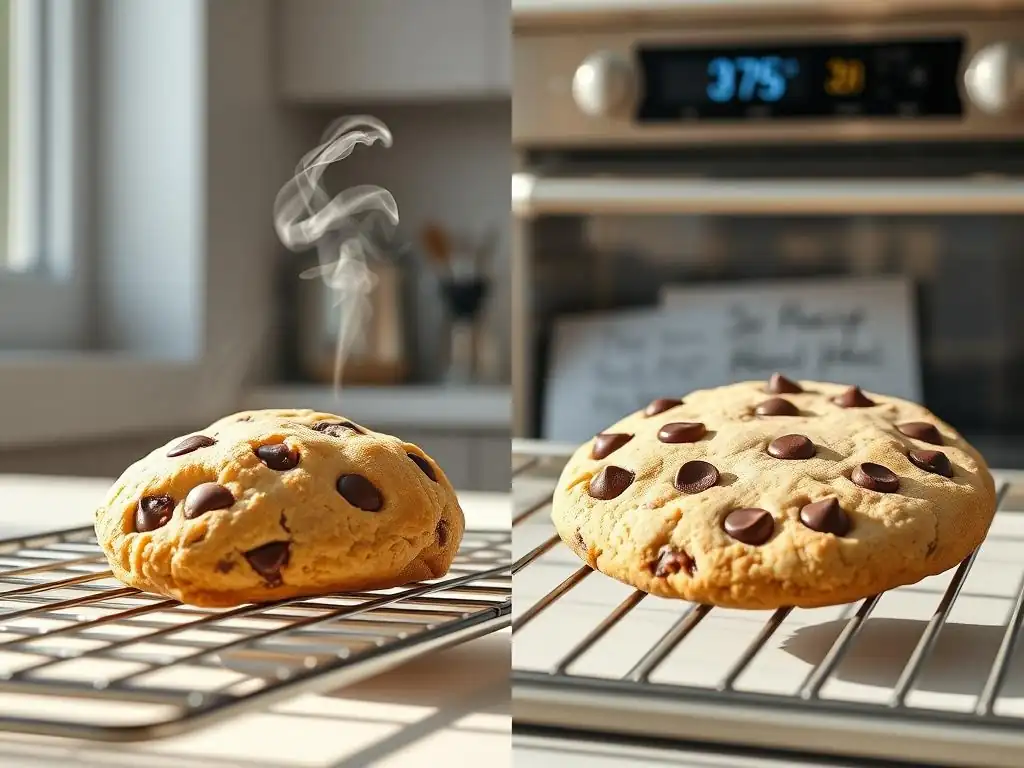
Many common baking mishaps can be traced back to one fundamental error: failing to preheat the oven properly. Understanding these pitfalls highlights just how essential proper oven preheating techniques baking truly are for consistent success in the kitchen. Avoid these frustrating issues by making preheating a non-negotiable first step in your baking process.
It's easy to get impatient, especially when eager to get a batch of cookies or a cake in the oven. However, the few extra minutes spent waiting for the oven to reach and stabilize its temperature can save you from wasted ingredients and disappointing results. Recognizing the symptoms of insufficient preheating can help you diagnose past baking failures and prevent future ones.
Unevenly Baked Cakes: A Direct Result of Insufficient Heat
Have you ever pulled a cake from the oven that looks perfectly golden on top but is still raw and gooey in the center? Or maybe one side is beautifully domed and browned while the other is flat and pale? This is a classic sign of uneven heat distribution, often caused by placing the cake in an oven that hasn't fully preheated. Without consistent heat radiating from all sides, different parts of the batter cook at different rates.
In a non-preheated oven, the heating elements might cycle on and off more frequently to reach the target temperature, creating fluctuating hot and cold zones. A delicate cake batter, which relies on a steady, uniform temperature to rise and set evenly, becomes a victim of this unstable environment. Proper oven preheating techniques baking ensure that the cake is surrounded by consistent heat from the moment it enters, allowing it to bake through evenly and develop a uniform crumb structure and crust color.
Soggy Bottoms and Doughy Centers: Preheating as the Solution
Soggy pie bottoms, undercooked bread centers, or doughy cookie middles are frustrating issues that can often be solved with proper preheating. For items like pies or tarts with wet fillings, the bottom crust needs to cook quickly and set before it absorbs too much moisture from the filling. A hot, preheated surface (like an oven rack or baking stone that has heated with the oven) provides the necessary thermal energy to crisp up the bottom crust rapidly.
Similarly, thicker items like loaves of bread or dense cakes require heat to penetrate to the center to cook thoroughly. If the oven isn't hot enough from the start, the outside might set too quickly (or worse, burn) while the interior remains undercooked. Proper oven preheating techniques baking ensures that the initial intense heat drives moisture out and cooks the interior effectively, preventing those unpleasant doughy textures. For example, baking a rustic loaf of bread often requires preheating the oven to a high temperature, like 450°F (230°C), to achieve a strong initial oven spring and a crisp crust, which is impossible if the oven isn't fully up to temperature.
The initial temperature shock of entering a hot oven is vital for certain baked goods. Cookies, for instance, rely on the fat melting at a specific rate in a hot environment to spread just the right amount before the structure sets. If the oven isn't hot enough, the fat might melt too slowly, causing excessive spread and resulting in thin, flat cookies that might also be pale and lack proper texture.
Soufflés are perhaps the most dramatic example of temperature sensitivity. They rely on steam expansion within the egg structure to rise dramatically. Placing a soufflé into an oven that isn't precisely preheated to the correct temperature (often 375-400°F or 190-200°C) means the steam won't generate enough force for a proper rise, or the delicate structure might collapse due to uneven or insufficient heat. Mastering proper oven preheating techniques baking is absolutely critical for these temperature-sensitive recipes to achieve their intended light, airy structure and impressive volume.
Mastering Proper Oven Preheating Techniques
Knowing why you should preheat is just the beginning. Mastering how to preheat your oven effectively is key to unlocking consistent baking success. Proper oven preheating techniques baking involve more than just setting the temperature and waiting for a light to turn off. It requires understanding your specific oven and allowing adequate time for it to reach a stable, uniform temperature.
This section will walk you through the practical steps to ensure your oven is perfectly ready every time you bake. From setting the dial to verifying the temperature, these techniques are simple but make a world of difference in your final product.
Setting the Correct Temperature
The first step in proper oven preheating techniques baking is always to set your oven to the exact temperature specified in your recipe. Avoid the temptation to round up or down, or to guess. Recipes are developed with specific temperatures in mind for optimal results. If a recipe calls for 325°F (160°C), set it precisely there.
It's also important to ensure you are using the correct setting (e.g., Bake, Convection Bake). Most standard recipes assume a conventional "Bake" setting unless otherwise specified. If using a convection setting, you might need to adjust the temperature or time, but the principle of preheating still applies, often even more so to ensure the circulating air is at the target temperature from the start. Always double-check the recipe instructions for any specific preheating or oven setting guidance.
Knowing When Your Oven is Ready
This is where many bakers fall short on proper oven preheating techniques baking. Most ovens have an indicator light or beep that signals when the set temperature has been reached. However, this often only means the air temperature has reached the target. The oven walls, racks, and door – which absorb and radiate heat – take longer to fully warm up and saturate the cavity with stable, even heat.
A good rule of thumb is to wait at least 15-20 minutes after your oven indicates it has reached temperature before placing your food inside. For higher temperatures (above 400°F or 200°C) or older ovens, this might take even longer, perhaps 25-30 minutes. This extra waiting period allows the thermal energy to fully distribute and stabilize throughout the oven, providing that crucial consistent environment for your baked goods.
Dealing with Oven Variations: Calibrating for Accurate Temperature
Oven thermostats can be notoriously inaccurate. It's not uncommon for an oven set to 350°F to actually be heating to 325°F or 375°F. This variation can significantly impact baking outcomes. A crucial part of mastering proper oven preheating techniques baking is knowing the true temperature inside your oven.
The best way to do this is by using an independent oven thermometer. Place a reliable oven thermometer on the center rack before preheating. Monitor it while the oven preheats and after it has supposedly reached temperature and sat for 15-20 minutes. Does it match the set temperature? If your oven consistently runs 25°F cool, you'll know to set it 25°F higher (e.g., set to 375°F to achieve a true 350°F). This simple step of calibrating your baking by knowing your oven's true temperature is invaluable for consistent results.
- Task List: Checking Your Oven's Accuracy
- [ ] Purchase a reliable oven thermometer.
- [ ] Place the thermometer on the middle rack of your cold oven.
- [ ] Set your oven to a common baking temperature, like
350°F. - [ ] Let the oven preheat fully (wait the extra 15-20 minutes after the light/beep).
- [ ] Check the thermometer reading. Note the difference.
- [ ] Repeat at a different temperature, like
400°F. - [ ] Use these observations to adjust your oven setting in the future.
Beyond the Basics: Advanced Oven Preheating Tips for Bakers
Once you've mastered the fundamental proper oven preheating techniques baking, you can explore ways to optimize your oven setup for specific types of baked goods. These advanced tips leverage the power of preheating to enhance texture, crust development, and overall baking performance. They often involve utilizing additional tools or understanding how different oven types behave.
Incorporating these techniques can take your baking from good to exceptional, especially for items that benefit from intense, consistent heat transfer from the start.
Preheating with Baking Stones or Steel: Enhancing Crust and Heat Retention
For bakers serious about achieving artisan-quality bread crusts or perfectly crispy pizza bases, preheating a baking stone or steel is a game-changer. These dense materials absorb and retain a significant amount of heat. When dough is placed directly onto a preheated stone or steel, it receives a powerful burst of conductive heat from below.
This intense initial heat transfer is crucial for rapid oven spring in bread, creating a light interior and a thicker, crisper bottom crust. To use a stone or steel effectively, place it in your oven before turning it on. Allow it to preheat with the oven for at least 30-60 minutes (or even longer for very thick stones/steels) after the oven reaches the set temperature. This ensures the stone/steel is fully saturated with heat, providing that incredible thermal boost essential for achieving professional results.
Convection Oven Considerations: Adjusting Preheating Times and Temperatures
Convection ovens use a fan to circulate hot air, resulting in faster, more even cooking. While this can be beneficial, it also means that proper oven preheating techniques baking need slight adjustments. Because the air is constantly moving, convection ovens often reach the set temperature faster than conventional ovens. However, they still require time for the oven cavity to heat up uniformly.
Many recipes suggest lowering the temperature by about 25°F (15°C) and/or reducing the baking time when using convection. Even with the fan, preheating is still essential to ensure the circulating air is at a stable temperature from the moment food is introduced. While the initial heat-up might be quicker, still allow a buffer time (perhaps 10-15 minutes after the beep) for the oven's internal temperature to stabilize fully before baking, especially for delicate items.
Preheating for Specific Recipes
Different recipes might benefit from slightly different preheating approaches. While the core principle of getting the oven fully hot and stable remains, the target temperature and duration might vary based on the desired outcome.
- High Heat for Crusts: Breads and pizzas often call for very high preheating temperatures (
450-500°For230-260°C) to achieve a rapid rise and a well-developed crust. Allowing ample preheating time at these temperatures is critical for saturating the oven and any baking stones/steels. - Moderate Heat for Cakes & Muffins: Standard temperatures around
325-375°F(160-190°C) require sufficient time (20+ minutes after the signal) to ensure even heat distribution for uniform rising and baking, preventing raw centers or burnt edges. - Low and Slow: Even for recipes baked at lower temperatures, like meringues or custards (
200-250°For90-120°C), preheating is still necessary to ensure the low temperature is stable and consistent from the start, preventing temperature fluctuations that can ruin delicate structures.
Understanding these nuances helps refine your proper oven preheating techniques baking for optimal results across a wide range of recipes.
Debunking Myths About Oven Preheating
Despite its importance, several myths surround oven preheating that can lead bakers astray. Dispelling these misconceptions is part of mastering proper oven preheating techniques baking and ensuring you get the best possible results every time you turn on your oven. Let's tackle some common beliefs that don't hold up to baking science.
Ignoring these myths and adhering to best practices will significantly improve your baking consistency and quality. It's better to wait a few extra minutes than to waste ingredients and effort on a bake that doesn't turn out right.
Myth: "A Few Minutes is Enough" - The Reality of Full Preheating
One of the most persistent myths is that waiting just a few minutes, or until the oven light turns off, is sufficient for preheating. As discussed earlier, the light typically only indicates that the air temperature has reached the set point. The oven walls, racks, and door, which are essential for radiating consistent heat, take considerably longer to heat up fully and evenly.
Placing food into an oven that has only preheated for a short time means it enters an environment with unstable, uneven temperatures. This directly contributes to uneven baking, poor rise, and inconsistent texture. The reality is that proper oven preheating techniques baking require patience – typically 15-20 minutes beyond the initial signal for standard temperatures, and longer for higher temperatures or when using baking stones/steels.
Myth: "Preheating Only Matters for Certain Recipes" - Universal Importance
Another myth is that preheating is only critical for delicate items like soufflés or finicky recipes. The truth is, preheating is universally important for all baked goods, from a simple batch of chocolate chip cookies to a complex sourdough loaf. While some items might be more visibly affected by insufficient preheating, every recipe relies on predictable, consistent heat to achieve its intended structure, texture, and flavor.
Even sturdy items like casseroles or roasted vegetables benefit from being placed in a preheated oven, which ensures they start cooking immediately at the correct temperature. Skipping preheating means you're starting the cooking process in an unstable, cooler environment, leading to extended baking times and potentially compromised results. Mastering proper oven preheating techniques baking applies across the board, regardless of what you're making.
Myth: "Oven Thermometers Are Always Accurate" - Calibration and Verification
Relying solely on an oven's built-in thermostat or assuming that any oven thermometer is perfectly accurate is another potential pitfall. Built-in thermostats can drift over time, and external oven thermometers can also vary in accuracy, especially cheaper models. Their placement within the oven also matters; a thermometer placed too close to a heating element will give a falsely high reading.
While using an external oven thermometer is a crucial step in proper oven preheating techniques baking, it's important to verify its accuracy if possible (e.g., testing it in boiling water) and to check the temperature in multiple spots in your oven if you suspect unevenness. Treat the thermometer as a guide, but also observe how your baked goods are cooking. If they are consistently browning too fast or too slow relative to the recipe time, your oven temperature might be off, even if your thermometer says otherwise.
Troubleshooting Oven Preheating Issues: What to Do When Things Go Wrong
Even with the best intentions for proper oven preheating techniques baking, you might encounter issues. Perhaps your oven seems to take an unusually long time to heat, or your external thermometer gives readings that don't make sense. Knowing how to troubleshoot these problems can save you frustration and help you get back to baking successfully.
These steps can help you diagnose common preheating problems and find solutions, ensuring your oven provides the reliable environment your baked goods need.
Oven Not Reaching Temperature
If your oven is taking an excessively long time to preheat or never seems to reach the set temperature according to your external thermometer, several factors could be at play:
- Heating Element Issues: On electric ovens, check if both the bake and broil elements are glowing red during the preheating cycle (they often cycle on and off). If one isn't working, the oven will struggle to reach temperature. On gas ovens, ensure the igniter is lighting the burner properly.
- Thermostat Problem: The oven's internal thermostat might be faulty, incorrectly reading the temperature and not signaling the heating elements to stay on long enough.
- Door Seal: A damaged or worn door seal allows heat to escape, making it difficult for the oven to maintain temperature. Check the seal for cracks or gaps.
- Oven Size/Type: Very large or professional-style ovens can take longer to preheat than standard residential models. Be patient and allow extra time.
If you suspect a faulty component, it's often best to consult the oven's manual or contact a qualified appliance repair technician.
Inaccurate Oven Thermometer: Calibration Techniques
If your external oven thermometer seems inconsistent or gives readings that contradict how your food is baking, it might be inaccurate. While professional calibration is complex, you can perform a simple test:
- Boiling Water Test: Place the thermometer in vigorously boiling water. It should read
212°F (100°C)at sea level. If it doesn't, note the difference. Remember that boiling point decreases at higher altitudes. - Ice Bath Test: Place the thermometer in a glass filled with ice water. It should read
32°F (0°C).
If your thermometer is significantly off, consider replacing it with a new, reliable model. Even a new thermometer should be checked periodically, perhaps every few months, as part of your routine proper oven preheating techniques baking checks.
Fluctuating Oven Temperature
Some temperature fluctuation is normal as the oven's thermostat cycles the heating elements on and off to maintain the average temperature. However, extreme fluctuations (more than 15-20°F above or below the set temperature after full preheating) can indicate a problem.
- Thermostat Issues: A faulty thermostat might be causing the heating elements to stay on too long or turn off too soon.
- Placement of Food: Placing very large or cold items into the oven can cause a temporary significant temperature drop, but the oven should recover relatively quickly if functioning correctly and fully preheated.
- Door Opening: Frequently opening the oven door releases heat and causes temperature drops. Try to peek through the oven window instead.
If your oven exhibits significant and persistent temperature swings even after allowing ample preheating time and using an accurate thermometer, it might require professional service. Consistent, proper oven preheating techniques baking relies on a stable temperature environment, so addressing fluctuations is important for success.
Optimizing Your Baking Results Through Proper Oven Preheating
Ultimately, the goal of mastering proper oven preheating techniques baking is to achieve consistently excellent results. By understanding why preheating is important, how it affects your baked goods, and how to ensure your oven is accurately ready, you set yourself up for baking success. Preheating isn't just a suggestion; it's a fundamental step that impacts everything from texture and rise to color and flavor.
Incorporating proper preheating into your baking routine ensures that every recipe gets the best possible start, leading to predictable and delicious outcomes. It's a small investment of time that yields significant rewards in the quality of your baked goods.
Achieving Perfect Results: Combining Preheating with Other Baking Best Practices
Proper oven preheating techniques baking are a cornerstone, but they work in synergy with other best practices:
- Accurate Ingredient Measurement: Using kitchen scales for dry ingredients ensures the correct ratio of flour, sugar, etc., which affects how a recipe behaves under heat.
- Following Recipe Instructions: Adhering to mixing times, order of ingredients, and pan sizes specified in the recipe is crucial.
- Using Ingredients at the Correct Temperature: Ensuring butter is softened, eggs are at room temperature, or liquids are warmed as required impacts emulsion and leavening.
- Avoiding Overmixing: Developing too much gluten in cakes or muffins can make them tough.
- Not Opening the Oven Door Frequently: Every time you open the door, the temperature drops, potentially causing delicate items to fall or extending baking time unnecessarily.
When you combine meticulous ingredient preparation and technique with proper oven preheating techniques baking, you create an environment where your baked goods can truly shine.
BakeWithEase Recommendations: Preheating as the Cornerstone of Baking Success
At BakeWithEase, our mission is to make baking accessible and enjoyable for everyone. We emphasize simple, clear techniques that guarantee success. That's why we consider proper oven preheating techniques baking to be one of the absolute cornerstones of our approach. It's a foundational skill that empowers you to achieve reliable results with confidence.
We recommend:
- Always preheat your oven to the temperature specified in the recipe.
- Allow at least 15-20 minutes after the oven signals it's ready for full thermal saturation.
- Use an independent oven thermometer to verify your oven's accuracy and adjust your settings accordingly.
- Be patient! The extra waiting time is worth it for better texture, rise, and flavor.
By making proper oven preheating techniques baking a non-negotiable part of your process, you are taking a significant step towards mastering the art of baking and enjoying consistently delicious treats from your kitchen. Happy baking!
Frequently Asked Questions
What happens if I don't preheat my oven properly?
Failing to preheat your oven can lead to uneven baking, resulting in some parts being undercooked while others are overcooked. This is because the oven temperature hasn't stabilized, impacting the final texture and rise of your baked goods.
How long should I preheat my oven for baking?
The ideal preheating time depends on your oven model, but generally, allow for at least 15-20 minutes after the oven indicates it has reached the set temperature. This ensures the oven walls and rack are properly heated.
What's the best way to check if my oven is fully preheated?
While the oven's indicator light is helpful, using an oven thermometer is the most accurate method. Place it inside the oven and wait until it reaches the desired temperature before baking.
Can preheating at a higher temperature than the recipe calls for improve baking?
No, preheating at a higher temperature is generally not recommended. It can cause the exterior of your baked goods to cook too quickly, while the interior remains undercooked, leading to uneven results.
Does preheating affect different types of baked goods differently?
Yes, preheating is crucial for all baked goods, but particularly important for items like bread and pastries that require a rapid rise. Proper preheating ensures they achieve the desired texture and volume.
Final Reflection: The Unsung Hero of Baking Success
Preheating your oven isn't just a suggestion; it's the cornerstone of consistent, delicious baked goods. Ignoring this crucial step is akin to building a house without a foundation – the results will be unstable and ultimately disappointing. The impact of proper preheating extends far beyond a perfectly browned crust; it's about achieving the precise temperature control necessary for chemical reactions within the batter or dough to unfold as intended.
The consistent rise of baking as a popular hobby and profession highlights the enduring importance of mastering fundamental techniques like preheating. This seemingly simple act speaks volumes about the dedication and precision required to create truly exceptional baked goods. It's a testament to the power of patience and attention to detail, qualities that extend far beyond the kitchen. Baking is a science, but it's also an art. The details matter.
– Unknown This quote perfectly encapsulates the essence of preheating's role in the baking process; it's the bridge between scientific precision and artistic expression.
Now, consider your own baking journey. Have you ever experienced the frustration of a deflated cake or a tough cookie? Perhaps a poorly preheated oven was the culprit. I urge you to reflect on your baking practices and commit to mastering this fundamental technique. Embrace the power of preheating, and unlock a new level of success and satisfaction in your baking endeavors. The perfectly golden crust, the light and airy texture, the sheer joy of a flawlessly baked creation – these are the rewards that await those who understand and appreciate the importance of a properly preheated oven.
Unleash Your Inner Baking Maestro!
Thanks for taking the time to explore the crucial role of preheating your oven! We hope you now feel confident in achieving consistently perfect bakes. Ready to put your new knowledge into action?
- Bake something amazing today! Challenge yourself with a new recipe that requires precise oven temperature control – you'll be amazed at the difference.
- Share your baking triumphs (and challenges!) with our community on social media using #BakeWithEasePreheating. Let's inspire each other!
- Explore our recipe archive for more baking tips and techniques – discover the secrets to achieving perfect results every time!
What delicious creation will you preheat your oven for today?