
Using a Bench Scraper for Perfectly Smooth Buttercream Sides

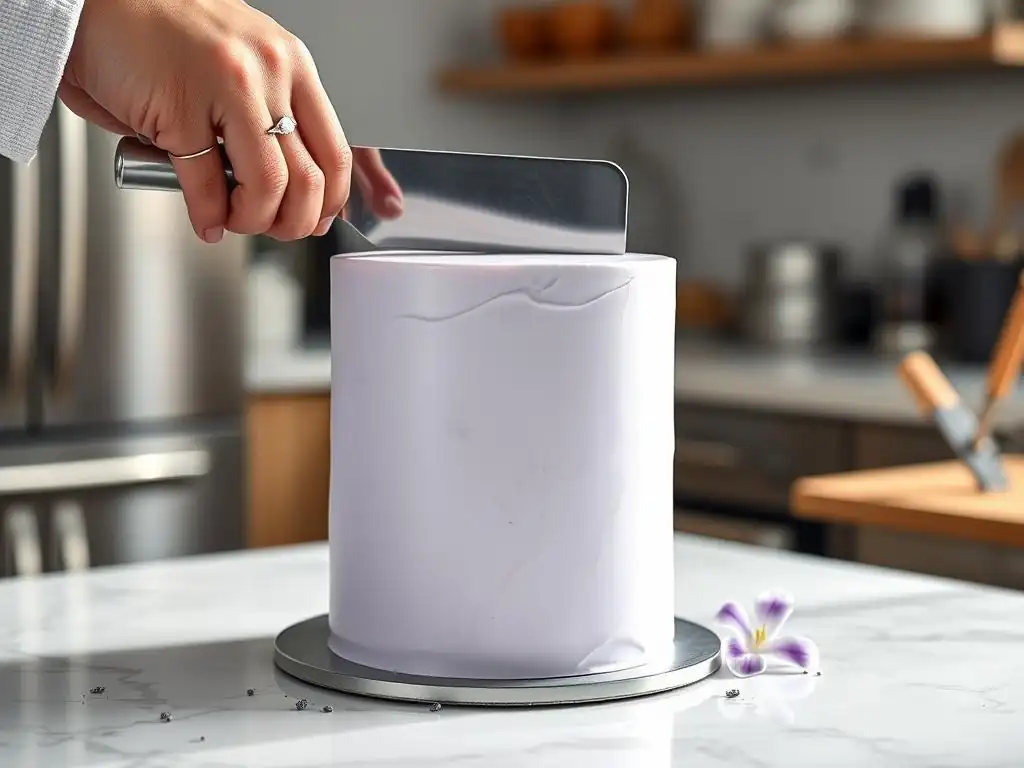
Welcome to BakeWithEase, where achieving baking brilliance is simpler than you think! Ever dreamed of flawlessly smooth buttercream sides on your cakes? Discover the secret weapon in every baker's arsenal: the bench scraper. Uncover the techniques and tips for achieving professional-looking results with our guide to bench scraper buttercream side smoothing, and say goodbye to uneven frosting forever. Are you ready to elevate your cake decorating game? Let's get started!
- Mastering Professional Buttercream Finishes with a Bench Scraper
- Preparing Your Cake and Buttercream for Optimal Smoothing
- Step-by-Step Guide to Achieving Smooth Buttercream Sides
- Advanced Bench Scraper Techniques for Cake Decorating
- Troubleshooting Common Buttercream Smoothing Problems
- Bench Scraper Selection and Maintenance
- Alternative Buttercream Smoothing Tools [Brief Overview]
- Conclusion: Elevating Your Cake Decorating with Bench Scraper Techniques
-
Frequently Asked Questions
- How does a bench scraper help achieve smooth buttercream sides?
- What type of bench scraper is best for smoothing buttercream?
- Can I use a bench scraper on other types of frosting besides buttercream?
- What's the best technique for using a bench scraper on a buttercream cake?
- How do I clean my bench scraper after smoothing buttercream?
- Final Reflection: The Transformative Power of a Simple Tool
- Unleash Your Inner Cake Artist: Achieve Flawless Buttercream!
Mastering Professional Buttercream Finishes with a Bench Scraper
Achieving a perfectly smooth buttercream finish on a cake can feel like the ultimate baking challenge. Often, home bakers struggle with uneven surfaces, visible spatula marks, and frustrating gaps. This is where a simple, yet incredibly effective tool comes into play: the bench scraper. While commonly used in bread making to divide dough, its flat, rigid edge makes it an indispensable asset for achieving that professional, bakery-quality smooth finish on your frosted cakes. Learning to use a bench scraper for buttercream side smoothing is a game-changer for your cake decorating skills.
A bench scraper is essentially a rectangular piece of metal or sturdy plastic with a straight edge, usually featuring a handle along the top. Its design provides a stable, flat surface that allows you to apply even pressure across the side of a cake.
Unlike flexible spatulas that can bend and create curves or waves, the rigidity of a bench scraper ensures that as you rotate the cake, the scraper removes excess frosting from the high points, leaving behind a consistently flat and smooth surface. This technique is far more efficient and precise than trying to smooth large areas with just a spatula.
Why a Bench Scraper is Essential for Smooth Buttercream
Using a bench scraper is crucial for anyone serious about achieving flawlessly smooth buttercream sides on their cakes. The primary reason lies in its design: a long, flat, and rigid edge.
When you hold this edge against the side of a frosted cake and rotate the cake, the scraper acts like a guide, shaving off the peaks and filling in the valleys of the buttercream layer. This process is significantly more effective than relying solely on the smaller, often flexible blade of an offset spatula, which tends to follow the contours of the cake and the frosting rather than creating a new, smooth plane.
Consider frosting a standard 8-inch round cake. Attempting to smooth the sides with just an offset spatula can take considerable time, often resulting in visible stroke marks and an uneven surface that might be off by several millimeters in thickness from one spot to another. A bench scraper, however, allows you to smooth the entire height of the cake side in one pass as you rotate it. This not only saves time but also provides a much straighter, more uniform result, making bench scraper buttercream side smoothing the go-to technique for professional bakers.
Benefits of Using a Bench Scraper for Frosting Application
The benefits of incorporating a bench scraper into your cake frosting routine are numerous, extending beyond just achieving smooth sides. Firstly, it dramatically improves the speed and efficiency of the smoothing process. Once you have a reasonably even layer of buttercream on the cake, using a bench scraper can reduce the time spent smoothing the sides from potentially 15-20 minutes with a spatula down to just 5-10 minutes, depending on the cake size and your practice level. This efficiency is invaluable, especially when frosting multiple cakes.
Beyond speed, the bench scraper ensures superior consistency and a more professional aesthetic. It helps create perfectly straight sides and sharp edges, which are hallmarks of professionally decorated cakes. Furthermore, by effectively removing excess frosting, it helps control the overall thickness of the buttercream layer, ensuring a balanced cake-to-frosting ratio in every slice. Mastering bench scraper buttercream side smoothing is truly an essential skill for elevating your cake decorating from amateur to impressive.
Preparing Your Cake and Buttercream for Optimal Smoothing
Achieving that coveted smooth finish with a bench scraper starts long before the scraper even touches the cake. Proper preparation of both the cake layers and the buttercream is fundamental. Think of it as building a house; a perfect exterior finish requires a solid, level foundation and quality materials. Taking the time to prepare your cake and frosting correctly will make the bench scraper buttercream side smoothing process infinitely easier and yield much better results.
Neglecting these preparatory steps can lead to frustrating issues later, such as crumbs in your final coat, uneven buttercream layers, or difficulty getting that perfectly flat side. A slightly domed cake layer or buttercream that is too soft can sabotage your smoothing efforts, no matter how skilled you become with the bench scraper. Investing effort in these initial stages pays off significantly in the final outcome of your beautifully frosted cake.
Leveling and Crumb Coating: The Foundation for a Perfect Finish
Leveling your cake layers is the critical first step. Using a serrated knife or a cake leveler, carefully trim the tops of your cooled cake layers so they are perfectly flat. Stacking uneven layers will result in a lopsided cake, which is incredibly difficult to frost smoothly. A level cake provides a straight vertical surface for your bench scraper to work against, which is essential for effective bench scraper buttercream side smoothing.
Once the layers are stacked, apply a thin layer of buttercream all over the cake – this is the crumb coat. The purpose of the crumb coat is to trap any loose crumbs from the cake layers, preventing them from getting into your final, smooth layer of frosting. Apply it thinly but ensure the entire cake is covered.
Then, chill the cake in the refrigerator for at least 20-30 minutes, or until the crumb coat is firm to the touch. This firm base is crucial; it stabilizes the cake and provides a solid, crumb-free surface for applying the final, thicker coat of buttercream that you will smooth with the bench scraper.
Achieving the Ideal Buttercream Consistency for Smooth Application
The consistency of your buttercream is paramount for successful bench scraper buttercream side smoothing. Buttercream that is too stiff will be difficult to spread evenly and may tear the cake; buttercream that is too soft will not hold its shape and will be impossible to smooth into a clean, straight side. The ideal consistency is often described as "medium" – it should be easily spreadable, like peanut butter, but hold stiff peaks when lifted with a spatula.
To achieve this, ensure your butter is at room temperature (soft but not melted) before creaming it. Add powdered sugar gradually, alternating with a liquid like milk, cream, or water, one tablespoon at a time, until the desired consistency is reached. If your buttercream is too stiff, add liquid sparingly.
If it's too soft, add more sifted powdered sugar. A common ratio might be around 1 pound (450g) of butter to 2 pounds (900g) of powdered sugar, plus 4-6 tablespoons of liquid, but this varies based on humidity and butterfat content. Test the consistency: it should spread smoothly without dragging and hold a peak without slumping immediately.
Tips for Perfect Buttercream Texture and Stability
Beyond consistency, the texture and stability of your buttercream also impact how well it smooths with a bench scraper. Ensure your powdered sugar is sifted to prevent lumps, which can cause drags and imperfections when smoothing. Cream your butter and sugar thoroughly to incorporate air, making the frosting light and fluffy, but be careful not to overmix after adding liquid, as this can sometimes incorporate too much air, leading to bubbles.
Temperature plays a significant role in buttercream stability. If your kitchen is warm, your buttercream may become too soft quickly. If this happens, pop the bowl of buttercream into the refrigerator for 5-10 minutes, then give it a quick stir before using. Conversely, if it's too cold and stiff, let it sit at room temperature for a bit or gently warm a small portion and mix it back in. The right temperature ensures the buttercream glides smoothly under the bench scraper without sticking or tearing, facilitating perfect bench scraper buttercream side smoothing.
Step-by-Step Guide to Achieving Smooth Buttercream Sides
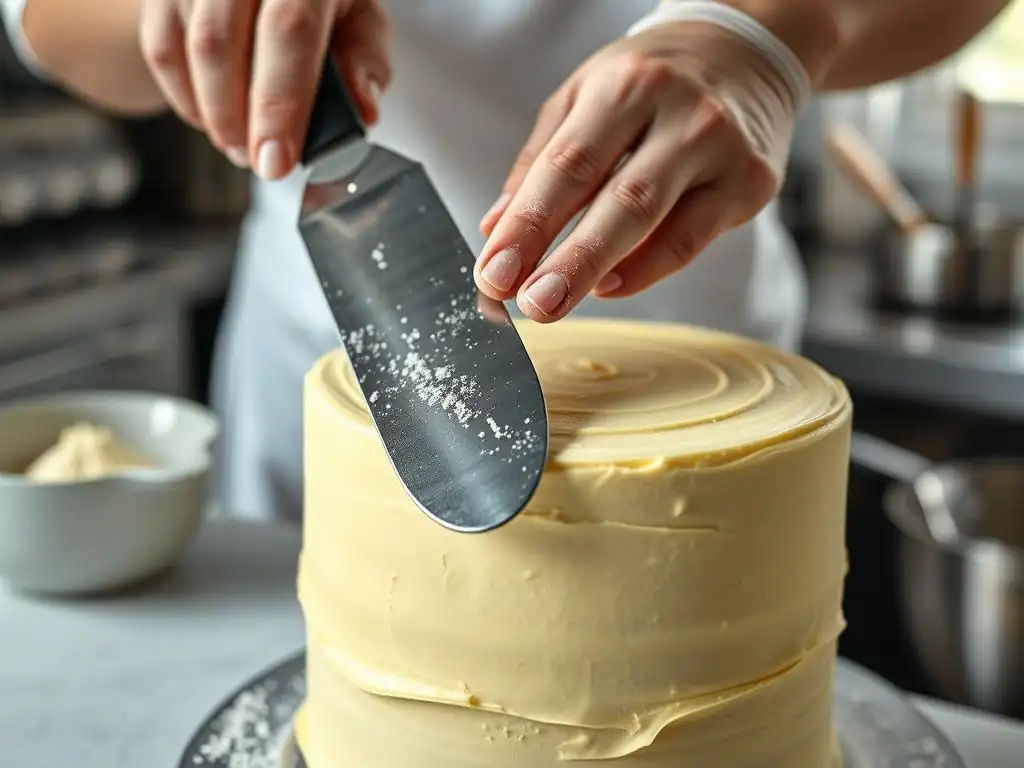
Now that your cake is crumb-coated and chilled, and your buttercream is the perfect consistency, you're ready for the main event: using the bench scraper to achieve those beautiful, smooth sides. This process requires a little practice, but by following these steps carefully, you'll be well on your way to mastering bench scraper buttercream side smoothing. Remember to work steadily and keep your movements consistent.
You will need your chilled, crumb-coated cake on a turntable, a generous amount of your perfectly prepared buttercream, and your chosen bench scraper. Having an offset spatula handy for applying the frosting and making minor adjustments is also helpful. Set up your workspace so you can easily rotate the turntable and hold the scraper steady.
Step 1: Applying an Even Layer of Buttercream
Apply a generous amount of your final coat buttercream to the sides of the chilled, crumb-coated cake. Use an offset spatula to dollop large amounts onto the sides, then spread it around to cover the entire surface. Don't worry too much about making it perfectly smooth at this stage; the goal is simply to ensure there is more than enough buttercream covering the sides, slightly thicker than your desired final layer.
Aim for a layer that is roughly 1/4 to 1/2 inch thick all around. It's better to apply too much frosting than too little, as the bench scraper will remove the excess. Ensure the frosting extends slightly above the top edge of the cake, creating a small lip. This excess will be used later to create a sharp top edge. Having a consistently thick layer initially makes the bench scraper buttercream side smoothing process much more efficient.
Step 2: Proper Bench Scraper Positioning and Technique
Hold your bench scraper vertically against the side of the cake. Ensure the flat edge is perpendicular to the base of the cake and parallel to the side you are smoothing. The bottom edge of the scraper should rest flat against the turntable or cake board. Your dominant hand will likely hold the scraper, while your non-dominant hand will turn the turntable.
Keep your elbow slightly bent and your wrist straight to maintain a steady grip. The key is to hold the scraper at a consistent angle and pressure throughout the rotation. A slight angle (maybe 5-10 degrees leaning into the cake) can sometimes help, but starting perpendicular is a good baseline. Consistency in positioning is vital for effective bench scraper buttercream side smoothing.
Step 3: Rotating and Scraping for a Smooth, Even Surface
With the bench scraper held steady against the side of the cake at the correct angle, begin slowly rotating the turntable with your other hand. Keep the pressure on the bench scraper consistent against the buttercream. As you rotate, the scraper will shave away excess frosting, revealing a smoother surface underneath.
Continue rotating the cake, keeping the scraper in place, for at least one full rotation, or until you have scraped all the way around. You will see the excess buttercream collecting on the edge of the scraper. After each full rotation, scrape the excess buttercream off the bench scraper into a separate bowl before continuing. Repeat this process – scrape, rotate, clean – until the sides appear mostly smooth and straight. Don't expect perfection after just one pass; it often takes several passes to achieve truly smooth bench scraper buttercream side smoothing.
Step 4: Correcting Imperfections and Filling Gaps
As you scrape, you may notice areas where there are gaps or indentations, or spots that are still uneven. This usually indicates that you didn't apply enough frosting in that area initially, or the scraper angle wasn't perfectly consistent. To correct these, use your offset spatula to add a little more buttercream to the low spots or gaps.
Once you've filled the imperfections, go back to Step 3 and repeat the scraping process. Hold the bench scraper against the side again and rotate the cake. The newly added buttercream will be smoothed into the surrounding area. Continue adding small amounts of frosting to imperfections and scraping until the sides are consistently smooth and straight. Patience is key here; don't be afraid to add more frosting and scrape again to achieve flawless bench scraper buttercream side smoothing.
Step 5: Chilling for a Firm, Smooth Finish
Once you are satisfied with the smoothness of the sides, carefully transfer the cake to the refrigerator. Chill the cake for at least 30-60 minutes, or until the buttercream is firm to the touch. This chilling step is crucial for setting the smooth finish you've achieved with the bench scraper.
A firm buttercream surface is much easier to handle when you move on to decorating the top of the cake or transferring it. It also helps lock in the smooth texture, preventing accidental bumps or smudges. Chilling the cake after bench scraper buttercream side smoothing is a non-negotiable step for a professional-looking result.
Advanced Bench Scraper Techniques for Cake Decorating
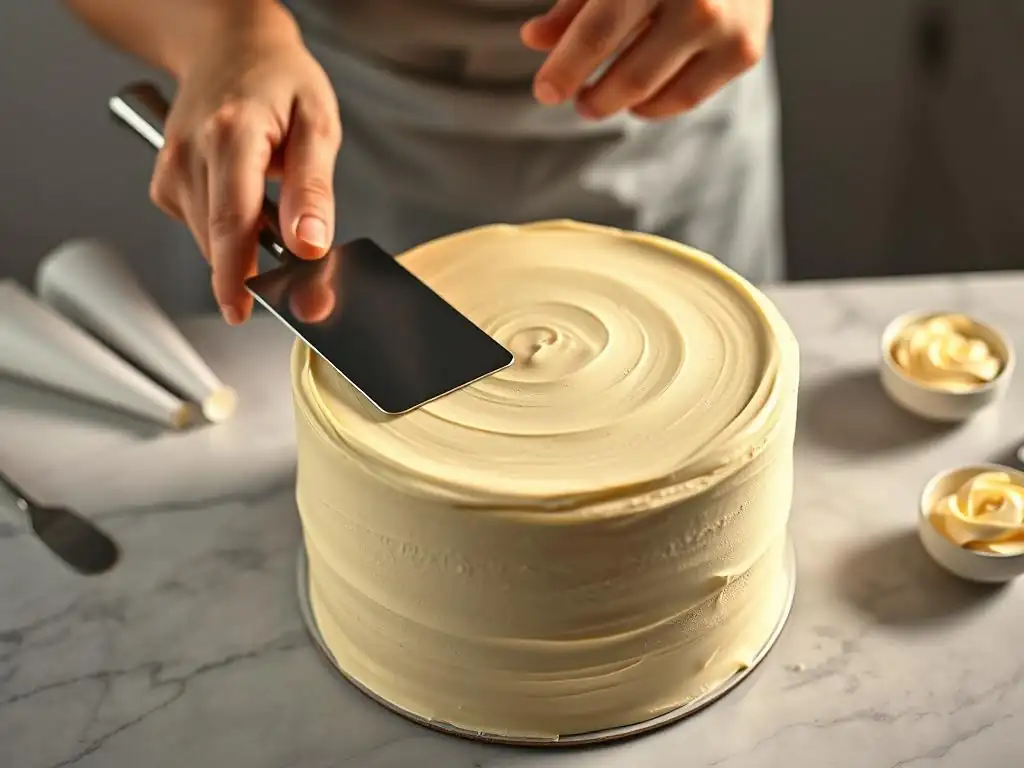
Once you've mastered the basic technique of using a bench scraper for smooth sides, you can explore more advanced applications. The bench scraper isn't just for creating a flat surface; it can also be used to enhance the finish or even create interesting textures. These techniques can add an extra level of polish and creativity to your cake designs, leveraging the tool's versatility beyond simple bench scraper buttercream side smoothing.
These methods often involve slight variations in technique or combining the scraper with temperature changes. Practicing these advanced methods will further expand your cake decorating repertoire and help you achieve even more stunning results with your buttercream finishes.
The Warm Water Method for an Ultra-Smooth Finish
For an incredibly smooth, almost glass-like finish on your buttercream, try the warm water method. After you have completed the initial bench scraper buttercream side smoothing and the sides are relatively straight, fill a tall container with hot water. Dip your metal bench scraper into the hot water, letting it heat up for a few seconds.
Carefully wipe the scraper completely dry with a clean towel (water droplets will ruin the smooth surface). Immediately hold the warm, dry scraper against the side of the chilled cake and rotate the turntable quickly. The warmth from the scraper will slightly melt the surface of the buttercream, creating a super smooth glide and a polished finish. You may need to re-dip and dry the scraper several times as you go around the cake. This technique is particularly effective after the cake has been chilled for a bit, firming up the underlying buttercream.
Creating Sharp, Clean Buttercream Edges
Achieving a sharp, clean top edge on your cake is a hallmark of professional finishing and works hand-in-hand with smooth sides. After you have smoothed the sides using the bench scraper and created that slight lip of excess frosting above the top edge, use the bench scraper (or a small offset spatula) to pull that excess frosting inwards towards the center of the cake.
Hold the scraper or spatula flat against the top surface of the cake, with the edge lined up with the outer edge of the cake. Swipe inwards, removing the excess frosting lip. Clean the scraper/spatula after each swipe. Work your way around the entire circumference of the cake. This action pulls the smoothed side frosting up and over, creating that crisp, defined edge. Repeat this process until the top edge is sharp and clean. This technique complements your bench scraper buttercream side smoothing perfectly.
Achieving Textured Buttercream Designs with a Bench Scraper [Example: Vertical Stripes]
While bench scrapers are great for smoothing, specialized textured bench scrapers (often called cake combs) can be used to create decorative patterns on the buttercream sides. However, even a standard straight bench scraper can be used for simple textures like vertical stripes. After applying a slightly thicker layer of buttercream than usual, hold your straight bench scraper against the side as you would for smoothing.
Instead of holding it perfectly flush, tilt the bottom edge away from the cake slightly, so only the top edge of the scraper is making firm contact. As you rotate the cake, the top edge of the scraper will drag through the frosting, creating vertical lines or ridges. The depth and spacing of the lines depend on the angle you hold the scraper and how quickly you rotate. This is a simple way to use your bench scraper for a decorative effect beyond just bench scraper buttercream side smoothing.
Troubleshooting Common Buttercream Smoothing Problems
Even with the right tools and techniques, you might encounter a few bumps (sometimes literally!) on your journey to perfect bench scraper buttercream side smoothing. Don't get discouraged; most common problems have straightforward solutions. Identifying the issue and knowing how to fix it is part of the learning process in cake decorating.
Here are some of the most frequent challenges faced when smoothing buttercream with a bench scraper and how to address them. Remember that practice and patience are your best friends.
Addressing Uneven Buttercream and Gaps
Problem: After scraping, you still see noticeable unevenness, dips, or areas where the cake shows through. Cause: Insufficient buttercream was applied initially in those spots, or your scraper wasn't held at a consistent angle and pressure. Solution: Use an offset spatula to add more buttercream specifically to the low or bare spots. Apply a generous amount, blending it slightly into the surrounding frosting.
Then, go back to the scraping step (Step 3) and repeat the process, holding the bench scraper firmly against the side again. Continue adding and scraping until the side is even. Don't try to fix large gaps by just scraping harder; you need to add more material.
Preventing and Removing Air Bubbles
Problem: Small air bubbles appear on the surface of the smoothed buttercream. Cause: Air was incorporated into the buttercream during mixing, or trapped during application and smoothing. Solution: To prevent bubbles, try mixing your buttercream on a lower speed after initial creaming. Before applying, vigorously stir the buttercream with a spatula by hand for a minute or two; this helps push air out.
If bubbles appear during smoothing, you can often pop them with a small pin or the tip of a spatula. Fill the tiny hole with a dab of fresh buttercream using the tip of a spatula or your finger, then gently smooth over the area with a warm, dry bench scraper or spatula. For persistent bubbles, sometimes a quick chill helps firm the buttercream, making them less likely to appear during the final passes.
Adjusting Buttercream Consistency Issues: Too Soft or Too Firm
Problem: The buttercream is either too soft (slumps, won't hold shape) or too firm (drags, tears cake). Cause: Incorrect ratio of ingredients, temperature of butter or liquid was off, or kitchen temperature is affecting consistency. Solution:
- Too Soft: If it's just slightly soft, chill the bowl of buttercream for 10-15 minutes, then stir. If it's significantly too soft, add more sifted powdered sugar, a quarter cup at a time, mixing well until the desired consistency is reached.
- Too Firm: If it's just slightly firm, let it sit at room temperature for a bit, or beat it on low speed for a minute to warm it slightly from friction. If it's significantly too firm, add liquid (milk, cream, water) one teaspoon at a time, mixing well after each addition, until it is spreadable but holds its shape.
Bench Scraper Selection and Maintenance
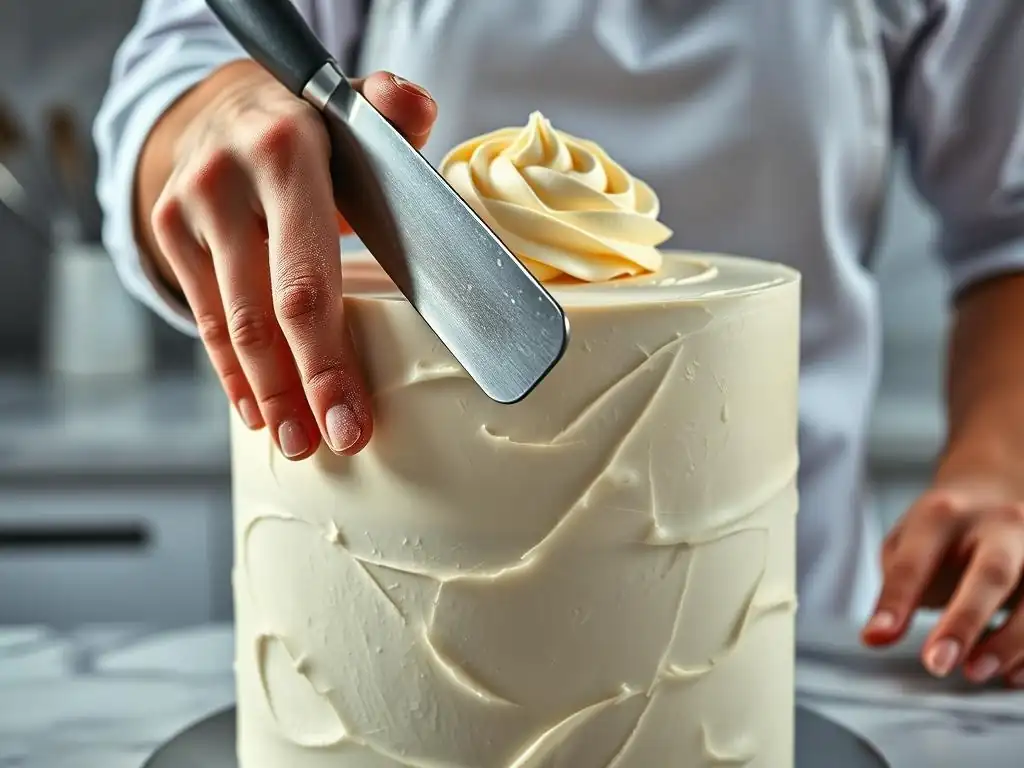
Choosing the right bench scraper is important for effective bench scraper buttercream side smoothing. While many different types are available, focusing on a few key features will ensure you get a tool that is both functional and durable. Proper care will also extend the life of your scraper and keep it performing its best.
A good quality bench scraper is a relatively inexpensive tool, typically costing between $10 and $25, but it makes a significant difference in the outcome of your frosted cakes. Investing in a sturdy one is worthwhile if you plan to frost cakes regularly.
Choosing the Right Bench Scraper [Material, Size, and Shape]
- Material: Bench scrapers are commonly made from stainless steel or sturdy plastic. Stainless steel scrapers are generally preferred for buttercream smoothing because they are rigid, durable, and can be warmed for the ultra-smooth finish technique. Plastic scrapers can work, but ensure it is a thick, rigid plastic that won't flex easily when pressure is applied. A metal scraper is often the top choice for serious bench scraper buttercream side smoothing.
- Size: Look for a scraper that is at least as tall as the side of the cakes you typically bake. For standard layer cakes (often 4-6 inches tall), a scraper with a blade height of 6-8 inches is ideal. This allows you to smooth the entire side in a single pass from bottom to top. A wider scraper (say, 6 inches wide or more) can also be helpful for covering more surface area quickly.
- Shape: The most important feature is a perfectly straight, sharp edge. Avoid scrapers with beveled or rounded edges if your primary goal is flat, smooth sides. Some scrapers have one straight edge and one beveled edge, which can be versatile, but ensure at least one edge is perfectly straight for effective bench scraper buttercream side smoothing.
Proper Cleaning and Storage for Longevity
After each use, it's important to clean your bench scraper immediately, especially if using buttercream which can harden. Wash it by hand with warm, soapy water, paying attention to the edge and where the handle meets the blade to remove all frosting residue. Dry it thoroughly with a towel to prevent water spots or rust, particularly on stainless steel models.
Store your bench scraper in a way that protects its edge. Avoid tossing it into a drawer with other sharp utensils that could nick or dull the straight edge. Some scrapers come with a protective sleeve, or you can store it vertically in a utensil crock or hang it. Proper cleaning and storage ensure your bench scraper remains sharp, straight, and ready for your next bench scraper buttercream side smoothing project.
Alternative Buttercream Smoothing Tools [Brief Overview]
While the bench scraper is arguably the most effective tool for achieving straight, smooth buttercream sides, it's helpful to understand how it compares to other tools and what other instruments can assist in the overall frosting process. Knowing the strengths and weaknesses of different tools helps you choose the best one for the task at hand.
No single tool does everything in cake decorating, but understanding their specific uses allows you to build a comprehensive toolkit. The bench scraper excels at creating flat, vertical surfaces, while other tools are better suited for application or smaller areas.
Spatulas vs. Bench Scrapers: Advantages and Disadvantages
- Spatulas (Offset Spatulas):
- Advantages: Excellent for applying buttercream to the cake, getting frosting into corners, and smoothing smaller areas or the top surface. Their flexibility can be useful for certain textures.
- Disadvantages: Difficult to achieve perfectly straight, flat sides due to their smaller size and flexibility. Requires more passes and skill to avoid waves and unevenness on large vertical surfaces. Not ideal for consistent bench scraper buttercream side smoothing.
- Bench Scrapers:
- Advantages: Designed specifically for creating flat, smooth, and straight vertical surfaces. Efficient for smoothing large areas quickly and achieving professional-looking sides. Essential for effective bench scraper buttercream side smoothing.
- Disadvantages: Less effective for applying the initial layer of frosting or working on the top surface (though they can be used for sharp edges). Not suitable for intricate detailing or working in tight spots.
Other Helpful Tools for Buttercream Application and Smoothing [Offset Spatula Recommendations]
In addition to your bench scraper, a good set of offset spatulas is indispensable. You will need them to apply the initial layer of frosting before smoothing with the scraper. A small offset spatula (around 4-6 inches blade length) is great for applying frosting and fixing small imperfections. A larger offset spatula (8-10 inches blade length) can be useful for applying frosting to larger cakes and smoothing the top surface.
Other helpful tools include a rotating cake turntable (essential for using a bench scraper effectively), a cake leveler or serrated knife for trimming layers, and potentially a small palette knife for very fine touch-ups. While these tools assist in the overall process, the bench scraper remains the star player for achieving those perfectly smooth buttercream sides.
Conclusion: Elevating Your Cake Decorating with Bench Scraper Techniques
Mastering the art of frosting a cake with smooth, straight sides is a skill that dramatically enhances the visual appeal of your baked creations. While it might seem intimidating at first, incorporating a bench scraper into your technique makes this achievable for home bakers of all levels. By understanding why the bench scraper is essential, properly preparing your cake and buttercream, and following the step-by-step process, you can consistently achieve professional-quality finishes.
Remember that practice makes perfect. Your first attempt at bench scraper buttercream side smoothing might not be flawless, and that's okay! Keep trying, pay attention to your buttercream consistency, and maintain a steady hand and consistent pressure with the scraper. As you gain confidence, you can even explore advanced techniques like the warm scraper method or creating sharp edges. Adding a quality bench scraper to your baking toolkit and learning these techniques is truly one of the best ways to elevate your cake decorating skills and impress everyone with your beautifully finished cakes.
Frequently Asked Questions
How does a bench scraper help achieve smooth buttercream sides?
A bench scraper provides a flat, even surface to remove excess buttercream and create a smooth, professional finish. It allows for controlled pressure and consistent application.
What type of bench scraper is best for smoothing buttercream?
A stainless steel bench scraper with a sharp, straight edge is generally recommended. Look for one that feels comfortable in your hand and is easy to grip.
Can I use a bench scraper on other types of frosting besides buttercream?
Yes, bench scrapers can be used on other frostings like ganache or even whipped cream, as long as the frosting is of a smooth and spreadable consistency. The technique remains the same.
What's the best technique for using a bench scraper on a buttercream cake?
Apply a generous layer of buttercream, then hold the bench scraper at a 45-degree angle against the cake. Rotate the cake stand, removing excess frosting in a smooth, continuous motion.
How do I clean my bench scraper after smoothing buttercream?
Wash the bench scraper immediately after use with warm, soapy water. Dry it thoroughly to prevent rust and maintain its sharp edge for future use.
Final Reflection: The Transformative Power of a Simple Tool
The humble bench scraper has revolutionized cake decorating, proving that achieving perfectly smooth buttercream sides isn't about complex techniques, but rather, the right tool wielded with precision. This seemingly small detail—the ability to create flawlessly smooth buttercream—transforms a homemade cake from good to extraordinary, elevating the entire baking experience. The impact extends beyond the visual appeal; it speaks to the dedication and attention to detail that goes into creating something beautiful and delicious.
The journey of mastering buttercream smoothing, for me, has been one of continuous learning and refinement. It’s a testament to how a simple tool can unlock a level of artistry I never thought possible. The details are not the details. They make the design.
- Charles Eames. This quote perfectly encapsulates the importance of seemingly small elements, like the perfect buttercream finish, in creating a truly impactful final product. The smooth surface isn't just aesthetically pleasing; it represents the care and precision put into every step of the baking process.
Now, it's your turn. Consider how a single tool, a simple technique, can dramatically improve your own craft, whether it's baking, painting, writing, or anything else you're passionate about. Don't underestimate the power of the seemingly small details. Pick up your bench scraper (or your equivalent tool), embrace the process, and discover the transformative power of precision and attention to detail in your own work. The results, like a perfectly smooth buttercream finish, will be truly rewarding.
Unleash Your Inner Cake Artist: Achieve Flawless Buttercream!
Thanks for taking the time to learn how a humble bench scraper can transform your buttercream frosting game! You've now got the skills to create perfectly smooth, professional-looking cakes. Ready to put your new knowledge into practice?
- Master the Scraper: Practice your technique on a smaller cake or even just a bowl of frosting. You'll be amazed at how quickly you improve!
- Share Your Success: Show off your flawlessly frosted creations on social media—tag us @BakeWithEase if you'd like!
- Challenge Yourself: Try a more intricate design using your newfound scraping skills. Think swirls, patterns, or even sculpted buttercream flowers!
What stunning cake creation will you tackle first? Let us know in the comments!