
Why Your Cake Won't Rise and How to Fix It

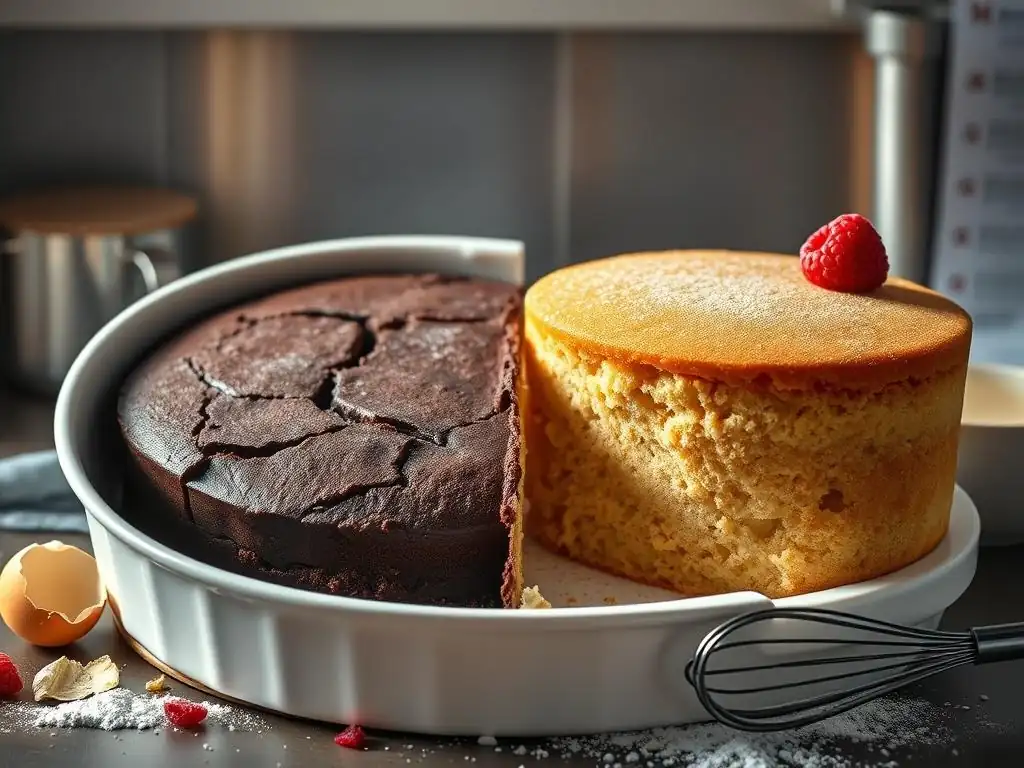
Welcome to BakeWithEase, your partner in baking perfection! Ever stared in dismay at a cake that just refuses to rise? You're not alone! Dive into our guide: " Why Your Cake Won't Rise and How to Fix It." We'll unlock the secrets behind common baking pitfalls and equip you with simple solutions to achieve that perfect, fluffy texture. Get ready to transform your baking game – the answers you've been searching for are just a scroll away!
- Understanding Why Cakes Don't Rise: Identifying the Root Cause
- Preventing Future Cake Failures: Step-by-Step Solutions
- DIY vs. Expert Consultation: Making the Right Choice
- Preventing Cakes From Failing: Proactive Measures for Bakers
- Recommended Baking Tools and Ingredients: Essentials for Success
- Conclusion: Achieving Perfectly Risen Cakes
-
Frequently Asked Questions
- Why is my cake flat and dense, even though I followed the recipe exactly?
- What are the most common mistakes that prevent a cake from rising properly?
- How important is the order in which I add ingredients when making a cake?
- Can the type of flour I use affect whether my cake rises well?
- What can I do if I realize halfway through baking that my cake isn't rising as much as it should?
- Final Reflection: The Sweet Science of a Successful Cake
- Unlock Your Baking Potential: Perfect Cakes Every Time!
Understanding Why Cakes Don't Rise: Identifying the Root Cause
Common Causes of Cakes Not Rising: Ingredient and Technique Factors
One of the most frequent reasons a cake won't rise properly stems from issues with the leavening agents. Baking soda and baking powder are sensitive ingredients; they react to moisture, heat, and acidity to produce the gas (usually carbon dioxide) that creates lift and airiness in your cake batter. If your leavening agents are old or have been stored improperly (like left open to humidity), they lose their potency.
Using expired baking powder, for example, means the chemical reaction needed for expansion simply won't happen effectively, leading to a dense, flat cake. A quick freshness test for baking powder involves adding a teaspoon to hot water – it should bubble vigorously. For baking soda, add a teaspoon to vinegar; it should fizz immediately.
Beyond leavening, the temperature of your ingredients plays a crucial role. Recipes often specify using ingredients like butter and eggs at room temperature. This isn't just a suggestion; it impacts how well they emulsify with other ingredients and how air is incorporated. Cold butter won't cream properly with sugar, which is a key step in creating tiny air pockets that expand during baking.
Similarly, cold eggs don't whip up as volumetrically as room-temperature eggs, resulting in less initial lift in the batter. Overmixing or undermixing the batter can also hinder rising. Overmixing develops too much gluten, leading to a tough texture and limited expansion, while undermixing might leave pockets of uncombined leavening or dense spots.
Types of Cake Problems: Dense, Sunken, and Crumbly
Cakes that fail to rise can manifest in a few distinct ways, each often pointing to a slightly different underlying cause. A dense cake that feels heavy and doesn't have an open crumb structure might indicate inactive leavening agents, expired flour, or perhaps too much liquid or sugar in the batter relative to the dry ingredients. It lacks the necessary internal structure and gas production to achieve lightness. This is a common outcome when the "cake won't rise solution" wasn't implemented during preparation.
Sunken cakes, which rise initially but then fall in the center, are often the result of opening the oven door too early (causing a sudden temperature drop), the oven temperature being too low, using too much leavening, or the cake being underbaked. The structure isn't set enough to support itself once removed from the heat.
A crumbly cake, while not strictly a rising issue in the same way as dense or sunken cakes, can still be related to ingredient balance or technique; too much flour or not enough fat/liquid can prevent the batter from forming a cohesive structure that rises evenly and holds together.
Preventing Future Cake Failures: Step-by-Step Solutions
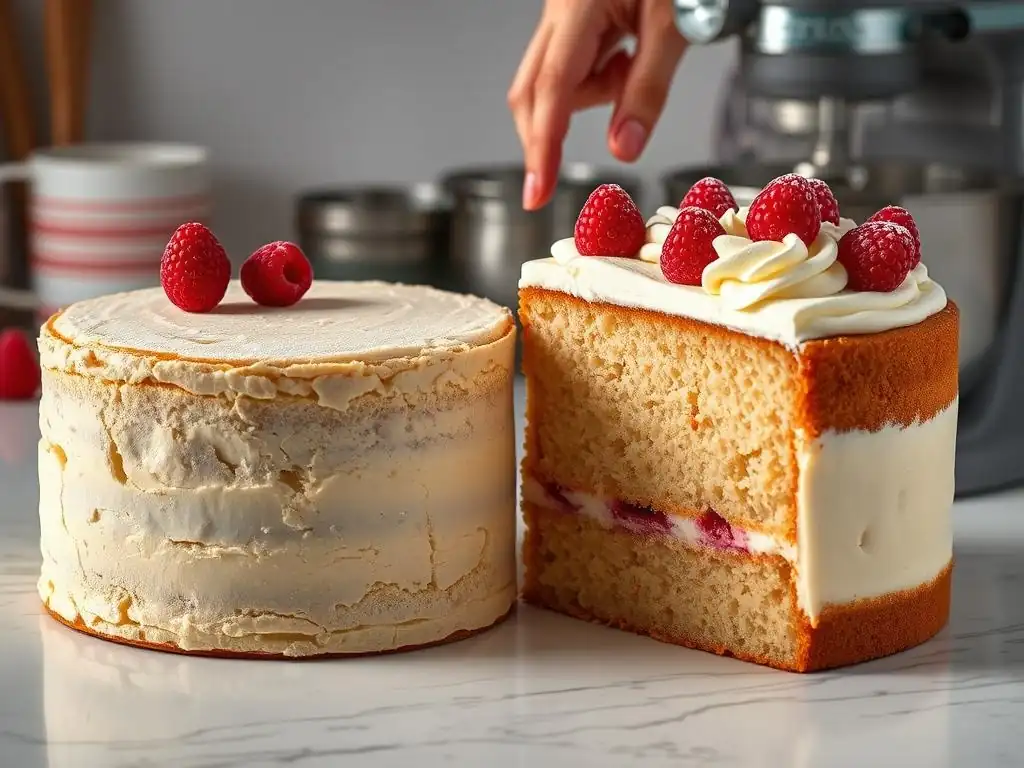
Slightly Sunken or Uneven Top: Quick and Easy Checks
If your cake has a slight dip in the center or an uneven dome, it's usually a minor issue that can be addressed with a few simple checks for your next bake. First, verify your oven temperature. Ovens can be notoriously inaccurate, sometimes running hotter or colder than the setting.
An oven thermometer is an inexpensive tool, typically costing under $10, that can save you a lot of frustration. Baking at a slightly incorrect temperature can drastically affect the cake's rise and structure. A 25°F difference might seem small, but it can be the reason your cake isn't performing as expected.
Another quick check involves your liquid ingredients. Are you measuring them precisely? Too much liquid can weigh down the batter, preventing it from rising properly. Ensure you're using standard measuring cups and leveling liquid ingredients correctly. Also, consider the pan size. Using a pan that's too small for the amount of batter can cause it to overflow or rise too quickly and then collapse. Most standard cake recipes are designed for specific pan sizes, like 8-inch or 9-inch rounds. Double-check the recipe requirements against the equipment you're using.
Checking Your Oven Temperature: Preparing for Consistent Baking
Accurate oven temperature is paramount for successful baking. Without it, even a perfect recipe and technique can result in a failed cake. Use a reliable oven thermometer placed in the center of your oven to get a true reading.
Preheat your oven for at least 15-20 minutes after it indicates it has reached the target temperature, as the internal temperature can fluctuate and needs time to stabilize. If your oven consistently runs hot or cold, you'll need to adjust the temperature setting accordingly for future bakes. For instance, if your oven reads 375°F when set to 350°F, set it to 325°F for your next cake.
This preparation step ensures that the leavening agents activate correctly and the cake bakes through evenly, allowing the structure to set before the gases escape. An oven that's too cool won't provide the necessary heat for the chemical reactions to happen fully, resulting in a dense cake. An oven that's too hot can cause the outside to set too quickly, preventing the inside from rising properly and potentially leading to a cracked or sunken top. Consistent temperature is a key element in finding a "cake won't rise solution."
Ensuring Ingredients Are Fresh: Using Proper Leavening for a Smooth Rise
The freshness and proper use of leavening agents like baking powder and baking soda are fundamental to a cake's rise. These ingredients have a shelf life, and their effectiveness diminishes over time, usually within 6-12 months once opened. Always check the expiration date on the packaging. Store them in airtight containers in a cool, dry place, away from moisture, which can prematurely activate them. Using fresh leavening is a straightforward "cake won't rise solution."
Furthermore, ensure you are using the correct type and amount of leavening specified in the recipe. Baking soda requires an acidic ingredient (like buttermilk, yogurt, or vinegar) to react fully, while baking powder contains both an acid and a base and primarily reacts when wet and then again when heated (double-acting). Substituting one for the other or using the wrong amount can drastically affect the outcome.
For example, using baking soda in a recipe that calls for baking powder without adding an acid will result in minimal lift. Precision in measuring leavening is also critical; too much can cause a rapid rise followed by a collapse, while too little prevents adequate lift.
Deep Cracks or Severe Sinking: Addressing Underlying Issues
When a cake consistently experiences deep cracks across the top or sinks significantly in the center, it suggests a more pronounced issue than just a slight unevenness. One common culprit is an oven that's too hot. High heat causes the outside of the cake to set rapidly, forming a crust, while the inside continues to expand.
As the inside pushes against the set crust, it cracks. If the inside is still underbaked when this happens, it can then collapse, leading to a sunken middle surrounded by a dense edge. Using an oven thermometer is vital here to confirm the actual temperature.
Another underlying issue can be the balance of ingredients, particularly the ratio of wet to dry ingredients or sugar to flour. Too much sugar can weaken the cake's structure, making it prone to sinking, as sugar caramelizes and spreads. An imbalance in the flour-to-liquid ratio can also affect the batter's consistency and ability to support the rise.
If you've checked your oven and leavening, review your measurements meticulously. Weighing ingredients, especially flour, using a kitchen scale (typically around $20-30) is far more accurate than using volume measurements, which can vary based on how the ingredient is packed. This precision is often the real "cake won't rise solution" for persistent issues.
Identifying the Source: Determining the Cause of the Sinking Pattern
To pinpoint the cause of deep cracks or severe sinking, consider the visual pattern. A cake that rises high and then sinks dramatically in the center often points to underbaking or opening the oven door too soon. The internal structure hasn't fully set, and the sudden temperature change or lack of sufficient baking time prevents it from holding its shape. If the cake is also excessively moist or gooey in the center, underbaking is highly likely.
If the cake rises and then cracks significantly but doesn't necessarily sink severely, it might indicate an oven that's too hot or too much leavening. The rapid expansion creates pressure that the quickly formed crust cannot withstand. Observing how the cake fails provides clues. Does it sink immediately upon opening the oven? Is the crack centered or more towards the edges? Is the texture inside uniform or are there dense, uncooked spots? These observations guide you toward the specific problem, helping you find the best "cake won't rise solution."
Reinforcing Your Technique: Preventing Future Sinking
Preventing future sinking requires reinforcing good baking practices. Ensure your oven is accurately calibrated and fully preheated before putting the cake in. Avoid opening the oven door during the critical initial phase of baking (usually the first two-thirds of the total baking time), as this causes temperature fluctuations that can lead to collapse. Use the baking time provided in the recipe as a guide, but rely on visual cues and the toothpick test for doneness. A toothpick inserted into the center should come out clean or with a few moist crumbs, not wet batter.
Additionally, pay attention to how you prepare the pan. Greasing and flouring correctly (or using parchment paper) ensures the cake releases cleanly, preventing it from sticking and potentially collapsing upon removal or cooling. Allowing the cake to cool in the pan on a wire rack for the time specified in the recipe (typically 10-15 minutes) before inverting it allows the structure to firm up further. Rushing the cooling process can also contribute to structural issues. Consistent technique is as vital as ingredient quality for a cake that rises properly.
Complete Failure or Dense Brick: Seeking Expert Guidance
When every attempt results in a cake that barely rises, resembles a brick, or is completely inedible, it might be time to seek expert guidance. This level of failure, where the "cake won't rise solution" seems elusive despite trying common fixes, could point to fundamental issues with the recipe itself, ingredient interactions you haven't considered, or advanced technique problems. A master baker or a baking instructor can provide personalized advice and potentially identify nuances in your process you might be overlooking.
Sometimes, the recipe itself might be flawed. An incorrect ratio of flour to leavening, an insufficient amount of fat or liquid, or unusual ingredients can all contribute to a complete lack of rise. Comparing the problematic recipe to similar, well-regarded recipes can sometimes highlight discrepancies. Consulting someone with extensive baking experience can help you analyze the recipe's structure and identify potential weaknesses. They might suggest ingredient substitutions or technique modifications based on their deep understanding of baking chemistry.
Recognizing Warning Signs: When to Consult a Master Baker
Warning signs that suggest you might benefit from expert help include consistent, repeatable failures across different recipes, even simple ones. If multiple attempts to bake a basic vanilla or chocolate cake result in a flat, dense product despite careful measuring and checking oven temperature, it's a good indicator. Another sign is feeling completely lost on why the issue is happening, even after researching common problems.
Furthermore, if you're attempting more complex recipes, such as delicate génoise or chiffon cakes that rely heavily on whipped eggs for leavening, and they consistently fail, a master baker can offer specific guidance on techniques like folding in ingredients without deflating the batter. They can demonstrate proper methods for creaming butter and sugar, whipping egg whites or yolks to the correct stage, and gently combining ingredients – techniques that are critical for achieving lift in these types of cakes. Investing in a baking class or private consultation can be the ultimate "cake won't rise solution" for complex issues.
Assessing the Outcome: Evaluating the Severity of the Problem
Evaluating the severity of your cake's failure helps determine the best course of action. Is the cake merely slightly less airy than desired, or is it completely flat and heavy? Can you identify a single potential cause (e.g., forgot the baking powder), or does it seem like multiple factors are contributing? A cake that is only slightly dense might just need a minor adjustment next time, like checking leavening freshness or oven temp.
A cake that is completely flat and hasn't risen at all, or has a texture like a hockey puck, indicates a major issue, most likely with the leavening agent being omitted or completely inactive, or a severe measurement error. Documenting your process, noting ingredient weights, temperatures, and baking times, can be invaluable when assessing the outcome and trying to diagnose the problem. This detailed assessment helps you decide if a simple tweak is needed or if you require more in-depth assistance to find your "cake won't rise solution."
DIY vs. Expert Consultation: Making the Right Choice
When to DIY: Handling Minor Issues and Adjustments
For common problems like a slightly sunken top, minor cracking, or a cake that's a bit denser than ideal but still edible, a DIY approach is usually sufficient. These issues are often resolved by double-checking common variables: oven calibration, ingredient freshness (especially leavening), accurate measurements, and avoiding opening the oven door too early. There's a wealth of information available online, including articles like this one, and in baking books that cover these frequent mishaps.
Tackling these minor issues yourself builds your baking skills and confidence. By systematically troubleshooting, checking each variable one by one, you learn how ingredients interact and how technique impacts the final product. For instance, if your cake cracked on top, trying the recipe again at a slightly lower temperature or positioning it differently in the oven (away from direct heat elements) are simple DIY adjustments. Experimenting with these small changes is often the most effective way to find your personal "cake won't rise solution" for minor flaws.
When to Consult an Expert: Addressing Persistent Failures and Complex Recipes
If you consistently face significant issues like cakes that don't rise at all, collapse entirely, or have extremely poor texture across multiple attempts and different recipes, consulting a baking expert is a wise investment. This is particularly true if you've already gone through the basic troubleshooting steps (checking leavening, oven temp, measurements) without success. An expert can observe your technique, analyze the specific recipe you're using, and identify less obvious issues.
Furthermore, when attempting challenging recipes that require advanced skills, such as making macarons, soufflés, or multi-layered celebration cakes, professional guidance can prevent costly failures and accelerate your learning. These recipes often have very specific requirements for ingredient temperatures, mixing times, and baking conditions that are difficult to master from a recipe alone. A baking class or private lesson provides hands-on feedback and tailored advice, offering a comprehensive "cake won't rise solution" for complex baking challenges.
Preventing Cakes From Failing: Proactive Measures for Bakers
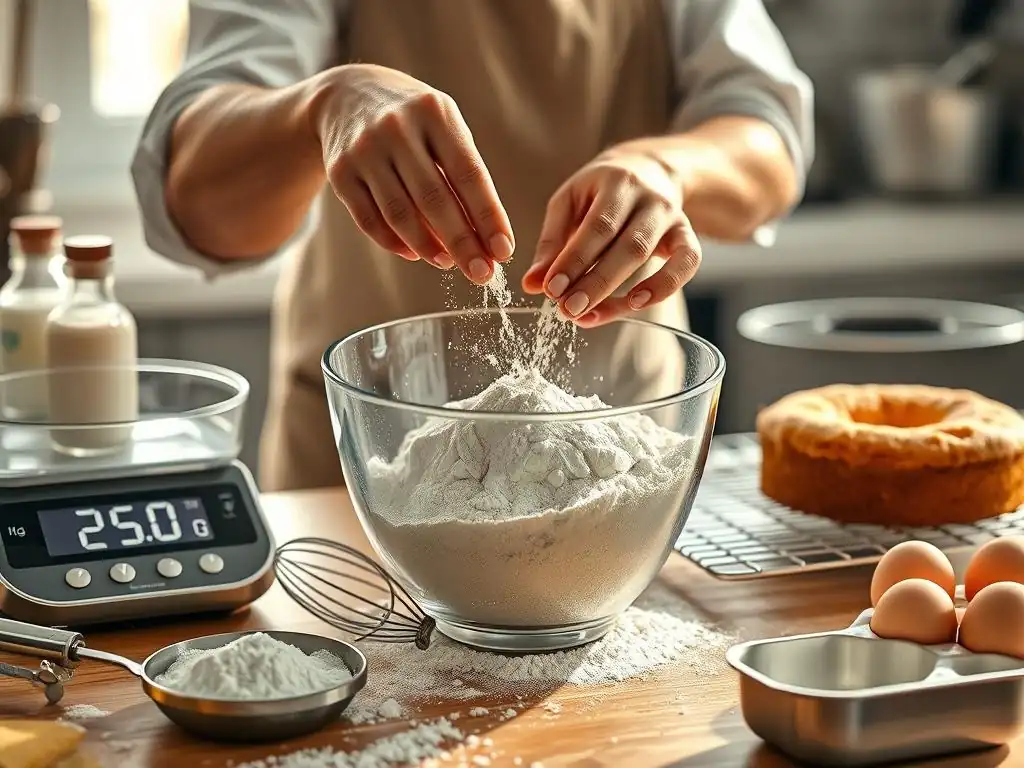
Ensuring Ingredients are at Room Temperature: Preventing Texture Issues
Bringing cold ingredients, particularly butter and eggs, to room temperature is a simple proactive measure that significantly impacts cake texture and rise. Room temperature butter creams with sugar much more effectively than cold butter, creating a stable structure filled with tiny air pockets. These pockets are crucial for the cake's initial lift in the oven. Cold butter doesn't emulsify properly, leading to a denser batter and a less airy cake.
Similarly, room temperature eggs whip up to a greater volume and incorporate more evenly into the batter than cold eggs. They also create a smoother emulsion, preventing the batter from curdling, which can negatively affect the cake's final texture and rise. Plan ahead and take these ingredients out of the refrigerator 30-60 minutes before you start baking. For a quicker method, you can place eggs in a bowl of warm (not hot) water for 5-10 minutes, and cut butter into small pieces to soften faster. This simple step is a vital part of any "cake won't rise solution" strategy.
Avoiding Opening the Oven Door Too Early: Reducing Temperature Shock
Resisting the urge to peek at your cake while it's baking is a critical proactive measure. Opening the oven door, especially during the first two-thirds of the baking time, causes a sudden drop in temperature inside the oven. This temperature shock can interrupt the leavening process and cause the delicate internal structure of the rising cake to collapse before it has fully set. This is a very common reason why cakes might sink in the middle.
Trust the process and the timing provided in the recipe. Most cakes require a consistent temperature environment to rise evenly and set properly. If you need to check on the cake, do so through the oven door window if possible. Only open the door when the cake is nearing the end of the baking time, typically when the edges have pulled away slightly from the pan or the top looks set. Minimizing oven door openings helps maintain the stable environment needed for a successful rise, proactively preventing a major reason why a "cake won't rise solution" is needed.
Addressing Recipe Issues: Ensuring Formula Stability
Sometimes, the issue isn't with your technique or ingredients, but with the recipe itself. Proactive bakers understand that not all recipes are created equal, especially those found online without rigorous testing. A recipe might have incorrect ingredient ratios, insufficient leavening, or unclear instructions that contribute to baking failures. If you've tried a recipe multiple times with consistent poor results despite following all the standard troubleshooting steps, consider that the recipe might be flawed.
Before investing time and ingredients in a new recipe, especially from an unfamiliar source, take a moment to review it. Does it seem balanced compared to similar recipes? Are the instructions clear?
Reading comments or reviews from others who have tried the recipe can also be helpful. If you suspect a recipe might be the issue, try a similar recipe from a trusted source, such as a reputable cookbook author or a well-known baking website. Using reliable recipes is a key proactive step in preventing cake failures and ensuring you don't need to search for a "cake won't rise solution."
Recommended Baking Tools and Ingredients: Essentials for Success
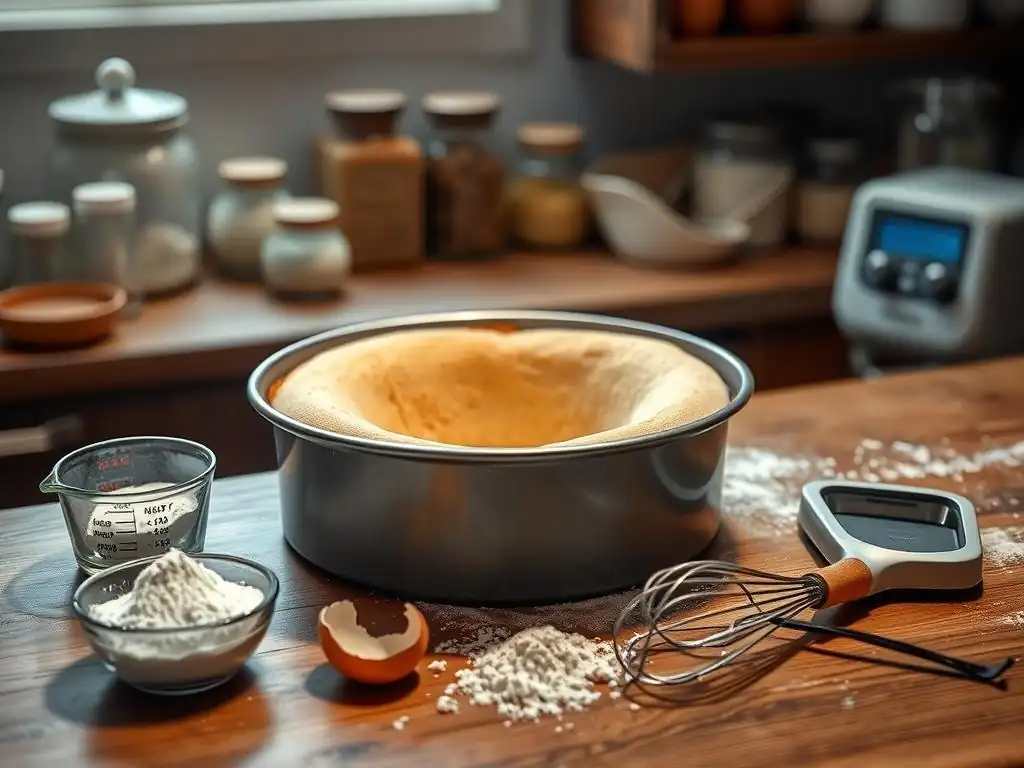
Digital Kitchen Scale
A digital kitchen scale is perhaps the single most impactful tool for improving baking consistency. Measuring ingredients, especially flour, by weight (grams or ounces) is far more accurate than using volume cups, which can vary significantly depending on how the ingredient is scooped or packed. Using a scale ensures you have the precise amount of each ingredient specified by the recipe, leading to more reliable results and helping you avoid common causes for why a cake won't rise.
Oven Thermometer
As previously mentioned, an inexpensive oven thermometer is crucial for verifying your oven's actual temperature. Relying solely on the oven's built-in thermostat can lead to baking at temperatures that are too high or too low, both of which negatively impact cake rise and texture. Placing a thermometer inside your oven provides an accurate reading, allowing you to adjust your oven setting if needed for consistent baking.
Fresh Leavening Agents
Always use fresh baking powder and baking soda. These are perishable ingredients that lose their effectiveness over time, even if the package isn't opened. Once opened, their shelf life is typically shortened, especially if exposed to moisture. Keep them in airtight containers and check their freshness periodically with the simple tests mentioned earlier. Using potent leavening is fundamental to achieving a proper cake rise and preventing a flat outcome.
Conclusion: Achieving Perfectly Risen Cakes
Mastering the art of baking cakes that rise beautifully is a rewarding process that combines understanding ingredients, precise technique, and careful observation. While frustrating when a cake won't rise, most issues stem from common, fixable problems like inactive leavening, inaccurate oven temperatures, incorrect measurements, or premature oven door openings. By systematically identifying the potential causes based on the type of failure (dense, sunken, cracked), and implementing the appropriate "cake won't rise solution," you can significantly improve your results.
Proactive measures, such as using fresh ingredients, ensuring proper ingredient temperatures, and trusting the baking process, are your best defense against cake failures. With practice and attention to detail, you'll be well on your way to consistently baking perfectly risen, delicious cakes.
Frequently Asked Questions
Why is my cake flat and dense, even though I followed the recipe exactly?
This is often due to issues with the leavening agents not working properly. It could also be because the ingredients weren't measured correctly or the oven temperature was off.
What are the most common mistakes that prevent a cake from rising properly?
Some common mistakes include using expired baking powder or baking soda, overmixing the batter which develops too much gluten, and opening the oven door during baking which causes a sudden temperature drop.
How important is the order in which I add ingredients when making a cake?
The order is crucial for proper emulsification and aeration. Typically, creaming together the butter and sugar creates air pockets vital for a light and fluffy texture.
Can the type of flour I use affect whether my cake rises well?
Absolutely! Using the wrong type of flour, like bread flour instead of cake flour, can result in a dense cake. Cake flour has less protein which results in a more tender crumb and better rise.
What can I do if I realize halfway through baking that my cake isn't rising as much as it should?
Unfortunately, there's not much you can do mid-bake to drastically improve the rise. Avoid opening the oven. For future bakes, double-check your ingredients and techniques.
Final Reflection: The Sweet Science of a Successful Cake
The seemingly simple act of baking a cake reveals a complex interplay of ingredients and technique; a failure to rise isn't just a culinary mishap, it's a lesson in precision and patience. Understanding the science behind leavening agents, proper mixing methods, and oven temperature control is crucial for achieving that perfect, lofty result. This knowledge isn't just about baking a better cake; it's about understanding the fundamental principles of chemistry and heat transfer in action.
The frustration of a sunken cake is a universal experience, a shared moment of culinary disappointment that transcends cultural boundaries. It's a reminder that even the most carefully planned endeavors can fall short if the fundamentals aren't mastered. As the old adage goes, The proof is in the pudding,
or in this case, the perfectly risen cake. This article aimed to demystify the process, offering solutions and empowering bakers to troubleshoot their own challenges, fostering a sense of accomplishment and confidence in the kitchen.
Now, consider your own "cakes" – the projects, goals, and aspirations you're working towards. Just like baking, achieving success requires careful planning, attention to detail, and the willingness to learn from setbacks. Don't let a "fallen cake" discourage you; instead, use this knowledge to identify the root cause, adjust your approach, and rise to the occasion. The next time you face a challenge, remember the lessons learned here: meticulous preparation, precise execution, and the unwavering belief in your ability to succeed will lead you to your own perfectly risen triumph.
Unlock Your Baking Potential: Perfect Cakes Every Time!
Thanks for taking the time to explore the secrets to perfectly risen cakes! We hope you now feel empowered to tackle even the most challenging recipes. Ready to put your new knowledge into practice?
- Bake a test cake this weekend! Use a simple recipe and focus on mastering the techniques we discussed – the results will be incredibly rewarding.
- Share your baking triumphs (or even your learning experiences!) with our community on social media using #BakeWithEase. Let's inspire each other!
- Explore our other articles on cake decorating and flavor combinations to further elevate your baking game.
What's your favorite cake recipe to experiment with, and what new technique are you most excited to try?