
The Science of Air Pockets: How Yeast Creates Crumb Structure

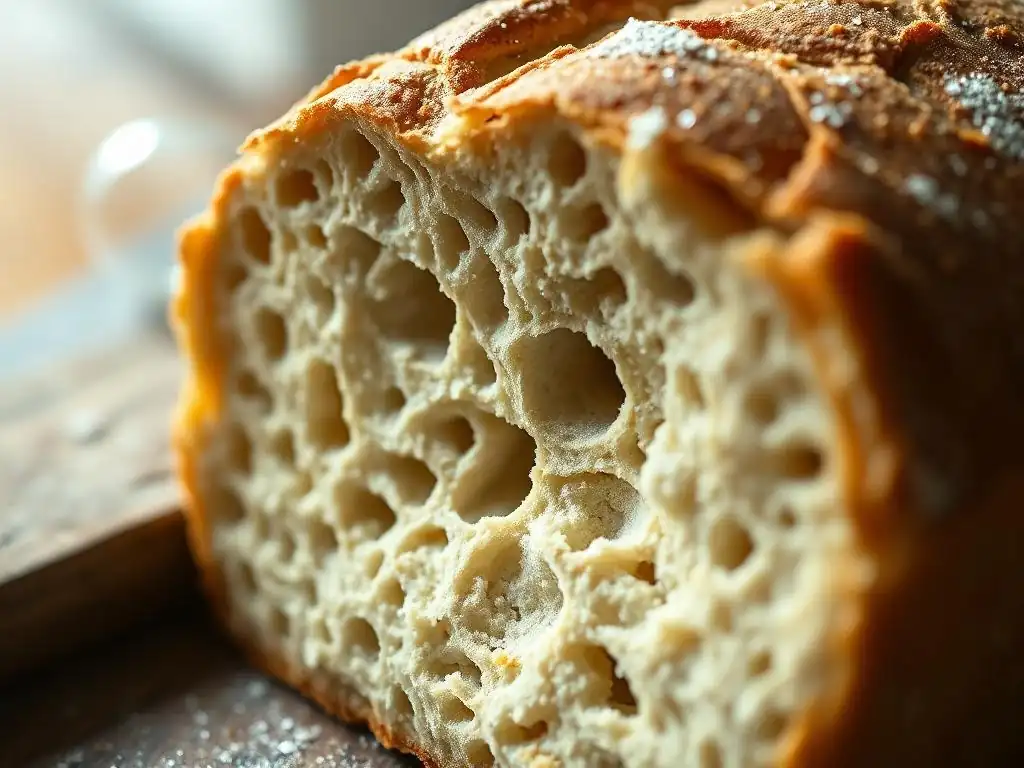
Welcome to BakeWithEase, your trusted guide to unlocking baking brilliance! Ever wondered how seemingly simple ingredients transform into delectable creations? In this Baking Science Deep Dive, we're pulling back the curtain on one of baking's most fascinating secrets: how yeast creates airy bread crumb. Discover the science behind those perfect air pockets and elevate your bread baking game. Ready to explore the microscopic world that makes your bread so delicious?
- Introduction to Yeast Fermentation and Bread Crumb Formation
- The Role of Yeast in Creating Airy Bread Crumb
- The Fermentation Process: Yeast's Impact on Dough Structure
- Gluten's Contribution to the Crumb Structure
- The Science Behind Air Pocket Formation
- Factors Influencing Bread Crumb Texture
- Troubleshooting Common Bread Crumb Issues
- Techniques for Achieving Optimal Crumb Structure
- Advanced Techniques for Perfecting Bread Crumb
- Conclusion: Mastering the Art of Airy Bread Crumb with Yeast
-
Frequently Asked Questions
- How does yeast contribute to the structure of bread?
- What is the role of gluten in trapping the gas produced by yeast?
- Why is kneading important for creating a good crumb structure?
- What happens if I don't use enough yeast in my bread recipe?
- Can I over-proof my dough, and how does that affect the crumb?
- Final Reflection: The Unexpected Wonders of Yeast and the Perfect Crumb
- Unleash Your Inner Baker: Craft Perfect Crumbs Today!
Introduction to Yeast Fermentation and Bread Crumb Formation
Understanding Airy Bread
Achieving a light, airy bread crumb is the goal of many bakers, and it's a defining characteristic of well-made bread. The airy texture, often described as having a good "alveoli" structure (the scientific term for the air cells), is what makes a baguette delightfully crisp on the outside and soft within, or a brioche wonderfully tender.
This desirable texture isn't magic; it's the direct result of a complex biological and physical process driven primarily by yeast. Understanding how yeast creates airy bread crumb is fundamental to controlling the outcome of your bake and consistently producing loaves with that coveted open structure.
The internal structure of bread, the crumb, is a matrix of baked dough interspersed with air pockets. The size, distribution, and shape of these pockets determine whether the crumb is dense, tight, or wonderfully open and airy. Bakers evaluate crumb structure to assess the success of fermentation and gluten development.
For example, a classic sourdough loaf might aim for large, irregular alveoli, while a sandwich loaf requires a finer, more uniform crumb. The journey from a simple mixture of flour, water, yeast, and salt to a loaf with a perfect crumb is a fascinating interplay of ingredients and technique, with yeast playing the starring role in generating the very air that forms these pockets.
The Importance of Crumb Structure in Baking
The crumb structure is more than just aesthetics; it significantly impacts the bread's texture, flavor, and even how it stales. An open, airy crumb provides a pleasant mouthfeel and allows flavors to develop more fully. Consider a rustic loaf with a well-developed crumb; the contrast between the chewy crust and the light interior is part of its appeal. Conversely, a dense, tight crumb can make bread feel heavy, doughy, and less palatable. The structure also affects how the bread interacts with other foods – an airy crumb is perfect for soaking up sauces or holding toppings without becoming soggy.
Furthermore, the crumb structure is a direct indicator of successful fermentation and proper handling of the dough. A baker can look at the crumb and tell if the dough was under-proofed, over-proofed, or if gluten development was insufficient. For instance, if a loaf is very dense with a tight crumb, it might indicate that the yeast didn't produce enough gas or that the dough structure wasn't strong enough to hold it.
Conversely, large, uneven holes might suggest over-proofing or improper shaping. Mastering the factors that influence crumb structure, particularly how yeast creates airy bread crumb, is essential for consistent baking success.
The Role of Yeast in Creating Airy Bread Crumb
Understanding Yeast: The Baker's Microscopic Ally
Yeast, specifically Saccharomyces cerevisiae in most baking applications, is a single-celled microorganism belonging to the fungi kingdom. It's a living organism that requires food (sugars), moisture, and a suitable temperature range to thrive. In baking, yeast consumes simple sugars present in the flour (or added to the dough) and converts them into ethanol and carbon dioxide gas through a process called fermentation.
This carbon dioxide gas is the primary agent responsible for leavening the dough, creating the air pockets that define the bread's crumb structure. Without yeast (or other leavening agents like sourdough starter or baking powder), you'd end up with a flatbread or cracker.
Different forms of commercial yeast are available to bakers, each with slightly different characteristics. Active dry yeast needs to be rehydrated in warm water (around 105-115°F or 40-46°C) before use, while instant dry yeast can often be mixed directly with the dry ingredients. Fresh yeast (also called cake yeast) is highly perishable and is typically dissolved in liquid.
While the form differs, their fundamental role in helping yeast creates airy bread crumb through gas production remains the same. Understanding the basic biology of yeast and how it functions in dough is the first step towards controlling the fermentation process and achieving your desired crumb.
How Yeast Produces Carbon Dioxide for Crumb Development
Yeast feeds on simple sugars. Flour contains complex carbohydrates (starches), which enzymes present in the flour and yeast break down into simpler sugars like glucose and maltose. Yeast then consumes these simple sugars through a metabolic process called anaerobic respiration, or fermentation, which occurs in the absence of oxygen.
The equation is roughly: Sugar → Ethanol + Carbon Dioxide + Energy. The energy is used by the yeast for its own growth and reproduction, the ethanol contributes subtle flavor compounds during fermentation and mostly evaporates during baking, and the carbon dioxide gas is trapped within the elastic network of the dough.
As the yeast consumes sugars and produces CO2 gas, tiny bubbles begin to form throughout the dough. These bubbles expand, causing the dough to rise – a process known as leavening. The amount of gas produced is directly related to the activity of the yeast, which is influenced by factors like temperature, the availability of food (sugars), and moisture.
A typical fast-acting yeast might produce enough gas to double a dough's volume in 1-2 hours at a warm room temperature (around 75-80°F or 24-27°C). This gas production is the engine that drives the formation of the airy crumb structure; the more effectively the yeast works and the better the dough can trap the gas, the lighter and more open the final loaf will be. Yeast creates airy bread crumb by continuously generating these gas bubbles throughout the fermentation and proofing stages.
The Fermentation Process: Yeast's Impact on Dough Structure
Primary Fermentation: Building the Foundation for Air Pockets
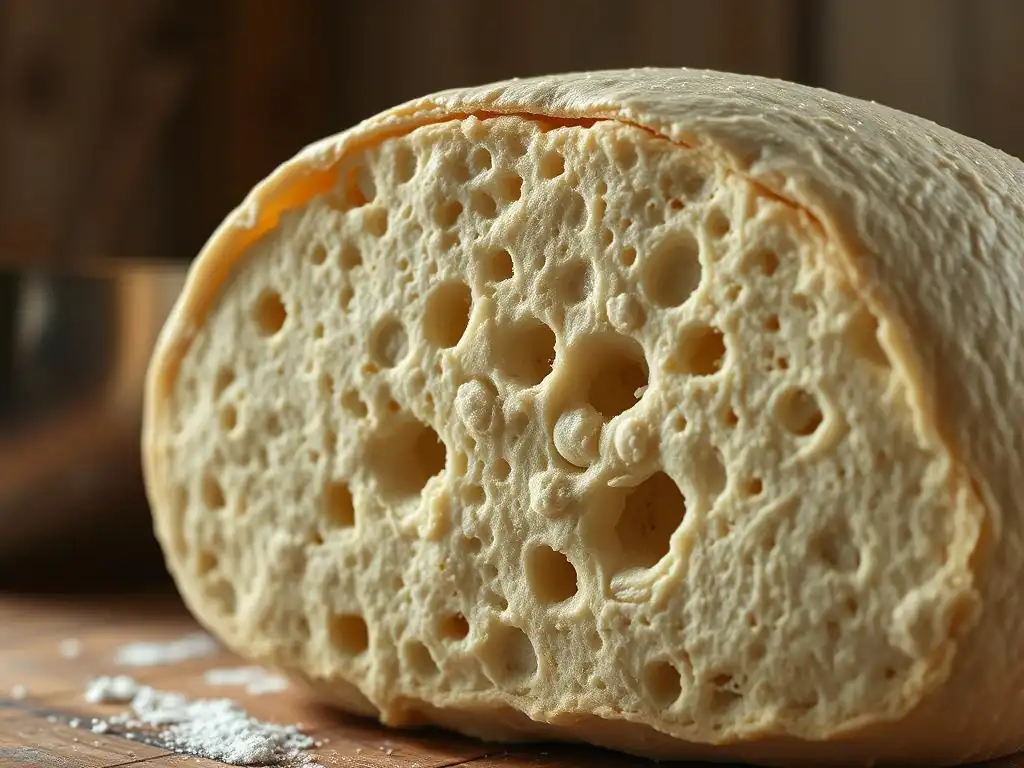
Primary fermentation, often called bulk fermentation, is the initial period after mixing the dough when the main volume increase occurs. This stage is crucial for developing both flavor and structure. As the yeast consumes sugars and produces carbon dioxide, the dough expands. Simultaneously, enzymes in the flour and yeast are active, breaking down proteins and starches, and the gluten network (developed through mixing and kneading) begins to relax and become more extensible. This extensibility is vital because the dough needs to be able to stretch and hold the accumulating gas bubbles without tearing.
During primary fermentation, especially over longer periods (like 2-4 hours or even overnight in the refrigerator), organic acids are also produced as byproducts of yeast and bacterial activity (if using a sourdough starter or relying on wild fermentation). These acids contribute significantly to the bread's flavor profile and also help strengthen the gluten network, making it better able to trap the gas produced by the yeast.
A well-managed primary fermentation ensures that the dough has sufficient gas production and the necessary structural integrity to support the airy crumb that will develop during the final proof and baking. This phase sets the stage for how effectively yeast creates airy bread crumb.
Secondary Fermentation (Proofing): Expanding the Crumb
Secondary fermentation, or proofing, is the final rise that occurs after the dough has been shaped and placed in its final baking vessel or on a baking sheet. This stage is dedicated to expanding the air pockets created during primary fermentation and ensuring the dough is light and ready for the oven. During proofing, the yeast continues to produce carbon dioxide, though often at a slower rate depending on the dough's temperature and remaining sugar supply. The gas bubbles expand, causing the shaped loaf to increase significantly in volume, sometimes doubling in size again.
The proofing stage is critical for achieving the desired crumb structure. If the dough is under-proofed, the yeast hasn't produced enough gas, and the crumb will be dense. If it's over-proofed, the gluten network becomes overstretched and weak, and the gas can escape, leading to a collapsed or gummy crumb with large, uneven holes.
Bakers often use visual cues, like the "poke test" (gently pressing the dough to see how quickly it springs back), to determine if proofing is complete. Proper proofing, guided by the ongoing work of the yeast, is the final step before baking where yeast creates airy bread crumb in its final shape.
Factors Affecting Yeast Activity: Temperature, Hydration, and Sugar
Yeast is a living organism, and its activity level is highly sensitive to environmental factors. Temperature is perhaps the most significant. Yeast is most active in warm, moist conditions, typically between 75°F and 85°F (24°C and 29°C).
Below 50°F (10°C), yeast activity slows dramatically, which is why cold fermentation (like proofing in the refrigerator for 12-48 hours) is used to slow down the rise and develop more complex flavors. Above 130°F (54°C), yeast begins to die, and by 140°F (60°C), it is killed, ceasing gas production entirely. This is why the rapid oven spring occurs before the yeast dies in the hot oven.
Hydration level also plays a role. Yeast needs moisture to become active and transport sugars and nutrients. Doughs with higher hydration (more water relative to flour) generally ferment faster than drier doughs, assuming other conditions are equal, as there is more free water available for yeast activity. The availability of simple sugars is also key; yeast feeds on these.
While flour naturally contains some sugars, adding a small amount of sugar (like 1-2% of the flour weight) can provide an initial boost to yeast activity, particularly in lean doughs (those without added sugar or fat). Salt, however, inhibits yeast activity, which is why it's typically added during mixing but should not be in direct contact with yeast during activation if using active dry yeast. Understanding these factors allows bakers to control the rate at which yeast creates airy bread crumb.
Gluten's Contribution to the Crumb Structure
Gluten Development: Forming the Network to Trap Air
While yeast produces the gas, it's the gluten network that traps it, forming the structure of the air pockets. Gluten is a complex protein structure that develops when two proteins found in wheat flour, glutenin and gliadin, are hydrated and manipulated (through mixing, kneading, or folding). Glutenin provides elasticity (the ability to spring back), while gliadin provides extensibility (the ability to stretch).
Together, they form a visco-elastic network capable of holding the carbon dioxide gas produced by the yeast, much like a balloon holds air. The strength and elasticity of this network are crucial for achieving an open, airy crumb.
Proper gluten development is achieved through various techniques, including mixing, kneading (either by hand or machine), and folding the dough during bulk fermentation. These actions align the protein strands and strengthen the network. Without sufficient gluten development, the dough would not be able to hold the gas produced by the yeast, and the result would be a flat, dense bread, regardless of how active the yeast was. The ability of yeast creates airy bread crumb is directly dependent on the strength and flexibility of the gluten network that contains the expanding gas.
The Interplay Between Gluten and Yeast in Bread Baking
The relationship between gluten and yeast is symbiotic and essential for creating leavened bread. Yeast produces the gas, and gluten provides the structure to contain it. As the yeast ferments and produces CO2, the gas bubbles push against the surrounding gluten network, causing it to stretch and expand. This expansion is what we observe as the dough rising. A strong, well-developed gluten network can stretch significantly without tearing, allowing the dough to achieve a large volume increase and develop an open, airy crumb.
Furthermore, the activity of yeast and the development of gluten influence each other. During fermentation, enzymatic activity (partially from yeast) can help relax the gluten network, making it more extensible. The physical act of the dough rising due to yeast activity also helps to stretch and align the gluten strands, further developing the network. It's a delicate balance: the yeast needs a strong network to trap gas, and the network benefits from the gentle stretching provided by the expanding gas. Optimizing both yeast activity and gluten development is key to ensuring that yeast creates airy bread crumb effectively.
The Science Behind Air Pocket Formation
How Carbon Dioxide Creates Bubbles in the Dough
As yeast ferments sugars, it releases carbon dioxide gas. Initially, this gas dissolves into the water component of the dough. However, as more gas is produced and the dough becomes saturated, the CO2 starts to form tiny bubbles within the dough matrix. These initial bubbles typically form around nucleation sites, such as tiny air pockets incorporated during mixing or small particles within the flour. As fermentation progresses, these small bubbles grow larger by collecting more dissolved CO2 and merging with adjacent bubbles.
The pressure of the accumulating gas within these bubbles causes them to expand, pushing against the surrounding dough. This expansion is what causes the dough to rise. During baking, the heat causes the gas within the bubbles to expand further (Charles's Law: gas volume is proportional to temperature), leading to a rapid increase in volume known as "oven spring."
Simultaneously, the heat causes water in the dough to turn into steam, which also contributes to the expansion of the air pockets. This process solidifies the dough structure, setting the network of air pockets and defining the final crumb structure. The efficiency with which yeast creates airy bread crumb is determined by its gas production and the dough's ability to capture and expand these CO2 bubbles.
The Relationship Between Dough Viscosity and Air Pocket Size
The consistency, or viscosity, of the dough significantly impacts the size and distribution of the air pockets. Dough viscosity is influenced primarily by its hydration level and the extent of gluten development. A lower hydration dough (stiffer dough) is more viscous and less extensible. While it can hold gas, the bubbles may be smaller and the crumb tighter because the stiff network resists expansion. Think of a dense bagel dough compared to a wet ciabatta dough.
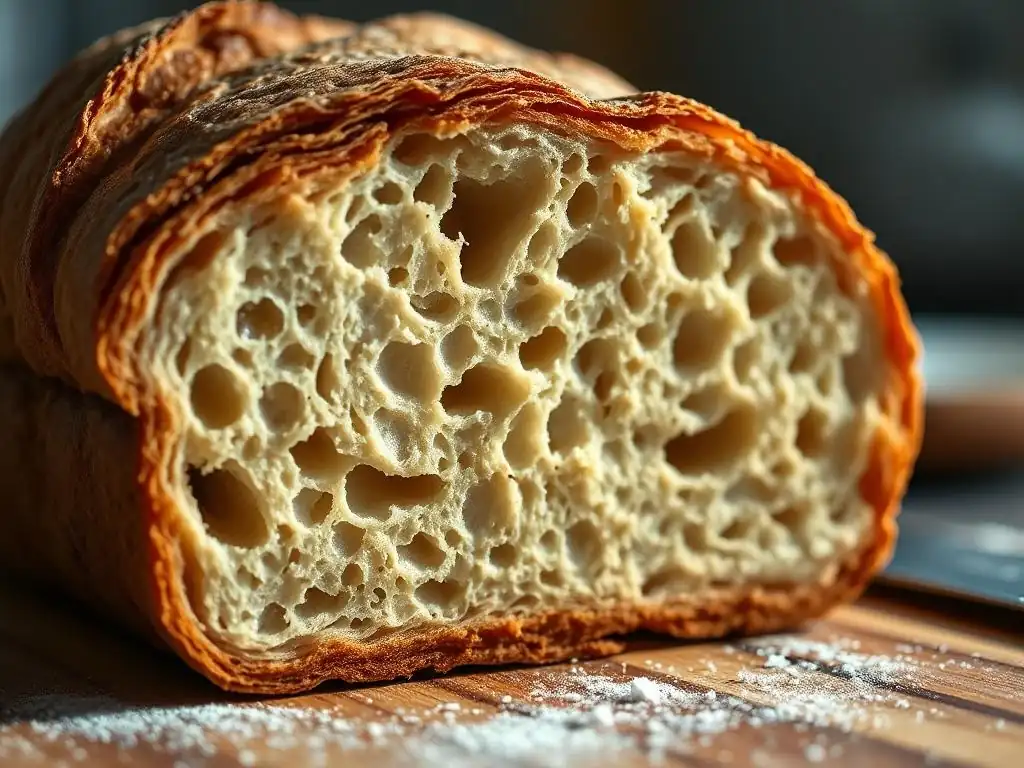
Conversely, a higher hydration dough is less viscous and more extensible. The gluten network is more relaxed and stretches more easily, allowing the gas bubbles to expand significantly and merge into larger, more irregular air pockets. This is why high-hydration doughs, like those used for ciabatta or many rustic loaves, often have a very open crumb with large alveoli.
However, a high hydration dough requires more careful handling and sufficient gluten strength to prevent the bubbles from collapsing. The dough's viscosity dictates how the gas produced by the yeast creates airy bread crumb – whether it forms many small bubbles or fewer, larger ones.
Understanding Alveoli in Bread Crumb
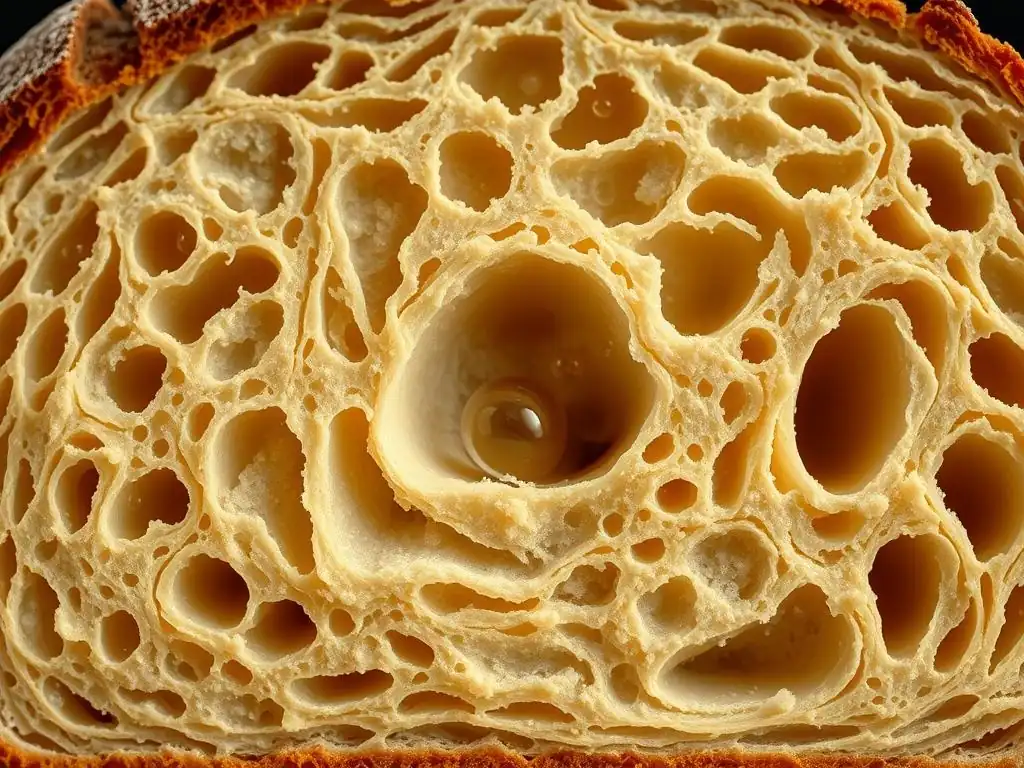
Alveoli is the technical term for the air cells or pockets within the baked bread crumb. The size, shape, and distribution of these alveoli are key indicators of the bread's quality and the success of the fermentation and baking process.
A desirable crumb structure is often described in terms of its alveoli – for example, a "tight crumb" has small, numerous alveoli, while an "open crumb" has larger, often irregularly shaped alveoli. Some breads, like a classic baguette, are prized for having a relatively open crumb with varying sizes of alveoli, while others, like a sandwich loaf, aim for a uniform, fine crumb.
The formation and appearance of alveoli are the direct result of the carbon dioxide gas produced by the yeast being trapped and expanded within the gluten network during fermentation, proofing, and baking. The final structure of the alveoli is set when the dough hits a high enough internal temperature (around 180-210°F or 82-99°C), causing the starches to gelatinize and the proteins to coagulate, solidifying the crumb structure around the expanded gas pockets. Understanding how yeast creates airy bread crumb ultimately means understanding the development and setting of these crucial alveoli.
Factors Influencing Bread Crumb Texture
Hydration Levels and Their Impact on Crumb
The hydration level of a dough – the ratio of water to flour by weight – is one of the most critical factors determining the final crumb structure. Higher hydration doughs (typically 70% or more) tend to produce a more open crumb with larger, more irregular alveoli. This is because the higher water content makes the dough more extensible, allowing the gluten network to stretch more easily around the expanding gas bubbles. For example, a ciabatta dough might be 80% hydration or higher, resulting in its characteristic large holes.
Lower hydration doughs (under 60%) are stiffer and result in a tighter, more uniform crumb with smaller air pockets. Think of a bagel dough at around 50-55% hydration, which bakes up dense and chewy. While higher hydration can lead to a more open crumb, it also makes the dough stickier and harder to handle and requires sufficient gluten development to prevent collapse. The baker must choose a hydration level appropriate for the desired final texture and manage how yeast creates airy bread crumb within that specific dough consistency.
The Effect of Flour Type on Crumb Structure: Bread Flour vs. Cake Flour
The type of flour used significantly impacts the potential crumb structure, primarily due to its protein content. Bread flour, with a higher protein content (typically 12-14%), is ideal for developing a strong gluten network. This strong network is essential for trapping the large volumes of CO2 gas needed to create an open, airy crumb, especially in rustic or artisan breads. The higher protein allows the dough to stretch further without tearing during fermentation and oven spring.
Cake flour, on the other hand, has a much lower protein content (around 7-9%) and is often finely milled. This results in less gluten development, producing a tender crumb that is characteristic of cakes, pastries, and some quick breads. While yeast might still produce gas in a dough made with cake flour (if it's a yeasted recipe), the weak gluten network cannot effectively trap large bubbles, leading to a fine, soft, and less open crumb. The choice of flour dictates the dough's capacity to support the structure that yeast creates airy bread crumb within.
Kneading Techniques and Their Influence on Gluten Development and Crumb
Kneading is a fundamental step in bread making that develops the gluten network. Whether by hand or machine, kneading stretches and folds the dough, aligning the gluten proteins and forming strong bonds. Sufficient kneading is crucial for building the strength and elasticity required for the dough to hold the gas produced by the yeast. Under-kneaded dough will have a weak gluten network, resulting in poor gas retention and a dense, tight crumb.
However, over-kneading can also be detrimental, potentially tearing the gluten strands and leading to a sticky, slack dough that cannot hold its shape or trap gas effectively, sometimes resulting in a dense crumb or one with large, irregular tunnels. For some doughs, like those with very high hydration, folding the dough periodically during bulk fermentation can be used instead of intense kneading to gently develop gluten while preserving the fragile network of gas bubbles already forming. Proper kneading or folding techniques are essential prerequisites for how yeast creates airy bread crumb successfully.
Troubleshooting Common Bread Crumb Issues
Dense Crumb: Causes and Solutions
A dense crumb is a common issue that can arise from several factors, often related to insufficient leavening or structure. One primary cause is under-proofing, meaning the yeast didn't produce enough gas or the dough didn't have enough time to rise sufficiently before baking. This could be due to inactive yeast, a cool fermentation temperature, or simply cutting the proofing time short. A related cause is insufficient gluten development; if the gluten network is too weak, it cannot trap the gas produced by the yeast, leading to a heavy, dense loaf.
To address a dense crumb: 1) Ensure your yeast is active (test it in warm water with a pinch of sugar). 2) Allow adequate time for fermentation and proofing, paying attention to dough volume increase and using the poke test. Consider a warmer spot for rising if your kitchen is cool (e.g., in a slightly warm, turned-off oven). 3) Ensure you are sufficiently developing gluten through kneading or folding, especially with lower protein flours or lower hydration doughs. A dense crumb often means the potential for yeast creates airy bread crumb was not fully realized.
Large, Uneven Air Pockets: Diagnosing and Fixing the Problem
While some breads are meant to have large, irregular air pockets (like ciabatta), excessively large, uneven holes alongside dense areas can indicate problems, often related to over-proofing or improper shaping. Over-proofing occurs when the dough rises too long or in too warm a temperature, causing the gluten network to become overstretched and weak. The gas bubbles grow too large and start to merge and collapse, leading to large voids and surrounding dense areas where the structure failed.
To fix large, uneven air pockets: 1) Be mindful of proofing time and temperature. Don't rely solely on time; watch the dough's volume and use the poke test. The dough should spring back slowly when gently poked, leaving a small indentation. 2) Ensure proper shaping techniques.
Shaping helps redistribute gas bubbles, strengthen the dough's structure, and create tension on the surface, which helps control expansion. Gentle handling during shaping is crucial to avoid deflating the dough too much, but enough shaping is needed to provide structure. While yeast creates airy bread crumb, controlling the size and distribution of air pockets requires careful proofing and shaping.
Gummy Crumb: Addressing the Underlying Issues
A gummy crumb can make bread unpleasant to eat and often indicates issues with either baking or fermentation. One common cause is underbaking; if the internal temperature doesn't reach high enough (at least 190°F or 88°C for enriched breads, 200-210°F or 93-99°C for lean breads), the starches don't fully gelatinize and set, resulting in a moist, sticky, or gummy texture. Using too much liquid relative to flour (excessive hydration without sufficient gluten development) can also contribute to a gummy crumb.
Another cause can be related to fermentation issues, such as over-proofing or insufficient enzymatic activity. Over-proofed dough can collapse in the oven, leading to a dense, gummy layer, particularly at the bottom. To address a gummy crumb: 1) Always bake bread until it reaches the appropriate internal temperature, using a thermometer. 2) Ensure you are not over-hydrating the dough for the type of flour and gluten development achieved. 3) Pay close attention to proofing times to avoid over-proofing, which weakens the structure that yeast creates airy bread crumb within.
Techniques for Achieving Optimal Crumb Structure
Proper Proofing Techniques for Airy Bread
Proper proofing is paramount for developing an airy crumb. The goal is to allow the dough to rise sufficiently to create a light structure without overstretching the gluten network to the point of collapse. The ideal proofing time and temperature vary greatly depending on the recipe, yeast amount, flour type, and ambient conditions. A general guideline is to proof until the dough has increased significantly in volume – often by 50% to 100% depending on the recipe and desired outcome.
The "poke test" is a reliable method: gently press the dough with a floured finger. If the indentation springs back immediately, it's under-proofed. If it springs back very slowly, leaving a small indentation, it's likely ready. If it doesn't spring back at all and the indentation remains, it's likely over-proofed. Proofing in a slightly warm, humid environment (like a turned-off oven with a pan of hot water) can help maintain an even temperature and prevent the surface from drying out, allowing yeast creates airy bread crumb uniformly throughout the loaf.
Scoring the Dough: Controlling Expansion and Crumb Formation
Scoring, or making strategic cuts on the surface of the dough just before baking, is not just for decoration; it serves a crucial structural purpose. As the dough experiences oven spring in the hot oven, the surface crust begins to set rapidly. Scoring provides weak points where the dough can expand predictably. Without scoring, the expanding gas pressure would find the weakest spot, often resulting in an uncontrolled burst or tear, which can negatively impact the crumb structure, leading to unevenness.
Proper scoring allows the loaf to achieve maximum volume and helps control the shape of the final loaf. The cuts direct the expansion, allowing the interior to push outwards and upwards evenly. This controlled expansion helps create a more open and consistent crumb structure throughout the loaf, ensuring that the work yeast creates airy bread crumb is fully realized during the critical oven spring phase. The depth and pattern of the score lines should be appropriate for the type of bread and its expected expansion.
Baking Temperature and Its Effect on Crumb Set
The high heat of the oven is what transforms the proofed dough into a baked loaf with a set crumb structure. The initial burst of heat causes rapid expansion of the trapped gases (oven spring) before the yeast dies and the crust hardens. Baking at a sufficiently high temperature is essential for achieving good oven spring and setting the crumb properly. Many artisan breads are baked at temperatures between 450°F and 500°F (230°C and 260°C).
The heat causes the gluten network and starches to coagulate and solidify around the expanded air pockets. If the oven temperature is too low or the baking time too short, the crumb may not set properly, potentially resulting in a dense or gummy texture. Conversely, too high a temperature can set the crust too quickly, restricting oven spring and leading to a dense interior, or burn the crust before the interior is fully baked. The baking temperature is the final step in locking in the airy structure that yeast creates airy bread crumb during fermentation.
Advanced Techniques for Perfecting Bread Crumb
Using a Sourdough Starter for Enhanced Flavor and Crumb Structure
While commercial yeast is a single-celled leavening powerhouse, a sourdough starter is a complex ecosystem of wild yeasts and lactic acid bacteria. This symbiotic relationship contributes not only unique, complex flavors (the characteristic tang) but also influences the crumb structure. The wild yeasts in a starter produce carbon dioxide, similar to commercial yeast, helping yeast creates airy bread crumb. However, the lactic acid bacteria produce organic acids (like lactic and acetic acid) that strengthen the gluten network.
This acidic environment helps break down certain enzymes that can degrade gluten, resulting in a more robust and extensible dough capable of holding larger gas bubbles. Sourdough fermentation is typically slower than commercial yeast fermentation, allowing for longer flavor development and often contributing to a more irregular, open crumb structure with larger alveoli. Mastering a sourdough starter is an advanced step that leverages natural fermentation to enhance both flavor and the airy bread crumb.
Autolyse: Improving Dough Hydration and Gluten Development
Autolyse (pronounced auto-leez) is a simple but effective technique involving mixing only the flour and water from a recipe and letting the mixture rest for 20 minutes to several hours before adding the salt and yeast. This resting period allows the flour to fully hydrate and gives enzymes (protease and amylase) present in the flour time to begin breaking down proteins and starches.
This enzymatic action helps relax the gluten network, making the dough more extensible and easier to knead or fold later. It also allows for better, more uniform hydration of the flour particles. The result is often a dough that requires less kneading to reach proper gluten development and is capable of producing a more open crumb. Implementing an autolyse step can significantly improve the dough's handling properties and the final structure where yeast creates airy bread crumb.
Understanding Different Types of Flour for Specific Crumb Results
Beyond the protein content difference between bread and cake flour, understanding nuances in flour types is key to controlling crumb structure. For example, whole wheat flour contains bran and germ, which can cut gluten strands, resulting in a denser crumb than white flour unless specific techniques are used (like sifting out some bran or increasing hydration). High-extraction flours fall between white and whole wheat, offering some bran/germ for flavor but less impact on gluten.
Different regions and mills produce flours with varying protein quality, even within the "bread flour" category. Some flours are known for producing particularly extensible doughs ideal for large alveoli, while others are better suited for tighter crumbs. Experimenting with flours from different sources and understanding their protein content and quality allows bakers to make informed choices to achieve specific crumb goals and optimize how yeast creates airy bread crumb.
Conclusion: Mastering the Art of Airy Bread Crumb with Yeast
Key Takeaways for Achieving Perfect Crumb Every Time
Achieving a perfect, airy bread crumb is a rewarding goal for any baker and hinges on understanding the fundamental processes at play. Key takeaways include recognizing that yeast creates airy bread crumb by producing carbon dioxide gas through fermentation. This gas is trapped by the elastic gluten network developed in the dough. Controlling the activity of the yeast through temperature, hydration, and sugar availability is crucial for sufficient gas production.
Equally important is developing a strong yet extensible gluten network through proper mixing, kneading, and folding, allowing the dough to hold the gas without tearing. Careful management of the fermentation and proofing stages, paying attention to volume increase and dough feel, ensures the optimal balance between gas production and dough structure. Finally, techniques like scoring and baking at the correct temperature help lock in the airy structure during oven spring. Mastering these elements allows you to consistently produce bread with a beautiful, open crumb.
Further Exploration of Baking Science
The science behind bread making, particularly how yeast creates airy bread crumb, is vast and fascinating. For those looking to deepen their understanding, exploring topics like enzymatic activity in dough (amylase breaking down starches, protease affecting gluten), the role of fermentation acids beyond flavor (dough strength, shelf life), and the physics of gas expansion and heat transfer during baking can provide valuable insights.
Experimenting with different yeast types, hydration levels, flour varieties, and fermentation schedules will reveal how each variable impacts the final crumb. Reading books dedicated to the science of baking, like "The Bread Baker's Apprentice" or "Flour Water Salt Yeast," can offer both theoretical knowledge and practical recipes to apply these principles. Continuous learning and practice are the keys to unlocking the secrets of the perfect airy bread crumb.
Frequently Asked Questions
How does yeast contribute to the structure of bread?
Yeast consumes sugars and produces carbon dioxide gas, which creates bubbles within the dough. This process is called fermentation, and these bubbles ultimately form the airy crumb structure we see in bread.
What is the role of gluten in trapping the gas produced by yeast?
Gluten, a protein found in wheat flour, forms a stretchy network that traps the carbon dioxide produced by the yeast. This network allows the dough to rise and creates the desired texture in the final baked bread.
Why is kneading important for creating a good crumb structure?
Kneading develops the gluten in the flour, making it stronger and more elastic. This enhanced gluten structure is essential for trapping the gas produced by yeast and creating a well-risen loaf with a good crumb.
What happens if I don't use enough yeast in my bread recipe?
Insufficient yeast will result in a smaller amount of carbon dioxide being produced. This will lead to a denser, less airy bread crumb, as there won't be enough gas to expand the dough properly.
Can I over-proof my dough, and how does that affect the crumb?
Yes, over-proofing occurs when the dough ferments for too long. This can lead to the gluten network collapsing, resulting in a flat, dense loaf with a coarse crumb because the gas escapes.
Final Reflection: The Unexpected Wonders of Yeast and the Perfect Crumb
The science of bread baking, once a mysterious art, is now increasingly understood, revealing the intricate dance between yeast, flour, and water that results in that coveted airy crumb. This understanding isn't just for professional bakers; it empowers home cooks to achieve consistently delicious results, transforming a simple loaf into a testament to the power of scientific precision.
The journey into the microscopic world of yeast fermentation has profoundly impacted my own approach to baking, shifting it from a sometimes frustrating process to one of mindful creation. I've learned to appreciate the delicate balance required, the subtle nuances of temperature and hydration, and the sheer artistry involved in harnessing the power of these tiny organisms. The best bread is made with love, but it also needs science.
- This unsourced quote perfectly captures the essence of this exploration, highlighting the synergy between passion and precision.
Now, armed with this knowledge, I invite you to consider your own relationship with baking. Perhaps you'll experiment with different yeast strains, meticulously control your fermentation temperatures, or simply take a moment to appreciate the complex biological processes unfolding within your dough. The next time you bite into a perfectly airy slice of bread, remember the science behind its creation – and the potential for even greater culinary adventures that await.
Unleash Your Inner Baker: Craft Perfect Crumbs Today!
Thanks for diving deep into the science of air pockets and how yeast contributes to amazing bread texture! You've now got the knowledge to create truly exceptional loaves. Ready to put your newfound expertise to the test?
- Bake a test loaf today: Try a simple recipe, focusing on controlling yeast activity and creating those perfect air pockets. Note your observations!
- Share your baking journey: Post a picture of your creation on social media and tag us @BakeWithEase – we’d love to see your results!
- Explore advanced techniques: Dive into our other articles on sourdough starters and different bread shaping methods for even more crumb control.
What unique ingredient or technique will you experiment with next to elevate your baking game?