
The Importance of Temperature in French Pastry Making

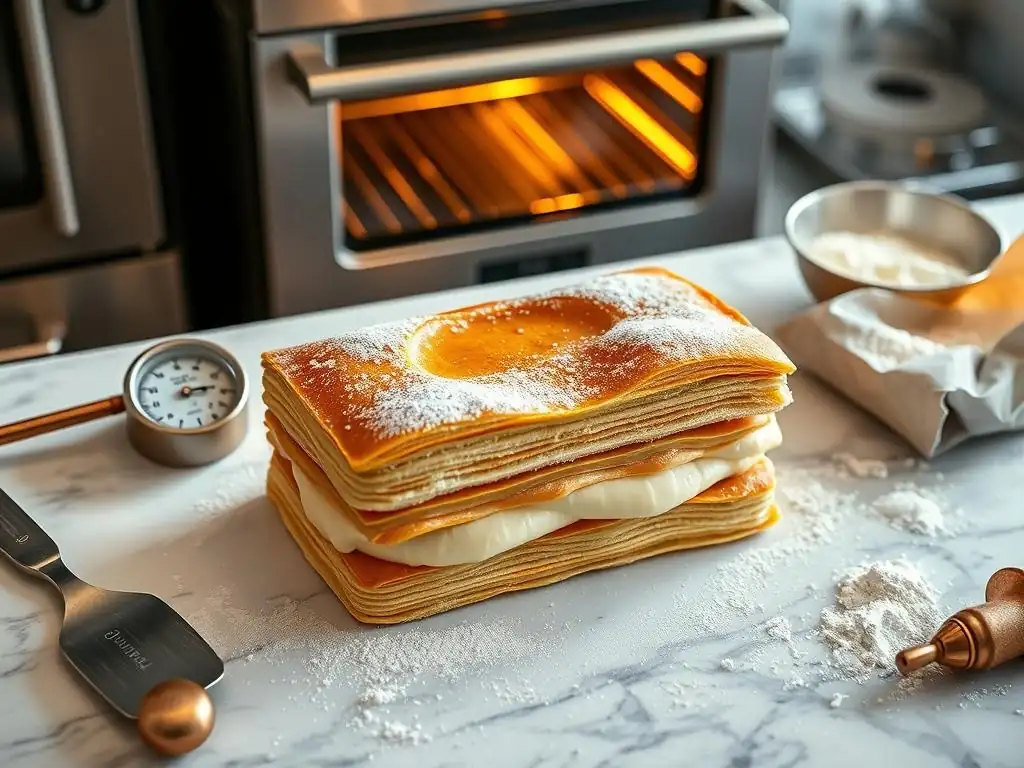
Welcome to BakeWithEase, where the secrets of baking are unveiled! Ever wondered why your éclairs lack that perfect puff or your macarons refuse to form feet? The answer might just lie in mastering a crucial element: French pastry temperature control. Dive into our latest article to discover how precision heat management can elevate your pastry game from amateur to chef d'oeuvre! Let's unlock the secrets together!
- BakeWithEase: Mastering French Pastry Through Temperature Control
- Why French Pastry Temperature Control is Crucial for Baking Success
- Understanding Key Temperatures in French Pastry Making
- Common Temperature-Related Problems in French Pastry and How to Avoid Them
- Essential Tools for Accurate French Pastry Temperature Measurement
- French Pastry Recipes Where Temperature is Key
- Advanced Techniques in French Pastry Temperature Control
- Temperature Control Tips for Different Types of French Pastries
- Conclusion: Elevate Your French Pastry Skills with Temperature Mastery
-
Frequently Asked Questions
- What makes temperature control so crucial in French pastry making?
- How does temperature impact the lamination process in pastries like croissants?
- What's the ideal temperature range for baking most French pastries?
- Why is proper chilling important when making pâte sablée (shortcrust pastry)?
- What tools can help ensure accurate temperature control in French pastry making?
- Final Reflection: Mastering the Heat: Precision and Passion in French Pastry
- Unlock the Secrets of Perfect French Pastries!
BakeWithEase: Mastering French Pastry Through Temperature Control
Achieving the delicate balance, exquisite texture, and stunning appearance characteristic of classic French pastries often comes down to one critical factor: temperature. From the initial mixing of ingredients to the final bake, precise temperature control is not just a suggestion, but a fundamental requirement. At BakeWithEase, we understand that mastering this element is key to unlocking your full baking potential, especially when tackling the intricate world of French patisserie. It's the difference between a perfectly flaky croissant and a dense, heavy one, or between a smooth, glossy ganache and a dull, grainy mess.
Embarking on the journey of French pastry making can feel daunting, but by focusing on the science and application of temperature, you can significantly improve your results. This guide will walk you through why French pastry temperature control is paramount, explore specific examples in iconic recipes, and provide practical tips and tools to help you achieve pastry perfection. Think of temperature as your silent partner in the kitchen, guiding your ingredients through their transformations to create edible works of art.
Why French Pastry Temperature Control is Crucial for Baking Success
The Science Behind Temperature and French Pastry
Temperature plays a fundamental role in the chemical and physical reactions that occur during baking. For instance, the temperature of butter dictates its state – solid, plastic, or liquid – which profoundly affects the texture of doughs like puff pastry or pâte brisée. When cold butter is incorporated into flour and then rolled out, it creates thin layers.
During baking, the water in these butter layers turns to steam, separating the dough layers and creating flakiness. If the butter is too warm, it melts into the flour, resulting in a tough, less flaky texture. This interaction highlights how critical ingredient temperature is for achieving the desired structure in laminated doughs, a cornerstone of French pastry temperature control.
Beyond fats, temperature influences the activation of leavening agents, the coagulation of proteins (like eggs in custards), and the caramelization of sugars. A meringue relies on egg whites reaching a specific temperature range (around 60-70°C internally) to set properly without weeping. Custards and creams require gentle, controlled heating to thicken without curdling, typically between 70-85°C, depending on the type and thickener used. Understanding these scientific principles allows bakers to predict and control outcomes, making precise French pastry temperature control an indispensable skill for consistent, high-quality results.
Achieving Perfect Results: The Role of Precise Temperature
Precision in temperature control is the hallmark of exceptional French pastry. It impacts everything from the rise of a soufflé to the snap of tempered chocolate. Consider the macaron: the delicate meringue shells require a specific oven temperature, often around 140-150°C (285-300°F), sometimes with the oven door slightly ajar, to bake evenly, develop a smooth top, and form the characteristic "foot" without cracking or browning too quickly. Even a slight variation of 10-15 degrees can lead to hollow shells, cracked tops, or uneven baking.
This level of precision extends to cooling and chilling as well. Many French pastries require specific cooling temperatures and times to set properly, prevent condensation, and develop flavor. Mousses, ganaches, and certain tarts need refrigeration to firm up before serving.
For example, a chocolate ganache destined for a tart filling might need to cool to around 30-35°C before being poured to ensure a smooth, even set without creating cracks or a greasy appearance. Mastering French pastry temperature control across all stages – preparation, baking, cooling, and chilling – is essential for achieving the professional finish and delightful textures that define this culinary art form.
Understanding Key Temperatures in French Pastry Making
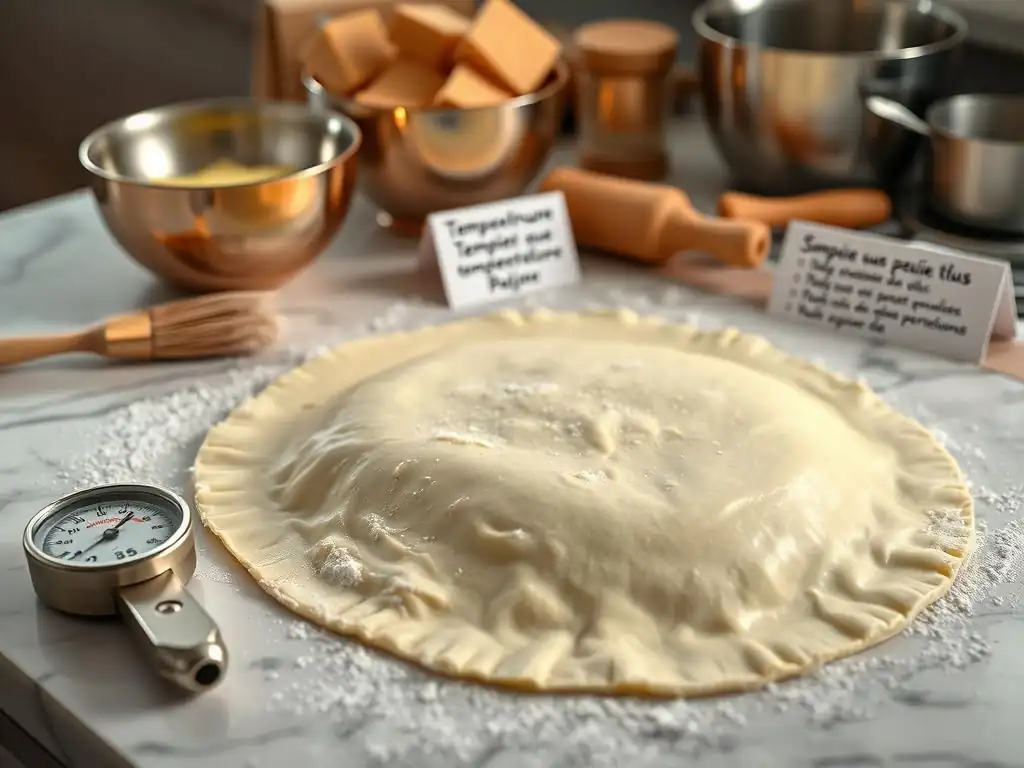
The Importance of Cold Butter in Pâte Brisée and Puff Pastry
Cold butter is arguably the most critical ingredient temperature for creating flaky pastry doughs like pâte brisée (shortcrust) and puff pastry (pâte feuilletée). For pâte brisée, butter is typically cut into small cubes and kept very cold, ideally around 4-7°C (39-45°F), before being quickly incorporated into the flour. The goal is to leave visible pieces of butter throughout the dough.
During baking, these cold butter pieces melt slowly, creating steam that pushes the layers of dough apart, resulting in a tender, flaky texture. Overworked or warm butter melts into the flour prematurely, leading to a tough, cookie-like crust rather than a flaky one.
In puff pastry, the technique takes this concept further by creating distinct layers of dough and a large block of cold butter. The butter used for lamination should be firm but pliable, typically around 10-13°C (50-55°F), allowing it to be rolled out with the dough without breaking or melting. The dough and butter are repeatedly folded and rolled (a process called lamination) while being kept cold, often requiring chilling periods in the refrigerator (around 4°C or 39°F) between turns.
This creates hundreds of alternating layers of dough and butter. When baked at a high initial temperature (often 200-220°C or 400-425°F), the water in the butter rapidly turns to steam, forcing the layers apart and causing the pastry to puff dramatically. Maintaining these cold temperatures throughout the process is paramount for successful lamination and achieving the characteristic airy, flaky structure of classic French pastries like croissants and vol-au-vents.
Chocolate Tempering: Achieving Shine and Snap
Tempering chocolate is a precise temperature-controlled process essential for achieving a smooth, glossy finish and a firm snap when broken, particularly important for coatings, decorations, and bonbons in French patisserie. Untempered chocolate will appear dull, bloom with grayish streaks (cocoa butter separating), and melt easily in your hands. Tempering involves heating chocolate to specific temperatures, cooling it down, and then reheating it slightly to stabilize the cocoa butter crystals in their most stable form (Beta V).
The specific temperatures vary depending on the type of chocolate: dark chocolate typically requires heating to around 45-50°C (113-122°F), cooling to 28-29°C (82-84°F), and then gently reheating to 31-32°C (88-90°F). Milk and white chocolate have lower temperature ranges due to their different compositions. For milk chocolate, the range might be heating to 40-45°C (104-113°F), cooling to 27-28°C (81-82°F), and reheating to 29-30°C (84-86°F).
White chocolate is even lower. Precision is key; exceeding the final working temperature by even a degree or two can cause the chocolate to fall out of temper, requiring the process to be started over. This demanding application of French pastry temperature control is vital for professional-looking chocolate work.
Precise Oven Temperature for Perfect Macarons
Baking macarons is notoriously sensitive to oven temperature, making it a prime example of why French pastry temperature control is non-negotiable. The delicate meringue-based shells require a specific, stable temperature and often a particular airflow condition to bake correctly. A common temperature range for macaron baking is between 140°C and 150°C (285°F to 300°F), depending on the oven and recipe.
If the oven is too hot, the shells can crack, brown too quickly, or develop an uneven texture. If it's too cool, they may not form the characteristic "foot" (pied) at the base, remain hollow, or have a rough surface.
Furthermore, humidity and airflow within the oven can impact the macaron's surface drying ("skinning") and baking. Some bakers recommend leaving the oven door slightly ajar or using a fan oven at a lower temperature to manage moisture and promote even baking. The ideal baking time at these temperatures is typically 12-18 minutes, but this can vary.
Monitoring the shells closely and understanding how your specific oven performs at these lower temperatures is crucial. Using an accurate oven thermometer is highly recommended to ensure the oven is truly at the desired temperature, as built-in oven thermostats can be inaccurate, adding another layer to mastering French pastry temperature control for these finicky cookies.
Soggy Bottoms: Troubleshooting Temperature Issues in Tart Crusts
Soggy tart bottoms are a common frustration, often stemming from issues related to temperature, both of the dough and the oven. Pâte sucrée or pâte sablée, used for sweet tart shells, relies on the cold butter technique mentioned earlier.
If the dough becomes too warm during preparation or rolling, the butter melts into the flour, preventing the formation of flaky layers and resulting in a dense crust that is prone to absorbing moisture from the filling. Ensuring the dough is kept cold, chilling it thoroughly before lining the tart pan, and chilling it again before baking are crucial steps in maintaining the necessary cold temperature for a crisp crust.
Oven temperature also plays a significant role. Baking the tart shell at too low a temperature or for too short a time, especially when partially baking ("blind baking") before adding a wet filling, can prevent the bottom crust from drying out and setting properly.
A common technique to avoid soggy bottoms is to blind bake the crust fully or partially at a relatively high temperature, often starting around 190-200°C (375-400°F) for the initial phase, using pie weights to hold the shape. This ensures the bottom crust sets and becomes impermeable before a filling is added.
If a wet filling is added to a partially baked crust, reducing the oven temperature slightly for the final bake might be necessary, but ensuring sufficient baking time at a hot enough temperature in the initial blind bake phase is the primary defense against a soggy bottom, highlighting the importance of oven temperature calibration in French pastry temperature control.
Cracked Macarons: Identifying Oven Temperature Problems
Cracked macaron shells are a tell-tale sign that something went wrong with the baking temperature or technique, a frequent challenge when mastering French pastry temperature control for these delicate items. One of the most common culprits is an oven temperature that is too high. If the oven is too hot, the surface of the macaron shell can set and harden too quickly before the interior has had a chance to rise. As the interior expands during baking, the rigid surface cracks under the pressure. This often results in shells with large, unsightly fissures across the top.
Another temperature-related issue causing cracks can be uneven heat distribution within the oven. Hot spots can cause some macarons on the baking sheet to bake faster and crack, while others might be fine. Using an accurate oven thermometer to verify the actual temperature and rotating the baking sheet halfway through the baking time can help mitigate this.
Additionally, ensuring the macarons have properly "skinned" (developed a dry surface that doesn't stick to your finger) before entering the oven is vital. If the surface is still too moist, it will likely crack as it bakes. Adjusting oven temperature down by 5-10°C and ensuring proper drying time are key strategies in preventing cracked macarons, demonstrating the fine-tuning required in French pastry temperature control.
Chocolate bloom, appearing as a grayish surface (fat bloom) or powdery white spots (sugar bloom), is almost always caused by improper temperature handling after tempering. Fat bloom occurs when chocolate is exposed to fluctuating temperatures or stored in a warm environment. The unstable cocoa butter crystals melt and separate from the cocoa solids, then recrystallize on the surface in an unorganized, visible form. For example, leaving tempered chocolate in a warm room (above 25°C or 77°F) or moving it repeatedly between warm and cool environments can trigger fat bloom.
Sugar bloom, while less common in high-quality chocolate, happens when moisture condenses on the surface of chocolate, dissolving some of the sugar crystals. When the moisture evaporates, the sugar recrystallizes on the surface as a white, powdery film. This is often caused by moving cold chocolate directly into a warm, humid environment, such as taking a box of chocolates from a cold refrigerator into a warm kitchen.
Proper storage temperature is crucial for preventing both types of bloom. Tempered chocolate should be stored in a cool, dry place, ideally between 15-18°C (59-64°F), away from direct sunlight and humidity fluctuations. Understanding and controlling these post-tempering temperatures is a final, critical step in French pastry temperature control for chocolate work.
Essential Tools for Accurate French Pastry Temperature Measurement
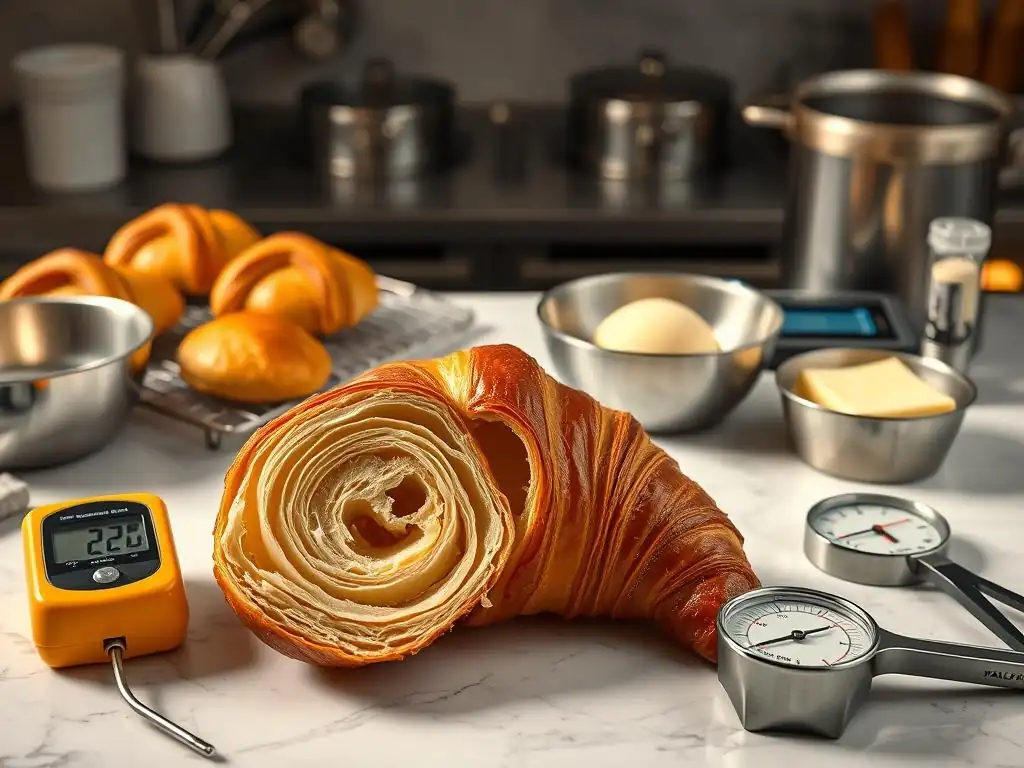
The Best Thermometers for French Pastry Making
Accurate temperature measurement is non-negotiable for precise French pastry temperature control. Several types of thermometers are essential tools for any serious baker. A good quality oven thermometer is paramount, as built-in oven thermostats can be wildly inaccurate, sometimes off by as much as 20-30°C. Placing an independent oven thermometer inside allows you to verify the actual temperature and adjust your baking accordingly. This simple tool can prevent numerous issues, from unevenly baked cakes to cracked macaron shells.
For measuring liquid temperatures, such as syrups for meringues, custards, or tempering chocolate, a digital probe thermometer or a candy thermometer is indispensable. Digital probe thermometers offer fast, accurate readings and can often be left in place while heating. Candy thermometers, usually glass or metal, clip onto the side of a pan and provide a continuous reading.
For delicate tasks like tempering chocolate, an instant-read digital thermometer is ideal for quickly checking temperatures at different stages without overshooting. Investing in a few reliable thermometers is a small cost compared to the frustration of failed pastries and is a fundamental step in mastering French pastry temperature control.
Using Temperature Probes for Perfect Results
Temperature probes offer unparalleled accuracy and real-time monitoring, making them invaluable for specific French pastry applications. For instance, achieving the perfect internal temperature for a crème anglaise or pastry cream is crucial to prevent curdling while ensuring proper thickening. Inserting a digital probe thermometer and gently heating the mixture until it reaches the target range, typically between 70-85°C (158-185°F) depending on the recipe and desired consistency, ensures success. The probe allows you to pull the mixture off the heat at the exact moment it's ready.
Similarly, when making Italian or Swiss meringue, the sugar syrup must reach a precise temperature, usually between 115-121°C (239-250°F - soft to firm ball stage), before being slowly poured into whipping egg whites. A temperature probe inserted into the syrup is the most reliable way to hit this narrow temperature window accurately. Undercooked syrup results in a weak, unstable meringue, while overcooked syrup can lead to a brittle or grainy texture. Using temperature probes takes the guesswork out of these critical steps, significantly improving your ability to apply French pastry temperature control with precision.
Maintaining Your Equipment for Accurate Readings
The accuracy of your temperature readings is only as good as the maintenance of your equipment. Thermometers, like any kitchen tool, require proper care to function correctly. Regularly cleaning your thermometers after each use is essential, especially probe thermometers that come into contact with food. Residue buildup can affect readings and harbor bacteria. Use warm, soapy water and follow the manufacturer's instructions for cleaning, particularly for digital components which may not be fully waterproof.
Calibration is another vital aspect of thermometer maintenance. While some thermometers are factory calibrated and don't require user adjustment, others, like certain instant-read digital thermometers or older dial-type thermometers, may need occasional calibration. For example, you can check the accuracy of a probe thermometer by testing it in ice water (should read 0°C or 32°F) and boiling water (should read 100°C or 212°F at sea level). If readings are off, follow the calibration instructions provided with your thermometer. Properly maintained and calibrated thermometers provide reliable data, ensuring your efforts in French pastry temperature control are based on accurate measurements.
French Pastry Recipes Where Temperature is Key
Mastering Macarons: A Temperature-Sensitive Recipe
As previously highlighted, macarons are perhaps the most temperature-sensitive of classic French pastries, demanding meticulous French pastry temperature control at multiple stages. Beyond the precise oven temperature (typically 140-150°C or 285-300°F), the temperature of the meringue is also critical. For Italian meringue, the sugar syrup must reach 118°C (244°F) consistently before being added to the egg whites. For Swiss meringue, the egg whites and sugar are heated together over a water bath until they reach 60-70°C (140-158°F) before whipping. These specific temperatures ensure the meringue is stable and provides the necessary structure for the shells.
Even the temperature of the egg whites themselves can subtly impact the outcome. Many bakers recommend using aged egg whites (separated and left at room temperature for a few hours or overnight) as they whip up more easily and create a more stable meringue, though the science behind this is debated. The drying period ("skinning") also relies on ambient temperature and humidity; a warm, dry environment is ideal.
Finally, allowing filled macarons to mature in the refrigerator for 12-24 hours at around 4°C (39°F) allows the filling's moisture and flavors to meld with the shell, creating the perfect chewy-yet-delicate texture. Every step, from syrup to aging, underscores the absolute necessity of French pastry temperature control for successful macarons.
Perfecting Crème Brûlée: Achieving a Silky Texture
Crème brûlée, a seemingly simple custard, relies heavily on precise temperature control during baking to achieve its signature silky texture and avoid curdling. The custard base, typically made from cream, egg yolks, sugar, and vanilla, is baked in a water bath (bain-marie). This technique provides gentle, even heat, preventing the edges from overcooking before the center is set. The water bath temperature should ideally be around 80-90°C (175-195°F).
The crucial temperature for doneness is the internal temperature of the custard. It should reach approximately 80-82°C (175-180°F). At this temperature, the egg proteins have coagulated just enough to set the custard into a delicate, jiggly mass.
Baking for too long or at too high a temperature will cause the proteins to over-coagulate, resulting in a rubbery or curdled texture. Using a thermometer to check the internal temperature is the most reliable method to ensure the crème brûlée is perfectly set. After baking, chilling the custards thoroughly in the refrigerator (around 4°C or 39°F) is also essential for them to firm up completely before the sugar topping is caramelized, completing the French pastry temperature control cycle for this classic dessert.
The Art of Éclairs: Temperature Tips for Light and Airy Pastry
Pâte à choux, the dough used for éclairs and profiteroles, is a masterclass in how temperature manipulation creates a light, airy structure. The process begins by heating water, butter, and salt to a rolling boil (100°C or 212°F), then adding flour all at once and stirring vigorously over medium heat. This cooking stage, often called "drying out" the dough, is critical.
It gelatinizes the starches in the flour, allowing the dough to absorb a large amount of liquid (eggs) later and creating steam during baking. Cooking the panade (the flour-butter mixture) for 2-3 minutes at around 70-80°C (158-176°F), stirring constantly, helps evaporate excess moisture.
After cooling the panade slightly to around 60°C (140°F), eggs are beaten in one at a time. The temperature is important here; if the panade is too hot, it will scramble the eggs. If it's too cool, the eggs won't incorporate properly. The dough should be warm enough to easily accept the eggs and develop a smooth, glossy consistency.
Finally, baking temperature is key. Choux pastry is typically baked at a relatively high temperature initially (around 200-220°C or 400-425°F) to create a rapid burst of steam that causes the pastries to puff dramatically. The temperature is then often reduced (to around 180°C or 350°F) to allow the pastries to dry out and firm up without collapsing. Precise temperature control at each stage is vital for achieving the hollow interior and crisp shell characteristic of perfect éclairs, showcasing the dynamic nature of French pastry temperature control.
Advanced Techniques in French Pastry Temperature Control
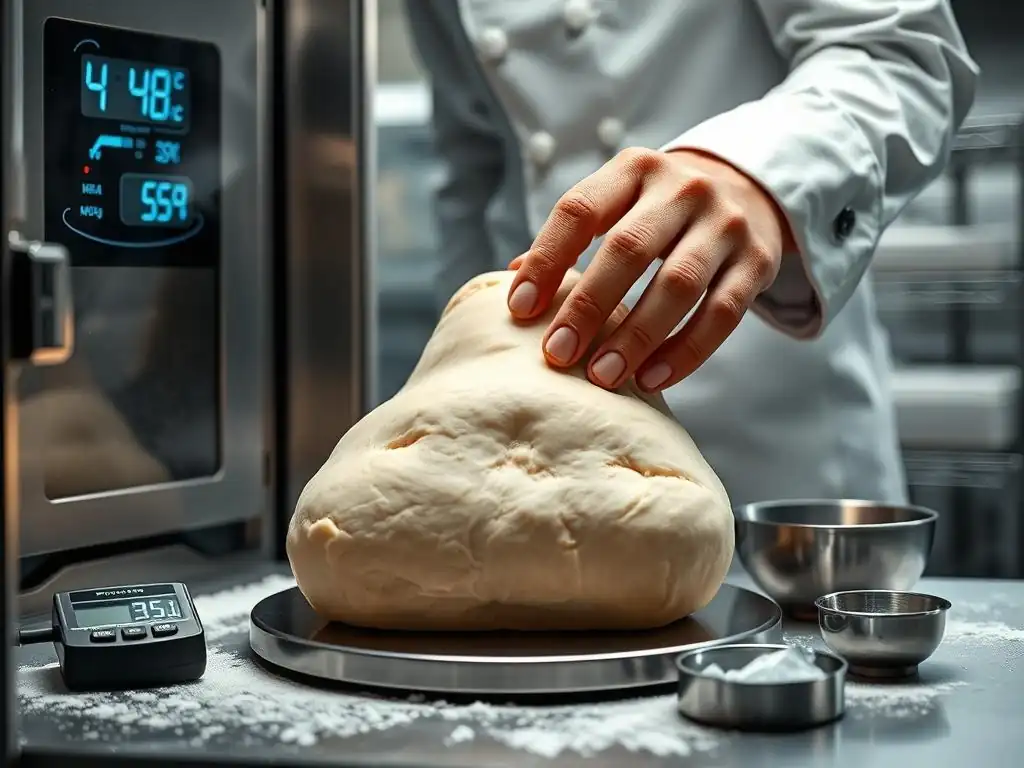
Understanding Temperature Gradients in Ovens
Even with an accurate oven thermometer, most home ovens have temperature gradients – variations in temperature within different areas of the oven cavity. Hot spots and cooler zones can significantly impact baking uniformity, especially with delicate items like macarons or multiple trays of pastries. For example, the back of the oven might be 10-15°C hotter than the front, or the bottom might be hotter than the top. This can lead to some pastries browning faster or rising more on one side than another.
Understanding your oven's quirks is an advanced aspect of French pastry temperature control. You can map your oven's hot spots by placing slices of bread or small dollops of meringue on a baking sheet and observing how they brown in different locations. Once you know your oven's tendencies, you can adjust accordingly.
This might involve rotating baking sheets halfway through the baking time, placing more delicate items in cooler zones, or avoiding filling the oven to capacity to allow for better air circulation and more even heat distribution. While challenging to eliminate entirely, acknowledging and managing these gradients is a crucial step in achieving consistent results in French pastry.
Using Ice Baths for Precise Temperature Management
Ice baths are a simple yet effective tool for rapidly cooling mixtures and stopping cooking processes at precise temperatures, a common technique in French pastry temperature control. When making custards, creams, or sauces like crème anglaise or pastry cream, heating is necessary to thicken the mixture by coagulating proteins or gelatinizing starches. However, leaving the mixture in a hot pan after it reaches the target temperature can lead to overcooking or curdling due to residual heat.
Immediately transferring the hot mixture to a bowl placed over an ice bath (a larger bowl filled with ice and water) rapidly brings the temperature down, halting the cooking process. This ensures the texture remains smooth and silky.
Ice baths are also invaluable when working with gelatin; once gelatin is dissolved in a warm liquid, it often needs to be cooled to a specific temperature (not too cold, not warm) before being incorporated into other mixtures, and an ice bath provides controlled cooling. This technique is essential for achieving the delicate textures required in many French desserts, from mousses to panna cotta.
Adjusting Recipes for Different Oven Types
Recognizing that ovens vary significantly – gas vs. electric, convection vs. conventional – is key to adapting French pastry recipes and applying effective French pastry temperature control. Conventional ovens use radiant heat from elements, often resulting in hot spots and uneven baking. Convection ovens use a fan to circulate hot air, providing more even heat and often requiring lower temperatures and shorter baking times. A recipe developed for a conventional oven might need a temperature reduction of 15-25°C (25-50°F) and a 10-15% reduction in baking time when using a convection oven.
Gas ovens often produce more moisture than electric ovens, which can affect things like crispness or the "skinning" of macarons. Electric ovens tend to provide drier heat. Learning how your specific oven type impacts baking is an ongoing process. It often involves trial and error, starting with recommended adjustments but being prepared to modify temperatures and times based on observation. Many experienced bakers keep detailed notes on how different recipes perform in their specific oven, refining their French pastry temperature control strategies over time to achieve optimal results regardless of the equipment.
Temperature Control Tips for Different Types of French Pastries
Pâte à Choux: Temperature Secrets for Perfect Puff
Mastering pâte à choux for perfect éclairs, gougères, or profiteroles hinges on several critical temperature points. As discussed, thoroughly cooking the panade over medium heat (around 70-80°C) to drive off moisture is the first secret. This step builds the structure necessary for the dramatic rise. Cooling the panade to around 60°C before adding eggs is equally important; too hot and you scramble the eggs, too cold and the dough is stiff. The resulting dough should be warm enough to be pliable and glossy.
Baking temperature is the final, crucial stage. Starting at a high temperature (200-220°C) for 10-15 minutes creates a powerful steam leavening effect, forming the hollow interior. Reducing the temperature (to 180°C) for the remaining baking time allows the pastry to dry out and develop a firm, crisp shell without collapsing. Opening the oven door too early or too often during the high-temperature phase can cause the pastries to deflate. Trusting your oven thermometer and resisting the urge to peek too soon are essential temperature control tips for these airy delights.
Croissants: Maintaining Cold Temperatures for Lamination
The success of flaky, buttery croissants is almost entirely dependent on maintaining cold temperatures throughout the lamination process, a prime example of intricate French pastry temperature control. The detrempe (the dough base) and the butter block must be kept cold, ideally between 4-7°C (39-45°F). The butter block needs to be firm but pliable enough to roll without breaking, often requiring it to sit out of the refrigerator for just a few minutes before use.
During the folding and rolling steps (the "turns"), the dough and butter layers must remain distinct. If the dough or butter gets too warm, the butter melts into the dough, destroying the layers and resulting in a dense, bread-like texture rather than a flaky one. Chilling the dough in the refrigerator for 30-60 minutes between each turn is absolutely non-negotiable to firm up the butter and relax the gluten in the dough.
The ambient temperature of the kitchen also plays a role; working in a cool environment helps maintain the necessary cold temperatures. This rigorous application of French pastry temperature control is what creates the hundreds of thin, buttery layers that define a perfect croissant.
Custards and Creams: Avoiding Curdling with Proper Temperature
Achieving smooth, velvety custards and creams like crème anglaise, pastry cream (crème pâtissière), or diplomat cream relies on careful temperature management to thicken the mixture through egg coagulation or starch gelatinization without causing the proteins to curdle. For egg-thickened custards like crème anglaise, the mixture should be heated gently over low to medium heat, stirring constantly, until it reaches around 80-82°C (175-180°F). At this point, the mixture will thicken enough to coat the back of a spoon ("nappe"). Exceeding this temperature, even slightly, can cause the egg yolks to scramble or curdle, resulting in a grainy texture.
Pastry cream, which is thickened with both egg yolks and starch (usually flour or cornstarch), is more forgiving but still requires attention to temperature. It needs to be brought to a boil (100°C or 212°F) and cooked for 1-2 minutes after boiling to ensure the starch is fully gelatinized and the raw starch flavor is cooked out.
However, vigorous boiling can still lead to curdling if not stirred constantly. Using a thermometer to monitor the temperature and an ice bath to stop the cooking process once the desired consistency is reached are essential techniques for preventing curdling and achieving perfectly smooth custards and creams, highlighting the nuances of French pastry temperature control.
Conclusion: Elevate Your French Pastry Skills with Temperature Mastery
Embrace the Science of Temperature for BakeWithEase Success
Mastering French pastry is a journey that rewards precision, patience, and a deep understanding of how ingredients behave. As we've explored, temperature is not just one factor among many; it is often the single most critical element that dictates the success or failure of classic French patisserie. From the flakiness of a croissant achieved through cold butter lamination (precisely maintained at around 4-7°C) to the delicate set of a crème brûlée baked to an internal temperature of 80-82°C, every iconic French dessert relies on careful French pastry temperature control.
By embracing the science behind these temperature requirements and investing in accurate tools like oven and probe thermometers, you gain the ability to control the outcomes in your kitchen. Understanding why keeping butter cold is crucial for puff pastry (preventing melting before steam leavening) or why chocolate needs specific heating and cooling cycles for tempering (stabilizing cocoa butter crystals at 31-32°C for dark chocolate) empowers you to troubleshoot problems and consistently achieve professional-level results.
At BakeWithEase, we believe that by focusing on the fundamentals of French pastry temperature control, you can elevate your baking skills and find true success and joy in creating these exquisite treats.
Frequently Asked Questions
What makes temperature control so crucial in French pastry making?
Temperature control is vital because it directly affects the chemical reactions that create the desired texture and structure. Precise temperature management ensures ingredients properly bind, gluten develops correctly, and fats remain stable.
How does temperature impact the lamination process in pastries like croissants?
Maintaining a cold temperature is essential during lamination. This prevents the butter from melting and blending into the dough, which is crucial for creating distinct layers and a flaky texture.
What's the ideal temperature range for baking most French pastries?
While specific temperatures vary by recipe, most French pastries bake best between 350°F (175°C) and 400°F (200°C). Monitoring the internal temperature is key to preventing under- or over-baking.
Why is proper chilling important when making pâte sablée (shortcrust pastry)?
Chilling the dough allows the gluten to relax, preventing it from becoming tough. This results in a tender and crumbly crust, which is a hallmark of good pâte sablée.
What tools can help ensure accurate temperature control in French pastry making?
Reliable tools include an oven thermometer to verify the oven temperature, a digital thermometer for checking internal temperatures, and even a temperature-controlled environment for chilling doughs.
Final Reflection: Mastering the Heat: Precision and Passion in French Pastry
The precise control of temperature isn't merely a technical detail in French pastry making; it's the very heartbeat of achieving perfection. A single degree too high or too low can mean the difference between a flawlessly delicate croissant and a dense, disappointing failure. This article has explored the critical role temperature plays at every stage, from the initial mixing of ingredients to the final, golden-brown bake. Understanding this intricate dance of heat is essential for anyone seeking to truly master the art of French pastry.
The influence of temperature extends beyond the kitchen, reflecting a broader cultural appreciation for precision and detail in French culinary tradition. The pursuit of the ideal temperature is a testament to the dedication and artistry involved. This meticulous approach isn't just about creating delicious treats; it's about honoring a legacy of culinary excellence. As Julia Child famously said, Find something you're passionate about and keep tremendously interested in it.
This passion for precision, for understanding the nuances of temperature, is what elevates French pastry from a simple dessert to a sophisticated art form.
Now, consider your own baking endeavors. Perhaps you've experienced the frustration of a less-than-perfect result. Remember the lessons learned here – the importance of gradual warming, the significance of precise measurements, and the impact of even subtle temperature fluctuations. Take this knowledge and apply it to your next baking project. Embrace the challenge of mastering temperature control, and you'll discover a new level of satisfaction and success in creating exquisite French pastries. The journey to perfection is a rewarding one, and the delicious results will be well worth the effort.
Unlock the Secrets of Perfect French Pastries!
Thanks for taking the time to explore the fascinating world of temperature control in French pastry making! You've now got the knowledge to elevate your baking game. Ready to put your newfound expertise to the test?
- Bake a masterpiece: Try out one of the recipes mentioned in the article, paying close attention to the temperature variations throughout the process. See the difference it makes!
- Share your baking triumphs (or challenges!): Post a picture of your creation on social media and tag us @BakeWithEase – we love seeing your results!
- Consider experimenting with a new, temperature-sensitive pastry recipe. This is a great way to practice your new skillset.
What temperature-related baking challenge are you most excited to conquer now?