
Fat Content and Hydration: Finding the Right Balance for Brioche

Welcome to BakeWithEase, your guide to baking brilliance!
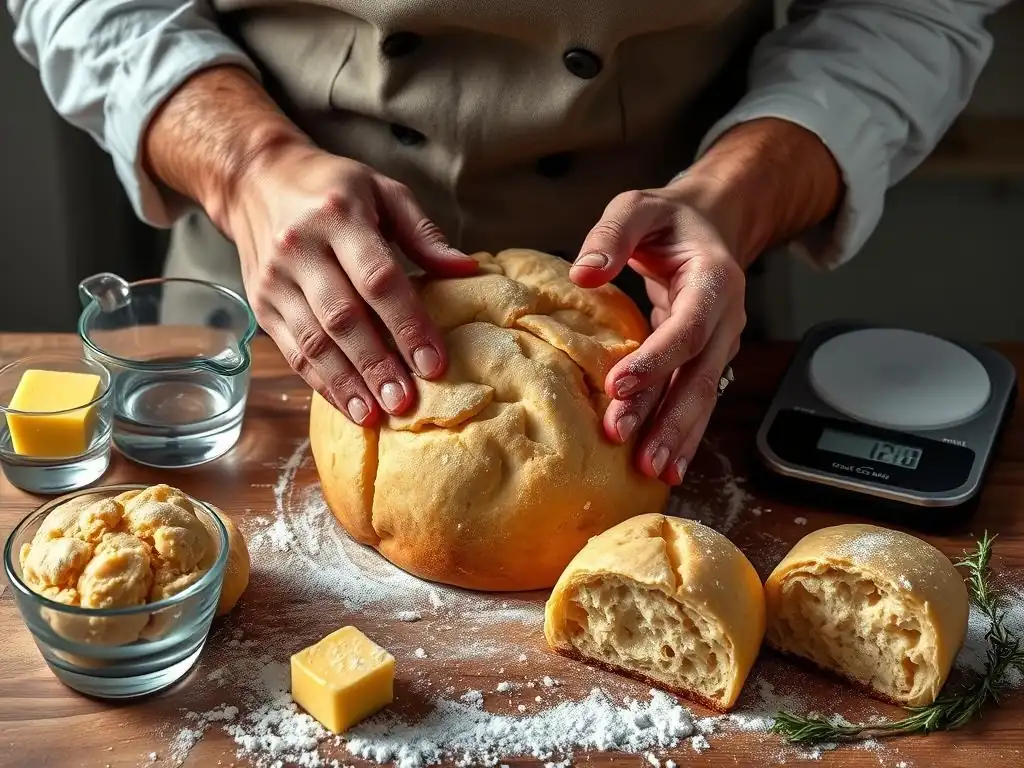
Ever wondered how to achieve that perfect, pillowy texture in your brioche? The secret lies in understanding the delicate dance between fat and hydration. This week, we're diving deep into the world of brioche dough hydration levels, exploring how different ratios impact the final product. Prepare to unlock the secrets to a truly exceptional brioche – a journey that will transform your baking! Ready to uncover the key to brioche perfection?
- Understanding Brioche Dough: The Key to a Perfect Bake
- The Impact of Fat on Brioche Dough Hydration Levels
- Hydration Levels in Brioche Dough: A Detailed Guide
- Finding the Right Balance: Fat-to-Hydration Ratio in Brioche
- Troubleshooting Brioche Dough: Hydration and Fat Imbalances
- Brioche Recipe Examples: Demonstrating Different Hydration Levels
- Tips for Mastering Brioche Dough Hydration
- Advanced Brioche Techniques: Manipulating Fat and Hydration
- Achieving Brioche Perfection: Practice and Observation
-
Frequently Asked Questions
- What is the ideal hydration level for brioche dough, according to BakeWithEase?
- How does the fat content in brioche dough impact the required hydration?
- Why is finding the right balance of fat and hydration so important for brioche?
- Where can I find simple brioche recipes with clear hydration instructions on BakeWithEase.com?
- What happens if I accidentally add too much water to my brioche dough?
- Final Reflection: The Delicate Dance of Fat and Hydration in Brioche
- Unlock Brioche Perfection: Master the Hydration-Fat Dance!
Understanding Brioche Dough: The Key to a Perfect Bake
What Makes Brioche Unique? The Role of Fat and Moisture
Brioche stands out in the world of enriched doughs primarily due to its generous inclusion of fat, typically in the form of butter, and other moistening agents like eggs and milk. Unlike lean doughs used for baguettes, which rely mainly on flour, water, salt, and yeast, brioche incorporates a significant amount of ingredients that inhibit gluten development while adding richness and tenderness.
This high fat content, often ranging from 50% to over 100% relative to the flour weight, coats the gluten strands, preventing them from forming a strong, elastic network. The moisture comes not just from added water or milk, but also substantially from the eggs, which are composed of roughly 75% water.
The interplay between this high level of fat and the total liquid content (hydration) is what defines the unique texture of brioche. It results in a dough that is soft, pliable, and often quite sticky before chilling. When baked, this balance yields a bread with a tender, almost cake-like crumb, a rich flavor, and a beautiful golden crust. Achieving the correct Brioche dough hydration levels in relation to the fat is crucial; too little liquid can result in a dry, dense loaf, while too much can make the dough unmanageable and lead to a gummy texture.
Exploring Enriched Doughs: Brioche in the Baking Family
Enriched doughs are a broad category of doughs that contain ingredients beyond the basic flour, water, yeast, and salt. These additions often include fat, sugar, eggs, and milk, which contribute to richness, tenderness, flavor, and keeping quality. Brioche is arguably one of the most famous examples of a highly enriched dough, sitting alongside others like challah, babka, and even sweet rolls. The level of enrichment varies; a simple enriched dough might just have a bit of butter and sugar, while a classic brioche is heavily enriched with butter and eggs.
Compared to other enriched doughs, brioche is known for its particularly high fat content. While challah might use oil and eggs for richness, and often has a moderate sugar content, brioche typically uses a large quantity of butter, sometimes equal to or exceeding the weight of the flour. This high fat percentage, combined with the moisture from eggs and milk, places specific demands on managing Brioche dough hydration levels. The techniques for handling and developing brioche dough, such as extended kneading and chilling, are often tailored to accommodate this unique composition, distinguishing it from less enriched breads.
The Impact of Fat on Brioche Dough Hydration Levels
How Fat Affects Gluten Development in Brioche
Fat plays a fascinating and critical role in the development of gluten within brioche dough. Gluten, the protein network that gives bread its structure, develops when two proteins in flour, glutenin and gliadin, combine in the presence of water and are manipulated (like kneading). However, when fat is introduced in significant quantities, it coats the flour particles and the developing gluten strands.
This coating acts as a barrier, preventing the gluten proteins from fully connecting and forming a strong, elastic matrix. Think of it like trying to hold hands with greasy gloves on – it's much harder to get a firm grip.
This inhibition of gluten development is intentional in brioche. While a strong gluten network is desired in a rustic loaf to create a chewy texture and open crumb, brioche aims for tenderness and a fine, close crumb. The high fat content ensures the crumb is soft and delicate.
Consequently, brioche dough requires a different approach to kneading – often longer and more gentle kneading is needed to coax what gluten development is possible, and chilling is essential to solidify the fat, making the dough easier to handle and allowing the limited gluten structure to set without collapsing under the weight of the fat and moisture. This interaction means the effective Brioche dough hydration levels need to be considered in the context of how much fat is present, as the fat itself contributes to the dough's richness and handling characteristics, almost like a liquid.
Fat Content and Dough Texture: Achieving the Ideal Brioche Crumb
The amount of fat in brioche dough directly influences its texture, both before and after baking, and is intrinsically linked to the perceived hydration. A dough with a very high fat content (say, 80-100% butter relative to flour) will feel incredibly rich and almost greasy.
While the actual water percentage relative to flour might be moderate (perhaps 50-55% added liquid hydration, plus the liquid from eggs), the presence of so much fat makes the dough feel softer and less elastic than a lean dough at the same water hydration level. This richness is key to the signature tender, melt-in-your-mouth crumb of a classic brioche.
Conversely, a brioche with a lower fat percentage (perhaps 40-50% butter) will behave more like a standard enriched dough; it will feel firmer, develop gluten more readily, and require slightly higher Brioche dough hydration levels from added liquids to achieve a similar level of workability. The resulting baked bread will have a slightly firmer crumb structure, less richness, and might feel less indulgent. Bakers carefully balance the fat percentage with the total liquid to achieve their desired outcome, whether it's a light, airy brioche or a dense, buttery loaf perfect for slicing.
Hydration Levels in Brioche Dough: A Detailed Guide
What is Dough Hydration and Why Does it Matter for Brioche?
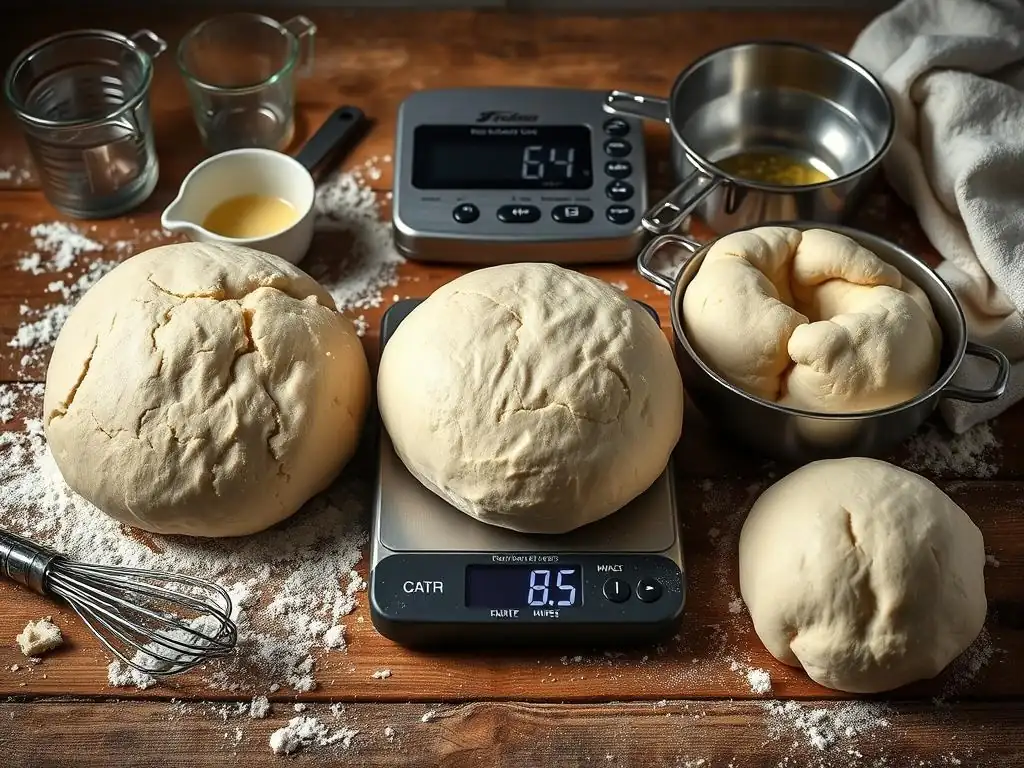
Dough hydration refers to the amount of liquid in a dough relative to the amount of flour, typically expressed as a percentage. It's calculated by dividing the weight of the liquid ingredients by the weight of the flour and multiplying by 100. For brioche, calculating hydration is a bit more nuanced because eggs and milk contain water, and even butter contains a small percentage of water (around 15-18%).
While some bakers calculate hydration based only on added water/milk, a more comprehensive approach for enriched doughs like brioche considers the total liquid weight from all sources – water, milk, and the water content within eggs and butter – against the flour weight. This gives a fuller picture of the actual Brioche dough hydration levels.
Hydration is critical for brioche because it affects gluten development, dough handling, fermentation rate, and the final crumb texture. Sufficient hydration is needed to allow the gluten proteins to absorb water and form a network, even if inhibited by fat. It keeps the dough pliable and allows for proper fermentation.
Too low hydration results in a stiff, difficult-to-knead dough and a dry, dense crumb. Too high hydration, while potentially yielding a very open crumb in lean doughs, can make brioche dough excessively sticky and hard to work with, leading to a gummy or heavy texture if not handled correctly, especially given the fat content.
Calculating Brioche Dough Hydration Percentage: A Baker's Essential Skill
Calculating Brioche dough hydration levels is a fundamental skill for consistent baking. The standard formula is: (Total Liquid Weight / Flour Weight) * 100%. For brioche, "Total Liquid Weight" should ideally include the water content from milk, eggs, and butter, in addition to any pure water added.
Let's consider an example:
- Flour: 500g
- Whole Milk: 150g (approx. 87% water = 130.5g water)
- Large Eggs: 3 (approx. 60g each, 75% water = 45g water per egg, total 135g water)
- Unsalted Butter: 250g (approx. 16% water = 40g water)
Total Flour Weight = 500g
Total Liquid Weight = 130.5g (milk) + 135g (eggs) + 40g (butter) = 305.5g
Hydration Percentage = (305.5g / 500g) * 100% = 61.1%
This calculation shows the effective hydration from all sources of liquid. While some recipes might state hydration based only on milk/water (e.g., 150g milk / 500g flour = 30% hydration), understanding the total liquid contribution provides a more accurate picture of the dough's wetness and handling characteristics, which is vital when troubleshooting or adapting recipes.
Finding the Right Balance: Fat-to-Hydration Ratio in Brioche
The Sweet Spot: Ideal Fat and Liquid Proportions for Brioche
Finding the "sweet spot" for fat and liquid proportions in brioche is less about a single magic number and more about achieving the desired texture and richness for a specific style of brioche. Generally, classic brioche recipes feature high fat content, often starting around 50% of the flour weight and going up to 100% or more. Alongside this, the total liquid from eggs, milk, and butter water content typically results in Brioche dough hydration levels ranging from approximately 55% to 70% based on total liquid to flour weight.
A common ratio for a rich, classic brioche might look something like this:
- Flour: 100%
- Butter: 50-80%
- Eggs: 30-50% (by weight, often replacing most or all added water/milk)
- Milk/Water: 0-20%
- Sugar: 10-20%
- Yeast: 1-3%
- Salt: 1.5-2%
In such a formula, the eggs and milk contribute significant liquid, potentially bringing the total effective hydration (including butter's water) into that 60-70% range. This balance provides enough liquid for yeast activity and some gluten development, while the high fat ensures tenderness and richness, preventing the dough from becoming tough despite the kneading required. It's this careful calibration of fat and total Brioche dough hydration levels that defines the luxurious texture of a well-made brioche.
Adjusting Hydration Based on Fat Content: Achieving Consistency
Achieving consistent results with brioche often involves understanding how to adjust Brioche dough hydration levels based on the specific fat content of a recipe or even variations in ingredients. If a recipe calls for a very high percentage of butter (e.g., 100% of flour weight), the dough will naturally feel softer and richer. In this case, the percentage of added liquid (milk or water) might be on the lower side of the typical range, as the fat significantly impacts the dough's rheology (how it flows and deforms). You might aim for a total effective hydration closer to 58-63%.
Conversely, if you're working with a brioche recipe that uses a more moderate amount of fat (say, 40-50% butter), the dough will have less inherent softness from the fat. To compensate and ensure the dough isn't too stiff, you might need to use a slightly higher percentage of added liquid, pushing the total effective Brioche dough hydration levels towards the upper end of the typical range, perhaps 65-70%.
The key is to observe the dough's feel during mixing – it should be soft and somewhat sticky, but eventually come together. Experienced bakers learn to make small adjustments to liquid based on flour type, egg size, and even ambient humidity to find the perfect balance for their specific formula and environment.
Troubleshooting Brioche Dough: Hydration and Fat Imbalances
Common Brioche Dough Problems: Identifying the Root Cause
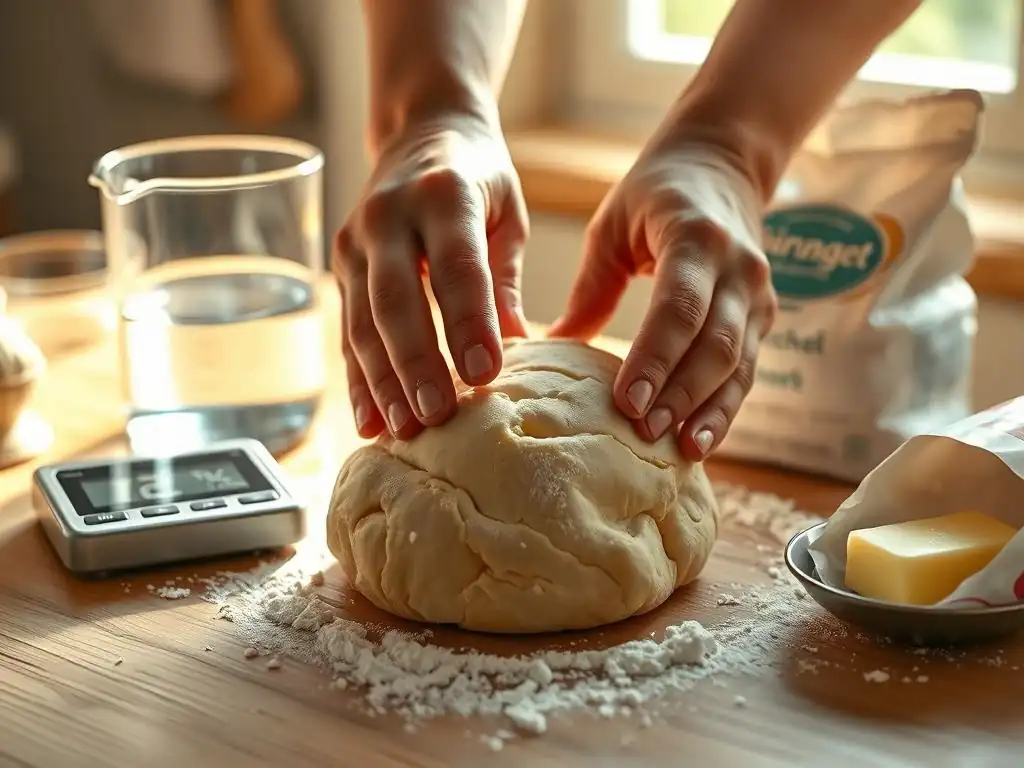
Working with enriched doughs like brioche can sometimes present challenges due to the high fat and egg content. Several common issues can arise, and often they are linked to the delicate balance between fat and Brioche dough hydration levels. Problems like a dough that won't come together, is excessively sticky even after chilling, is too stiff, or yields a dry or heavy baked loaf often point back to ingredient ratios or mixing technique.
Here's a quick checklist of potential issues and their likely causes:
- Dough is too stiff/crumbly: Likely too low hydration (not enough liquid relative to flour) or insufficient mixing/kneading to incorporate the fat properly.
- Dough is excessively sticky/won't develop: Could be too high hydration, insufficient mixing, or adding fat too early before some initial gluten development.
- Baked brioche is dry: Often due to low hydration or overbaking.
- Baked brioche is heavy/gummy: Can be caused by too high hydration, under-kneading (gluten not developed enough to support the structure), or insufficient proofing.
- Butter is separating/greasy dough: Usually means the butter was too cold when added, or it was added too quickly, or the dough was overworked and became too warm, causing the fat to melt out.
Identifying whether the issue stems from hydration being off, fat content being incorrect, or a technique flaw (like mixing or temperature) is the first step to fixing it.
Too Much Fat, Not Enough Hydration: Solutions for a Dry Brioche
If you suspect your brioche dough is too dry, potentially due to slightly low Brioche dough hydration levels or a very high fat content without sufficient liquid to balance it, you'll notice the dough feels stiff and resistant during mixing. It might not easily form a smooth ball and could appear crumbly.
Here are some steps to address this:
- Gradually Add Liquid: If you are still in the mixing phase, try adding a very small amount of milk or water, perhaps a tablespoon at a time, allowing it to incorporate fully before adding more. Be cautious not to add too much too quickly.
- Extend Kneading: Sometimes a stiff dough just needs more time for the liquid to fully hydrate the flour and for the fat to be incorporated. Continue kneading, either by hand or machine, and see if the dough softens and becomes more pliable.
- Check Temperature: Ensure your ingredients (especially eggs and milk) weren't excessively cold, which can make the dough stiff. If kneading by machine, check the dough temperature; if it's too cold, let it warm up slightly at room temperature before continuing.
- Adjust Next Time: For future bakes with that recipe, consider slightly increasing the liquid percentage (milk/water or egg quantity) to achieve better Brioche dough hydration levels.
Over-Hydrated Brioche Dough: How to Rescue a Sticky Mess
An over-hydrated brioche dough, where the Brioche dough hydration levels are too high relative to the flour and fat, will feel excessively sticky and might not develop structure properly even after extended kneading. It can be very difficult to handle.
Here's how to attempt a rescue:
- Add Flour Gradually: If the dough is still in the mixer or on your work surface, add a tablespoon or two of flour at a time. Mix or knead it in completely before deciding if more is needed. Add just enough until the dough becomes manageable, but avoid adding so much that the fat-to-flour ratio is drastically altered.
- Chill Thoroughly: Over-hydrated brioche benefits immensely from chilling. Cold temperatures firm up the butter, making the dough less sticky and much easier to handle. Refrigerate the dough for several hours or even overnight. The cold also allows time for the flour to fully absorb the excess liquid.
- Adjust Kneading Technique: If kneading by hand, use a bench scraper to help manage the sticky dough. Techniques like the "stretch and fold" can be easier than traditional kneading for very wet doughs.
- Use Less Liquid Next Time: The most effective long-term solution is to slightly reduce the liquid content (milk, water, or egg weight) the next time you use that recipe to achieve appropriate Brioche dough hydration levels.
Brioche Recipe Examples: Demonstrating Different Hydration Levels
Classic Brioche Recipe: A Balanced Approach to Fat and Hydration
A classic brioche recipe typically strikes a balance between a high fat content and moderate Brioche dough hydration levels from eggs and milk to achieve its signature richness and tender crumb.
Here's an example structure:
- Flour: 500g
- Eggs: 4 large (approx. 240g total, providing about 180g water)
- Milk: 50g (providing about 43.5g water)
- Butter: 300g (60% of flour weight, providing about 48g water)
- Sugar: 75g
- Salt: 10g
- Instant Yeast: 7g
In this recipe:
- Flour = 500g
- Total Liquid = 180g (eggs) + 43.5g (milk) + 48g (butter water) = 271.5g
- Effective Hydration = (271.5g / 500g) * 100% = 54.3%
This effective hydration level of around 54% might seem low compared to lean doughs, but the significant fat content (60% of flour weight) contributes greatly to the dough's softness and workability. This ratio typically produces a dough that is soft and manageable after chilling, resulting in a rich, tender, and flavorful brioche loaf with a relatively tight, even crumb structure. It's a widely used starting point for mastering brioche.
Variations in Fat and Hydration: Exploring Different Brioche Styles
Varying the fat content and Brioche dough hydration levels allows for creating different styles of brioche, from a lighter version to an intensely rich "Brioche Mousseline."
Consider these variations:
- Lighter Brioche:
- Flour: 500g
- Eggs: 2 large (approx. 120g, ~90g water)
- Milk: 100g (~87g water)
- Butter: 200g (40% of flour, ~32g water)
- Sugar: 50g
- Salt: 10g
- Yeast: 7g
- Effective Hydration: (90 + 87 + 32) / 500 * 100% = 41.8% (Note: This calculation is based only on added liquid + butter water. If calculating based on all liquid sources including eggs, it's higher. A simpler way for comparison is often just liquid relative to flour). Let's calculate based on Milk+Eggs / Flour for comparison: (120 + 100) / 500 * 100% = 44%. This dough will be less rich, potentially easier to handle, and yield a slightly less tender crumb than classic brioche.
- Rich Brioche (Brioche Mousseline):
- Flour: 500g
- Eggs: 5-6 large (approx. 300-360g, ~225-270g water)
- Milk: 0g
- Butter: 400g (80% of flour, ~64g water)
- Sugar: 100g
- Salt: 10g
- Yeast: 7g
- Effective Hydration: (225 + 64) / 500 * 100% = 57.8% (using 5 eggs). Calculating based on Eggs / Flour: 300 / 500 * 100% = 60%. This dough is incredibly rich and soft, requiring significant chilling and careful handling. The high fat and higher Brioche dough hydration levels (from the many eggs) result in an exceptionally tender, fine, and moist crumb.
These examples show how altering the proportions of fat and liquid dramatically changes the dough's characteristics and the final bread.
Tips for Mastering Brioche Dough Hydration
Measuring Ingredients Accurately for Optimal Hydration
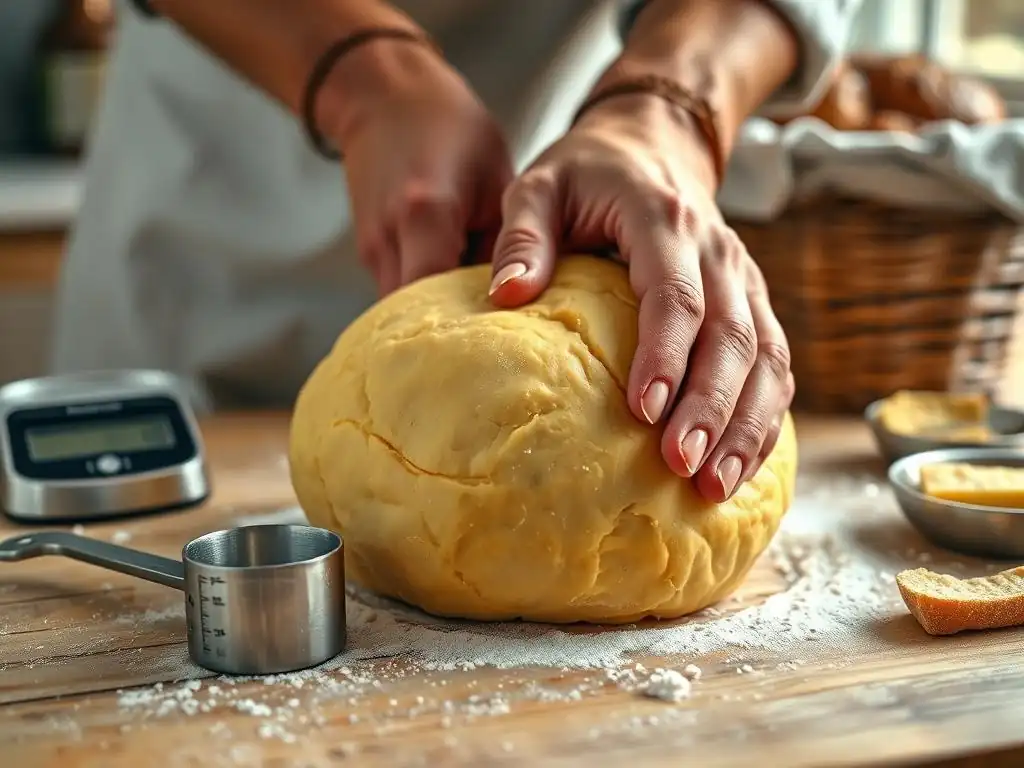
Accuracy in measuring ingredients is paramount when working with dough, especially enriched doughs like brioche where the balance of fat, liquid, and flour is so crucial. Even small errors can significantly impact Brioche dough hydration levels and the dough's consistency. Using a digital kitchen scale is highly recommended for weighing flour, liquids (milk, eggs), butter, sugar, salt, and yeast. Volume measurements (cups and spoons) are notoriously imprecise, as flour can be packed differently and egg sizes vary.
For example, a cup of flour can weigh anywhere from 120g to 150g depending on how it's scooped and leveled. This variation alone can shift your hydration percentage by several points. Similarly, large eggs can vary in weight by 10g or more. Weighing ensures you are using the exact quantities specified in a recipe, allowing you to replicate results consistently and understand how specific Brioche dough hydration levels behave with your ingredients. This precision is the first step towards troubleshooting and improving your brioche bakes.
Understanding Flour Absorption: A Key Factor in Brioche Hydration
Not all flours are created equal, and their ability to absorb liquid varies. This is a key factor influencing effective Brioche dough hydration levels. Factors like the protein content (which affects gluten development) and the type of wheat used impact how much water the flour can hold. High-protein bread flour generally absorbs more liquid than lower-protein all-purpose flour. Whole wheat flour, with its bran and germ, is often more absorbent than white flour.
Even the same type of flour can vary slightly from brand to brand or batch to batch, and environmental factors like humidity can play a role. A very humid day might mean your flour has already absorbed a little moisture from the air. Because of this variability, recipes often provide a starting point for hydration, but experienced bakers learn to make minor adjustments based on the feel of the dough.
If your flour seems less absorbent, you might need slightly lower Brioche dough hydration levels; if it's very absorbent, you might need a touch more liquid to achieve the desired consistency. Paying attention to how the dough feels during mixing is crucial.
The Importance of Dough Temperature in Hydration Control
Controlling dough temperature is vital in brioche making, and it directly impacts how the dough feels and handles, which can be mistaken for incorrect Brioche dough hydration levels. Ingredients like eggs and milk are often used cold to help keep the dough temperature down during the typically long mixing time required to incorporate the butter. Butter itself is usually added cold and in pieces for the same reason.
If the dough gets too warm during mixing (above 75-80°F or 24-27°C), the butter can start to melt, making the dough greasy, difficult to handle, and potentially causing the fat to separate. This greasy texture can feel like over-hydration, even if the liquid percentages are correct. Conversely, a dough that is too cold can feel stiff and resistant, mimicking low hydration.
Maintaining the correct dough temperature (ideally finishing mixing around 75°F or 24°C before chilling) ensures the butter remains solid and properly incorporated, allowing the dough's true Brioche dough hydration levels to express themselves in its handling characteristics. Chilling then firms the butter further, making the dough much easier to shape.
Advanced Brioche Techniques: Manipulating Fat and Hydration
Using Different Fats: Butter vs. Other Fats and Their Impact on Hydration
While butter is the traditional fat for brioche, other fats like oil, shortening, or even rendered animal fats can be used, and they impact the dough and its effective Brioche dough hydration levels differently. Butter is an emulsion of fat, water (around 16-18%), and milk solids. Its solid state at room temperature and its melting properties are key to the texture of brioche, contributing flakiness and tenderness.
Oils, being liquid at room temperature and 100% fat (with no water content), will result in a dough that is immediately softer and richer but lacks the structure and flaky layers that solid fat provides. Using oil might require adjusting the total liquid downward slightly, as you're adding pure fat without the water component of butter. The final crumb will be moist but potentially less tender and complex than one made with butter.
Shortening behaves more like butter but lacks the flavor and water content. If substituting shortening for butter, you'd need to account for the missing water when calculating Brioche dough hydration levels and potentially add a tiny bit more liquid. The type of fat significantly influences the dough's behavior and the final product's characteristics.
Autolyse and Hydration: Enhancing Brioche Dough Development
Autolyse is a technique where flour and water (or other liquids) are mixed together and allowed to rest before adding other ingredients like salt, yeast, and fat. This resting period allows the flour to fully hydrate and enzymes to start breaking down proteins, which helps in gluten development without kneading. While traditionally used for lean doughs, autolyse can be adapted for brioche, though the high fat content changes its effect.
For brioche, an autolyse might involve mixing just the flour with the liquid ingredients (milk, eggs, maybe sugar but usually not salt, yeast, or butter) and letting it rest for 20-30 minutes. This pre-hydration step ensures the flour is fully saturated before the fat is introduced. This can potentially lead to a slightly smoother dough and better gluten development with less intensive kneading later, even with the high fat.
When using autolyse, ensuring accurate Brioche dough hydration levels in the initial mix is even more important, as the flour starts absorbing the liquid immediately during the rest period. The butter is then typically kneaded in after the autolyse, slowly, to fully incorporate it into the partially developed dough structure.
Achieving Brioche Perfection: Practice and Observation
Observing Dough Texture: Visual Cues for Correct Hydration
Becoming adept at making brioche involves developing a keen eye for dough texture, which is your primary indicator of correct Brioche dough hydration levels and proper development. During mixing, pay attention to how the dough feels. Initially, it will be a shaggy mess. As you knead and incorporate the butter, it should transform into a soft, smooth, and elastic dough that pulls away from the sides of the bowl (if using a mixer), though it will remain quite soft and potentially sticky due to the high fat and liquid content.
A properly hydrated brioche dough, after sufficient kneading and chilling, should feel pliable and soft but not excessively sticky. It should stretch without tearing too easily (though it will be less elastic than a lean dough). If it feels stiff and breaks when stretched, it might be under-hydrated. If it's still excessively sticky and doesn't hold its shape even after chilling, it could be over-hydrated or under-kneaded. Learning to recognize these visual and tactile cues is essential for knowing when your Brioche dough hydration levels are just right for your ingredients and environment.
Documenting Your Bakes: Tracking Fat and Hydration Levels for Consistent Results
To consistently bake excellent brioche, especially as you experiment with recipes or adjust for ingredients, keeping a baking journal is invaluable. Documenting the specifics of each bake allows you to track what worked and what didn't, helping you refine your approach to Brioche dough hydration levels and fat content.
For each brioche bake, consider recording:
- The exact recipe used (including weights).
- Calculated effective hydration percentage.
- Calculated fat percentage (butter weight vs. flour weight).
- Type and brand of flour used.
- Notes on ingredient temperature.
- Mixing time and observations on dough texture (e.g., "very sticky," "smooth after 15 mins," "passed windowpane test").
- Dough temperature after mixing.
- Proofing times and temperatures.
- Baking time and temperature.
- Observations on the final baked brioche (crumb texture, crust, flavor, moisture).
By correlating the objective data (hydration, fat %) with your subjective observations on dough handling and the final result, you can quickly identify patterns and make informed adjustments for future bakes. This systematic approach demystifies the process and helps you pinpoint the ideal Brioche dough hydration levels and fat balance for your specific baking conditions and desired outcome.
- [ ] Measure ingredients by weight
- [ ] Calculate hydration percentage
- [ ] Observe dough texture during mixing
- [ ] Check dough temperature
- [ ] Chill dough thoroughly
- [ ] Document bake results
Frequently Asked Questions
What is the ideal hydration level for brioche dough, according to BakeWithEase?
The ideal hydration level for brioche dough is crucial for its texture. While it varies slightly, BakeWithEase generally recommends aiming for a hydration level between 60-70% to achieve a rich, tender crumb. This range ensures the dough is manageable yet still yields a soft, buttery result.
How does the fat content in brioche dough impact the required hydration?
Higher fat content, characteristic of brioche, actually inhibits gluten development. Therefore, a lower hydration is often needed to prevent the dough from becoming too slack and difficult to handle. Remember that fat coats the flour particles, limiting water absorption.
Why is finding the right balance of fat and hydration so important for brioche?
Achieving the correct balance ensures the signature brioche texture: rich, tender, and slightly sweet. Too little hydration results in a dry, dense bread, while too much can lead to a sticky, unmanageable dough that doesn't rise properly.
Where can I find simple brioche recipes with clear hydration instructions on BakeWithEase.com?
BakeWithEase.com offers a variety of brioche recipes, searchable by skill level. Look for recipes specifically mentioning "Brioche Dough" and pay attention to the exact water-to-flour ratio provided, considering the fat content. Recipes often include step-by-step guides for beginners.
What happens if I accidentally add too much water to my brioche dough?
If your brioche dough is too wet, BakeWithEase suggests adding small amounts of flour (1-2 tablespoons at a time) until it reaches a workable consistency. Be careful not to add too much, as this can lead to a tougher final product. Refrigerating the dough can also help.
Final Reflection: The Delicate Dance of Fat and Hydration in Brioche
The perfect brioche, with its airy crumb and rich flavor, hinges on a precise balance between fat content and hydration. This seemingly simple equation, explored throughout this article, reveals a complex interplay that significantly impacts the final product's texture, taste, and overall success. Mastering this balance is not merely a technical skill; it's the key to unlocking the true potential of this beloved pastry.
Understanding the relationship between fat and hydration in brioche dough has profoundly shaped my own baking journey. It's a lesson in precision and patience, reminding me that even seemingly small adjustments can yield dramatic results. The subtle nuances of dough manipulation, the careful observation of its behavior, and the anticipation of the final bake – these are the elements that elevate brioche making from a simple recipe to a truly rewarding experience. The proof of the pudding is in the eating,
and in the case of brioche, the proof is in the perfectly tender crumb and the rich, buttery aroma.
Now, it's your turn to experiment. Don't be afraid to adjust the hydration levels in your next brioche recipe, to explore the impact of different fat percentages. Observe your dough, feel its texture, and trust your instincts. Each batch will be a lesson, each loaf a testament to your growing understanding of this delicate dance. The journey to perfecting your brioche is a rewarding one, filled with delicious discoveries and the satisfaction of creating something truly special.
Unlock Brioche Perfection: Master the Hydration-Fat Dance!
Thanks for diving into the world of fluffy, buttery brioche! You've now got the knowledge to create truly exceptional bread. Ready to put your new skills to the test?
- Bake your dream brioche: Use the adjusted hydration and fat ratios from the article to create your masterpiece. Note your results and tweak as needed – experimentation is key!
- Share your creation: Post a picture of your beautiful brioche on social media and tag us @BakeWithEase! Let's inspire other bakers.
- Join our baking community: Head over to our forums to discuss your baking journey and share tips with fellow bread enthusiasts.
Ready to experience the satisfaction of perfectly balanced brioche? What unique flavor or technique will you incorporate into your next bake?