
Sourdough Discard Dinner Rolls: Soft and Easy Recipe

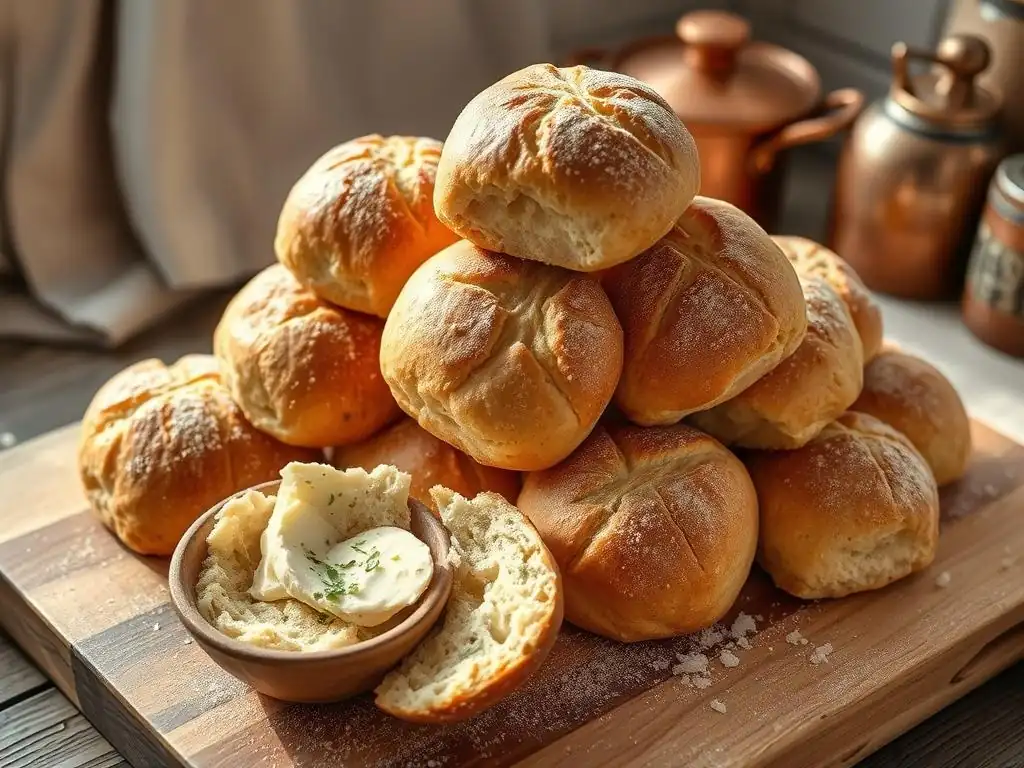
Welcome to BakeWithEase, your trusted guide to baking brilliance!
Ever wondered if you could transform your sourdough discard into something truly extraordinary? Prepare to be amazed! Our Soft Sourdough Discard Dinner Rolls recipe is here to revolutionize your baking game. Unlock the secrets to achieving irresistibly soft and flavorful rolls using simple techniques, even if you're venturing beyond beginner baking. Dive in and discover how easy it is to create a crowd-pleasing masterpiece from something you might otherwise discard!
- Sourdough Discard Dinner Rolls: Soft and Tangy Recipe
- Introduction to Sourdough Discard Dinner Rolls
- Understanding Sourdough Discard
- Ingredients and Equipment
- Step-by-Step Guide: Making Sourdough Discard Dinner Rolls
- Tips and Tricks for Perfect Rolls
- Serving and Storing
- Sourdough Discard Dinner Rolls Recipe Card
- Conclusion: Enjoying Your Homemade Rolls
-
Frequently Asked Questions
- What exactly is "sourdough discard" and why can I use it in dinner rolls?
- Are these sourdough discard dinner rolls difficult to make for a beginner baker?
- How do these sourdough discard dinner rolls differ from regular dinner rolls?
- Can I freeze these sourdough discard dinner rolls for later?
- What are some serving suggestions for these sourdough discard dinner rolls?
- Final Reflection: The Unexpected Joy of Sourdough Discard
- Unleash Your Inner Baker: Make These Rolls Tonight!
Sourdough Discard Dinner Rolls: Soft and Tangy Recipe
Introduction to Sourdough Discard Dinner Rolls
Baking with sourdough can feel magical, transforming simple flour and water into loaves bursting with flavor and character. But what do you do with the discard, that unfed portion you remove before feeding your starter? Don't toss it! Sourdough discard is a fantastic ingredient, especially for creating incredibly soft sourdough discard dinner rolls. These rolls offer a delightful tang without the long fermentation time required for a traditional sourdough loaf, making them perfect for a weeknight meal or a special occasion.
Creating soft sourdough discard dinner rolls is a rewarding process that minimizes waste and maximizes flavor. Unlike recipes relying solely on active starter for leavening, discard recipes often use commercial yeast to provide the primary lift, with the discard contributing complex flavor and a wonderfully tender crumb. This approach makes the process more predictable and much faster, meaning you can enjoy warm, homemade rolls relatively quickly after deciding to bake.
Delicious Sourdough Discard Dinner Roll Recipe
This recipe focuses on achieving rolls that are not just flavorful with that signature sourdough tang, but also exceptionally soft and fluffy. The key lies in the balance of ingredients and the handling of the dough. We'll incorporate enrichments like milk, butter, and a touch of sugar, which are classic additions to dinner roll doughs that promote tenderness and a fine crumb structure.
Developing a truly delicious soft sourdough discard dinner roll recipe involves careful attention to hydration and kneading. A dough that is slightly sticky yet manageable after kneading tends to produce the softest results. We'll explore techniques to ensure your dough is perfectly developed, leading to rolls that are light as air and incredibly satisfying, whether served warm with butter or used for sliders.
Reducing Waste: Utilizing Sourdough Discard
One of the most appealing aspects of this recipe is its role in sustainable baking by utilizing sourdough discard. For many sourdough enthusiasts, maintaining a starter involves regular feedings and subsequent discard, which can accumulate quickly. Finding delicious ways to use this discard prevents food waste and unlocks a new realm of baking possibilities beyond traditional loaves.
Using sourdough discard in recipes like these soft sourdough discard dinner rolls adds value to a component that might otherwise be thrown away. A moderately active discard, even if it hasn't been fed recently, still contains a wealth of flavor compounds developed during its fermentation. Incorporating it into enriched doughs imparts a subtle tang that elevates the rolls from ordinary to extraordinary, giving them a unique depth of flavor that you can't achieve with commercial yeast alone.
Understanding Sourdough Discard
Sourdough discard refers to the portion of your sourdough starter that you remove before feeding it. This is typically done to maintain a manageable amount of starter and ensure its health and activity by providing it with fresh flour and water. Unlike an active, bubbly starter used for leavening, discard is generally less vigorous and may not be able to rise dough on its own.
The composition of sourdough discard varies depending on the starter's hydration level (the ratio of water to flour) and how recently it was fed. A 100% hydration starter discard, for example, contains equal parts flour and water by weight. Even when inactive, discard is rich in the complex acids and alcohols produced by the yeast and bacteria cultures, which contribute significantly to flavor but provide minimal leavening power. Using discard is an excellent way to infuse that characteristic sourdough taste into baked goods where the primary lift comes from other sources.
Sourdough Discard Explained
Sourdough discard is essentially unfed sourdough starter. Over time, the wild yeast and lactic acid bacteria in the starter consume the available sugars in the flour. Without regular feeding, their activity slows down, and the starter's ability to leaven diminishes. The "discard" is the portion you remove before adding fresh flour and water to the remaining starter to refresh it.
Think of discard as a flavor powerhouse rather than a leavening agent. A mature discard, even one that's been in the fridge for a week or two, carries a deeper, more complex sour flavor than a freshly fed starter. This makes it ideal for recipes like pancakes, crackers, muffins, and, of course, soft sourdough discard dinner rolls, where you want the tang without necessarily relying on the starter for rise. The hydration level of your discard (e.g., 100%, 75%) will affect the overall hydration of your dough, so it's good to know your starter's ratio.
Benefits of Using Sourdough Discard in Rolls
Using sourdough discard in dinner rolls offers several distinct advantages. Firstly, it significantly reduces food waste, making your sourdough journey more sustainable. Every gram of discard used means less goes into the bin.
Secondly, discard imparts a wonderful depth of flavor to the rolls. While commercial yeast provides the necessary rise for these soft sourdough discard dinner rolls, the discard contributes a subtle, pleasant tanginess that balances the richness of the dough. This creates a more complex and interesting flavor profile compared to rolls made with commercial yeast alone. Additionally, the acids in the discard can contribute to a tender crumb and potentially extend the shelf life of the rolls slightly by inhibiting mold growth.
Ingredients and Equipment
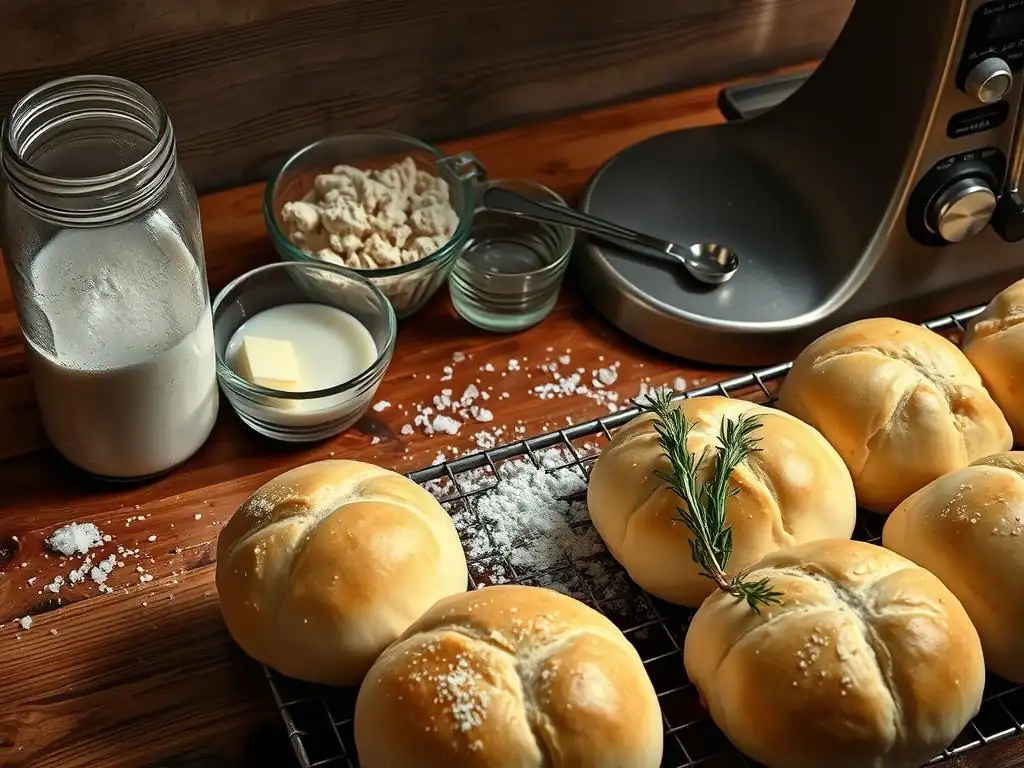
Crafting delicious soft sourdough discard dinner rolls requires a careful selection of ingredients and some basic baking equipment. The quality of your ingredients directly impacts the final texture and flavor of your rolls. Using fresh, high-quality flour and dairy will make a noticeable difference.
Having the right tools on hand streamlines the baking process and helps ensure consistent results. While you don't need a professional bakery setup, some standard kitchen items are essential for successful roll making, from mixing to baking.
Key Ingredients for Fluffy Rolls
For truly fluffy soft sourdough discard dinner rolls, you'll need:
- All-Purpose Flour: Provides the main structure. Around 3-4 cups (approximately 400-500g) is typical for a batch of 12-16 rolls.
- Sourdough Discard: Unfed starter, ideally at 100% hydration. About 1 cup (around 200-250g) adds great flavor.
- Milk: Adds richness and contributes to a soft crumb. Whole milk is often preferred. Around 1 cup (240ml).
- Butter: Provides tenderness and flavor. About 4-6 tablespoons (55-85g), softened.
- Egg: Adds richness, helps with structure, and contributes to a golden crust. One large egg is usually sufficient.
- Sugar: Feeds the yeast and adds a touch of sweetness, enhancing browning. 2-4 tablespoons.
- Salt: Essential for flavor and controlling yeast activity. Around 1-1.5 teaspoons.
- Instant Dry Yeast: Provides the primary leavening. About 1-2 teaspoons.
These ingredients work together to create a rich, slightly sweet dough with a wonderful tang from the discard, resulting in incredibly soft sourdough discard dinner rolls. The butter and milk are particularly crucial for achieving that desired tender texture.
Essential Equipment for Baking
You don't need a professional kitchen to bake excellent soft sourdough discard dinner rolls, but having a few key pieces of equipment will make the process smoother:
- Large Mixing Bowl: For combining ingredients and the first rise.
- Stand Mixer with Dough Hook (Optional but Recommended): Makes kneading much easier and more efficient, helping develop gluten for a soft texture. If you don't have one, you'll need a sturdy surface for hand kneading.
- Measuring Cups and Spoons: For accurate ingredient measurements. Using a kitchen scale for flour and discard (measuring by weight) is even better for consistency.
- Bench Scraper: Useful for dividing dough and cleaning surfaces.
- Baking Pan: A 9x13 inch (23x33 cm) baking dish is standard for baking a batch of rolls close together, resulting in soft sides.
- Parchment Paper: Lines the pan for easy cleanup and prevents sticking.
- Plastic Wrap or Damp Kitchen Towel: For covering the dough during rising periods.
- Wire Rack: For cooling the baked rolls.
Having these tools ready before you begin will ensure you can move smoothly through each stage of the recipe, leading you closer to enjoying your delicious soft sourdough discard dinner rolls.
Step-by-Step Guide: Making Sourdough Discard Dinner Rolls
Making soft sourdough discard dinner rolls is a straightforward process involving mixing, rising, shaping, and baking. While it requires a bit of time for fermentation and proofing, the active work is manageable, making it a rewarding baking project.
Following these steps carefully will guide you from simple ingredients to warm, golden, and incredibly soft rolls ready for your dinner table.
Step 1: Mixing the Dough
Begin by warming your milk slightly, ideally to around 100-110°F (38-43°C). In a large mixing bowl or the bowl of your stand mixer, combine the warm milk, sugar, and instant dry yeast. Let this mixture sit for about 5-10 minutes until it becomes foamy, indicating the yeast is active. This is a crucial step to ensure your rolls will rise properly, yielding soft sourdough discard dinner rolls.
Once the yeast is bubbly, add your sourdough discard, softened butter, egg, and salt to the bowl. Mix these wet ingredients together briefly. Then, gradually add the flour, one cup at a time, mixing on low speed with a dough hook (or stirring with a spoon) until a shaggy dough forms.
Increase the speed slightly and continue mixing for 6-8 minutes, or knead by hand on a lightly floured surface for 10-12 minutes, until the dough is smooth, elastic, and pulls away from the sides of the bowl. Proper kneading is vital for developing the gluten structure needed for soft sourdough discard dinner rolls.
Step 2: Bulk Fermentation
After kneading, the dough needs time to rise. Shape the dough into a ball and place it in a clean, lightly oiled bowl, turning to coat the surface. Cover the bowl tightly with plastic wrap or a damp kitchen towel. Place the bowl in a warm spot, ideally around 75-80°F (24-27°C).
Allow the dough to undergo its first rise, known as bulk fermentation. This typically takes around 1.5 to 2 hours, or until the dough has roughly doubled in size. The exact time can vary significantly depending on the temperature of your kitchen and the activity level of your yeast (even though discard adds flavor, the commercial yeast does the heavy lifting here). A dough that has doubled indicates sufficient fermentation, a key factor in achieving soft sourdough discard dinner rolls.
Step 3: Shaping the Rolls
Once the dough has completed its bulk fermentation, gently punch it down to release the air. Turn the dough out onto a lightly floured surface. You can weigh the dough and divide it into equal portions for consistently sized rolls. For example, if your dough weighs around 900g, dividing it into 12 pieces of 75g each will yield medium-sized rolls. For larger rolls, divide into 10 pieces (90g each); for smaller, divide into 16 (approx. 56g each).
To shape each roll, take a portion of dough and flatten it slightly into a disk. Pull the edges of the dough up and pinch them together in the center to form a smooth ball. Place the seam side down. Roll the ball gently against the counter surface under the cup of your hand, using a circular motion with slight pressure, to create a smooth, taut surface. This shaping technique helps create even, round rolls and contributes to the uniform texture of your soft sourdough discard dinner rolls.
Step 4: Proofing for Lightness
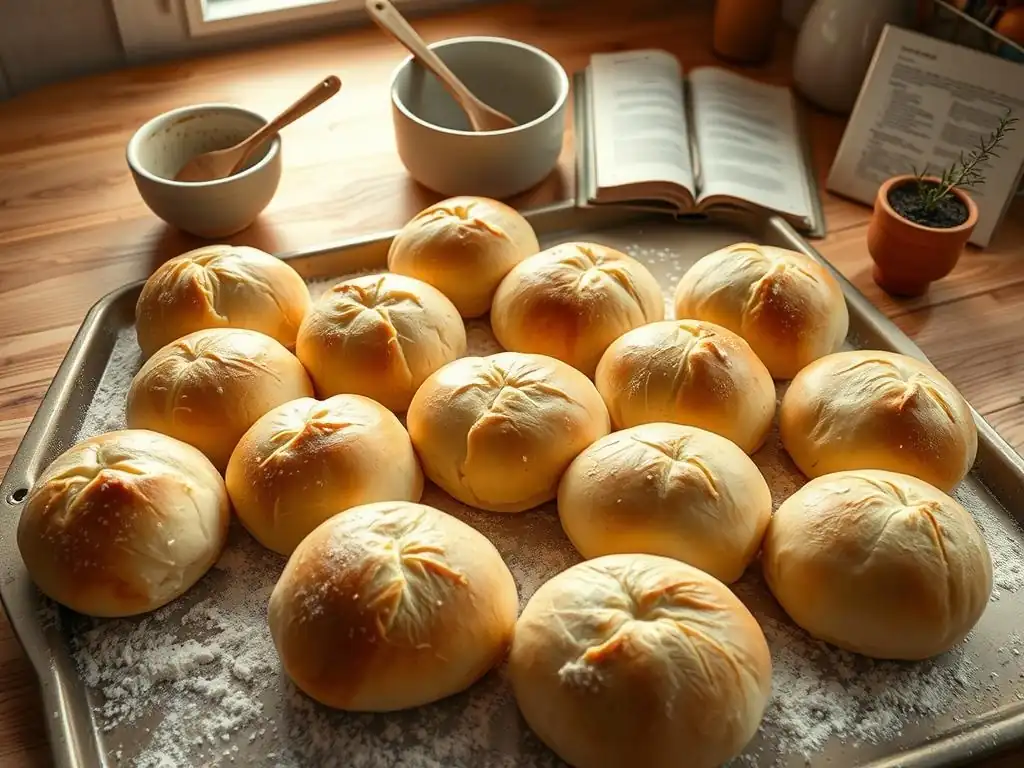
Arrange the shaped rolls in your prepared baking pan, leaving a small gap between them (they will expand). A 9x13 inch pan is perfect for fitting 12-16 rolls snugly, which helps them rise up rather than out, resulting in tall, soft sourdough discard dinner rolls with tender sides. Cover the pan loosely with plastic wrap or a clean kitchen towel.
Allow the rolls to proof for their second rise, typically lasting 30-60 minutes. They should visibly increase in size and become puffy. To check if they are ready, gently poke a roll with your finger; if the indentation springs back slowly but not completely, they are properly proofed. Over-proofing can cause the rolls to collapse in the oven, while under-proofing results in dense rolls. Aim for that perfect balance for maximum softness.
Step 5: Baking to Golden Perfection
Preheat your oven to 375°F (190°C) while the rolls are proofing. Once the oven is hot and the rolls are ready, you can brush the tops with an egg wash (one egg beaten with a tablespoon of water or milk) for a glossy, golden-brown crust, or with melted butter for a softer finish.
Bake the rolls in the preheated oven for 18-25 minutes. The exact baking time will depend on your oven and the size of your rolls. They are done when they are golden brown on top and the internal temperature reaches about 190-200°F (88-93°C). Remove the pan from the oven and, if desired, brush the tops with more melted butter for extra softness and flavor. Let the rolls cool in the pan for a few minutes before transferring them to a wire rack to cool slightly before serving. Enjoy your warm, soft sourdough discard dinner rolls!
Tips and Tricks for Perfect Rolls
Achieving consistently perfect soft sourdough discard dinner rolls involves understanding a few key principles and having some troubleshooting strategies up your sleeve. Small adjustments in technique can make a big difference in the final outcome.
These tips cover everything from getting that ideal crust to fixing common issues and adding exciting variations to your basic recipe.
Achieving a Perfect Crust
The crust of your soft sourdough discard dinner rolls can range from delicately tender to slightly crisp, depending on your preference and technique. For a truly soft crust, brush the rolls with melted butter immediately after they come out of the oven. The residual heat helps the butter absorb, keeping the tops moist and tender.
If you prefer a slightly richer, more golden crust with a gentle sheen, an egg wash (one egg beaten with a tablespoon of milk or water) applied before baking is ideal. For a less shiny, matte finish, a simple milk wash before baking works well and also contributes to a softer crust than baking plain. Avoid over-baking, as this can lead to a thicker, harder crust. Baking until just golden brown is usually sufficient for achieving that desired soft texture.
Troubleshooting Common Issues
Sometimes, baking doesn't go exactly as planned. If your soft sourdough discard dinner rolls didn't rise well, it could be due to inactive yeast (check the expiration date or perform the foaming test in Step 1), a kitchen that's too cold during proofing (find a warmer spot, like an oven with just the light on), or insufficient kneading (gluten needs to develop to trap gasses).
If your rolls turned out dense, it might be from not enough liquid, insufficient kneading, not allowing enough time for the rises (bulk fermentation or proofing), or over-handling the dough during shaping. Dense rolls can also result from using too much flour during kneading or shaping. Aim for a slightly sticky dough that becomes smooth and elastic after adequate kneading. Patience during the rising stages is key to achieving light and soft sourdough discard dinner rolls.
Variations: Adding Flavors to Your Rolls
The basic recipe for soft sourdough discard dinner rolls is a wonderful canvas for adding other flavors. Before shaping, you can knead in ingredients like:
- Garlic and Herb: Add 1-2 cloves minced garlic and 1-2 tablespoons finely chopped fresh herbs like rosemary, thyme, or chives to the dough during the last minute of kneading.
- Cheddar Cheese and Jalapeño: Fold in 1/2 cup shredded cheddar cheese and 1-2 finely diced pickled jalapeños (drained well) after kneading.
- Everything Bagel Seasoning: Brush the shaped rolls with melted butter or an egg wash before proofing, then generously sprinkle with everything bagel seasoning.
- Parmesan and Black Pepper: Add 1/4 cup grated Parmesan cheese and 1 teaspoon freshly ground black pepper to the dry ingredients.
These simple additions can transform your basic soft sourdough discard dinner rolls into something special, tailored to complement different meals or stand alone as a delicious snack.
Serving and Storing
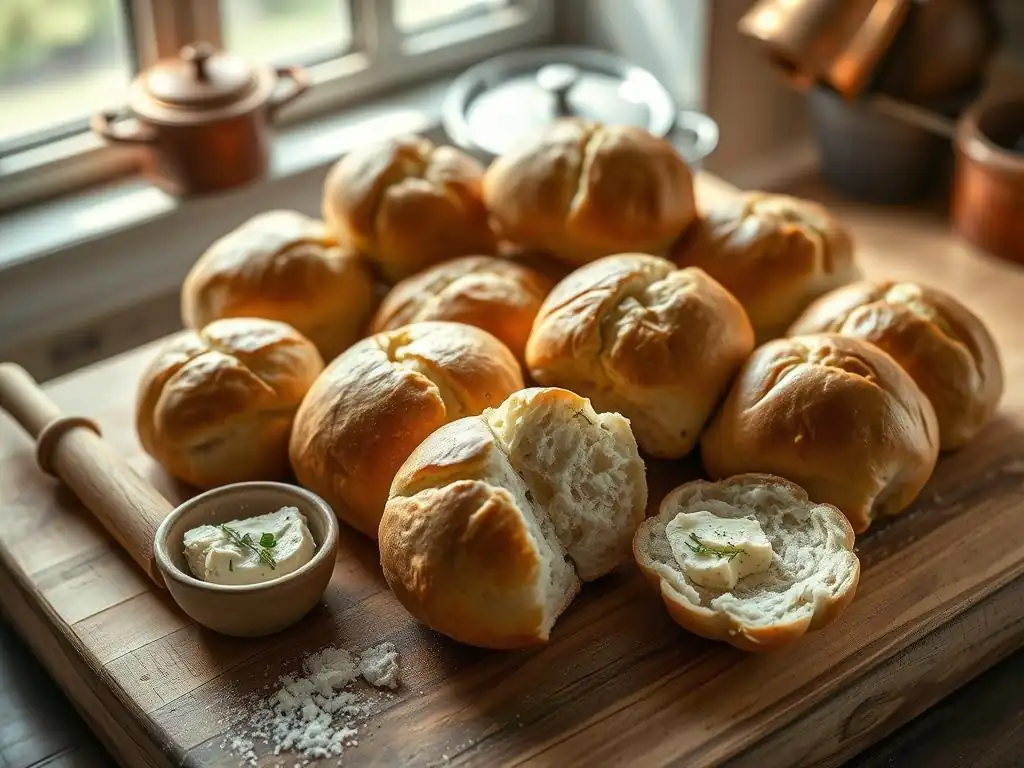
Once your soft sourdough discard dinner rolls emerge from the oven, golden and fragrant, the best part begins – enjoying them! Proper serving and storage will help you make the most of your delicious homemade bake.
Whether they disappear immediately or you have leftovers, knowing the best ways to serve and store them ensures they maintain their wonderful texture and flavor.
Serving Suggestions
Warm soft sourdough discard dinner rolls are heavenly served simply with butter. The slight tang from the discard pairs beautifully with the richness of dairy. Place a basket of warm rolls on the table just before a meal, and watch them vanish.
Beyond butter, these rolls are fantastic alongside soups, stews, and chili, perfect for soaking up flavorful broths. They make excellent sliders for mini sandwiches, ideal for parties or lunchboxes. Consider serving them with a charcuterie board, alongside roasted meats, or simply as a comforting snack any time of day. Their versatile flavor profile makes them a welcome addition to almost any meal.
Storing Leftover Rolls
If you happen to have any soft sourdough discard dinner rolls leftover, they can be stored to maintain their freshness. Once completely cooled, store them in an airtight container or a resealable plastic bag at room temperature for 2-3 days.
For longer storage, you can freeze the cooled rolls. Place them in a single layer on a baking sheet until frozen solid (about 1-2 hours), then transfer them to a freezer-safe bag or container. They can be frozen for up to 2-3 months. To reheat from frozen, you can warm them gently in a microwave for a few seconds or wrap them in foil and reheat in a 300°F (150°C) oven for 10-15 minutes until warmed through. This allows you to enjoy that fresh-baked taste and soft texture whenever you like.
Sourdough Discard Dinner Rolls Recipe Card
Here you will find the detailed instructions and measurements needed to make a batch of incredibly soft sourdough discard dinner rolls. This section is laid out clearly to guide you through each step, ensuring success in your baking endeavor.
While we cannot provide a downloadable or printable file directly here, the information is presented in a comprehensive format suitable for following along in your kitchen.
Detailed Instructions and Measurements
Here is a breakdown of the ingredients and steps for approximately 12-16 soft sourdough discard dinner rolls:
Yield: 12-16 rolls Prep time: Approx. 30 minutes Rise time: Approx. 2-3 hours (total) Bake time: Approx. 18-25 minutes
Ingredients:
- 1 cup (240ml) warm milk (100-110°F / 38-43°C)
- 2-4 tablespoons granulated sugar
- 1.5 teaspoons instant dry yeast
- 1 cup (approx. 200-250g) sourdough discard (100% hydration recommended)
- 4 tablespoons (55g) unsalted butter, softened, plus more for brushing
- 1 large egg
- 1 teaspoon salt
- 3.5 - 4 cups (approx. 450-500g) all-purpose flour, plus more for dusting
Instructions:
- In a large bowl or stand mixer bowl, combine warm milk, sugar, and yeast. Let stand 5-10 minutes until foamy.
- Stir in sourdough discard, softened butter, egg, and salt.
- Gradually add flour, mixing on low with a dough hook or stirring, until a shaggy dough forms.
- Increase speed to medium-low and knead for 6-8 minutes, or knead by hand for 10-12 minutes, until dough is smooth and elastic. It should be slightly sticky.
- Shape dough into a ball, place in a lightly oiled bowl, turn to coat. Cover and let rise in a warm place (approx. 75-80°F / 24-27°C) until doubled, 1.5 - 2 hours.
- Punch dough down gently. Turn onto a lightly floured surface. Divide into 12-16 equal pieces (approx. 60-75g each).
- Shape each piece into a smooth ball.
- Arrange rolls in a greased or parchment-lined 9x13 inch baking pan.
- Cover pan and let rolls proof in a warm spot until puffy and nearly doubled, 30-60 minutes. They should touch slightly.
- Preheat oven to 375°F (190°C). Optional: Brush rolls with egg wash or milk.
- Bake for 18-25 minutes, until golden brown and internal temperature is 190-200°F (88-93°C).
- Brush tops with melted butter immediately after removing from oven.
- Let cool in the pan for a few minutes, then transfer to a wire rack.
Task List: Key Baking Steps[x]Activate Yeast[x]Mix & Knead Dough[x]Bulk Ferment[x]Shape Rolls[x]Proof Rolls[x]Bake Rolls
Tip: The amount of flour needed can vary based on humidity and your discard's hydration. Start with the lower amount and add just enough until the dough is manageable but still soft. This is key for soft sourdough discard dinner rolls.
Printable Recipe
While a direct printable link is not available here, you can easily copy and paste the "Detailed Instructions and Measurements" section above into a document or note-taking app to create your own printable version. This allows you to have the recipe handy in your kitchen as you bake these delightful soft sourdough discard dinner rolls.
The format provided, with clear steps and measurements, is designed to be easy to follow whether on screen or transferred to a printed page.
Conclusion: Enjoying Your Homemade Rolls
Baking soft sourdough discard dinner rolls is a rewarding experience that results in delicious, flavorful rolls perfect for any occasion. You've transformed simple ingredients and often-discarded starter into something truly special, adding a touch of homemade goodness to your table.
The process, from mixing the dough to pulling golden rolls from the oven, is a journey of transformation. Each step, from achieving the right dough consistency to allowing adequate time for rising, contributes to the final outcome: incredibly soft sourdough discard dinner rolls with a delightful tang.
Sourdough Baking Resource
BakeWithEase.com is your comprehensive resource for all things baking, including mastering sourdough. Whether you're looking for more ways to use sourdough discard, tips on maintaining your starter, or recipes for traditional loaves, cakes, or cookies, you'll find guides and inspiration tailored for bakers of all levels.
Exploring the world of sourdough baking can be a continuous learning process, and resources like ours are here to support you. We aim to demystify techniques and provide reliable recipes so you can bake with confidence and ease, creating delicious treats like these soft sourdough discard dinner rolls and beyond.
We love seeing what you bake! Sharing your experience with making these soft sourdough discard dinner rolls can inspire others in the baking community. Did you add a variation? Find a helpful tip? Or simply want to show off your beautiful, golden rolls?
Consider sharing photos of your finished soft sourdough discard dinner rolls! Connecting with fellow bakers is part of the joy of this craft. Happy baking!
Frequently Asked Questions
What exactly is "sourdough discard" and why can I use it in dinner rolls?
Sourdough discard is the portion of your sourdough starter that you remove before feeding it. It can be used in recipes, like these rolls, to add flavor and texture without needing commercial yeast.
Are these sourdough discard dinner rolls difficult to make for a beginner baker?
No, this recipe is designed for bakers of all skill levels. BakeWithEase provides step-by-step instructions and uses easy-to-find ingredients to ensure a successful bake, even for beginners.
How do these sourdough discard dinner rolls differ from regular dinner rolls?
Sourdough discard dinner rolls have a slightly tangy flavor and a chewier texture compared to regular dinner rolls. The discard also contributes to a softer, more tender crumb.
Can I freeze these sourdough discard dinner rolls for later?
Yes, you can absolutely freeze them! Allow the baked rolls to cool completely, then wrap them tightly in plastic wrap and place them in a freezer-safe bag. To reheat, thaw completely and warm them in the oven for a few minutes to restore their softness.
What are some serving suggestions for these sourdough discard dinner rolls?
These rolls are incredibly versatile! Serve them warm with butter, jam, or your favorite spreads. They're also great alongside soups, salads, or as part of a holiday meal.
Final Reflection: The Unexpected Joy of Sourdough Discard
The humble sourdough discard, once a kitchen nuisance, has been transformed into a culinary treasure. This recipe proves that embracing imperfection can lead to extraordinary results, turning what was once waste into soft, pillowy dinner rolls that rival any bakery's offering. The ease of this recipe, combined with its delicious outcome, makes it a perfect example of sustainable baking and resourceful cooking.
The impact of this simple recipe extends beyond just the delicious rolls themselves. It speaks to a larger movement towards mindful consumption and reducing food waste. It's a reminder that even the smallest adjustments in our kitchens can have a significant impact. Waste not, want not
– a timeless adage that resonates deeply as we strive for more sustainable practices in our daily lives. This recipe is a small step, but a powerful symbol of that larger shift.
Now, consider your own kitchen. What seemingly insignificant ingredients might hold untapped potential? I encourage you to experiment, to embrace the unexpected, and to find joy in transforming what might otherwise be discarded into something delicious and meaningful. Don't be afraid to get your hands a little messy – the rewards of baking these soft sourdough discard dinner rolls are well worth the effort. Let this recipe be a springboard for your own culinary creativity and a testament to the power of resourcefulness.
Unleash Your Inner Baker: Make These Rolls Tonight!
Thanks for joining us on this sourdough adventure! You've just unlocked the secret to transforming your discard into delicious, soft dinner rolls. Ready to take your baking skills to the next level?
- Bake a batch of these amazing rolls tonight! The recipe is easier than you think, and the results are unbelievably rewarding.
- Share your baking journey with us on social media – tag @BakeWithEase and show us your delicious creations!
- Try a creative twist! Experiment with different herbs or cheeses to personalize your rolls.
What's your favorite way to use up sourdough discard? Let's share ideas in the comments below!