
Elevate Your Desserts with Elegant Choux Pastry

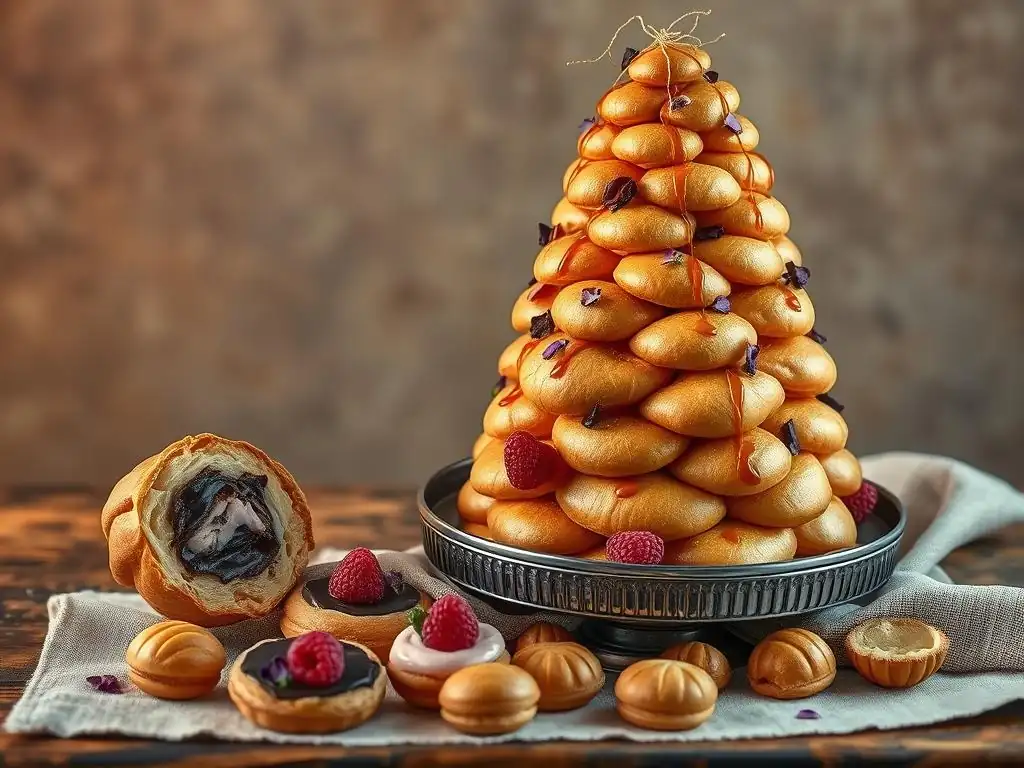
Welcome to BakeWithEase, where baking becomes a joy! Are you ready to create something truly impressive? Dive into our guide on crafting an elegant choux pastry recipe that's surprisingly easy, even for intermediate bakers. Discover the secrets to achieving that perfect rise and delicate texture, and prepare to wow your friends and family. What are you waiting for? Let's get baking!
- Mastering Choux Pastry: A Baker's Journey to Éclairs and Profiteroles
- Understanding Choux Pastry: A Foundation for Culinary Creativity
- The Classic Choux Pastry Recipe: A Step-by-Step Guide
- Preparing the Dough: Achieving the Ideal Consistency
- Baking Your Choux Pastry: Achieving Golden Brown Perfection
- Creative Filling Ideas for Choux Pastry: From Classic to Contemporary
- Assembling and Decorating Choux Pastry: Creating Stunning Desserts
- Troubleshooting Common Choux Pastry Challenges
- Mastering Choux Pastry: Final Tips and Creative Ideas
-
Frequently Asked Questions
- What exactly is choux pastry, and why is it considered "elegant"?
- Is this "Elegant Choux Pastry Recipe Easy" truly easy for a beginner baker?
- What are the key ingredients needed for this choux pastry recipe?
- What are some common mistakes to avoid when making choux pastry?
- What are some ways I can fill and decorate my elegant choux pastry creations?
- Final Reflection: The Enduring Allure of Elegant Choux Pastry
- Unlock Your Inner Pâtissier: Master Choux Pastry Today!
Mastering Choux Pastry: A Baker's Journey to Éclairs and Profiteroles
Understanding Choux Pastry: A Foundation for Culinary Creativity
What is Choux Pastry and Its Culinary Versatility?
Choux pastry, or pâte à choux in French, is a light dough used in many pastries. Unlike other doughs that rely on chemical leaveners like baking powder or yeast, choux pastry puffs up significantly during baking due to its high moisture content. The water in the dough turns to steam in the hot oven, creating large cavities inside.
This unique process results in hollow shells perfect for filling with creams, custards, or even savory mixtures. It's the foundation for beloved desserts like éclairs, profiteroles (cream puffs), and savory gougères. Mastering an elegant choux pastry recipe easy enough for beginners is a key step in expanding your baking repertoire.
The versatility of choux pastry is truly remarkable. From sweet applications like the iconic Paris-Brest ring, traditionally filled with praline cream, to savory uses such as cheese-infused gougères served as appetizers, the possibilities are vast. A single batch of dough can be transformed into numerous shapes and sizes, each offering a different delightful experience. For instance, a standard recipe yielding about 12-15 medium-sized cream puffs can also be piped into 8-10 éclairs or dozens of mini profiteroles for a croquembouche. This adaptability makes it a fundamental skill for any aspiring baker.
Your Guide to Baking Light and Airy Choux Pastry
Achieving light and airy choux pastry hinges on a few critical steps, primarily related to dough consistency and baking technique. The initial cooking of the flour, water, and butter mixture on the stovetop is crucial; it gelatinizes the starch in the flour, creating a stable base that can absorb a significant amount of liquid (the eggs). This cooking also helps dry out the dough slightly, ensuring it's not too wet before adding the eggs, which are essential for structure and lift. A properly cooked base will pull away from the sides of the pan easily.
The baking process for choux is equally vital. It typically involves baking at a relatively high temperature initially (around 200-220°C or 400-425°F) for the first 10-15 minutes. This high heat provides a burst of steam production, forcing the pastry to puff rapidly. After this initial phase, the temperature is often reduced (to around 180°C or 350°F) to allow the pastry to dry out and become crisp without burning. Opening the oven door too early can cause the pastries to collapse, as the internal steam pressure drops before the structure is set. Patience is key during the baking phase.
The Classic Choux Pastry Recipe: A Step-by-Step Guide
Ingredients for Perfect Choux Pastry
A reliable elegant choux pastry recipe easy to follow typically requires only a handful of basic ingredients found in most kitchens. The standard components are water or milk, butter, flour, and eggs, often with a pinch of salt and sometimes a touch of sugar depending on the intended use (sweet or savory).
- Water or Milk: Provides the liquid base for steam.
- Butter: Adds richness and helps create a tender crust.
- Salt: Enhances flavor.
- Sugar (optional): Adds a touch of sweetness for desserts.
- All-Purpose Flour: Provides structure through gluten and starch.
- Eggs: Provide structure, richness, and crucial moisture for steam production and puffing.
The Role of Each Ingredient in Choux Pastry
Each ingredient plays a specific, vital role in the transformation of simple components into light, airy shells. The water, heated with butter, creates the steam that inflates the pastry during baking. Butter adds tenderness and flavor; using unsalted butter gives you more control over the salt content. Salt is essential for balancing flavors, even in sweet applications, and a small amount of sugar can aid browning.
All-purpose flour is preferred because its moderate protein content (typically 10-12%) provides enough structure without making the pastry tough. The starch in the flour gelatinizes when cooked with the liquid and fat, forming a stable paste. Finally, eggs are the magic ingredient: they emulsify the fat and liquid, add richness, and their protein sets during baking, creating the internal structure. The moisture in the eggs also contributes significantly to the steam that creates the hollow center.
Essential Tools for Baking Choux Pastry
While an elegant choux pastry recipe easy to master doesn't require highly specialized equipment, having the right tools makes the process smoother and ensures better results.
- Heavy-bottomed saucepan: Essential for cooking the flour paste evenly without scorching.
- Wooden spoon or sturdy spatula: For mixing the dough vigorously on the stovetop.
- Stand mixer with paddle attachment (optional but recommended): Makes incorporating the eggs much easier and ensures even mixing. A hand mixer can also work but requires more effort.
- Piping bag and pastry tips (round or star): Crucial for shaping the choux pastry consistently. A large round tip (like an Ateco 805 or 806) is common for cream puffs, while a medium-sized round tip (like an Ateco 803 or 804) or a star tip (like an Ateco 826 or 827) works well for éclairs.
- Baking sheets: Standard flat baking sheets.
- Parchment paper or silicone baking mats: Prevents sticking and helps the pastries lift off cleanly. Silicone mats also provide better heat distribution for the bottom crust.
Using a piping bag is strongly recommended for uniform size and shape, which leads to even baking. Trying to spoon the dough onto the baking sheet often results in irregular shapes that bake unevenly, with smaller pieces potentially burning while larger ones remain underbaked. The consistency of size is paramount for a successful batch. For example, aiming for cream puffs roughly 4-5 cm (1.5-2 inches) in diameter ensures they bake through in approximately 25-30 minutes at the correct temperature.
Preparing the Dough: Achieving the Ideal Consistency
Combining Water, Butter, and Flour: Creating the Base
The first step in creating your elegant choux pastry recipe easy is to bring the liquid (water or milk) and fat (butter), along with salt and sugar (if using), to a rolling boil in a heavy-bottomed saucepan. This ensures the butter is fully melted and evenly dispersed. Once boiling, remove the pan from the heat immediately and add all the flour at once. Stir vigorously with a wooden spoon or sturdy spatula. The mixture will quickly come together to form a thick paste.
Return the pan to medium heat and continue stirring and pressing the dough against the bottom and sides of the pan for 2-3 minutes. This step, often called dessécher (to dry out), is vital. It cooks the flour, gelatinizing the starches, and evaporates excess moisture, creating a firm base that can absorb the eggs later without becoming too loose. You'll know it's ready when a thin film forms on the bottom of the pan and the dough pulls away from the sides cleanly.
Achieving the Correct Dough Texture: Visual Cues and Techniques
After the drying-out phase, transfer the hot dough to a mixing bowl. If using a stand mixer, use the paddle attachment. Stir or mix the dough for a few minutes to allow it to cool down slightly. It should still be warm, but not so hot that it will scramble the eggs. The surface temperature should drop to around 60-65°C (140-150°F). This cooling prevents the eggs from cooking prematurely when added.
The texture at this stage is critical. It should be a thick, cohesive paste. When you drag a spoon or spatula through it, it should hold its shape briefly. If it's too wet before adding eggs, the final dough will be too slack and won't hold its shape when piped. If it's not cooked long enough, the starch won't be fully gelatinized, resulting in less puff. Aim for a texture where the dough forms a ball and leaves a clean pan bottom during the stovetop cooking.
Incorporating Eggs: Adding Moisture and Structure
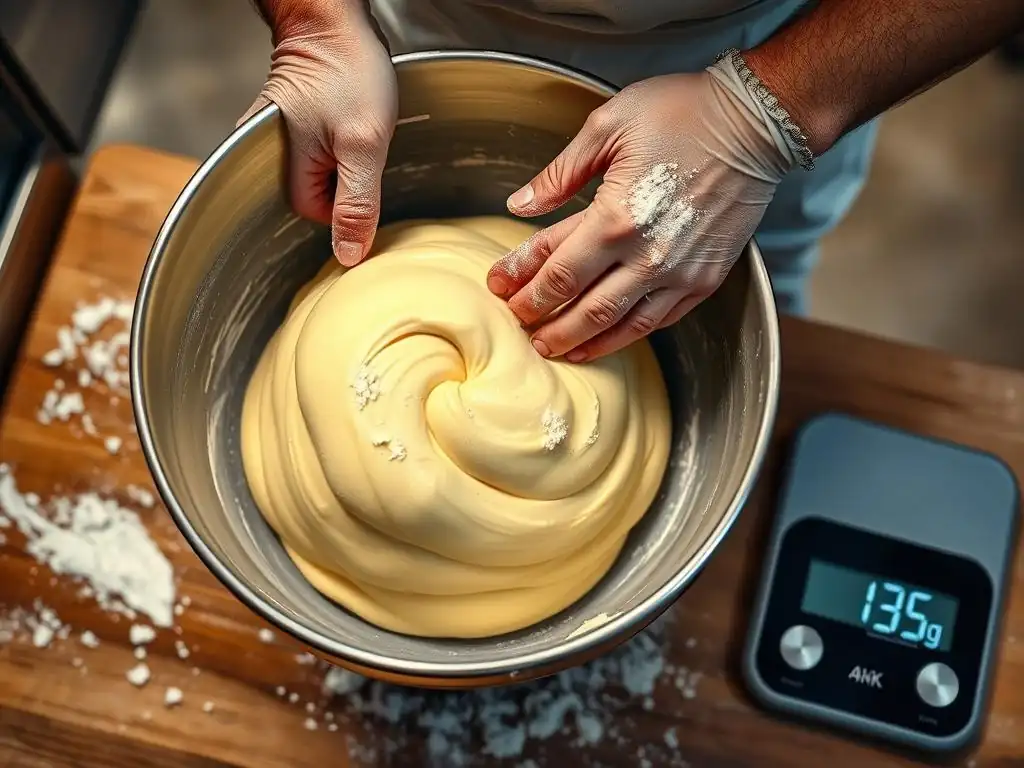
Adding the eggs is arguably the most crucial step for achieving the correct choux pastry consistency. The eggs must be added one at a time, and each egg must be fully incorporated into the dough before adding the next. This is because the dough can only absorb a certain amount of liquid, and adding eggs gradually allows you to control the final consistency precisely. Mix thoroughly after each egg; the dough will look like a shaggy mess at first but will come together as you mix.
The exact number of eggs needed can vary slightly depending on factors like the size of the eggs, the flour's moisture content, and how much moisture evaporated during the stovetop cooking. This is why adding eggs one by one and checking the consistency is essential. A typical recipe might call for 3-5 large eggs for a standard quantity of flour (e.g., 150g flour), but you should always rely on the dough's appearance and texture rather than a fixed number.
The Finger Test: Determining Dough Readiness
The finger test, also known as the "ribbon test," is the most reliable way to determine if your choux dough has the perfect consistency after adding the eggs. Lift some dough on your spatula or mixer paddle and let it fall back into the bowl.
- Too stiff: The dough breaks off cleanly without forming a trailing shape. Add another whisked egg, a little at a time, until the correct consistency is reached.
- Too loose: The dough is very runny and doesn't hold any shape. Unfortunately, this is difficult to fix; you might need to start over or try cooking it gently on the stove again to evaporate some moisture, but this often compromises the texture.
- Just right: The dough should be smooth and glossy. When you lift the spatula, the dough should hang in a "V" or "ribbon" shape, eventually breaking off but leaving a significant trail behind. If you run your finger through the dough on the spatula, the channel should hold its shape without the dough immediately flowing back together. This consistency is key for piping and ensures maximum puff in the oven.
### Choux Dough Readiness Checklist

*   [ ] Dough cooked on stovetop until film forms on pan.
*   [ ] Dough cooled slightly before adding eggs.
*   [ ] Eggs added one at a time, fully incorporated.
*   [ ] Dough is smooth and glossy.
*   [ ] Dough forms a "V" or ribbon shape when lifted.
*   [ ] Finger drawn through dough leaves a channel.
Baking Your Choux Pastry: Achieving Golden Brown Perfection
Preheating Your Oven: Ensuring Proper Puffing
Proper oven preheating is non-negotiable for successful choux pastry. The high initial temperature is crucial for creating the necessary steam that causes the pastries to inflate rapidly. You should preheat your oven for at least 20-30 minutes before baking, ensuring it reaches and maintains the target temperature (often 200-220°C / 400-425°F). Using an oven thermometer can help verify the actual temperature, as oven thermostats can sometimes be inaccurate by as much as 10-20°C.
Placing the baking sheet in a sufficiently hot oven ensures that the exterior of the choux pastry sets quickly while the interior is still moist. This creates a strong structure capable of containing the expanding steam. If the oven isn't hot enough, the pastry will spread outwards before it has a chance to rise upwards, resulting in flat, dense pastries instead of tall, airy ones.
Piping the Choux Pastry: Shaping for Success
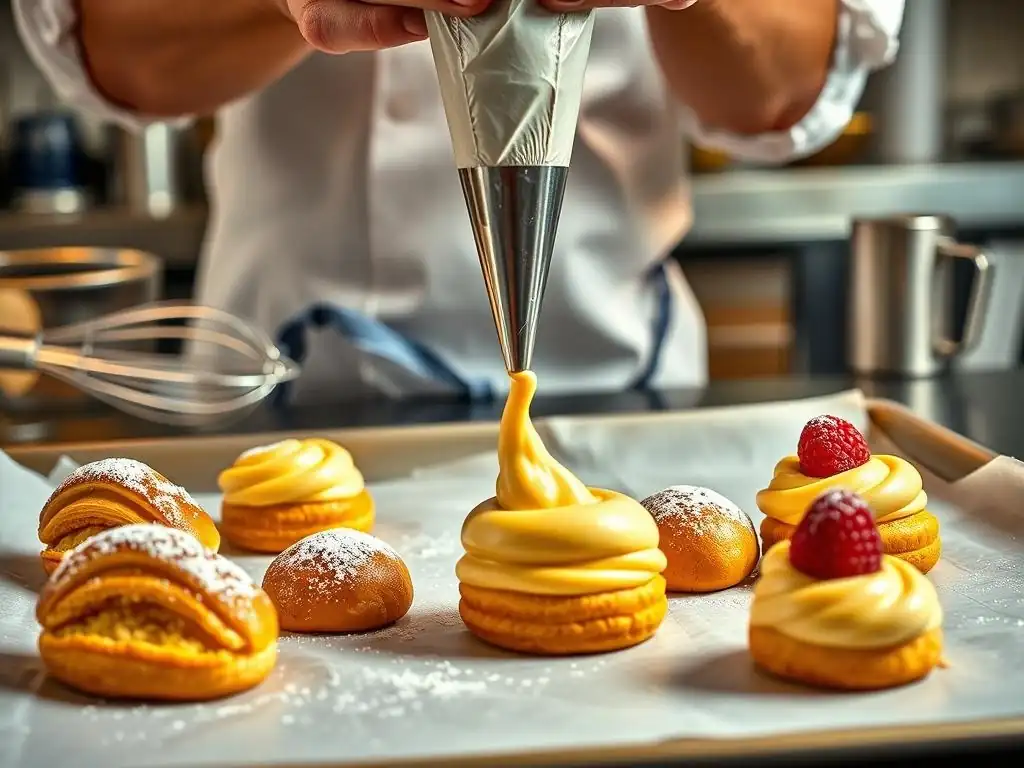
Once your dough has reached the perfect consistency, it's time to pipe it onto your prepared baking sheets (lined with parchment paper or silicone mats). Fill your piping bag about two-thirds full to make it manageable. Hold the bag vertically for round shapes (like profiteroles) or at a slight angle for elongated shapes (like éclairs). Apply steady, even pressure.
For round shapes, pipe mounds of dough, lifting the bag straight up when finished. For éclairs, pipe straight lines of the desired length. Leave adequate space between pastries, as they will expand significantly – often doubling in size. About 5-7 cm (2-3 inches) of space is usually sufficient. To smooth any peaks left by the piping tip, gently dab them with a wet fingertip or the back of a spoon. This ensures the tops don't burn during baking. Uniform shapes are key to an elegant choux pastry recipe easy to bake evenly.
Piping Techniques for Uniform Shapes
Consistency in piping size and shape directly impacts baking uniformity. For round cream puffs, aim for mounds roughly the size of a walnut before baking. Using a template drawn on the underside of the parchment paper can help maintain consistent spacing and size. For éclairs, practice piping straight lines of equal length. Some bakers draw lines on the parchment paper as guides.
For a particularly elegant finish on éclairs, you can use a star tip (like an Ateco 826 or 827). This creates ridges that bake up crisp and visually appealing. Regardless of the shape, ensure the dough is piped with even pressure to avoid thin spots that might collapse.
Baking Time and Temperature: Monitoring for Doneness
Baking choux pastry typically involves two phases: an initial high-temperature phase to create steam and lift, followed by a lower-temperature phase to dry out the interiors and crisp the crust. A common approach is 10-15 minutes at 200-220°C (400-425°F), then reducing the temperature to 180°C (350°F) for another 15-25 minutes, depending on the size of the pastries.
The total baking time for medium cream puffs (approx. 5cm diameter) is usually around 25-35 minutes, while éclairs might take slightly longer, closer to 30-40 minutes. The pastries are done when they are deeply golden brown all over and feel light and hollow when lifted. They should also sound hollow when tapped on the bottom. Crucially, they must be completely dry inside to prevent collapsing after cooling. Opening the oven door during the first 15-20 minutes is a common mistake that can lead to deflation.
Troubleshooting Common Baking Issues
- Pastries deflate after baking: This is usually because they weren't baked long enough or at a sufficient temperature to dry out the interior and set the structure. Increase baking time at the lower temperature or consider leaving them in the turned-off oven with the door slightly ajar for a few minutes after baking.
- Pastries are pale and soft: Similar to deflation, this indicates underbaking. They need more time to brown and crisp up.
- Pastries crack excessively: While some cracking is normal, excessive, jagged cracks can be due to the oven being too hot initially, causing the exterior to set too fast. Ensure your oven temperature is accurate.
- Pastries bake unevenly: Check if your oven has hot spots. Rotating the baking sheet halfway through the lower-temperature baking phase can help. Also, ensure pastries are uniformly sized and spaced on the sheet.
A good trick for ensuring the interiors are dry is to pierce the bottom of each pastry with a small sharp knife or skewer immediately after removing them from the oven. This allows steam to escape and helps prevent them from becoming soggy or collapsing as they cool.
Creative Filling Ideas for Choux Pastry: From Classic to Contemporary
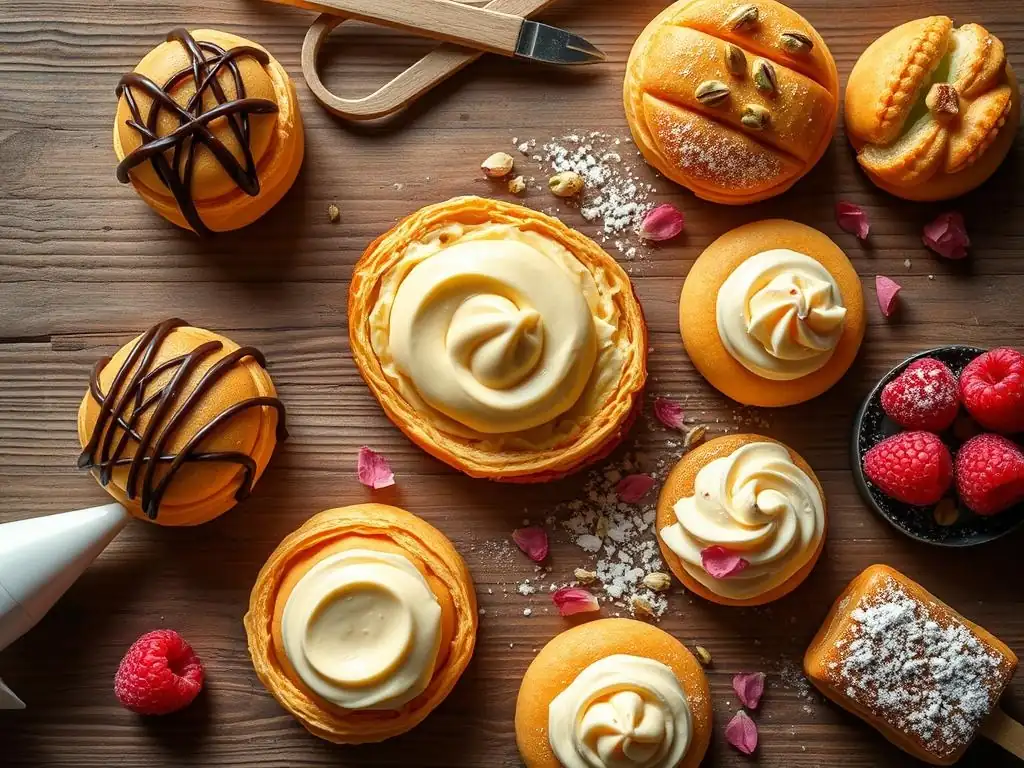
Once your elegant choux pastry recipe easy shells are baked to perfection, the real fun begins: filling them! The hollow interior is a blank canvas for endless possibilities.
Classic Cream Filling Recipes
The most traditional and beloved fillings for choux pastry are smooth, rich creams.
Vanilla Crème Pâtissière: A Timeless Choice
Vanilla Crème Pâtissière, or pastry cream, is a staple in French patisserie and a perfect partner for choux. It's a cooked custard thickened with egg yolks and flour or cornstarch, infused with vanilla.
Simple Vanilla Crème Pâtissière Outline:
- Heat milk with vanilla bean or extract.
- Whisk egg yolks with sugar until pale.
- Whisk in flour or cornstarch.
- Temper hot milk into yolk mixture gradually.
- Return mixture to saucepan, cook over medium heat, stirring constantly, until thick and bubbling.
- Cook for an additional 1-2 minutes to ensure starch is fully cooked and raw flour taste is gone.
- Strain (optional), stir in butter, and cool completely, covered with plastic wrap touching the surface to prevent a skin from forming.
This classic filling provides a wonderful contrast to the crisp choux shell. A typical recipe for about 12-15 cream puffs might use 500ml milk, 4-6 egg yolks, 100g sugar, and 40-50g flour/cornstarch.
Chocolate Crème Pâtissière: Rich and Decadent
For chocolate lovers, transforming vanilla pastry cream into a rich chocolate version is simple. Just whisk in chopped good-quality dark or milk chocolate (around 100-150g per 500ml milk) into the hot pastry cream after it's cooked and removed from the heat. The residual heat will melt the chocolate; then stir until smooth and glossy.
This chocolate version is wonderfully decadent and pairs beautifully with the light choux shell. It's the quintessential filling for chocolate éclairs. Ensure the chocolate is fully melted and emulsified into the cream before chilling.
Exploring Unique Filling Options
While classics are great, don't hesitate to experiment with more contemporary or unique fillings to elevate your choux pastry.
Raspberry Cream Filling
A bright and fruity filling offers a lovely contrast to the richness of the pastry. A raspberry cream could be a pastry cream infused with raspberry puree or, more simply, whipped cream folded with fresh raspberry puree or a cooked raspberry compote.
For a stable, pipeable raspberry cream, you could make a standard pastry cream base and fold in reduced raspberry puree once cooled, or make a diplomat cream (pastry cream lightened with whipped cream) and flavor it with raspberry. Using about 50-100g of concentrated raspberry puree per 500ml of pastry cream base provides a vibrant flavor and color.
Pistachio Cream Filling
Pistachio cream, often made from a base of pastry cream or diplomat cream flavored with pistachio paste, is a sophisticated choice. Good quality pistachio paste (made from 100% pistachios) provides the most authentic flavor.
Incorporating 50-80g of pistachio paste into a batch of pastry cream creates a wonderfully nutty and slightly earthy filling that complements the neutral flavor of the choux shell beautifully. This filling is famously used in the Paris-Brest pastry, though traditionally it uses praline paste. Pistachio offers a delightful variation.
Assembling and Decorating Choux Pastry: Creating Stunning Desserts
Assembling and decorating are the final steps in transforming your elegant choux pastry recipe easy shells into stunning desserts.
Filling Techniques for Various Choux Pastry Shapes
The method for filling depends on the shape of your choux pastry:
- Profiteroles/Cream Puffs: These are typically filled by making a small hole in the bottom or side of the cooled pastry shell with a sharp knife or skewer. Then, insert a piping tip (a bismarck tip is ideal for filling) into the hole and pipe the filling until the puff feels heavy and full.
- Éclairs: Éclairs can be filled in a couple of ways. The traditional method is to make three small holes in the bottom of the éclair shell using a piping tip or skewer and pipe filling into each hole until full. Alternatively, you can slice the éclair horizontally using a serrated knife and pipe or spread the filling onto the bottom half before replacing the top.
Ensure the pastries are completely cool before filling. Warm pastries will melt the filling, especially cream-based ones, leading to a soggy mess.
Glazing and Icing: Enhancing Flavor and Appearance
Glazing adds both flavor and a professional finish to choux pastry. Éclairs are traditionally topped with fondant or a simple glaze, while profiteroles can be dusted with powdered sugar, drizzled with chocolate sauce, or dipped in glaze.
Simple Chocolate Glaze Recipe
A very common and easy glaze for éclairs or dipping profiteroles is a simple chocolate ganache or a basic chocolate glaze.
Basic Chocolate Glaze Outline:
- Chop 100g good quality chocolate (dark or milk).
- Heat 100ml heavy cream or milk until simmering.
- Pour hot cream over chopped chocolate.
- Let sit for 1-2 minutes, then whisk gently until smooth and glossy.
- Add a small knob of butter (optional) for extra shine.
- Use while still warm (around 30-35°C / 85-95°F).
Dip the top of éclairs into the warm glaze or drizzle it over profiteroles. The glaze will set as it cools.
Garnishing: Adding Visual Appeal
Garnishes add the final touch of elegance. Simple options include a dusting of powdered sugar, cocoa powder, or a drizzle of contrasting sauce (like raspberry coulis on a vanilla cream puff). More elaborate garnishes can include:
- Fresh berries (raspberries, strawberries)
- Toasted nuts (slivered almonds for Paris-Brest, chopped pistachios)
- Chocolate shavings or curls
- Candied orange peel
- A simple piped swirl of leftover filling or whipped cream
Consider the flavor of the filling when choosing a garnish. For instance, a chocolate éclair might be garnished with cocoa nibs or a white chocolate drizzle, while a pistachio cream puff could be topped with chopped toasted pistachios.
Troubleshooting Common Choux Pastry Challenges
Even with an elegant choux pastry recipe easy to follow, issues can arise. Understanding why they happen helps you fix them next time.
Why Did My Choux Pastry Deflate?
Deflation is one of the most disheartening problems in choux pastry making. The primary reasons are:
- Underbaking: The most common cause. The structure hasn't set completely, and the interior is still too moist. When removed from the heat, the cooling steam causes the weak structure to collapse.
- Opening the oven door too early: Releasing the hot, steam-filled air during the critical puffing phase (the first 15-20 minutes) causes a sudden temperature drop and steam loss, leading to collapse.
- Dough too wet: If too many eggs were added or the dough wasn't dried out sufficiently on the stovetop, the structure won't be strong enough to support the puff.
- Oven temperature too low: Insufficient heat means less steam is generated, and the crust doesn't set quickly enough to hold the shape.
Ensure your oven temperature is accurate, bake until deeply golden brown and firm, and resist the urge to open the oven door until the final stages of baking.
Why is My Choux Pastry Too Dry?
If your baked choux pastry is dry and brittle instead of having a crisp exterior and hollow, slightly moist interior, it's usually due to:
- Overbaking: Baking for too long, especially at the lower temperature, dries out the pastry completely.
- Dough too stiff: If not enough eggs were added, the dough will be too thick, resulting in smaller pastries that dry out quickly in the oven.
- Too much flour or not enough liquid/fat: Incorrect ingredient ratios can lead to a dry base dough from the start.
Next time, check the dough consistency carefully before piping. If it's too stiff, add a little more whisked egg. Reduce baking time slightly if they are consistently too dry.
Preventing Soggy Choux Pastry
Soggy choux pastry can happen after baking or after filling.
- Soggy after baking: This means the interior wasn't dried out enough in the oven. They might look golden outside but are still soft and heavy. Increase the baking time at the lower temperature until they are light and crisp. Piercing the bottoms immediately after baking also helps release steam.
- Soggy after filling: This is common if the filling is too wet or if the pastries are filled too far in advance. The moisture from the filling seeps into the delicate pastry shell, making it soft. Fill choux pastry as close to serving time as possible, ideally within a few hours. Store unfilled shells properly to keep them crisp.
Mastering Choux Pastry: Final Tips and Creative Ideas
Mastering an elegant choux pastry recipe easy comes with practice. Each batch teaches you something new about dough consistency, oven quirks, and piping control.
Storing Baked Choux Pastry for Optimal Freshness
Unfilled, cooled choux pastry shells store remarkably well. The key is to keep them dry.
- Store completely cooled shells in an airtight container at room temperature for 1-2 days.
- For longer storage, freeze unfilled shells for up to 1-2 months. Place them in a single layer on a baking sheet until frozen, then transfer to a freezer bag or container. Thaw at room temperature and crisp them up in a preheated oven at 180°C (350°F) for 5-10 minutes before filling.
- Filled choux pastries are best eaten within a few hours of assembly to maintain the crispness of the shell. Store filled pastries in the refrigerator, but be aware the shells will soften over time, usually within 12-24 hours depending on the filling.
Exploring Flavor Variations and Adaptations
An elegant choux pastry recipe easy to adapt allows for endless creativity.
- Savory Choux (Gougères): Omit the sugar and add grated cheese (like Gruyère or Parmesan) to the dough after adding the eggs. These are delicious served warm as appetizers.
- Sweet Dough Variations: Infuse the initial liquid with tea leaves (like Earl Grey) or coffee for flavored shells. A small amount of cocoa powder can be added with the flour for chocolate choux, though this requires careful balancing of liquid.
- Toppings: Before baking, you can top the piped choux dough with craquelin, a simple mixture of butter, sugar, and flour rolled thin and cut into rounds. This bakes into a crisp, crackly topping that helps the pastry maintain a perfectly round shape and adds a lovely texture.
Experimenting with different flours (like part bread flour for extra strength) or fats (like clarified butter) can also subtly change the texture, though sticking to all-purpose flour and unsalted butter is recommended when starting out with an elegant choux pastry recipe easy.
We'd love to see your beautiful éclairs, towering profiteroles, or creative choux inventions! Share your photos and tips with the BakeWithEase community. Happy Baking!
Frequently Asked Questions
What exactly is choux pastry, and why is it considered "elegant"?
Choux pastry is a light and airy French pastry dough used to make items like cream puffs and éclairs. It's considered elegant because of its crisp exterior and hollow interior, perfect for fillings.
Is this "Elegant Choux Pastry Recipe Easy" truly easy for a beginner baker?
While choux pastry can seem intimidating, this recipe focuses on simplified steps and clear instructions to make it accessible for beginners. Success is based on following the recipe closely.
What are the key ingredients needed for this choux pastry recipe?
The basic ingredients are water, butter, flour, and eggs. The precise ratios of these ingredients are crucial for achieving the correct texture. Quality ingredients enhance the flavour.
What are some common mistakes to avoid when making choux pastry?
Avoid opening the oven door during baking, as this can cause the pastry to collapse. Also, ensure the dough is cooked properly on the stovetop before adding eggs.
What are some ways I can fill and decorate my elegant choux pastry creations?
You can fill choux pastry with pastry cream, whipped cream, or even savory fillings. Decorate with chocolate ganache, powdered sugar, or a simple glaze for an elegant finish.
Final Reflection: The Enduring Allure of Elegant Choux Pastry
The delicate art of choux pastry, once considered a culinary feat achievable only by seasoned professionals, is now within everyone's reach. This accessibility, coupled with its inherent elegance, makes mastering choux a truly rewarding experience, transforming simple ingredients into breathtaking desserts that impress and delight. The ease of the recipes presented, combined with the stunning visual results, makes this technique more relevant than ever in today's busy yet visually-driven world.
The journey of creating choux pastry, from the initial simmering of the water and butter to the satisfying puffing in the oven, is a testament to the transformative power of simple ingredients. It's a process that connects us to culinary traditions spanning centuries, reminding us of the enduring appeal of classic techniques. The most beautiful things in the world cannot be seen or even touched - they must be felt with the heart.
This quote, while not directly about choux pastry, perfectly encapsulates the emotional connection one can forge with this delicate art form; the satisfaction isn't just in the taste, but in the creation itself.
Now, I invite you to embrace the challenge. Don't be intimidated by the seemingly complex process; let the detailed instructions and tips provided guide you. Experiment with fillings, glazes, and decorations to personalize your creations. Imagine the joy of presenting your beautifully crafted profiteroles, éclairs, or cream puffs to friends and family – the pride in your accomplishment will be as sweet as the dessert itself. The elegance of choux pastry is not just in its appearance, but in the mastery you gain and the joy you share. So, gather your ingredients, and let the baking begin!
Unlock Your Inner Pâtissier: Master Choux Pastry Today!
Thanks for joining us on this delicious journey into the world of choux pastry! We hope you’ve gained the confidence to create truly elegant and impressive desserts. Ready to put your new skills to the test?
- Bake your masterpiece! Try one of the recipes mentioned in the article – the classic cream puffs are a great starting point.
- Share your creations! Show us your choux pastry triumphs on social media using #BakeWithEaseChoux. We'd love to see them!
- Explore more advanced techniques: Dive deeper into the art of choux by researching different fillings and decorative piping techniques.
What unique twist will you add to your next choux pastry creation? Let's hear your ideas in the comments below!