
What is Xanthan Gum and Why Your GF Bread Needs It

Welcome to BakeWithEase, your kitchen companion for all things baking! Ever wondered why your gluten-free bread just isn't quite right? Our latest article delves into the secret ingredient that can transform your baking: xanthan gum. Discover What is Xanthan Gum and Why Your GF Bread Needs It and unlock the secrets to perfect gluten-free loaves. Eager to bake bread that rivals the real deal? Let's get started!
- The Science of Gluten-Free Bread: Why Xanthan Gum is Essential
- Understanding the Role of Xanthan Gum in Gluten-Free Bread Baking
- In-Depth Look at Xanthan Gum
- Why Xanthan Gum is Crucial for Gluten-Free Bread
- Optimizing Xanthan Gum Dosage in Gluten-Free Bread
- Practical Applications: Xanthan Gum in Gluten-Free Bread Recipes
- Exploring Alternatives to Xanthan Gum
- Storage Recommendations for Gluten-Free Bread
- Conclusion: Mastering Gluten-Free Bread Baking
- Frequently Asked Questions
- Final Reflection: The Unexpected Power of Xanthan Gum
- Unleash Your Gluten-Free Baking Potential!
The Science of Gluten-Free Bread: Why Xanthan Gum is Essential
Understanding the Role of Xanthan Gum in Gluten-Free Bread Baking
The Function of Gluten in Traditional Bread Making
In traditional bread making, gluten is the star ingredient, even though it's a complex protein structure that develops when water is added to wheat flour and kneaded. This protein network acts like a flexible scaffolding, trapping the carbon dioxide gas produced by yeast fermentation. As the dough rises, the gluten network stretches, allowing the bread to expand and achieve its characteristic airy texture.
This elastic network is crucial for the structure and chewiness of conventional bread. It provides the dough with strength, allowing it to hold its shape during proofing and baking. Without this gluten matrix, bread would be dense, flat, and would likely crumble apart. The ability of gluten to develop provides the foundation upon which the entire bread-making process relies, from kneading to the final oven spring.
The Challenges of Gluten-Free Baking: Lack of Structure and Binding
The primary hurdle in gluten-free baking is the absence of this gluten network. Gluten-free flours, derived from sources like rice, corn, potato, or sorghum, do not contain the proteins that form gluten. This means that when mixed with liquid and yeast, gluten-free dough lacks the inherent elasticity and structure needed to trap gas and rise effectively.
Consequently, gluten-free baked goods, particularly bread, often suffer from common issues: a dense, heavy texture, a tendency to crumble easily, and a lack of the desirable chewiness found in wheat bread. Achieving a light, airy crumb and a well-formed loaf requires adding ingredients that can replicate some of the binding and structuring properties that gluten naturally provides.
Xanthan Gum: Mimicking Gluten for Improved Texture and Structure
This is where xanthan gum steps in as a vital ingredient for successful xanthan gum glutenfree bread. Xanthan gum is a polysaccharide, a type of complex carbohydrate, that acts as a powerful thickener and stabilizer. When hydrated, it forms a viscous, gel-like substance that helps bind the gluten-free flour particles together.
By creating this gel network, xanthan gum helps to trap the gas bubbles produced by yeast or other leavening agents, allowing the dough to rise and develop a more open crumb structure. It provides the much-needed elasticity and cohesion that is missing in gluten-free flours, preventing the bread from becoming excessively dense or falling apart. It's an essential tool for bakers aiming to create xanthan gum glutenfree bread with a texture closer to its wheat-based counterpart.
In-Depth Look at Xanthan Gum
What is Xanthan Gum? Production and Origin
Xanthan gum is a food additive produced through the fermentation of simple sugars by a specific bacterium, Xanthomonas campestris. This is the same bacterium responsible for causing black rot on leafy vegetables like cabbage and broccoli. However, the gum itself is a byproduct of the fermentation process, not the bacteria itself.
After fermentation, the resulting broth is purified, precipitated with an alcohol (usually isopropyl alcohol), dried, and then ground into a fine powder. This powder is the xanthan gum that we use in cooking and baking. Its production process is highly controlled to ensure purity and consistency for food applications.
Safety and Regulation of Xanthan Gum in Food
Xanthan gum has been extensively studied and is widely recognized as safe for consumption by major food safety authorities around the world. In the United States, it holds Generally Recognized As Safe (GRAS) status from the Food and Drug Administration (FDA). In Europe, it is approved as a food additive and is listed under the code E415.
Numerous studies have confirmed its safety when consumed within typical dietary levels. While some individuals might experience digestive discomfort like bloating or gas if consuming very large amounts, this is uncommon with the quantities used in standard food recipes, including xanthan gum glutenfree bread. Its widespread approval across international regulatory bodies underscores its safety profile for general use in food products.
Key Properties: Viscosity, Water Binding, and Stability in Baking
Xanthan gum possesses several key properties that make it invaluable in gluten-free baking. Firstly, it is an exceptionally effective thickening agent, creating high viscosity solutions even at very low concentrations (as low as 0.1%). This viscosity helps give gluten-free dough and batters body and structure.
Secondly, xanthan gum is hydrophilic, meaning it has a strong affinity for water. It effectively binds and holds onto moisture within the dough. This water-binding capacity is crucial for preventing gluten-free bread from drying out quickly and becoming stale or crumbly, a common challenge in this type of baking. Furthermore, xanthan gum is remarkably stable across a wide range of temperatures and pH levels, meaning its thickening and binding properties hold up during the baking process, ensuring consistent results in xanthan gum glutenfree bread.
Why Xanthan Gum is Crucial for Gluten-Free Bread
Creating Structure in Gluten-Free Bread
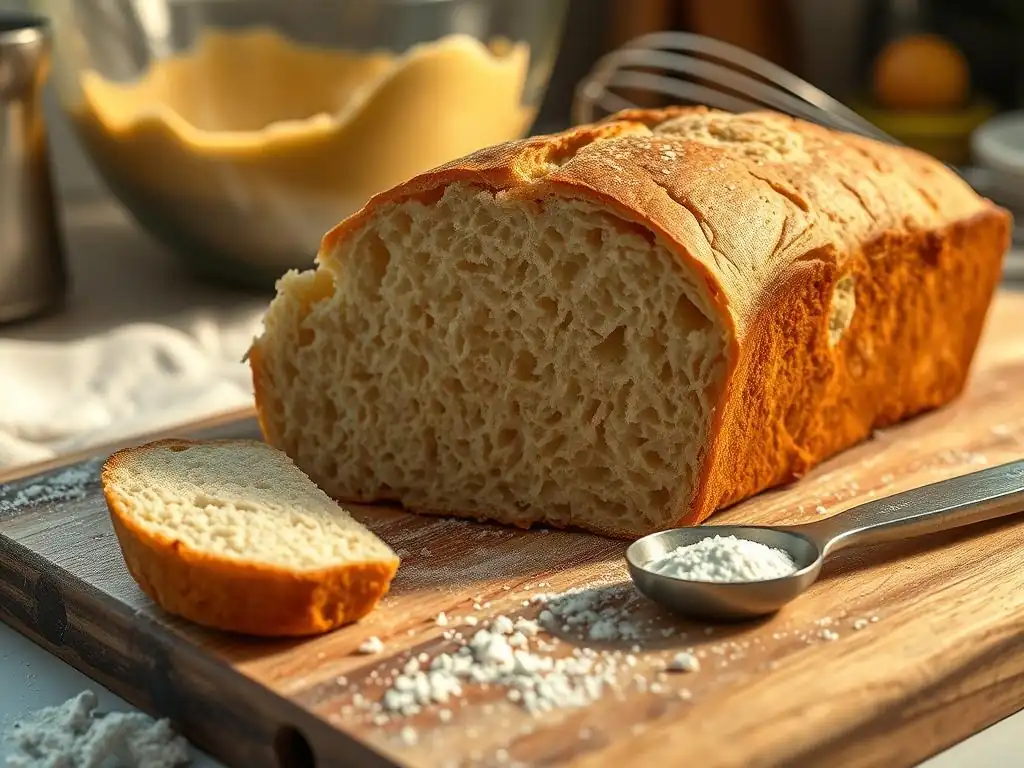
Without the protein network provided by gluten, gluten-free flours struggle to form a cohesive structure that can support the dough during rising and baking. This often results in loaves that are flat, dense, and lack the internal framework of traditional bread. Xanthan gum addresses this by forming a hydrocolloid gel when mixed with liquid.
This gel acts as a scaffold within the dough, mimicking some of the structural support that gluten provides. It helps to hold the dough together, preventing it from spreading out excessively and allowing it to maintain its shape as it proofs. This structural support is fundamental to achieving a well-formed loaf of xanthan gum glutenfree bread with a desirable height and shape.
Replicating Gluten's Elasticity and Dough Strength with Xanthan Gum
While xanthan gum doesn't create elasticity in the same way gluten does (it doesn't form stretchy strands), it does impart a degree of flexibility and cohesion to gluten-free dough. This is particularly important for kneaded doughs, like those used for sandwich bread or pizza crust. The xanthan gum helps the dough tolerate handling and shaping without tearing or collapsing.
This replicated strength is vital for trapping the gas bubbles produced by yeast fermentation. As the yeast works, the xanthan gum matrix stretches slightly, allowing the dough to expand rather than breaking apart. This leads to a better rise and a lighter crumb structure in the final xanthan gum glutenfree bread, more closely approximating the texture of wheat bread.
Moisture Retention and Preventing Crumbling: Xanthan Gum's Contribution
One of the most significant challenges in gluten-free baking is preventing the finished product from drying out rapidly and becoming crumbly. Gluten-free flours often absorb moisture differently than wheat flour, and the lack of a strong protein network can lead to increased moisture loss during baking and cooling.
Xanthan gum's exceptional water-binding capacity helps to mitigate this issue. By holding onto moisture within the bread structure, it keeps the crumb softer and more pliable for a longer period. This improved moisture retention not only enhances the texture but also significantly extends the shelf life of xanthan gum glutenfree bread, reducing the tendency for it to crumble apart when sliced or eaten.
Optimizing Xanthan Gum Dosage in Gluten-Free Bread
Influencing Factors: Flour Blend, Hydration, and Recipe Type
Determining the correct amount of xanthan gum for your xanthan gum glutenfree bread recipe is crucial, as too much or too little can negatively impact the outcome. Several factors influence the ideal dosage. The type of gluten-free flour blend used is paramount; some flours are more absorbent than others, and pre-mixed blends may already contain some xanthan or other gums.
The hydration level of the dough also plays a role; wetter doughs might require slightly more gum to provide adequate structure. Furthermore, the type of bread being made dictates the need for structure and elasticity. A dense, yeasted sandwich loaf typically requires more xanthan gum than a quick bread or muffin.
Recommended Dosage Guidelines for Different Gluten-Free Bread Types
While there's no one-size-fits-all rule, general guidelines exist for using xanthan gum in xanthan gum glutenfree bread. A common starting point is to use about 1/2 to 1 teaspoon of xanthan gum per cup of gluten-free flour blend. However, this can vary based on the specific recipe and desired outcome.
For yeasted breads that require kneading and rising (like sandwich bread or rolls), you might lean towards the higher end of the range, perhaps 3/4 to 1 teaspoon per cup of flour blend. For less structured items like quick breads or muffins, a smaller amount, maybe 1/4 to 1/2 teaspoon per cup, might suffice. Always check the specific recipe instructions first, as they are often tailored to the particular flour blend and ingredients used.
Troubleshooting: Addressing Issues of Too Much or Too Little Xanthan Gum
Using the incorrect amount of xanthan gum is a common pitfall in gluten-free baking. If you use too much, your xanthan gum glutenfree bread can end up with an unpleasant gummy or slimy texture, and the loaf might be overly dense. The dough can also feel excessively stiff and difficult to work with.
Conversely, using too little xanthan gum will result in a lack of structure. The dough might not rise properly, the final loaf will likely be dense and flat, and it will almost certainly be very crumbly. If your gluten-free bread is falling apart when you slice it, or if it resembles a pile of crumbs, it's a strong indicator that you needed more xanthan gum or another binder. Adjusting the amount in future attempts based on these outcomes is key to perfecting your xanthan gum glutenfree bread.
Practical Applications: Xanthan Gum in Gluten-Free Bread Recipes
Gluten-Free Sandwich Bread Recipe with Xanthan Gum
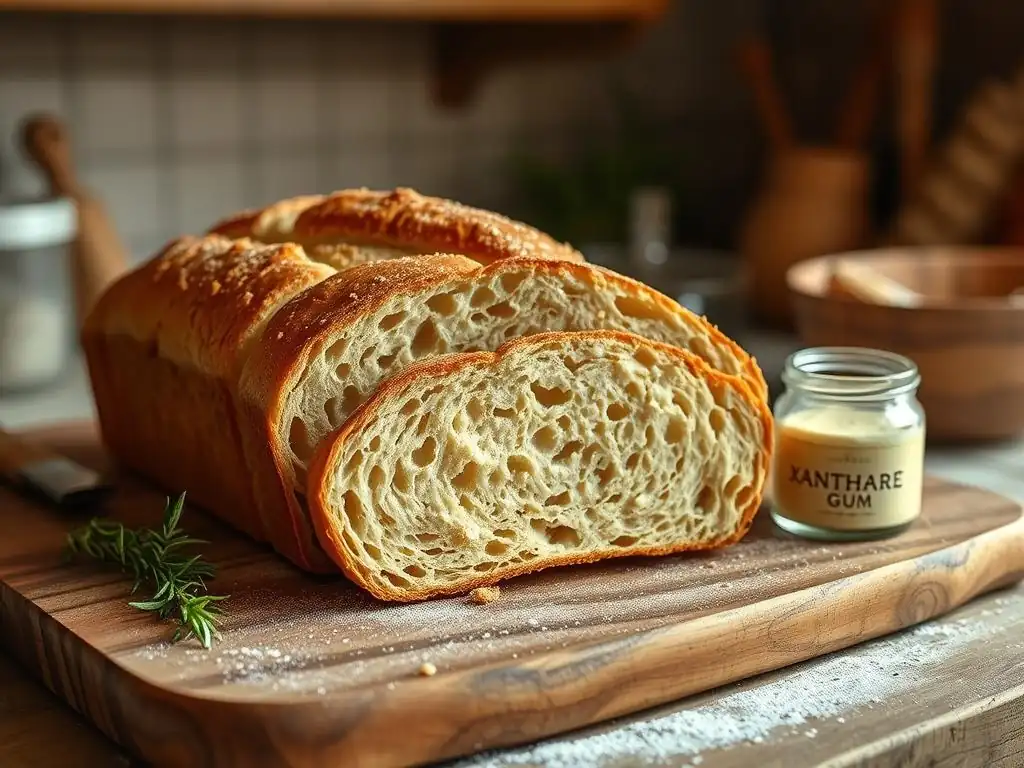
Making a soft, sliceable gluten-free sandwich loaf is a prime example where xanthan gum is indispensable. A typical recipe involves a blend of gluten-free flours (like brown rice, white rice, and tapioca starch), yeast, sugar, salt, a liquid (water or milk), oil, eggs (or egg substitute), and crucially, xanthan gum. The xanthan gum is usually whisked together with the dry ingredients.
When the wet ingredients are added, the xanthan gum hydrates and begins to form its gel structure, giving the dough enough viscosity and cohesion to be mixed, proofed, and baked into a loaf that holds its shape and doesn't crumble excessively when sliced. The amount of xanthan gum for this type of xanthan gum glutenfree bread is often around 3/4 to 1 teaspoon per cup of flour blend to provide sufficient structure for a free-standing loaf.
Gluten-Free Pizza Dough Recipe with Xanthan Gum
Gluten-free pizza dough presents a unique challenge: it needs to be pliable enough to shape but strong enough to hold toppings without collapsing. Xanthan gum is key to achieving this balance. A gluten-free pizza dough recipe often uses a blend of flours, yeast, water, olive oil, salt, and xanthan gum.
The xanthan gum provides the necessary binding to allow the dough to be rolled or pressed into a crust shape without tearing. It also helps create a slightly chewy texture once baked, more akin to traditional pizza crust. For xanthan gum glutenfree bread in the form of pizza dough, the dosage might be similar to sandwich bread, ensuring the dough has enough integrity to be handled and support the weight of toppings.
Gluten-Free Baguette Recipe with Xanthan Gum
Creating a gluten-free baguette with a crispy crust and an open, airy interior is one of the more advanced applications of xanthan gum glutenfree bread. Baguettes rely heavily on gluten development for their structure and characteristic crumb. Replicating this without gluten requires careful use of binders like xanthan gum and often psyllium husk.
In a gluten-free baguette recipe, xanthan gum helps provide the basic structure and cohesion to the dough, allowing it to be shaped into long loaves. While achieving the exact open crumb of a wheat baguette can be difficult, xanthan gum, often paired with other binders, contributes significantly to trapping steam and gas during baking to create some internal air pockets and give the crust a chance to crisp up effectively.
Exploring Alternatives to Xanthan Gum
Guar Gum as a Substitute
Guar gum is another common food additive that can function as a binder and thickener in gluten-free baking. Like xanthan gum, it is a polysaccharide that forms a viscous gel when hydrated. It is derived from the guar bean.
While it can be used as a substitute for xanthan gum in many recipes, it doesn't always perform identically. Some bakers find that guar gum works better in cold applications like dressings or dairy-based recipes, while xanthan gum is preferred for baked goods like xanthan gum glutenfree bread due to its superior performance in trapping gases and providing structure during baking. A general substitution ratio is often 1:1, but results can vary depending on the recipe.
Psyllium Husk as a Binding Agent
Psyllium husk, derived from the seeds of the Plantago ovata plant, is a popular alternative binder, particularly in gluten-free bread making. It is high in soluble fiber and forms a very thick, gel-like substance that is excellent at binding ingredients and holding moisture.
Many gluten-free bread recipes, especially those aiming for a chewier texture or a more open crumb, use psyllium husk, sometimes in combination with xanthan gum. Psyllium husk can impart a slightly purple hue to the dough and requires significant hydration, but it is highly effective at providing structure and preventing crumbling in xanthan gum glutenfree bread and other baked goods.
Chia Seeds and Flaxseed Meal: Natural Binding Options
For those seeking more natural alternatives, ground chia seeds and flaxseed meal can also act as binders. When mixed with liquid, both form a gelatinous consistency (often called a "chia egg" or "flax egg") that can help hold gluten-free ingredients together.
These options add nutritional value, including fiber and omega-3 fatty acids. However, they don't always provide the same level of structural support and elasticity as xanthan gum or psyllium husk, particularly in yeasted breads that require significant rising. While useful in quick breads, muffins, or as partial binders, achieving a light and airy xanthan gum glutenfree bread loaf might be more challenging using only chia or flax as the primary binder.
Storage Recommendations for Gluten-Free Bread
Maintaining Freshness in Gluten-Free Bread
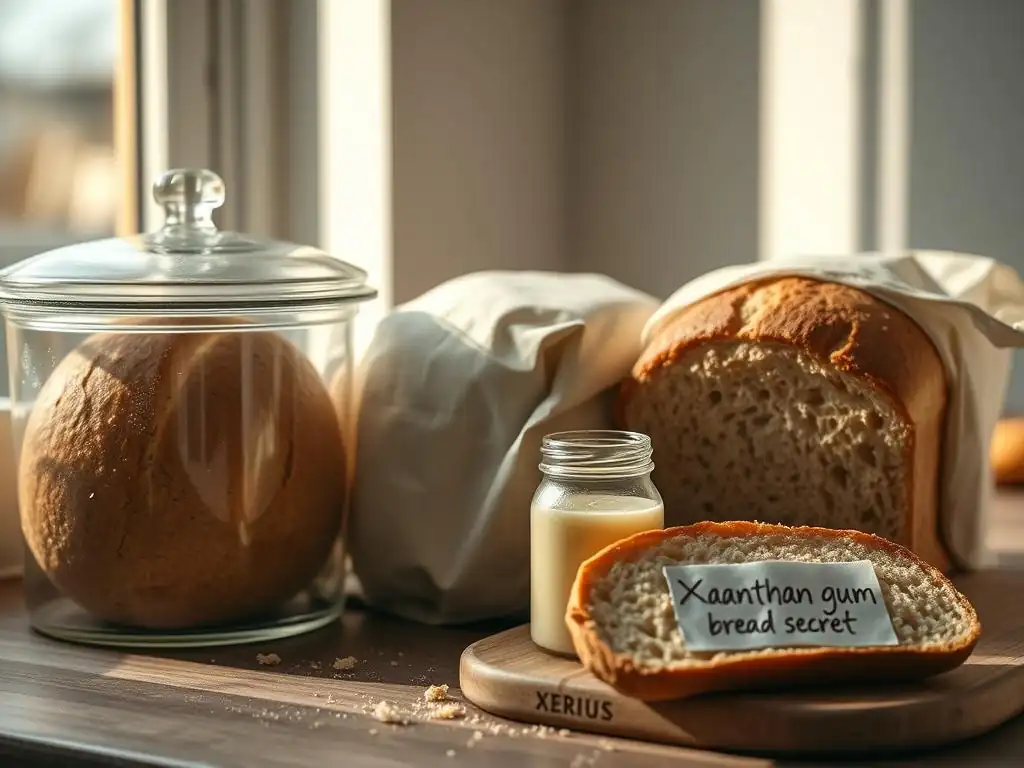
Gluten-free bread tends to dry out and become stale much faster than traditional wheat bread. This is partly due to the nature of gluten-free flours and the lack of a strong gluten network to retain moisture. Proper storage is therefore essential to keep your xanthan gum glutenfree bread fresh and enjoyable.
Once completely cooled, storing gluten-free bread in an airtight container or a plastic bag at room temperature is usually best for consumption within 1-2 days. For longer storage, freezing is highly recommended. Slicing the loaf before freezing allows you to thaw individual slices as needed, preserving the rest of the loaf's freshness.
Xanthan Gum's Impact on Shelf Life
The inclusion of xanthan gum in xanthan gum glutenfree bread plays a significant role in extending its shelf life compared to bread made without it. As previously mentioned, xanthan gum's ability to bind and retain moisture helps keep the bread softer and less prone to drying out and becoming crumbly.
While it won't keep the bread fresh indefinitely at room temperature, the improved moisture retention delays the staling process. This means you get an extra day or two of good quality bread before needing to freeze it or use it for toast or breadcrumbs. It's a small but important contribution to making homemade xanthan gum glutenfree bread more practical for everyday enjoyment.
Conclusion: Mastering Gluten-Free Bread Baking
The Importance of Xanthan Gum and Proper Techniques
Mastering the art of gluten-free bread baking requires understanding the unique properties of gluten-free flours and how to compensate for the absence of gluten. As we've explored, xanthan gum is arguably the most crucial ingredient in achieving well-structured, light, and palatable xanthan gum glutenfree bread. Its ability to mimic gluten's binding and structure-providing qualities is essential for preventing dense, crumbly loaves.
However, xanthan gum is just one piece of the puzzle. Success also depends on using appropriate gluten-free flour blends, correct hydration levels, proper mixing techniques, and allowing adequate proofing time. Paying attention to these details, alongside using the right amount of xanthan gum, will significantly improve your gluten-free baking results.
Expanding Gluten-Free Bread Baking Possibilities
With a good understanding of how xanthan gum works and how to use it effectively, you can unlock a world of possibilities in gluten-free bread baking. From classic sandwich loaves and rustic boules to chewy pizza crusts and even challenging items like bagels or challah, xanthan gum provides the necessary foundation.
Experimenting with different flour blends, hydration levels, and xanthan gum dosages will help you fine-tune recipes and achieve your desired textures. Embrace the science behind ingredients like xanthan gum, and you'll be well on your way to baking delicious, satisfying xanthan gum glutenfree bread that everyone can enjoy.
Frequently Asked Questions
What exactly is Xanthan Gum?
Xanthan Gum is a food additive created from bacterial fermentation. It acts as a thickening and stabilizing agent, often used in gluten-free baking to mimic gluten's texture. It helps to bind ingredients together.
Why is Xanthan Gum so important in gluten-free bread?
Gluten-free bread lacks gluten, the protein that provides structure and elasticity. Xanthan Gum acts as a gluten replacer, giving the dough similar properties, preventing it from crumbling.
How much Xanthan Gum should I use in my gluten-free bread recipe?
The amount varies, but typically, you'll use about 1/2 to 1 teaspoon per cup of gluten-free flour. Too much can make the bread gummy; too little, and it may be crumbly. It's important to follow the specific recipe.
Can I substitute Xanthan Gum with something else in gluten-free bread?
Yes, options like psyllium husk or chia seeds can sometimes be used. However, they may not always produce the same results as Xanthan Gum in terms of texture and structure.
Where can I purchase Xanthan Gum for my gluten-free baking?
Xanthan Gum is widely available! You can find it at most grocery stores in the baking aisle, health food stores, or online retailers like Amazon or specialty baking supply shops.
Final Reflection: The Unexpected Power of Xanthan Gum
The seemingly simple addition of xanthan gum transforms gluten-free baking from a frustrating endeavor into a delicious possibility. This small ingredient plays a monumental role in the texture and success of gluten-free bread, a fact that resonates deeply with the growing number of people embracing gluten-free diets. Its impact extends far beyond just a smoother crumb; it represents a bridge between dietary restrictions and culinary enjoyment.
The journey of understanding xanthan gum's role in gluten-free baking has been a fascinating one, highlighting the intricate science behind food production and the ingenuity of culinary innovation. It's a testament to how seemingly small ingredients can have a profound impact on our daily lives and dietary choices. The most beautiful discovery true science has ever made is the unexpected.
This quote, though not directly about xanthan gum, perfectly encapsulates the surprise and satisfaction of discovering how this seemingly simple ingredient can elevate gluten-free baking.
Now, consider your own baking experiences. Have you ever struggled with a dense, crumbly gluten-free loaf? Perhaps this article has shed light on a solution you hadn't considered. I encourage you to experiment with xanthan gum in your next gluten-free bread recipe. Embrace the power of this small ingredient to unlock the potential of delicious, satisfying gluten-free baking, and discover the joy of a perfectly textured loaf. The journey of culinary exploration is ongoing, and xanthan gum is just one ingredient that can help you along the way.
Unleash Your Gluten-Free Baking Potential!
Thanks for exploring the world of xanthan gum with us! You've now unlocked a key ingredient to achieving perfectly textured gluten-free bread. Ready to put your new knowledge into practice?
- Bake your best gluten-free loaf yet: Try our recommended recipe (found here - but you'd need to replace this with a link on the actual website) using xanthan gum – the results will amaze you!
- Share your baking triumphs (and challenges!): Let’s build a supportive gluten-free baking community! Post pictures of your creations on social media using #BakeWithEaseXanthan.
- Explore other gluten-free baking secrets: Discover more helpful tips and tricks on our website (again, replace with a link) to elevate your gluten-free baking game.
What's your favorite gluten-free recipe that benefits from xanthan gum? Let's hear about it in the comments!