
The History of the Victoria Sponge: Bake a Piece of Royalty

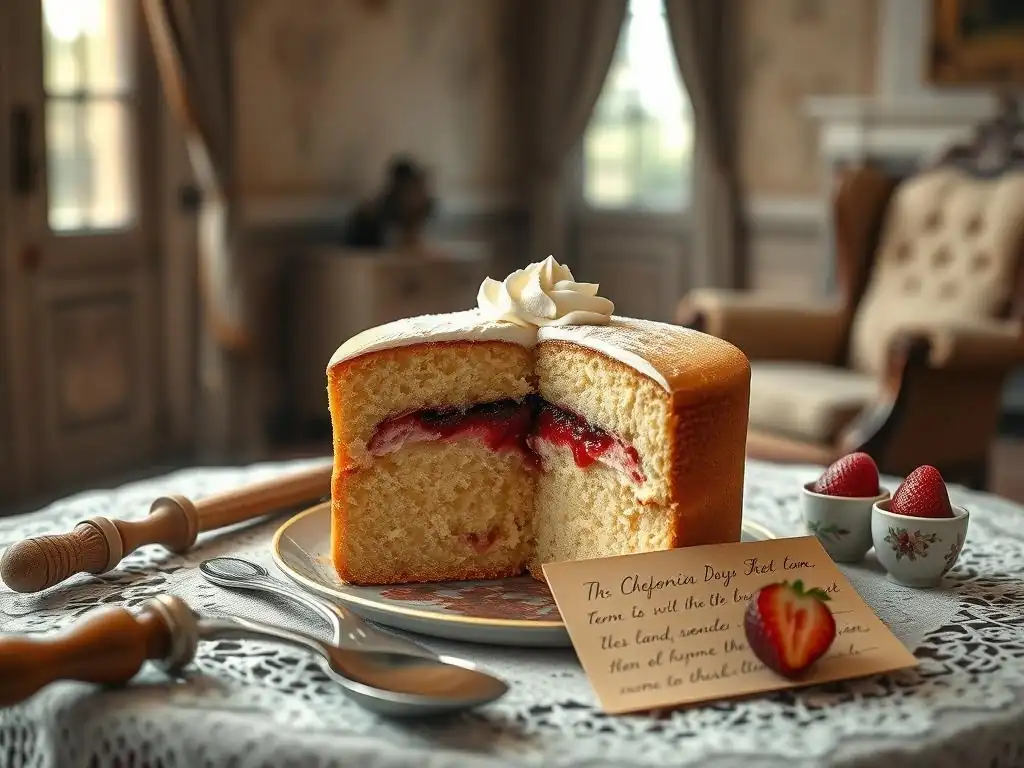
Welcome to BakeWithEase, where baking becomes a joyful adventure! Ever wondered about the regal origins of one of baking's most beloved classics? This week, we delve into the fascinating Victoria sponge cake history. Uncover the sweet secrets and royal connections behind this iconic treat, and get ready to bake a piece of history yourself! Intrigued? Keep reading to discover the full story and our foolproof recipe.
- Introduction: A Royal Treat - Discovering the Victoria Sponge Cake
- The Origins of the Victoria Sponge Cake
- The Evolution of the Victoria Sponge Recipe
- Key Moments in Victoria Sponge Cake History
- Victoria Sponge vs. Other Similar Cakes
- Baking Your Own Royal Victoria Sponge: A Step-by-Step Guide
- Modern Variations of the Classic Victoria Sponge
- The Enduring Appeal of the Victoria Sponge Cake
- Conclusion: Celebrate Baking History with a Victoria Sponge
-
Frequently Asked Questions
- What is the origin of the name "Victoria Sponge Cake"?
- What are the key ingredients that define a classic Victoria Sponge?
- How does the Victoria Sponge differ from other sponge cakes?
- Is the Victoria Sponge Cake difficult for beginner bakers to make?
- What are some common variations of the traditional Victoria Sponge?
- Final Reflection: A Slice of History, A Taste of Enduring Legacy
- Unlock Your Inner Royal Baker!
Introduction: A Royal Treat - Discovering the Victoria Sponge Cake
The Quintessential Victoria Sponge
The Victoria Sponge, a seemingly simple cake comprising two light sponge layers sandwiched together with jam and cream, is far more than just a dessert; it's a true icon of British baking. Its elegance lies in its understated nature and the perfect balance of textures and flavours: the soft, airy sponge, the sweet fruit jam, and the rich, smooth cream.
This classic confection holds a special place in the hearts of many, often evoking memories of childhood tea parties, village fetes, and comforting afternoons. Its enduring popularity speaks to its timeless appeal and its status as a fundamental part of the UK's culinary heritage.
Despite its humble appearance, mastering the Victoria Sponge requires precision and attention to detail, particularly in achieving that signature light and even crumb. The standard recipe typically calls for equal weights of butter, sugar, flour, and eggs, a ratio known as the "four quarters" or "pound cake" method, although variations exist.
The quality of the ingredients is paramount; using good butter, fresh eggs, and a fine self-raising flour makes a significant difference. This foundational simplicity is perhaps why the Victoria Sponge is often one of the first cakes many home bakers attempt, yet it remains a benchmark for judging baking skill.
Why This Classic Cake Remains a British Baking Favorite
The enduring appeal of the Victoria Sponge lies in its versatility and nostalgic charm. It is a cake intrinsically linked to British culture and history, particularly the tradition of afternoon tea, which gained widespread popularity during the Victorian era. This association gives it a sense of tradition and comfort that few other cakes can match. It's a cake that feels both special and familiar, suitable for celebrations yet simple enough for a casual gathering.
Furthermore, the Victoria Sponge is incredibly adaptable. While the classic filling is raspberry or strawberry jam and whipped cream, variations abound, from adding fresh fruit like strawberries between the layers to incorporating different flavoured creams or curds. Its plain sponge base serves as a perfect canvas. This adaptability, combined with its relatively straightforward preparation compared to more elaborate layered cakes, ensures it remains a go-to recipe for bakers of all skill levels, solidifying its position as a perennial favourite in British kitchens. The history of the Victoria sponge cake is deeply intertwined with these cultural traditions.
The Origins of the Victoria Sponge Cake
Queen Victoria's Influence on Cake Culture
The history of the Victoria Sponge cake is inextricably linked to its namesake, Queen Victoria. While sponge cakes existed before her reign, it was during her time on the throne (1837-1901) that this particular style of cake, filled and served as part of afternoon tea, became widely popular and eventually adopted her name. Queen Victoria was known to have a sweet tooth and was particularly fond of sponge cake. The concept of afternoon tea itself flourished during her reign, evolving from a simple repast to a significant social ritual among the upper classes.
It is said that the Queen's ladies-in-waiting, perhaps most notably Anna Russell, the Duchess of Bedford, were instrumental in establishing the afternoon tea custom. As this practice grew, so did the need for suitable accompaniments. Light, delicate cakes that could be easily sliced and eaten with tea were ideal.
The simple sponge cake, often baked flat and sliced, or layered, fitted this need perfectly. Queen Victoria's personal preference for a plain sponge, possibly filled with jam or cream, is credited with cementing its popularity and lending it the royal moniker, making it a central figure in the history of the Victoria sponge cake.
Before Victoria: Cakes in 19th Century Britain
Before the Victorian era, cakes in Britain, particularly those made at home, were often much denser and heavier than the airy sponge we know today. Many relied on yeast or simply the leavening power of beaten eggs for lift. Rich fruit cakes, plum cakes (which often contained dried fruit rather than plums), and pound cakes (named for using a pound each of butter, sugar, flour, and eggs) were common. These cakes were often baked in loaf tins and were more akin to modern-day Madeira cake or dense fruit loaves, designed to keep for longer periods.
The development of new leavening agents in the 19th century began to change the landscape of baking. The invention and increasing availability of bicarbonate of soda (baking soda) and cream of tartar, and later, commercial baking powder (first patented in the 1840s and becoming more widely available from the 1850s onwards), revolutionised cake making.
These chemical leaveners allowed for much lighter, finer-textured cakes that didn't rely solely on laborious whisking of eggs or slow yeast fermentation. This technological shift paved the way for the rise of the lighter sponge cakes that became characteristic of the Victorian era and are central to the history of the Victoria sponge cake.
The Evolution of the Victoria Sponge Recipe
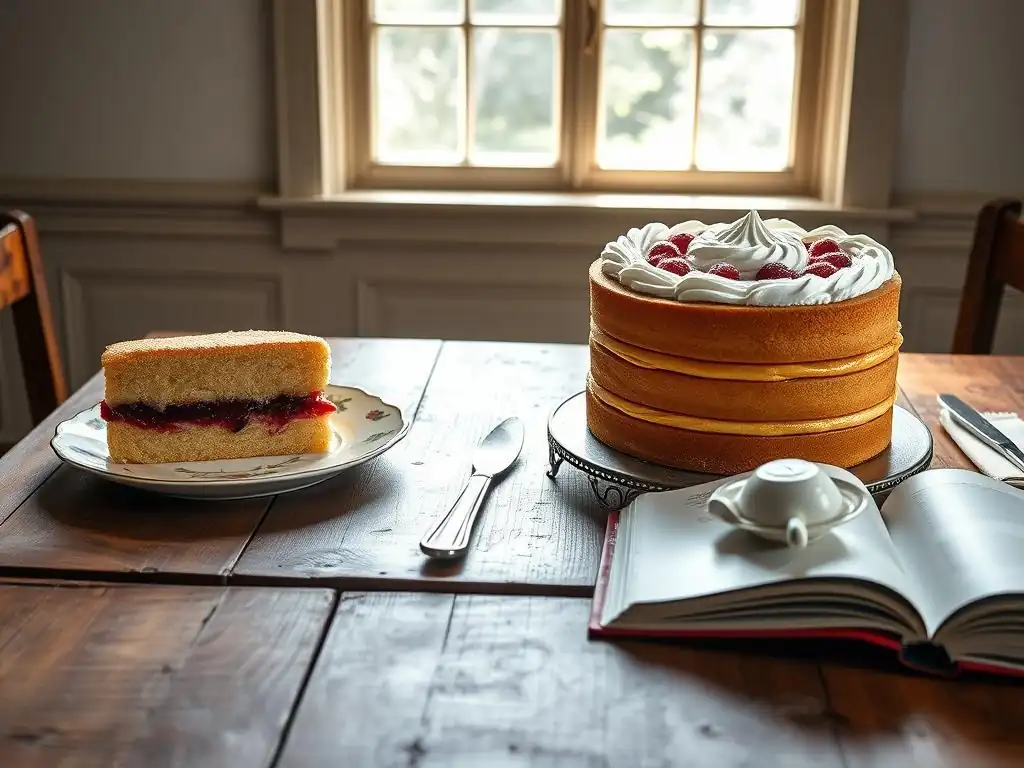
Early Victoria Sponge Ingredients: Flour, Butter, Sugar, and Eggs
The fundamental ingredients of the Victoria Sponge – flour, butter, sugar, and eggs – have remained constant throughout its history. Early recipes, before the widespread use of chemical leaveners, relied heavily on the aeration achieved by creaming the butter and sugar together until light and fluffy, and whisking the eggs thoroughly to incorporate air. These techniques were crucial for creating any lift in the cake batter. The flour used would typically have been a soft wheat flour, low in protein, which is ideal for tender cakes.
The proportions in these early recipes might have varied, but the principle of using a balanced ratio of fat, sweetener, structure, and binder was established. A common approach, particularly for pound cakes from which the sponge evolved, was the equal weight ratio mentioned earlier. While modern recipes might slightly adjust these ratios for a lighter crumb or easier handling, the core components and the goal of combining them to create a rich yet delicate sponge remain the same. Understanding these basic ingredients and their traditional roles is key to appreciating the history of the Victoria sponge cake.
The Rise of Baking Powder and its Impact
The introduction and popularisation of baking powder were monumental shifts in the history of the Victoria Sponge cake. Baking powder is a dry chemical leavening agent, typically a mixture of a carbonate or bicarbonate (like baking soda) and a weak acid (like cream of tartar), often with a filler like cornstarch. When moistened, it produces carbon dioxide gas, which creates bubbles in the batter, causing it to rise rapidly and evenly during baking. This was far more reliable and produced a lighter texture than relying solely on mechanical aeration or yeast.
The availability of commercial baking powder from the mid-19th century onwards made baking significantly easier and more predictable for home cooks. It allowed for the creation of cakes that were much lighter, taller, and finer-grained than previously possible without extensive effort. The Victoria Sponge, in particular, benefited immensely from this innovation.
It enabled bakers to achieve the characteristic airy texture without the need for potentially hours of egg whisking, solidifying its place as an accessible yet elegant cake and accelerating its rise to popularity. This technological advancement was a defining moment in the evolution of the Victoria sponge cake history.
Victoria Sponge: From Tea Cake to Showstopper
Initially, the Victoria Sponge was conceived primarily as a simple cake to accompany afternoon tea. It was a modest affair, perhaps baked in a single tin and sliced, or two thin layers sandwiched together. Its purpose was to be a pleasant, easily digestible treat alongside sandwiches and pastries. It was part of the array, not necessarily the centrepiece. However, as afternoon tea grew in significance and cakes became more elaborate, the Victoria Sponge began its transformation.
Over time, particularly into the late Victorian and Edwardian eras, the Victoria Sponge became slightly more substantial. Bakers experimented with thicker layers and more generous fillings. It started appearing at garden parties, picnics, and other social gatherings.
In the 20th century, it cemented its status as a classic bake, a standard test of skill in domestic science classes and baking competitions. While still retaining its fundamental simplicity, the perfect Victoria Sponge became a point of pride, capable of being a showstopping centrepiece on any tea table, demonstrating that even a simple cake can achieve greatness in the history of the Victoria sponge cake.
Key Moments in Victoria Sponge Cake History
The Royal Connection: Queen Victoria's afternoon teas at Osborne House
The most famous link in the history of the Victoria Sponge cake is, of course, to Queen Victoria herself. While she had several royal residences, her summer home, Osborne House on the Isle of Wight, is particularly associated with her enjoyment of afternoon tea. It was here, away from the strict formalities of Buckingham Palace, that the Queen and her family could enjoy more relaxed gatherings, and afternoon tea was a regular feature. It is widely believed that the Queen's preference for a simple sponge cake served during these teas led to the cake being named in her honour.
Historical accounts and menus from the period suggest that sponge cakes were indeed frequently served at royal tea times. While exact records detailing the very first instance of the "Victoria Sponge" name are elusive, the association between the Queen's fondness for sponge cake and the growing popularity of afternoon tea during her reign at places like Osborne House solidified the connection. This royal endorsement, albeit informal, played a significant role in establishing the cake's prestige and ensuring its place in British culinary tradition and the history of the Victoria sponge cake.
The Victorian Tea Party and its Role
The Victorian era saw the rise of the tea party as a significant social institution, particularly among the middle and upper classes. Originating as a way to bridge the long gap between lunch and a late dinner, afternoon tea evolved into an elaborate affair involving specific etiquette, fine china, and a carefully curated selection of food. This included a variety of sandwiches, scones with jam and cream, small pastries, and, crucially, cakes. The tea party provided the perfect setting for the lighter, more delicate cakes made possible by new leavening agents.
The Victoria Sponge, with its appealing texture and pleasant sweetness, was perfectly suited to the tea party format. It was easy to slice and serve, paired well with tea, and wasn't overly rich or heavy. As tea parties became more common, so too did the cakes served at them. The demand for reliable sponge cake recipes grew, further integrating the Victoria Sponge into the fabric of British social life and solidifying its place in the history of the Victoria sponge cake as the quintessential tea-time treat.
Victoria Sponge in Wartime Britain: Dried Egg Powder and Rationed Ingredients
The 20th century presented significant challenges to home baking, particularly during the two World Wars. Rationing of essential ingredients like butter, sugar, and eggs had a direct impact on the ability to bake cakes like the Victoria Sponge, which relies heavily on these components. During both World Wars, but perhaps most notably during World War II (1939-1945), ingredients were severely limited. Butter and sugar were rationed, and fresh eggs were often scarce.
Home bakers became incredibly resourceful, turning to substitutes. Margarine was used instead of butter, and rationed sugar had to be carefully stretched. One of the most significant changes was the widespread use of dried egg powder.
While not producing quite the same result as fresh eggs, dried egg powder allowed cakes to be made when fresh eggs were unavailable. Recipes were adapted to use smaller quantities of rationed items and incorporate substitutes. Despite these limitations, the desire for familiar comforts like a slice of Victoria Sponge persisted, and people did their best to recreate it with the ingredients available, demonstrating its deep cultural significance even in challenging times and adding another layer to the history of the Victoria sponge cake.
Victoria Sponge vs. Other Similar Cakes
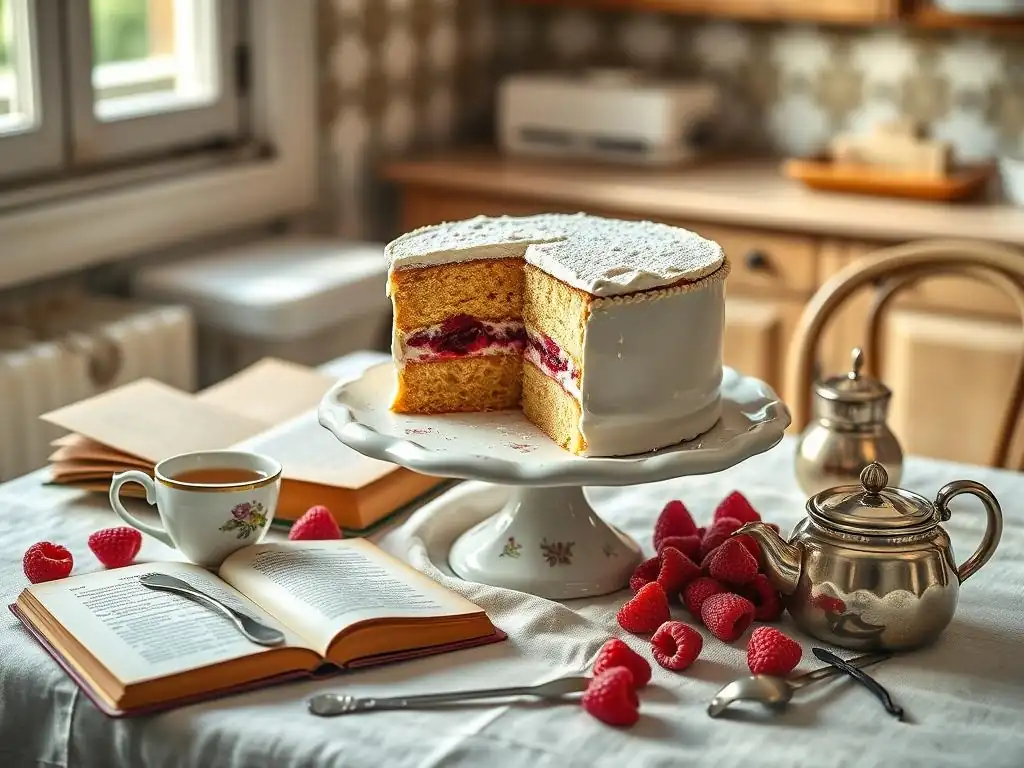
Comparing Victoria Sponge to Madeira Cake
While both are classic British cakes often served with tea, the Victoria Sponge and Madeira Cake have distinct differences. The Victoria Sponge is characterised by its light, airy texture, achieved through creaming butter and sugar and often enhanced by baking powder. Its primary flavour comes from the vanilla in the sponge and the jam/cream filling. It is typically baked as two thin layers sandwiched together.
Madeira Cake, conversely, is a denser, firmer cake. It traditionally contains more flour in proportion to butter and eggs than a Victoria Sponge, and often includes lemon zest, giving it a characteristic citrus note. It is usually baked as a single loaf or round cake, not typically split and filled in the same way as a Victoria Sponge (though it can be served sliced with butter).
The name "Madeira" is said to come from the fact that it was traditionally served with a glass of Madeira wine, rather than being from the island itself. Its sturdier texture means it slices cleanly and keeps well, making it suitable for serving alongside a drink. This contrast highlights the specific qualities that define the Victoria Sponge in the history of British baking.
Is it a Victoria Sponge or a Sandwich Cake?
The term "sandwich cake" is often used interchangeably with Victoria Sponge, and in many contexts, especially in the UK, they refer to the same thing: a cake made of two layers of sponge joined by a filling. Historically, "sandwich cake" is a broader term that simply describes the structure – any cake made by sandwiching layers together. The Victoria Sponge is the most famous and specific type of sandwich cake, defined by its plain vanilla sponge, jam, and cream filling.
So, while a Victoria Sponge is always a sandwich cake, not all sandwich cakes are Victoria Sponges. You could have a chocolate sandwich cake with chocolate buttercream, or a lemon sandwich cake with lemon curd. However, the classic "sandwich cake" referred to in many older British recipes and common usage is understood to mean the Victoria Sponge. This terminology reflects the cake's defining structure and its evolution from a simple sponge into a layered confection, a key point in the history of the Victoria sponge cake.
The Debate: Jam First or Cream First?
A lighthearted but surprisingly passionate debate among British bakers and cake enthusiasts revolves around the correct order for assembling a Victoria Sponge: should the jam be spread on the bottom layer first, followed by the cream on top, or should the cream go down first, then the jam? There is no single definitive answer, and both methods have their proponents.
Those who put jam first often argue that it prevents the cream from soaking into the sponge, creating a barrier. They spread the jam evenly over the bottom layer, then dollop or spread the cream on top of the jam before placing the second sponge layer on top. Others prefer cream first, arguing it provides a stable base for the jam and allows the jam's flavour to be the first thing tasted when biting into the cake.
They spread the cream over the bottom layer, then add the jam on top of the cream, often leaving a slight border of cream. Ultimately, the choice comes down to personal preference, but the existence of this debate underscores how deeply ingrained the Victoria Sponge is in British culture and adds a quirky footnote to the history of the Victoria sponge cake.
Baking Your Own Royal Victoria Sponge: A Step-by-Step Guide
Preparing the Ingredients for a Perfect Victoria Sponge
Achieving a perfect Victoria Sponge starts with preparation and using ingredients at the right temperature. Ensure your butter and eggs are at room temperature – this is crucial for successful creaming and emulsification of the batter. Typically, for a standard 8-inch (approx. 20 cm) cake, you'll need around 200g each of soft butter, caster sugar, and self-raising flour, plus 4 large eggs. You'll also need a good quality vanilla extract, raspberry or strawberry jam (around 150-200g), and double cream (around 250-300ml), which should be kept cold until ready to whip.
Preheat your oven to around 180°C (160°C fan/Gas Mark 4) and prepare two 8-inch sandwich tins by greasing and lining the bases with baking parchment. Weigh all your ingredients accurately. Sieveing the flour is also a good practice to ensure a lighter texture and remove any lumps. Having everything ready before you start mixing the batter will make the process smooth and help ensure a successful bake, honouring the tradition behind the history of the Victoria sponge cake.
The Creaming Method: Achieving a Light and Airy Sponge
The classic method for making a Victoria Sponge is the creaming method, which is key to incorporating air into the batter and achieving that characteristic light texture. Begin by beating the softened butter and caster sugar together in a large bowl. Use an electric mixer or a wooden spoon and plenty of elbow grease. The mixture should become pale yellow, light, and fluffy – this can take 5-10 minutes with a mixer. This process creates tiny air pockets within the fat, which will expand during baking.
Next, gradually add the beaten eggs, one at a time, beating well after each addition. If the mixture looks like it's starting to curdle, add a tablespoon of the sieved flour. Once the eggs are fully incorporated, add a splash of good quality vanilla extract. Finally, gently fold in the sieved self-raising flour using a spatula or large metal spoon. Be careful not to overmix; you want to keep the air you've incorporated. Overmixing develops the gluten in the flour, resulting in a tougher cake. The batter should be light and airy.
Baking Tips for a Golden Victoria Sponge
Divide the batter evenly between your two prepared tins. Use a spatula to gently level the tops. Place the tins in the preheated oven on the middle shelf. Baking time typically ranges from 20 to 25 minutes, but this can vary depending on your oven. Avoid opening the oven door during the first 15-20 minutes, as this can cause the cakes to sink.
The cakes are ready when they are golden brown, have risen well, and feel springy to the touch when lightly pressed in the centre. You can also check for doneness by inserting a clean skewer into the centre of a cake; it should come out clean.
Once baked, remove the tins from the oven and let the cakes cool in the tins for about 5-10 minutes before carefully turning them out onto a wire rack to cool completely. Ensuring the cakes are fully cooled before filling is essential to prevent the cream from melting, a small but important detail in mastering the art behind the history of the Victoria sponge cake.
Assembling and Decorating Your Victoria Sponge Cake
Once the sponge layers are completely cool, it's time to assemble your Victoria Sponge. Lightly whip the cold double cream until it holds soft peaks – be careful not to over-whip it into butter. Place one sponge layer bottom-side up on your serving plate or stand. Spread a generous layer of your chosen jam over this bottom layer, going almost to the edge.
Next, dollop or spread the whipped cream over the jam (or apply the cream first, then the jam, depending on your preferred method from the great debate!). Gently place the second sponge layer on top, presentation-side up. You can finish the cake with a light dusting of icing sugar using a sieve. For a truly classic look, keep the decoration simple. The beauty of the Victoria Sponge lies in its simplicity and the quality of its components. This final step brings together the elements that have defined the history of the Victoria sponge cake for generations.
Modern Variations of the Classic Victoria Sponge
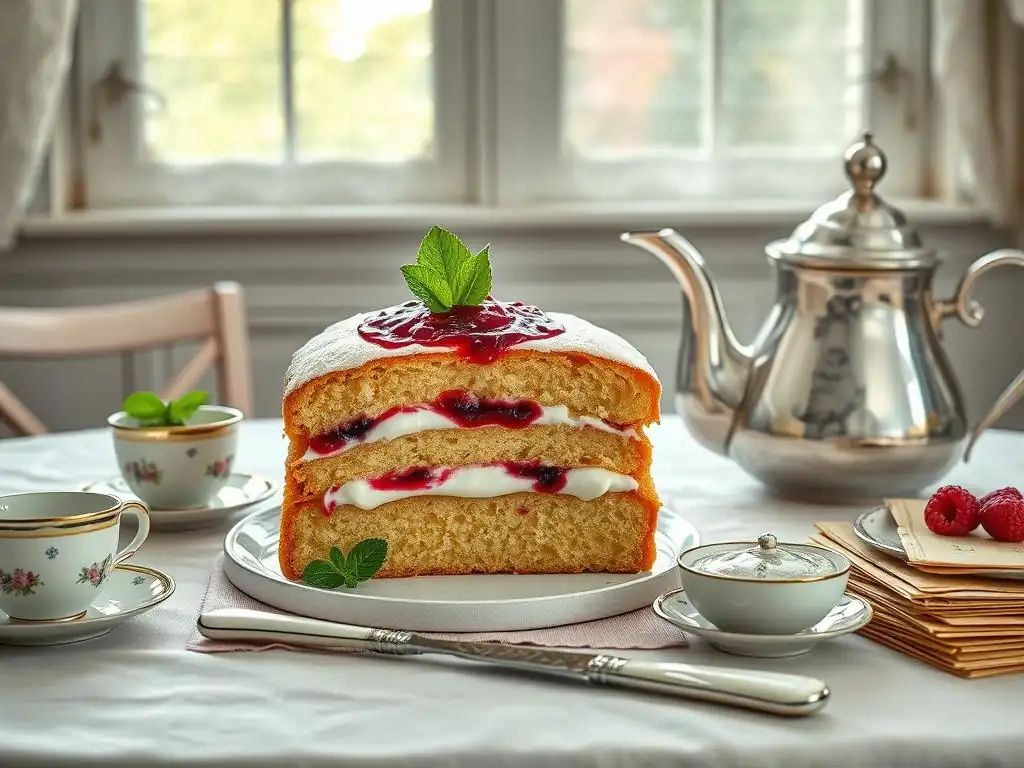
Adding Flavors: Lemon Zest, Raspberry Jam, Vanilla Extract
While the classic Victoria Sponge is defined by its vanilla sponge and raspberry or strawberry jam and cream filling, modern bakers often introduce subtle variations to add complexity or cater to personal tastes. Adding the zest of one or two lemons to the sponge batter introduces a bright, fragrant note that complements the sweetness of the cake and filling beautifully. This creates a 'Lemon Victoria Sponge', a popular twist.
The choice of jam is also a point of variation. While raspberry and strawberry are traditional, other fruit jams like cherry, blackcurrant, or mixed berry can be used. Some bakers even opt for lemon curd, sometimes combined with cream, for a tangy alternative to the standard jam.
Increasing the amount or using a high-quality vanilla extract in the sponge also deepens the flavour profile, ensuring the sponge itself is not just a carrier for the filling but has its own delicious character. These small adjustments show the cake's adaptability while staying true to the core concept that has shaped the history of the Victoria sponge cake.
Victoria Sponge Cake with Different Fillings
Beyond the classic jam and cream, the Victoria Sponge's simple structure makes it suitable for a variety of fillings, transforming it into different, yet related, cakes. Instead of whipped double cream, some recipes use a vanilla buttercream frosting, which is richer and more stable, though less traditional. Cream cheese frosting can also be used for a tangy contrast, particularly if paired with a slightly different jam like cherry or blackberry.
For added texture and flavour, fresh fruit can be incorporated into the filling. Sliced fresh strawberries or raspberries are common additions, often layered on top of the jam and cream. Sometimes, a layer of fruit compote or even a thin layer of custard is used, though these deviate further from the historical standard. These variations showcase the cake's evolution and its ability to remain relevant in contemporary baking, building upon the foundation laid by the history of the Victoria sponge cake.
Gluten-Free Victoria Sponge: A Modern Twist
In response to changing dietary needs and preferences, the Victoria Sponge has also adapted to become accessible to those following a gluten-free diet. Gluten-free Victoria Sponge recipes replace traditional wheat flour with a blend of gluten-free flours (such as rice flour, potato starch, tapioca starch, and sometimes ground almonds for texture and moisture). These blends require careful balancing to mimic the structure and texture of a wheat-based sponge.
Baking a good gluten-free sponge can be slightly more challenging, as gluten provides structure and elasticity. Recipes often rely more heavily on the leavening power of baking powder and thorough creaming/whisking, and sometimes include ingredients like xanthan gum to improve texture and binding. Despite the technical adjustments, the goal remains the same: to create a light, tender cake that can be filled with jam and cream. The success of gluten-free variations demonstrates the enduring desire for this classic cake and its ability to evolve with the times, adding a new chapter to the history of the Victoria sponge cake.
The Enduring Appeal of the Victoria Sponge Cake
Why Victoria Sponge Remains a Popular Choice
The Victoria Sponge holds a unique and enduring place in the baking world, remaining a popular choice for countless reasons. Its relative simplicity makes it approachable for novice bakers, providing a rewarding outcome for minimal fuss compared to more complex pastries. Yet, its subtle nuances – achieving the perfect crumb, the ideal rise, the balanced filling – offer a challenge for experienced bakers seeking perfection. This blend of accessibility and challenge contributes significantly to its lasting appeal.
Furthermore, the Victoria Sponge is deeply woven into the cultural fabric of Britain. It is synonymous with celebratory occasions like birthdays, anniversaries, and Christenings, as well as everyday pleasures like afternoon tea. Its familiar appearance and comforting flavour profile evoke nostalgia and a sense of tradition. In a world of ever-changing culinary trends, the Victoria Sponge offers a reliable, beloved classic that consistently delivers simple, unadulterated pleasure, ensuring its continued prominence in the history of the Victoria sponge cake.
Victoria Sponge: A Perfect Cake for Any Occasion
One of the greatest strengths of the Victoria Sponge is its versatility; it truly is a perfect cake for nearly any occasion. Its elegant simplicity makes it suitable for formal gatherings, while its comforting nature makes it equally welcome at casual family teas or picnics. Unlike heavily iced or elaborate cakes that might feel out of place, the Victoria Sponge fits seamlessly into almost any setting where cake is desired.
Whether served at a sophisticated afternoon tea, brought to a potluck, baked for a school fete, or simply enjoyed with a cup of tea on a quiet afternoon, the Victoria Sponge always feels right. Its classic appeal transcends trends, ensuring it remains a go-to recipe for bakers and a much-loved treat for eaters across generations. This adaptability solidifies its status not just as a historical artifact, but as a living, breathing part of modern baking culture, continuing to add chapters to the rich history of the Victoria sponge cake.
Conclusion: Celebrate Baking History with a Victoria Sponge
Frequently Asked Questions
What is the origin of the name "Victoria Sponge Cake"?
The Victoria Sponge Cake is named after Queen Victoria, who enjoyed a slice of sponge cake with her afternoon tea. The cake gained popularity during her reign, becoming a staple of Victorian tea parties.
What are the key ingredients that define a classic Victoria Sponge?
The core ingredients are flour, sugar, butter, and eggs, usually in equal weights. Traditionally, it's filled with raspberry jam and sometimes whipped cream, creating a simple yet delicious flavor profile.
How does the Victoria Sponge differ from other sponge cakes?
Unlike some sponge cakes, the Victoria Sponge relies on creaming butter and sugar together for its light and airy texture. It generally does not contain any leavening agent other than the air incorporated during creaming and whisking.
Is the Victoria Sponge Cake difficult for beginner bakers to make?
No, it's considered a relatively easy cake to bake, making it a good starting point for novice bakers. The recipe is straightforward and uses easily accessible ingredients.
What are some common variations of the traditional Victoria Sponge?
While raspberry jam is classic, other fillings like strawberry jam, lemon curd, or even chocolate ganache can be used. Some recipes also incorporate almond extract or vanilla extract to enhance the flavor.
Final Reflection: A Slice of History, A Taste of Enduring Legacy
The Victoria sponge cake, far from being a mere dessert, represents a potent symbol of British culinary heritage and social evolution. Its enduring popularity, spanning centuries, speaks volumes about its ability to transcend fleeting trends and connect generations through a shared experience of simple pleasure. This seemingly humble cake holds a mirror to the changing times, reflecting shifts in societal norms and technological advancements in baking.
The Victoria sponge's influence extends far beyond the kitchen table. It's a testament to the power of simple ingredients transformed into something exquisite, a reflection of the Victorian era's emphasis on domesticity and craftsmanship. Its continued presence in modern baking, adapted and reinterpreted countless times, demonstrates its enduring appeal. A cake is a celebration of life, a moment of joy, a symbol of togetherness.
This sentiment, though not specifically about the Victoria sponge, perfectly encapsulates its enduring charm and the feelings it evokes.
Now, as you consider the rich history of this iconic cake, I invite you to reflect on its enduring legacy. Consider the stories it tells, the traditions it upholds, and the simple joy it brings. Perhaps you'll be inspired to bake your own Victoria sponge, to share its deliciousness with loved ones, and to carry forward the tradition of this truly remarkable piece of culinary history. Let the simple act of baking become a connection to the past, a celebration of the present, and a promise for the future.
Unlock Your Inner Royal Baker!
Thanks for joining us on a delicious journey through the history of the Victoria sponge! We hope you've gained a new appreciation for this classic treat. Ready to put your newfound knowledge to the test?
- Bake your own magnificent Victoria sponge! This is your chance to create a truly regal dessert. Find a recipe online, gather your ingredients, and get baking.
- Share your baking journey! Post a picture of your creation on social media and tag us! Let's celebrate your royal baking success together.
- Explore our other historical recipes: Discover more delicious recipes inspired by different eras and cultures on our website.
Have you ever tried adding a unique twist to a classic recipe? Share your ideas below!