
Understanding Rye Bread Hydration for Better Dough

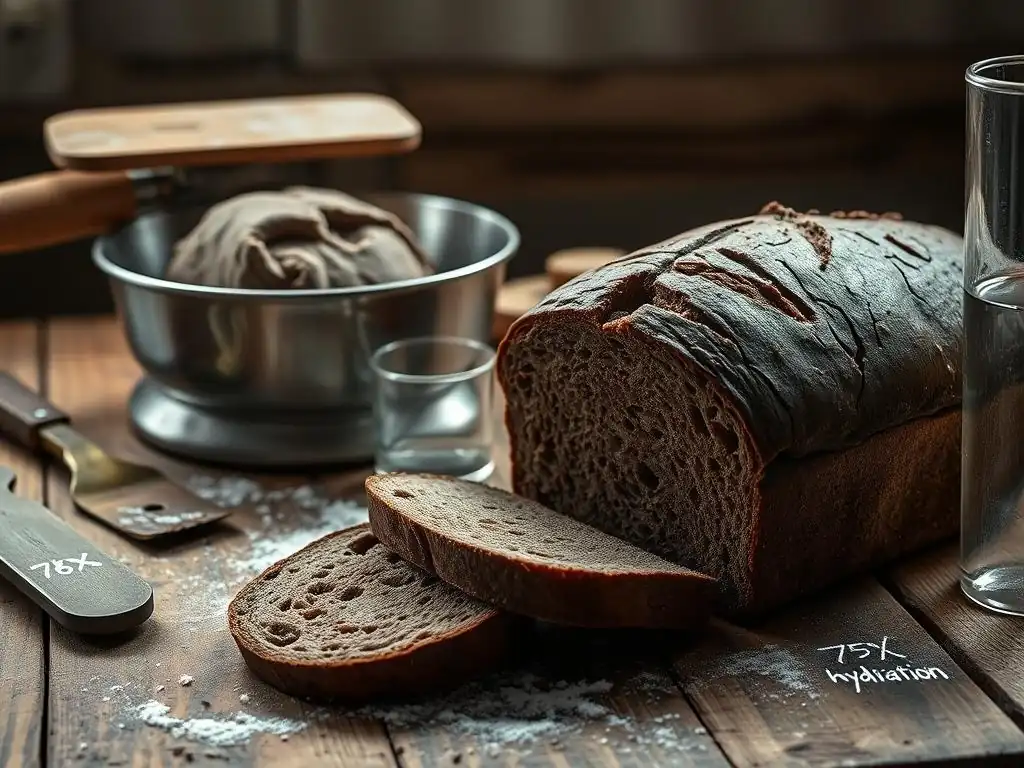
Welcome to BakeWithEase, your kitchen companion for all things baking! Ever wondered how hydration impacts the texture and rise of your rye bread? Dive into our latest exploration of rye bread hydration levels and unlock the secrets to a perfectly balanced dough. Discover tips and techniques that will elevate your bread baking from good to extraordinary. Read on to find out how to achieve the ideal consistency, no matter your experience level.
- Understanding Rye Bread Hydration for Optimal Dough
- Introduction to Rye Bread Hydration
- The Science Behind Rye Bread Hydration
- Determining the Ideal Rye Bread Hydration Level
- Mastering Rye Bread Hydration Techniques
- Troubleshooting Rye Bread Hydration Problems
- Advanced Rye Bread Hydration Concepts
- Rye Bread Hydration and Sourdough
- Tips and Tricks for Perfect Rye Bread Hydration
- Conclusion: Hydration - Key to Delicious Rye Bread
-
Frequently Asked Questions
- What is hydration in rye bread baking, and why is it important?
- How does rye flour's unique composition affect hydration levels?
- What happens if my rye bread dough is under-hydrated?
- What are the signs of over-hydrated rye bread dough?
- What is a good starting point for rye bread hydration levels, and how can I adjust it?
- Final Reflection: The Transformative Power of Hydration in Rye Bread Baking
- Unleash Your Inner Baker: Master Rye Hydration!
Understanding Rye Bread Hydration for Optimal Dough
Introduction to Rye Bread Hydration
Baking rye bread offers a unique and rewarding experience, distinct from working with wheat flour. One of the most critical factors influencing the success of your rye loaf is hydration – the amount of water added relative to the flour. Getting the rye bread hydration levels right is fundamental because rye flour behaves very differently when mixed with water compared to wheat flour. This difference significantly impacts dough handling, fermentation, and the final texture and flavor of your bread.
Understanding the nuances of rye bread hydration allows bakers to control the outcome of their loaves, from dense, traditional pumpernickel to lighter, airy rye rolls. Unlike wheat, rye flour contains very little gluten-forming protein, relying on other components, primarily pentosans, to structure the dough. This structural difference means rye doughs are often much wetter and stickier than their wheat counterparts, requiring a different approach to hydration and handling. Mastering these rye bread hydration levels unlocks the door to a world of delicious rye baking possibilities.
Why Hydration Levels Matter for Rye Bread Baking
The precise level of hydration dramatically affects the workability of rye dough and the final characteristics of the baked bread. Too little water results in a dry, crumbly dough that is difficult to mix and shape, leading to a dense, heavy loaf with a tight crumb. On the other hand, excessive hydration can make the dough incredibly sticky and challenging to handle, potentially resulting in a gummy texture or a collapsed structure during baking.
Finding the optimal rye bread hydration levels ensures that the dough develops properly, allowing for adequate fermentation and oven spring (though less dramatic than in wheat breads). It influences the crumb structure, ranging from the extremely dense, closed crumb of pumpernickel (often 90-100%+ hydration) to the slightly more open, moist crumb of a light rye loaf (perhaps 65-75% hydration). Correct hydration is key to achieving the desired texture, moisture content, and overall eating quality specific to different types of rye bread.
Unique Properties of Rye Flour and Their Impact on Hydration
Rye flour possesses unique characteristics that set it apart from wheat, most notably its lower gluten content and higher concentration of non-starch polysaccharides, particularly pentosans. While wheat flour relies on gluten development for structure, rye's structure is largely dependent on these pentosans and starches absorbing and retaining water. This means rye doughs tend to be stickier and less elastic than wheat doughs at similar hydration levels.
Pentosans in rye flour can absorb significantly more water than wheat starch or protein, sometimes up to 10 times their weight. This high water absorption capacity is why rye dough often requires higher hydration levels than wheat dough to achieve a similar consistency. However, because rye lacks the strong gluten network of wheat, this absorbed water doesn't lead to an elastic, extensible dough; instead, it creates a viscous, often porridge-like mass, especially in high-hydration rye breads. Understanding these properties is crucial for managing rye bread hydration levels effectively.
The Science Behind Rye Bread Hydration
Water Absorption Differences Between Rye and Wheat Flour
The fundamental difference in how rye and wheat flours absorb water stems from their composition. Wheat flour contains proteins like glutenin and gliadin which, when hydrated and kneaded, form gluten – a strong, elastic network that traps gases produced during fermentation, giving wheat bread its open structure and chewiness. Wheat flour typically absorbs about 50-60% of its weight in water to form a manageable dough for many common bread types.
Rye flour, conversely, has much lower levels of these gluten-forming proteins. Its primary water-absorbing power comes from pentosans. These complex carbohydrates are highly hydrophilic, meaning they love water and can bind large amounts of it. This difference results in rye flour requiring more water than wheat flour to achieve a similar dough consistency, and the resulting dough behaves less like an elastic network and more like a sticky, pliable mass. Typical rye bread hydration levels can range from 60% for firmer doughs up to 120% or even higher for very wet, traditional European rye styles.
Pentosans and Their Role in Rye Dough Hydration
Pentosans are the unsung heroes of rye bread hydration. These polysaccharides are not digestible by humans but play a vital role in the physical properties of rye dough. Chemically, they are polymers of pentose sugars like xylose and arabinose. In the presence of water, pentosans swell and form a highly viscous gel. This gel-like structure is responsible for much of the water retention in rye dough.
Because rye has less gluten to provide structure, the gel formed by pentosans is crucial for holding the dough together and trapping some of the fermentation gases. However, this gel structure is not as strong or elastic as gluten, which is why pure rye breads tend to be denser and have a tighter crumb than wheat breads. The amount and type of pentosans vary with the milling process and the rye grain itself, directly influencing the required rye bread hydration levels and the final dough consistency.
Hydration's Impact on Rye Bread Texture and Structure
The level of hydration profoundly affects the texture and structure of the finished rye bread. Lower hydration (e.g., 60-70%) results in a firmer dough that yields a denser loaf with a tighter, sometimes even slightly dry crumb. This is common in certain types of rye rolls or loaf breads where a more robust structure is desired.
Higher hydration (e.g., 80-100%+) creates a wetter, stickier dough that can be challenging to handle but contributes to a more moist, sometimes almost creamy crumb. This is typical for many traditional European dark rye breads like Pumpernickel or Rugbrød, which are characterized by their dense yet incredibly moist texture. The water bound by pentosans helps keep the bread from drying out, contributing to a longer shelf life. The higher the rye bread hydration levels, generally the moister and denser the final crumb will be.
Determining the Ideal Rye Bread Hydration Level
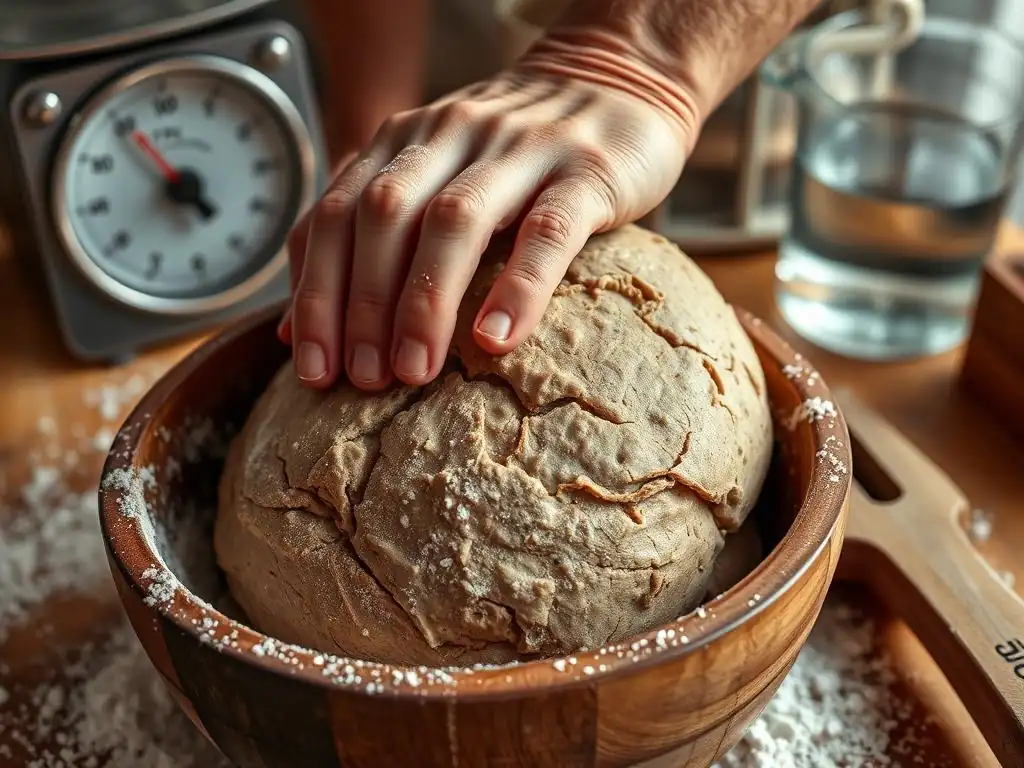
Factors Affecting Optimal Hydration: Flour Type, Recipe, and Environment
Determining the perfect rye bread hydration level isn't a one-size-fits-all situation. Several factors interact to influence how much water your dough will need. The type of rye flour used (light, medium, dark, or whole) is paramount, as different grinds and extractions have varying amounts of pentosans and bran, which affect water absorption. A fine, light rye will absorb water differently than a coarse, whole rye flour.
Furthermore, the specific recipe plays a significant role. Recipes often include other ingredients like seeds, grains, or even cooked potatoes, which also absorb water and influence the overall hydration calculation. The baking environment, including humidity and temperature, can also slightly affect how much water the flour absorbs and how quickly the dough dries out during handling and proofing. Therefore, while guidelines exist, experienced bakers often adjust rye bread hydration levels slightly based on their specific flour, recipe, and conditions.
Hydration Needs of Different Rye Flour Types
Different types of rye flour have distinct hydration needs due to their varying composition, particularly the amount of bran and germ retained during milling. Whole rye flour, containing all parts of the grain, is highest in pentosans and bran, requiring the most water. Dark rye flour is typically a whole or near-whole grain flour. Medium rye flour has some bran and germ removed, while light rye flour is mostly the endosperm, with most bran and germ sifted out.
As a general rule, the darker and coarser the rye flour, the higher the hydration level it can handle and often requires to develop properly. Light rye flour, being lower in pentosans and bran, behaves somewhat closer to wheat flour in terms of handling, though still stickier. Understanding these differences is key to successfully working with different rye bread hydration levels.
Light Rye Flour Hydration Guidelines
Light rye flour, also known as white rye flour, is the result of milling the rye kernel and sifting out most of the bran and germ. It has the lowest amount of pentosans and bran compared to darker rye flours. Consequently, it absorbs less water than whole or dark rye and develops a dough that is less sticky, though still stickier than a pure wheat dough at similar hydration.
Typical rye bread hydration levels for dough made predominantly with light rye flour often fall in the range of 65% to 75%. At these hydration levels, the dough is usually manageable enough for some light kneading or folding, although it will still be softer and less elastic than a wheat dough. This hydration range is suitable for lighter rye loaves or rolls.
Medium Rye Flour Hydration Guidelines
Medium rye flour contains more of the bran and germ than light rye but less than dark or whole rye. This increased presence of pentosans and fibrous material means it has a higher water absorption capacity than light rye. Doughs made with medium rye flour will be noticeably stickier and denser than those made with light rye.
A common range for rye bread hydration levels when using medium rye flour is between 75% and 85%. Doughs at this hydration level are typically quite sticky and are best handled using techniques like stretch and folds or simply shaping with wet hands or a dough scraper. This hydration range yields a loaf with a denser, more substantial crumb than light rye bread.
Dark Rye Flour Hydration Guidelines
Dark rye flour, which includes whole rye flour, contains the maximum amount of bran, germ, and pentosans. It has the highest water absorption capacity among the different rye flour types. Doughs made with dark rye flour are generally very sticky, dense, and often have a consistency closer to a thick batter or paste than a traditional dough.
Rye bread hydration levels for dark or whole rye flour can range from 85% up to 100% or even 120%+ for some traditional recipes. Doughs at these high hydration levels are not kneaded; they are typically mixed vigorously with a spoon or mixer and then poured or scraped into a pan for baking. This high hydration is essential for achieving the characteristic dense, moist, and long-lasting crumb of many dark rye breads.
Caraway Rye Bread: Hydration Level Breakdown
Caraway rye bread, a popular style, often uses a blend of wheat and rye flour, frequently light or medium rye. The inclusion of wheat flour provides some gluten structure, making the dough easier to handle than pure rye doughs. The hydration level for caraway rye bread depends heavily on the proportion of rye to wheat flour and the type of rye used.
If using a mix with a significant portion of light or medium rye (e.g., 40-60% rye), typical rye bread hydration levels might be in the 68% to 78% range. This allows for a dough that can be shaped into a freestanding loaf, while still benefiting from the distinct flavor and slightly denser crumb contributed by the rye. Recipes with a higher percentage of rye will trend towards the upper end of this range or slightly higher.
Pumpernickel Bread: Hydration Level Breakdown
Pumpernickel is the quintessential example of a high-hydration, dark rye bread. Traditional Pumpernickel is often made with coarsely ground whole rye meal or chopped rye kernels and a sourdough starter, baked slowly at low temperatures for many hours. The high proportion of whole rye and the long baking time contribute to its signature dense, moist, and dark crumb.
Rye bread hydration levels for Pumpernickel are typically very high, often ranging from 90% to 120% or even more. The dough is more like a thick porridge than a conventional dough and is usually packed into a loaf pan. This high hydration is necessary to soften the coarse rye particles and prevent the bread from becoming excessively dry during the long, slow baking process. The extreme rye bread hydration levels are a defining characteristic of this bread style.
Mastering Rye Bread Hydration Techniques
Pre-Hydration: Autolyse and Soakers for Rye Flour
While a traditional autolyse (mixing flour and water and letting it rest) is primarily used in wheat baking to develop gluten, a modified form can be beneficial for rye. For rye, pre-hydrating the flour, especially coarse or whole rye, allows the pentosans and starches to fully absorb water before other ingredients like salt or starter are added. This step, sometimes called a "soaker" or "sponge" when grains or meals are included, helps soften the bran and improves the overall texture.
A simple pre-hydration for rye might involve mixing the rye flour with all or most of the water in the recipe and letting it rest for 30 minutes to an hour before adding other components. For recipes with whole grains or coarse rye meal, a soaker (mixing the coarse ingredients with water, often hot, and letting it stand for several hours or overnight) is essential to ensure the grains are fully hydrated and soft, preventing a gritty texture in the final bread. These techniques help manage rye bread hydration levels effectively from the start.
Hydration Adjustments During Mixing
Even with careful measurement, the exact amount of water needed can vary slightly depending on the flour and ambient conditions. It's often best to start with a slightly lower amount of water than the recipe calls for and add more gradually during the mixing process. Rye dough, particularly at higher hydration, can be very sticky, so it's easier to add water than to take it away (by adding more flour, which can alter ratios).
Observe the dough's consistency as you mix. For light or medium rye doughs (65-80% hydration), you're looking for a dough that is cohesive but still quite soft and sticky. For darker or higher hydration rye doughs (85%+ hydration), the consistency will be more like a thick batter or paste. Adjust the water a tablespoon at a time until the desired consistency is reached, keeping in mind that rye dough will always be stickier than wheat dough at comparable hydration levels.
Recognizing Over-Hydrated Rye Dough
An over-hydrated rye dough will be excessively slack, almost liquid-like, and extremely difficult to handle. While rye dough is naturally sticky, an over-hydrated dough will stick relentlessly to everything – your hands, the bowl, the counter – without forming any semblance of structure or cohesion, even after mixing. It may appear thin and watery.
If you suspect your rye dough is over-hydrated during mixing, you can try adding a small amount of additional rye or wheat flour (start with a tablespoon) and mixing it in. Be cautious, as adding too much flour can disrupt the recipe's balance. Sometimes, if the dough is significantly over-hydrated, the best approach might be to embrace it and bake it in a loaf pan, as a freeform loaf will likely spread into a flat disc.
An under-hydrated rye dough will feel stiff, dry, and crumbly. It might not come together easily in the bowl, leaving dry pockets of flour. When you try to mix or handle it, it will resist forming a cohesive mass and may break apart easily.
If you recognize your rye dough is under-hydrated, gradually add more water, a tablespoon or two at a time, while mixing. Continue adding and mixing until the dough reaches the desired consistency – cohesive but still soft and appropriately sticky for the type of rye flour used. It's easier to fix under-hydration than over-hydration, so adding water slowly is always a good strategy.
Troubleshooting Rye Bread Hydration Problems
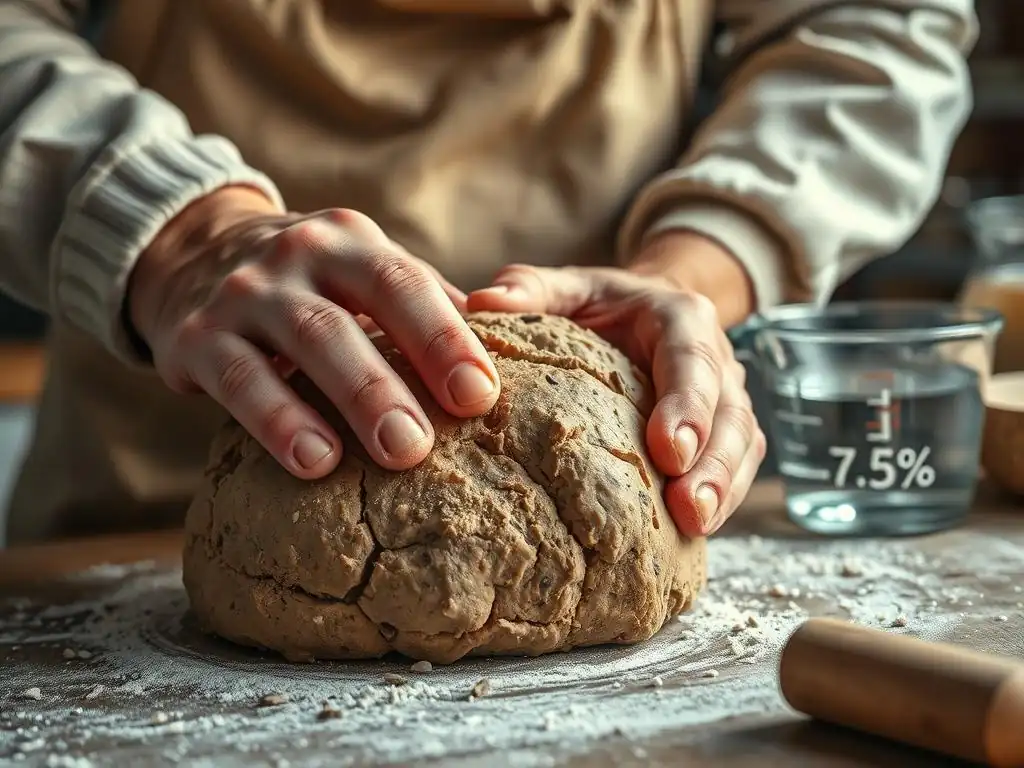
Common Rye Dough Hydration Issues
Bakers new to rye often encounter challenges related to hydration because rye dough behaves so differently from wheat. The most common issues include dough that is either too sticky to handle or too dry and crumbly to form. Another issue is misjudging the final consistency needed for different rye bread types; expecting a kneadable dough when making a high-hydration pumpernickel, for instance, will lead to frustration.
These problems usually stem from either inaccurate measurement of water and flour or a lack of understanding of how pentosans affect dough consistency. Using the wrong type of rye flour for a specific recipe's intended rye bread hydration levels can also cause problems. For example, using light rye in a recipe designed for dark rye at 90% hydration will result in a very wet, unusable dough.
Solutions for Sticky Rye Bread
If your rye dough is excessively sticky, beyond the expected stickiness for the hydration level, there are a few things you can do. First, ensure you are using proper handling techniques: wet your hands or use a dough scraper when working with high-hydration rye doughs, rather than trying to handle them like wheat dough. Avoid adding excessive amounts of bench flour, as this changes the hydration ratio.
If the dough is genuinely over-hydrated, you can attempt to incorporate a small amount of additional flour (rye or wheat). Add just a tablespoon at a time and mix thoroughly before deciding if more is needed. As mentioned before, if it's significantly too wet, baking in a pan is often the most practical solution. Remember that rye dough is sticky; learn to work with its stickiness rather than expecting it to behave like wheat.
Solutions for Dry Rye Bread
If your rye dough is too dry and crumbly, the solution is straightforward: add more water. Add water gradually, perhaps a tablespoon at a time, and mix it into the dough until it reaches the desired consistency. It's much easier to add water than to remove it, so always add slowly and mix thoroughly before adding more.
Ensure the water is fully incorporated before assessing the dough's consistency again. Sometimes, dry pockets of flour can hide within the dough mass. Continue mixing and adding small amounts of water until the dough is cohesive and appropriately soft and pliable for the specific type of rye bread you are making and its intended rye bread hydration levels.
Advanced Rye Bread Hydration Concepts
Hydration's Influence on Rye Bread Flavor Development
Hydration doesn't just affect texture; it also plays a role in the flavor development of rye bread, particularly when using sourdough. Higher hydration levels can influence the activity of sourdough cultures and the enzymatic processes occurring in the dough. The presence of more water allows enzymes (like amylase and protease, which are particularly active in rye) to break down starches and proteins more effectively.
This enzymatic activity contributes to the development of complex sugars and amino acids, which are precursors to flavor compounds. In long, slow fermentation processes common in high-hydration rye breads like Pumpernickel, these enzymatic reactions, coupled with sourdough fermentation, create the characteristic deep, malty, and slightly sweet flavors. Managing rye bread hydration levels is therefore an important factor in achieving desired flavor profiles.
Exploring High-Hydration Rye Bread Recipes
High-hydration rye bread recipes, often exceeding 85% or even 100% rye bread hydration levels, are common in traditional European baking, particularly in Germany and Scandinavia. These breads, like Westphalian Pumpernickel or Danish Rugbrød, are typically made with coarse rye meal or chopped rye kernels and are baked for many hours at low temperatures (sometimes 12-24 hours at 200-250°F).
Working with these very wet doughs requires a shift in technique; kneading is impossible. The dough is usually mixed to a thick batter consistency and then simply scraped or poured into a loaf pan. The long, slow bake allows the starches and pentosans to fully gelatinize and bind the large amount of water, resulting in an incredibly dense, moist loaf that has exceptional keeping qualities. Mastering these high rye bread hydration levels opens up a world of unique textures and flavors.
Hydration and Rye Bread Shelf Life
One of the significant advantages of rye bread, especially high-hydration versions, is its excellent shelf life compared to wheat bread. This longevity is largely due to the high water-binding capacity of rye's pentosans. Even as the bread cools and ages, the water remains bound within the crumb structure, preventing it from drying out quickly.
Breads with higher rye bread hydration levels tend to stay moist for longer periods. This is particularly evident in dense, dark rye breads like Pumpernickel, which can often be stored for a week or more at room temperature without becoming stale. The bound water also contributes to the bread's texture, keeping it soft and pliable over time. Proper hydration is therefore key not only to the initial quality but also to the keeping quality of rye bread.
Rye Bread Hydration and Sourdough
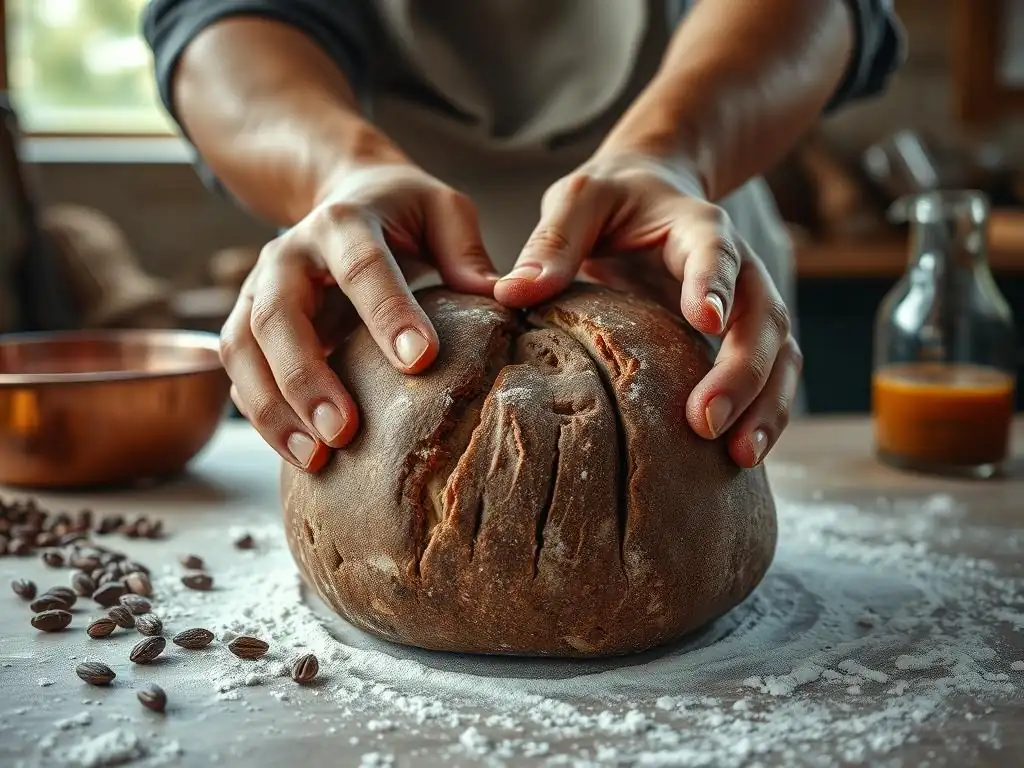
Hydration's Effect on Sourdough Rye Bread
Sourdough is a natural pairing for rye bread, as the acidity produced by the lactic acid bacteria in the starter helps to manage the enzymatic activity in rye flour. The hydration level of the dough significantly impacts the activity of the sourdough starter within the rye matrix. A wetter dough (higher hydration) generally promotes faster fermentation activity because the yeast and bacteria have easier access to the starches and sugars.
However, the sourdough starter itself also has a hydration level, and this contributes to the overall rye bread hydration of the final dough. When calculating hydration, remember to account for the water and flour in your starter. A 100% hydration starter (equal parts flour and water by weight) will contribute differently than a stiffer, lower-hydration starter. The starter's hydration and activity must be balanced with the dough's overall hydration for optimal fermentation and flavor development in sourdough rye bread.
Maintaining a Healthy Sourdough Starter for Rye Bread
To make great sourdough rye bread, you need a healthy and active sourdough starter. While many bakers maintain a wheat-based starter, you can also maintain a starter using exclusively rye flour, or a mix of rye and wheat. Rye flour is rich in nutrients that sourdough microorganisms thrive on, and a rye starter can be particularly vigorous.
Maintaining a rye starter involves regular feeding with fresh rye flour and water, typically at a 100% hydration level (equal weights of flour and water). A well-maintained rye starter should become bubbly and active within a few hours of feeding, indicating its readiness to leaven bread. The consistency of a rye starter will be different from a wheat starter at the same hydration – often more liquid and bubbly due to the pentosans. A healthy starter is crucial for achieving the desired rise and tangy flavor in your rye bread, regardless of the final dough's rye bread hydration levels.
Tips and Tricks for Perfect Rye Bread Hydration
Accurate Water Measurement for Rye Bread
Precision is important when it comes to rye bread hydration levels. Unlike some wheat doughs where you can rely more on feel, rye doughs are less forgiving of hydration errors due to their unique structure. Always measure your water and flour by weight using a kitchen scale for the most accurate results. Volume measurements (cups, tablespoons) can be imprecise, especially for flour, which can pack down differently.
Using a scale ensures you hit the target hydration percentage specified in your recipe. For example, if a recipe calls for 500g of rye flour and 400g of water, that's 400/500 = 0.8, or 80% hydration. Weighing both ingredients guarantees you achieve this exact ratio, providing a consistent starting point for your dough and helping you master those crucial rye bread hydration levels.
Temperature's Role in Hydration Control
The temperature of your water and your dough can slightly influence how quickly and effectively the flour absorbs water. Warmer water (around 90-100°F or 32-38°C) can help activate enzymes and speed up absorption, which can be beneficial, especially with coarser rye meals or in colder environments. However, very hot water can damage the flour's starches and pentosans, so avoid using boiling water unless specifically instructed by a recipe (e.g., for a scald).
The dough temperature during mixing and fermentation also impacts hydration. A warmer dough ferments faster and can sometimes feel stickier. Maintaining a consistent dough temperature throughout the process helps ensure predictable results regarding dough consistency and hydration. Aim for the dough temperature recommended in your recipe, often around 75-80°F (24-27°C) for fermentation.
Patience in Rye Bread Baking
Patience is perhaps the most important ingredient when working with rye bread hydration levels. Rye doughs require time for the pentosans and starches to fully absorb the water and for the dough to relax. Rushing the process can lead to a stiff, unmanageable dough or a dense, gummy crumb.
Allow adequate time for mixing (even if it's just a few minutes for high-hydration doughs), resting, and fermentation. Rye dough benefits from longer, slower fermentation periods, which not only develop flavor but also allow the hydration to equalize throughout the dough mass. Don't be tempted to add excessive flour if the dough feels sticky immediately after mixing; give it a rest, and you might find it becomes more manageable. Trust the process and the recipe's recommended rye bread hydration levels and timing.
Conclusion: Hydration - Key to Delicious Rye Bread
Mastering rye bread hydration levels is arguably the single most important factor in achieving successful and delicious rye bread. Due to the unique properties of rye flour, particularly its high pentosan content and low gluten, rye doughs behave fundamentally differently than wheat doughs. Understanding how much water rye flour absorbs and how this affects dough consistency, texture, and even flavor is essential for any baker venturing into the world of rye.
From the relatively lower hydration of light rye loaves to the extremely high hydration of traditional Pumpernickel, each style demands specific rye bread hydration levels to achieve its characteristic qualities. By accurately measuring ingredients, using appropriate techniques like pre-hydration, adjusting for flour type and environment, and troubleshooting common issues, you can confidently work with rye dough. Embrace the stickiness and the unique properties of rye, and you will be rewarded with incredibly flavorful, moist, and satisfying loaves that showcase the true potential of rye bread hydration.
Frequently Asked Questions
What is hydration in rye bread baking, and why is it important?
Hydration refers to the ratio of water to flour in a dough. In rye bread, it's crucial because rye flour absorbs water differently than wheat flour, impacting the dough's texture and the final crumb.
How does rye flour's unique composition affect hydration levels?
Rye flour contains pentosans, which absorb a significant amount of water. This means rye doughs often require higher hydration levels compared to wheat doughs to achieve a similar consistency.
What happens if my rye bread dough is under-hydrated?
Under-hydrated rye dough will be stiff and difficult to work with. The resulting bread will likely be dense, dry, and have a crumbly texture.
What are the signs of over-hydrated rye bread dough?
Over-hydrated rye dough will be extremely sticky and difficult to shape. It may also spread excessively during baking, leading to a flat, dense loaf.
What is a good starting point for rye bread hydration levels, and how can I adjust it?
A good starting point is around 75-85% hydration, but this can vary depending on the rye flour type. Adjust hydration based on the dough's feel and the recipe's instructions, adding water or flour gradually.
Final Reflection: The Transformative Power of Hydration in Rye Bread Baking
Understanding rye bread hydration is not merely a technical detail; it's the key that unlocks the full potential of this complex and rewarding grain. Mastering hydration allows bakers to move beyond simply producing edible loaves and instead craft truly exceptional breads, with textures and flavors that dance on the palate. This understanding is more relevant than ever, as the artisan bread movement continues to grow, demanding higher quality and more nuanced results from home bakers and professionals alike.
The journey of exploring rye bread hydration has been a deeply personal one, revealing the intricate relationship between water, flour, and time. It's a journey that mirrors the larger human experience of finding balance and harmony within seemingly disparate elements. The subtle shifts in texture, from a dense, almost cake-like crumb to an airy, open structure, are a testament to the power of precise control. The baker's touch is not just about skill, but about understanding the subtle language of ingredients.
This quote, while not directly about hydration, perfectly captures the essence of this exploration – a deep understanding of the ingredients and their interactions is crucial to achieving mastery.
Now, it's your turn. Consider the lessons learned here – the importance of precise measurement, the impact of different flour types, and the patience required for optimal fermentation. Don't just bake a loaf of rye; craft a loaf of rye. Experiment with different hydration levels, observe the changes, and discover the unique character that each percentage brings to your bread. Embrace the challenge, and you'll find yourself not just baking bread, but creating a truly personal and rewarding culinary experience.
Unleash Your Inner Baker: Master Rye Hydration!
Thanks for diving into the world of rye bread hydration with us! We hope you now feel more confident in tackling this unique baking challenge. Ready to put your new knowledge into practice?
- Bake a perfect rye loaf today! Experiment with different hydration levels and see how it affects the texture and flavor. Document your results—you might discover your signature rye recipe!
- Share your baking journey! Post a photo of your creation on social media and tag #BakeWithEaseRye. We'd love to see your results!
- Explore advanced rye techniques: Dive deeper into sourdough rye or explore different types of rye flour. The possibilities are endless!
What unique ingredient will you add to your next rye loaf to elevate its flavor profile? Let's discuss in the comments below!