
Why Acid Matters: Cream of Tartar's Crucial Role in Meringue Stability

Welcome to BakeWithEase, your partner in creating baking masterpieces! Ever wondered why some meringues stand tall and proud while others deflate into a sticky mess? Dive into the science behind perfect peaks and learn how a seemingly simple ingredient, cream of tartar, plays a crucial role in achieving unparalleled meringue stability. Prepare to unlock the secrets of this essential baking acid and elevate your meringue game to new heights.
- Understanding Meringue Stability: The Importance of Cream of Tartar
- The Science Behind Cream of Tartar and Meringue
- Cream of Tartar vs. Other Stabilizers: A Comparison
- Troubleshooting Meringue Issues: Cream of Tartar to the Rescue
- How to Use Cream of Tartar Effectively in Meringue Recipes
- Recipes Featuring Perfectly Stable Meringues Thanks to Cream of Tartar
- Advanced Meringue Techniques and Cream of Tartar
- Mastering Meringue: Tips and Tricks for Success
- Cream of Tartar: Your Key to Meringue Mastery
- Frequently Asked Questions
- Final Reflection: The Unexpected Power of a Simple Ingredient
- Unlock Your Meringue Mastery!
Understanding Meringue Stability: The Importance of Cream of Tartar
What is Meringue and Why is Stability Important?
Meringue is a delicate confection made by whipping egg whites, usually with sugar, until they form stiff peaks. It's a fundamental component in countless desserts, from airy pavlovas and light-as-air angel food cakes to fluffy pie toppings and crisp meringue cookies. At its core, meringue is a foam structure, where air bubbles are trapped within a network of denatured egg white proteins. The magic happens when whisking incorporates air into the liquid egg whites, causing the proteins (primarily albumin) to unfold and rearrange themselves around the air bubbles. This process is known as denaturation.
Stability is paramount for a successful meringue. A stable meringue holds its shape, whether it's piped onto a pie, spread as a frosting, or baked into a crisp shell. Without sufficient stability, the delicate foam structure can collapse, weep (release liquid), or fail to reach the desired volume and texture. An unstable meringue can ruin a dessert, leading to flat, soggy, or watery results instead of the light, airy, and firm structure we aim for. Achieving reliable meringue stability is a key skill for any baker, and understanding the role of ingredients like cream of tartar is crucial.
Cream of Tartar: The Secret Ingredient for Perfect Meringues
Often found in the spice aisle, cream of tartar is an acidic salt, specifically potassium bitartrate. It's a byproduct of winemaking and has been used in baking for centuries. While it might seem like a small addition, a pinch of cream of tartar can make a significant difference in the outcome of your meringue. It acts as a powerful stabilizer, helping the egg white proteins form a stronger, more resilient network capable of trapping and holding air effectively.
Adding cream of tartar to your egg whites before whipping helps to lower the pH. This slightly acidic environment assists in the denaturation of the egg white proteins, allowing them to unfold more readily and create a more robust protein matrix. This improved structure is less likely to collapse and more capable of holding its shape, which is essential for achieving that desirable volume and maintaining it during baking or chilling. Think of it as reinforcing the delicate protein walls holding up your airy creation.
The Science Behind Cream of Tartar and Meringue
How Cream of Tartar Impacts Egg White Proteins
Egg whites are primarily composed of water (around 90%) and protein (around 10%). The main protein is albumin, which exists in a coiled, globular structure. When you whisk egg whites, mechanical energy causes these protein molecules to denature – they unfold. As they unfold, they expose hydrophobic (water-repelling) and hydrophilic (water-attracting) parts. These proteins then rearrange themselves at the air-water interfaces, with the hydrophobic parts facing the air bubbles and the hydrophilic parts facing the water. This forms a protein film around each air bubble, creating the foam structure.
Cream of tartar, being an acid, lowers the pH of the egg whites. Egg white proteins are sensitive to pH changes. In a slightly acidic environment (like one created by adding cream of tartar), the proteins' native structure is disrupted more easily, promoting faster and more complete denaturation. This leads to a more extensive unfolding and cross-linking of the protein molecules, creating a denser, stronger, and more stable protein network around the air bubbles. This enhanced structure is what gives meringue its ability to hold stiff peaks and resist collapse.
Cream of Tartar's Role in pH and Meringue Structure
The pH of fresh egg whites is typically slightly alkaline, around 7.6 to 8.0. As egg whites age, the pH can rise even higher, sometimes reaching 9.0 or more. While egg whites will whip into a foam at these higher pH levels, the resulting meringue tends to be less stable and more prone to weeping and collapse. This is because the protein structure formed at higher pH is weaker.
Adding an acid like cream of tartar lowers the pH of the egg whites, bringing it closer to the optimal range (generally considered slightly acidic, though the exact ideal pH for whipping stability is complex and debated, it's significantly lower than the natural alkaline state). This lower pH environment facilitates the correct unfolding and bonding of proteins, leading to a tighter, more stable foam structure.
The acidic conditions also help prevent the proteins from clumping together too tightly (coagulating prematurely), which can happen in alkaline conditions and result in a less voluminous, grainy meringue. This precise control over protein behavior is key to achieving reliable cream of tartar meringue stability.
Preventing Common Meringue Problems with Cream of Tartar
Two of the most frustrating issues bakers face with meringue are weeping and collapse. Weeping occurs when the protein structure breaks down and releases liquid (syneresis), leaving a pool of sugary liquid at the base of the meringue. Collapse is when the meringue loses its volume and deflates, either before or after baking. Both are signs of an unstable foam structure.
Cream of tartar directly addresses the root cause of these problems by strengthening the protein network. A more robust protein matrix is better equipped to hold onto the trapped air and the water within the foam, significantly reducing the likelihood of weeping. Similarly, a stronger structure is more resistant to gravity and the stresses of handling or baking, preventing the meringue from collapsing. Using cream of tartar for meringue stability is a proactive step to ensure your delicate foam holds up beautifully.
Cream of Tartar vs. Other Stabilizers: A Comparison
Cream of Tartar vs. Lemon Juice for Meringue
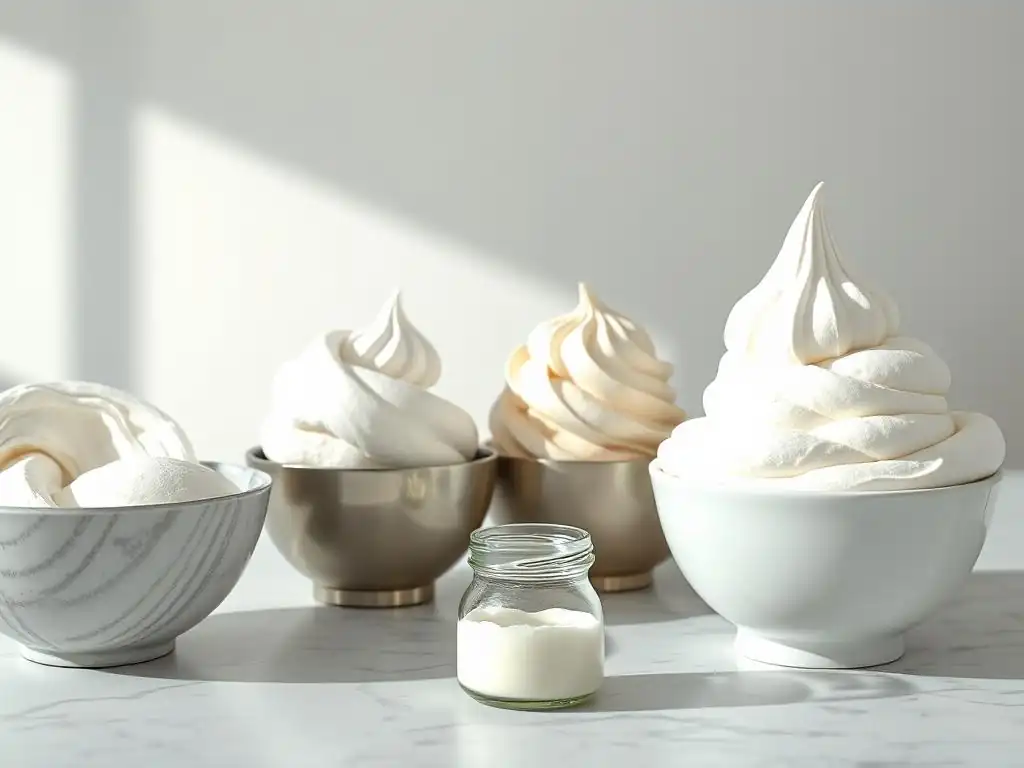
Lemon juice is another common acidic ingredient used to stabilize meringue. Like cream of tartar, it lowers the pH of egg whites, helping to denature proteins and create a more stable foam. A common substitution is about double the amount of lemon juice compared to cream of tartar (e.g., 1 teaspoon lemon juice for ½ teaspoon cream of tartar), though this is an approximation as lemon juice acidity varies.
While effective, lemon juice introduces moisture and a distinct citrus flavor. For some applications, like lemon meringue pie, this flavor is desirable. However, for delicate meringues where a neutral taste is preferred, or where excess moisture could be detrimental (like crisp baked meringues), cream of tartar is often the superior choice. Cream of tartar is a dry powder and has a neutral taste in the small quantities used for meringue, making it versatile across many recipes. The dry nature also contributes less liquid to the mix, which is beneficial for achieving a very crisp texture when baking.
Cream of Tartar vs. Vinegar in Meringue Recipes
Vinegar, typically white vinegar, is another acidic option that can be used to stabilize meringue. Similar to lemon juice, it works by lowering the pH of the egg whites. The substitution ratio is generally similar to lemon juice, roughly double the amount of vinegar compared to cream of tartar (e.g., 1 teaspoon vinegar for ½ teaspoon cream of tartar).
Vinegar is often chosen for its low cost and availability. However, like lemon juice, it introduces liquid and can potentially impart a noticeable flavor, particularly if too much is used. While the acetic acid in vinegar is effective at stabilizing the proteins, the distinct smell and taste of vinegar can sometimes be undesirable in a delicate meringue. Cream of tartar remains the preferred choice for many bakers seeking maximum meringue stability without adding unwanted flavor or excess moisture. Its reliability in promoting cream of tartar meringue stability is unmatched by these liquid alternatives in many contexts.
Choosing the Right Stabilizer for Your Meringue
The best stabilizer depends on the specific recipe and desired outcome. For most applications where maximum volume, crispness, and a neutral flavor are paramount, cream of tartar is the gold standard for promoting meringue stability. Its dry form and neutral taste make it incredibly versatile.
If a recipe already incorporates lemon flavor, like a lemon meringue pie, using lemon juice as a stabilizer can be a convenient and flavorful option. Vinegar can be a last resort if neither cream of tartar nor lemon juice is available, but be mindful of potential flavor impact. For professional results and consistent cream of tartar meringue stability across a wide range of uses, from pavlovas to frostings, cream of tartar is generally the recommended choice. Its predictable acidity and lack of added liquid or flavor make it the most reliable stabilizer for achieving perfect meringue every time.
Troubleshooting Meringue Issues: Cream of Tartar to the Rescue
Solving Weeping Meringue Problems with Cream of Tartar
Weeping is a common and frustrating issue where a meringue topping or component starts to leak a sugary liquid. This often happens with baked meringues, especially on pies, and indicates that the protein structure wasn't strong enough to hold onto the moisture. It can be caused by under-beating, over-beating, humidity, or inadequate stabilization.
Adding cream of tartar significantly improves the protein network's ability to trap and hold moisture. By promoting better denaturation and cross-linking of the egg white proteins, cream of tartar creates a tighter, more resilient structure that is far less likely to break down and release liquid. For example, a typical recipe for meringue topping might use ½ teaspoon of cream of tartar for 4-6 egg whites. Including this small amount drastically reduces the chances of encountering weeping, ensuring your meringue stays fluffy and dry on top of your pie.
Preventing Collapsed Meringue: The Cream of Tartar Solution
Meringue can collapse for several reasons: under-beating (not enough air incorporated or structure built), over-beating (proteins become too tightly clumped and brittle), adding sugar too quickly, or insufficient stabilization. A collapsed meringue loses its volume and airy texture, resulting in a dense or flat layer instead of a light, lofty one.
Cream of tartar addresses this by strengthening the protein structure, making it more resistant to deflation. The robust network created with the help of cream of tartar can better support the trapped air bubbles, preventing them from escaping and causing the meringue to sink. This is particularly important for meringues that are piped into shapes or baked, where maintaining volume and structure is critical. Using cream of tartar for meringue stability helps build a foundation strong enough to withstand the demands of shaping and baking.
Achieving Stiff Peaks: Mastering Cream of Tartar Usage
Achieving stiff, glossy peaks is the hallmark of properly whipped meringue. Stiff peaks stand straight up when the whisk is lifted and indicate that the protein structure is strong enough to hold its shape. Without sufficient stabilization, egg whites might reach soft or medium peaks but fail to hold stiff peaks, or the peaks might collapse quickly.
Cream of tartar accelerates and improves the whipping process, making it easier to achieve stable stiff peaks. The acid helps the proteins denature and form a stronger network more quickly. This means you're less likely to over-beat the meringue in an attempt to reach stiff peaks, which can lead to a brittle, unstable structure.
A typical ratio is around ⅛ to ¼ teaspoon of cream of tartar per egg white, or about ½ teaspoon for 4-6 egg whites. Using cream of tartar helps ensure that when you reach stiff peaks, they are truly stiff and capable of holding their form, showcasing excellent cream of tartar meringue stability.
How to Use Cream of Tartar Effectively in Meringue Recipes
Measuring Cream of Tartar for Optimal Meringue Stability
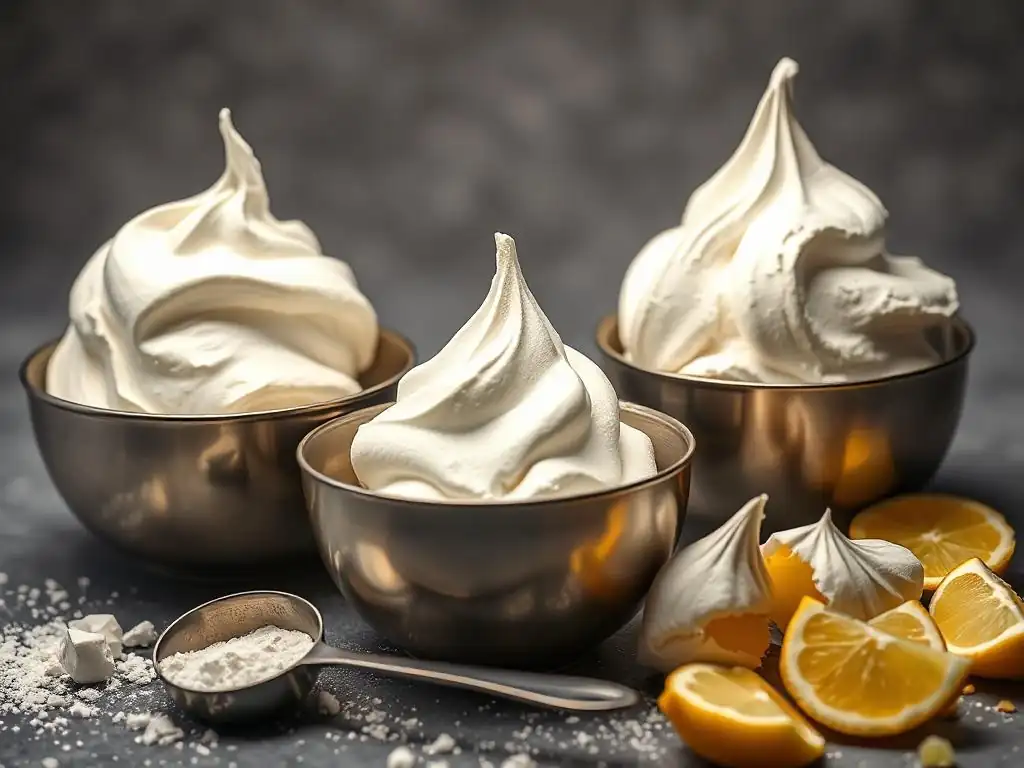
Precision in measuring cream of tartar is important, though the exact amount can vary slightly depending on the recipe and the number of egg whites. A general guideline is to use about ⅛ to ¼ teaspoon of cream of tartar per large egg white. For recipes using multiple egg whites, this often translates to ½ teaspoon for 4-6 large egg whites.
Using too little cream of tartar might not provide sufficient stabilization, leading to weeping or collapse. Using too much can potentially give the meringue a slightly metallic or chalky taste, although this is less common with cream of tartar than with some other acids. Always refer to your specific recipe's recommendation, but if none is given, the ½ teaspoon per 4-6 egg white rule is a good starting point for achieving reliable cream of tartar meringue stability.
When to Add Cream of Tartar During the Meringue Process
The optimal time to add cream of tartar is at the beginning of the whipping process, after the egg whites have started to become foamy but before they reach soft peaks. This allows the acid to disperse evenly throughout the egg whites and begin its work of lowering the pH and assisting protein denaturation early on.
Adding it too early, before any foam has formed, might hinder the initial aeration slightly. Adding it too late, after stiff peaks have already formed, will have less impact on the overall structure and stability, as the protein network is already largely established. So, wait until you see small bubbles and the egg whites are starting to look opaque and slightly voluminous, then sprinkle in the cream of tartar before gradually adding the sugar. This timing maximizes the benefit of cream of tartar for meringue stability.
Cream of Tartar Substitutes: What to Do if You Don't Have It
If you find yourself without cream of tartar but need to make meringue, you can substitute other acidic ingredients, although results may vary slightly. As mentioned, lemon juice and white vinegar are the most common liquid substitutes. Use approximately twice the amount of lemon juice or white vinegar as you would cream of tartar. For example, if a recipe calls for ½ teaspoon of cream of tartar, use 1 teaspoon of lemon juice or white vinegar.
Keep in mind that these liquid substitutes add moisture and can impart flavor. While they provide acidity to help stabilize the proteins, they might not yield quite the same level of stability or crispness as cream of tartar, especially in baked meringues. For the best and most consistent cream of tartar meringue stability, having this pantry staple on hand is highly recommended. If substituting, be prepared for slight differences in texture or flavor.
Recipes Featuring Perfectly Stable Meringues Thanks to Cream of Tartar
Classic Lemon Meringue Pie Recipe
A classic lemon meringue pie relies heavily on a stable meringue topping that holds its lofty shape and doesn't weep onto the tangy lemon filling. Cream of tartar is indispensable in achieving this. A typical recipe calls for 4-6 egg whites for the meringue topping. Adding ½ teaspoon of cream of tartar to these egg whites before whipping ensures that the meringue whips up beautifully, holds its peaks when piped, and bakes into a light, slightly crisp topping that resists shrinking and weeping.
The acid from the cream of tartar works synergistically with the heat of the oven to set the protein structure, creating a stable barrier over the lemon curd. Without cream of tartar, the meringue is much more likely to collapse or "sweat" liquid, ruining the texture and appearance of the pie. This dessert is a prime example of the practical benefits of using cream of tartar for meringue stability.
Seven-Minute Frosting Recipe with Cream of Tartar
Seven-minute frosting, also known as boiled icing or divinity frosting, is a light, fluffy, cooked meringue frosting. It's made by whisking egg whites, sugar, and usually water over a double boiler until it reaches a specific temperature (often around 160-165°F or 71-74°C), then whipping it until thick and glossy. Cream of tartar plays a vital role in this recipe, even though it's a cooked meringue.
Adding cream of tartar (typically around ¼ to ½ teaspoon for 2-3 egg whites) helps the egg whites whip up faster and achieve greater volume and stability before and during the cooking process. The heat helps to further set the proteins, but the initial stability provided by the cream of tartar ensures a robust structure capable of trapping a large amount of air. This results in a light, airy, and stable frosting that holds its shape when spread or piped onto cakes and cupcakes, preventing it from becoming a runny or deflated mess.
Angel Food Cake Recipe with Perfect Meringue Structure
Angel food cake is essentially a large, lightly sweetened baked meringue. Its signature light and airy texture comes entirely from the whipped egg whites; it contains no chemical leaveners like baking soda or powder. Achieving a tall, tender, and evenly textured angel food cake depends almost entirely on the stability of the egg white foam.
Cream of tartar is a crucial ingredient in angel food cake recipes, typically used in a ratio of about 1 teaspoon per 12-14 egg whites. It helps the egg whites achieve maximum volume and, more importantly, creates a strong, stable protein matrix capable of supporting the cake's structure as it bakes and cools (often upside down). The acid helps the proteins set properly in the heat of the oven, preventing the cake from collapsing. The use of cream of tartar for meringue stability is non-negotiable for a successful angel food cake, ensuring that light, ethereal texture is achieved.
Advanced Meringue Techniques and Cream of Tartar
Italian Meringue and the Benefits of Cream of Tartar
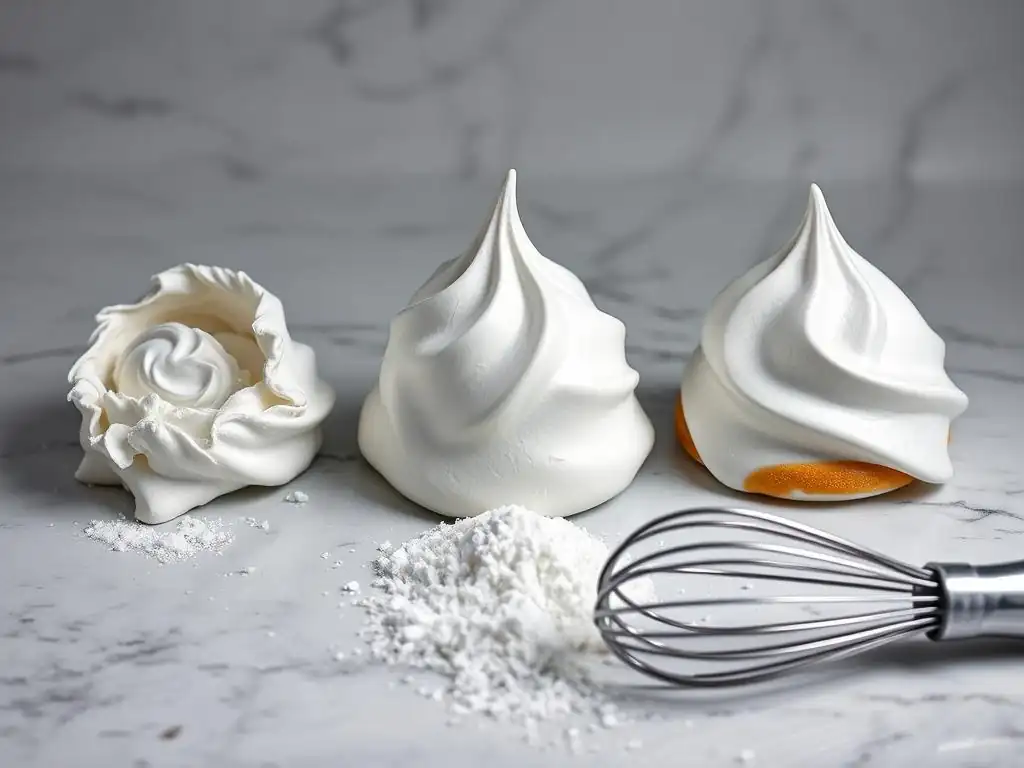
Italian meringue is made by slowly pouring hot sugar syrup (heated to a specific temperature, usually 240-245°F or 115-118°C) into whipping egg whites. This cooking process makes Italian meringue very stable and safe to eat raw, often used for buttercream, mousses, or as a frosting. While the hot syrup provides significant stability by cooking the proteins, cream of tartar can still offer benefits.
Adding a small amount of cream of tartar (e.g., ⅛ teaspoon per 2-3 egg whites) to the egg whites before whipping them can help them whip up faster and achieve a good initial volume before the hot syrup is added. This gives you a better base for incorporating the syrup smoothly and ensures the proteins are receptive to the heat. While not as strictly necessary for stability as in French meringue, cream of tartar can contribute to a smoother, more consistent Italian meringue texture and slightly enhance its overall stability, showcasing its versatility in different meringue types.
French Meringue: Maximizing Stability with Cream of Tartar
French meringue is the simplest type, made by whipping egg whites with sugar until stiff peaks form. It's often used for baked items like meringue cookies, pavlovas, or as a base for mousses. Because it's uncooked (unless baked), French meringue is the least stable type and the most prone to weeping and collapse. This is where cream of tartar is arguably most critical.
In French meringue, cream of tartar (typically ½ teaspoon per 4-6 egg whites) is essential for creating a strong enough protein structure to hold the air and sugar without collapsing, especially when baked. It significantly improves the meringue's ability to hold stiff peaks and resist shrinking and cracking during baking. Maximizing cream of tartar meringue stability is key to successful French meringue, ensuring light, crisp results rather than flat, sticky failures.
Swiss Meringue: Achieving Silky Smoothness and Structure
Swiss meringue is made by whisking egg whites and sugar together over a double boiler until the sugar is dissolved and the mixture is warm (around 130-140°F or 54-60°C), then removing it from the heat and whipping until stiff, glossy peaks form. The gentle heating process partially cooks the egg whites, making Swiss meringue more stable than French meringue but less stable than Italian. It's known for its smooth, silky texture, often used for frostings and buttercreams.
Cream of tartar (around ¼ teaspoon per 4-5 egg whites) can still enhance Swiss meringue stability. Adding it to the egg white and sugar mixture before heating helps the proteins denature more efficiently as they warm. This leads to a more robust protein structure capable of holding the meringue's volume and silky texture during whipping. The result is a more reliable Swiss meringue that is less likely to deflate, providing a smoother, more stable base for subsequent uses.
Mastering Meringue: Tips and Tricks for Success
Achieving the Perfect Texture: Cream of Tartar Dosage
The perfect meringue texture is light, airy, and either soft and glossy (for frostings) or crisp and dry (for baked items). The correct dosage of cream of tartar plays a significant role in achieving this. As a general guideline, ½ teaspoon of cream of tartar for 4-6 large egg whites is a common and effective amount for most meringues, providing excellent cream of tartar meringue stability without imparting a noticeable taste.
Using too little might result in a weaker structure, leading to a less voluminous or potentially weeping meringue. Using significantly more than recommended could potentially affect the taste, although this is rare in typical meringue quantities. Always start with the recommended amount in your recipe, or use the ½ teaspoon per 4-6 egg whites rule as a reliable base. Adjusting slightly based on humidity or specific recipe requirements might be necessary with experience, but this dosage provides a solid foundation for success.
Baking Meringue: Temperature and Time Considerations
Baking meringue is less about "cooking" it and more about "drying" it out to achieve a crisp texture. Low temperatures and long baking times are key. Temperatures typically range from 200°F to 250°F (90°C to 120°C). The exact time depends on the size and thickness of the meringue, ranging from 1 hour for small cookies to 2-3 hours or more for larger shapes or pavlovas.
Cream of tartar's role in baked meringue stability is crucial here. The strong protein network it helps create is essential for the meringue to hold its shape and height throughout the long, slow drying process in the oven. It minimizes shrinkage and cracking, resulting in a beautifully shaped, crisp, and dry meringue. Baking until the meringue is easily lifted from the parchment paper and feels dry to the touch indicates it's done. Leaving it to cool completely inside the turned-off oven further helps prevent cracking and ensures internal dryness.
Storing Meringue: Maintaining Crispness and Stability
Baked meringues are highly susceptible to moisture from the air. Humidity can quickly turn a crisp meringue into a sticky, chewy mess. Proper storage is essential to maintain their texture and the cream of tartar meringue stability you worked hard to achieve.
Once completely cooled, baked meringues should be stored in an airtight container at room temperature. Avoid refrigerating them, as the cold environment often has higher humidity than the air outside the fridge, leading to softening. If you need to store meringues for more than a day or two, consider adding a layer of paper towels to the bottom of the container to absorb any residual moisture. Properly stored, crisp meringues can last for several days while retaining their texture and structural integrity.
Cream of Tartar: Your Key to Meringue Mastery
Baking with Confidence: Achieving Stable Meringues Every Time
Mastering meringue can feel daunting, but understanding the science behind it and utilizing key ingredients like cream of tartar empowers you to bake with confidence. Cream of tartar isn't just another ingredient; it's a powerful ally in the quest for perfect meringue stability. By helping the egg white proteins form a strong, resilient network, it ensures your meringues whip up beautifully, hold their shape, resist weeping, and bake to perfection.
Whether you're whipping up a simple French meringue for cookies, crafting a silky Swiss meringue frosting, or building a towering Italian meringue structure, incorporating cream of tartar significantly increases your chances of success. It simplifies the process by making the egg whites more forgiving and the resulting foam more robust. Embrace the science, add that pinch of cream of tartar, and watch your meringues transform from potentially finicky foams into consistently stable, glorious creations.
The Essential Role of Acid in Baking Success
While we've focused on cream of tartar and meringue, the principle of using acid to influence protein structure and leavening is fundamental in many areas of baking. Acids like cream of tartar, lemon juice, vinegar, buttermilk, and yogurt play diverse roles, from activating baking soda to tenderizing doughs and, as we've seen, stabilizing foams.
In the realm of meringue, acid's role in lowering pH and facilitating protein denaturation is essential for achieving the desired volume, texture, and, most importantly, cream of tartar meringue stability. It's a classic example of how a small chemical adjustment can have a profound impact on the physical outcome of a bake. Understanding and utilizing the power of acids like cream of tartar elevates your baking skills and allows you to achieve professional-quality results consistently.
Frequently Asked Questions
What is cream of tartar, and why is it important in meringue?
Cream of tartar is an acidic byproduct of winemaking. It's important in meringue because it helps to stabilize the egg whites and prevent them from collapsing.
How does cream of tartar contribute to meringue stability?
Cream of tartar lowers the pH of the egg whites, making them more stable. This allows the whites to hold their shape better when whipped and baked.
Can I make meringue without cream of tartar?
While possible, it's not recommended for optimal stability. You can try using other acids like lemon juice or vinegar but the result may be less stable and not as long lasting.
How much cream of tartar should I use in my meringue recipe?
Generally, a 1/8 teaspoon per egg white is a good starting point. Adjust slightly based on the specific recipe and desired texture.
What happens if I use too much cream of tartar in my meringue?
Using too much cream of tartar can result in a dry, brittle meringue with a slightly tart taste. It can also inhibit proper browning, so adhere to the recommended amount.
Final Reflection: The Unexpected Power of a Simple Ingredient
The seemingly humble cream of tartar plays a far more significant role in baking than many realize; its impact on meringue stability is nothing short of transformative. Understanding this seemingly small detail unlocks a world of perfectly formed, glossy, and stable meringues, elevating baking from a frustrating endeavor to a consistently rewarding experience. This knowledge, once grasped, empowers bakers of all levels to achieve consistent results and unlock their creative potential.
The journey of understanding cream of tartar's influence on meringue stability has been a fascinating exploration into the chemistry of baking. It highlights how seemingly insignificant ingredients can have profound effects on the final product. The devil is in the details,
a phrase often used in baking, perfectly encapsulates the importance of understanding the fundamental principles behind each ingredient. This exploration underscores the importance of appreciating the science behind culinary arts, moving beyond simple recipes to a deeper understanding of the processes involved.
Consider this: the next time you whip egg whites, remember the power held within those tiny crystals of cream of tartar. Don't just follow a recipe; understand why it works. Experiment, explore, and discover the subtle nuances that elevate your baking to the next level. Embrace the science, appreciate the art, and unlock the magic within every ingredient. The perfectly stable meringue, a testament to your understanding, awaits.
Unlock Your Meringue Mastery!
Thanks for diving into the world of meringue stability with us! You've now learned the secrets to achieving those perfect, glossy peaks. Ready to put your new knowledge into practice?
- Whip up a batch of your favorite meringue recipe, using your newfound cream of tartar wisdom. Observe the difference!
- Share your meringue successes (or even your meringue mishaps!) with us on social media using #BakeWithEaseMeringues – we'd love to see them!
- Explore other BakeWithEase articles on baking techniques to further enhance your skills.
Now, tell us: What's your favorite meringue-based dessert to bake, and what’s your biggest meringue challenge?