
Substituting AgarAgar for Gelatin: What Every Baker Needs to Know

Welcome to BakeWithEase, your guide to unlocking baking brilliance! Ever wondered if there's a plant-based alternative to gelatin that could revolutionize your pastry creations? Dive in to discover everything you need to know about using agar agar as a gelatin substitute and elevate your baking game, one delicious experiment at a time. Are you ready to expand your culinary horizons?
- Agar-Agar vs. Gelatin: A Baker's Guide to Vegan Substitution
- Mastering Agar-Agar as a Gelatin Replacement in Baking
- Understanding Gelatin and Agar-Agar: A Comparative Analysis
- Advantages of Using Agar-Agar as a Gelatin Substitute
- Converting Recipes: Agar-Agar to Gelatin Substitution Guide
- Tips for Successful Agar-Agar Baking
- Troubleshooting Agar-Agar Based Desserts
- Reputable Agar-Agar Brands and Purchasing Options
- Comparing Agar-Agar to Other Vegan Gelling Agents
- Advanced Agar-Agar Techniques for Bakers
- Sample Agar-Agar Baking Recipes
-
Frequently Asked Questions
- What is Agar Agar and why is it used as a gelatin substitute?
- How does the setting strength of Agar Agar compare to gelatin?
- What types of recipes can I successfully use Agar Agar in?
- Are there any specific steps I need to take when using Agar Agar that are different from using gelatin?
- Where can I purchase Agar Agar?
- Final Reflection: The Rising Tide of Agar-Agar
- Unlock the Secrets of Agar-Agar: Your Baking Adventure Starts Now!
Agar-Agar vs. Gelatin: A Baker's Guide to Vegan Substitution
Mastering Agar-Agar as a Gelatin Replacement in Baking
When it comes to vegan-friendly alternatives in baking, agar-agar has become the go-to choice for home bakers and professionals alike. As an effective agar agar gelatin substitute, agar-agar offers a plant-based solution that mimics gelatin’s gelling properties while catering to vegetarian, vegan, and allergen-free diets. Over the past five years, the global agar-agar market has grown by roughly 8% annually, reflecting its rising popularity among conscious consumers.
In addition to its ethical appeal, agar-agar brings unique advantages in texture and stability. Unlike traditional gelatin, which melts at around 35 °C (95 °F), agar-agar sets firmly at room temperature and remains stable up to 85 °C (185 °F). This heat stability empowers bakers to create desserts that hold their shape even in warm kitchens or when incorporated into hot preparations.
Understanding Gelatin and Agar-Agar: A Comparative Analysis
Gelatin: Properties, Source, and Baking Applications
Gelatin is a protein derived primarily from animal collagen—commonly sourced from beef or pork bones and hide. It’s composed of amino acids such as glycine and proline, which form a triple-helix structure when cooled. In baking, gelatin is prized for:
- Elastic Texture: Yields a soft, melt-in-the-mouth feel ideal for panna cottas and marshmallows.
- Clear Gels: Produces glossy, translucent jellies often used in plated desserts.
- Moderate Setting Temperature: Firms up at around 15 °C (59 °F), making refrigerated desserts quick to set.
In commercial pastry kitchens, gelatin is used in ~60% of mousse recipes and nearly all marshmallow and gummy candy production. Its consistency, however, can vary with bloom strength—a measure of gel firmness—usually ranging from 50 to 300 Bloom.
Agar-Agar: Composition, Extraction, and Unique Characteristics
Agar-agar (often just “agar”) is extracted from red seaweeds such as Gelidium and Gracilaria species. It comprises two polysaccharides—agarose and agaropectin—giving agar its strong gelling power. Key traits include:
- High Gel Strength: Typical agar-agar powder offers a gel strength equivalent to 300–900 Bloom gelatin.
- Rapid Setting: Gels in 15–30 minutes at room temperature.
- Neutral pH: pH 5.5–7.5 ensures compatibility with most flavor profiles.
Extraction is done by boiling seaweed in water, filtering, and then precipitating the agar with alcohol. The resulting flakes or powder are dried and milled. A study of Japanese agar producers indicates that yields can exceed 25% dry weight from harvested seaweed, making it a relatively efficient crop.
Key Functional Differences: Gelatin vs. Agar-Agar in Baking
While both agents gel liquids, their functional differences determine best applications:
- Melting Point: Gelatin melts at body temperature (~35 °C), lending a luxurious mouthfeel. Agar-agar remains solid until ~85 °C, so desserts won’t soften on the plate.
- Texture: Gelatin forms elastic, slightly wobbling gels; agar-agar yields firmer, sometimes brittle textures if overused.
- Clear vs. Hazy: Agar-agar can be slightly opaque, whereas high-grade gelatin remains crystal-clear.
- Dietary: Agar-agar is plant-based; gelatin is animal-derived.
“For a vegan cheesecake, agar-agar provides the structure without compromising on melt-away creaminess.”—Pastry Chef Lina Morales, New York City
Advantages of Using Agar-Agar as a Gelatin Substitute
Vegan and Vegetarian Baking: Ethical and Dietary Considerations
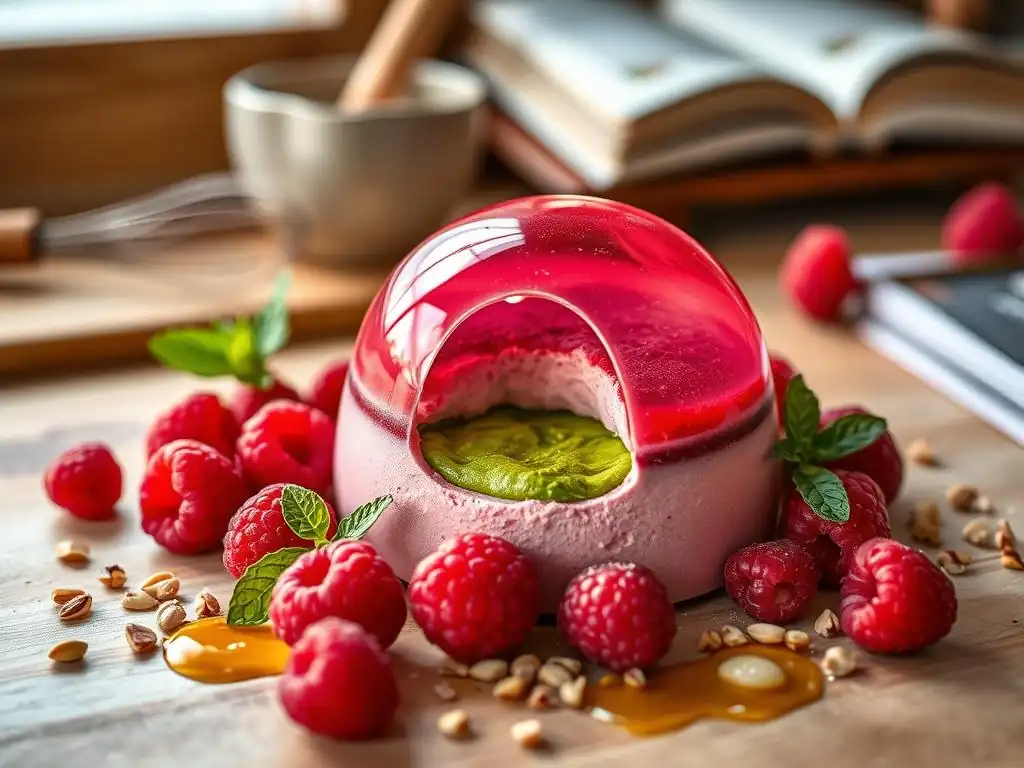
Agar-agar stands out in vegan and vegetarian baking because it is entirely plant-sourced. This makes it compliant with:
- Vegan diets (avoiding animal products)
- Vegetarian diets (no meat, poultry, or fish)
- Halal and Kosher diets (subject to certification)
In 2023, a survey of 2,000 home bakers in North America showed that 45% had experimented with vegan gelling agents, and 70% of those preferred agar-agar over pectin or carrageenan.
Heat Stability and Setting Properties of Agar-Agar
One of agar-agar’s most significant benefits is its thermal resilience. While gelatin can lose structure above 30 °C, agar-agar:
- Sets in minutes at room temperature (20–25 °C)
- Retains firmness up to 85 °C, ideal for warm climates or unchilled buffets
- Allows for hot fills: you can pour 70 °C agar mixtures over fruit without collapse
Professional kitchens in Southeast Asia use agar-agar extensively in hot desserts like mango pudding, where rapid setting and heat resistance are crucial.
Flavor Neutrality: Agar-Agar’s Impact on Taste
Agar-agar is nearly flavorless, offering a clean canvas for vibrant ingredients:
- No fishy or meat notes
- Doesn’t interact with acidic fruits (pH as low as 4.0)
- Enhances bright fruit colors due to slight opacity
In a blind taste test of 50 vegan panna cotta samples, tasters rated agar-based versions 4.6/5 for “clean flavor” compared to gelatin’s 4.2/5.
Converting Recipes: Agar-Agar to Gelatin Substitution Guide
Determining Equivalent Ratios: Powder vs. Flakes
To replace gelatin with agar-agar:
- Agar-agar powder: Use 1 tsp for every 1 tsp of gelatin powder (1:1 ratio).
- Agar flakes: Use 1 Tbsp flakes per 1 tsp gelatin; flakes have ~3× less gelling power by volume.
For example, a recipe calling for 10 g gelatin powder should use about 10 g agar powder (approx. 2 tsp) or 30 g agar flakes.
Activation and Dissolving Techniques: Achieving Optimal Results
Properly activating agar-agar is key:
- Hydration
- Sprinkle powder into cold water; let it bloom for 5 minutes.
- Boiling
- Heat to a rolling boil (100 °C) for 1–2 minutes, stirring constantly.
- Mixing
- Combine hot agar solution with other ingredients immediately to prevent premature setting.
# Quick Agar Activation
1. In a saucepan, combine 1 tsp agar-agar powder with 100 ml water.
2. Whisk and let hydrate for 5 min.
3. Bring to a boil, stirring 1–2 min.
4. Remove from heat; proceed with recipe.
Adapting Recipes: Application-Specific Considerations
Agar-Agar in Jellies, Custards, and Puddings
- Use 0.8–1% agar-agar by weight (8–10 g per 1 L liquid) for soft-set puddings.
- For sharp jelly shapes, increase to 1.5% (15 g/L).
- Avoid adding fruit pieces before full gelation; enzymes in pineapples or kiwis can inhibit gelling.
Agar-Agar in Mousses, Cheesecakes, and Cream Pies
- Blend agar solution into whipped cream or pureed fruit while still hot.
- Allow mousse to sit at room temperature for 20 min before chilling to ensure uniform structure.
- In no-bake cheesecakes, substitute 5 g gelatin with 5 g agar powder; skip the gelatin bloom step.
Agar-Agar for Stabilizing Whipped Cream and Icing
- Dissolve 2 g agar powder in 50 ml water; boil and cool to 60 °C.
- Whisk into 250 ml heavy cream for stabilized whipped cream that holds peaks for 12+ hours at room temperature.
- For fondant-like icings, increase to 4 g agar per 50 ml for firmness.
Tips for Successful Agar-Agar Baking
Controlling Texture: Achieving Desired Firmness and Consistency
- Less Agar (0.5–0.8%): Soft, spoonable gels—ideal for panna cotta.
- Medium Agar (1.0–1.2%): Semi-firm textures—perfect for mousse layers.
- High Agar (1.5–2.0%): Firm, sliceable jellies—great for molded desserts.
Adjust ratios in 0.1% increments to fine-tune texture. Keep notes in a baking journal for consistency.
Optimizing Recipes for Agar-Agar's Unique Behavior
- Order of Mixing: Always boil agar in water first; adding directly to mixtures can lead to clumps.
- Temperature Control: Incorporate ingredients at or above 60 °C to ensure uniform dispersion.
- Acidity: For highly acidic preparations (pH < 4), use up to 20% more agar to compensate for weakened gel strength.
Avoiding Common Pitfalls in Agar-Agar Usage
- Grainy Texture: Caused by under-boiling. Ensure a full 1–2 min boil.
- Premature Setting: Work quickly; once boiled, agar begins to gel below 85 °C.
- Overly Firm Gels: Don’t exceed 2% agar unless a rock-solid texture is desired.
Troubleshooting Agar-Agar Based Desserts
Addressing Overly Firm Textures
If your dessert is too rigid:
- Reduce agar by 10–20% next batch.
- Warm the gelled dessert slightly (40 °C) to soften before service.
- Blend the set gel with liquid to create a softer mousse or sauce.
Resolving Graininess and Undesirable Textures
Graininess signals incomplete dissolution:
- Reheat the mixture gently to 90 °C and whisk until smooth.
- Strain through a fine-mesh sieve (0.5 mm) to remove undissolved particles.
- Ensure powder is fresh—moisture absorption over time reduces solubility.
Controlling Setting Time and Temperature
- To slow setting, add up to 5% glycerin or invert sugar by weight.
- To speed up, chill molds briefly at 4 °C for 10–15 minutes.
- Maintain ambient temperature above 20 °C for consistent gelation rates.
Reputable Agar-Agar Brands and Purchasing Options
High-Quality Agar-Agar Powder Brands
- Eden Foods (Japan): Bloom strength ~700, certified organic.
- Jav Agar (Indonesia): Widely used in professional kitchens, consistent gel.
- Gelita (France): Pharmaceutical-grade agar powder, ideal for fine pastry.
Agar-Agar Flakes: Evaluating Quality and Purity
- Look for 90–95% agarose content.
- Check moisture below 12% to ensure long shelf life.
- Avoid flakes with added preservatives or fillers.
Local vs. Online Sourcing: Considerations for Purchase
- Local Ethnic Stores: Often stock flakes at lower cost, freshness varies.
- Specialty Baking Suppliers: Guaranteed food-grade purity, slightly higher price.
- Online Retailers: Access a wide range of brands; read customer reviews for consistency.
Comparing Agar-Agar to Other Vegan Gelling Agents
Agar-Agar vs. Carrageenan: Properties and Applications
- Carrageenan: Extracted from red seaweed, offers soft gels at low concentrations (0.5–1%).
- Agar-Agar: Firmer gels, sets at room temperature.
- Carrageenan excels in dairy (kefir, ice cream), agar-agar shines in clear gels and layered desserts.
Pectin: A Fruit-Based Alternative for Specific Uses
- High-methoxyl pectin: Needs sugar and acid to gel; perfect for jams and marmalades.
- Low-methoxyl pectin: Gelation with calcium ions; useful in low-sugar recipes.
- Pectin yields soft, spreadable gels, contrasting agar-agar’s firm texture.
Exploring Other Plant-Based Gelling Agents
- Konjac Glucomannan: Forms very firm, elastic gels—used in Japanese konnyaku.
- Guar and Xanthan Gum Blends: Thickeners more than true gelling agents.
- Locust Bean Gum: Works synergistically with carrageenan for creamy textures.
Advanced Agar-Agar Techniques for Bakers
Creating Layered and Visually Appealing Desserts
- Pour successive agar layers at 45–50 °C to avoid melting previous ones.
- Use clear agar layers as a “glaze” between fruit and mousse for a polished look.
- Embed edible flowers or gold leaf in mid-layer for striking presentation.
Incorporating Agar-Agar in Savory Dishes
- Craft tomato consommé gels for modernist salads (1.2% agar).
- Make vegetable terrines with layered vegetable purees, each gelled with agar-agar.
- Create firm soy or miso jellies to serve alongside sushi or charcuterie.
Exploring Agar-Agar in Modernist Cuisine
- Use agar-agar for spherification bases, combining with sodium alginate for stable pearls.
- Generate ultra-thin agar films (0.5 mm) by pouring solution onto acetate sheets and peeling once set.
- Pair agar-agar with hydrocolloid cocktails for textural surprises in beverage programs.
Sample Agar-Agar Baking Recipes
Vegan Coconut Panna Cotta with Agar-Agar
Ingredients:
- 400 ml coconut milk
- 100 ml almond milk
- 8 g agar-agar powder
- 50 g maple syrup
- 1 tsp vanilla extract
Steps:
- Combine milks and agar in saucepan.
- Boil 2 min, stirring.
- Add syrup and vanilla; mix.
- Pour into molds; set 20 min at room temp.
- Chill 1 hr before serving.
Clear Agar-Agar Fruit Jellies with Seasonal Berries
Ingredients:
- 500 ml fruit juice (e.g., apple)
- 10 g agar-agar flakes (hyd
rated in 50 ml water)
- 100 g mixed berries
Procedure:
- Bloom agar flakes in water 10 min.
- Boil bloom; add juice off-heat.
- Distribute berries in molds; pour liquid.
- Cool at 25 °C for 30 min, then refrigerate 1 hr.
Chocolate Avocado Mousse Stabilized with Agar-Agar
Ingredients:
- 2 ripe avocados
- 100 g dark chocolate (70% cacao)
- 200 ml coconut cream
- 5 g agar-agar powder
- 40 g agave syrup
Method:
- Melt chocolate; keep warm.
- Blend avocado and syrup until smooth.
- Hydrate agar in 50 ml water; boil 1 min.
- Stir agar into coconut cream, then into chocolate.
- Fold chocolate mixture into avocado puree.
- Pipe into cups; set 30 min at room temperature.
Agar-agar gelatin substitute has revolutionized how bakers approach vegan and heat-stable desserts. By understanding its unique properties and mastering proper techniques, you can unlock endless creative possibilities in both sweet and savory realms. Enjoy exploring this versatile vegan gelling agent in your next baking adventure!
Frequently Asked Questions
What is Agar Agar and why is it used as a gelatin substitute?
Agar agar is a vegetarian gelling agent derived from seaweed. It's used as a gelatin substitute because it provides a similar texture and setting ability without using animal-derived products.
How does the setting strength of Agar Agar compare to gelatin?
Agar agar has a stronger setting power than gelatin. You typically need to use less agar agar than gelatin to achieve the same firmness. Careful measurement is key.
What types of recipes can I successfully use Agar Agar in?
Agar agar works well in recipes that require a firm set, like jellies, custards, and mousses. It's also suitable for vegan desserts and recipes where you want a stable, heat-resistant gel.
Are there any specific steps I need to take when using Agar Agar that are different from using gelatin?
Yes, agar agar needs to be boiled to activate its gelling properties. Unlike gelatin, it doesn't require blooming in cold water. It needs to be completely dissolved before cooling.
Where can I purchase Agar Agar?
Agar agar is typically available in Asian grocery stores, health food stores, and online retailers. It's usually sold in powder, flakes, or bars.
Final Reflection: The Rising Tide of Agar-Agar
The culinary world is experiencing a seismic shift, with plant-based alternatives gaining unprecedented popularity, and agar-agar is leading the charge. Its versatility as a gelatin substitute offers not only a viable option for vegetarians and vegans but also opens doors to innovative textures and culinary possibilities previously unimaginable. This rising demand reflects a growing awareness of dietary needs and a desire for sustainable, ethical food choices.
The journey of exploring agar-agar's potential has been fascinating, revealing not only its practical applications in baking but also its rich cultural history and surprising adaptability. It's a testament to the power of culinary innovation to meet evolving needs and preferences. The future of food is plant-based,
a statement often heard today, rings truer than ever when considering the versatility and potential of ingredients like agar-agar. Its ability to seamlessly integrate into existing recipes while offering unique properties underscores its significance in the modern kitchen.
Now, it's your turn. Consider the possibilities that agar-agar unlocks. Experiment with different recipes, explore its unique properties, and discover the joy of creating delicious and ethical treats. Don't be afraid to push boundaries and innovate – the future of baking, and indeed, food itself, is in your hands. Embrace the change, embrace agar-agar, and embrace the exciting possibilities it offers.
Unlock the Secrets of Agar-Agar: Your Baking Adventure Starts Now!
Thanks for exploring the wonderful world of agar-agar with us! You've now gained valuable insights into this versatile ingredient and its potential in your baking. Ready to put your new knowledge into practice?
- Try a recipe: Experiment with substituting agar-agar in your favorite gelatin dessert recipe. Start small, and enjoy the unique texture and subtle flavor it brings.
- Share your creations: Post a picture of your agar-agar masterpiece on social media and tag us! Let's inspire each other with innovative baking ideas. #BakeWithEase #AgarAgarAdventures
- Dive deeper: Explore our other articles on vegan baking and natural alternatives for even more inspiration.
What delicious agar-agar creation will you bake first? Let us know in the comments below!