
How to Adjust Baking Powder & Soda for High Altitude Success

Welcome to BakeWithEase, your trusted companion in the delightful world of baking!
Ever wondered why your cakes fall flat at higher altitudes? Unlock the secrets to high altitude baking powder adjustments and conquer those kitchen challenges. Discover the surprisingly simple tweaks that can transform your baking from a high-altitude headache to a sky-high success – keep reading to learn how!
- High Altitude Baking: Adjusting Leavening Agents for Success
- Understanding High Altitude Baking Challenges
- Adjusting Baking Powder for High Altitude
- Mastering Baking Soda Adjustments at High Altitude
- Practical Tips for High Altitude Baking
- Baking Powder vs. Baking Soda in High Altitude
- Recipe Adjustments for High Altitude Baking
- Troubleshooting High Altitude Baking
- Conclusion: Confident Baking at Any Altitude
-
Frequently Asked Questions
- How does altitude affect baking powder's effectiveness?
- Why is it important to adjust baking powder in high altitude baking?
- How much baking powder should I reduce when baking at high altitude?
- Can I adjust baking soda instead of baking powder for high altitude?
- Besides baking powder, what other adjustments might be needed for high altitude baking?
- Final Reflection: Scaling the Peaks of Baking Success
- Unlock Your High-Altitude Baking Secrets!
High Altitude Baking: Adjusting Leavening Agents for Success
Welcome to BakeWithEase! Baking at higher elevations presents unique challenges, but with a few simple adjustments, you can achieve delicious results no matter how high you are. One of the most critical elements to manage is your leavening agents: baking powder and baking soda. Understanding how to adjust these for high altitude baking is key to preventing sunken cakes, tough cookies, or dense breads. Let's dive into the science and practical tips to make your high altitude baking a success story.
Understanding High Altitude Baking Challenges
Baking is a science, and like any science, it's affected by environmental factors. At higher altitudes, the air pressure is lower, and the air is typically drier. These two factors significantly impact how baked goods rise and set. Ignoring these changes is a common reason why recipes that work perfectly at sea level can fail spectacularly in the mountains.
Why Altitude Impacts Baking
The primary reason altitude affects baking is the reduced atmospheric pressure. At sea level, the pressure is about 14.7 pounds per square inch (psi). At 5,000 feet, it drops to around 12.3 psi, and at 10,000 feet, it's roughly 10.2 psi. This lower pressure allows leavening gases (produced by baking powder, baking soda, yeast, or air trapped during creaming) to expand more rapidly and to a greater extent than they would at lower elevations. Imagine a balloon – it expands more easily where there's less resistance from the surrounding air.
Furthermore, the boiling point of liquids decreases at higher altitudes. Water boils at 212°F (100°C) at sea level, but at 5,000 feet, it boils at approximately 203°F (95°C), and at 10,000 feet, it's around 194°F (90°C). This means moisture evaporates faster from your batter or dough during baking.
The reduced boiling point also means that the internal temperature of your baked goods won't reach as high a point before the liquid turns to steam, affecting how quickly starches gelatinize and proteins coagulate to set the structure. This combination of faster expansion and quicker drying can lead to structures collapsing before they are fully set.
The Science of Leavening at High Altitude
Leavening agents work by creating gas bubbles within the batter or dough, causing it to rise. Baking powder is a common leavener that produces carbon dioxide gas when it reacts with liquid and heat. Baking soda also produces carbon dioxide, but it requires an acidic ingredient (like buttermilk, yogurt, or brown sugar) to activate fully. At high altitudes, the lower atmospheric pressure offers less resistance to these expanding gas bubbles.
This reduced pressure causes the bubbles to expand much more quickly and grow larger than intended by the original recipe. If the structure of the batter or dough hasn't had enough time to set (which is also affected by the lower boiling point and faster moisture evaporation), the overly expanded bubbles can cause the structure to stretch too thin and eventually collapse. This results in cakes that sink in the middle, breads that are too airy and crumbly, or cookies that spread excessively. Adjusting the high altitude baking powder and baking soda amounts is crucial to control this rapid expansion and allow the structure to set properly.
Adjusting Baking Powder for High Altitude
Baking powder is a chemical leavener widely used in cakes, muffins, and quick breads. It contains both an acid and a base and typically reacts in two phases: once when mixed with liquid and again when heated in the oven. Because it's a complete leavener, its effect is quite pronounced, making high altitude baking powder adjustments particularly important.
Determining Altitude's Impact
Recognizing the signs that your baking is being affected by altitude is the first step. If your cakes consistently sink in the center, have a very coarse or crumbly texture, or overflow their pans, it's a strong indicator that the leavening is too active for your elevation. Similarly, muffins that peak dramatically and then collapse, or quick breads that are dry and dense, can signal the need for high altitude baking powder adjustments.
Even subtle changes like a tough crust or uneven crumb can point to altitude-related issues, often linked to the faster moisture loss and rapid leavening. Pay attention to how recipes that work well at lower elevations behave in your kitchen. If they consistently fail in predictable ways related to rise or texture, altitude is likely the culprit.
Reducing Baking Powder in Cakes and Breads
The general principle for adjusting high altitude baking powder is to reduce the amount called for in the original recipe. Since the lower pressure allows gases to expand more easily, you simply don't need as much leavening agent to achieve the desired rise. Reducing the baking powder helps control the rate and extent of expansion, giving the batter or dough structure time to set before the bubbles over-expand and cause collapse.
The amount of reduction needed depends on your specific altitude and the recipe itself. Recipes with a lot of leavening, like light and airy cakes, often require more significant adjustments than denser items. Starting with a small reduction and testing the result is a good approach, as baking is also influenced by factors like humidity and oven accuracy.
Baking Powder Reduction Guidelines by Altitude
While these are general guidelines and may vary by recipe, here's a common starting point for adjusting high altitude baking powder:
- 3,000 - 5,000 feet: Reduce baking powder by about 1/8 teaspoon per teaspoon called for in the recipe. For example, if a recipe uses 2 teaspoons of baking powder, try reducing it to about 1 and 3/4 teaspoons.
- 5,000 - 7,000 feet: Reduce baking powder by about 1/8 to 1/4 teaspoon per teaspoon. If the recipe uses 2 teaspoons, reduce to between 1 and 1/2 to 1 and 3/4 teaspoons.
- 7,000 - 10,000 feet: Reduce baking powder by about 1/4 teaspoon per teaspoon. For a recipe with 2 teaspoons, reduce to about 1 and 1/2 teaspoons.
Remember, these are starting points. You might need to fine-tune the reduction based on how your specific recipe turns out. Keep notes on your adjustments to find the perfect balance for your elevation and preferred texture.
Substituting Leavening Agents: Considerations
While the primary focus is adjusting the amount of high altitude baking powder and soda, sometimes considering the type of leavener can be helpful, though less common for simple adjustments. Double-acting baking powder, standard in most supermarkets, provides a sustained lift, which is generally desirable at high altitudes.
Substituting baking powder entirely with other leaveners like yeast or whipped egg whites would fundamentally change the recipe and its structure. Yeast-leavened breads, for instance, require different high altitude adjustments related to fermentation time and liquid, not just leavener quantity. For most quick breads and cakes relying on chemical leaveners, the simplest and most effective approach is reducing the amount of the existing leaveners rather than substituting them.
Mastering Baking Soda Adjustments at High Altitude
Baking soda (sodium bicarbonate) is another crucial chemical leavener, but unlike baking powder, it requires an acid to produce carbon dioxide gas. Common acidic ingredients include buttermilk, yogurt, sour cream, molasses, brown sugar, honey, vinegar, citrus juice, and natural cocoa powder (not Dutch-processed).
Baking Soda Adjustment Needs
Adjusting baking soda at high altitude is often intertwined with managing the recipe's acidity. While the lower pressure still causes the gas produced by baking soda to expand faster, the amount of baking soda used in a recipe is typically balanced precisely with the amount of acidic ingredients present. Too much baking soda without enough acid results in a bitter, soapy flavor and potentially excessive browning.
Therefore, simply reducing baking soda can throw off the acid-base balance of the recipe, affecting flavor, color, and texture. Adjustments are needed, but they must be considered alongside the other ingredients, particularly the acidic ones. If you reduce the baking soda, you might also need to slightly reduce the acidic ingredients, or vice-versa, to maintain balance.
Baking Soda Reduction Guidelines
Adjustments to baking soda are generally less drastic than those for high altitude baking powder, especially in recipes where baking soda is used primarily to neutralize acidity for flavor and color, with baking powder providing the main lift.
- For recipes using only baking soda: Reduce by about 1/8 teaspoon per teaspoon of baking soda for every 3,000-5,000 feet above sea level.
- For recipes using both baking powder and baking soda: Focus primarily on reducing the baking powder first. Only make a small reduction to baking soda (perhaps 1/16 to 1/8 teaspoon per teaspoon) if you notice issues specifically related to the baking soda's reaction, such as excessive browning or a soapy taste, after adjusting the baking powder.
It's often recommended to adjust baking powder first and see how the recipe performs, as it's typically the more significant leavener contributor to rapid expansion issues at altitude. Then, fine-tune the baking soda if necessary, keeping the acid balance in mind.
The Role of Acidity in High Altitude Baking
Acidity plays a vital role when baking with baking soda. The reaction between baking soda and acid produces carbon dioxide gas, but it also neutralizes the acid. This neutralization affects the final pH of the batter, which influences the texture, color, and flavor of the baked good. For example, a slightly acidic batter (often achieved with ingredients like buttermilk) results in a tender crumb and lighter color, while a more alkaline batter (too much baking soda for the acid) can lead to a tougher texture, darker color, and that characteristic soapy taste.
At high altitudes, where moisture evaporates faster, the concentration of ingredients (including acids and bases) can effectively increase slightly as the bake progresses. Maintaining the correct acid-base balance is crucial not just for leavening but for achieving the desired final product characteristics. Understanding the acidic ingredients in your recipe is key to successfully adjusting baking soda.
Balancing pH Levels for Optimal Results
Successfully adjusting baking soda at high altitude requires careful consideration of the recipe's pH balance. If you reduce baking soda without reducing the acid, the final product will be more acidic, potentially leading to a sour taste or undesired texture changes. Conversely, if you don't reduce baking soda enough, or reduce the acid too much, the product will be too alkaline.
Think of it like a seesaw: you need to keep the acid and base in a relatively stable relationship, even as you reduce the overall amount of leavening. Sometimes, a minor reduction in a key acidic ingredient (like reducing buttermilk by a tablespoon or two) alongside the baking soda reduction can help maintain this balance. Taste your batter (if safe to do so, e.g., cookie dough) to get a sense of the flavor balance before baking. The goal is to reduce the total gas production while preserving the intended flavor and texture profile.
Practical Tips for High Altitude Baking
Beyond adjusting high altitude baking powder and soda, several other practical tips can help improve your results at higher elevations. These often involve small tweaks to technique and oven management that complement your leavening adjustments.
Accurate Measurement of Leavening Agents
Precision is paramount when adjusting leavening agents for high altitude. Using measuring spoons designed for small increments (like 1/8 or 1/16 teaspoon) is highly recommended. Even a slight mismeasurement can significantly impact the outcome when dealing with small reduction amounts.
- Always level off your measuring spoons carefully using a straight edge.
- Avoid tapping the spoon, which can pack the powder or soda.
- Consider using a digital scale for very small amounts if you have one capable of measuring milligrams, though standard volume measurements with proper technique are usually sufficient for these adjustments.
Consistent, accurate measurement ensures that your adjustments are repeatable and helps you fine-tune recipes effectively over time.
Mixing Techniques for Even Leavening
How you mix your batter or dough also affects how leavening gases are distributed and retained. Overmixing can develop too much gluten (leading to toughness) and cause gas bubbles to escape prematurely. At high altitude, where bubbles expand rapidly, this is even more critical.
- Mix just until ingredients are combined. A few small lumps in muffin batter are perfectly fine.
- Use a gentle hand when folding in dry ingredients.
- For recipes relying on creaming butter and sugar for aeration, ensure the butter is at the correct temperature (room temperature, not melted) and cream until light and fluffy, but avoid over-creaming once dry ingredients are added.
Proper mixing helps create a stable structure and evenly distributed leavening pockets, preventing large, irregular holes or collapse.
Oven Temperature and Baking Time Adjustments
While not directly about high altitude baking powder or soda, adjusting oven temperature and baking time is a common high altitude modification that works in tandem with leavening adjustments. Because moisture evaporates faster at altitude, increasing the oven temperature slightly (often by 15-25°F or 8-14°C) can help set the structure of the baked good more quickly before the leavening gases over-expand and cause collapse.
Increasing the temperature often means the item bakes faster, so baking times are typically reduced. Start checking for doneness earlier than the recipe states. Use visual cues (like browning and structure) and tools (like toothpicks or internal thermometers) to determine when your baked good is ready.
Identifying Common High Altitude Baking Issues
Knowing the signs of altitude-related baking problems helps you determine which adjustments are needed.
Common issues include:
- Cakes: Sunken centers, coarse or crumbly texture, tough crust, overflowing pans, doming excessively and then falling.
- Muffins/Quick Breads: Peaked tops that collapse, tunnels inside, dry crumb, tough texture.
- Cookies: Spreading too much or not enough, dry or crumbly texture, inconsistent results.
- Breads (Yeast): Over-proofing too quickly, collapsing during baking, dry crumb.
These issues often point to too much leavening, too little liquid, or insufficient structure development before the gases expand too much. Adjusting high altitude baking powder, baking soda, liquid, and potentially flour can help mitigate these problems.
Baking Powder vs. Baking Soda in High Altitude
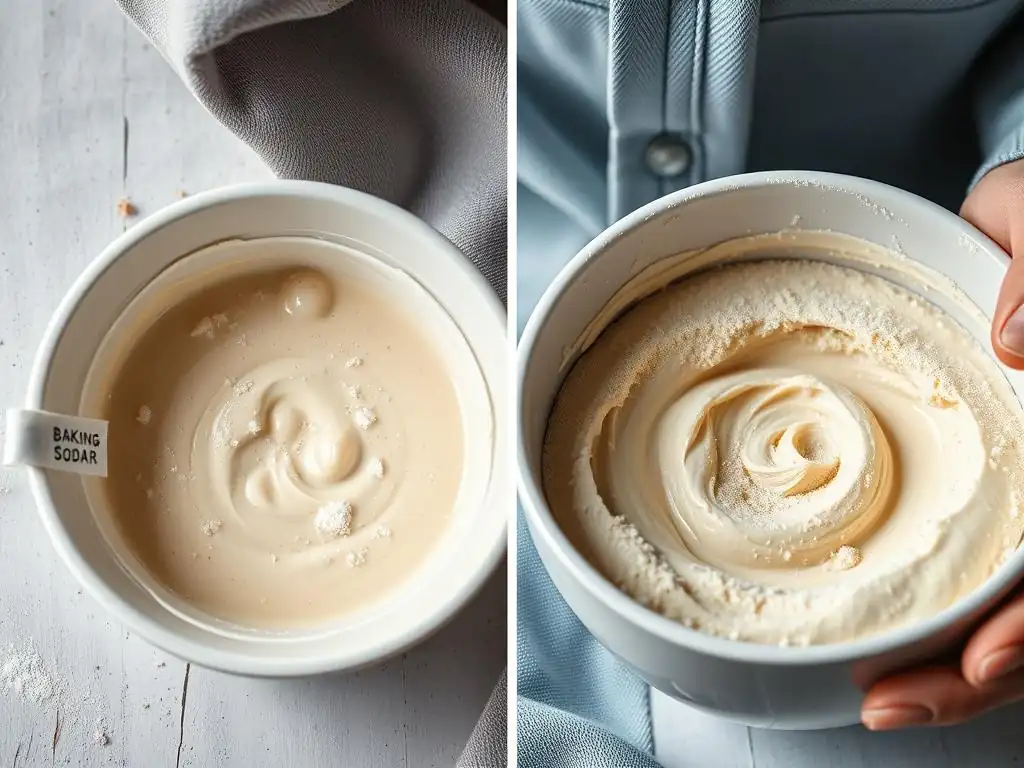
Understanding the fundamental difference between these two leaveners is key to making effective high altitude baking powder and baking soda adjustments. They don't behave identically, and their roles in a recipe differ.
Baking Powder: A Complete Leavening Agent
Baking powder is a mixture containing a base (sodium bicarbonate), one or more acids (like cream of tartar, sodium aluminum sulfate, or sodium acid pyrophosphate), and usually a starch (like cornstarch) to absorb moisture and prevent premature reaction. Double-acting baking powder releases gas in two stages: a small amount when mixed with liquid at room temperature, and a larger, more significant amount when heated in the oven.
This sustained release of gas means that baking powder provides a consistent lift throughout the baking process. Because it provides its own acid, it's often used in recipes that don't contain acidic ingredients or need a significant boost in leavening beyond what is provided by other means (like eggs or creaming). Its powerful, heat-activated lift is particularly susceptible to the reduced atmospheric pressure at high altitudes, making high altitude baking powder adjustments crucial for recipes that rely heavily on it.
Baking Soda: Requires Acid for Activation
Baking soda, or sodium bicarbonate, is a single compound. It reacts with an acid in the presence of moisture to produce carbon dioxide gas. This reaction is immediate and happens as soon as the wet and dry ingredients (containing the acid and baking soda) are combined. Once the reaction is complete, no more leavening gas is produced from the baking soda itself.
Recipes using baking soda typically contain acidic ingredients like buttermilk, yogurt, sour cream, molasses, brown sugar, honey, or citrus juice. The amount of baking soda is often calibrated to react with and neutralize the acid, contributing to both leavening and flavor/texture balance. Because its reaction is fast and dependent on an acid, adjusting baking soda at altitude requires considering the acid component as well.
Prioritizing Baking Powder Adjustments
When troubleshooting high altitude baking issues in recipes that use both leaveners, it's often most effective to prioritize adjusting the high altitude baking powder. Baking powder contributes a significant, sustained lift during the critical phase of baking when the structure is setting and the internal temperature is rising towards the boiling point. Its double-acting nature means it's continuously producing gas as the oven heats, and this is where the rapid expansion due to lower pressure has its most pronounced negative effect, often leading to collapse.
Reducing the high altitude baking powder helps temper this rapid expansion, allowing the structure more time to firm up. Once you've made an initial adjustment to the baking powder, bake the recipe and evaluate the results. If you still experience issues like sinking or a very coarse crumb, you might need to further reduce the baking powder or consider other adjustments like liquid or sugar.
Focusing on Baking Soda and Acidity Balance
After addressing the high altitude baking powder, turn your attention to baking soda if necessary. As mentioned, baking soda adjustments are less about controlling overwhelming expansion and more about maintaining the proper pH balance for flavor, color, and texture.
If, after adjusting baking powder, your baked goods have a soapy taste, excessively dark color, or a tough texture, you likely have too much baking soda relative to the acid. In this case, a small reduction in baking soda is warranted. If the product is too pale or lacks the intended flavor depth (in recipes where baking soda reacts with molasses or brown sugar for specific flavor notes), you might need to re-evaluate your baking soda or acid reduction. Focusing on the acid-base ratio is key when working with baking soda at altitude.
Recipe Adjustments for High Altitude Baking
Let's look at how high altitude baking powder and soda adjustments, along with other common tweaks, might look in practice for different types of baked goods. These are illustrative examples of the types of changes you'd make, not complete recipes.
High Altitude Chocolate Cake Recipe
A typical chocolate cake often uses both baking powder and baking soda (the soda reacting with cocoa powder or buttermilk). For a high altitude version (say, 5,000-7,000 feet), adjustments might include:
- Leavening: Reduce baking powder by about 1/4 teaspoon per teaspoon used. Slightly reduce baking soda (e.g., 1/8 teaspoon).
- Liquid: Increase liquid slightly (e.g., 2-4 tablespoons per cup of liquid in the original recipe) to counteract faster evaporation.
- Sugar: Slightly reduce sugar (e.g., 1-2 tablespoons per cup) as sugar can weaken structure.
- Flour: Increase flour slightly (e.g., 1-2 tablespoons per cup) or add a tablespoon or two of a strengthening agent like vital wheat gluten to build structure.
- Oven: Increase oven temperature by 15-25°F (8-14°C).
The goal is to reduce the explosive lift from high altitude baking powder and soda, add moisture, strengthen the structure, and set the cake faster with higher heat.
High Altitude Bread Recipe
Yeast-leavened breads require different considerations than quick breads using high altitude baking powder. While you might reduce yeast slightly, the primary adjustments often involve liquid and fermentation time.
- Leavening (Yeast): You might slightly reduce yeast (e.g., by 1/8 to 1/4 teaspoon per packet), but often the main issue is over-proofing due to faster gas expansion.
- Liquid: Increase liquid slightly (e.g., 1-3 tablespoons per cup of liquid) as dough dries faster.
- Proofing: Reduce proofing time. Dough will rise faster at altitude. Watch the dough, not the clock – it's ready when doubled, not when the recipe time is up. You might need to punch down and proof a second time to develop flavor and structure without over-expanding.
- Kneading: Dough might require slightly more kneading to develop gluten strength.
- Oven: Increase oven temperature by 15-25°F (8-14°C) to set the crust faster.
For quick breads using high altitude baking powder, the adjustments would follow the cake guidelines: reduce baking powder/soda, increase liquid, potentially increase flour, and adjust oven temperature/time.
Cookies often spread more at high altitude due to faster leavening expansion and quicker melting of fats. Adjustments focus on controlling spread and preventing excessive dryness.
- Leavening: Reduce
high altitude baking powderand baking soda by about 1/8 to 1/4 teaspoon total per batch, depending on the recipe and altitude. Less leavening means less spread. - Flour: Increase flour slightly (e.g., 1-3 tablespoons per cup) to provide more structure.
- Sugar: Slightly reduce sugar (especially granulated sugar, which promotes spread).
- Fat: Ensure butter is cool but pliable if the recipe calls for creaming. Avoid using softened or melted butter unless specified. Chilling the dough before baking can also help control spread.
- Oven: Increase oven temperature by 15-25°F (8-14°C) to set cookies faster.
Adjusting high altitude baking powder and soda in cookies is often the first step to preventing excessive spread and achieving a desirable texture.
Troubleshooting High Altitude Baking
Even with guidelines, high altitude baking can require some trial and error. Knowing how to troubleshoot common issues helps you refine your adjustments, especially concerning high altitude baking powder and soda.
Common Mistakes and Prevention
One of the most common mistakes is over-leavening, which is precisely what adjusting high altitude baking powder and soda aims to prevent. Too much leavener leads to rapid, uncontrolled expansion, resulting in sunken centers or coarse textures. Prevention involves careful measurement and gradual reduction of leavening agents based on your altitude and recipe performance.
Another mistake is not compensating for faster moisture loss. This results in dry, dense, or crumbly baked goods. Increasing liquid, slightly reducing sugar (which holds moisture), and adjusting oven temperature and time can help. Finally, not allowing the structure to set before the leavening gases expand too much is a key issue. This is addressed by reducing leavening, strengthening structure (more flour/gluten), and setting the structure faster (higher oven temp).
Addressing Cake Collapse
Cake collapse is a classic sign of needing high altitude baking powder adjustments. The center sinks because the leavening gases expanded too rapidly and the cake's structure didn't set before the bubbles burst or the thin walls of the cake structure gave way under their own weight.
To address cake collapse:
- Reduce Leavening: This is the most direct step. Start by reducing
high altitude baking powderfollowing the guidelines (e.g., 1/4 tsp per tsp for 7,000 ft). If using baking soda, consider a small reduction as well, keeping acidity in mind. - Increase Structure: Add a tablespoon or two of flour per cup, or consider adding a bit of vital wheat gluten if appropriate for the recipe type.
- Adjust Oven: Increase oven temperature by 15-25°F to help the cake set faster.
Test one adjustment at a time if possible, or make small changes across multiple factors, noting each change.
Achieving Desired Texture
The desired texture (tender, moist, light, chewy, etc.) is heavily influenced by the balance of ingredients and how the structure sets. At high altitude, texture issues often manifest as dryness, toughness, or excessive crumbliness.
- Dryness/Crumbliness: Often due to faster moisture evaporation and potentially too much leavening creating a weak, open structure. Increase liquid, slightly reduce sugar, and ensure
high altitude baking powderand soda are reduced appropriately. - Toughness: Can result from overmixing (developing too much gluten) or an imbalance of ingredients leading to a too-alkaline state (if using baking soda). Ensure gentle mixing and check your baking soda/acid balance after adjusting
high altitude baking powder. - Coarse Crumb: Typically caused by too much leavening expanding too rapidly. Reducing
high altitude baking powderis key here.
Refining your adjustments based on the specific texture issues you encounter will lead to consistently better results.
Conclusion: Confident Baking at Any Altitude
Baking at high altitude doesn't have to be daunting. By understanding the science behind how reduced pressure and faster moisture evaporation affect leavening, you can confidently make the necessary adjustments. The most impactful changes often involve carefully reducing high altitude baking powder and, to a lesser extent, baking soda, while also considering related factors like liquid, sugar, and oven temperature.
Mastering Leavening for Consistent Results
Mastering the adjustment of high altitude baking powder and baking soda is perhaps the most critical skill for successful baking at elevation. It directly addresses the primary challenge: controlling the expansion of leavening gases in lower atmospheric pressure. While initial attempts might require some tweaking, keeping a baking journal to note your altitude, the original recipe, the adjustments made, and the final results will significantly speed up the learning process.
With practice and patience, you'll develop an intuition for how recipes behave at your specific altitude and how to modify them effectively. Don't be discouraged by early failures; view them as learning opportunities. Embrace the challenge, make smart adjustments to your high altitude baking powder and other ingredients, and soon you'll be enjoying perfectly baked goods, no matter how high you climb!
Frequently Asked Questions
How does altitude affect baking powder's effectiveness?
At higher altitudes, lower air pressure causes leavening agents like baking powder to react more quickly and intensely. This can result in baked goods rising too fast and then collapsing.
Why is it important to adjust baking powder in high altitude baking?
Adjusting baking powder is crucial to prevent your baked goods from becoming dense, dry, or sunken. It ensures proper structure and prevents over-expansion during baking.
How much baking powder should I reduce when baking at high altitude?
A general guideline is to reduce baking powder by 1/8 to 1/4 teaspoon per teaspoon called for in the original recipe, depending on the altitude. Experimentation is key!
Can I adjust baking soda instead of baking powder for high altitude?
While baking soda adjustments are sometimes necessary, focusing on reducing baking powder first is usually more effective. Baking soda requires an acidic ingredient to react properly.
Besides baking powder, what other adjustments might be needed for high altitude baking?
You may also need to increase liquid, decrease sugar, and increase oven temperature slightly to compensate for faster evaporation and drying at higher altitudes.
Final Reflection: Scaling the Peaks of Baking Success
Mastering the art of high-altitude baking isn't just about following a recipe; it's about understanding the science behind the rise. The subtle shifts in atmospheric pressure dramatically impact baking powder's leavening power, leading to dense, disappointing results if adjustments aren't made. This article has explored the critical role of baking powder (and baking soda) in achieving light and airy baked goods, even at higher elevations.
The impact of altitude on baking extends far beyond simply adjusting recipes; it speaks to the ingenuity and adaptability required to overcome environmental challenges. It's a testament to the enduring human desire to create, to adapt, and to perfect our craft, even when faced with seemingly insurmountable obstacles. The best way to predict the future is to create it,
and that's precisely what we do when we adjust our baking techniques to conquer the unique challenges of high-altitude baking.
Now, consider your own baking journey. Have you experienced the frustration of a collapsed cake or a dense muffin at high altitude? I encourage you to take the knowledge gained here and experiment! Don't be afraid to tweak recipes, to understand the "why" behind the adjustments, and to celebrate the delicious successes that await you. The journey to mastering high-altitude baking is a rewarding one, filled with the sweet taste of triumph and the satisfaction of creating something truly special.
Unlock Your High-Altitude Baking Secrets!
Thanks for taking the time to explore the world of high-altitude baking! We hope you now feel confident tackling those tricky altitude adjustments. Ready to put your newfound knowledge into practice?
- Bake your dream cake (or cookies, or bread!): Use the charts and tips from this article to adjust your next baking project. You’ll be amazed at the difference!
- Share your baking triumphs (and challenges!): Let's build a community of high-altitude bakers! Share your experiences and recipes in the comments below.
- Explore more high-altitude baking resources: Check out our other articles on BakeWithEase for even more tips and techniques!
What delicious high-altitude treat will you bake first?