
The Art of Scoring Bread to Prevent Unsightly Blowouts

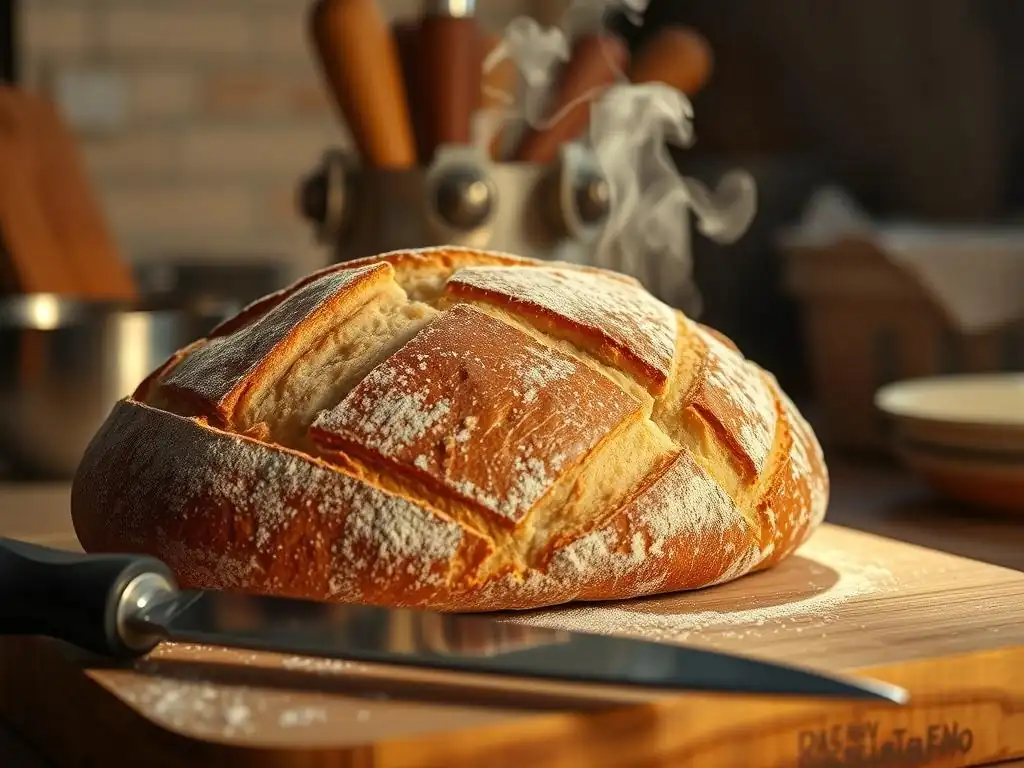
Welcome to BakeWithEase.com, your culinary haven for all things baking! Ever wondered how to achieve that picture-perfect loaf without those dreaded blowouts? This week, we delve into the crucial art of scoring bread – a deceptively simple technique that's key to unlocking perfectly risen, beautifully textured loaves. Discover how mastering this skill can transform your baking and prevent those unsightly cracks. Ready to unveil the secrets? Let's get baking!
- Mastering Bread Scoring: A Comprehensive Guide to Preventing Blowouts
- Understanding Bread Blowouts and the Importance of Scoring
- Essential Tools for Perfect Bread Scoring
- Mastering Bread Scoring Techniques: A Step-by-Step Guide
- Troubleshooting Common Bread Scoring Problems
- Bread Scoring Patterns to Prevent Blowouts: Examples and Techniques
- Beyond the Score: Factors Influencing Bread Expansion
- Achieving Consistent Results: Practice and Refinement
- Frequently Asked Questions
- Final Reflection: The Humble Score, a Baker's Best Friend
- Unlock Your Bread-Baking Potential!
Mastering Bread Scoring: A Comprehensive Guide to Preventing Blowouts
Understanding Bread Blowouts and the Importance of Scoring
What Causes Bread Blowouts? The Science of Steam and Dough Expansion
Bread blowouts, those unsightly cracks or ruptures on your loaf, are primarily caused by the rapid expansion of gases, mainly steam, within the dough during the initial stages of baking. As the dough hits the hot oven, water inside quickly turns to steam, causing significant internal pressure. Simultaneously, yeast activity continues for a short period, producing more carbon dioxide.
This internal pressure needs an outlet. If the crust sets too quickly and there isn't a designated weak point, the pressure will find the path of least resistance, often resulting in an uncontrolled tear or "blowout" in an unexpected spot, like the side or bottom of the loaf. This typically occurs within the first 10-15 minutes of baking, during the crucial period known as oven spring.
Consider a typical loaf of sourdough placed in a 450°F (230°C) oven. The surface begins to dry and firm up almost immediately, forming a nascent crust. However, the interior remains moist and pliable, with steam building rapidly as the internal temperature rises past the boiling point of water (212°F or 100°C).
If the dough hasn't been scored, or if the scoring isn't adequate, this immense internal pressure forces the dough to rupture the setting crust wherever it is weakest, leading to an uncontrolled expansion rather than the desired rise through a planned opening. This not only ruins the aesthetic but can also impact the final shape and structure of the crumb. Understanding this dynamic pressure cooker effect inside the loaf is key to appreciating why scoring bread prevent blowouts effectively.
Why Scoring Bread Matters: Directing Expansion and Enhancing Aesthetics
Scoring bread is essentially creating a controlled weak point on the surface of the dough just before it enters the oven. This deliberately placed incision serves as a vent, allowing the steam and gases to escape in a predictable manner during oven spring. Instead of the pressure causing a random rupture, it directs the expansion through the score, resulting in a controlled, beautiful opening.
This is fundamental to preventing bread blowouts and ensuring your loaf achieves its maximum potential volume and shape. A well-executed score ensures that the energy of oven spring is channeled precisely where you want it to go.
Beyond preventing bread blowouts, scoring is also a vital artistic element in bread making. The way the score opens up creates unique patterns and textures on the crust, giving each loaf its distinct character. From a simple single slash on a baguette to intricate designs on a boule, scoring transforms a plain ball of dough into a work of art.
It allows bakers to express creativity and add a personal touch to their loaves. Furthermore, the way a score opens can even influence the texture of the crust in that specific area, often creating a desirable crispy edge or "ear." Mastering this technique is crucial for both the structural integrity and the visual appeal of your baked goods.
Scoring Bread: Your First Line of Defense Against Uneven Baking
Think of scoring as preparing the dough for its explosive growth in the oven. By making precise cuts, you are pre-determining exactly where the loaf will expand. This controlled expansion is not just about preventing blowouts; it's also about promoting even baking.
When a loaf blows out randomly, the crust thickness and structure become uneven, which can lead to parts of the loaf baking faster or slower than others. A clean, intentional score helps the loaf rise uniformly, ensuring that the heat penetrates the dough evenly and the entire crust develops consistently. This contributes to a better overall bake and a more predictable crumb structure.
For instance, if you're baking a round sourdough boule, a simple cross or a circular score helps distribute the expansion evenly around the loaf. Without this guidance, the dough might burst on one side, causing that side to bulge outwards while the other side remains tighter, leading to an asymmetrical loaf and potentially denser spots in the crumb where the dough didn't expand properly.
Effective scoring bread prevent blowouts and ensures that the energy of oven spring is harnessed efficiently, resulting in a well-shaped, evenly baked loaf every time. It's a critical step that differentiates a good loaf from a great one.
Essential Tools for Perfect Bread Scoring
The Bread Lame: Choosing the Right Blade for Precision
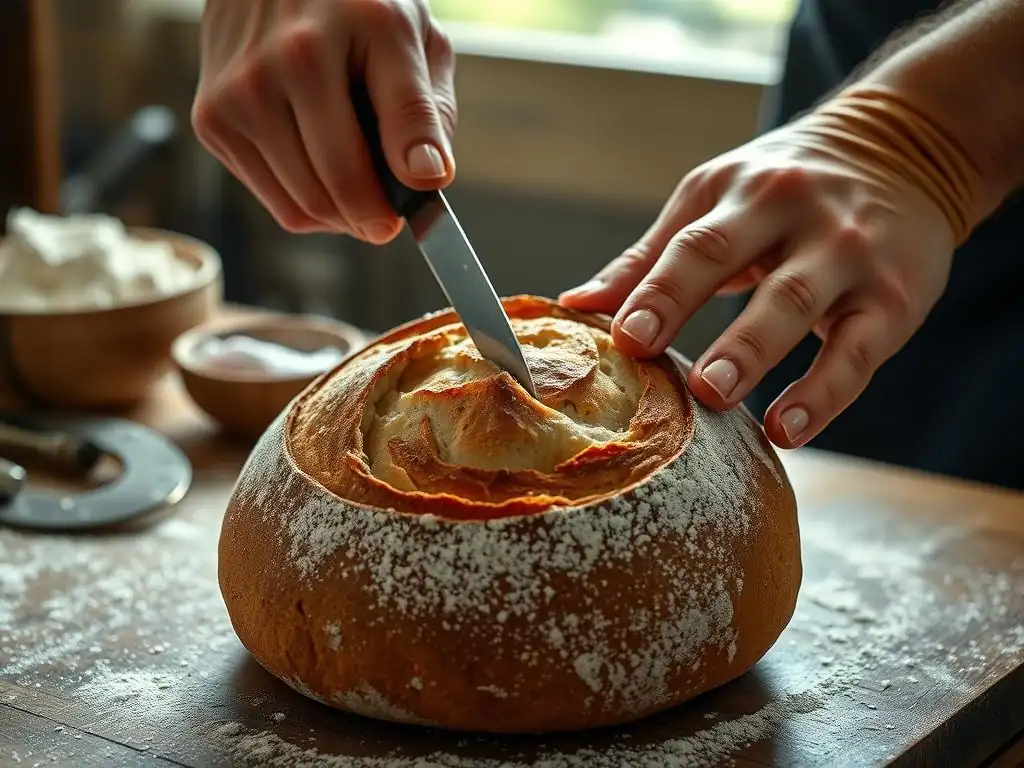
The bread lame (pronounced "lahm") is the quintessential tool for scoring bread, and for good reason. It's essentially a handle designed to hold a razor-sharp blade, allowing for clean, swift cuts on the dough surface. The most common type uses standard double-edged razor blades, which are incredibly sharp and easily replaceable – crucial for getting clean cuts without dragging or tearing the dough. Blades dull quickly when scoring dough, especially stickier, high-hydration varieties, so using a fresh blade for each baking session is highly recommended for optimal results and preventing bread blowouts caused by poor cuts.
Lamés come in various forms, including straight and curved holders. A straight lame is excellent for making shallow, straight cuts, often used for decorative patterns or simple slashes. A curved lame, where the blade is slightly bent, is specifically designed to make curved cuts that promote the formation of a prominent "ear" on loaves like sourdough boules or batards.
The curve allows you to cut under the surface skin of the dough at an angle, creating a flap that lifts and crisps during baking. Choosing the right lame and blade is the first step towards mastering scoring bread prevent blowouts and achieving professional-looking loaves.
Alternative Scoring Tools: Utility Knives and Specialized Blades
While a lame is the preferred tool for many, it's not the only option for scoring bread. A very sharp utility knife or a dedicated craft knife with a fresh blade can also be used effectively. The key is the sharpness of the blade; a dull blade will drag the dough rather than slice it cleanly, leading to jagged edges and hindering controlled expansion.
Ensure the blade is clean and held at the correct angle for the desired cut. Some bakers even use sharp scissors for certain types of dough or patterns, like snipping the top of a round loaf or creating decorative shapes.
Specialized single-edge razor blades, often found in hardware stores, can be held carefully between fingers (use caution!) or mounted onto makeshift handles. While these alternatives can work, they may lack the ergonomic design and safety features of a dedicated bread lame. Using a proper lame generally offers better control, especially when attempting angled or intricate cuts necessary for specific patterns or for scoring bread prevent blowouts on various dough types. Regardless of the tool, always prioritize blade sharpness and safety.
Maintaining Your Scoring Tools: Sharpening and Cleaning for Optimal Performance
Maintaining your scoring tools is crucial for consistent results and hygiene. For lamés using replaceable razor blades, the primary maintenance is simply replacing the blade frequently. A general guideline is to use a fresh blade for every 1-3 baking sessions, depending on how much scoring you do. Trying to score with a dull blade is a common cause of frustrating, messy cuts that fail to guide expansion properly, thus not effectively scoring bread prevent blowouts. For utility or craft knives, ensure the blade is sharpened regularly or replaced when it shows signs of dullness.
Cleaning involves removing any sticky dough residue from the blade and holder immediately after use. Warm water and a small brush or cloth are usually sufficient. Ensure the tools are thoroughly dried to prevent rust, especially on razor blades. Proper storage is also important; many lamés come with protective covers for the blade, which not only keeps the blade sharp but also prevents accidents. By keeping your tools sharp and clean, you ensure that every score is precise, contributing significantly to the success of your loaf's oven spring and your efforts in scoring bread prevent blowouts.
Mastering Bread Scoring Techniques: A Step-by-Step Guide
Preparing Your Dough for Scoring: Surface Tension and Dough Handling
Before you even pick up your scoring tool, proper dough preparation is paramount. The dough should have sufficient surface tension. This means the outer layer should be relatively taut and smooth, often achieved through proper shaping and a final proofing period. A dough that is too slack or sticky on the surface is difficult to score cleanly; the blade will tend to drag and stick rather than glide smoothly. The dough should also be adequately proofed – not under-proofed (too springy and resistant) or over-proofed (too fragile and prone to collapsing).
Handling the dough gently during this stage is also key. Avoid degassing the dough too much when transferring it from the proofing basket or surface. The goal is to preserve the airy structure that has developed during fermentation and proofing. For loaves proofed seam-side up in a banneton, you will invert the dough onto a baking surface or peel before scoring. Working quickly and confidently with a well-prepared dough surface makes the scoring process much easier and more effective for scoring bread prevent blowouts.
Angle and Depth: Controlling Expansion and Creating Visual Appeal
The angle and depth of your score are critical variables that determine how the dough expands and how the final crust looks. For promoting a significant "ear" on a loaf, a shallow cut made at a low angle (around 30-45 degrees relative to the dough surface) is ideal. This angle creates a flap of dough that lifts and crisps. For maximizing overall loaf volume and ensuring even expansion without a specific ear, a deeper, more perpendicular cut (closer to 90 degrees) is often used, particularly for patterns like a cross or a simple central slash.
The depth of the cut should generally penetrate the surface skin but not go so deep as to deflate the loaf significantly. A depth of about 1/4 to 1/2 inch (0.5 - 1 cm) is common, though this can vary depending on the dough's hydration and proofing level. Too shallow a cut might not provide an adequate vent, potentially still leading to a blowout.
Too deep a cut can cause the loaf to spread sideways rather than rise upwards. Experimenting with different angles and depths on practice loaves can help you understand how these factors influence the final shape and appearance, and how they contribute to scoring bread prevent blowouts effectively.
Common Scoring Patterns: From Simple to Complex Designs
Scoring patterns range from purely functional cuts designed solely for expansion to intricate designs that are both functional and artistic. Choosing a pattern often depends on the type of dough, the shape of the loaf, and the desired aesthetic. Mastering a few basic patterns provides a solid foundation for scoring bread prevent blowouts while also allowing for creative expression.
The Single Slash: A Fundamental Scoring Technique
The single slash is perhaps the simplest and most common scoring pattern, particularly for elongated loaves like baguettes or batards. A single, clean cut running lengthwise along the top of the loaf provides a clear path for expansion. For baguettes, multiple diagonal slashes overlapping slightly are typical, each acting as an individual vent. This pattern is highly effective at directing expansion and is relatively easy to execute cleanly. For a baguette, you might make 5-7 diagonal slashes, each about 1/4 inch deep, running about two-thirds the length of the loaf and overlapping slightly.
The Cross Pattern: A Classic for Boules and Round Loaves
The cross pattern is a traditional and effective score for round loaves or boules. It involves making two cuts that intersect at the center, forming a cross. This pattern encourages the loaf to expand upwards and outwards evenly in four directions from the center.
A variation is to make three or four cuts radiating from the center like spokes on a wheel. The depth of the cuts is typically more perpendicular than for an ear, aiming for consistent venting across the loaf's surface. This classic pattern is a reliable method for scoring bread prevent blowouts on round loaves, ensuring symmetrical expansion.
Decorative Scoring: Expressing Creativity and Enhancing Presentation
Once you've mastered functional scoring, you can explore decorative patterns. These can range from simple leaf shapes to complex geometric designs or even intricate stencil-guided patterns. Decorative scoring still needs to provide adequate venting, but the focus shifts towards the visual outcome.
This might involve combining shallow decorative cuts with one or two deeper, functional cuts to ensure proper expansion. For example, you might score a beautiful leaf pattern on a boule but still include a deeper central cut to guarantee sufficient venting and prevent a blowout. Achieving successful decorative scoring requires a very sharp blade and confident, swift strokes on a well-proofed, taut dough surface.
Scoring Different Types of Bread Dough: Adapting to Dough Characteristics
Different dough types have varying hydration levels, gluten development, and inclusion ingredients (like fats or sugars), all of which influence how they behave during scoring and baking. Adapting your scoring technique to the specific characteristics of the dough is crucial for success and for scoring bread prevent blowouts across your repertoire.
Scoring Sourdough Bread: Maximizing Oven Spring and Ear Formation
Sourdough dough is often high in hydration and can be quite sticky, requiring a very sharp blade and swift, confident cuts. The goal for many sourdough bakers is to achieve a prominent "ear," that crispy ridge along the score line. This is typically done with a curved lame, holding the blade at a low angle (around 30-45 degrees) relative to the dough surface and making a single, sweeping cut along a portion of the loaf's circumference.
The angle and depth are critical for creating the flap that will lift. For a boule, a common ear score might be a single curved slash covering about half to two-thirds of the loaf's perimeter. Achieving a good ear is a hallmark of successful sourdough scoring and helps direct the powerful oven spring inherent in well-fermented sourdough, effectively scoring bread prevent blowouts on these often challenging doughs.
Scoring High-Hydration Dough: Preventing Sticking and Facilitating Expansion
High-hydration dough (doughs with a high percentage of water relative to flour, like ciabatta or many artisan no-knead doughs) presents a challenge because it tends to be very sticky and slack. Scoring these doughs requires extreme blade sharpness and a light touch. Sometimes, dusting the surface lightly with flour or rice flour can help prevent the blade from sticking.
Simple, functional cuts are often preferred over intricate designs, as complex scoring can be difficult to execute cleanly on such wet dough. A few strategic, relatively deep cuts are usually sufficient to provide the necessary vents for expansion and prevent blowouts. For a very wet dough like ciabatta, simple perpendicular cuts across the top are often used.
Scoring Enriched Dough: Accounting for Fat and Sugar Content
Enriched doughs, which contain ingredients like butter, milk, eggs, or sugar (think challah, brioche, or dinner rolls), behave differently than lean doughs (flour, water, salt, yeast/starter). The fat and sugar tend to make the crust softer and less prone to forming a hard shell as quickly. These doughs may not require as deep or numerous scores as lean doughs because they are less likely to develop a rigid crust early in baking.
Simple cuts or even no scoring at all might be appropriate depending on the desired outcome and the specific dough. When scoring enriched dough, use a sharp blade but be mindful that the dough might be softer and more delicate. Often, simpler patterns like a single slash or a cross are sufficient for scoring bread prevent blowouts while maintaining the dough's rich character.
Troubleshooting Common Bread Scoring Problems
Dough Sticking to the Lame: Solutions for a Clean Cut
A common frustration when scoring is the dough sticking to the blade, resulting in a jagged, messy cut instead of a clean slice. This often happens with sticky, high-hydration doughs or when using a dull blade. The primary solution is ensuring your blade is razor sharp – use a fresh blade frequently! For sticky doughs, try lightly dusting the surface of the loaf with flour, rice flour (which doesn't absorb into the dough), or cocoa powder (for dark loaves) just before scoring.
You can also quickly dip the blade in water between cuts, shaking off the excess. Working quickly and confidently, making swift, decisive cuts, also helps prevent sticking. A clean, smooth cut is essential for scoring bread prevent blowouts effectively.
Scoring Too Deep or Not Deep Enough: Achieving Optimal Depth
Determining the correct scoring depth comes with practice and varies slightly depending on the dough and the desired outcome. Scoring too shallowly (less than ~1/4 inch) may not provide an adequate vent, potentially leading to a blowout elsewhere on the loaf. The crust might simply stitch itself back together during baking. Scoring too deeply (more than ~1/2 inch) can cause the loaf to spread excessively sideways rather than rising upwards, resulting in a flatter loaf.
It can also deflate some of the precious gas built up during proofing. The optimal depth should just penetrate the surface tension and extend slightly into the dough, creating a clear path for expansion without compromising the loaf's structure. Observing how your scores open on different loaves is key to finding the right depth.
Understanding Oven Spring: Adjusting Scoring for Consistent Results
Oven spring is the final, rapid rise a loaf undergoes during the first 10-15 minutes in the hot oven. It's primarily driven by the expansion of gases and the last burst of yeast activity before the yeast dies off. The success of your score is directly tied to oven spring; the score provides the channel for this energy. If your oven spring is consistently weak, your scores might not open fully.
This could be due to under-proofing, insufficient gluten development, or issues with oven temperature and steam. Conversely, very strong oven spring requires robust, well-placed scores to manage the expansion. Adjusting your scoring depth and pattern based on your typical oven spring – perhaps scoring a bit deeper if you have strong oven spring, or ensuring very clean cuts if it's moderate – helps in scoring bread prevent blowouts and achieve predictable results.
Preventing Blowouts: Addressing Proofing, Oven Temperature, and Hydration
While scoring is your primary tool for preventing bread blowouts, it works in concert with other factors. Under-proofed dough, which is very tight and has a lot of latent energy, is particularly prone to blowouts, even with adequate scoring. Ensuring your dough is properly proofed (passes the poke test) is crucial. Oven temperature is also key; a sufficiently hot oven (often 450-500°F or 230-260°C) helps set the crust quickly while the interior is still expanding.
Steam in the oven environment keeps the crust pliable longer, allowing the scores to open gracefully during oven spring instead of the crust hardening too fast and forcing a rupture elsewhere. High hydration doughs require careful handling and sharp scoring due to their stickiness and tendency for powerful expansion. Addressing these factors alongside your scoring technique provides the best chance of successfully scoring bread prevent blowouts.
Bread Scoring Patterns to Prevent Blowouts: Examples and Techniques
Specific scoring patterns are tailored to different loaf shapes and desired outcomes, all with the underlying goal of managing expansion and preventing blowouts. Here are a few examples of functional scores.
The "Ear" Score for Sourdough: Promoting a Distinctive Ridge
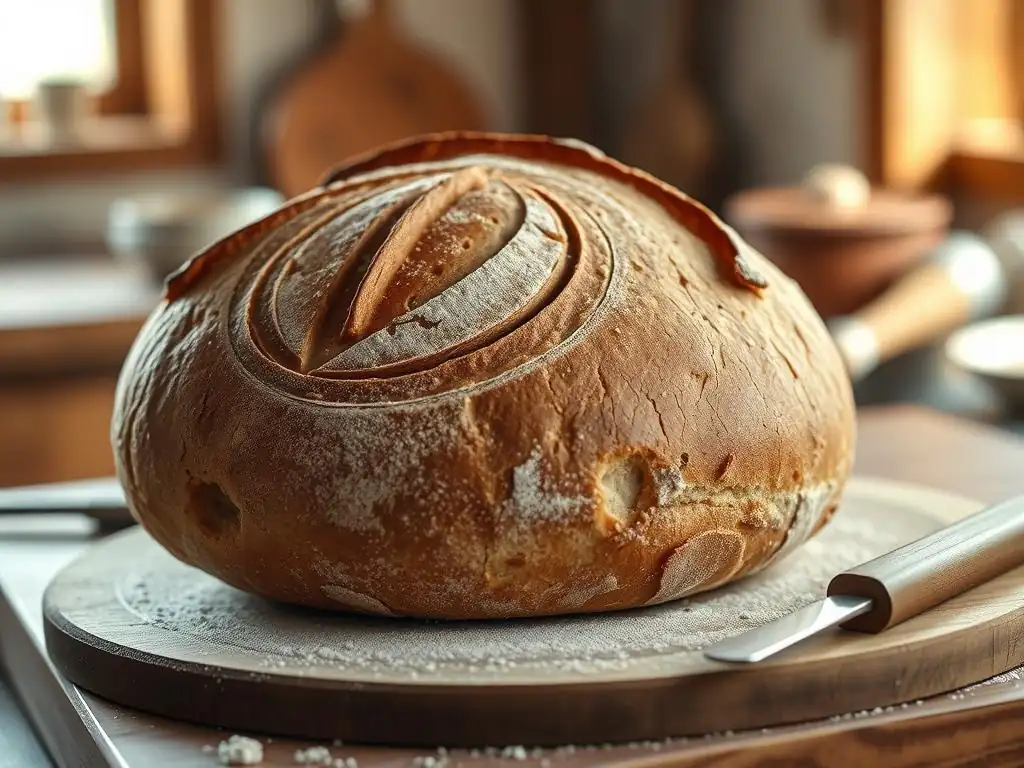
The "ear" score, typically used on sourdough boules or batards, is a single, sweeping curved cut made with a curved lame at a low angle (30-45 degrees). The cut usually starts near one end of the loaf and runs along about half to two-thirds of its circumference. The low angle is crucial as it cuts under the dough's surface, creating a flap.
As the loaf expands in the oven, this flap lifts and crisps into a beautiful, brittle "ear." This single cut is the primary vent for the powerful oven spring of sourdough, effectively scoring bread prevent blowouts by directing all the energy to one intended opening.
The "Wheat Stalk" Pattern: A Decorative and Functional Score
The wheat stalk pattern is both visually appealing and functional. It involves a central score (often a single straight slash down the middle or a slightly curved one) with several smaller, angled cuts branching off from it on either side, resembling grains on a wheat stalk. The central cut acts as the main vent, while the smaller cuts contribute to expansion and create the decorative effect.
The depth of the central cut is usually deeper than the decorative side cuts. This pattern provides multiple points for expansion, helping in scoring bread prevent blowouts while adding aesthetic charm to the loaf.
The "Chevron" Pattern for Baguettes: Ensuring Even Expansion
While multiple diagonal slashes are standard for baguettes, the "chevron" or overlapping pattern is key to their characteristic look and even expansion. Each slash is made diagonally, starting where the previous slash ends or slightly overlaps it. The cuts are typically about 1/4 inch deep and angled relative to the length of the baguette. This series of vents ensures that the long, narrow loaf expands relatively uniformly along its length, preventing random bursts and maintaining the baguette's shape. It's a simple yet effective method for scoring bread prevent blowouts on elongated loaves.
Beyond the Score: Factors Influencing Bread Expansion
Scoring is a critical piece of the puzzle, but optimal bread expansion relies on several interconnected factors working together.
The Role of Proofing: Achieving Optimal Dough Readiness
Proofing, the final rise of the dough before baking, is arguably as important as scoring in determining oven spring and preventing blowouts. Dough that is under-proofed is still very tight and has significant potential for expansion. When it hits the oven, the rapid, uncontrolled expansion can overwhelm even good scores, leading to blowouts.
Over-proofed dough, on the other hand, has exhausted much of its rising power and may collapse slightly when scored or transferred. It will have weak oven spring, and while less prone to blowouts, it won't achieve good volume. Properly proofed dough is relaxed yet still has some structure and resilience (passes the gentle poke test), providing the ideal state for the score to work effectively and for optimal scoring bread prevent blowouts.
Oven Temperature and Steam: Creating the Ideal Baking Environment
The baking environment significantly impacts crust development and, consequently, how scores open. A hot oven is essential for a good oven spring. High initial temperatures (e.g., 450-500°F / 230-260°C) provide the necessary thermal shock to kickstart rapid expansion. Steam is equally vital in the first part of the bake.
Steam keeps the surface of the dough moist and pliable longer, preventing the crust from setting too early. This allows the scores to open fully and cleanly as the dough expands. Without sufficient steam, the crust sets prematurely, constricting expansion and potentially leading to blowouts despite proper scoring. Baking in a Dutch oven or using a steam tray are common methods to create a steamy environment.
Hydration Levels: Balancing Moisture for Desired Texture and Structure
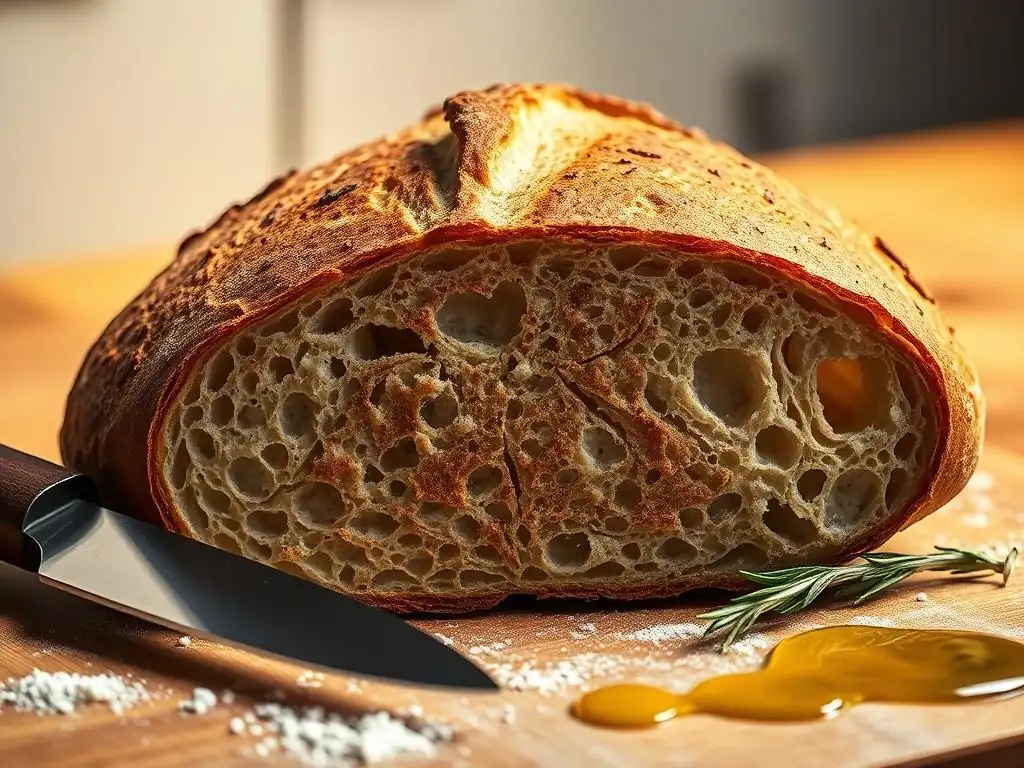
The hydration level of your dough (the ratio of water to flour) plays a significant role in its behavior, including how it expands and how it needs to be scored. Higher hydration doughs are typically stickier and more challenging to handle and score, but they often yield a more open crumb structure and can achieve impressive oven spring if managed correctly. Lower hydration doughs are easier to score but may produce a tighter crumb.
Understanding the hydration of your dough informs your handling techniques, scoring depth, and the specific challenges you might face (like sticking with high hydration). Adapting your scoring approach based on hydration is key to successfully scoring bread prevent blowouts across different recipes.
Achieving Consistent Results: Practice and Refinement
Mastering bread scoring, like any craft, requires practice. Don't be discouraged by imperfect scores or occasional blowouts initially. Each loaf provides a learning opportunity.
Documenting Your Scoring Techniques: Tracking Progress and Identifying Patterns
Keeping a baking journal can be incredibly helpful. Note the type of dough, its hydration, proofing time, the scoring pattern used, the tool, angle, and depth of the cuts, and the oven temperature and steam method. Crucially, record the outcome: how the scores opened, if there was a blowout, and the final shape and crumb. Over time, reviewing these notes will help you identify which techniques work best for different doughs and conditions, allowing you to refine your approach and improve your success rate in scoring bread prevent blowouts.
Adjusting Your Approach: Fine-Tuning for Different Doughs and Ovens
Every dough is unique, and every oven behaves slightly differently. Don't be afraid to experiment and adjust your scoring techniques based on your observations. If a particular dough consistently blows out in an unexpected spot, perhaps your score isn't deep enough, or it's in the wrong location.
If your scores aren't opening fully, consider if the dough is under-proofed or if you need more steam. Fine-tuning involves small adjustments – slightly changing the angle of the blade, making a cut a little deeper, or trying a different pattern altogether – until you find what works best for your specific baking process and the dough you are working with, leading to consistent success in scoring bread prevent blowouts.
The baking community is a vast resource of shared knowledge and experience. Don't hesitate to share photos of your loaves (both successes and failures) and ask for feedback. Describe your dough and scoring process. Seeing how others score similar doughs or hearing their troubleshooting tips can provide valuable insights. Engaging with other bakers allows you to learn from their trials and errors, accelerate your learning curve, and gain new perspectives on mastering scoring bread prevent blowouts. Baking is a journey, and learning from others makes it more enjoyable and rewarding.
Frequently Asked Questions
How does scoring bread help prevent blowouts?
Scoring provides a controlled release for steam during baking. This allows the bread to expand in a predictable way rather than bursting at its weakest point, preventing unsightly blowouts.
What are the different types of scoring patterns I can use?
There's a wide range, from a simple single slash to more elaborate decorative patterns. The best pattern depends on the shape and style of your bread.
What tool is best for scoring bread dough?
A lame (pronounced "lahm") is the most common tool. It's a razor-sharp blade specifically designed for scoring dough. A sharp knife can also work, but a lame provides better control.
How deep should I score my bread dough?
The depth depends on the desired effect. Generally, scores should be about ¼ to ½ inch deep. Deeper scores allow for greater expansion, while shallower scores create more subtle effects.
What causes blowouts even after scoring my bread?
Several factors can contribute, including insufficient scoring, too much steam in the oven, or over-proofing the dough. Adjusting these elements can help prevent future blowouts.
Final Reflection: The Humble Score, a Baker's Best Friend
The art of scoring bread isn't merely aesthetic; it's the crucial difference between a beautifully risen loaf and a disastrous blowout. Mastering this seemingly simple technique unlocks the potential for perfectly shaped, evenly textured bread, transforming a potentially frustrating baking experience into a rewarding one. This isn't just about pretty pictures; it's about understanding the fundamental forces at play during the baking process.
The impact of proper scoring extends far beyond the individual baker's kitchen. It speaks to a deeper connection with the craft of bread making, a tradition passed down through generations. Understanding the science behind the score allows us to appreciate the artistry involved in transforming simple ingredients into something nourishing and beautiful. Bread is the staff of life,
a simple phrase, yet it encapsulates the profound significance of this staple food and the skill required to create it perfectly. The score, in its own way, reflects this respect for the process and the product.
Now, consider your own baking journey. What have you learned about the power of a well-placed score? Perhaps you've experienced the frustration of a blowout firsthand, or maybe you've reveled in the satisfaction of a perfectly controlled rise. I encourage you to experiment, to embrace the imperfections, and to learn from each loaf you bake. The next time you prepare your dough, remember the humble score—a small act with a significant impact on the final result. Let it be a reminder of the patience, precision, and artistry inherent in the art of bread making.
Unlock Your Bread-Baking Potential!
Thanks for taking the time to explore the art of scoring bread with us! We hope you now feel confident in preventing those frustrating blowouts and achieving perfectly shaped loaves. Ready to put your new knowledge to the test?
- Master the Score: Practice your scoring techniques on a few test loaves. Experiment with different patterns and depths to find what works best for you. Consider filming your scoring process to review your technique later!
- Share Your Success (or Challenges!): Show off your beautifully scored loaves (or share your learning journey!) on social media using #BakeWithEaseScores. We'd love to see your creations!
- Deep Dive into Dough: Explore our other articles on bread baking for more tips and tricks to elevate your baking game!
So, what unique scoring pattern will you try first, and what bread will you be baking next?