
The Impact of Temperature and Humidity on Ingredient Measurements

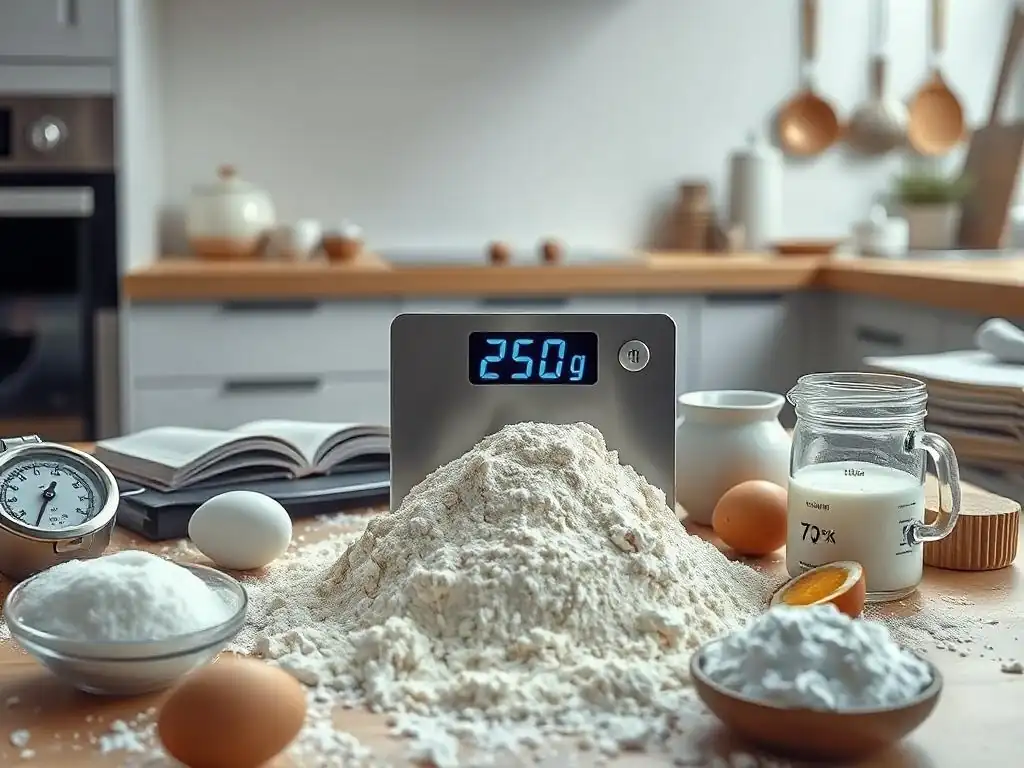
Welcome to BakeWithEase, where baking bliss begins! Ever wondered why your measurements sometimes fail, despite following the recipe perfectly? Unlocking the secrets to successful baking often lies in understanding the unseen influence of the environment. This article delves deep into the impact of temperature and humidity on ingredient measurements accuracy, revealing how these factors can significantly alter your results. Prepare to elevate your baking game with knowledge that will transform your kitchen into a haven of consistent, delicious creations! Let's explore...
- The Impact of Temperature and Humidity on Ingredient Measurements for Baking
- Introduction: Temperature and Humidity's Unseen Influence on Baking Accuracy
- How Temperature Affects Baking Ingredient Measurements
- Humidity's Role in Baking Measurement Inaccuracy
- Specific Ingredient Measurement Challenges in Different Climates
- Best Practices for Accurate Baking Measurements Regardless of Temperature and Humidity
- Tools and Techniques for Minimizing Temperature and Humidity Effects
- Case Studies: Examples of Temperature and Humidity Affecting Baking Outcomes
- Conclusion: Achieving Baking Precision Despite Environmental Challenges
-
Frequently Asked Questions
- How does temperature affect the accuracy of ingredient measurements in baking?
- Why is humidity a factor when measuring dry ingredients for baking?
- What tools can help ensure accurate measurements despite temperature and humidity fluctuations?
- How can I adjust my baking recipes to compensate for high humidity?
- Is it necessary to adjust oven temperature based on humidity levels?
- Final Reflection: Precision Baking in a Changing Climate
- Unlock Baking Perfection: Master the Art of Precise Measurement
The Impact of Temperature and Humidity on Ingredient Measurements for Baking
Introduction: Temperature and Humidity's Unseen Influence on Baking Accuracy
Baking is often described as a science, and like any science, precision is paramount. While recipes provide precise measurements, the environment in which you bake can significantly alter the physical properties of your ingredients, leading to unexpected outcomes. Factors like the surrounding temperature and the level of humidity in the air might seem minor, but they play a crucial role in the actual amount of each ingredient you add to your mix, directly impacting the final texture, rise, and flavor of your baked goods. Understanding this connection is key to achieving consistent baking success.
This article will explore the intricate relationship between environmental conditions and the ingredients you measure. We'll delve into how temperature and humidity specifically affect common baking staples like flour, sugar, and fats, and how these changes can subtly yet significantly alter your ingredient measurements. Mastering the challenges presented by varying temperatures and humidity levels is essential for anyone seeking reliable temperature humidity baking measurements accuracy.
Why Accurate Ingredient Measurements are Crucial for Baking Success
Achieving temperature humidity baking measurements accuracy isn't just about following a recipe; it's about ensuring the correct ratio of ingredients reacts as intended during the baking process. In baking, ingredients often interact chemically. For instance, the balance between flour (structure), sugar (sweetness, tenderness, browning), fat (tenderness, moisture), and leavening agents (rise) is delicate. Too much flour, and your cake could be dry and dense; too little sugar, and your cookies might spread excessively and lack color.
Consider a simple cookie recipe. The ratio of flour to fat dictates the spread and texture. If your flour has absorbed extra moisture from high humidity, a cup measurement might contain less actual flour solids than intended, altering that critical ratio. Similarly, if your butter is too warm and soft when creaming with sugar, you incorporate more air, which affects the final rise and texture. Precise ingredient measurement, taking into account environmental factors, is the bedrock of consistent and delicious baking results.
Understanding the Environmental Factors Affecting Baking Results
The two primary environmental factors that heavily influence ingredient measurements and baking outcomes are temperature and humidity. Ambient room temperature affects everything from the consistency of fats to the activity of yeast and the density of dry ingredients. Higher temperatures can cause ingredients like butter to soften rapidly or flours to become less dense due to expansion.
Humidity, the amount of water vapor in the air, is particularly impactful on dry, hygroscopic ingredients like flour and sugar. These ingredients readily absorb moisture from their surroundings. High humidity means more moisture is available to be absorbed, increasing the weight and slightly decreasing the volume of a given cup of flour, for example. Low humidity can have the opposite effect, potentially drying out ingredients over time if not stored properly. Recognizing and accounting for these environmental variables is vital for maintaining temperature humidity baking measurements accuracy.
How Temperature Affects Baking Ingredient Measurements
Temperature exerts a significant influence on the physical state and density of many baking ingredients, directly impacting volume and sometimes weight measurements, especially when measuring by volume. Understanding these effects is crucial for maintaining temperature humidity baking measurements accuracy.
Temperature's Impact on Flour Density and Volume
Flour is often measured by volume (cups), and its density can change with temperature. Warmer flour tends to be slightly less dense than colder flour. While this effect is less dramatic than humidity's influence on flour weight, it can still contribute to measurement inaccuracies. For example, a cup of cold flour might weigh slightly more than a cup of warm flour from a warm pantry.
Furthermore, the method of measuring flour is critical and interacts with temperature. The common advice is to lightly spoon flour into a measuring cup and level it off, rather than scooping directly, which compacts the flour. The degree to which flour compacts can also be subtly influenced by its temperature and ambient humidity. A warm, slightly drier flour might pack less densely than a colder, slightly moister flour, further highlighting the challenges in achieving consistent temperature humidity baking measurements accuracy when relying solely on volume.
The Effect of Temperature on Sugar Measurements: Granulated vs. Brown Sugar
Granulated sugar is relatively stable across typical room temperatures, though extreme cold can make it slightly less free-flowing. Its density doesn't change significantly enough with standard temperature fluctuations to cause major measurement issues when using volume. However, brown sugar is different. Brown sugar contains molasses, which adds moisture and makes it soft and clumpy.
The temperature significantly affects brown sugar's consistency. In warmer temperatures, brown sugar becomes softer and easier to pack firmly into a measuring cup – the standard method for measuring brown sugar by volume. In colder temperatures, it can become hard and challenging to pack consistently, leading to inaccurate volume measurements. This variability underscores the importance of considering temperature for temperature humidity baking measurements accuracy, especially with ingredients like brown sugar.
Measuring Fats and Oils Accurately in Varying Temperatures
Fats are perhaps the most temperature-sensitive ingredients when it comes to measurement and handling in baking. Their state changes dramatically from solid to liquid within relatively narrow temperature ranges, which profoundly affects how they are measured and how they behave in a recipe.
Solid Fats (Butter, Shortening): Temperature Sensitivity
Solid fats like butter and shortening are typically measured by weight or by volume when softened or melted. Butter is often called for at specific temperatures: cold (for flaky pastries), softened (for creaming with sugar), or melted. Measuring softened butter by volume is particularly prone to inaccuracy. If butter is too cold, it's hard to pack into a cup; if it's too warm, it's too soft and can trap varying amounts of air.
The ideal "softened" temperature for creaming butter and sugar is generally between 65°F and 70°F (18°C-21°C). Outside this range, the volume measurement can vary, and the ability to incorporate air (essential for leavening in many recipes) is compromised. For reliable temperature humidity baking measurements accuracy, measuring solid fats by weight is always the most precise method.
Liquid Fats (Oils): Temperature and Viscosity
Liquid fats like vegetable oil or olive oil are less sensitive to typical room temperature fluctuations than solid fats, but their viscosity (thickness) does change slightly with temperature. Colder oils are thicker and pour more slowly than warmer oils. While this difference is usually minimal and less impactful on measurement accuracy for liquid fats compared to solid fats or dry ingredients, it's still a subtle factor. For most baking purposes, measuring liquid oils by volume at standard room temperature is sufficiently accurate, but extreme temperatures could introduce minor variations.
Humidity's Role in Baking Measurement Inaccuracy
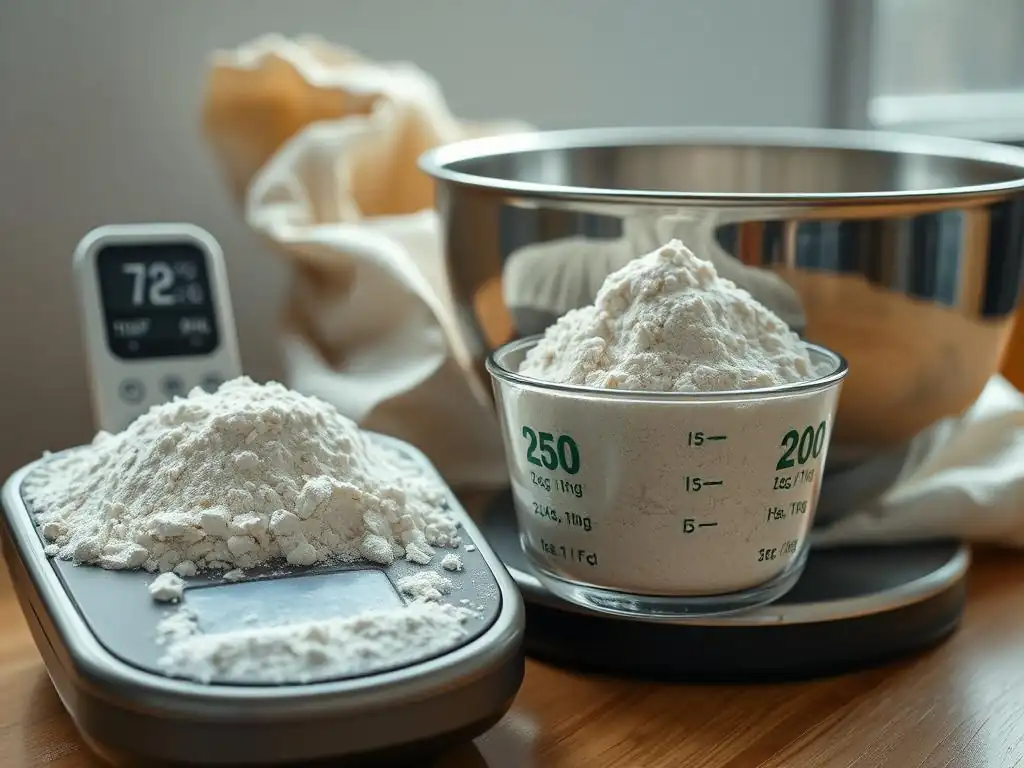
Humidity, the amount of water vapor present in the air, is a silent but powerful force affecting many baking ingredients, particularly dry ones. Its influence is largely due to the hygroscopic nature of these ingredients – their tendency to absorb moisture from the environment. This absorption directly impacts the weight and volume of ingredients measured, posing a significant challenge to temperature humidity baking measurements accuracy.
The Hygroscopic Nature of Flour: Absorbing Moisture from the Air
Flour is highly hygroscopic, meaning it readily absorbs moisture from the atmosphere. In high humidity conditions, flour can absorb a significant amount of water vapor. While the exact amount varies depending on the type of flour and the humidity level, flour stored in a humid environment can easily contain 1-2% more moisture by weight than flour stored in a dry environment. This might seem small, but it translates directly into measurement inaccuracy, especially when measuring by volume.
A cup of flour measured in high humidity will contain more water and therefore less actual flour solids by weight compared to a cup measured in low humidity. This alters the crucial flour-to-liquid ratio in a recipe. For instance, if a recipe calls for 2 cups of flour, measured by volume, you could be adding less structural protein and starch in humid conditions, potentially leading to a weaker dough or batter that doesn't hold its shape or rise correctly. This is a primary reason why achieving consistent temperature humidity baking measurements accuracy is difficult with volume measurements of flour.
Humidity's Influence on Sugar Clumping and Measurement
Like flour, sugar is also hygroscopic, although to a lesser extent depending on the type. Granulated sugar can absorb moisture in high humidity, which can cause it to clump. While clumping doesn't drastically change the weight of a standard volume measurement as much as it does for flour, it can make accurate and consistent scooping and leveling difficult, potentially leading to volume errors.
Brown sugar, with its added molasses, is even more susceptible to humidity. High humidity can make it overly soft and sticky, while low humidity can cause it to dry out and harden into a solid block. Both extremes make accurate volume measurement challenging, as the ability to pack the sugar consistently is compromised. For optimal temperature humidity baking measurements accuracy with brown sugar, storing it properly in an airtight container and measuring by weight are recommended.
Impact of High Humidity on Leavening Agents: Baking Powder and Baking Soda
Baking powder and baking soda are chemical leaveners that react with moisture and/or acid to produce carbon dioxide gas, creating rise in baked goods. They are sensitive to moisture, and exposure to high humidity can prematurely activate them or degrade their potency over time.
While you measure leavening agents in small volumes (teaspoons, tablespoons), their effectiveness is critical. If baking powder absorbs moisture from humid air before being used, some of its leavening power might be lost. This can result in baked goods that don't rise as high or have a denser texture than intended. Storing these agents in airtight containers is essential to protect their efficacy and ensure they perform correctly when needed, contributing to overall temperature humidity baking measurements accuracy.
Specific Ingredient Measurement Challenges in Different Climates
Baking in different geographical locations presents unique environmental challenges that directly impact ingredient behavior and measurement accuracy. The ambient temperature and humidity levels, as well as atmospheric pressure, vary significantly from place to place, requiring bakers to be mindful of these factors to achieve successful results. Understanding these regional differences is key to adapting recipes for consistent temperature humidity baking measurements accuracy.
Baking at High Altitude: Compensating for Atmospheric Pressure
High altitude baking introduces several challenges, primarily due to lower atmospheric pressure and typically lower humidity. At higher elevations (e.g., 3,000 feet or roughly 900 meters and above), the air pressure is lower. This causes leavening gases (like carbon dioxide from baking powder or yeast) to expand more rapidly and with less resistance, potentially causing cakes to rise too quickly and then collapse, or cookies to spread excessively. Liquids also evaporate faster because water boils at a lower temperature (around 203°F or 95°C at 5,000 feet/1,500 meters, compared to 212°F or 100°C at sea level).
While the primary adjustments for high altitude baking involve reducing leavening, sugar, and fat, and increasing liquid, the lower humidity often found at high altitudes also affects ingredient measurements. Dry ingredients like flour may be drier and lighter, meaning a cup measurement might contain less actual flour solids compared to sea level. This requires careful attention to measurement, and often weighing ingredients becomes even more critical for temperature humidity baking measurements accuracy in high-altitude environments.
Baking in Coastal Regions: Managing High Humidity and Salt Air
Coastal regions are often characterized by high humidity. As discussed earlier, high humidity causes dry ingredients like flour and sugar to absorb moisture, increasing their weight and potentially affecting volume measurements. This extra moisture in ingredients can lead to doughs and batters that are stickier or wetter than expected, requiring adjustments in flour or liquid.
Beyond humidity, coastal air can also carry fine salt particles. While less impactful on general ingredient measurement, prolonged exposure for ingredients stored improperly could theoretically affect flavor or ingredient stability over time. The main challenge in coastal baking is consistently managing the moisture absorbed by ingredients before they even make it into the mixing bowl. Achieving reliable temperature humidity baking measurements accuracy here heavily relies on proper ingredient storage and potentially adjusting recipes based on observed dough/batter consistency.
Best Practices for Accurate Baking Measurements Regardless of Temperature and Humidity
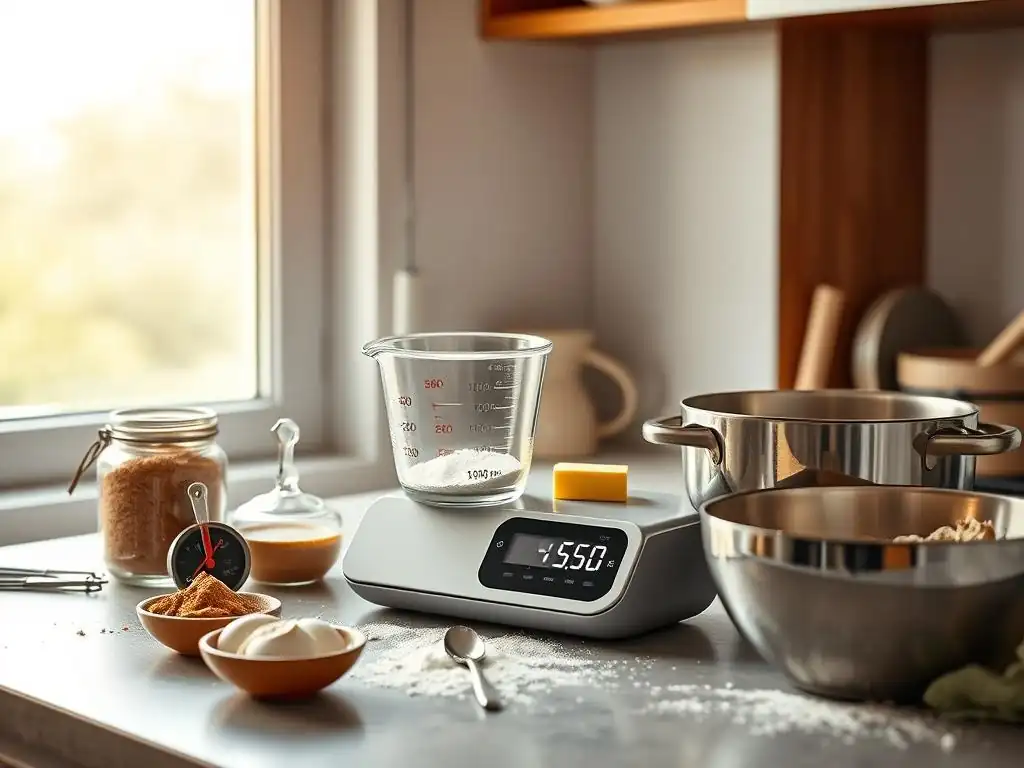
While temperature and humidity can certainly complicate temperature humidity baking measurements accuracy, adopting certain best practices can significantly mitigate their impact and lead to more consistent baking results. These techniques help standardize your approach, making your measurements more reliable regardless of the environmental conditions on any given baking day.
Maintaining a Consistent Baking Environment
Whenever possible, try to bake in an environment with a relatively consistent temperature and humidity level. Avoid baking in a kitchen that is excessively hot or cold, or during a period of extreme humidity if you can help it. Aim for a comfortable room temperature, ideally between 68°F and 72°F (20°C-22°C). While controlling humidity might be harder without a dehumidifier, being aware of high humidity can prompt you to be more cautious with certain ingredients, especially flour. A stable environment reduces the variables affecting ingredient properties.
Using a Kitchen Scale for Precise Ingredient Weight Measurements
The single most effective way to achieve temperature humidity baking measurements accuracy is to measure ingredients by weight using a digital kitchen scale rather than by volume (cups and spoons). Weight measurements are impervious to fluctuations in density caused by temperature or humidity. A gram of flour is always a gram of flour, whether it's warm or cold, dry or moist.
Many modern recipes provide ingredient weights alongside volume measurements. If a recipe only provides volume, you can often find reliable weight conversions online or in baking reference books. Investing in a good quality digital scale is perhaps the most impactful step you can take towards mastering accurate measurements and overcoming environmental challenges in baking.
Proper Storage of Baking Ingredients to Minimize Environmental Impact
How you store your baking ingredients plays a critical role in protecting them from the effects of temperature and humidity. Proper storage helps maintain their intended moisture content and consistency, which in turn improves temperature humidity baking measurements accuracy.
Airtight Containers for Flour and Sugar
Flour, sugar, and leavening agents like baking powder and baking soda should always be stored in airtight containers. Materials like glass, metal, or sturdy plastic containers with tight-fitting lids work best. These containers create a barrier against ambient moisture, preventing hygroscopic ingredients from absorbing excess humidity or drying out in low humidity. Storing them in a cool, dark pantry further protects them from temperature fluctuations and light degradation.
Temperature-Controlled Storage for Fats and Oils
Solid fats like butter and shortening should be stored according to recipe requirements (usually refrigerated) until needed. If a recipe calls for softened butter, take it out of the refrigerator ahead of time to allow it to come to the correct temperature range (65-70°F / 18-21°C) naturally, rather than trying to soften it quickly in a warm place. Oils should be stored in a cool, dark place away from heat sources to prevent them from becoming rancid and to maintain a relatively stable temperature.
Adjusting Recipes Based on Temperature and Humidity Observations
Even with best practices, sometimes you need to make minor adjustments based on the look and feel of your dough or batter, especially in challenging environments. If you notice your flour feels particularly damp due to high humidity, you might need to slightly reduce the liquid called for in the recipe or add a tiny bit more flour (measured carefully by weight if possible) until the dough or batter reaches the correct consistency described in the recipe.
Conversely, in very dry conditions, you might need a touch more liquid. These small adjustments, based on careful observation and understanding of how temperature and humidity affect your ingredients, are part of developing baking intuition and ensuring temperature humidity baking measurements accuracy in practice.
Tools and Techniques for Minimizing Temperature and Humidity Effects
Equipping yourself with the right tools and understanding simple techniques can further help you navigate the challenges posed by environmental factors in baking. These aids provide information and methods to help you maintain temperature humidity baking measurements accuracy and adapt your baking process effectively.
Investing in a Reliable Kitchen Thermometer
A good kitchen thermometer is invaluable. It helps you ensure ingredients like butter are at the correct temperature for creaming, check the temperature of liquids for yeast activation, and verify your oven temperature (which can sometimes fluctuate significantly from the dial setting). Knowing the precise temperature of your ingredients and your oven is fundamental to controlling the baking process and achieving predictable results, complementing your efforts in temperature humidity baking measurements accuracy.
Using a Hygrometer to Monitor Humidity Levels
For bakers living in areas with significant humidity swings, or those striving for ultimate precision, a simple hygrometer can be a useful tool. A hygrometer measures the amount of humidity in the air. While you don't need to monitor humidity constantly, being aware of whether the air is particularly dry or humid can inform your expectations about how your dry ingredients might behave and whether you might need to pay extra attention to their consistency or consider slight adjustments.
Tips for Adapting Recipes to Your Specific Climate
- Start with Weight: Prioritize using recipes that provide ingredient weights, or convert your favorite volume-based recipes to weight measurements. This is the most impactful adaptation for temperature humidity baking measurements accuracy.
- Observe Ingredient Consistency: Pay attention to how your flour, sugar, and butter feel before you start. Is the flour clumping? Is the brown sugar hard or excessively soft? Is the butter softening very quickly? These observations provide clues about the environmental conditions affecting your ingredients.
- Make Small Adjustments: If your dough or batter feels too wet in high humidity or too dry in low humidity compared to the recipe's description, make very small adjustments (e.g., add a tablespoon of flour or a teaspoon of liquid at a time) until the consistency feels right. Note these adjustments for future reference.
- Proper Cooling: Allow baked goods to cool properly according to the recipe. Temperature and humidity during cooling also affect final texture.
Case Studies: Examples of Temperature and Humidity Affecting Baking Outcomes
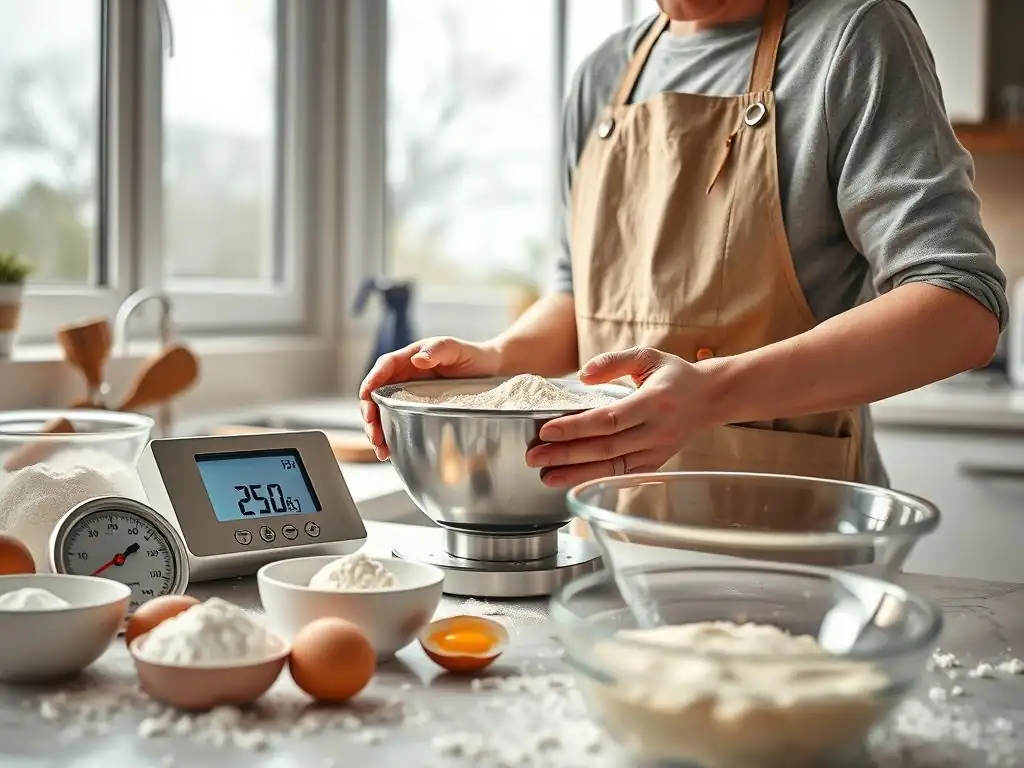
Looking at real-world examples helps illustrate just how impactful temperature and humidity can be on baking results, even when following a recipe diligently. These scenarios highlight the importance of considering environmental factors for temperature humidity baking measurements accuracy.
Imagine baking your favorite chocolate chip cookie recipe on a hot, humid summer day. You measure your flour by volume, scooping it directly from the bag (a common but less accurate method). Due to the high humidity, the flour has absorbed extra moisture and is slightly compacted in the bag. When you scoop and level, you might inadvertently include more actual flour solids than the recipe intended by volume in standard conditions. Additionally, the high ambient temperature means your butter softens faster than usual, perhaps becoming too soft before creaming.
The combination of slightly more flour (making the dough stiffer) and potentially over-softened butter (affecting creaming and spread) can lead to cookies that don't spread properly in the oven and end up thicker and potentially less chewy than desired. Conversely, if the flour absorbed moisture and you used the spoon-and-level method, you might add less flour solids, and combined with potentially too-soft butter, you could end up with cookies that spread excessively thin. This demonstrates how even subtle shifts in temperature humidity baking measurements accuracy due to environment can alter the final product.
Example 2: Tough Bread Crust in a Dry Environment
Consider baking a loaf of rustic bread on a cold, dry winter day. You are measuring your flour by volume. In the low humidity, your flour is likely quite dry. If you measure by volume, you might be adding slightly less moisture than expected within the flour itself. The dry air also causes the surface of your dough to dry out more quickly during kneading and proofing if not properly covered.
If the dough surface dries out during proofing, it forms a skin that restricts the dough's ability to expand properly. During baking, the dry environment can lead to increased moisture loss from the crust, resulting in a thicker, harder, and potentially tougher crust than intended. While measuring by weight helps significantly with the initial flour measurement, the overall dry environment still requires attention to hydration levels and preventing the dough surface from drying, reinforcing that temperature humidity baking measurements accuracy is part of a larger environmental awareness in baking.
Conclusion: Achieving Baking Precision Despite Environmental Challenges
Achieving consistent baking results requires more than just accurately reading a recipe; it demands an understanding of how environmental factors like temperature and humidity interact with your ingredients. While these factors can introduce variability into measurements, especially when using volume, recognizing their impact is the first step towards mitigating their effects. By being mindful of the conditions in your kitchen and the state of your ingredients, you can take proactive steps to ensure greater precision.
Ultimately, striving for temperature humidity baking measurements accuracy involves adopting best practices like measuring by weight, storing ingredients properly, and being willing to make small, informed adjustments based on observation. Baking is a blend of science and art, and learning to navigate the nuances of your environment will empower you to produce delicious, consistent results regardless of the weather outside.
Key Takeaways for Accurate Baking Measurements
- Temperature affects the density of dry ingredients and the consistency of fats.
- Humidity causes dry ingredients like flour and sugar to absorb moisture, altering their weight and volume.
- Volume measurements (cups/spoons) are more susceptible to temperature and humidity variations than weight measurements.
- Measuring ingredients by weight using a kitchen scale is the most reliable method for consistent temperature humidity baking measurements accuracy.
- Proper storage in airtight containers protects ingredients from environmental moisture and temperature swings.
- Be aware of your climate (high altitude, coastal, etc.) and how it might affect your ingredients and baking process.
- Observing the consistency of your dough or batter allows for minor, necessary adjustments.
Further Resources for Mastering Baking Techniques
For those eager to continue refining their baking skills and understanding, exploring resources on ingredient science, high-altitude baking adjustments, and the specifics of measuring by weight can provide deeper insights. Many excellent baking books and online communities offer detailed guides and tips from experienced bakers who have navigated these environmental challenges successfully. Keep practicing, keep observing, and enjoy the rewarding journey of mastering baking with greater precision.
Frequently Asked Questions
How does temperature affect the accuracy of ingredient measurements in baking?
Temperature can significantly impact the density and volume of ingredients. Warmer temperatures can cause ingredients like flour to expand, leading to inaccurate measurements if not accounted for.
Why is humidity a factor when measuring dry ingredients for baking?
High humidity can cause dry ingredients like flour and sugar to absorb moisture from the air, increasing their weight and affecting the dry-to-wet ratio in your recipe. This can lead to altered textures in baked goods.
What tools can help ensure accurate measurements despite temperature and humidity fluctuations?
Using a digital kitchen scale is crucial for accurate measurement, as it measures by weight rather than volume. Also, consider using airtight containers to store ingredients and minimize moisture absorption.
How can I adjust my baking recipes to compensate for high humidity?
You might need to slightly reduce the amount of liquid in your recipe to compensate for increased moisture in dry ingredients. Another strategy is to add a bit more flour to absorb excess moisture.
Is it necessary to adjust oven temperature based on humidity levels?
While not always necessary, extreme humidity can affect baking times. Consider slightly increasing baking time if you notice baked goods taking longer to set, and ensure proper ventilation in your kitchen.
Final Reflection: Precision Baking in a Changing Climate
The precise measurement of ingredients is not merely a detail in baking; it's the cornerstone of consistent, high-quality results. Ignoring the impact of temperature and humidity on ingredient behavior is akin to building a house on shifting sand – the foundation is unstable, and the final product suffers. This is especially relevant today, as climate change leads to increasingly unpredictable weather patterns, directly affecting the accuracy of our measurements in the kitchen.
The subtle shifts in ingredient volume and weight caused by fluctuating temperatures and humidity levels have a profound and often overlooked impact on the baking process. This isn't just about achieving the perfect rise; it's about understanding the fundamental chemistry at play. As the old adage goes, Baking is a science, and a little bit of magic.
But the magic only works if the science is sound, and that science demands attention to environmental factors. My own experiences, from disastrously flat cakes to unexpectedly dense loaves, have underscored the critical importance of accounting for these variables.
Consider the information presented in this article – the impact of humidity on flour, the effect of temperature on butter, the importance of adjusting liquid measurements accordingly. Now, take a moment to reflect on your own baking practices. Are you accounting for these variables? Are you using tools that help you measure accurately, regardless of environmental fluctuations? I encourage you to embrace precision in your baking, to observe the subtle changes in your ingredients, and to adjust your techniques accordingly. The reward? Consistent, delicious results that will elevate your baking to a new level of mastery.
Unlock Baking Perfection: Master the Art of Precise Measurement
Thanks for taking the time to explore the fascinating world of ingredient measurements and their relationship to temperature and humidity! You've now gained valuable insights into achieving consistent and delicious results in your baking. Ready to put this knowledge into action?
- Master your kitchen's microclimate: Start tracking your kitchen's temperature and humidity for a week, noting the variations and how they affect your ingredients. This will give you a better understanding of your unique baking environment.
- Perfect your recipes: Adapt existing recipes to account for temperature fluctuations. Try baking the same recipe on different days with varying temperatures and humidity to observe the impact.
- Share your discoveries: Let’s build a community of baking perfectionists! Share your experiences and insights about temperature and humidity impacts on your baking in the comments below.
What temperature and humidity adjustments will you make to your next baking project?