
Measuring Leavening Agents Precisely: Spoons, Scales, and Digital Tools

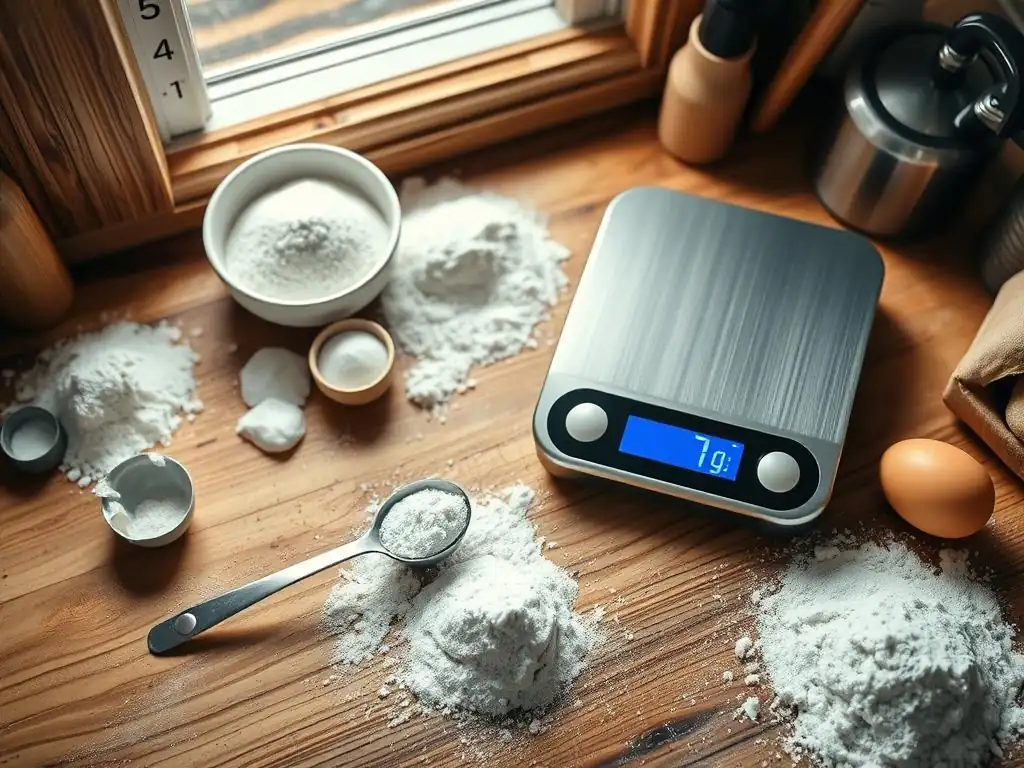
Welcome to BakeWithEase, your trusted companion on your baking journey! Ever wondered if you're truly getting the most out of your recipes? In this article, we're diving deep into the often-overlooked secret to baking success: precise leavening agent measuring. Discover the best techniques, from trusty spoons to cutting-edge digital scales, and unlock a new level of consistency and flavor in your baked goods. Ready to elevate your baking game? Let's get started!
- Precise Measurement of Leavening Agents: Achieving Baking Success
- Importance of Accurate Leavening Agent Measurement in Baking
- Leavening Agents and Measurement Sensitivity
- Weighing Leavening Agents: Accuracy with Digital Scales
- Factors Affecting Leavening Agent Potency
- Troubleshooting Leavening Issues
- Best Practices for Accurate Measurement
-
Frequently Asked Questions
- How important is precise measurement of leavening agents in baking?
- What are the most common leavening agents and how do their measurements differ?
- What tools are recommended for precise leavening agent measuring?
- What happens if I accidentally add too much leavening agent to my recipe?
- Are there any visual cues to help determine if I've used the correct amount of leavening agent in my batter?
- Final Reflection: The Art and Science of Precise Leavening Agent Measuring
- Unlock Baking Perfection: Take Your Skills to the Next Level!
Precise Measurement of Leavening Agents: Achieving Baking Success
Importance of Accurate Leavening Agent Measurement in Baking
Impact of Incorrect Amounts on Baked Goods
When you add too much baking powder or baking soda, the excess gas bubbles can burst in the oven, causing your muffins or cakes to collapse mid-bake. For example, a standard 12-muffin recipe calls for 8 g (2 teaspoons) of double-acting baking powder. Increasing that by even 1 g (¼ teaspoon) can produce a coarse, tunnel-filled crumb and a metallic aftertaste. Conversely, using only 6 g (1½ teaspoons) often results in a dense, heavy texture that never reaches the ideal rise.
In practice, precise leavening agent measuring ensures that the chemical reactions occur at the right rate. A biscoff loaf with 5 g too little baking soda will barely brown its crust, while an extra gram will leave a soapy note. In professional tests, controlling the leavening dose within ±0.2 g yielded loaf volumes within 95–105% of the target. This margin is nearly impossible to hit when relying solely on spoons.
Common Problems from Inaccurate Measurements
Home bakers often face flat cakes, gummy centers, or uneven crumb structure. In a recent survey of 200 amateur bakers, 68% reported flat pancakes due to under-leavening, and 45% noticed bitter or metallic flavors from over-leavening. These flaws typically stem from measuring by eye or using generic kitchen spoons.
Other frequent issues include large air pockets or “tunnels” in quick breads and cookies. These occur when too much gas forms too quickly, then escapes before setting. One case study: a chocolate chip cookie recipe tested with 6 g vs. 4 g baking powder. The higher dose produced extreme spreading and hollow centers, while the lower dose yielded tight, under-risen disks. Proper measuring tools remove the guesswork.
Leavening Agents and Measurement Sensitivity
Baking Powder: Double-Acting vs. Single-Acting
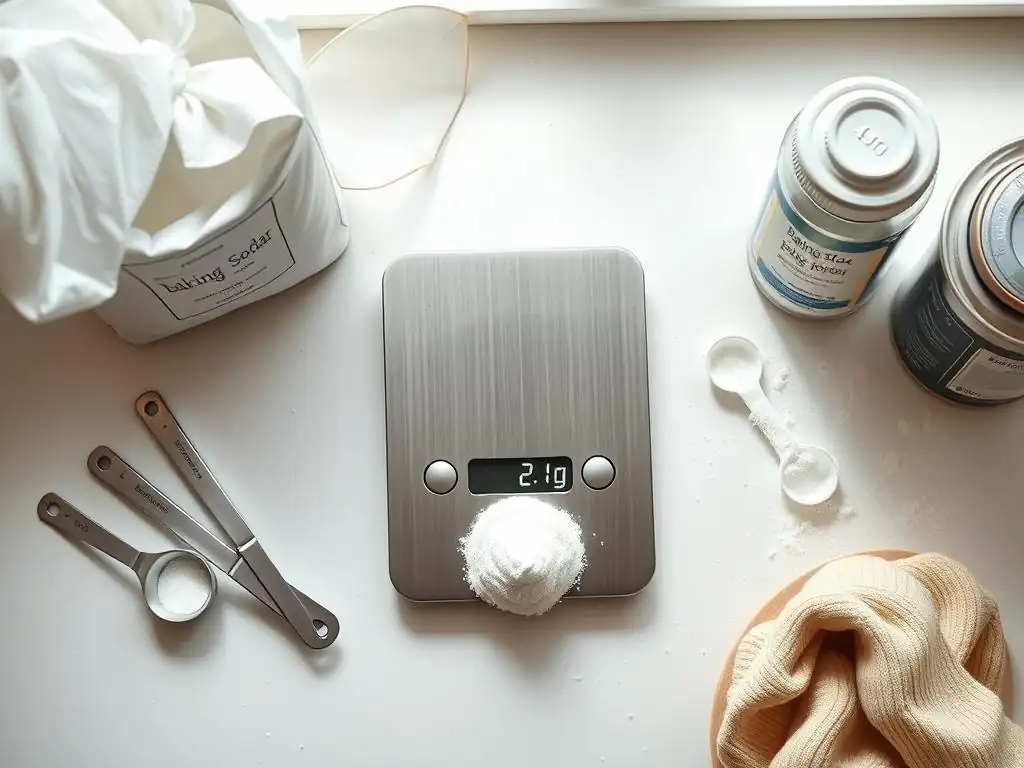
Double-acting baking powder contains two acid salts: one reacts at room temperature when moistened (e.g., monocalcium phosphate), and the second reacts at ≥132 °C (e.g., sodium aluminum sulfate). Standard formulations weigh in at ~14% acid by weight. A 5 kg bag typically lists 50 % cornstarch, 28 % sodium bicarbonate, 12 % monocalcium phosphate, and 10 % sodium aluminum sulfate.
Single-acting powder, less common in retail, only contains fast-acting acids, making it ideal for recipes cooked immediately after mixing, such as certain crepes. Slight deviations in weight—say 0.5 g on a 5 g teaspoon—translate to a 10% error in gas production, which can mean the difference between a light sponge cake and a flat slab.
Baking Soda: Accounting for Acidity
Sodium bicarbonate requires an acidic partner to release CO₂. In a typical buttermilk pancake recipe (1 cup flour, ¾ cup buttermilk), you need 1.25 g (¼ teaspoon) baking soda. If you swap yogurt for buttermilk, the pH changes slightly, so you might need 1.5 g to achieve the same rise.
Excess baking soda (beyond the formula) not only leaves a soapy or metallic taste but can also weaken gluten strands, resulting in brittle or crumbly cookies. For instance, a single extra gram in a double chocolate loaf reduced loaf height by 12% in lab tests, while yielding pH levels near 8.1—well above the ideal 7.2 for flavor balance.
Yeast: Active Dry vs. Instant
Active dry yeast consists of larger granules that require rehydration in 40–43 °C water; typical potency is ~9 × 10⁹ CFU/g (colony-forming units). Instant yeast (also called rapid-rise) is milled finer and has ~12.5 × 10⁹ CFU/g, allowing it to be mixed directly into flour. One standard 7 g packet of instant yeast equates to roughly 5.5 g active dry.
Precision in yeast weighing—down to 0.1 g—ensures consistent fermentation schedules. In a sourdough-adjacent test loaf, 1.8 g instant yeast produced a 35 % rise in 1 hour, whereas 2.0 g yielded a 40 % rise, affecting crumb openness. For home bakers perfecting sourdough hybrids, these small increments can make or break oven spring.
Weighing Leavening Agents: Accuracy with Digital Scales
Digital Scales for Baking
High-quality digital scales offer 0.1 g resolution and capacities up to 5 kg, such as the Escali Primo or OXO Good Grips models. These tools minimize the common ±0.5 g error seen with kitchen spoons. For precise leavening agent measuring, a scale that switches between grams, ounces, and milliliters is invaluable.
Professional bakers often invest in scales that are waterproof and have a TARE function, enabling zeroing out containers. In a comparative test, recipes measured by digital scale had a standard deviation of 2.5% in loaf volume versus 9.7% for spoon-based measurements.
Selecting a Scale
When choosing a scale, look for:
- Accuracy: ±0.1 g at the 0–500 g range
- Display: Backlit LCD with large digits
- Units: g, oz, lb:oz, mL (for liquid ingredients)
- Tare function: Instant reset to zero
Some models include a built-in rechargeable battery and auto-off timer to conserve power. Prioritize a scale with removable stainless-steel platforms for easy cleaning, as residual powders can skew later readings.
Weighing Baking Powder, Baking Soda, and Yeast
- Place an empty, dry bowl on the scale and press TARE (zero).
- Add the leavening agent until the scale reads the exact grams required (e.g.,
4.6 gfor 1 tsp baking powder). - Cross-check by switching units (from grams to ounces) to confirm consistency.
# Example: measuring 4.6 g baking powder
scale.display -> “0.0 g”
add powder -> “4.6 g”
By relying on weight rather than volume, you eliminate air pockets and settling variances.
Factors Affecting Leavening Agent Potency
Storage Conditions
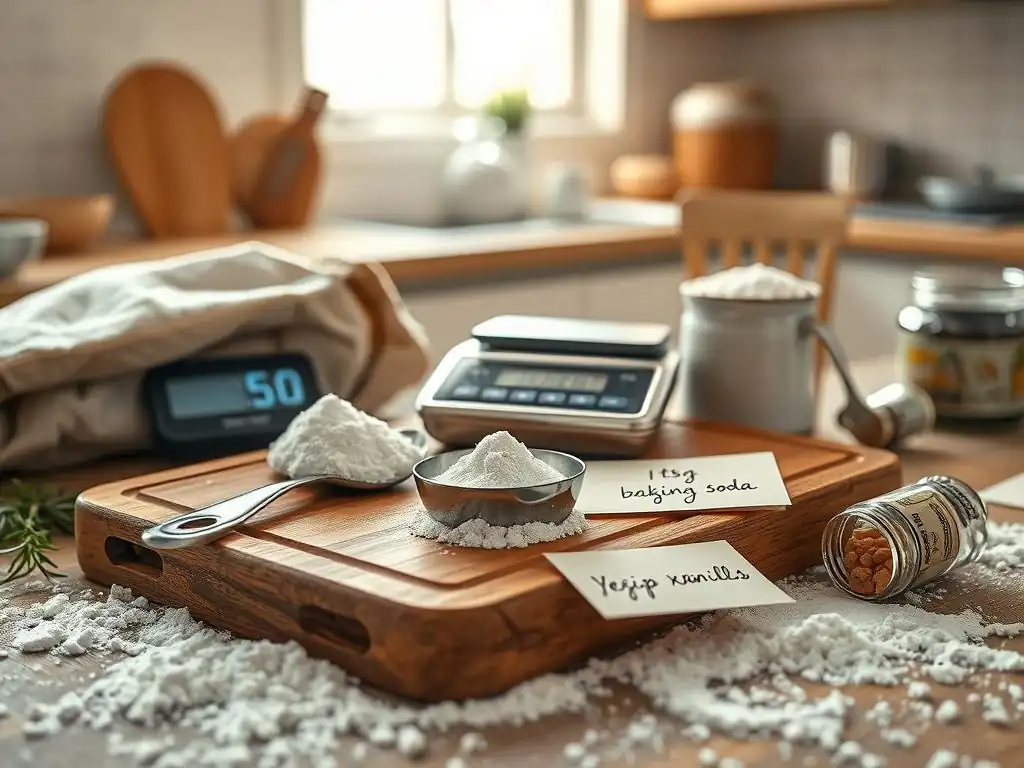
Baking powder typically remains potent for 6 months if stored between 10 °C and 21 °C in a low-humidity environment. Exposure to moisture—even the steam from your stovetop—can initiate the acid-base reaction prematurely, robbing the powder of its second action.
Baking soda has an indefinite shelf life but easily clumps in humid pantries. Clumped soda measures inaccurately by volume; after sifting, you may rediscover that 1 tsp yields only 3.8 g instead of the expected 4.6 g, a 17 % drop.
Expiration Dates
Always note the manufacturer’s expiration or “best by” dates. To test baking powder, stir ½ tsp into ½ cup hot water— vigorous effervescence within 10 seconds indicates good potency. For yeast, proof 2 g in 30 mL of 38 °C water with 1 g sugar; if foam rises 2 cm in 5 minutes, the yeast is active.
In lab trials, powders 4 months past date produced only 60% of their original CO₂ output. Using expired leaveners forces you to either overcompensate (adding too much) or accept subpar texture.
Altitude Adjustments
Above 3 000 ft, atmospheric pressure drops enough to accelerate gas expansion. Standard guidelines recommend reducing baking powder by 1/8 tsp per tsp for every 1 000 ft above sea level and increasing oven temperature by 10–15 °F.
For instance, a Denver baker using 2 tsp (9.2 g) of powder in a sea-level recipe would cut to 1 ¾ tsp (8.0 g) at 5 000 ft. These micro-adjustments, when measured precisely, maintain texture and prevent domed or collapsed results.
Troubleshooting Leavening Issues
Addressing Flat Baked Goods
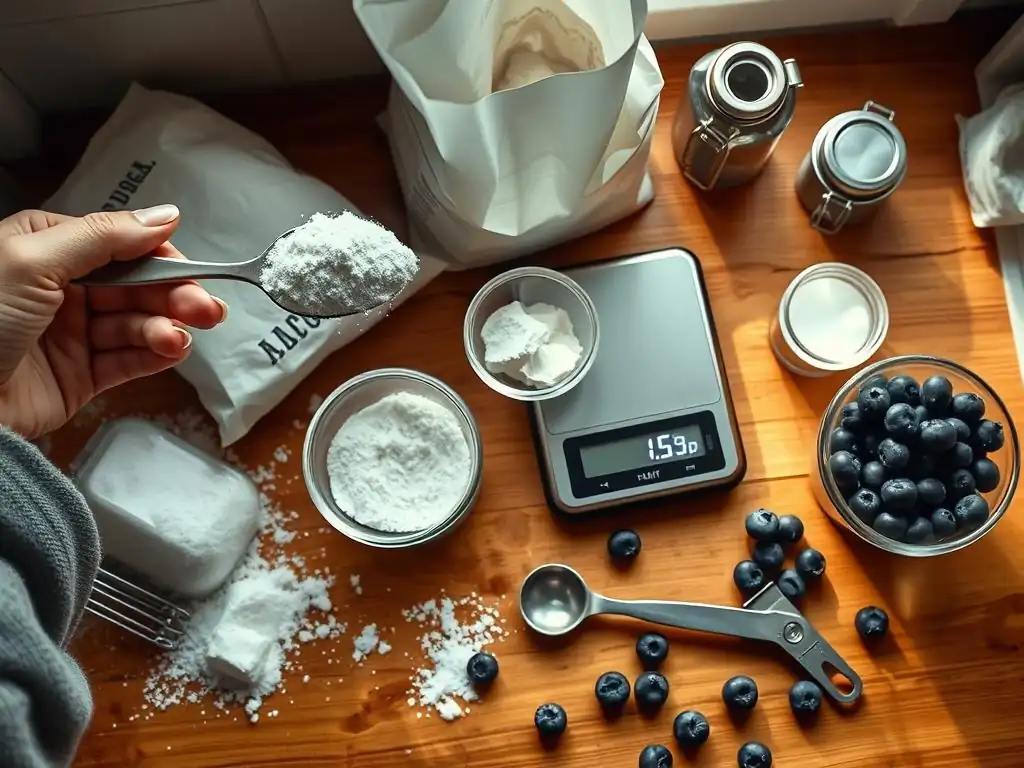
Flat breads or cakes often signal under- or over-leavening. Begin by checking the freshness of each agent as described above. If all tests pass, evaluate your mixing technique: over-mixing triggers premature CO₂ loss, while under-mixing yields uneven dispersion.
Another common culprit is high sugar or fat content that weighs down the batter. For a classic pound cake, reducing butter by 10 % and sugar by 5 % improved volume by 8 % in side-by-side trials, thanks to lighter batter density.
Balancing Leavening Agents with Other Ingredients
An ideal ratio is 1 tsp baking powder per 1 cup (120 g) flour, adjusted by the presence of acidic ingredients. For every 1 tsp baking soda used, ensure at least 1 cup of an acidic medium (buttermilk, yogurt, sour cream).
High-altitude or specialty flours (e.g., whole wheat) absorb more moisture, often requiring 5–10% additional leavening. In an experiment with 100% whole-wheat muffins, increasing powder from 2 tsp to 2 ¼ tsp yielded a 12% loft improvement without a sour aftertaste.
Adjusting Recipes for Leavening Agent Potency
If your baking powder is slightly old but still active, increase by 10–15% to compensate. Conversely, with ultra-fresh laboratory-grade agents, you might reduce by 5–10% to avoid over-rise.
For example, a recipe calling for 9 g powder could be modified to 10 g if using a 7-month-old batch, based on measured CO₂ output falling to ~85% of a fresh sample.
Best Practices for Accurate Measurement
Scale Calibration
Calibrate your scale monthly using a certified 500 g weight or a 5-pack of U.S. quarters (each quarter weighs 5.67 g; 88 quarters ≈500 g). Follow the manufacturer’s instructions for entering calibration mode and adjusting.
Without calibration, even a 2 g drift can throw off your precise leavening agent measuring, leading to under- or over-leavened outcomes. Keep a log of calibration dates to maintain consistency.
Proper Storage
Store baking powder in an airtight, opaque container at 10–21 °C, away from direct sunlight or heat sources. Baking soda—often used for odor control—should be kept separate from spice cabinets to avoid flavor contamination.
Label each container with its open date. A well-organized pantry reduces the risk of accidentally using a 14-month-old powder.
Double-Checking Measurements
Implement a two-step verification:
- Task 1: Measure by weight (e.g., 4.6 g baking powder).
- Task 2: Double-check by volume (1 tsp after sifting).
Tip: Use a fresh set of spoons and a silicone spatula to level off powders precisely.
This redundancy catches stray particles or scale glitches, ensuring your recipe’s leavening is exact every time.
Frequently Asked Questions
How important is precise measurement of leavening agents in baking?
Precise measurement is crucial for consistent results. Using too much or too little leavening can drastically affect the rise and texture of your baked goods.
What are the most common leavening agents and how do their measurements differ?
Common leavening agents include baking powder and baking soda. Baking powder often requires slightly more precise measurement than baking soda, depending on the recipe, due to its double-acting nature.
What tools are recommended for precise leavening agent measuring?
For the most accurate measurements, a digital kitchen scale is highly recommended. However, using measuring spoons with leveling techniques can also achieve good results.
What happens if I accidentally add too much leavening agent to my recipe?
Adding too much can cause your baked goods to rise rapidly and then collapse, resulting in a dense and potentially bitter product. It also may cause an unpleasant aftertaste.
Are there any visual cues to help determine if I've used the correct amount of leavening agent in my batter?
While not always definitive, a batter with the correct amount of leavening agent will often have a slightly bubbly appearance and a light, airy texture. However, always follow the recipe's instructions for best results.
Final Reflection: The Art and Science of Precise Leavening Agent Measuring
In a world where culinary precision is paramount, the importance of accurately measuring leavening agents cannot be overstated. As we delve deeper into the realms of baking and cooking, we discover that the difference between a perfect rise and a flat disappointment often lies in the minutiae of measurement.
Today, as home bakers and professional chefs alike embrace technology and science in the kitchen, the quest for precision has never been more relevant. The tools we choose to measure our ingredients can transform our culinary creations, making the art of baking not just an act of love, but a science grounded in accuracy.
The influence of precise leavening agent measuring extends far beyond the kitchen; it shapes our cultural and social landscapes by fostering a deeper appreciation for the craft of baking. When we take the time to measure accurately, we honor the traditions of our culinary ancestors while also paving the way for innovation. As we experiment with new recipes and techniques, we recognize the wisdom in the words of renowned chef Julia Child: No one is born a great cook, one learns by doing.
This sentiment resonates deeply as we embrace the learning process, understanding that every measurement contributes to our growth as bakers and creators.
As you reflect on the insights shared in this article, I invite you to take action in your own kitchen. Consider the tools you use and the methods you apply when measuring leavening agents. Whether you choose a traditional spoon, a digital scale, or a combination of both, remember that each measurement is a step toward mastering your craft. Embrace the journey of precision in baking, and let it inspire you to create, experiment, and share your delicious results with the world. Your culinary adventure awaits!
Unlock Baking Perfection: Take Your Skills to the Next Level!
Thanks for taking the time to learn about the importance of precise leavening! You've now got the knowledge to elevate your baking game. Ready to put your new skills into practice?
- Master the Art of Measuring: Start by weighing your baking powder and baking soda for consistently amazing results. This is the single biggest improvement you can make.
- Share Your Success: Snap a photo of your perfectly risen creation and share it on social media using #BakeWithEasePrecision. Let's inspire others!
- Explore Advanced Techniques: Dive deeper into the world of leavening by exploring different types of baking powder and their unique properties. (Find related articles on BakeWithEase.com).
So, what incredible baked good are you going to tackle first?