
How to Prevent Butter Leakage in OreoStyle Sandwich Cookies


Welcome to BakeWithEase, your haven for all things baking! Ever wondered how to achieve that perfect Oreo-style sandwich cookie without the dreaded butter leakage? This isn't just about aesthetics; it's about achieving that ideal texture and flavor. Uncover the secrets to creating flawless sandwich cookies that hold their shape and tantalize the taste buds. Read on to learn our Baking Tips & Hacks and say goodbye to oily messes!
- How to Prevent Butter Leakage in Oreo-Style Sandwich Cookies: A BakeWithEase Guide
- Understanding Oreo Sandwich Cookie Leakage: Why Does Butter Ooze Out?
- Troubleshooting Butter Leakage in Homemade Oreo Cookies: Practical Solutions
- Baking Techniques to Minimize Butter Leakage in Oreo-Style Cookies
- Recipe Adjustments for Leak-Proof Oreo Sandwich Cookies
- Storing Oreo Sandwich Cookies to Prevent Butter Leakage
- Advanced Tips for Preventing Butter Leakage in Oreo Cookies
-
Frequently Asked Questions
- How does the temperature of the butter affect butter leakage in Oreo-style cookies?
- What role does flour play in preventing butter leakage?
- Can the type of fat I use affect butter leakage?
- Does chilling the dough help to prevent butter leakage?
- What baking techniques can minimize butter leakage in Oreo-style cookies?
- Final Reflection: Beyond the Mess: Mastering the Oreo Sandwich Cookie
- Conquer Cookie Leakage: Master Your Oreo-Style Sandwich!
Butter is a complex ingredient, primarily composed of fat (typically around 80-82%), water (about 16-18%), and milk solids (around 1-2%). In cookie dough, the fat is often suspended within the flour and sugar matrix. When exposed to heat during baking, the butter's crystalline structure breaks down, and the fat melts.
This melting process is crucial for creating tenderness and contributing to spread, but if it happens too quickly or excessively before the cookie structure sets, the liquid fat can separate and leak out, leading to unsightly and greasy Oreo sandwich cookie leakage. The water in the butter also turns to steam, which helps leaven the cookie slightly, but this process must be balanced with the fat melting.
The temperature at which butter melts is relatively low, typically between 86°F and 95°F (30°C and 35°C). Oven temperatures, however, are much higher, often 350°F (175°C) or more. This significant temperature difference means the butter melts rapidly once the cookies hit the heat.
The key to preventing Oreo sandwich cookie leakage is to ensure the cookie dough is structured enough by the time the butter fully melts to contain the fat, or to slow down the melting process itself. The balance of ingredients – flour, sugar, fat, and leaveners – plays a critical role in how quickly the cookie sets and whether it can hold its shape and fat content during baking.
Several factors can contribute to butter separation, or Oreo sandwich cookie leakage, during the baking process. One of the most frequent culprits is insufficient chilling of the dough. When dough is not properly chilled, the butter is softer and melts much faster when introduced to the oven's heat, increasing the likelihood of it oozing out before the cookie can set around it. This is particularly true for recipes with a high butter-to-flour ratio, common in rich sandwich cookie bases.
Another significant cause of Oreo sandwich cookie leakage is using the wrong type or amount of fat, both in the cookie dough and especially in the filling. If the filling recipe relies solely on butter and is not stabilized, the butter can soften or melt at room temperature or when sandwiched between slightly warm cookies, leading to a greasy mess around the edges.
Overmixing the cookie dough can also develop too much gluten, resulting in a tougher cookie that might not spread correctly, potentially forcing fat out as it bakes. Similarly, baking at too high a temperature or for too long can cause the butter to melt completely and spread excessively before the cookie has a chance to firm up, exacerbating the problem of Oreo sandwich cookie leakage.
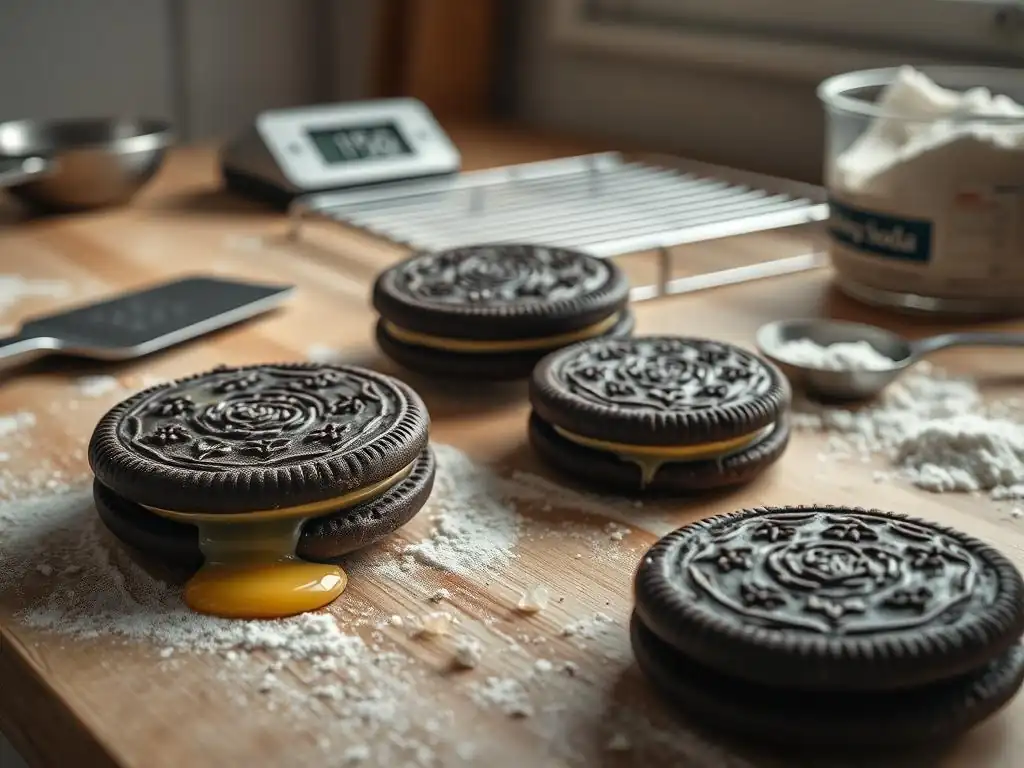
The Importance of Chilled Dough in Preventing Butter Leakage
Chilling cookie dough is perhaps the most crucial step in preventing Oreo sandwich cookie leakage and achieving that perfect texture and shape. When cookie dough is chilled, the fat (butter) solidifies, and the flour absorbs moisture from the wet ingredients. This process creates a firmer, more stable dough structure. When the cold dough enters a hot oven, the butter melts more slowly compared to room-temperature butter. This delay gives the cookie's structure (formed by the setting flour and egg proteins) time to solidify around the melting fat.
Furthermore, chilling allows flavors to meld and deepen, resulting in a more delicious cookie. For recipes prone to spreading or Oreo sandwich cookie leakage, chilling for at least 30-60 minutes is often recommended. Some bakers even find chilling for 24 hours or more improves the texture and reduces spread significantly. The cold butter also creates small pockets within the dough; as it melts, the water content turns to steam, contributing to a slightly leavened, tender interior while the slower melting helps maintain the cookie's defined shape and prevents the fat from running out the sides.
How to Properly Chill Oreo Cookie Dough
To properly chill Oreo cookie dough and combat Oreo sandwich cookie leakage, first ensure your dough recipe has been mixed according to instructions, typically until just combined. Avoid overmixing, as this can develop excess gluten, leading to a tough cookie. Once the dough is ready, gather it into a cohesive mass. For ease of handling and rolling, it's often best to divide the dough into one or two flatter discs or rectangles before chilling. This reduces the chilling time needed compared to one large ball, as the cold can penetrate the dough more efficiently.
Wrap the dough discs tightly in plastic wrap. Ensure there are no gaps where air can reach the dough, as this can cause it to dry out. Place the wrapped dough in the refrigerator for the recommended time, which is usually at least 30 minutes, but often 1-2 hours is better for firm dough that resists Oreo sandwich cookie leakage.
If chilling for longer than a few hours or overnight, you might need to let the dough sit at room temperature for 5-10 minutes before rolling to make it pliable enough to work with, but be careful not to let it get too warm. The dough should be firm but not rock hard when you roll and cut it.
Understanding the Impact of Fat Content on Filling Stability
The fat content in your Oreo-style cream filling is a primary determinant of its stability and susceptibility to Oreo sandwich cookie leakage. Traditional American-style buttercream, often used in these fillings, is primarily butter and powdered sugar. While delicious, butter softens significantly at room temperature and can melt readily, especially when sandwiched between cookies that retain residual heat. A filling with a very high ratio of butter to powdered sugar will be softer and more prone to oozing out the sides of your sandwich cookies, leading to the dreaded Oreo sandwich cookie leakage.
Conversely, reducing the fat content too much can result in a dry, crumbly filling that lacks the creamy mouthfeel characteristic of an Oreo. The goal is to achieve a balance where the fat provides richness and smoothness, but the structure is stable enough to hold its shape at various temperatures. This often involves adjusting the ratio of fat to powdered sugar or incorporating other ingredients that provide stability without excessive fat. The type of fat used also plays a significant role, as different fats have different melting points and consistencies.
Best Butter Types for Oreo Sandwich Cookie Filling
When using butter for your Oreo-style filling to minimize Oreo sandwich cookie leakage, the type of butter matters. Standard unsalted butter, which typically contains around 80-82% butterfat, is commonly used. However, butter with a higher butterfat percentage, sometimes labeled "European-style" butter (often 82-84% butterfat), can sometimes yield a slightly firmer, richer filling due to less water content. While this difference is subtle, it can contribute to better stability.
Using very soft or partially melted butter in the filling is a sure way to invite Oreo sandwich cookie leakage. Always start with softened, but not melted, butter at cool room temperature (around 65-68°F or 18-20°C). This allows it to cream properly with the powdered sugar, creating a stable emulsion. High-quality butter generally performs better, but the primary factor for stability lies in the overall recipe composition and technique, rather than just the specific brand of standard butter.
Alternative Fats to Minimize Butter Leakage
To further combat Oreo sandwich cookie leakage in the filling, consider incorporating alternative fats or fat blends. Shortening, a solid hydrogenated vegetable oil, is a popular choice because it has a higher melting point than butter. Replacing a portion of the butter (e.g., 1/4 to 1/2) with shortening can significantly increase the filling's stability at room temperature, making it less likely to soften and ooze. For example, a filling might use 1/2 cup of softened butter combined with 1/2 cup of shortening, creamed with powdered sugar and flavoring.
Another alternative is using a combination of butter and cream cheese. Cream cheese adds a tangy flavor and creamy texture while providing structure. A filling using equal parts softened butter and cream cheese (e.g., 4 ounces of each) blended with powdered sugar will be much firmer and more stable than one made with butter alone, dramatically reducing the risk of Oreo sandwich cookie leakage. Some recipes even use vegetable oil or melted coconut oil in combination with powdered sugar and stabilizers, though these require careful balancing to achieve the correct texture and prevent separation.
Solution 3: Optimizing Mixing Techniques for Stable Oreo Cream Filling
Overmixing and Undermixing: How They Affect Butter Leakage
The way you mix your Oreo-style cream filling has a direct impact on its texture and stability, and thus its propensity for Oreo sandwich cookie leakage. Undermixing, especially when creaming the butter and powdered sugar, can leave lumps of butter or unincorporated sugar. This results in an inconsistent filling texture where pockets of softer butter are more likely to melt and ooze out, causing localized Oreo sandwich cookie leakage. The filling won't be a smooth, stable emulsion.
Conversely, overmixing the filling, particularly after the powdered sugar has been added, can incorporate too much air. While some air is desirable for a light, fluffy texture, excessive air can make the filling less dense and more prone to collapsing or softening, especially if exposed to warmth. Overbeating the butter and sugar for extended periods can also potentially break the emulsion, leading to a greasy, separated mixture. The goal is to mix just enough to achieve a smooth, homogenous, and creamy consistency without incorporating excessive air or warmth from friction.
The Ideal Mixing Time for Oreo Cookie Filling
Achieving the ideal consistency for your Oreo-style filling to prevent Oreo sandwich cookie leakage requires careful attention to mixing time and speed. Start by creaming the softened butter (or butter/shortening/cream cheese blend) alone for a minute or two on medium speed until it is smooth and lump-free. This ensures the fat is uniform. Then, gradually add the powdered sugar, often in 2-3 additions, mixing on low speed until just combined after each addition.
Once all the powdered sugar is incorporated, scrape down the sides of the bowl. Increase the speed to medium-low and mix for just 1-3 minutes more. The goal is to achieve a smooth, creamy texture that holds its shape.
You'll see the mixture become cohesive and fluffy, but avoid whipping it for too long like you might a frosting meant for piping intricate details. Over-whipping can warm the butter and incorporate too much air, making it less stable. A quick mix after adding all ingredients is usually sufficient to prevent Oreo sandwich cookie leakage caused by an unstable filling structure.
Using Cornstarch to Prevent Butter Separation
Cornstarch is an excellent ingredient for adding stability to fillings and preventing butter separation or Oreo sandwich cookie leakage, especially in recipes that might be exposed to slightly warmer temperatures. Cornstarch is a starch derived from corn kernels and acts as a thickening agent. When combined with fats and liquids and mixed, it helps create a more structured matrix within the filling.
A small amount of cornstarch, typically 1-2 tablespoons per cup of fat (like butter or shortening), can be sifted with the powdered sugar before adding it to the creamed butter. Ensure it is thoroughly combined with the dry ingredients first to prevent clumps. The cornstarch helps absorb any minimal moisture present and provides a subtle thickening effect that prevents the fat from separating out, thereby reducing Oreo sandwich cookie leakage. It won't significantly alter the flavor when used in small quantities.
Adding Powdered Sugar for Enhanced Stability
Powdered sugar, also known as confectioners' sugar or icing sugar, is a key structural component in most Oreo-style fillings and is essential in preventing Oreo sandwich cookie leakage. Unlike granulated sugar, powdered sugar contains a small amount of cornstarch (usually around 3%) to prevent clumping, which also contributes to its stabilizing properties. The finely ground sugar dissolves and blends with the fat, creating a smooth, paste-like consistency that provides the bulk and structure of the filling.
The ratio of powdered sugar to fat is critical for stability. A filling with a higher proportion of powdered sugar to butter will be much firmer and less likely to suffer from Oreo sandwich cookie leakage than one with a lower ratio. For example, a ratio of 2 cups of powdered sugar to 1/2 cup of butter will yield a very firm filling, while 1 cup of powdered sugar to 1/2 cup of butter will be much softer. Experimenting with this ratio is key to finding the right balance between creaminess and stability for your specific needs and environment.
Employing Cream Cheese or Shortening for a Firmer Filling
As mentioned earlier, substituting a portion of the butter with cream cheese or shortening is a highly effective strategy to prevent Oreo sandwich cookie leakage by creating a firmer, more stable filling. Cream cheese has a higher protein content and a different fat structure than butter, which helps it maintain its shape better at room temperature. Using half butter and half cream cheese in your filling recipe will result in a tangy, less sweet, and significantly more stable filling.
Shortening, being a solid fat with a higher melting point, is perhaps the most common additive for increasing filling stability. Replacing half the butter with an equal amount of shortening in a standard buttercream recipe will dramatically reduce its susceptibility to softening and oozing. This is a technique often used in commercial fillings. While it might slightly alter the flavor or mouthfeel compared to 100% butter, the benefit of preventing Oreo sandwich cookie leakage is often worth it, especially if you plan to stack or store the cookies for a period.
Baking Time and Temperature: Finding the Sweet Spot
The oven's temperature and the duration of baking are critical factors in preventing Oreo sandwich cookie leakage. Baking at too high a temperature or for too long can cause the butter in the cookie dough to melt completely before the cookie structure has set, leading to excessive spread and fat leakage. A common temperature for chocolate cookies is around 350°F (175°C). Baking at this temperature for 8-11 minutes, depending on cookie size and thickness, usually allows the edges to set while the center remains slightly soft, preventing significant butter meltdown and subsequent leakage.
If you notice excessive spreading or Oreo sandwich cookie leakage, try slightly lowering your oven temperature by 10-15°F (5-8°C) and increasing the baking time slightly. This allows the cookies to bake more gently, giving the dough structure more time to solidify before the butter fully melts and spreads.
Conversely, baking at too low a temperature might result in cookies that don't spread enough or are crumbly, but it's less likely to cause significant butter leakage unless the dough itself is problematic. Using an oven thermometer to ensure your oven is accurately calibrated is also highly recommended, as oven temperatures can vary significantly from the dial setting.
Preventing Butter Meltdown During Baking
Beyond adjusting temperature and time, several other baking techniques can help prevent butter meltdown and Oreo sandwich cookie leakage. Always start with thoroughly chilled dough, as discussed earlier. Placing cold dough on a cool baking sheet is also beneficial; using a hot baking sheet will cause the butter in the dough to start melting immediately upon contact, increasing the risk of premature spread and leakage. If baking multiple batches, allow the baking sheets to cool completely between batches, or use multiple sheets.
Consider using parchment paper or silicone baking mats on your baking sheets. While they don't directly prevent butter from melting, they create a non-stick surface that allows the cookies to spread evenly without sticking, and they can help contain any minor leakage that does occur, preventing it from burning onto your pan. Avoid overcrowding the baking sheet; place cookies a couple of inches apart (e.g., 2 inches or about 5 cm) to allow for even heat circulation and spread, reducing the chance that excessive heat buildup between closely placed cookies will cause butter to melt out.
The cooling process is just as important as baking when it comes to preventing Oreo sandwich cookie leakage. Once the cookies are out of the oven, they are still quite fragile and the butter within them is still in a liquid or semi-liquid state. Moving them too soon can cause them to break, warp, or encourage any remaining liquid fat to seep out as the structure is disturbed.
Allow the baked cookies to cool on the baking sheet for several minutes (e.g., 5-10 minutes) before attempting to move them. This allows the cookie structure to firm up as the butter solidifies and the starches set. Once they are firm enough to handle without breaking, carefully transfer them to a wire cooling rack to cool completely.
Cooling on a wire rack allows air to circulate around the entire cookie, ensuring even cooling and preventing condensation which could soften the cookie or the filling later. Ensure cookies are completely cool before adding the filling; warm cookies will melt the filling, leading to immediate Oreo sandwich cookie leakage.

Sometimes, the base recipe itself is the culprit behind Oreo sandwich cookie leakage. Recipes with a very high butter-to-flour ratio are inherently more prone to excessive spread and leakage. To increase stability, you can slightly increase the amount of flour in the dough. Adding just a couple of tablespoons (e.g., 15-30g) of extra all-purpose flour per standard batch (using 1-2 cups of flour) can absorb additional moisture and provide more structure to contain the melting butter during baking.
Another adjustment is to slightly reduce the amount of sugar, particularly granulated sugar. Granulated sugar melts and spreads more than powdered sugar, contributing to cookie spread. Reducing it by a tablespoon or two might help control spread and minimize Oreo sandwich cookie leakage without significantly impacting sweetness or texture. Ensure you are using the correct type of sugar specified in the recipe; substituting granulated for powdered or vice versa will drastically change the outcome.
Refining the Filling Recipe for Enhanced Structure
As discussed in the solutions section, the filling recipe is often the main source of Oreo sandwich cookie leakage. The most effective refinement is adjusting the ratio of powdered sugar to butter or incorporating stabilizers. Aim for a ratio of at least 2 parts powdered sugar to 1 part butter by volume, or ideally closer to 3 or 4 parts sugar to 1 part butter for maximum stability. For example, if using 1/2 cup (1 stick) of butter, use at least 2 cups of powdered sugar.
Incorporating a portion of shortening or cream cheese is another key refinement. A filling made with 1/2 cup butter and 1/2 cup shortening combined with 3-4 cups of powdered sugar will be far more stable than one using 1 cup of butter and the same amount of sugar. Adding a tablespoon or two of cornstarch sifted with the powdered sugar can also provide an extra layer of structural integrity, helping to prevent Oreo sandwich cookie leakage in warmer conditions.
Achieving Optimal Texture: Balancing Crispness and Chewiness
The desired texture of your Oreo-style cookie also influences potential Oreo sandwich cookie leakage. A cookie that is too soft or underbaked is more likely to spread excessively and release fat. Baking slightly longer (without burning) helps to set the cookie's structure more firmly, reducing the chance of leakage. This might result in a crispier cookie, which is often desired for an Oreo-style base.
If you prefer a slightly chewier cookie, you can achieve this while still preventing leakage by ensuring the edges are set and firm, even if the very center seems slightly soft when it comes out of the oven. The cookie will continue to bake slightly as it cools on the hot baking sheet. Using ingredients like brown sugar (which retains more moisture) can also contribute to chewiness, but ensure the overall recipe balance is correct to prevent excessive spread and maintain structural integrity, thus avoiding Oreo sandwich cookie leakage.
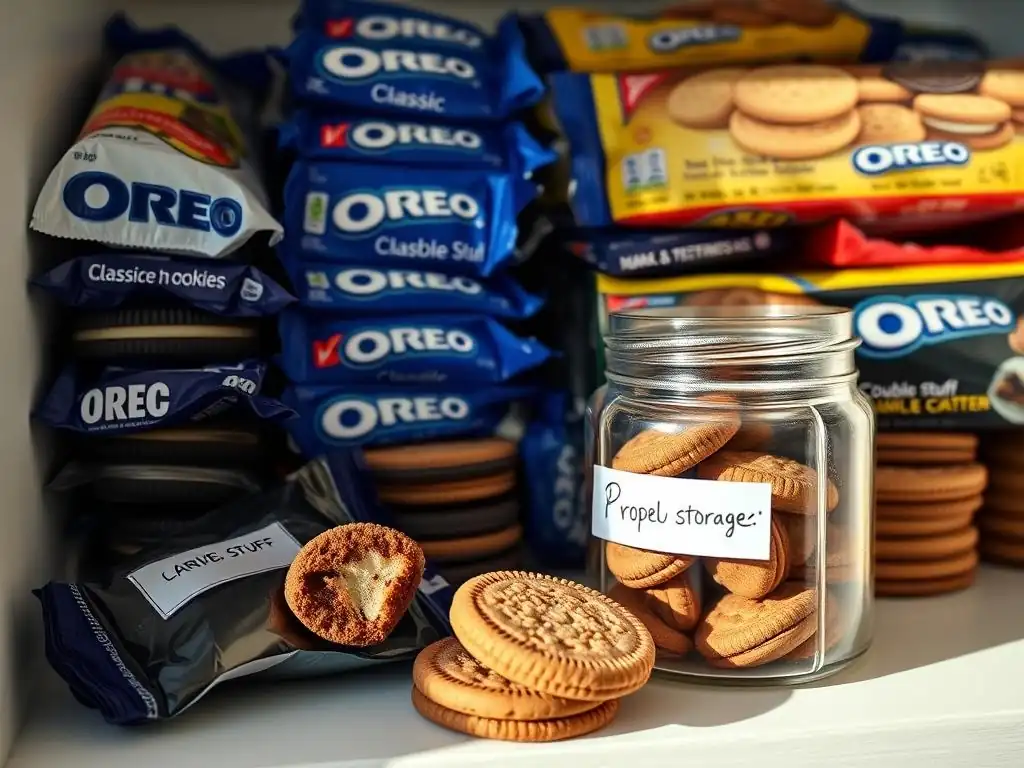
Proper Storage Techniques for Homemade Oreos
Proper storage is essential for maintaining the quality of your homemade Oreo-style sandwich cookies and, critically, preventing Oreo sandwich cookie leakage over time. Once the cookies are completely cooled and filled, they should be stored in an airtight container. This prevents them from drying out and protects the filling from absorbing odors or moisture from the environment.
Stacking the cookies carefully in the container can also help maintain their shape and prevent the filling from being squeezed out, which could initiate Oreo sandwich cookie leakage. If stacking multiple layers, consider placing a piece of parchment paper between layers to prevent sticking. Avoid storing the cookies in a warm or humid environment, as these conditions will cause the butter in the filling to soften and potentially ooze out.
The ideal storage temperature for your homemade Oreo sandwich cookies depends largely on the filling composition. If your filling is a simple butter and powdered sugar mixture, storing them at cool room temperature (around 68-72°F or 20-22°C) in an airtight container is usually sufficient for a few days, provided the room isn't too warm. However, if your environment is warmer or humid, or if you need to store them for longer, refrigeration is the best option to prevent Oreo sandwich cookie leakage.
Cookies with fillings containing cream cheese or other perishable ingredients must be stored in the refrigerator. Refrigeration solidifies the butter and any other fats, making the filling very firm and completely preventing Oreo sandwich cookie leakage. Just be aware that the cookie part might become slightly firmer or drier in the fridge; allow them to sit at room temperature for 10-15 minutes before serving for the best texture. For very long-term storage (weeks or months), freezing is an option, provided they are wrapped extremely well to prevent freezer burn.
Working with Different Chocolate Types
The type of chocolate used in the cookie dough can subtly influence its baking properties and potential for Oreo sandwich cookie leakage. Using cocoa powder is standard for the dark color and intense flavor. Different types of cocoa powder (natural vs. Dutch-processed) have different pH levels which affect leavening, but generally don't directly cause butter leakage unless the recipe balance is off. If using melted chocolate or chocolate chips in the dough, ensure they are properly incorporated. Over-relying on melted chocolate without sufficient flour structure could potentially contribute to a softer dough that spreads more.
The quality and type of chocolate used in the filling (if adding melted chocolate or cocoa powder) also matter. Using high-quality cocoa powder ensures good flavor without adding excess fat or moisture that could destabilize a butter-based filling. If adding melted chocolate to the filling, ensure it is cooled slightly before incorporating it into the creamed butter mixture to avoid melting the butter prematurely and causing separation, which would lead to Oreo sandwich cookie leakage.
Adjusting for Humidity
Humidity is a baker's nemesis and can certainly contribute to Oreo sandwich cookie leakage, particularly by affecting the filling. High humidity can cause powdered sugar to absorb moisture from the air, making the filling softer and stickier. In humid environments, it's often beneficial to slightly increase the amount of powdered sugar or add a bit more cornstarch to the filling to provide extra structure and absorb excess moisture.
For the cookie dough, high humidity can make it feel stickier and harder to handle. Ensure your dry ingredients are fresh and stored properly. Chilling the dough for a longer period in humid conditions is even more critical to firm up the butter and create a stable dough before baking. Baking on slightly cooler, longer settings can also help the cookie structure set before the humidity has too much impact on the melting fat, mitigating the risk of Oreo sandwich cookie leakage.
Considerations for Vegan or Gluten-Free Alternatives
When making vegan or gluten-free Oreo-style cookies, the ingredients used as substitutes for butter and flour introduce new variables for preventing Oreo sandwich cookie leakage. Vegan butter substitutes often have different fat compositions and melting points than dairy butter; some melt at lower temperatures, while others are designed to mimic butter's behavior. Experimentation with different brands might be necessary to find one that performs well in baking without excessive spread. Incorporating a harder fat like refined coconut oil (which is solid at room temperature but melts easily) or vegetable shortening can help stabilize vegan dough and fillings.
For gluten-free cookies, the lack of gluten means the structure is formed by starches and other binders. Gluten-free flour blends can vary significantly in composition. Some blends might absorb more or less fat and moisture than wheat flour, affecting spread and potentially leading to Oreo sandwich cookie leakage if the balance is off.
Often, gluten-free cookie recipes benefit from slightly longer chilling times and potentially a higher ratio of flour blend to fat to ensure the cookie sets properly in the oven before the fat melts and causes leakage. Using binders like xanthan gum (often included in GF blends but sometimes added separately) helps create structure that can contain the fat during baking.
Frequently Asked Questions
Using too warm butter is a primary cause. Warm butter melts faster during baking, leading to leakage. Aim for cold, but pliable butter for the best results.
What role does flour play in preventing butter leakage?
Flour acts as a binding agent, absorbing some of the melted butter. Using the correct flour-to-fat ratio is crucial to prevent excess butter from seeping out during baking.
Can the type of fat I use affect butter leakage?
Yes, the type of fat is important. While the recipe might call for butter, using shortening or a blend of butter and shortening can sometimes help reduce leakage, as shortening has a higher melting point.
Does chilling the dough help to prevent butter leakage?
Chilling the dough allows the butter to solidify before baking. This helps the cookies retain their shape and reduces the chances of butter melting too quickly and leaking out.
Baking at a slightly lower temperature and for a longer time can help. This allows the cookies to bake more evenly, reducing the risk of rapid butter melting and subsequent leakage.
The seemingly simple act of constructing the perfect Oreo sandwich cookie reveals a surprisingly complex engineering challenge. Millions grapple daily with the frustrating reality of creamy leakage, a culinary catastrophe that threatens the very integrity of this beloved treat. This article has explored the science behind this sticky situation, offering practical solutions to achieve that elusive, mess-free bite.
The quest for the perfect, leak-free Oreo sandwich has, for many, become a personal crusade. It's a testament to the enduring power of this simple cookie, a symbol of childhood joy and shared moments. The ongoing struggle against the dreaded cream overflow reflects a larger cultural obsession with perfection and the pursuit of effortless pleasure. The details are not the details. They make the design.
- Charles Eames. This quote perfectly encapsulates the importance of seemingly small details, like the careful selection and placement of Oreos, in achieving a truly satisfying culinary experience.
Consider the implications of this seemingly trivial topic. It's not just about avoiding sticky fingers; it's about mastering a small skill, finding joy in the process, and appreciating the artistry of a perfectly constructed treat. You, the reader, now possess the knowledge to conquer the Oreo leakage challenge. So, the next time you reach for those iconic chocolate wafers, remember the lessons learned here. Embrace the challenge, experiment with different techniques, and savor the sweet victory of a perfectly constructed, mess-free Oreo sandwich cookie. The journey to culinary perfection begins with a single, perfectly aligned cookie.
Thanks for joining us on this delicious journey into the world of perfectly sealed Oreo-style cookies! You've learned valuable techniques to avoid that dreaded butter leakage – now it's time to put your new skills to the test.
Here's your next step:
- Perfect your own batch: Use your newly acquired knowledge to bake a batch of flawless, leak-free sandwich cookies. Experiment with different fillings and flavors!
- Share your success: Post a picture of your magnificent creations on social media and tag us – we’d love to see your results! Use #BakeWithEaseLeakFree.
- Challenge a friend: Nominate a fellow baker to tackle this cookie challenge and share their masterpiece with you.
Ready to show off your leak-proof cookie skills? What innovative filling will you create next?