
Substituting Leavening Agents: Ratios to Replace Baking Soda with Powder

Welcome to BakeWithEase, your haven for unlocking baking brilliance! Ever find yourself out of baking soda mid-recipe? Don't panic! This guide delves into the crucial world of leavening agents, specifically exploring accurate baking soda powder substitution ratios. Discover the secrets to swapping ingredients without sacrificing that perfect rise and texture. Intrigued? Read on to conquer leavening challenges and elevate your baking game!
- Converting Baking Soda to Baking Powder: A Comprehensive Guide
- Understanding Chemical Leavening
- Reasons for Baking Powder Substitution
- Baking Soda to Baking Powder Conversion Ratio
- Step-by-Step Substitution Guide
- Practical Substitution Examples
- Troubleshooting Common Issues
- Baking Powder Types and Their Relevance
- Tips for Successful Baking
- Exploring Alternative Leavening Methods
- Conclusion: Achieving Baking Success
-
Frequently Asked Questions
- How does baking powder differ from baking soda?
- What is the general rule of thumb for substituting baking powder for baking soda?
- Why can't I just use baking powder in place of baking soda in every recipe?
- What happens if I use too much baking powder in a recipe?
- Where can I find more detailed information about specific baking soda to baking powder substitution ratios?
- Final Reflection: The Baking Powder and Soda Conundrum: A Baker's Guide to Successful Substitutions
- Unlock Baking Success: Master Leavening Agent Substitutions!
Converting Baking Soda to Baking Powder: A Comprehensive Guide
Welcome to BakeWithEase! Understanding how your leavening agents work is a cornerstone of successful baking. Sometimes, you might find yourself short on baking soda, or a recipe might yield results you're not quite happy with, prompting you to consider a change. This guide will walk you through the ins and outs of substituting baking powder for baking soda, explaining the science and providing practical tips for mastering baking soda powder substitution ratios.
Understanding Chemical Leavening
Chemical leavening is the process where ingredients react to produce gas, typically carbon dioxide, which creates air pockets in batter or dough. This expansion causes the baked good to rise, resulting in a light and airy texture. The most common chemical leavening agents are baking soda and baking powder, though they function differently.
The Function of Baking Soda and Baking Powder
Baking soda, chemically known as sodium bicarbonate, is a single ingredient. It's an alkaline compound that requires an acid and moisture to react and produce carbon dioxide gas. Common acidic ingredients in baking include buttermilk, yogurt, vinegar, lemon juice, brown sugar, molasses, and honey. Without an acidic component in the recipe, baking soda won't react fully, leading to a dense product and potentially a soapy or metallic taste. A typical reaction might look like this in simplified terms: NaHCO₃ (baking soda) + Acid → Salt + Water + CO₂ (gas).
Baking powder, on the other hand, is a complete leavening system. It's a mixture that typically contains baking soda, one or more acidic salts (like cream of tartar or sodium aluminum sulfate), and a starch (like cornstarch) to absorb moisture and prevent premature reaction. Because it already contains the necessary acid, baking powder only needs liquid to start reacting. This makes it ideal for recipes that don't contain acidic ingredients, ensuring a reliable rise.
Single-Acting vs. Double-Acting Baking Powder
Understanding the difference between single-acting and double-acting baking powder is crucial, especially when dealing with baking soda powder substitution ratios. Single-acting baking powder reacts immediately when mixed with liquid. This means the batter or dough must be baked quickly after mixing to capture the leavening gas before it dissipates. This type is less common in home baking today.
Double-acting baking powder, the most common type found in supermarkets, provides two stages of leavening. The first reaction occurs when the baking powder gets wet during mixing, producing some initial gas. The second, more significant reaction happens when the mixture is heated in the oven. This two-stage process provides a more sustained rise and offers a little more flexibility in terms of how long the batter can sit before baking, making it more forgiving for home bakers.
Reasons for Baking Powder Substitution
Why would you consider substituting baking powder for baking soda, or vice versa? While recipes are usually carefully formulated, there are several practical reasons why bakers explore different baking soda powder substitution ratios.
Addressing Baking Soda's Metallic Taste
One common reason to adjust leavening is to avoid the unpleasant metallic or soapy taste that can occur if baking soda is not fully neutralized by an acid in the recipe. If a recipe calls for baking soda and doesn't contain sufficient acidic ingredients to react with all of it, residual baking soda can leave behind an off-flavor. This is more likely in recipes with minimal acid or where the amount of baking soda is disproportionately high compared to the acid content.
By substituting baking powder, which contains its own acid, you ensure that the alkaline component (the baking soda within the powder) is balanced. This can lead to a cleaner, more pleasant flavor profile in the final baked good. It's a practical application of understanding baking soda powder substitution ratios to improve taste.
Achieving a Specific Texture or Rise
The type and amount of leavening agent significantly impact the final texture and rise of a baked item. Baking soda, reacting quickly and strongly with acid, tends to produce a rapid, strong burst of gas. This can contribute to a more open crumb structure or a crispier texture, especially in thinner items like cookies. However, too much can lead to over-spreading or a coarse texture.
Baking powder, with its double-acting nature, provides a more sustained and often gentler rise. This is often preferred for cakes, muffins, and biscuits, where a finer, more even crumb and a consistent upward rise are desired. Experimenting with baking soda powder substitution ratios allows bakers to fine-tune these characteristics, achieving anything from a tender cake crumb to a perfectly domed muffin top.
Baking Soda to Baking Powder Conversion Ratio
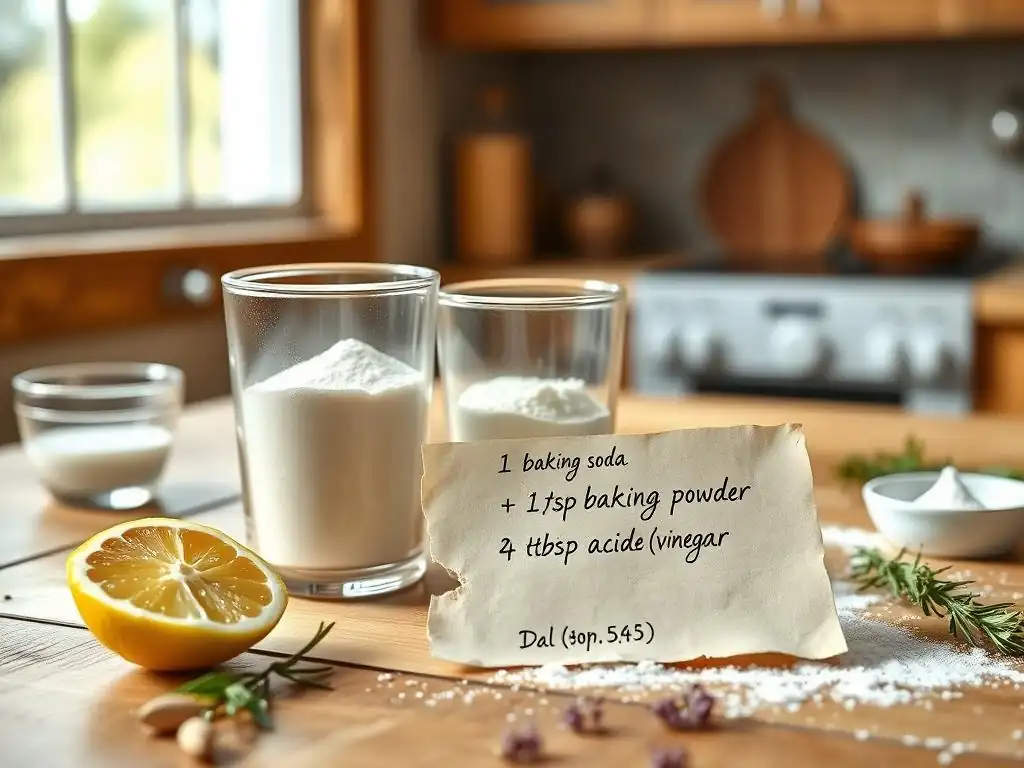
Converting baking soda to baking powder isn't a simple one-to-one swap because of their different compositions and activation requirements. Mastering the correct baking soda powder substitution ratios is key to successful results.
Standard Conversion Ratio Explained
The most widely accepted standard baking soda powder substitution ratio is to use approximately three times the amount of double-acting baking powder as the original baking soda called for in the recipe. So, if a recipe calls for 1 teaspoon of baking soda, you would typically substitute it with 3 teaspoons of double-acting baking powder. This ratio accounts for the fact that baking powder contains baking soda diluted with acids and starch.
Roughly one-quarter to one-third of baking powder is baking soda, with the rest being the acidic components and starch. Using three times the volume ensures you get a comparable amount of the leavening base (sodium bicarbonate) while also introducing the necessary acid that was missing when you removed the pure baking soda.
It's important to remember that this 1:3 ratio is a starting point. It works best in recipes where the original baking soda was not primarily reacting with a significant amount of added acid (like buttermilk or yogurt) but was maybe intended to provide a little extra lift or react with a milder acid like brown sugar.
Accounting for Recipe Acidity
The standard 1:3 baking soda powder substitution ratio works well when the recipe's primary leavening wasn't solely reliant on baking soda reacting with a strong acid. However, if the recipe calls for baking soda specifically to react with a significant amount of acid (like a cup of buttermilk, which has a pH around 4.5), simply substituting baking powder at a 1:3 ratio might not yield the intended result. The original recipe likely balanced the baking soda precisely to neutralize that acid and provide leavening.
When you remove the baking soda and replace it with baking powder, you lose the acid-neutralizing effect of the pure baking soda. While the baking powder will provide leavening, it won't interact with the recipe's existing acid in the same way. In these cases, you might need to slightly reduce or replace the acidic ingredient to prevent it from negatively impacting the texture or flavor (making it too tender or slightly sour). This highlights why understanding the original recipe's chemistry is vital when modifying baking soda powder substitution ratios.
Step-by-Step Substitution Guide
Ready to try a baking soda powder substitution? Follow these steps for the best chance of success. This process helps you apply the correct baking soda powder substitution ratios effectively.
Step 1: Determining the Recipe's Acid Content
Before making any substitution, carefully read through the recipe and identify any ingredients that are acidic. Look for ingredients like buttermilk, yogurt, sour cream, vinegar, lemon juice, molasses, brown sugar, honey, applesauce, or cocoa powder (natural, not Dutch-processed). The amount and strength of these acids will influence how the original baking soda would have behaved and how your substitution will perform.
If the recipe contains a significant amount of strong acid (like buttermilk or vinegar), the baking soda was likely added specifically to react with it. If the recipe has little to no strong acid, the baking soda might have been intended to react with milder acids or simply provide some lift alongside baking powder (if also present). This initial assessment is crucial for selecting the appropriate baking soda powder substitution ratio and planning for potential adjustments.
Step 2: Calculating Baking Powder Equivalent
Once you have an idea of the recipe's acidity, you can calculate the baking powder equivalent. Use the standard baking soda powder substitution ratio of 1 part baking soda to 3 parts double-acting baking powder as your starting point. For example, if the recipe calls for ½ teaspoon of baking soda, you would calculate ½ tsp * 3 = 1 ½ teaspoons of baking powder.
Measure this amount accurately. Remember that precise measurement is critical in baking, especially when adjusting leavening agents. Use level scoops and appropriate measuring spoons to ensure you're adding the correct quantity based on your calculated baking soda powder substitution ratio.
Step 3: Adjusting for Flavor and Moisture
When you substitute baking powder for baking soda, you are adding acidic salts and starch that weren't originally in the recipe. While the amount is usually small, in some delicate recipes, this can slightly alter the flavor profile or texture. The acidic salts in baking powder can sometimes impart a subtle tangy or slightly bitter note if used in very large quantities relative to the other ingredients.
Also, consider the moisture. Baking powder contains starch, which absorbs a tiny amount of liquid. In most recipes, this is negligible. However, if you're substituting a large amount of baking soda with a significantly larger volume of baking powder, you might need to add a very tiny splash more liquid (like milk or water) if the dough or batter seems unexpectedly dry. This step requires judgment based on the consistency described in the original recipe.
Step 4: Baking and Monitoring Results
After making the substitution using your chosen baking soda powder substitution ratio, proceed with the rest of the recipe as written. Pay close attention during the baking process. Observe how the item rises – is it similar to how it usually performs? Note the texture and flavor of the finished product.
Since substituting leavening can sometimes be an experiment, especially in recipes you haven't tried before or those with complex chemistry, be prepared for slight variations. The first attempt using a new baking soda powder substitution ratio might not be perfect, but it provides valuable information. Note what worked well and what didn't, and be ready to make small adjustments to the ratio or other ingredients in future attempts.
Practical Substitution Examples
Let's look at how baking soda powder substitution ratios play out in common recipes. Seeing these examples can make the concept feel more concrete.
Many chocolate chip cookie recipes use a combination of baking soda and baking powder, or sometimes just baking soda, often reacting with brown sugar (mildly acidic) or eggs. If a recipe calls for 1 teaspoon of baking soda and no other strong acids like buttermilk, you could substitute it with 3 teaspoons of double-acting baking powder.
- Original: 1 tsp Baking Soda
- Substitution: 3 tsp Double-Acting Baking Powder
The expected outcome might be cookies that spread slightly less and have a puffier, more cake-like center compared to the chewier, flatter cookies often achieved with baking soda alone. This is because baking powder provides more consistent upward lift throughout the baking process.
Substituting in Pancakes
Pancake recipes frequently rely on baking powder for a fluffy texture. However, some older or traditional recipes might use baking soda with buttermilk (a strong acid). If a recipe calls for 1 teaspoon of baking soda and 1 cup of buttermilk, directly substituting with just baking powder using the 1:3 ratio (3 teaspoons) might result in pancakes that are less tender or have a slightly tangy flavor due to the un-neutralized buttermilk.
In this specific case, a direct baking soda powder substitution ratio might not be ideal without also adjusting the acidic ingredient. A better approach might be to use a recipe that calls for baking powder and milk instead of buttermilk and baking soda, or to experiment by using the 3 teaspoons of baking powder and replacing the buttermilk with regular milk plus a small amount of vinegar or lemon juice (like 1 cup milk + 1 tablespoon acid) to mimic the original acidity level, though this adds complexity.
A simple 1:3 powder substitution without changing the liquid is usually only recommended when minimal or no strong acid is present.
Substituting in Muffins
Muffins often use baking powder for their characteristic dome shape and tender crumb. If a muffin recipe calls for, say, 1 teaspoon of baking soda and contains ingredients like applesauce or brown sugar (mild acids), substituting with 3 teaspoons of double-acting baking powder should work well.
- Original: 1 tsp Baking Soda
- Substitution: 3 tsp Double-Acting Baking Powder
The resulting muffins should still rise nicely, perhaps with a slightly more even dome than if baking soda alone was used. The texture should remain tender. This is a scenario where the standard baking soda powder substitution ratio is quite effective, as the original recipe likely didn't rely solely on a strong acid-baking soda reaction for lift.
Troubleshooting Common Issues
Even with the correct baking soda powder substitution ratios, sometimes things don't go exactly as planned. Here are a few common issues and how to address them.
Addressing a Bitter Aftertaste
A bitter or metallic aftertaste is often a sign that the baking soda (whether used directly or as part of baking powder) wasn't fully neutralized during baking. When substituting baking powder for baking soda, if you still detect bitterness, it could mean that the amount of baking powder used was excessive for the recipe's balance of ingredients, or that the specific brand of baking powder contains acidic salts (like aluminum salts, though less common now) that are contributing to the flavor.
To address this, first ensure you used the correct baking soda powder substitution ratio (typically 1:3). If the issue persists, consider trying a different brand of double-acting baking powder, specifically one labeled "aluminum-free." Aluminum-free baking powders use different acidic salts (like sodium acid pyrophosphate and calcium acid phosphate) that are less likely to leave a metallic residue.
Preventing Excessive Spreading
If your baked goods spread much more than intended after substituting baking powder for baking soda, it could be related to the change in leavening action or moisture balance. Baking soda typically causes a rapid spread before the item sets, especially in recipes with butter that melts quickly. Baking powder provides a more controlled, upward rise as the item heats.
Excessive spreading after a baking soda powder substitution might indicate that the batter is too wet, or perhaps the oven temperature isn't quite right, causing the item to spread before the leavening can lift it effectively. Double-check your measurements, ensure your oven is accurately calibrated, and review the recipe's original characteristics to understand if some spread was expected. The 1:3 baking soda powder substitution ratio generally promotes less spread compared to using baking soda alone in low-acid recipes.
Resolving Insufficient Rise
A lack of sufficient rise after substituting baking powder suggests the leavening isn't producing enough gas. This could be due to an incorrect baking soda powder substitution ratio (using too little powder), inactive leavening agents, or issues with the batter itself (e.g., overmixing, which develops gluten and makes it harder for gas bubbles to expand).
First, verify your baking soda powder substitution ratio calculation and measurement. Ensure you used double-acting baking powder and measured it accurately. Next, check the expiration date of your baking powder. Baking powder loses its effectiveness over time, especially if not stored properly. You can test its freshness by putting a teaspoon in a small bowl of hot water; it should bubble vigorously. If it doesn't, replace it. Also, review the recipe process to ensure you haven't overmixed the batter, which can inhibit rise.
Baking Powder Types and Their Relevance
Not all baking powders are created equal, and understanding the different types is relevant when considering baking soda powder substitution ratios and overall baking success.
Considerations for Using Different Baking Powder Types
As mentioned earlier, single-acting baking powder reacts fully upon contact with liquid, while double-acting baking powder has a second reaction stage in the oven. Most recipes written today assume you are using double-acting baking powder. If you attempt a baking soda powder substitution ratio using single-acting baking powder, you must work very quickly to get the batter into the oven immediately after mixing to capture the leavening gas.
Using single-acting powder in place of double-acting (even if you've substituted from baking soda) can lead to a less consistent rise and potentially a denser product if there are delays between mixing and baking. Always check the label of your baking powder to understand its type and activation properties.
Adapting Recipes for Aluminum-Free Baking Powder
Aluminum-free baking powders are readily available and often preferred by bakers looking to avoid any potential metallic aftertaste. These typically use alternative acidic salts like sodium acid pyrophosphate or calcium acid phosphate. While the leavening power is comparable to traditional double-acting baking powder, the rate of the second reaction might differ slightly.
When using aluminum-free baking powder for baking soda powder substitution ratios, you can generally follow the standard 1:3 guideline without needing to adjust the ratio itself. The primary difference you might observe is in the flavor profile, which should be cleaner. Some bakers feel aluminum-free varieties provide a slightly more even rise, though results can vary depending on the recipe and other ingredients.
Tips for Successful Baking
Beyond just getting the baking soda powder substitution ratios right, several fundamental baking practices contribute to consistent and successful results with leavening agents.
Precise Measurement Techniques
Accuracy in measuring leavening agents is paramount. Too much can cause rapid, excessive rising followed by collapse, or leave a bitter taste. Too little results in a dense product. Always use dry measuring cups and spoons for baking powder and baking soda. Spoon the leavening agent into the measuring spoon and level it off with a straight edge (like the back of a knife).
Do not scoop directly from the container with the measuring spoon, as this can compact the powder and result in adding too much. This simple technique ensures you are using the precise amount determined by your baking soda powder substitution ratio calculation.
Checking Ingredient Expiration Dates
Leavening agents do not last forever. Both baking soda and baking powder can lose their potency over time, especially if not stored correctly. Using expired leavening is a common cause of baked goods that fail to rise. Always check the expiration date on the packaging before you begin baking.
Even if not expired, test your baking powder if you're unsure about its age (as described in the troubleshooting section). For baking soda, you can test it by adding a teaspoon to a few tablespoons of vinegar or lemon juice; it should bubble vigorously. If it doesn't react, it's time for a new box. Using fresh ingredients is fundamental, regardless of the baking soda powder substitution ratios you employ.
Proper Storage for Leavening Agents
Proper storage helps extend the shelf life and maintain the potency of your baking soda and baking powder. Both should be stored in airtight containers in a cool, dry place. Moisture is the enemy, as it can trigger the leavening reaction prematurely, especially in baking powder.
Avoid storing them near the stove or in areas prone to humidity. Keeping them in their original packaging inside a larger, airtight container is a good practice. Replacing your leavening agents periodically, even if not visibly expired but after several months of use, is a good habit for consistent baking results.
Exploring Alternative Leavening Methods
While chemical leavening using baking soda and baking powder is common, especially for quick breads and cakes, other methods exist that can achieve loft and texture in different types of baked goods.
Utilizing Yeast for Bread
Yeast is a biological leavening agent, a living microorganism that consumes sugars in dough and produces carbon dioxide and alcohol as byproducts. This process, fermentation, is slower than chemical leavening but is essential for the structure and flavor development of traditional breads, rolls, and some pastries.
Yeast requires specific conditions to thrive, including warmth, moisture, and time. It cannot be directly substituted for baking soda or baking powder using simple baking soda powder substitution ratios, as the entire recipe structure, mixing method, and proofing times are designed around the yeast fermentation process. Recipes using yeast typically have longer rise times compared to those using chemical leavening.
Whipping Egg Whites for Volume
Whipping egg whites until they form stiff peaks is a mechanical leavening method. As egg whites are whipped, air is incorporated into the protein structure, creating a stable foam. When this foam is gently folded into a batter, the trapped air expands during baking, causing the item to rise.
This technique is crucial for achieving the light, airy texture of soufflés, meringues, angel food cake, and some types of sponge cake. Egg whites are often used in conjunction with chemical leavening or sometimes as the sole leavening agent. Like yeast, whipped egg whites cannot be directly substituted using baking soda powder substitution ratios; recipes designed for this method require careful handling to maintain the delicate air structure.
Conclusion: Achieving Baking Success
Mastering leavening is a key skill in baking, and understanding baking soda powder substitution ratios is a valuable tool in your arsenal. While the standard 1:3 ratio for converting baking soda to double-acting baking powder is a reliable starting point, remember that successful substitution involves more than just a simple measurement swap.
Key Considerations for Leavening
Always consider the original recipe's ingredients, particularly its acid content, when contemplating baking soda powder substitution ratios. Assess if the baking soda was primarily reacting with a strong acid or providing general lift. Use the 1:3 ratio as a guideline, but be prepared to observe and potentially adjust in future attempts. Precision in measurement, using fresh ingredients, and proper storage are fundamental practices that underpin the effectiveness of any leavening agent, chemical or otherwise.
Resources for Further Learning
Continue exploring resources on BakeWithEase.com to deepen your understanding of baking science. Look for articles on ingredient functions, recipe development basics, and troubleshooting guides. Experimenting with different recipes and techniques is the best way to build intuition and confidence in the kitchen. Don't be afraid to try that baking soda powder substitution ratio when needed – each attempt is a learning opportunity on your journey to becoming a more skilled baker.
Frequently Asked Questions
How does baking powder differ from baking soda?
Baking soda is a pure alkali requiring an acid to activate, while baking powder contains both an acid and an alkali, making it a complete leavening agent. Essentially, baking powder is baking soda with an acid already added.
What is the general rule of thumb for substituting baking powder for baking soda?
Typically, you'll need more baking powder than baking soda. A common starting point is to use 3 to 4 times the amount of baking powder as baking soda called for in the recipe. This provides the necessary leavening.
Why can't I just use baking powder in place of baking soda in every recipe?
Recipes that call for baking soda often rely on it to neutralize acidic ingredients like buttermilk or molasses. Simply substituting baking powder can throw off the flavor balance and texture of the final product.
What happens if I use too much baking powder in a recipe?
Using too much baking powder can result in a bitter or metallic taste, and the baked goods may rise rapidly and then collapse. It's important to follow the correct substitution ratios for the best results.
Where can I find more detailed information about specific baking soda to baking powder substitution ratios?
BakeWithEase.com provides step-by-step guides and easy-to-find ingredients to help you master this process, ensuring successful baking outcomes, with detailed information about substituting leavening agents.
Final Reflection: The Baking Powder and Soda Conundrum: A Baker's Guide to Successful Substitutions
Understanding the nuances of leavening agents is crucial for consistent baking success, and the ability to substitute baking soda for baking powder (or vice versa) is a skill every baker should possess. The precise ratios detailed in this article are not merely recipes; they are keys to unlocking a world of baking possibilities, allowing for flexibility and creativity in the kitchen, even when faced with ingredient limitations.
The impact of this knowledge extends beyond simply avoiding a ruined cake. It represents a deeper understanding of the chemical reactions that underpin baking, a fascinating intersection of science and art. The best bakers are those who understand not just the recipe, but the 'why' behind each ingredient.
This quote highlights the importance of moving beyond rote memorization to a true grasp of the underlying principles. Mastering these substitutions empowers bakers to adapt and innovate, fostering a more confident and experimental approach to their craft.
Now, consider your own baking journey. Have you ever been caught short, missing a crucial ingredient? This article provides you with the tools to overcome such challenges. Take this knowledge and experiment! Try substituting in your next bake, observe the results, and refine your technique. The journey of mastering baking is a continuous process of learning and adaptation, and understanding leavening agent substitutions is a significant step along that path. Embrace the challenge, and discover the joy of baking with confidence and precision.
Unlock Baking Success: Master Leavening Agent Substitutions!
Thanks for diving into the world of leavening agents with us! You've now got the knowledge to confidently navigate baking soda and powder substitutions. Ready to put your new skills to the test?
- Bake your dream recipe: Choose a favorite recipe and try substituting the leavening agents using the ratios we've outlined. This is your chance to experiment and perfect your baking technique!
- Share your baking triumphs (or tales!): Tell us about your experience in the comments below! We love hearing about your baking adventures.
- Explore more baking secrets: Dive deeper into our other articles to unlock even more baking mastery!
What amazing creation will you bake first using your newfound knowledge of leavening agents?