
The Ultimate Guide to GlutenFree Flour Substitutions for Any Recipe

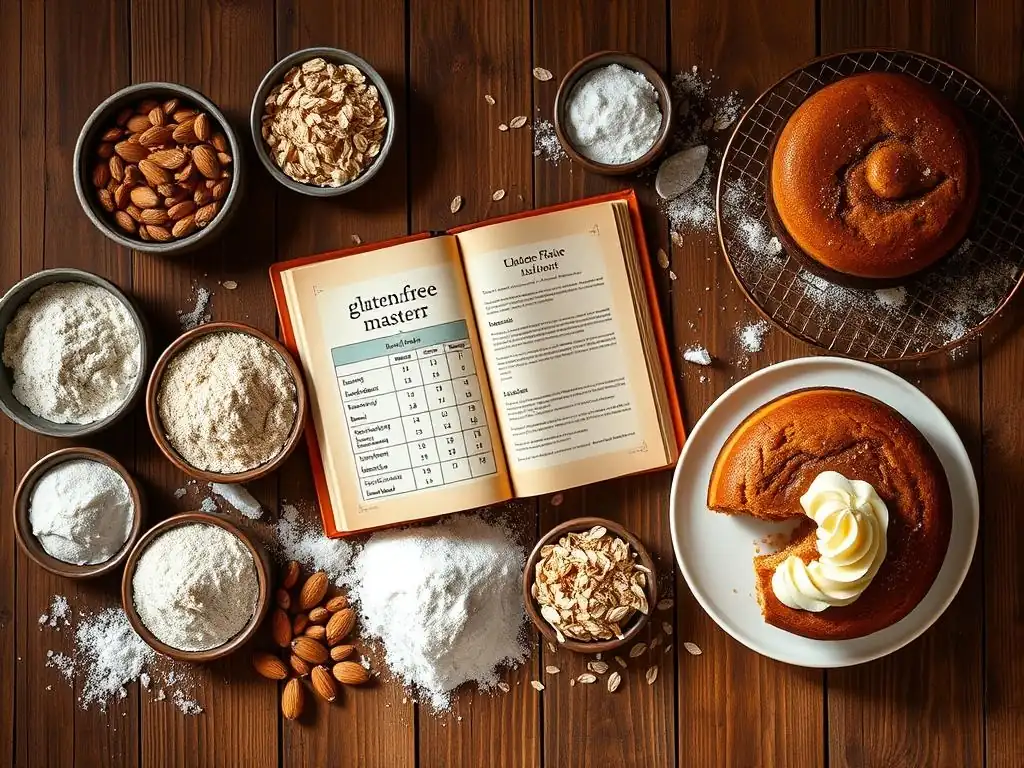
Welcome to BakeWithEase, your trusted companion on your baking journey! Are you ready to unlock a world of delicious possibilities, even without gluten? Our Ultimate Guide to Gluten-Free Flour Substitutions will empower you to adapt any recipe, ensuring everyone can enjoy your delectable creations. Intrigued by how a simple swap can transform your baking? Dive in and discover the secrets to perfectly textured, flavorful gluten-free treats!
- Introduction to Gluten-Free Baking and Flour Alternatives
- Decoding Gluten-Free Flours: A Comprehensive Guide
- Mastering Gluten-Free Flour Blends: The Key to Success
- Gluten-Free Flour Substitution Strategies for Specific Recipes
- Essential Ingredients for Gluten-Free Baking Success
- Troubleshooting Common Gluten-Free Baking Problems
- Gluten-Free Flour Substitution Chart: A Quick Reference Guide
- Conclusion: Embrace the World of Gluten-Free Baking
-
Frequently Asked Questions
- What is the main benefit of using a gluten-free flour substitution guide?
- Which gluten-free flours are best for beginners?
- Can I substitute gluten-free flour 1:1 for wheat flour in all recipes?
- What is xanthan gum, and why is it often needed in gluten-free baking?
- Where can I find reliable gluten-free recipes and flour substitution information?
- Final Reflection: Embracing the Gluten-Free Revolution
- Unleash Your Gluten-Free Baking Potential!
Introduction to Gluten-Free Baking and Flour Alternatives
Why Choose Gluten-Free Baking?
Choosing gluten-free baking is a necessity for many people, primarily those diagnosed with celiac disease, an autoimmune disorder where gluten ingestion damages the small intestine. For an estimated 1% of the global population, avoiding gluten is not a choice but a critical medical requirement to prevent severe health complications. Beyond celiac disease, a significant number of individuals experience non-celiac gluten sensitivity (NCGS), which can cause digestive issues, headaches, fatigue, and other symptoms, leading them to seek gluten-free flour substitutions and recipes.
Furthermore, some bakers simply explore gluten-free options as part of a broader dietary choice, believing it aligns better with their wellness goals or wanting to experiment with alternative grains and ingredients. The growing availability of diverse gluten-free flours and blends has made it easier than ever to create delicious baked goods that cater to these needs, expanding the possibilities in your kitchen and allowing you to share treats with friends and family who follow a gluten-free diet. Mastering gluten-free flour substitutions opens up a whole new world of baking possibilities.
Understanding Gluten's Role in Baking
Gluten is a protein composite found in wheat, barley, and rye. When flour made from these grains is mixed with liquid and kneaded, the gluten proteins (glutenin and gliadin) develop into a stretchy network. This network is crucial in traditional baking because it provides structure, elasticity, and chewiness to doughs and batters. Think of it as the internal scaffolding that allows bread to rise and hold its shape, or gives cookies their desired bend and snap.
Without gluten, baked goods tend to be dense, crumbly, or lack the desired texture. This is why simply swapping wheat flour 1:1 with a single gluten-free flour rarely works well. Successful gluten-free flour substitutions require understanding how different alternative flours behave and how to compensate for the absence of gluten's structural properties, often by incorporating binders and specific blending techniques to mimic its function.
The Importance of Gluten-Free Flour Blends
Given that no single gluten-free flour can perfectly replicate the properties of wheat flour, the secret to successful gluten-free baking often lies in using gluten-free flour blends. These blends combine different types of flours and starches, each contributing unique characteristics like protein content, starch structure, and absorption rate, to create a mixture that behaves more predictably and effectively in recipes. A typical homemade or commercial blend might include a balance of higher-protein flours (like brown rice or sorghum) and lighter starches (like tapioca or potato starch).
Developing or selecting the right gluten-free flour blend is paramount for achieving desirable texture, rise, and flavor in baked goods. A well-formulated blend provides a better foundation for gluten-free flour substitutions, allowing bakers to more closely approximate the results of traditional recipes. While pre-made blends offer convenience, understanding the components allows you to customize blends for specific baking needs, making your gluten-free creations even more successful.
Decoding Gluten-Free Flours: A Comprehensive Guide
Grain-Based Gluten-Free Flour Options
Rice Flour: White, Brown, and Sweet Rice Flour
Rice flour is a staple in many gluten-free flour substitutions. White rice flour is finely ground from polished rice, resulting in a light texture ideal for delicate baked goods. Brown rice flour, made from whole-grain rice, offers more fiber and nutrients but can sometimes have a slightly gritty texture or stronger flavor. Sweet rice flour (also known as glutinous rice flour, though it contains no gluten) is high in amylopectin starch, making it excellent for binding and creating chewy textures, often used in mochi and as a thickener.
When using rice flours in gluten-free flour substitutions, it's common to combine them with other flours to balance their properties. White rice flour can be somewhat dry, while brown rice flour's fiber content can affect rise. Sweet rice flour is particularly useful in blends for cakes and cookies where a tender, slightly chewy crumb is desired. For instance, a blend might use 50% white or brown rice flour combined with starches and other flours.
Oat Flour: Tips for Using Gluten-Free Oat Flour
Oat flour, made from ground oats, adds a lovely subtle flavor and tenderness to baked goods. It's important to use certified gluten-free oat flour to avoid cross-contamination, as oats are often processed in facilities that handle wheat. Oat flour is relatively high in soluble fiber, particularly beta-glucan, which can help with moisture retention but also make doughs slightly sticky.
When incorporating oat flour into gluten-free flour substitutions, it often works well in recipes like muffins, cookies, and quick breads. It can absorb a fair amount of liquid, so you might need to adjust hydration slightly. A common approach is to substitute up to 25-30% of the total flour blend with oat flour for enhanced flavor and softness, while maintaining structure with other flours.
Sorghum Flour: A Versatile Gluten-Free Grain
Sorghum flour is milled from the ancient grain sorghum and offers a mild, slightly sweet flavor and a smooth texture, making it a versatile component in gluten-free flour substitutions. It's a good source of fiber and protein compared to some other gluten-free options, contributing to better structure and nutritional value in baked goods. Sorghum is less likely to have a bitter aftertaste that some gluten-free flours possess.
Its neutral-to-slightly-sweet profile makes sorghum flour suitable for both sweet and savory gluten-free baking. It can be used in blends for breads, cakes, cookies, and more. Many bakers find that substituting 15-25% of the total flour blend with sorghum flour improves the overall texture and crumb structure of their gluten-free creations.
Teff Flour: Nutritional Powerhouse for Baking
Teff flour, ground from the smallest grain in the world, is a nutritional powerhouse, rich in iron, calcium, and protein. It has a distinctive earthy, slightly molasses-like flavor and a fine texture. Teff flour is available in light and dark varieties, with the darker version having a more pronounced flavor and higher nutrient content.
While its strong flavor might not be suitable for every recipe, teff flour adds wonderful depth and nutrition to gluten-free flour substitutions, especially in items like pancakes, waffles, and darker breads or muffins. It can be quite absorbent, so adjustments to liquid may be needed. Including teff flour as a portion of your gluten-free blend, perhaps 10-15%, can significantly boost the nutritional profile of your baked goods.
Nut and Seed Flour Options for Gluten-Free Baking
Almond Flour: The King of Gluten-Free Baking?
Almond flour, made from ground blanched almonds, is incredibly popular in gluten-free baking due to its rich flavor, moist texture, and versatility. It's lower in carbohydrates and higher in fat and protein than many grain flours, which contributes to tender results. Fine almond flour is often used in delicate pastries like macarons, while coarser almond meal (made from unblanched almonds) is great for rustic tarts or breadings.
When using almond flour in gluten-free flour substitutions, it's important to note that it behaves differently than grain flours due to its fat content. It doesn't absorb liquid in the same way and doesn't contribute to structure via starch. However, its moisture and flavor are invaluable. It can sometimes be substituted 1:1 by weight for wheat flour in certain recipes, but volume measurements will differ significantly (e.g., 1 cup of almond flour is lighter than 1 cup of wheat flour). It's excellent in cakes, cookies, and muffins, often providing a desirable moist crumb.
Coconut Flour: Absorbing Power and Sweetness
Coconut flour is made from dried, defatted coconut meat and is known for its extremely high absorption rate and subtle coconut flavor. It's also very high in fiber and relatively low in carbohydrates. Because it acts like a sponge, you need significantly less coconut flour than other flours in a recipe, and you must add a lot more liquid and often more eggs to provide structure.
Due to its unique properties, coconut flour cannot be substituted 1:1 for most other flours in gluten-free flour substitutions. A general rule of thumb is to replace about 1/4 to 1/3 cup of wheat flour with just 1/4 cup of coconut flour, while also increasing liquids and eggs (perhaps adding 1-2 extra eggs per 1/4 cup used). It's best used in recipes specifically developed for it or in small quantities within a blend to add fiber and a hint of flavor.
Sunflower Seed Flour: A Nut-Free Alternative
Sunflower seed flour, ground from raw or roasted sunflower seeds, is an excellent option for those with nut allergies seeking gluten-free flour substitutions. It has a slightly nutty flavor and can behave similarly to almond flour in some applications, offering fat and protein for moisture and tenderness. It's a good source of Vitamin E and magnesium.
When using sunflower seed flour in baking, be aware that it can sometimes turn green when exposed to baking soda/powder and heat due to a reaction between chlorophyll in the seeds and alkaline ingredients. This is harmless but can be visually unappealing. To minimize this, you can add a touch of acid like lemon juice or vinegar to the batter. It works well in muffins, cookies, and quick breads as a partial substitute for other flours in a gluten-free blend.
Starch-Based Gluten-Free Flours
Tapioca Starch/Flour: Binding and Lightness
Tapioca starch, often labeled as tapioca flour, is extracted from the cassava root. It is a very fine, white powder that acts as an excellent thickener and binder in gluten-free baking. It helps create a chewy texture and contributes to browning and crispness, especially in crusts and cookies. Tapioca starch adds lightness and elasticity to gluten-free flour blends, preventing baked goods from becoming too dense.
Because it is purely starch and lacks protein and fiber, tapioca starch is typically used as part of a blend, usually making up 20-30% of the total gluten-free flour substitution mix. It's particularly useful in recipes where a slightly chewy or crispy texture is desired, such as cookies, pie crusts, and pancakes. It also helps bind ingredients together in the absence of gluten.
Potato Starch: Creates a Soft Crumb
Potato starch, extracted from potatoes, is another fine white starch commonly used in gluten-free flour substitutions. Similar to tapioca starch, it acts as a binder and helps create a tender, moist crumb structure in baked goods. It's particularly effective at absorbing moisture during baking and releasing it slowly, contributing to a soft texture that can counteract the dryness sometimes found in gluten-free items.
Potato starch works well in combination with other flours and starches in a gluten-free blend, often making up 15-25% of the mix. It's especially beneficial in cakes, muffins, and scones where a soft, delicate crumb is desired. Be careful not to confuse potato starch with potato flour, which is made from dried, ground potatoes and is much heavier and more absorbent.
Cornstarch: A Common Gluten-Free Thickener
Cornstarch, derived from corn, is a widely available and inexpensive gluten-free starch. While primarily known as a thickening agent for sauces and gravies, it also plays a role in gluten-free baking, contributing to tenderness and structure when used in blends. It provides a fine, smooth texture and can help lighten the overall crumb of baked goods.
In gluten-free flour substitutions, cornstarch is typically used in smaller quantities within a blend compared to tapioca or potato starch, perhaps making up 10-15% of the total mix. It's effective in creating a tender crumb in cakes and cookies. However, using too much can result in a dry or chalky texture, so it's best balanced with other flours and starches.
Bean-Based Flour Options
Chickpea Flour (Besan): Savory Baking and Beyond
Chickpea flour, also known as besan or gram flour, is made from ground chickpeas and is a popular ingredient in Indian and Middle Eastern cuisine. It has a distinct, slightly earthy or beany flavor and is relatively high in protein and fiber. It's a versatile flour used for binding, thickening, and adding structure, particularly in savory applications.
While its flavor profile makes it less common in sweet gluten-free flour substitutions, chickpea flour is excellent for savory baking, such as flatbreads (like socca or farinata), fritters, and as a binder in vegetable burgers or gluten-free quiche crusts. It can also be used in small amounts (perhaps 5-10%) in some gluten-free blends for protein and structure, though its flavor can be noticeable. It absorbs a moderate amount of liquid and can create a dense texture if used in large quantities.
Mastering Gluten-Free Flour Blends: The Key to Success
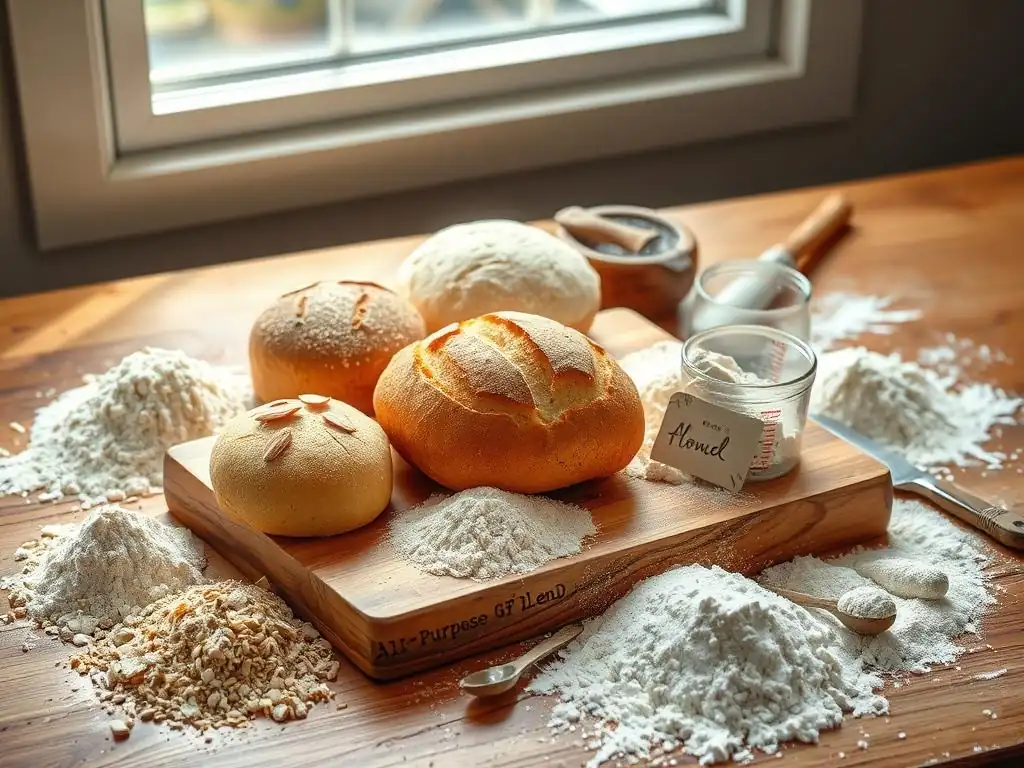
Creating Your Own Gluten-Free Flour Blend
Creating your own gluten-free flour blend offers flexibility and control over the ingredients and proportions, allowing you to tailor the blend to specific dietary needs or baking goals. It's a cost-effective option if you bake frequently and buy individual flours in bulk. The basic principle is to combine heavier, protein-rich flours with lighter starches to mimic the structure and texture provided by wheat flour.
Developing a custom blend involves experimenting with different ratios. A common starting point often includes a combination of rice flour (white or brown), a second grain or nut/seed flour (like sorghum, oat, or almond), and one or more starches (tapioca, potato, or cornstarch), plus a binder like xanthan gum added per recipe. Keep detailed notes on which blends work best for different types of gluten-free flour substitutions, such as those for cakes versus breads.
Basic Gluten-Free Flour Blend Recipe
A widely used starting point for a versatile gluten-free flour blend might look something like this:
- 40% whole grain flour (like brown rice or sorghum)
- 30% starch (like tapioca starch or potato starch)
- 30% lighter flour (like white rice flour or millet flour)
This ratio provides a balance of structure from the whole grain/lighter flours and tenderness/binding from the starch. For example, you could combine 1 cup brown rice flour, 3/4 cup tapioca starch, and 3/4 cup white rice flour. Remember to add a binder like xanthan or guar gum per recipe, not to the blend itself, as the amount needed varies greatly depending on what you're baking (e.g., cookies need less binder than bread).
Adjusting Your Blend for Different Recipes
The "perfect" gluten-free flour blend can vary depending on the specific recipe you're making. A blend suitable for delicate cakes might be too soft for chewy cookies or structured bread. For instance, a blend for gluten-free bread might benefit from a higher proportion of protein-rich flours like brown rice or sorghum and the addition of psyllium husk for extra structure and elasticity.
Conversely, a blend for tender gluten-free cakes or muffins might use a higher percentage of starches and lighter flours like white rice flour or a bit of almond flour for moisture. If a recipe turns out too dense, increase the proportion of starches in your blend next time. If it's too crumbly, increase the protein flours slightly and ensure you're using enough binder. Iterative testing and adjustment are key to mastering gluten-free flour substitutions with custom blends.
Pre-Made Gluten-Free Flour Blends: A Convenient Option
For busy bakers or those just starting with gluten-free flour substitutions, pre-made gluten-free flour blends offer immense convenience. These blends are formulated by experts to provide a balanced mix of flours and starches designed to work as a direct 1:1 substitute for wheat flour in many standard recipes. They take the guesswork out of combining individual flours and often already contain necessary binders like xanthan gum.
Using a reliable pre-made blend can significantly simplify the process of converting traditional recipes to gluten-free. It allows you to focus on the rest of the baking process without worrying about complex flour ratios. While they can be more expensive than buying individual flours, the consistency and ease of use make them a popular choice for many gluten-free bakers.
What to Look for in a Store-Bought Blend
When selecting a pre-made gluten-free flour blend for your gluten-free flour substitutions, check the ingredient list. Look for blends that contain a mix of different flours and starches (e.g., rice flour, sorghum flour, potato starch, tapioca starch) rather than just one or two ingredients, as variety usually leads to better results. Some blends include binders like xanthan gum or guar gum directly in the mix; these are often labeled as "all-purpose" or "1:1" blends and are designed for direct substitution.
Consider the intended use of the blend; some are specifically formulated for bread, while others are general purpose. Reading reviews from other bakers can also provide insight into how well a particular blend performs in different types of gluten-free baking. Experimenting with a couple of different brands might be necessary to find the one that yields the best results in your favorite recipes.
Popular Gluten-Free Flour Blend Brands
Several brands are well-regarded for their pre-made gluten-free flour blends, making gluten-free flour substitutions more accessible. Brands like King Arthur Baking Company's Gluten-Free All-Purpose Flour, Bob's Red Mill Gluten-Free 1:1 Baking Flour, and Cup4Cup Gluten-Free All-Purpose Flour are popular choices. These blends are often formulated to be used as a direct replacement for wheat flour in many standard recipes, simplifying the conversion process.
For instance, Bob's Red Mill 1:1 blend contains sweet white rice flour, brown rice flour, potato starch, sorghum flour, tapioca flour, and xanthan gum, offering a balance of ingredients for versatile use. Cup4Cup, developed by chefs, is known for its fine texture and inclusion of milk powder (check for dairy allergies) and is often praised for its performance in pastries. Trying a few different popular blends can help you discover which one works best for your specific gluten-free baking needs.
Gluten-Free Flour Substitution Strategies for Specific Recipes
Substituting Gluten-Free Flour in Bread Recipes
Baking gluten-free bread can be one of the most challenging gluten-free flour substitutions due to the critical role gluten plays in structure and rise. Without gluten, doughs tend to be less elastic and require different handling. Successful gluten-free bread often relies on a blend of flours that provide structure (like brown rice, sorghum, or millet) and starches for tenderness, combined with effective binders.
Hydration is also key; gluten-free bread doughs are often wetter than traditional wheat doughs, sometimes resembling a thick batter. Using a stand mixer can help incorporate air and develop structure. Allowing adequate rest or proofing time is also essential for achieving a good rise before baking.
Yeast Breads: Tips for Gluten-Free Bread Baking
For gluten-free yeast breads, using a blend specifically formulated for bread is highly recommended, or creating your own with a higher proportion of protein flours (like 60-70% grain/protein flours and 30-40% starches). Binders like xanthan gum or psyllium husk are crucial to provide the necessary structure and elasticity for the dough to trap gases produced by the yeast. Psyllium husk, in particular, can give gluten-free dough a more bread-like texture that can even be kneaded slightly.
Ensure your yeast is active and your liquid is the correct temperature (around 105-115°F or 40-46°C). Gluten-free dough doesn't require traditional kneading to develop gluten, but mixing thoroughly is important. Proofing times can vary; watch the dough, not the clock, for signs of a good rise (it won't double like wheat dough). Baking in a loaf pan provides support, and sometimes a higher starting temperature or steam can improve crust development.
Quick Breads: Adapting Recipes for Gluten-Free Flours
Quick breads, like muffins, scones, and loaf cakes, are generally easier to adapt for gluten-free flour substitutions than yeast breads because they rely on chemical leaveners (baking powder, baking soda) rather than yeast and don't require gluten development for structure. A good all-purpose gluten-free flour blend (with or without added binder) often works well as a 1:1 substitute for wheat flour in these recipes.
Pay attention to the batter consistency; gluten-free batters can sometimes be thicker than wheat batters. Don't overmix, as this can lead to tough results even without gluten. Adding ingredients like yogurt, sour cream, mashed banana, or applesauce can help ensure adequate moisture and tenderness in your gluten-free quick breads. Baking time might need slight adjustment; bake until a skewer inserted comes out clean.
Gluten-Free Flour Substitutions in Cake Recipes
Achieving a light, moist, and tender crumb is the goal when making gluten-free cakes, and successful gluten-free flour substitutions are central to this. Cakes rely less on gluten's elasticity and more on the balance of ingredients and leavening to create structure. Using a fine-textured gluten-free flour blend with a good proportion of starches and a tenderizing flour like white rice or a bit of almond flour is often ideal.
Ensure all ingredients are at room temperature for better emulsification. Don't overmix the batter once the dry ingredients are added; mix just until combined. Using parchment paper in pans helps prevent sticking, and cooling cakes properly on a wire rack allows steam to escape evenly, preventing sogginess.
Layer Cakes: Achieving Structure and Texture
For gluten-free layer cakes, a blend that provides both structure and a delicate crumb is essential. A blend containing white rice flour, potato starch, and tapioca starch often works well. The starches contribute to a soft, tender texture, while the rice flour provides some structure. Including a binder like xanthan gum (typically 1/4 to 1/2 teaspoon per cup of flour blend) is crucial to prevent the layers from being crumbly and to help them hold together when stacked and frosted.
Baking temperature and time are important; slightly lower temperatures and longer baking times than traditional recipes might be needed to ensure the center is fully cooked without over-browning the edges. Cooling the layers completely before handling and frosting is vital for preventing breakage, as gluten-free cakes can be more delicate than wheat cakes.
Cupcakes: Light and Fluffy Gluten-Free Cupcakes
Gluten-free cupcakes require a light and fluffy texture, similar to their wheat counterparts. Using a finely milled gluten-free flour blend with a good amount of starch (like tapioca or potato starch) is key for tenderness. Blends designed for cakes or muffins often perform well. Adding ingredients that contribute moisture and tenderness, such as sour cream, yogurt, milk, or oil, is very helpful.
Don't overfill the cupcake liners; filling them about two-thirds full allows for proper rise without overflowing. Baking at the correct temperature is crucial for achieving a nice dome and preventing sinking. Check for doneness using a toothpick test. Allow cupcakes to cool slightly in the pan before transferring them to a wire rack to cool completely before frosting.
Converting cookie recipes using gluten-free flour substitutions is often one of the simpler transitions in gluten-free baking. Cookies rely less on gluten for structure than bread or cakes. The key is to use a blend that provides the desired texture – whether crisp, chewy, or soft – and to ensure proper binding so the cookies don't spread excessively or crumble apart.
Many all-purpose gluten-free flour blends work well as a 1:1 substitute for wheat flour in cookie recipes. Adding a binder like xanthan gum (usually 1/4 teaspoon per cup of flour blend) is often necessary to provide structure and prevent excessive spreading, especially in recipes with higher fat content like chocolate chip cookies. Chilling the dough before baking is also a helpful technique to control spread.
Crunchy Cookies: Maintaining Crispness
For crunchy gluten-free cookies, using a blend with a good proportion of rice flour and starches like tapioca or cornstarch can help achieve that desirable snap. Reducing moisture in the dough slightly compared to chewy cookie recipes and ensuring thorough baking are also important. Thin cookies naturally bake up crispier than thick ones.
Baking on parchment-lined baking sheets helps conduct heat evenly, contributing to crispness. Cooling cookies completely on a wire rack allows them to firm up and develop their final crunchy texture. Storing crunchy cookies in an airtight container at room temperature is best for maintaining their crispness.
Chewy Cookies: Achieving the Perfect Texture
Achieving chewy gluten-free cookies requires a different approach to gluten-free flour substitutions and ingredients. Using a blend that includes some brown rice flour or a small amount of oat flour can contribute to a chewier texture. Incorporating ingredients like brown sugar (which holds more moisture than white sugar), melted butter instead of softened butter, and an extra egg yolk can also enhance chewiness.
Binders like xanthan gum are particularly important in chewy cookies to provide that pliable, slightly resistant bite. Baking just until the edges are set but the center still looks slightly soft helps ensure a chewy interior after cooling. Allowing the cookies to cool on the baking sheet for a few minutes before transferring them can also help set their structure while retaining moisture.
Gluten-Free Pastry Crusts: Achieving Flakiness
Creating flaky gluten-free pastry crusts for pies and tarts can be challenging, as flakiness in traditional pastry relies on layers of fat separated by gluten. Without gluten, the dough can be crumbly and difficult to handle. Successful gluten-free flour substitutions for pastry require specific blends and techniques to mimic this layered structure.
Using a blend of fine flours and starches, keeping ingredients very cold, and handling the dough minimally are key. Incorporating a binder like xanthan gum or psyllium husk helps hold the dough together enough to be rolled or pressed into a pan. Using a combination of butter and a solid fat like shortening can also improve flakiness.
Pie Crusts: Tips for a Tender Gluten-Free Crust
For tender gluten-free pie crusts, a blend often includes white rice flour, sorghum flour, and starches like tapioca and potato. The goal is a dough that is pliable enough to work with but doesn't become tough. Keeping the fat (cold butter or shortening cut into small pieces) separate within the flour mix is crucial for creating steam pockets during baking, which results in flakiness.
Adding a binder (like 1/2 teaspoon xanthan gum per cup of flour blend) and sometimes a touch of vinegar or a liquid like vodka (which inhibits gluten development in wheat dough but helps make gluten-free dough pliable without adding excess water) can improve texture and workability. Rolling the dough between two sheets of parchment paper makes transferring it to the pie plate much easier, minimizing breakage.
Tart Crusts: Adapting Recipes for Gluten-Free Flours
Gluten-free tart crusts, especially press-in crusts, can be slightly simpler than rolled pie crusts. A blend similar to pie crusts works well, focusing on tender flours and starches. For press-in crusts, a blend containing almond flour or a bit more fat can make the dough easier to handle. Binders are still important to ensure the crust holds its shape and doesn't crumble excessively after baking.
If rolling a tart crust, follow the same techniques as for pie crusts, keeping everything cold and using parchment paper. Blind baking the tart shell before filling is often necessary to ensure a crisp bottom crust, especially with wet fillings. Use pie weights or dried beans to keep the crust from shrinking or puffing up during blind baking.
Essential Ingredients for Gluten-Free Baking Success
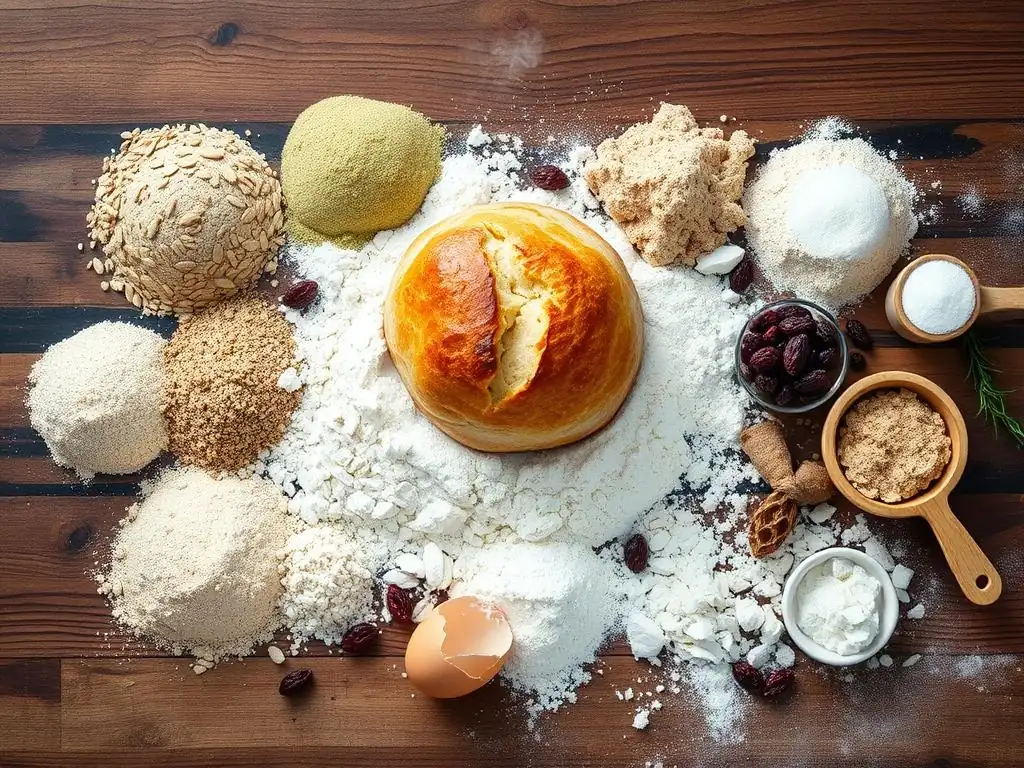
The Role of Binders: Xanthan Gum, Guar Gum, and Psyllium Husk
Binders are arguably the most essential ingredients for successful gluten-free flour substitutions. Since gluten provides structure and elasticity, binders step in to perform a similar function, holding ingredients together, providing elasticity, and preventing crumbly or dense results. The most common binders are xanthan gum, guar gum, and psyllium husk.
The amount of binder needed varies significantly depending on the type of baked good. Cakes and muffins require less binder than yeast breads or pastries. Using too much binder can result in a gummy or unpleasant texture, while too little leads to fragile or crumbly goods. It's often best to add the binder directly to the dry ingredients before combining with wet ingredients.
Xanthan Gum: The Go-To Binder
Xanthan gum is a popular choice for gluten-free flour substitutions and acts as a strong binder. It's a polysaccharide produced by the fermentation of sugar by the bacterium Xanthomonas campestris. It creates a viscous, gel-like consistency when mixed with liquid, mimicking some of the properties of gluten by providing elasticity and structure.
Typical usage ranges from about 1/4 teaspoon per cup of gluten-free flour blend for cakes and muffins, up to 1 teaspoon per cup for yeast breads. While effective, some people find xanthan gum can cause digestive upset in large quantities, and it can sometimes impart a slightly gummy texture if overused.
Guar Gum: An Alternative Binder
Guar gum, derived from guar beans, is another common binder used in gluten-free flour substitutions. It functions similarly to xanthan gum, providing structure and preventing crumbling. It is often used interchangeably with xanthan gum, although some bakers find it performs slightly better in certain applications, like cold recipes or dairy-based items.
Like xanthan gum, the amount of guar gum needed varies by recipe type, generally following similar guidelines (e.g., 1/4 to 3/4 teaspoon per cup of flour blend). Some sources suggest using slightly more guar gum than xanthan gum (perhaps 1.5 times the amount), while others use them interchangeably. Experimentation is key to finding which binder, or combination, works best for you.
Psyllium Husk: Adding Fiber and Structure
Psyllium husk, ground from the seeds of the Plantago ovata plant, is a fiber-rich ingredient that is gaining popularity as a binder in gluten-free baking, particularly for breads. When mixed with liquid, psyllium husk forms a gel that provides significant structure and elasticity, more closely mimicking the stretchiness of gluten than xanthan or guar gum.
It's especially effective in yeast breads, where it can help create a dough that is almost kneadable and results in a less crumbly loaf with better volume and a more traditional crumb structure. Usage rates vary, but typically range from 1 to 2 tablespoons of whole psyllium husks (or slightly less if using powder) per cup of gluten-free flour blend in bread recipes. It also adds valuable dietary fiber.
Leavening Agents in Gluten-Free Baking
Leavening agents, such as baking powder and baking soda, are just as crucial in gluten-free baking as they are in traditional baking. They are responsible for producing the gases (carbon dioxide) that make cakes, muffins, and quick breads rise, creating a light and airy texture. Their function is independent of gluten, so they work similarly with gluten-free flour substitutions.
Ensuring your leavening agents are fresh is important for proper lift. Store them in airtight containers and check expiration dates. Baking powder is a complete leavener containing both acid and base, while baking soda requires an acidic ingredient (like buttermilk, yogurt, or lemon juice) in the batter to activate it. Many recipes use a combination of both for optimal rise and texture.
Baking Powder and Baking Soda: Ensuring Proper Rise
Baking powder and baking soda are the primary chemical leaveners used in gluten-free quick breads, cakes, muffins, and cookies. Baking powder causes an initial lift when mixed with liquid and a second lift when heated in the oven. Baking soda, when combined with an acid, creates a rapid release of gas, contributing to spread and leavening, particularly useful in cookies and some cakes.
Using the correct proportions of baking powder and baking soda relative to the amount of gluten-free flour blend and acidic ingredients in the recipe is essential for proper rise and texture. Too little results in dense baked goods, while too much can cause rapid over-expansion followed by collapse, or leave a soapy aftertaste. Follow recipe specifications carefully, or adjust based on observation when converting recipes.
Adding Moisture and Flavor to Gluten-Free Baked Goods
Gluten-free baked goods can sometimes be prone to dryness, as some gluten-free flours absorb more liquid than wheat flour or lack the fat content of wheat germ. Therefore, incorporating ingredients that add moisture and flavor is a key strategy in successful gluten-free flour substitutions.
Ingredients like butter, oil, eggs, yogurt, sour cream, applesauce, mashed banana, pumpkin puree, and even pureed vegetables can significantly improve the moisture content, tenderness, and flavor of gluten-free cakes, muffins, and quick breads. Using these ingredients helps create a more palatable and enjoyable texture, counteracting the potential dryness often associated with gluten-free baking.
Using Applesauce, Yogurt, and Other Moist Ingredients
Applesauce is a popular addition for adding moisture and reducing fat in gluten-free baked goods like muffins and cakes. Unsweetened applesauce works well, typically substituted cup for cup for oil or butter (though adjustments may be needed for texture). It adds moisture and a subtle sweetness.
Yogurt and sour cream add richness, tang, and significant moisture, contributing to a tender crumb in cakes and muffins. Using full-fat versions often yields the best results. Mashed bananas or pumpkin puree add moisture, natural sweetness, and flavor, working particularly well in spiced quick breads and muffins. Incorporating these ingredients is a simple yet effective way to enhance the texture and taste of your gluten-free creations using various gluten-free flour substitutions.
Troubleshooting Common Gluten-Free Baking Problems
Dry and Crumbly Baked Goods: Hydration Solutions
One of the most common issues encountered with gluten-free flour substitutions is ending up with dry and crumbly baked goods. This often happens because gluten-free flours, particularly starches and some grain flours, absorb liquid differently and sometimes more slowly than wheat flour. Without gluten to hold everything together, a lack of moisture results in a fragile structure that easily falls apart.
To combat dryness, ensure you are using enough liquid in your recipe. Gluten-free batters and doughs often need to be wetter than their wheat counterparts; a quick bread batter might resemble thick pancake batter, and yeast dough might be sticky. Additionally, incorporating moisture-rich ingredients like extra eggs, yogurt, sour cream, oil, applesauce, or mashed fruits/vegetables can significantly improve hydration and tenderness. Using a balanced gluten-free flour blend that includes flours with different absorption rates also helps.
Gummy or Dense Textures: Achieving the Right Balance
Conversely, gluten-free baked goods can sometimes turn out gummy or excessively dense. A gummy texture is often a result of using too much binder (xanthan gum, guar gum, psyllium husk) or too much starch without enough protein or fiber to balance it out. Overmixing the batter after adding the dry ingredients can also contribute to a tough or gummy texture, similar to overdeveloping gluten in wheat dough.
A dense texture can occur if there isn't enough leavening, if the batter is too wet or too dry, or if the flour blend is too heavy (too many protein flours, not enough starch). Ensure your leavening agents are fresh and used in the correct amounts. Adjusting the ratio of flours and starches in your blend – perhaps increasing starches slightly for lightness, or ensuring enough protein flour for structure – can help. Careful mixing, just until ingredients are combined, is also crucial for avoiding gumminess and density.
Lack of Rise: Understanding Leavening and Proofing
A disappointing lack of rise is another frequent problem in gluten-free baking, particularly with yeast breads. In quick breads, insufficient rise is usually due to inactive or insufficient chemical leavening (baking powder/soda). Ensure your leaveners are fresh and that acidic ingredients are present if using baking soda. Check your oven temperature calibration, as an oven that isn't hot enough can hinder the initial spring.
For gluten-free yeast breads, lack of rise can be attributed to inactive yeast (check temperature of liquid), insufficient sugar to feed the yeast, cold proofing temperatures, or, most commonly, an inadequate binder. Without enough xanthan gum or psyllium husk, the dough lacks the structure to trap the gases produced by the yeast, causing it to spread outwards rather than rise upwards. Ensure proper hydration and use enough binder appropriate for bread recipes to support the rise.
Gluten-Free Flour Substitution Chart: A Quick Reference Guide
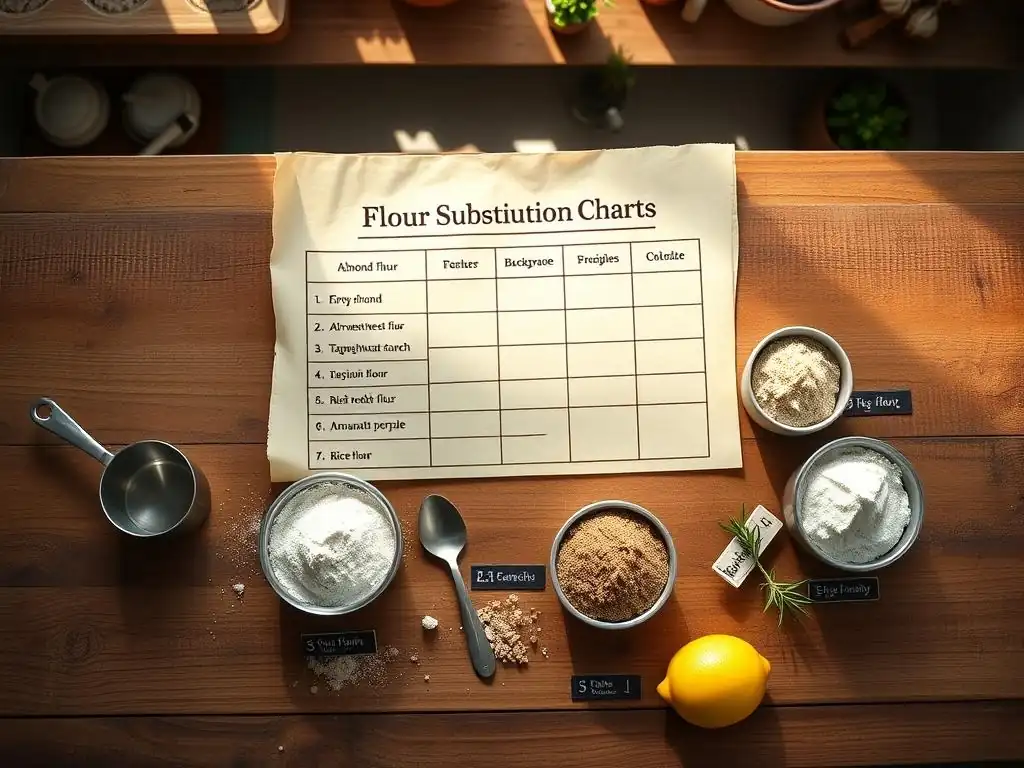
- Please note: Due to formatting limitations, a visual chart cannot be displayed here. Below are key points for substituting common flours.
This section serves as a quick reference for common gluten-free flour substitutions. Remember that substituting single flours for wheat flour is rarely a 1:1 swap for the best results; blends are usually preferred. However, understanding the properties of individual flours helps in creating blends or making minor adjustments. For instance, if a recipe calls for a small amount of all-purpose flour for thickening a sauce, a starch like cornstarch or tapioca starch can often be substituted directly.
When replacing wheat flour in a baked good recipe with a single gluten-free flour, significant adjustments to liquid, fat, eggs, and binders are almost always necessary. For example, substituting coconut flour requires vastly more liquid and eggs. Substituting almond flour adds significant fat and moisture but lacks starch structure. Always start with recipes specifically developed for gluten-free flour substitutions or use a reliable 1:1 gluten-free blend.
Conclusion: Embrace the World of Gluten-Free Baking
Navigating the world of gluten-free flour substitutions might seem daunting at first, but with a little understanding and practice, it becomes an exciting journey of culinary discovery. Each gluten-free flour brings its unique characteristics to the table, offering a wider palette of flavors, textures, and nutritional profiles than traditional wheat flour. Embracing these alternatives allows you to bake delicious goods that are inclusive and cater to diverse dietary needs.
Remember that gluten-free baking is a science and an art. It often requires experimentation and patience. Don't be discouraged by initial results that aren't perfect. Every attempt is a learning opportunity that brings you closer to mastering gluten-free flour substitutions and creating baked goods you and your loved ones will adore.
The Future of Gluten-Free Baking: Innovation and Trends
The landscape of gluten-free baking is constantly evolving, driven by increasing consumer demand and innovation. Researchers and food scientists are continually working on developing new gluten-free flour blends and ingredients that better mimic the properties of gluten, making gluten-free flour substitutions even more effective. We're seeing greater use of ancient grains like teff and sorghum, as well as legumes and seeds, expanding both the nutritional value and flavor possibilities in gluten-free goods.
Trends also point towards incorporating more whole grains and fibers into gluten-free recipes, moving away from reliance solely on starches. This not only improves nutrition but can also enhance texture. The availability of high-quality pre-made blends is also increasing, making gluten-free baking more accessible to home bakers. The future promises even more delicious, well-textured, and nutritious gluten-free options.
Final Thoughts and Encouragement for Gluten-Free Bakers
You've now got a comprehensive guide to gluten-free flour substitutions! Armed with knowledge about different flours, starches, binders, and troubleshooting tips, you're well-equipped to tackle any gluten-free baking challenge. Start simple, perhaps by adapting a favorite quick bread or cookie recipe using a reliable 1:1 gluten-free blend. As you gain confidence, experiment with different flours and create your own blends.
Baking is meant to be enjoyable! Celebrate the small victories – the cake that rose beautifully, the cookie with the perfect chew. Don't be afraid to experiment and find what works best for you and your kitchen. The world of gluten-free baking is full of possibilities, and with this guide to gluten-free flour substitutions, you're ready to bake with ease and create delightful treats for everyone to enjoy. Happy baking!
Frequently Asked Questions
What is the main benefit of using a gluten-free flour substitution guide?
A guide helps you understand how to replace wheat flour with appropriate gluten-free alternatives in your recipes, ensuring successful baking results. It avoids recipe failures and wasted ingredients.
Which gluten-free flours are best for beginners?
For beginners, consider using all-purpose gluten-free flour blends. These are often pre-mixed and designed to mimic the properties of wheat flour, making them easy to use.
Can I substitute gluten-free flour 1:1 for wheat flour in all recipes?
No, a 1:1 substitution is not always possible. Gluten-free flours have different properties, so you may need to adjust liquid ratios or add binding agents like xanthan gum.
What is xanthan gum, and why is it often needed in gluten-free baking?
Xanthan gum is a binding agent that mimics gluten's elasticity and structure. It helps to create a better texture and prevent baked goods from crumbling in gluten-free recipes.
Where can I find reliable gluten-free recipes and flour substitution information?
Websites like BakeWithEase.com and other reputable baking blogs provide tested recipes and guides on gluten-free flour substitutions, helping you achieve consistent and delicious results.
Final Reflection: Embracing the Gluten-Free Revolution
The demand for gluten-free alternatives is no longer a niche trend; it's a mainstream movement impacting millions. This guide has explored the vast landscape of gluten-free flour substitutions, highlighting the nuances of each and offering practical advice for successful baking and cooking. The sheer variety available underscores the ongoing innovation and dedication to providing inclusive and delicious food for everyone.
The journey into the world of gluten-free baking has been a personal one for me, filled with both triumphs and challenges. I've learned firsthand the importance of understanding the unique properties of different gluten-free flours and how they interact with other ingredients. This understanding allows for creative experimentation and the development of recipes that are not only gluten-free but also incredibly flavorful and satisfying. The best things in life are worth fighting for, and a delicious gluten-free cake is definitely one of them.
This sentiment, though lighthearted, encapsulates the dedication and passion many share in perfecting gluten-free recipes.
Now, it's your turn. Don't be intimidated by the seemingly endless options; embrace the opportunity to experiment and discover your own favorite gluten-free flour blends. Consider the unique characteristics of each flour – its texture, moisture absorption, and resulting flavor profile – and let your culinary creativity flourish. With a little practice and the knowledge gained from this guide, you can confidently navigate the world of gluten-free baking and cooking, creating delicious and satisfying meals for yourself and those you love. The journey to gluten-free mastery begins with a single recipe – so, what will you bake today?
Unleash Your Gluten-Free Baking Potential!
Thanks for taking the time to explore the world of gluten-free flour substitutions! We hope you now feel confident in tackling any recipe, gluten-free style. Ready to put your new knowledge into practice?
- Bake your dream recipe gluten-free today! Choose a favorite recipe (even a non-gluten-free one!) and try substituting the flour based on what you learned.
- Share your gluten-free baking journey with our community on social media using #BakeWithEaseGlutenFree. Let’s inspire each other!
- Explore more of our gluten-free baking resources on BakeWithEase.com – we have tons of tips and tricks waiting for you!
What delicious gluten-free creation will you bake first?