
Weighing Small Quantities: Tackling Pinches, Dashes, and Smidgens Accurately

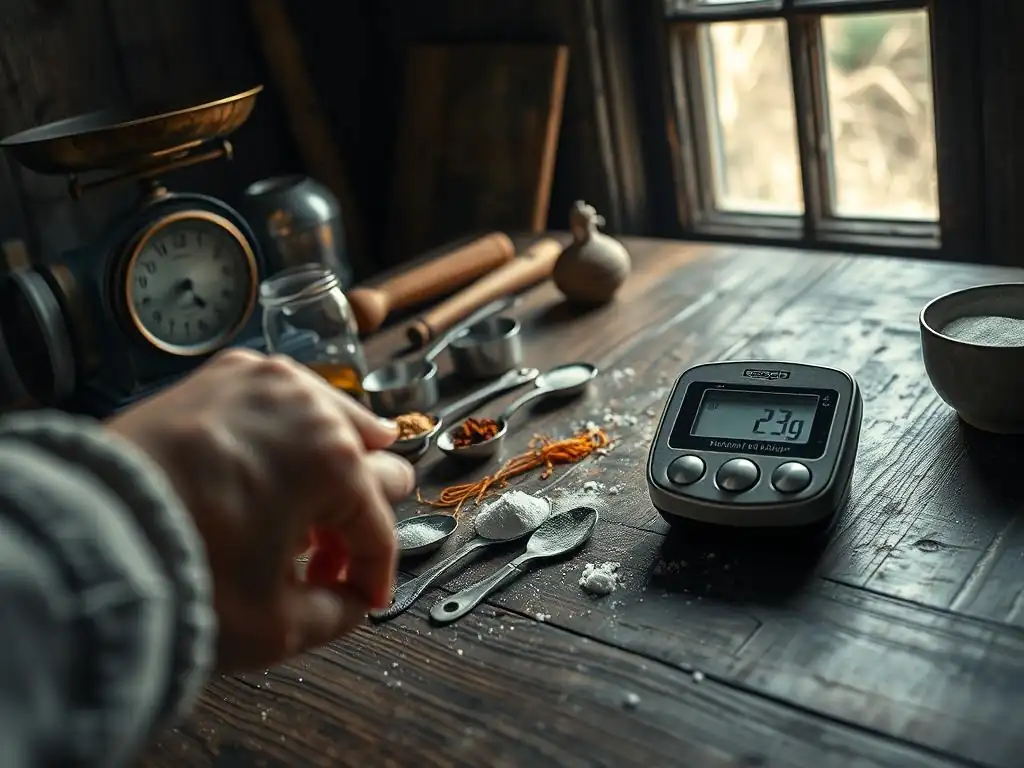
Welcome to BakeWithEase, your partner in confident baking! Ever wondered how to achieve that perfect cake texture or consistently delectable cookies? It often boils down to precision. In this article, we're diving deep into the seemingly small details that make a huge difference: mastering precise baking ingredient measurements. Discover easy and effective methods for accurately measuring those "pinches," "dashes," and "smidgens" that can elevate your baking from good to extraordinary. Ready to unlock the secrets to consistent results? Let's get baking!
- Weighing Small Quantities: Achieving Accuracy in Spice Blends
- The Importance of Precise Spice Measurements in Culinary Arts
- Understanding Informal Spice Measurements
- Methods for Accurately Measuring Small Amounts of Spices
- Tools and Equipment for Precise Spice Measurement
- Tips for Consistent and Accurate Small Quantity Measurement
- Converting Between Informal and Precise Spice Measurements
- Troubleshooting Common Measurement Issues in Spice Blends
- Achieving Culinary Excellence with Precise Spice Control
-
Frequently Asked Questions
- How important is precise measurement when baking, especially for small quantities?
- What's the best tool for accurately measuring very small amounts of baking ingredients?
- Are there any conversion charts available to help translate vague measurements like "smidgen" into standard units?
- Why can't I just use measuring spoons for everything, even small amounts?
- What are some common baking ingredients where precise measurement of small amounts is particularly important?
- Final Reflection: The Art and Science of Precise Baking
- Unlock Your Baking Precision: Master Tiny Measurements!
Weighing Small Quantities: Achieving Accuracy in Spice Blends
Spices are the soul of many baked goods, providing depth, warmth, and complexity. While flour and sugar measurements get much attention, the precise measurement of potent spices, often used in tiny quantities, is equally critical for consistent, delicious results. Mastering precise baking ingredient measurements, especially for spices, elevates your baking from good to exceptional.
The Importance of Precise Spice Measurements in Culinary Arts
The difference between a perfectly spiced gingerbread cookie and an overwhelming one often comes down to mere milligrams of ginger, clove, or cinnamon. Spices, especially ground ones, have concentrated flavors and aromas. Even a slight deviation when measuring small quantities can significantly alter the intended flavor profile of your final product, making precise baking ingredient measurements paramount.
Achieving consistent results batch after batch relies heavily on accurate measurement. Whether you're perfecting your signature pumpkin pie spice blend or ensuring your snickerdoodles have just the right kick of cinnamon, reproducible flavor requires reproducible measurements. This consistency is key for home bakers who want reliable outcomes and essential for anyone sharing or selling their baked goods.
Why Accurate Measurements Matter for Flavor Consistency
Accurate spice measurements are crucial because spices are potent flavor agents. Unlike bulk ingredients like flour or sugar, where a few grams might not drastically change the outcome, a few extra tenths of a gram of, say, cayenne pepper or ground cloves can completely overpower other flavors in a delicate pastry or cake. The balance of spices in a blend is what creates harmony; disrupting that balance with imprecise measurements leads to unpredictable and often undesirable results.
Consider a classic spice blend like apple pie spice, which typically includes cinnamon, nutmeg, allspice, and sometimes ginger or cardamom. The ratio of these spices is carefully balanced to complement the sweetness of the apples and pastry. If you consistently add slightly too much nutmeg due to imprecise measurement, your pie will have a noticeably different, potentially bitter, flavor compared to when the nutmeg is measured precisely. This highlights why precise baking ingredient measurements for spices are non-negotiable for consistent flavor.
Common Challenges in Measuring Tiny Amounts of Spices
Measuring tiny amounts of ground spices presents unique challenges. Static cling can cause fine powders like ground ginger or cinnamon to stick to measuring spoons or scales, making it difficult to get the exact amount. Spices can also clump, especially in humid environments, leading to inaccurate volume measurements when using spoons. Furthermore, the sheer smallness of quantities like "a pinch" or "a dash" makes visual estimation unreliable and highly variable from person to person.
Another challenge is the density of spices. Ground cinnamon is typically less dense than ground nutmeg, meaning a level teaspoon of each will weigh different amounts. Recipes often call for spices by volume (teaspoons), but weight is the most accurate way to measure density-variable ingredients. Transitioning to weighing spices requires converting these small volume measurements, which adds another layer of complexity to achieving precise baking ingredient measurements.
Understanding Informal Spice Measurements
Many recipes, particularly older or more traditional ones, use informal terms like "pinch," "dash," and "smidgen." While charming, these terms are inherently subjective and depend entirely on the person doing the measuring. Relying on these terms for critical spice amounts can lead to inconsistent results, reinforcing the need for a more precise approach to baking ingredient measurements.
These informal units are often used for ingredients added more for subtle enhancement or tradition than for structural or primary flavoring purposes. However, even small amounts of powerful spices can impact a recipe significantly. Understanding the approximate value of these terms can be a starting point, but for true precision, especially in baking where chemistry plays a big role, converting to weight or using precise volume tools is necessary.
Defining "Pinch": A Practical Interpretation
A "pinch" is traditionally defined as the amount of a dry ingredient that can be held between the thumb and forefinger.
While this definition is clear, the actual amount held varies greatly depending on the size of one's fingers, the texture of the ingredient, and even humidity. As a rough approximation, a pinch is often considered to be about 1/8 of a teaspoon. However, weighing a few pinches of different spices will quickly show you that this volume approximation isn't a precise weight.
For example, a pinch of fine salt might weigh around 0.2 grams, while a pinch of fluffy dried dill might weigh less. For precise baking ingredient measurements, especially in sensitive recipes, relying solely on the "pinch" is risky.
In practice, when a recipe calls for "a pinch," it usually implies a very small amount intended to add a subtle note rather than a dominant flavor. However, for strong spices like cayenne pepper or ground cloves, even a traditional "pinch" can be quite potent. To move towards more precise baking ingredient measurements, you might weigh what your typical "pinch" of a specific spice is and note it down for future reference, or simply use a milligram scale to add a specific, tiny weight (e.g., 0.1 - 0.3 grams) if you're aiming for maximum accuracy.
Demystifying "Dash": A Useful Approximation
A "dash" is often considered slightly more than a pinch, typically defined as a quick shake or sprinkle.
Like a pinch, a dash is highly variable. It's commonly approximated as 1/4 of a teaspoon, though some sources suggest it's closer to 1/8 teaspoon, similar to a pinch. This ambiguity highlights the imprecision of the term. The amount dispensed by a "dash" depends on the size of the opening in the spice container, how vigorously it's shaken, and the flow properties of the spice itself.
In liquid measurements, a "dash" from a bitters bottle, for example, is often more consistent due to the specific dropper-like opening, but for dry spices, it's still a rough estimate. If a recipe calls for a "dash" of a potent spice, using a precise measurement tool like a micro spoon or a milligram scale to add a specific, small amount (perhaps 0.5 to 0.8 grams as a starting point, depending on the spice) will yield far more consistent results than relying on a subjective shake. For precise baking ingredient measurements, moving away from the "dash" is recommended.
"Smidgen" Explained: The Smallest Discernible Amount
A "smidgen" is generally considered the smallest of the informal measurements, even less than a pinch.
This term is the most elusive and variable, often approximated as 1/32 of a teaspoon. It represents an amount so small that it's barely measurable with standard kitchen tools. A smidgen of a spice like saffron threads or mace might be called for to add a subtle hint of flavor without being noticeable as a distinct ingredient.
Trying to measure a smidgen accurately with standard teaspoons is nearly impossible. This is where specialized micro measuring spoons or a sensitive milligram scale become indispensable for precise baking ingredient measurements. If a recipe truly relies on the impact of a "smidgen" of a potent spice, using a scale to measure something like 0.05 to 0.1 grams would be the most reliable way to ensure that tiny but potentially significant amount is consistently included.
Methods for Accurately Measuring Small Amounts of Spices
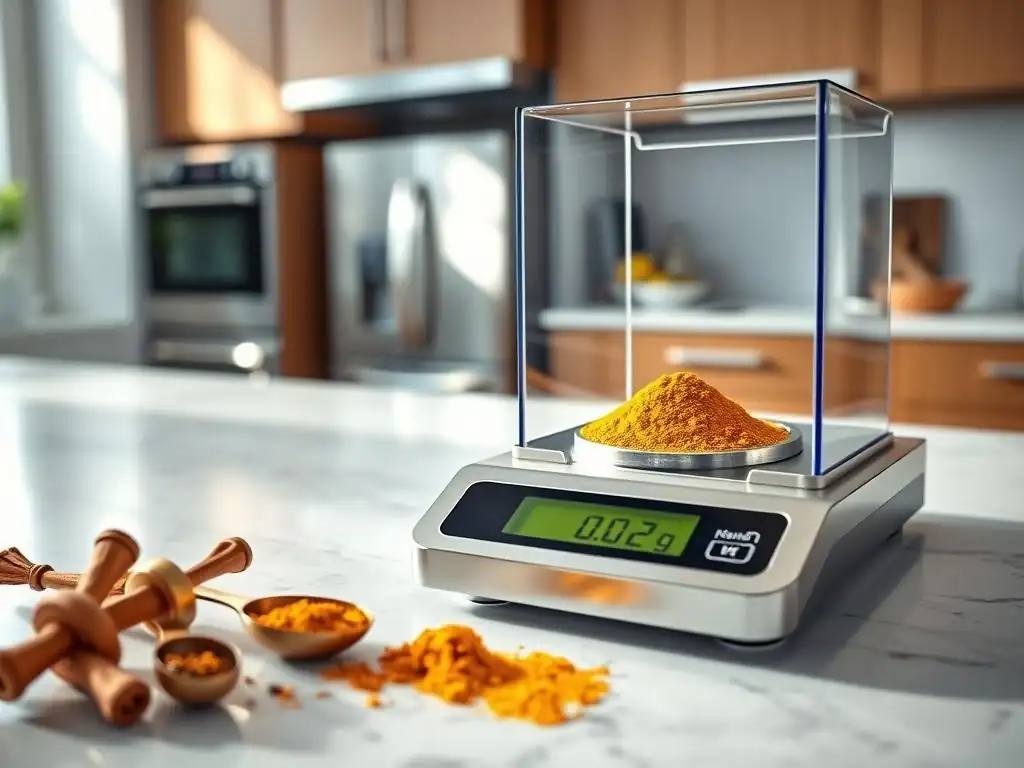
Achieving precise baking ingredient measurements for spices requires moving beyond informal terms and utilizing appropriate tools and techniques. While volume measurements using tiny spoons are common, weighing small quantities with a sensitive scale offers the highest level of accuracy and consistency, especially for potent spices.
Combining different methods can also be effective. For instance, using a micro spoon to transfer a tiny amount of spice to a milligram scale ensures you're working with a manageable quantity before getting the exact weight. Understanding the strengths and limitations of each method allows you to choose the best approach for a given recipe and ingredient.
Using a Digital Scale for Precise Spice Measurements
Using a digital scale is the gold standard for achieving precise baking ingredient measurements, particularly for small quantities of spices. Scales eliminate the variability associated with volume (how tightly packed a spice is) and the subjectivity of informal terms. They measure the actual mass of the ingredient, providing a consistent and reproducible figure.
For spices, which are often used in amounts less than a gram, a standard kitchen scale with 1-gram increments is insufficient. You need a scale capable of measuring in tenths or hundredths of a gram (milligrams). This level of granularity allows you to accurately measure even a "pinch" or "dash" by weight, ensuring you add the exact amount specified or desired.
Choosing a Scale with Milligram Accuracy
To accurately measure spices, look for a digital scale that specifies accuracy down to 0.01 grams (centigrams) or, ideally, 0.001 grams (milligrams). These scales are often marketed as "jewelry scales," "spice scales," or "precision scales." They typically have a maximum capacity between 20 and 100 grams, which is more than sufficient for measuring spices.
When selecting a scale, also consider its readability (how many decimal places it displays), ease of calibration, and the size of the weighing platform. A scale with a cover or draft shield is beneficial to prevent air currents from affecting the reading, which is particularly important when measuring tiny amounts. Investing in a good milligram scale is perhaps the single best step you can take towards achieving truly precise baking ingredient measurements for spices.
Tare Function: Essential for Multi-Spice Blends
The tare function on a digital scale is indispensable when measuring multiple spices into a single bowl or container, such as when creating a custom spice blend for cookies or a cake. This function allows you to place an empty container on the scale, press the "tare" button to zero out its weight, and then add the first ingredient.
After adding the correct weight of the first spice, you can press "tare" again to zero the scale, then add the next spice to the desired weight directly into the same container. This process can be repeated for each ingredient in the blend, ensuring each component is added in the correct, precise amount without needing multiple containers or complex calculations. Using the tare function is a fundamental technique for achieving precise baking ingredient measurements in complex spice mixtures.
Converting Informal Terms to Grams/Milligrams
Converting informal terms like pinch, dash, and smidgen to grams or milligrams requires estimation and experimentation, as their exact weight varies depending on the spice. However, establishing approximate weight ranges can provide a starting point for more precise baking ingredient measurements. For example, a typical "pinch" of a ground spice might weigh between 0.2 and 0.5 grams. A "dash" could be approximated as 0.5 to 0.8 grams, and a "smidgen" perhaps 0.05 to 0.15 grams.
To create your own reliable conversions, you can use your milligram scale to weigh what your pinch, dash, or smidgen of various common spices looks like. For instance, measure "a pinch" of ground cinnamon using your fingers and weigh it. Repeat this several times and average the results. Do the same for ground ginger, nutmeg, etc. This personalized conversion data allows you to translate older recipes into precise weight measurements, ensuring consistent results even when starting with informal instructions.
Measuring Spoons: A Consistent but Less Precise Approach
Measuring spoons are the most common tool for measuring spices by volume. While they offer more consistency than informal terms, they are inherently less precise than weighing, primarily due to the variability in how densely a spice is packed into the spoon and the effect of static cling or clumping. However, for many home bakers, they are the most accessible tool for small quantity measurements.
To maximize accuracy when using measuring spoons for spices, always use the correct size spoon (don't eyeball a 1/2 teaspoon in a full teaspoon spoon). Fill the spoon gently without packing the spice down. Then, use a straight edge, like the back of a knife or a small offset spatula, to level off the excess spice, ensuring the top is flat and even with the rim of the spoon. This leveling technique helps improve repeatability, though it still doesn't match the precision of weighing.
Selecting a Set with Small Increments
Standard measuring spoon sets typically include 1/4 teaspoon, 1/2 teaspoon, 1 teaspoon, and 1 tablespoon. While useful, these increments aren't small enough for measuring "pinches" or "smidgens" accurately. To improve volume measurement accuracy for tiny amounts, look for specialized sets that include smaller increments like 1/8 teaspoon, 1/16 teaspoon (often marketed as a "smidgen" spoon), and sometimes even 1/32 teaspoon.
These smaller spoons, often called "mini measuring spoons" or "spice measuring spoons," provide a more standardized volume for amounts smaller than a quarter teaspoon. While still subject to density variations, using a dedicated 1/8 teaspoon spoon is far more consistent than trying to estimate 1/8 teaspoon in a larger spoon or relying on a finger pinch. They are a good step towards more precise baking ingredient measurements if a milligram scale isn't available.
Leveling Off Spoons for Repeatability
Proper leveling is crucial for achieving repeatable volume measurements with measuring spoons. After scooping or spooning the spice into the appropriate size spoon, the surface of the spice should be flush with the rim of the spoon. Avoid tapping the spoon or shaking it, as this can cause the spice to settle and pack down, leading to more spice by weight than intended for that volume.
To level, gently overfill the spoon, then use a straight edge to sweep across the top, pushing the excess spice back into the container. This technique minimizes variations due to packing density and helps ensure that the amount of spice in the spoon is consistent each time you measure that volume. While not as precise as weighing, consistent leveling is essential for improving the accuracy of volume-based small quantity measurements.
Volumetric Techniques for Tiny Amounts
Beyond standard measuring spoons, other volumetric tools can be useful for measuring very small amounts, particularly for liquid extracts or potent spice powders. These techniques are often employed when maximum precision isn't strictly necessary, but a more consistent volume than a simple pour or sprinkle is desired.
These methods still rely on volume, so they are subject to the same limitations regarding density and consistency as measuring spoons. However, for specific applications, they can offer a practical way to handle amounts too small for traditional tools.
Using Graduated Pipettes for Liquid Extracts
Liquid flavor extracts and potent oils (like peppermint oil or lemon oil) are often used in very small quantities, sometimes just a few drops. Measuring these with standard measuring spoons can be difficult, and drops can vary in size. For precise baking ingredient measurements of liquids used in tiny amounts, graduated pipettes or droppers are ideal.
Pipettes allow you to measure liquids in precise increments, often down to 0.1 ml or even less. A standard dropper might dispense around 0.05 ml per drop, but this can vary. Using a graduated pipette ensures you add the exact volume required, providing much greater accuracy and repeatability than counting drops or trying to measure a fraction of a teaspoon of liquid.
Employing Micro Scoops for Powders
Similar in principle to mini measuring spoons but often even smaller, micro scoops are tiny plastic or metal scoops that provide extremely small, defined volumes. They are sometimes included with dietary supplements or potent powders where precise dosage is required. While not commonly found in standard kitchen sets, they can be useful for measuring out "smidgen" or "pinch" sized volumes of spices.
These scoops come in various sizes, often labeled with their approximate volume in milliliters (e.g., 0.1 ml, 0.25 ml). Like measuring spoons, they require careful leveling for consistency. While still a volume measurement, using a dedicated micro scoop provides a much more standardized "smidgen" than a finger pinch, contributing to more precise baking ingredient measurements when a scale isn't practical or available for such tiny amounts.
Tools and Equipment for Precise Spice Measurement
Having the right tools is fundamental to achieving precise baking ingredient measurements for spices. While basic measuring spoons are a start, investing in specialized equipment designed for small quantities will significantly improve your accuracy and consistency, leading to better baking results.
The tools range from highly accurate digital scales to specialized miniature spoons and scoops. The best choice depends on your budget, the level of precision required by your recipes, and your personal preference for measuring by weight or volume.
Milligram Scales
As discussed, a milligram scale (accurate to 0.01g or 0.001g) is the most recommended tool for achieving truly precise baking ingredient measurements for spices. They are relatively affordable, typically ranging from $15 to $40 for a basic model.
Key features to look for include a tare function, multiple units of measurement (grams, ounces, etc. ), a clear display, and a protective cover. Some models come with small weighing pans or scoops to help handle tiny amounts of powder. Regularly calibrating your milligram scale using check weights (often included or sold separately) is essential to maintain its accuracy over time.
Micro Spoons and Mini Measuring Spoons
These specialized spoon sets bridge the gap between standard measuring spoons and scales for volume measurement of small quantities. They include sizes smaller than a 1/4 teaspoon, such as 1/8, 1/16, and sometimes 1/32 teaspoon.
Using these spoons requires careful leveling, but they offer a more consistent volume than informal methods. They are particularly useful for recipes that specifically call for these smaller volume increments. While not as precise as weighing, they are a valuable tool for improving small quantity measurements.
Spice Measuring Sets with Scoops
Some measuring spoon sets designed specifically for spices include narrow spoons that can fit into small spice jars, reducing mess. Some also feature a leveling bar or edge built into the set.
These sets prioritize convenience and ease of use with spice containers while still offering standard or mini volume measurements. Look for sets made from durable materials like stainless steel for longevity and ease of cleaning.
Droppers and Pipettes for Extracts and Oils
For liquid extracts, flavorings, or potent oils used in very small quantities, graduated droppers or pipettes are the most accurate volumetric tools. They allow measurement in milliliters or fractions of a milliliter.
A set of glass or plastic pipettes with clear volume markings is inexpensive and highly effective for ensuring precise baking ingredient measurements of liquid flavorings. They are much more reliable than simply counting drops, which can vary significantly in size.
Tips for Consistent and Accurate Small Quantity Measurement
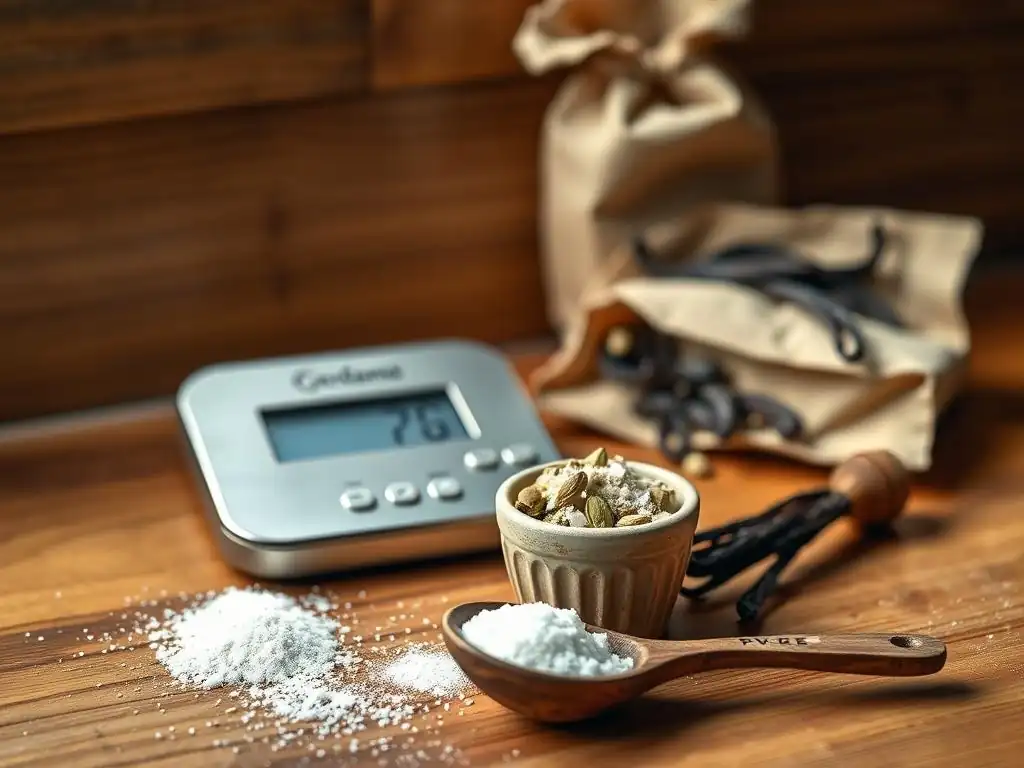
Achieving consistent and precise baking ingredient measurements for spices involves more than just having the right tools; it also requires good practices. Implementing a few simple habits can significantly improve the reliability of your measurements, ensuring your baked goods turn out perfectly every time.
These tips focus on maintaining the accuracy of your tools and techniques, minimizing external factors that can affect measurements, and developing a routine that promotes precision.
Calibrating Your Scale Regularly
Digital scales, especially sensitive milligram scales, can drift over time. Exposure to temperature changes, physical shocks, or simply regular use can affect their accuracy. Regular calibration is essential to ensure your scale is providing precise readings.
Most digital scales come with instructions on how to calibrate them, often requiring a specific calibration weight (e.g., a 10-gram or 20-gram weight). Make it a habit to calibrate your scale periodically, perhaps monthly or before measuring ingredients for a critical recipe. This simple step ensures the foundation of your precise baking ingredient measurements remains accurate.
Maintaining Cleanliness to Prevent Cross-Contamination
When measuring potent spices in small quantities, even tiny residues from previous measurements can affect the flavor of your current project. Ensure your measuring tools – spoons, scoops, scale platform, or weighing container – are thoroughly clean and dry before measuring each spice.
Spice residues can also affect the weight readings on a sensitive scale. A few clinging particles might not seem significant, but when you're measuring only 0.2 grams of a spice, an extra 0.05 grams of residue from a previous measurement represents a 25% error. Cleanliness is paramount for accurate and precise baking ingredient measurements.
Double-Checking Measurements Before Combining
It's easy to get distracted in the kitchen, especially when dealing with multiple ingredients and steps. Before adding your precisely measured spice to the rest of your ingredients, take a moment to double-check the reading on your scale or the level in your measuring spoon.
This quick verification step can catch potential errors before they impact your entire recipe. If you're creating a complex spice blend, measure each spice into a separate small container or onto parchment paper before combining them, allowing you to visually confirm each amount before mixing the final blend. This practice enhances the reliability of your precise baking ingredient measurements.
Converting Between Informal and Precise Spice Measurements
Many beloved recipes still use informal measurements. To incorporate these recipes into your repertoire while maintaining consistency, you'll need a strategy for converting those pinches, dashes, and smidgens into more precise units, preferably weight.
This conversion process isn't a one-time task but an ongoing effort to build your personal database of equivalents. The goal is to move away from subjective interpretation towards objective, measurable quantities for precise baking ingredient measurements.
Creating a Personal Conversion Table
The most reliable way to convert informal terms is to create your own personal conversion table based on your tools and techniques. Use your milligram scale to weigh what your typical "pinch" or "dash" of various spices weighs. Note the type of spice (e.g., ground cinnamon, ground nutmeg, cayenne pepper) and the average weight you get for "a pinch" or "a dash" using your preferred method (finger pinch, quick shake from the jar, etc. ).
| Spice | Informal Term | Your Approx. Weight (grams) | Notes |
|---|---|---|---|
| Ground Cinnamon | Pinch | ~0.3g | Using thumb & forefinger |
| Ground Nutmeg | Dash | ~0.6g | Quick shake from jar |
| Cayenne Pepper | Smidgen | ~0.1g | Using a 1/32 tsp spoon (approximated) |
Over time, this table becomes a valuable resource for translating any recipe's informal calls into precise baking ingredient measurements tailored to your kitchen.
Cross-Referencing Online Resources
While creating your own table is best for personalization, online baking resources and forums often provide approximate weight-to-volume conversions for various spices. These can serve as a starting point if you don't have a milligram scale or are just beginning to explore precise baking ingredient measurements.
Be aware that online conversions are averages and can vary significantly based on the source and the specific grind or density of the spice. Use them as estimates, and if possible, verify them with your own measurements. Resources like the USDA FoodData Central or reputable culinary websites sometimes provide density data that can help estimate weight from volume, although this is more complex than direct measurement.
Troubleshooting Common Measurement Issues in Spice Blends
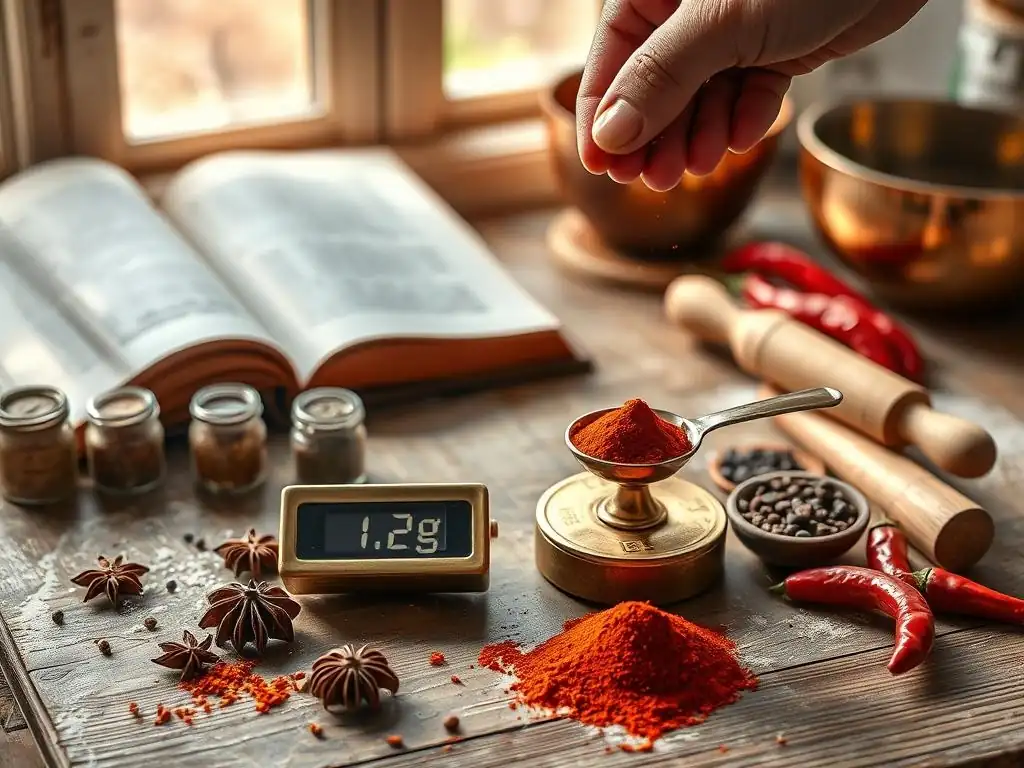
Even with the right tools and techniques, issues can arise when measuring small quantities of spices. Knowing how to identify and correct common problems is part of mastering precise baking ingredient measurements and ensures you can salvage a recipe if a mistake occurs.
Common issues include accidentally adding too much or too little of a potent spice. The approach to correcting these depends on the nature of the mistake and the recipe itself.
Over-Measuring: Dilution Strategies
If you accidentally add too much of a potent spice, especially in a dough or batter that hasn't been baked yet, diluting the mixture is often the best strategy. This involves increasing the quantities of the other main ingredients (flour, sugar, butter, etc.) to balance out the overpowering spice flavor.
For example, if you added too much cayenne pepper to cookie dough, you might need to make more plain cookie dough (without spice) and mix it in to reduce the overall concentration of cayenne. This works well for doughs and batters but is much harder to correct in liquids or finished products. Prevention through careful, precise baking ingredient measurements is always better than trying to fix an over-spiced mixture.
Under-Measuring: Incremental Adjustments
If you suspect you haven't added enough spice, the correction is usually simpler: add more, but do so incrementally and carefully. For instance, if your gingerbread dough lacks ginger kick, weigh out a tiny amount (e.g., 0.2 grams) on your milligram scale, incorporate it thoroughly into a small portion of the dough, taste it (if safe/possible), and then decide if you need to add that amount to the whole batch or add even more.
Adding spices bit by bit allows you to adjust the flavor profile gradually without risking over-spicing. This is particularly useful when adapting recipes or when working with spices whose potency might vary. Always err on the side of adding too little initially and building up the flavor using precise baking ingredient measurements for each addition.
Adapting Recipes for Different Palates
While precise baking ingredient measurements are key for consistency, sometimes you might intentionally want to adjust spice levels to suit different taste preferences. Some people prefer a bolder flavor, while others like it more subtle.
Once you have a reliable method for precise measurement (ideally weighing), it becomes easy to scale spice amounts up or down by a specific percentage. If a recipe calls for 1 gram of cinnamon, and you know someone prefers less spice, you might try 0.8 grams next time. If they like more kick, try 1.2 grams. Keeping notes on these adjustments alongside your precise measurements allows you to tailor recipes effectively for different palates while still maintaining consistency for that specific preference.
Achieving Culinary Excellence with Precise Spice Control
Mastering the art of precise baking ingredient measurements, especially for those potent pinches, dashes, and smidgens of spices, is a skill that significantly impacts the quality and consistency of your baked goods. Moving beyond subjective estimates to objective measurements using appropriate tools like milligram scales transforms your approach to flavor.
Embracing precise measurement techniques allows you to reproduce successful recipes reliably, troubleshoot issues effectively, and confidently adapt recipes to your preferences. It's a fundamental step towards achieving true culinary excellence in baking, where the subtle nuances of spice blends can make all the difference.
Mastering Small Quantity Measurements for Flavor Harmony
Precise baking ingredient measurements for spices are not just about accuracy; they are about achieving flavor harmony. Each spice in a blend plays a role, and their proportions are critical to creating a balanced and pleasing taste experience. Too much of one spice can clash with or overpower others, disrupting the intended balance.
By using precise methods – weighing with a milligram scale, employing micro spoons, or using pipettes for extracts – you gain control over the subtle yet powerful influence of spices. This control allows you to fine-tune flavors, experiment with confidence, and consistently produce baked goods that are perfectly spiced, batch after batch. Investing time and effort in mastering these small quantity measurements is an investment in the consistent deliciousness of your baking.
Frequently Asked Questions
How important is precise measurement when baking, especially for small quantities?
Precise measurement is crucial for consistent results in baking. Even small variations in "pinches" or "dashes" can significantly impact the final texture and flavor of your baked goods.
What's the best tool for accurately measuring very small amounts of baking ingredients?
A digital kitchen scale with high precision (measuring in grams or even milligrams) is ideal. It allows for consistent and repeatable measurements compared to relying on approximations like "pinch" or "dash."
Are there any conversion charts available to help translate vague measurements like "smidgen" into standard units?
Yes, many resources offer conversion charts. Search online for "baking measurement conversions" to find charts that translate "pinch," "dash," and "smidgen" into approximate teaspoon or gram equivalents. However, scales are still more accurate.
Why can't I just use measuring spoons for everything, even small amounts?
While measuring spoons are helpful, they become less accurate for very small quantities. Variations in how a person scoops can lead to inconsistent results compared to the precise weights offered by a digital scale.
What are some common baking ingredients where precise measurement of small amounts is particularly important?
Ingredients like salt, spices, and baking powder are critical where a tiny difference in amount can affect the final product significantly. Accurate measurement ensures the intended flavor and rise are achieved.
Final Reflection: The Art and Science of Precise Baking
The pursuit of perfect baked goods hinges on accuracy, and that accuracy begins with mastering the seemingly insignificant: pinches, dashes, and smidgens. In a world increasingly reliant on convenience and estimations, the meticulous measurement of small quantities remains a crucial skill, impacting not only the final taste and texture but also the overall success of any baking endeavor. Ignoring these seemingly minor details can lead to disappointing results, highlighting the importance of precision in even the smallest aspects of the process.
The impact of precise measurement extends far beyond the individual kitchen; it speaks to a broader appreciation for detail and craftsmanship. It's a reminder that even the most seemingly simple recipes require attention and respect for the ingredients and the process. As the culinary historian, Waverly Root, once wrote: Cooking is at once child's play and adult joy. And cooking done with care is an act of love.
This sentiment perfectly encapsulates the dedication and precision required for successful baking, where even a slight deviation can significantly alter the outcome. The pursuit of precise measurements becomes a meditative act, connecting us to the history and artistry of baking.
Consider the impact of your next baking project. Will you approach it with the same level of care and attention to detail you've learned about here? I invite you to embrace the challenge of precise measurement, not as a chore, but as an opportunity to elevate your baking to a new level of artistry and satisfaction. By mastering the art of weighing small quantities, you unlock the potential to create truly exceptional baked goods, transforming your kitchen into a laboratory of culinary creativity and precision. The journey to perfect baking begins with a single, accurately measured pinch.
Unlock Your Baking Precision: Master Tiny Measurements!
Thanks for taking the time to delve into the world of precise baking! We hope you now feel more confident tackling those tricky small measurements. Ready to put your new skills to the test?
- Whip up your favorite recipe: Choose a recipe that relies on precise small measurements, and let's see how much more accurate (and delicious!) your results are!
- Share your baking triumphs (or challenges!) with us in the comments below. Let's build a supportive community of bakers who embrace the art of precise measuring.
- Try experimenting with different small-measurement techniques. Which method do you find most efficient and accurate?
What's the smallest quantity you've ever successfully measured in your baking, and what was the result?