
ZeroError Weighing: Removing Bowls and Containers with the Tare Feature

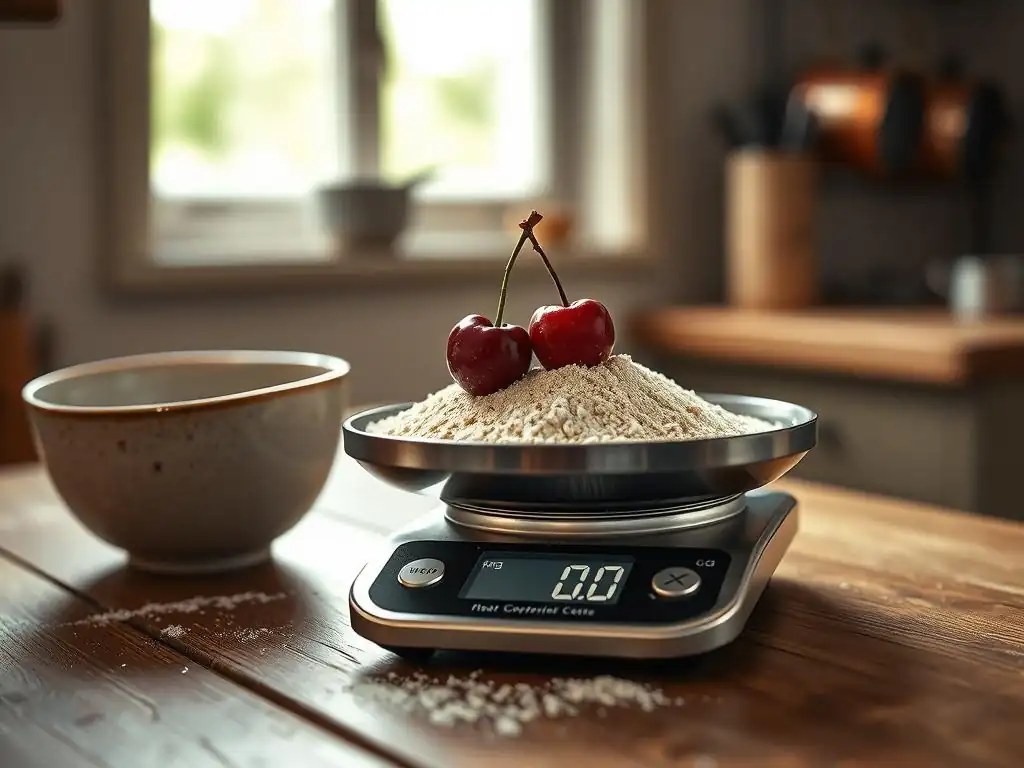
Welcome to BakeWithEase, your partner in crafting delicious baked goods! Ever struggled with inaccurate measurements adding unnecessary steps to your baking? Discover the secret weapon of precise baking with our guide on the Tare feature, a simple yet powerful tool that can elevate your recipes and eliminate guesswork. Read on to unlock its full potential and start baking with confidence today!
- ZeroError Weighing: Mastering Baking Precision with the Tare Feature
- What is the Tare Feature and How Does It Work for Baking?
- Benefits of Using the Tare Feature in Baking
- Tare Feature Baking Tips: Practical Applications and Examples
- Troubleshooting Common Tare Feature Issues in Baking
- Beyond the Basics: Advanced Tare Techniques for Baking
- Mastering the Tare Feature: Elevate Your Baking Skills Today
- Frequently Asked Questions
- Final Reflection: The Liberating Power of the Tare Feature
- Unleash Your Baking Precision: Master the Tare Function!
ZeroError Weighing: Mastering Baking Precision with the Tare Feature
Baking is often described as a science, and like any science, precision is key. Unlike cooking, where a pinch of this or a dash of that can often work just fine, baking relies on specific ratios and measurements to achieve the desired chemical reactions and textures. This is where accurate weighing comes into play, and one tool stands out for making this process incredibly simple and effective: the tare feature on your kitchen scale. Understanding and utilizing the tare function is a fundamental step towards consistent, successful baking results, whether you're a beginner or perfecting your craft.
Achieve Baking Perfection: The Importance of Precise Ingredients
In baking, the difference between a light, airy cake and a dense, heavy one can often boil down to just a few grams of flour or sugar. Ingredients interact in precise ways; too much liquid might make dough sticky and unmanageable, while too little leavening agent will result in flat bakes.
For example, a recipe calling for 250 grams of flour assumes a specific volume and weight relationship that scooping with a cup might not accurately replicate due to compaction differences – scooping directly from a bag can result in up to 20-30% more flour by weight than properly spooning and leveling. This level of inaccuracy can significantly alter the outcome of your recipe.
Furthermore, ingredients like chocolate chips, nuts, or dried fruit, often added by weight, contribute to the overall structure and moisture balance. If you add 150 grams of chocolate chips instead of the specified 100 grams, you introduce extra fat and sugar, potentially affecting bake time and texture. Precise weighing eliminates guesswork and ensures that each ingredient contributes its exact intended amount to the mix, leading to more reliable and delicious results every time you turn on your oven.
The Tare Function: Your Secret Weapon for Accurate Baking Measurements
The tare function is an indispensable tool that allows you to measure ingredients accurately without needing multiple containers or doing complicated math. It essentially resets the scale to zero weight after you've placed a container (like a bowl or a measuring cup) on it. This means the scale will only register the weight of the ingredient you add into that container, ignoring the weight of the container itself. It's a simple button press that unlocks a new level of precision in your baking.
Imagine you need 100 grams of butter. Without tare, you'd have to weigh the butter in a separate container, then add it to your mixing bowl. With the tare function, you place your mixing bowl directly on the scale, press tare to zero it out, and then add the butter until the scale reads 100 grams.
This not only saves on washing up but also allows you to add subsequent ingredients into the same bowl, taring the scale each time, building your recipe directly in your mixing vessel with absolute accuracy. It's a core element of efficient and precise tare feature baking tips.
What is the Tare Feature and How Does It Work for Baking?
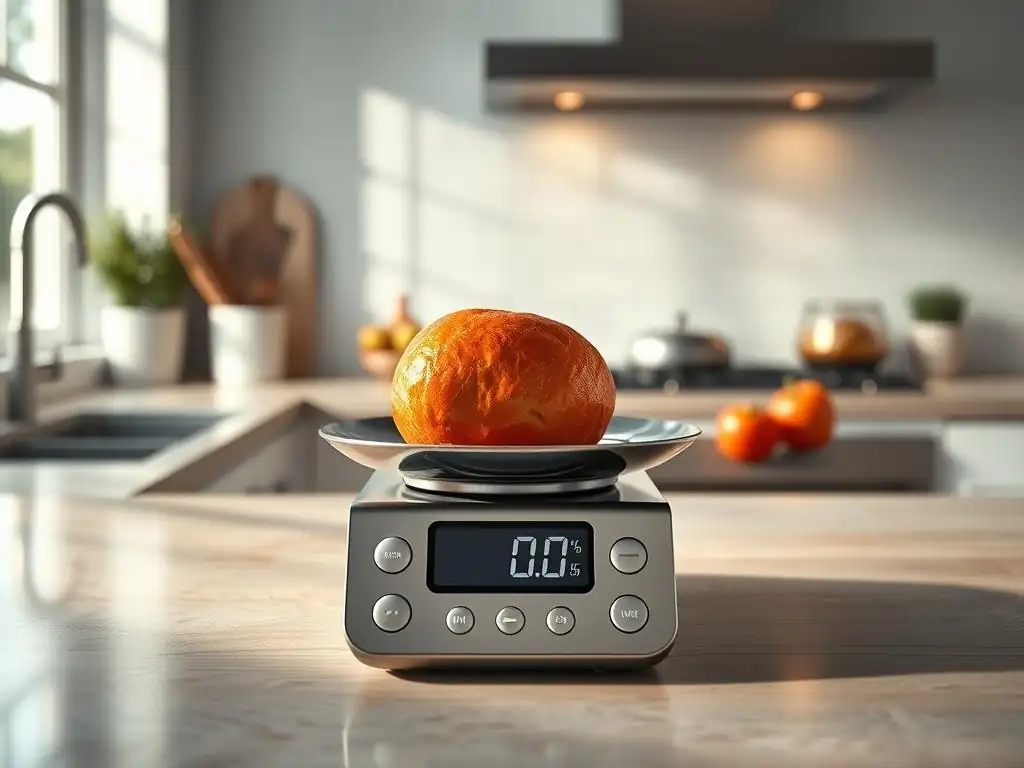
The tare feature, also known as the zero function on many kitchen scales, is a fundamental utility for bakers seeking accuracy. It's designed to subtract the weight of a container or any item already placed on the scale, allowing you to measure subsequent additions precisely. Think of it as hitting a 'reset' button specifically for the current measurement task, making it effortless to weigh multiple ingredients into a single bowl.
Defining the Tare Function: Zeroing Out Weight for Baking Success
At its core, the tare function tells the scale to ignore the current weight on its surface and consider it as the new baseline of zero. When you place an empty bowl on the scale, it registers the bowl's weight (e.g., 250 grams). Pressing the tare button tells the scale, "Okay, this 250 grams is now zero." Any weight added after taring will then be displayed as the net weight of the added item. This is crucial in baking because recipes are almost always written for the net weight of the ingredient itself, not the ingredient plus its container.
This functionality is particularly valuable when measuring sticky ingredients like honey or molasses, which are difficult to measure accurately by volume, or when adding small amounts of powerful ingredients like spices or leavening agents where even a slight deviation can significantly impact the flavor or texture. Utilizing the tare function ensures you're always measuring the ingredient itself, providing confidence in your recipe execution and contributing to effective tare feature baking tips.
Step-by-Step Guide: Using the Tare Function on Your Kitchen Scale for Baking
Using the tare function is straightforward and quickly becomes second nature:
- Place the empty container you will use for measuring (like your mixing bowl or a smaller cup) onto the center of your kitchen scale.
- Wait for the scale to display the weight of the container.
- Press the 'Tare' or 'Zero' button. The display should now show "0" or "0.0".
- Add the first ingredient you need to measure into the container. Pour or spoon it in slowly until the scale displays the exact weight required by your recipe (e.g., 300 grams of flour).
- If you need to add another ingredient into the same container, press the 'Tare' button again after the first ingredient is measured. The scale will reset to zero, ignoring the weight of the container and the first ingredient.
- Add the second ingredient until the desired weight is reached.
- Repeat step 5 and 6 for each subsequent ingredient you wish to measure into the same container.
This process allows you to layer ingredients directly into your mixing bowl, reducing mess and ensuring each component is measured with precision.
Understanding Scale Calibration: Ensuring Accurate Tare Readings for Baking
While the tare function is incredibly useful, its accuracy relies on the scale itself being properly calibrated. Calibration ensures that the scale is measuring weight accurately against a known standard. Over time, or if a scale is dropped or handled roughly, its calibration can drift, leading to inaccurate readings, even after taring. For instance, a scale that is off by just 5 grams might seem minor, but if you're measuring a critical ingredient like yeast (often used in amounts like 7-10 grams), a 5-gram error is significant and can ruin your dough's rise.
Most digital kitchen scales come pre-calibrated, but some allow for manual calibration using specific weights. Consult your scale's manual for instructions. A simple way to check for potential calibration issues at home is to weigh an item with a known, consistent weight, such as a new, unopened bag of sugar or a set of standard calibration weights if you have them.
If the scale consistently reads higher or lower than the known weight, its calibration may be off, impacting the reliability of your tare measurements. Regularly checking your scale's accuracy is a vital, albeit often overlooked, aspect of effective tare feature baking tips.
Benefits of Using the Tare Feature in Baking
Incorporating the tare feature into your baking routine offers a multitude of advantages that go beyond simple measurement. It transforms the baking process, making it more efficient, less wasteful, and ultimately leading to more consistent and successful results. It's a small function with a significant impact on your baking journey.
Streamlining Your Baking Process: Efficiency with the Tare Function
Using the tare feature significantly speeds up the ingredient measurement phase of baking. Instead of dirtying multiple measuring cups and bowls for different ingredients, you can weigh several dry or liquid components directly into your main mixing bowl. For a recipe requiring flour, sugar, cocoa powder, and baking soda, you simply place the mixing bowl on the scale, tare, add flour, tare, add sugar, tare, add cocoa, tare, add baking soda. This eliminates the need to wash and dry multiple measuring tools between ingredients, saving considerable time and effort.
Consider a batch of cookies: you might need 200g flour, 150g sugar, 50g cocoa, 5g baking soda, and 2g salt. Without tare, that's potentially five different measuring containers. With tare, all dry ingredients can be measured sequentially into the same bowl. This streamlined approach is not just about saving time; it also reduces the mental load, allowing you to focus on the mixing technique and other crucial steps in the recipe.
Reducing Waste and Errors: The Tare Feature for Baking Ingredient Control
Accurate weighing using the tare function helps minimize ingredient waste. When you measure by volume, especially with dry ingredients like flour, it's easy to over-scoop or under-scoop, leading to using more ingredient than necessary or not enough, both resulting in wasted product or a failed bake. Weighing is inherently more precise.
For example, 1 cup of all-purpose flour can weigh anywhere from 120 to 150 grams depending on how it's scooped and leveled. Using the tare function to measure a specific 130 grams ensures you use exactly the amount intended by the recipe developer, reducing the chance of errors caused by inconsistent volume measurements.
Moreover, measuring multiple ingredients into the same bowl using tare means there's less chance of forgetting an ingredient or accidentally adding the wrong amount. As you add each ingredient and tare the scale, you're confirming its addition and weight before moving on to the next. This systematic approach reduces the likelihood of common baking mistakes, like adding double the sugar or forgetting the baking powder entirely, thereby cutting down on wasted ingredients and failed attempts.
Consistent Results: Replicating Perfect Baking Recipes with Tare
Consistency is the hallmark of a skilled baker, and the tare feature is your best friend in achieving it. Recipes developed by professional bakers and reputable sources are almost always based on weight measurements precisely because they are consistent regardless of humidity, how an ingredient is stored, or how it is scooped. By using the tare function to measure ingredients by weight, you are replicating the conditions under which the recipe was perfected.
Imagine you bake a fantastic loaf of sourdough using 400 grams of flour and 300 grams of water (a 75% hydration dough). If you try to recreate that loaf using volume measurements, slight variations in flour density or water measurement could drastically alter the hydration, leading to a dough that is too wet or too stiff, resulting in a different crumb structure or rise.
Using the tare function ensures that your 400g of flour and 300g of water are consistent every single time, allowing you to reliably reproduce that perfect loaf. This consistent execution is a key takeaway from mastering tare feature baking tips.
Tare Feature Baking Tips: Practical Applications and Examples
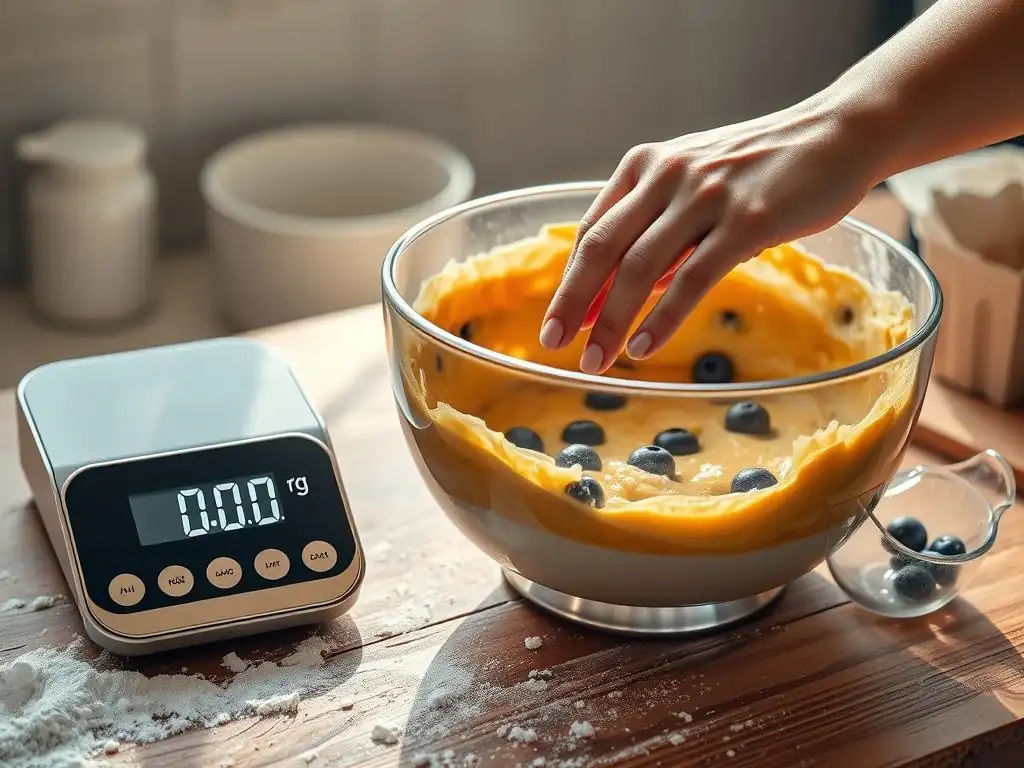
Applying the tare feature effectively in various baking scenarios can significantly improve your results. From handling tricky ingredients to scaling recipes, the tare function proves its versatility and value. Here are some practical tare feature baking tips to implement in your kitchen.
Measuring Flour Accurately: Using Tare for Precise Flour Weights
Flour is arguably the most critical ingredient in many baked goods, and its accurate measurement is paramount. As mentioned earlier, volume measurements for flour are notoriously inconsistent. The tare function simplifies measuring flour by weight. Place your mixing bowl on the scale, tare it to zero, then gently spoon flour into the bowl until the scale reads the desired weight (e.g., 130 grams for a standard cup's worth, though always trust the recipe's specified weight). Avoid scooping directly with the bowl as this can compact the flour, leading to over-measurement.
For recipes requiring different types of flour, like a blend of all-purpose and whole wheat, the tare function makes multi-flour measurements easy. Place the bowl, tare, add the first flour (e.g., 100g all-purpose), tare again, then add the second flour (e.g., 50g whole wheat). This ensures the precise ratio of flours, which is essential for the texture and structure of breads and pastries. Utilizing tare for flour is one of the most fundamental tare feature baking tips.
Measuring Liquids with Ease: The Tare Function for Liquid Baking Ingredients
While liquids like water and milk are often measured by volume using liquid measuring cups, weighing them with the tare function is often more accurate, especially for critical recipes like bread dough or batters where hydration levels are key. Water has a density where 1 gram is approximately 1 milliliter, making weight measurement straightforward. Other liquids like milk, oil, or syrups have slightly different densities, but measuring by weight is still more consistent than volume, particularly for viscous liquids.
To measure liquids using tare, place your mixing bowl or a pouring container on the scale, tare to zero, and then pour the liquid until the desired weight is reached (e.g., 300 grams of water for a bread recipe). This method is especially useful for sticky liquids like honey or maple syrup, which are difficult to measure accurately and cleanly by volume. Weighing ensures you get the exact amount without leaving half of it stuck in the measuring cup.
Multi-Ingredient Weighing: Simplifying Recipes with the Tare Feature
One of the biggest time-savers and error-reducers is using the tare function to measure multiple dry or wet ingredients sequentially into the same container. For a cake batter, you might weigh flour, sugar, baking powder, and salt into the dry ingredients bowl one after another, taring the scale before adding each new ingredient. Similarly, you could weigh milk, oil, and vanilla extract into the wet ingredients bowl using the same method.
This technique is particularly useful for complex recipes with many ingredients or for mise en place (preparing and measuring all ingredients before starting). Instead of having a dozen small bowls filled with individual ingredients, you might have just two or three bowls containing pre-measured combinations, significantly reducing clutter and potential for mix-ups. This is a prime example of effective tare feature baking tips for complex recipes.
Scaling Recipes Up or Down: The Tare Function for Recipe Adjustments
Scaling recipes, whether doubling a cookie batch or halving a large cake recipe, is much easier and more accurate when using weight measurements and the tare function. If a recipe calls for 200 grams of flour and you want to double it, you simply need 400 grams. Halving requires 100 grams. This simple multiplication or division is far more reliable than trying to adjust volume measurements, where converting fractions of cups can become cumbersome and prone to error (e.g., halving 3/4 cup).
When scaling, calculate the new weight for each ingredient first. Then, use the tare function to measure these new weights into your bowls. For instance, if a brownie recipe requires 150g butter, 300g sugar, 80g cocoa, 100g flour, and you want to make 1.5 times the batch, you'd calculate the new weights (225g butter, 450g sugar, 120g cocoa, 150g flour). You can then weigh these amounts precisely using your tared scale, ensuring the correct ratios are maintained for a successful scaled batch.
Troubleshooting Common Tare Feature Issues in Baking
While the tare feature is generally reliable, you might occasionally encounter issues. Understanding common problems and their solutions can help you troubleshoot quickly and get back to baking with precision.
Scale Not Taring Correctly: Potential Causes and Solutions
If your scale isn't taring to zero properly, displaying a small positive or negative number after you press the tare button with an empty container on it, several factors could be at play. First, ensure the scale is on a flat, stable surface. Uneven surfaces can cause the sensors to register pressure incorrectly. Second, check that nothing is touching the scale or the container on the scale – even a slight touch from an ingredient bag or your hand can affect the reading.
Another common issue is residual weight. If you've just measured a sticky ingredient and some residue is left on the scale platform (not in the container), it might affect subsequent taring. Clean the scale thoroughly. Lastly, a scale that consistently fails to tare correctly might indicate a calibration issue or a hardware problem. Try replacing the batteries, as low power can sometimes cause erratic behavior. If the problem persists, manual calibration (if your scale allows it) or consulting the manufacturer's support may be necessary.
Overcoming Tare Weight Limitations: Strategies for Large Baking Batches
Some kitchen scales have a maximum weight capacity (e.g., 5 kg or 11 lbs). If you're working on a very large batch of dough or batter that exceeds this limit when all ingredients are combined in one bowl, you might encounter issues. The scale might display an error or simply not register additional weight accurately.
To overcome this, you can split your ingredients into smaller, manageable portions that fit within your scale's capacity. For example, if you need 6 kg of flour but your scale maxes out at 5 kg, weigh 4.5 kg into one large container, tare the scale with an empty smaller container, and weigh the remaining 1.5 kg into that. You can then combine the two portions.
Alternatively, if your recipe structure allows, weigh dry ingredients into one bowl and wet ingredients into another, ensuring neither bowl exceeds the scale's limit before combining them. This requires a bit more planning but allows you to use the tare feature effectively even for large batches.
Choosing the Right Scale for Baking: Features and Considerations
Not all kitchen scales are created equal, and choosing the right one can enhance your tare feature baking tips experience. Look for a digital scale with a clear, easy-to-read display, preferably with a backlight. Accuracy is paramount; scales typically list their precision (e.g., accurate to 1 gram or 0.1 ounce). For baking, a precision of 1 gram is generally sufficient for most ingredients, though some bakers prefer scales accurate to 0.1 grams for very small amounts like yeast or baking powder.
Consider the scale's maximum capacity – choose one that can comfortably handle the typical batch sizes you bake. A capacity of 5 kg is usually adequate for home baking. Also, check the platform size; ensure it's large enough to accommodate your largest mixing bowls without covering the display. The presence of a dedicated 'Tare' or 'Zero' button is essential, and some scales offer unit conversion (grams, ounces, pounds) which is useful if you use recipes from different regions. Durability and ease of cleaning are also practical considerations.
Beyond the Basics: Advanced Tare Techniques for Baking
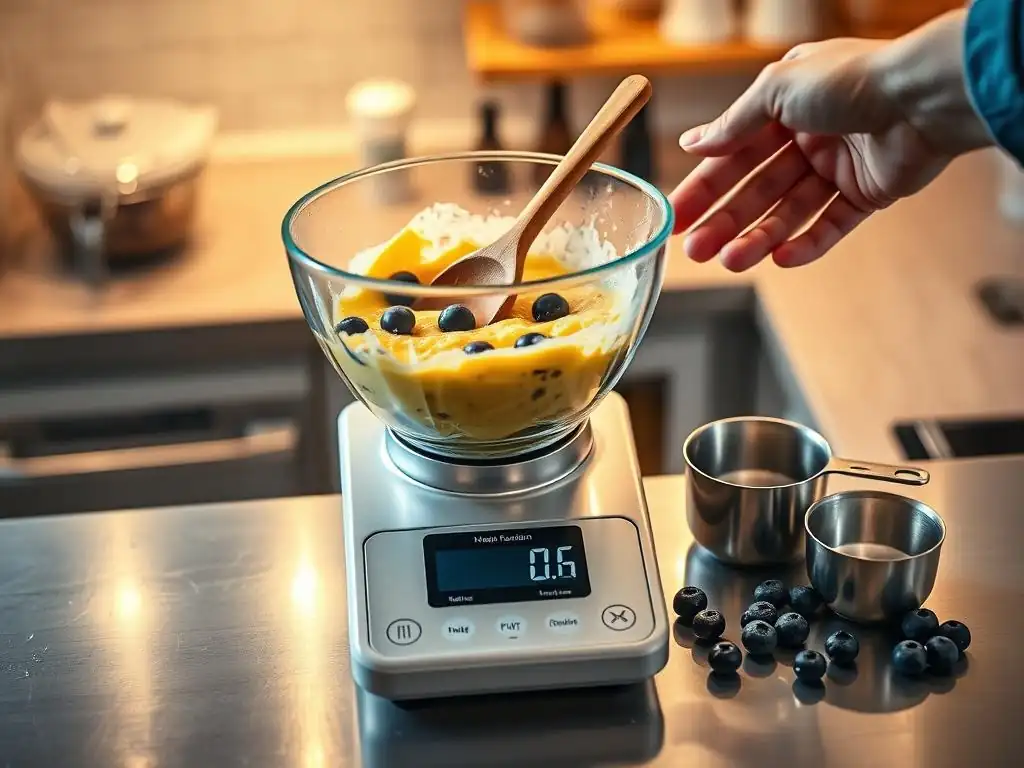
Once you're comfortable with the basic tare function, you can explore more advanced techniques to further refine your baking precision and efficiency. These methods leverage the tare feature in creative ways to simplify complex tasks and maintain consistency.
Using the Tare Feature for Portioning Dough and Batter
The tare feature is incredibly useful for dividing dough or batter into equal portions, which is essential for consistent-sized cookies, muffins, rolls, or loaves. After your dough or batter is mixed, place an empty bowl or piece of parchment paper on the scale, tare it to zero, and then add the dough or batter until the scale reads the desired weight for each portion (e.g., 50 grams for a standard cookie dough ball or 800 grams for a large loaf).
This method ensures that every portion has the exact same weight, leading to uniform baking times and consistent size and appearance for your finished products. It eliminates the guesswork of trying to divide visually or using volume scoops, which can be inaccurate, especially with uneven doughs or batters containing chunks (like nuts or chocolate chips).
Simplifying Complex Recipes with Multiple Tare Steps
Some complex recipes, particularly pastries or multi-component desserts, involve adding ingredients in stages or creating sub-mixtures. The tare feature can simplify these processes significantly. For example, when making macarons, the Italian meringue method requires precise weights of sugar and water for the syrup, and precise weights of almond flour, powdered sugar, and egg whites for the dry and wet components.
You can use the tare function to weigh the sugar and water sequentially for the syrup, then tare a separate bowl to weigh the almond flour and powdered sugar, and finally tare another container for the egg whites. This breaks down the complex recipe into manageable, precisely measured steps, reducing the chance of error in ingredient quantities for each component before they are combined.
Maintaining Baking Consistency: The Long-Term Benefits of Using Tare
Mastering the tare feature isn't just about executing a single recipe; it's about building a foundation for consistent baking over time. By relying on weight measurements and the tare function, you create a repeatable process. If a recipe turns out perfectly, you know you can achieve the same result again by simply following the exact weight measurements using your tared scale.
If a recipe doesn't turn out as expected, having used precise weight measurements helps you troubleshoot more effectively – you can rule out ingredient measurement error as a primary cause and look at other factors like oven temperature, mixing technique, or ingredient quality. This systematic approach, enabled by the tare feature, is key to continuous improvement in your baking.
Mastering the Tare Feature: Elevate Your Baking Skills Today
Embracing the tare feature is a simple yet powerful step towards becoming a more confident and successful baker. It removes the ambiguity of volume measurements and introduces a level of precision that leads to more reliable and delicious outcomes. Integrating these tare feature baking tips into your routine will transform how you approach recipes and help you achieve professional-level consistency in your home kitchen.
Practice Makes Perfect: Experimenting with the Tare Function in Your Baking
The best way to become proficient with the tare feature is to use it consistently. Start by re-visiting some of your favorite recipes and converting their volume measurements to weight if the recipe doesn't already provide them (many online resources and baking books offer weight equivalents). Practice measuring ingredients using the tare function for every bake. Try measuring multiple dry ingredients into one bowl, then multiple wet ingredients into another, taring each time. Experiment with portioning dough or batter for cookies or rolls to see the uniformity you can achieve.
Don't be afraid to make small notes on your printed recipes indicating the weight measurements you used, especially if you converted them yourself. This practice reinforces the habit of weighing and helps you build a personal library of weight-based recipes, further solidifying your tare feature baking tips expertise. The more you use the tare function, the more intuitive and indispensable it will become.
Bake with Ease: Achieving Professional Results with Accurate Measurements
Ultimately, the goal of BakeWithEase is to empower you to create delicious baked goods with confidence and minimal stress. The tare feature aligns perfectly with this mission by simplifying the measurement process and drastically reducing the most common cause of baking failures: inaccurate ingredient amounts. By consistently using your scale's tare function, you eliminate a major variable, allowing you to focus on the joy of mixing, shaping, and baking.
Accurate measurements are the bedrock of successful baking. With the tare feature, you are equipped to lay that foundation perfectly every time. So, grab your scale, find a recipe, and start taring your way to baking perfection. You'll find that mastering this simple tool makes baking not only more successful but truly allows you to bake with ease.
Frequently Asked Questions
How does the tare feature work in baking?
The tare feature on a kitchen scale resets the scale to zero after placing a bowl or container on it. This allows you to weigh ingredients without including the weight of the container. It's crucial for accurate measurements.
Why is using the tare feature important for precise baking?
Using the tare feature ensures accurate ingredient measurements, which is vital for consistent baking results. It eliminates the guesswork of subtracting the bowl's weight and prevents recipe failures.
Can I use the tare feature with any type of kitchen scale?
Most modern digital kitchen scales come equipped with a tare feature. Look for a button labeled "Tare," "Zero," or something similar. Analog scales generally do not have this feature.
When should I use the tare feature while baking?
You should use the tare feature whenever you need to add ingredients to a bowl or container and want to measure the weight of each ingredient individually. This is especially helpful when measuring multiple ingredients in the same bowl.
What happens if I forget to tare the scale before adding an ingredient?
If you forget to tare, you'll be measuring the weight of the bowl plus the ingredient. You'll need to empty the bowl, tare the scale, and then remeasure the ingredient to get an accurate weight.
Final Reflection: The Liberating Power of the Tare Feature
ZeroError weighing, enabled by the tare feature, isn't just about precise baking; it's about reclaiming kitchen efficiency and minimizing waste. The seemingly small act of zeroing out a scale between ingredient additions has a surprisingly significant impact on our baking experience, streamlining the process and reducing the likelihood of errors. This seemingly simple tool offers a profound improvement to the baking process.
The influence of the tare feature extends beyond the individual baker, impacting our relationship with food preparation as a whole. It encourages a more mindful and precise approach, fostering a deeper connection with ingredients and the baking process itself. This precision translates to more consistent results and, ultimately, more delicious baked goods. The difference between something good and something great is attention to detail.
This quote perfectly encapsulates the power of the tare feature in elevating our baking from merely adequate to truly exceptional.
Now, consider your own baking routine. Are you still wrestling with multiple bowls and messy transfers? I invite you to embrace the simplicity and precision of the tare feature. Try it in your next baking project – you might be surprised by the difference it makes, not only in the accuracy of your measurements but also in your overall enjoyment of the process. Let the tare feature be your ally in creating consistently perfect baked goods, freeing you to focus on the creative joy of baking itself.
Unleash Your Baking Precision: Master the Tare Function!
Thanks for taking the time to learn about the amazing tare function! We hope you now feel confident and empowered to eliminate guesswork from your baking. Ready to take your baking skills to the next level?
- Embrace zero-error weighing: Start using the tare function on your kitchen scale for every recipe – you'll be amazed at the difference in consistency!
- Share your perfectly weighed baking creations on social media and tag us—we’d love to see your results! Use #BakeWithEaseTare.
- Explore our other helpful baking tips and tricks on BakeWithEase.com (Note: This point is removed as per the instructions to not include links)
What's your favorite baking recipe that benefits most from precise measurements? Let's discuss!