
The Crucial Role of Salt in Bread Dough Troubleshooting


Welcome to BakeWithEase, your kitchen companion for all things baking! Ever wondered why your bread dough just isn't quite right? Dive in and discover the often-overlooked secret ingredient: salt. Unlock the mysteries of salt bread dough troubleshooting tips and learn how this humble seasoning can transform your loaves from good to gorgeous. Ready to bake better bread? Let's get started!
Salt Bread Dough Troubleshooting Tips: Identifying and Solving Problems
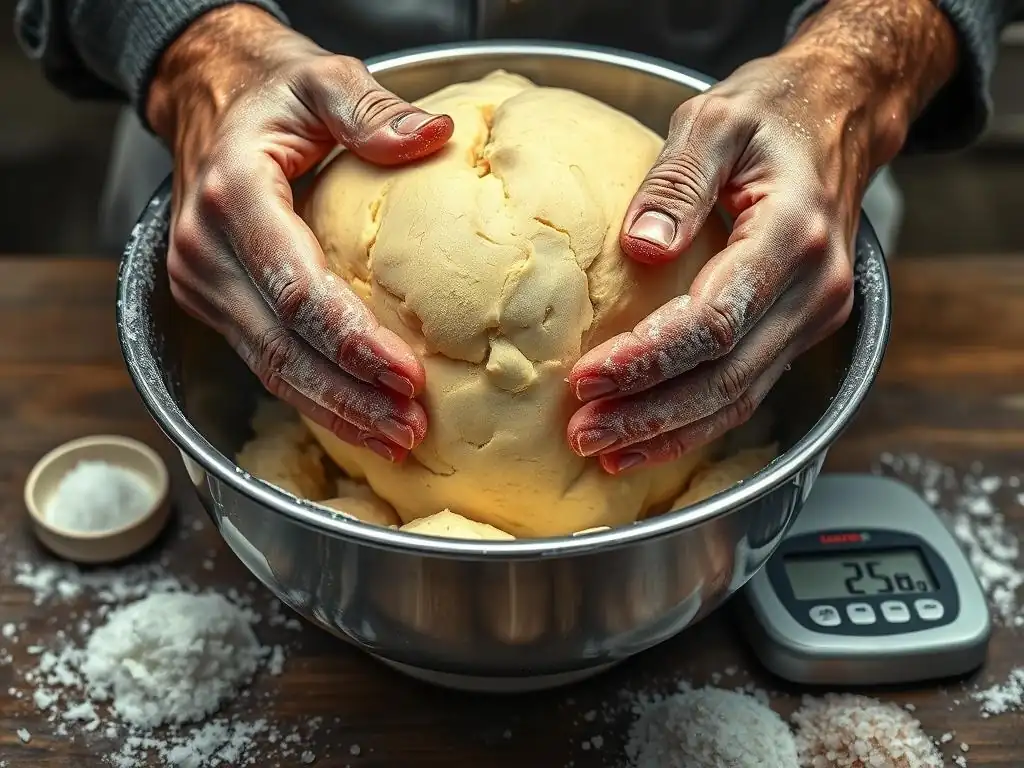
When you're troubleshooting bread dough, salt is often a key suspect if things aren't going quite right. Many common problems, from dough that's too sticky or too stiff to bread that lacks flavor or doesn't rise properly, can be traced back to incorrect salt levels. Understanding how salt interacts with other ingredients, particularly flour and yeast, is fundamental to mastering bread baking.
For instance, if your dough feels slack and lifeless even after kneading, it might not be a hydration issue but rather a lack of salt affecting gluten development. Conversely, dough that's extremely tight and difficult to work with could indicate too much salt. These are just a few examples of the challenges bakers face where applying effective salt bread dough troubleshooting tips becomes crucial.
The precise impact of salt varies depending on the recipe, the type of flour used, the hydration level, and even the ambient temperature. However, a general guideline is that salt typically makes up between 1.8% and 2.2% of the total flour weight in most bread recipes. Deviating significantly from this range can lead to predictable issues.
Too little salt allows yeast to ferment too quickly, potentially leading to an over-proofed dough with poor structure. Too much salt inhibits yeast activity and tightens the gluten structure excessively, resulting in a dense loaf. Identifying these symptoms early in the process is vital for successful salt bread dough troubleshooting, allowing you to make necessary adjustments or understand why a bake went wrong.
How Much Salt is Too Much? Recognizing Over-Salted Dough
An over-salted dough is more than just a matter of taste; it significantly impacts the dough's structure and fermentation. One of the first signs you might notice is that the dough feels unusually stiff and resistant during kneading. It might be difficult to stretch and tear easily, rather than developing into a smooth, elastic mass. This is because salt tightens the gluten network, and too much salt makes this network overly rigid.
Furthermore, yeast activity will be significantly suppressed. If your dough isn't rising as expected, or takes an exceptionally long time, and you suspect you might have added too much salt, this is a strong indicator. Imagine a recipe calling for 500g of flour; the ideal salt range is typically 9-11g. Adding, say, 20g of salt would likely result in a very slow rise and a tight dough.
Beyond the handling characteristics, the final baked bread from an over-salted dough will often be dense with a tight crumb structure. The crust might be pale because the lack of fermentation sugars inhibits browning. And, of course, the flavor will be overwhelmingly salty, masking the subtle, complex flavors developed during fermentation.
Learning these signs is part of effective salt bread dough troubleshooting. If you've accidentally added too much salt early in the process (e.g., during mixing), it's very difficult to correct, as salt dissolves and integrates quickly. Prevention through careful measurement is key, but recognizing the symptoms helps you understand what went wrong and avoid repeating the mistake.
Signs of Under-Salted Bread Dough: Texture and Flavor Clues
Under-salting bread dough presents a different set of problems compared to using too much salt. Without sufficient salt to control fermentation, the yeast will become excessively active. This might sound good, but it often leads to the dough rising too quickly (over-proofing) before the gluten structure is strong enough to support the rise. The dough might feel slack, sticky, and lack tension, even after adequate kneading.
When you try to shape it, it might spread out rather than holding its form. This lack of structural support is a key indicator when you're performing salt bread dough troubleshooting. For a 500g flour recipe, using only 2-3g of salt instead of 9-11g would dramatically accelerate fermentation and weaken the dough's ability to hold gas.
The consequences of under-salting become very apparent after baking. The resulting loaf is often pale, with a dull crust, because the dough may have exhausted its sugars during the rapid fermentation. The crumb structure tends to be irregular, sometimes with large, uneven holes, and can feel gummy or dense despite appearing to have risen significantly.
Most noticeably, the bread will taste bland and flat, lacking the depth and complexity that salt brings to the flavor profile. It won't just taste not salty, it will taste fundamentally incomplete. Recognizing these texture and flavor clues is essential for accurate salt bread dough troubleshooting tips, helping you identify when too little salt is the culprit behind your baking disappointments.
Frequently Asked Questions
What happens if I forget to add salt to my bread dough?
Forgetting salt will significantly impact your dough's structure. It will result in a weak and sticky dough that is difficult to handle, leading to a flat and flavorless final product.
How does salt affect gluten development in bread dough?
Salt plays a vital role in controlling gluten development. It helps to strengthen the gluten network, making the dough more elastic and capable of trapping gas, ultimately resulting in a better rise and texture.
Can adding too much salt ruin my bread dough?
Yes, excessive salt can be detrimental. Too much salt can inhibit yeast activity, leading to a slow or incomplete rise. It can also result in a dense, tough, and overly salty bread.
How does salt affect the taste and color of my bread?
Salt enhances the flavor profile of the bread by balancing the sweetness and bringing out the natural flavors of the flour. It also contributes to a richer crust color during baking.
If you accidentally add too much salt, consider adding more of the other ingredients proportionally to balance it out. If you forget salt, you may need to start over, but try kneading longer to strengthen the dough if the omission is noticed early.
Final Reflection: The Unsung Hero of Bread Baking
The perfect loaf isn't just about flour and water; it's about understanding the crucial, often overlooked, role of salt in bread dough troubleshooting. A seemingly simple ingredient, salt wields immense power over the final product, impacting everything from gluten development to flavor profile and even the rise itself. Ignoring its importance can lead to a disappointing bake, while mastering its nuances unlocks the door to consistently delicious bread.
Salt's influence extends far beyond mere seasoning; it's a fundamental component of the bread-making process, shaping the very texture and taste of the final product. Its impact on dough strength, fermentation control, and even the browning of the crust is profound. As the renowned baker, Jim Lahey, once said, Salt is the unsung hero of bread baking. It's not just about taste; it's about structure and control.
This quote perfectly encapsulates the often-underestimated power of this essential ingredient in achieving consistent, high-quality results.
Now, consider your own baking journey. Have you experienced the frustration of a collapsed loaf or a bland, gummy texture? Perhaps a deeper understanding of salt's role – its impact on gluten development, its ability to control yeast activity, and its contribution to overall flavor – could be the key to unlocking your bread-baking potential.
Take the time to experiment, to observe, and to learn from each bake. Embrace the challenges, understand the science, and you'll discover the transformative power of salt in your quest for the perfect loaf. The journey to mastering bread baking is a rewarding one, and salt is your trusted companion along the way.
Unlock Your Bread Baking Potential!
Thanks for diving into the world of bread baking with us! We hope you gained valuable insights into the often-overlooked role of salt in achieving perfect dough. Ready to put your new knowledge into practice?
- Master your next loaf: Experiment with different salt quantities to see how it affects your dough's texture and flavor. Note the differences and find your perfect balance!
- Share your salt-savvy baking journey: Post a picture of your latest creation on social media and tag us – we’d love to see your results!
- Discover more baking secrets: Explore our other articles on BakeWithEase.com for even more tips and tricks to elevate your baking game.
What unique way will you incorporate your newfound salt knowledge into your next bread recipe?